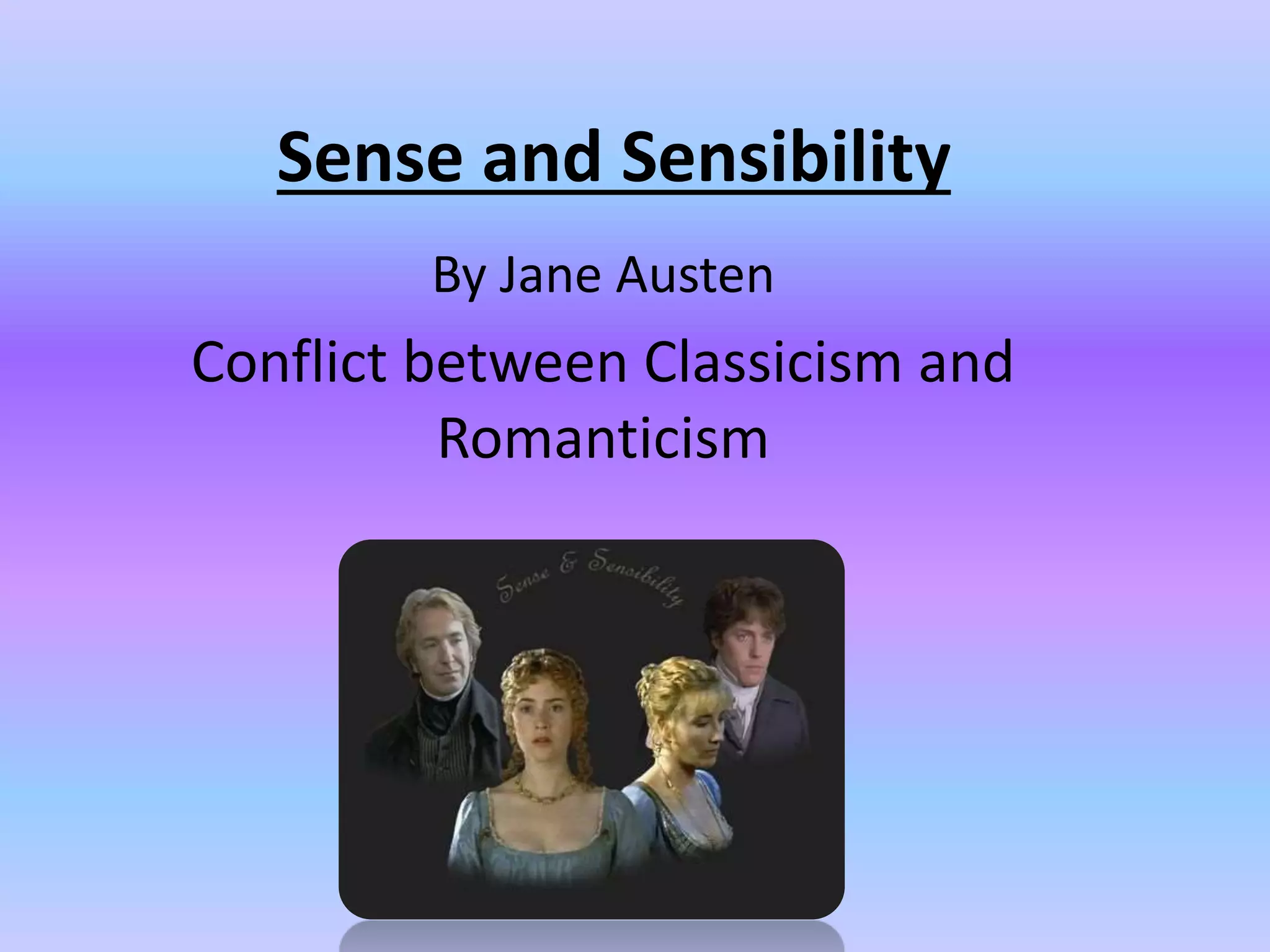
Sense and Sensibility
By Jane Austen
Conflict between Classicism and
Romanticism
Characteristics
Classicism
• Age of reason and prose
• Rational and logic
• Dominance of materialism
• Objective
• Standard view of human
nature
Romanticism
• Age of poetry
• Shift from intellect to
imagination
• Liberty of thoughts
• Subjective
• Expression of emotions
Two main Protagonists
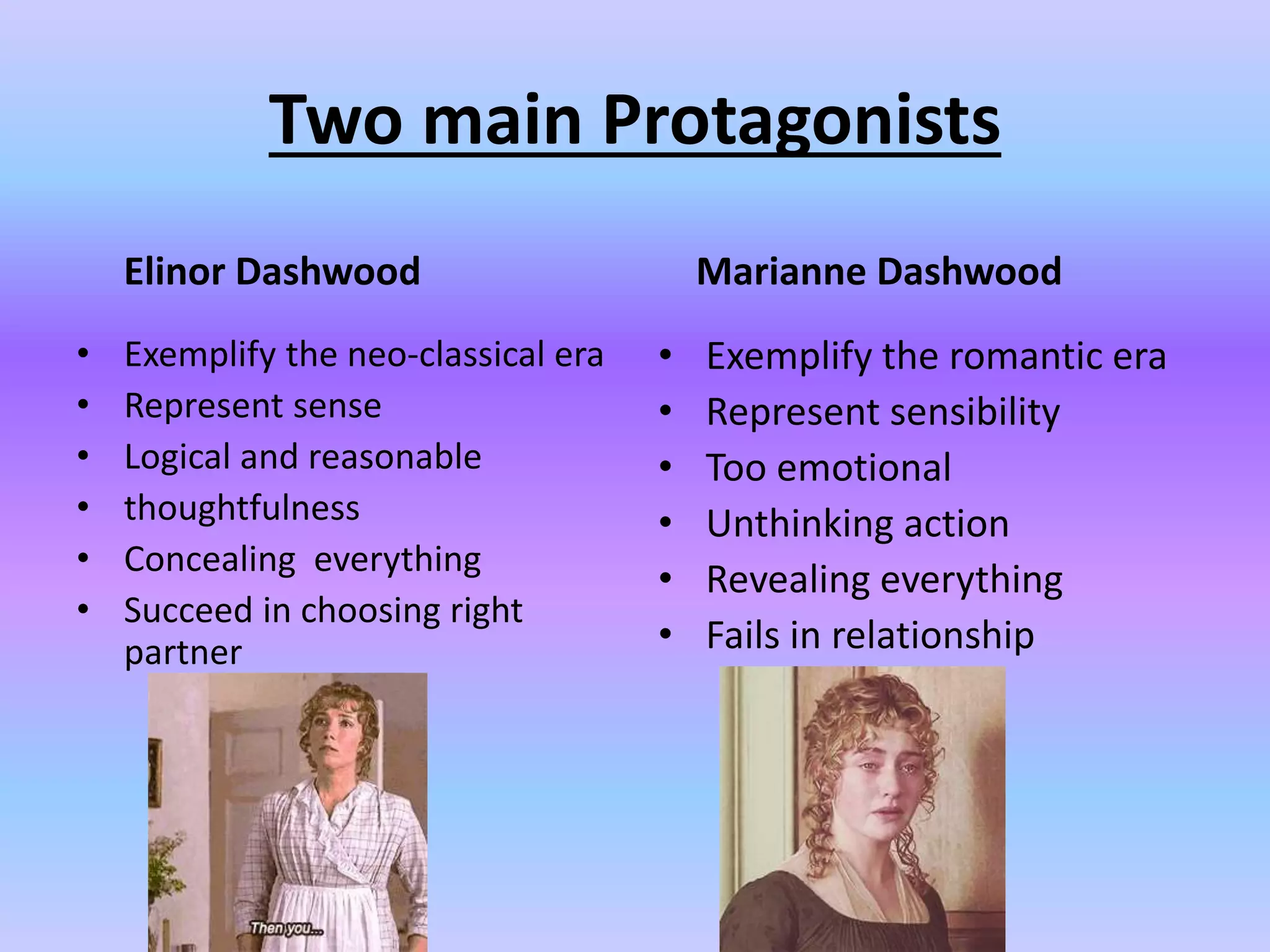
Elinor Dashwood
• Exemplify the neo-classical era
• Represent sense
• Logical and reasonable
• thoughtfulness
• Concealing everything
• Succeed in choosing right
partner
Marianne Dashwood
• Exemplify the romantic era
• Represent sensibility
• Too emotional
• Unthinking action
• Revealing everything
• Fails in relationship
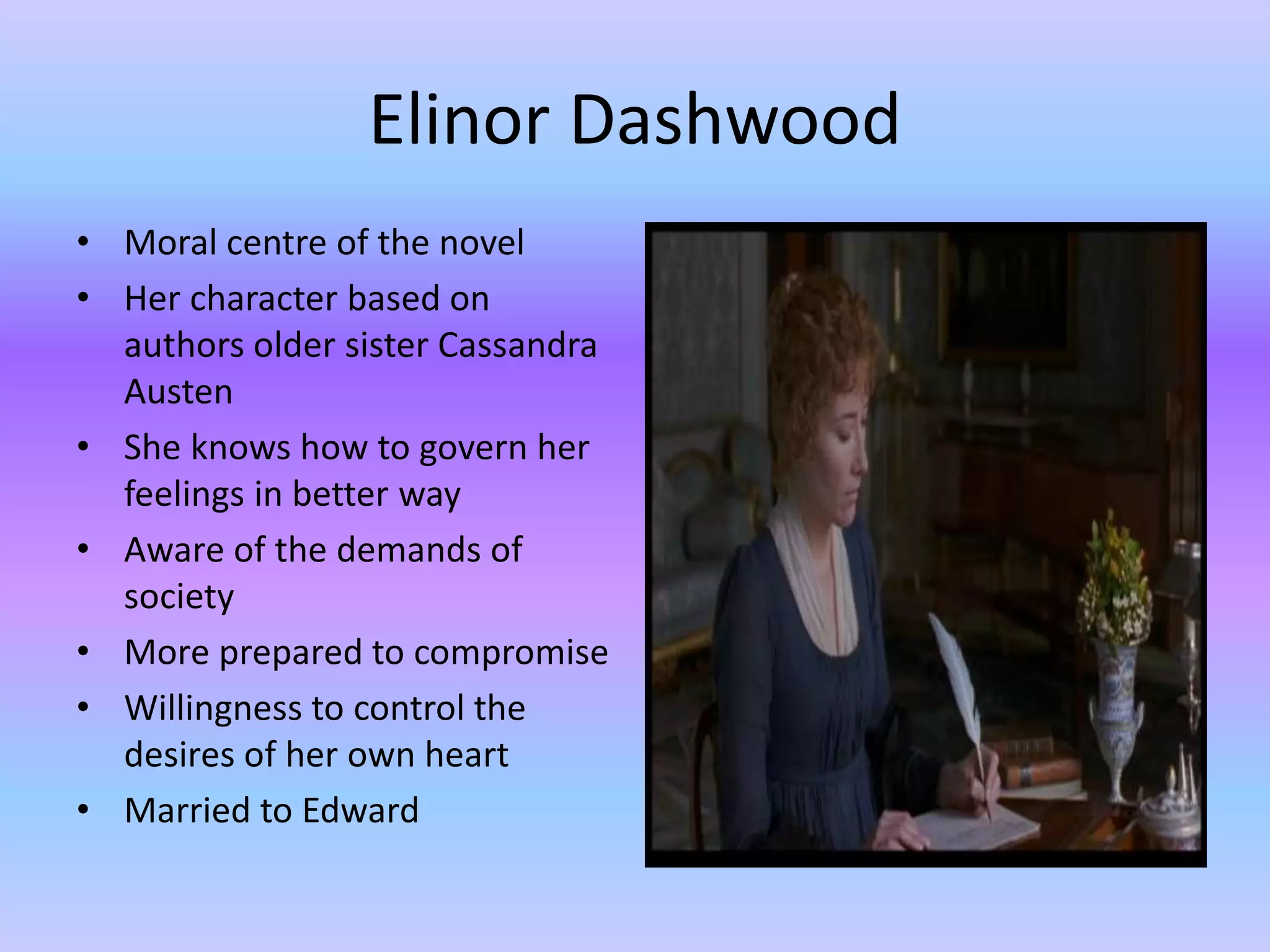
Elinor Dashwood
• Moral centre of the novel
• Her character based on
authors older sister Cassandra
Austen
• She knows how to govern her
feelings in better way
• Aware of the demands of
society
• More prepared to compromise
• Willingness to control the
desires of her own heart
• Married to Edward
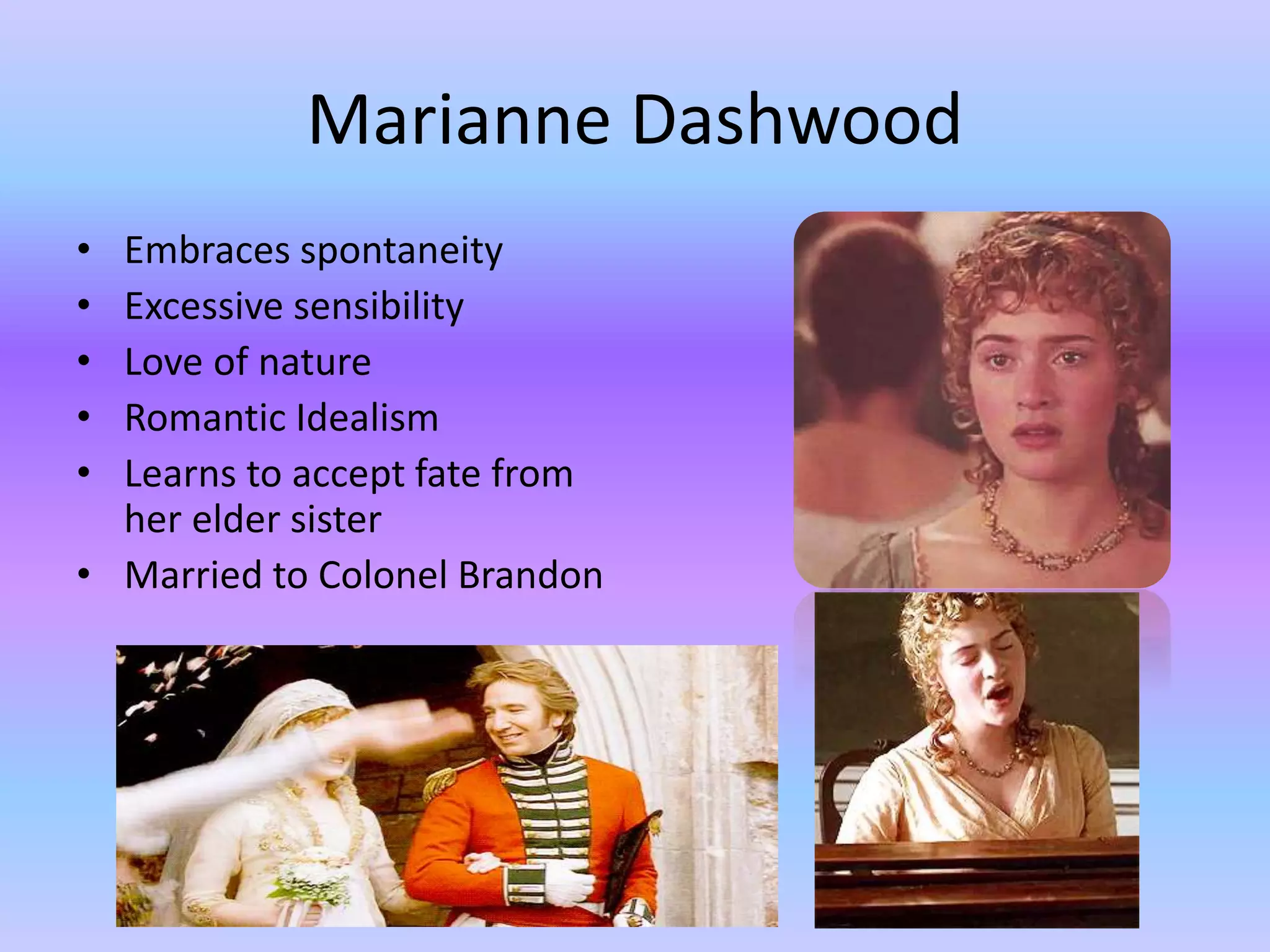
Marianne Dashwood
• Embraces spontaneity
• Excessive sensibility
• Love of nature
• Romantic Idealism
• Learns to accept fate from
her elder sister
• Married to Colonel Brandon
Conclusion
As because this novel was
written during the transitional
period, it combines both the
ages, Neo-classicism and
Romanticism and Austen
perfectly represent both the
ages through the characters.
However Austen gives more
importance to sense over
sensibility, but in real life both
the elements are important
and we have to keep balance
between them.

Sense and sensibility

  • 1.
    Sense and Sensibility ByJane Austen Conflict between Classicism and Romanticism
  • 2.
    Characteristics Classicism • Age ofreason and prose • Rational and logic • Dominance of materialism • Objective • Standard view of human nature Romanticism • Age of poetry • Shift from intellect to imagination • Liberty of thoughts • Subjective • Expression of emotions
  • 3.
    Two main Protagonists ElinorDashwood • Exemplify the neo-classical era • Represent sense • Logical and reasonable • thoughtfulness • Concealing everything • Succeed in choosing right partner Marianne Dashwood • Exemplify the romantic era • Represent sensibility • Too emotional • Unthinking action • Revealing everything • Fails in relationship
  • 4.
    Elinor Dashwood • Moralcentre of the novel • Her character based on authors older sister Cassandra Austen • She knows how to govern her feelings in better way • Aware of the demands of society • More prepared to compromise • Willingness to control the desires of her own heart • Married to Edward
  • 5.
    Marianne Dashwood • Embracesspontaneity • Excessive sensibility • Love of nature • Romantic Idealism • Learns to accept fate from her elder sister • Married to Colonel Brandon
  • 6.
    Conclusion As because thisnovel was written during the transitional period, it combines both the ages, Neo-classicism and Romanticism and Austen perfectly represent both the ages through the characters. However Austen gives more importance to sense over sensibility, but in real life both the elements are important and we have to keep balance between them.