GRAPHENE
Presented by
M C ABINAYA
2017303501
Introduction
 Graphene is an allotrope of carbon
 It consists of only a single layer of carbon atom
 Graphene is the basic structural element of 3-D
carbon allotropes namely graphite, carbon
nanotubes, etc.
 It is lightest and strongest material discovered.
 Though only an atom thick, it is considered to be
200 times stronger than steel.
History of
Graphene
 Graphene has been produced
by mankind unknowingly in
small quantities through the
production of pencils and
other applications of
graphite.
 The material was later
rediscovered, isolated, and
characterized in 2004 by
Andre Geim and Konstantin
Novoselov at the University
of Manchester.
 They were awarded the
Nobel Prize in Physics in 2010
for their research on the
material.
Structure of
Graphene
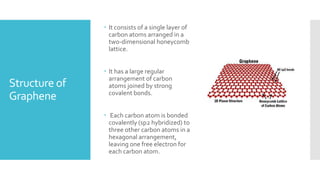
 It consists of a single layer of
carbon atoms arranged in a
two-dimensional honeycomb
lattice.
 It has a large regular
arrangement of carbon
atoms joined by strong
covalent bonds.
 Each carbon atom is bonded
covalently (sp2 hybridized) to
three other carbon atoms in a
hexagonal arrangement,
leaving one free electron for
each carbon atom.
Electronic
properties
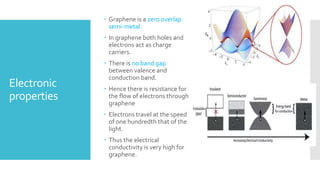
 Graphene is a zero overlap
semi-metal.
 In graphene both holes and
electrons act as charge
carriers.
 There is no band gap
between valence and
conduction band.
 Hence there is resistance for
the flow of electrons through
graphene
 Electrons travel at the speed
of one hundredth that of the
light.
 Thus the electrical
conductivity is very high for
graphene.
Mechanical
Properties
 Graphene is the strongest material ever discovered.
 The reason for great strength is due to its highly regular
arrangement joined by covalent bonds.
 It has an ultimate tensile strength of 130,000,000,000 Pascals.
 Graphene also has impressive elastic properties, capable of
regaining its initial size after strain tensile strength 50-60 Gpa.
Optical
properties
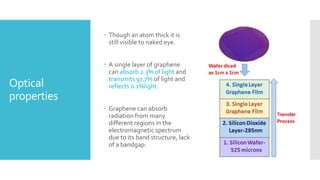
 Though an atom thick it is
still visible to naked eye.
 A single layer of graphene
can absorb 2.3% of light and
transmits 97.7% of light and
reflects 0.1%light.
 Graphene can absorb
radiation from many
different regions in the
electromagnetic spectrum
due to its band structure, lack
of a bandgap.
Chemical
Properties
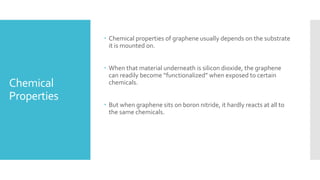
 Chemical properties of graphene usually depends on the substrate
it is mounted on.
 When that material underneath is silicon dioxide, the graphene
can readily become “functionalized” when exposed to certain
chemicals.
 But when graphene sits on boron nitride, it hardly reacts at all to
the same chemicals.
Production
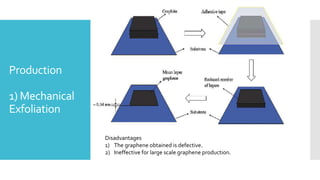
1) Mechanical
Exfoliation
Disadvantages
1) The graphene obtained is defective.
2) Ineffective for large scale graphene production.
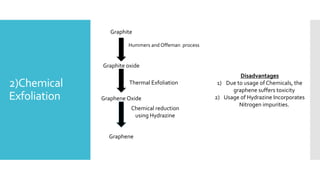
2)Chemical
Exfoliation Graphene Oxide
Graphene
Graphite
Graphite oxide
Hummers and Offeman process
Thermal Exfoliation
Chemical reduction
using Hydrazine
Disadvantages
1) Due to usage of Chemicals, the
graphene suffers toxicity
2) Usage of Hydrazine Incorporates
Nitrogen impurities.
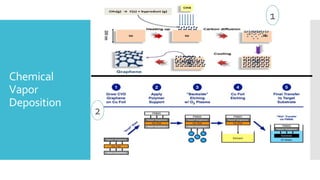
Chemical
Vapor
Deposition
1
2
Applications
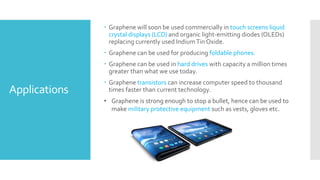
 Graphene will soon be used commercially in touch screens liquid
crystal displays (LCD) and organic light-emitting diodes (OLEDs)
replacing currently used IndiumTin Oxide.
 Graphene can be used for producing foldable phones.
 Graphene can be used in hard drives with capacity a million times
greater than what we use today.
 Graphene transistors can increase computer speed to thousand
times faster than current technology.
• Graphene is strong enough to stop a bullet, hence can be used to
make military protective equipment such as vests, gloves etc.
Applications
 Graphene enhanced Li-ion batteries when compared to Li ion
battery is fast charging, will have higher capacity, longer lifespan,
and is also extremely light and flexible.
 Graphene can also detect cancer cells in the early stages of the
disease. Moreover, it can stop them from growing any further in
many by intervening in the formation of the tumor.
 Graphene dioxide can be used in solar panels and is found to
release multiple electrons per photon that hits the panel.
 Graphene can be used as membranes for desalination of salt
water.
Advantages
 The thinnest and strongest material ever found in the world.
 Has a wide range of applications.
 Has the potential to revolutionize electronic technology.
 It is the best conductor of heat and electricity.
 Environmental friendly
Disadvantages
 The major drawback of Graphene is its production is very
expensive and tedious
 Graphene is an amazing conductor with no bandgap, this means
that it cannot be switched off.
 Large scale production of defect less graphene sheet is not
entirely possible.
 Toxic chemicals are used at high temperatures to produce
graphene. Because of this graphene show signs of some
poisonous qualities.
 Graphene of size below 20 nm is unstable.
 Graphene is very messy stuff.
THANKYOU

Seminar about graphene

  • 1.
    GRAPHENE Presented by M CABINAYA 2017303501
  • 2.
    Introduction  Graphene isan allotrope of carbon  It consists of only a single layer of carbon atom  Graphene is the basic structural element of 3-D carbon allotropes namely graphite, carbon nanotubes, etc.  It is lightest and strongest material discovered.  Though only an atom thick, it is considered to be 200 times stronger than steel.
  • 3.
    History of Graphene  Graphenehas been produced by mankind unknowingly in small quantities through the production of pencils and other applications of graphite.  The material was later rediscovered, isolated, and characterized in 2004 by Andre Geim and Konstantin Novoselov at the University of Manchester.  They were awarded the Nobel Prize in Physics in 2010 for their research on the material.
  • 4.
    Structure of Graphene  Itconsists of a single layer of carbon atoms arranged in a two-dimensional honeycomb lattice.  It has a large regular arrangement of carbon atoms joined by strong covalent bonds.  Each carbon atom is bonded covalently (sp2 hybridized) to three other carbon atoms in a hexagonal arrangement, leaving one free electron for each carbon atom.
  • 5.
    Electronic properties  Graphene isa zero overlap semi-metal.  In graphene both holes and electrons act as charge carriers.  There is no band gap between valence and conduction band.  Hence there is resistance for the flow of electrons through graphene  Electrons travel at the speed of one hundredth that of the light.  Thus the electrical conductivity is very high for graphene.
  • 6.
    Mechanical Properties  Graphene isthe strongest material ever discovered.  The reason for great strength is due to its highly regular arrangement joined by covalent bonds.  It has an ultimate tensile strength of 130,000,000,000 Pascals.  Graphene also has impressive elastic properties, capable of regaining its initial size after strain tensile strength 50-60 Gpa.
  • 7.
    Optical properties  Though anatom thick it is still visible to naked eye.  A single layer of graphene can absorb 2.3% of light and transmits 97.7% of light and reflects 0.1%light.  Graphene can absorb radiation from many different regions in the electromagnetic spectrum due to its band structure, lack of a bandgap.
  • 8.
    Chemical Properties  Chemical propertiesof graphene usually depends on the substrate it is mounted on.  When that material underneath is silicon dioxide, the graphene can readily become “functionalized” when exposed to certain chemicals.  But when graphene sits on boron nitride, it hardly reacts at all to the same chemicals.
  • 9.
    Production 1) Mechanical Exfoliation Disadvantages 1) Thegraphene obtained is defective. 2) Ineffective for large scale graphene production.
  • 10.
    2)Chemical Exfoliation Graphene Oxide Graphene Graphite Graphiteoxide Hummers and Offeman process Thermal Exfoliation Chemical reduction using Hydrazine Disadvantages 1) Due to usage of Chemicals, the graphene suffers toxicity 2) Usage of Hydrazine Incorporates Nitrogen impurities.
  • 11.
  • 12.
    Applications  Graphene willsoon be used commercially in touch screens liquid crystal displays (LCD) and organic light-emitting diodes (OLEDs) replacing currently used IndiumTin Oxide.  Graphene can be used for producing foldable phones.  Graphene can be used in hard drives with capacity a million times greater than what we use today.  Graphene transistors can increase computer speed to thousand times faster than current technology. • Graphene is strong enough to stop a bullet, hence can be used to make military protective equipment such as vests, gloves etc.
  • 13.
    Applications  Graphene enhancedLi-ion batteries when compared to Li ion battery is fast charging, will have higher capacity, longer lifespan, and is also extremely light and flexible.  Graphene can also detect cancer cells in the early stages of the disease. Moreover, it can stop them from growing any further in many by intervening in the formation of the tumor.  Graphene dioxide can be used in solar panels and is found to release multiple electrons per photon that hits the panel.  Graphene can be used as membranes for desalination of salt water.
  • 14.
    Advantages  The thinnestand strongest material ever found in the world.  Has a wide range of applications.  Has the potential to revolutionize electronic technology.  It is the best conductor of heat and electricity.  Environmental friendly
  • 15.
    Disadvantages  The majordrawback of Graphene is its production is very expensive and tedious  Graphene is an amazing conductor with no bandgap, this means that it cannot be switched off.  Large scale production of defect less graphene sheet is not entirely possible.  Toxic chemicals are used at high temperatures to produce graphene. Because of this graphene show signs of some poisonous qualities.  Graphene of size below 20 nm is unstable.  Graphene is very messy stuff.
  • 16.