A Nobel Material
by: K.saran narayana samy
The Next Wonder Material?
 There is a new wonder material in town that might change
our future.
 Imagine a coffee cup that streams the day’s headlines in
real time.
 A cooking pot that can detect the presence
of E.coli bacteria that could make you sick.
 Television screen that is as flexible and thin as a piece of
paper.
 All of these applications could be a reality if the wonder
material, named graphene, lives up to its hype.
High speed conduction
wire made up of carbon
 Graphene rocked the world of chemistry in 2004 when
scientists discovered that it had remarkable properties
 It conducted electricity better than any other common
substance
 It was the thinnest known material—only one-atom
thick—and it was stronger than steel!
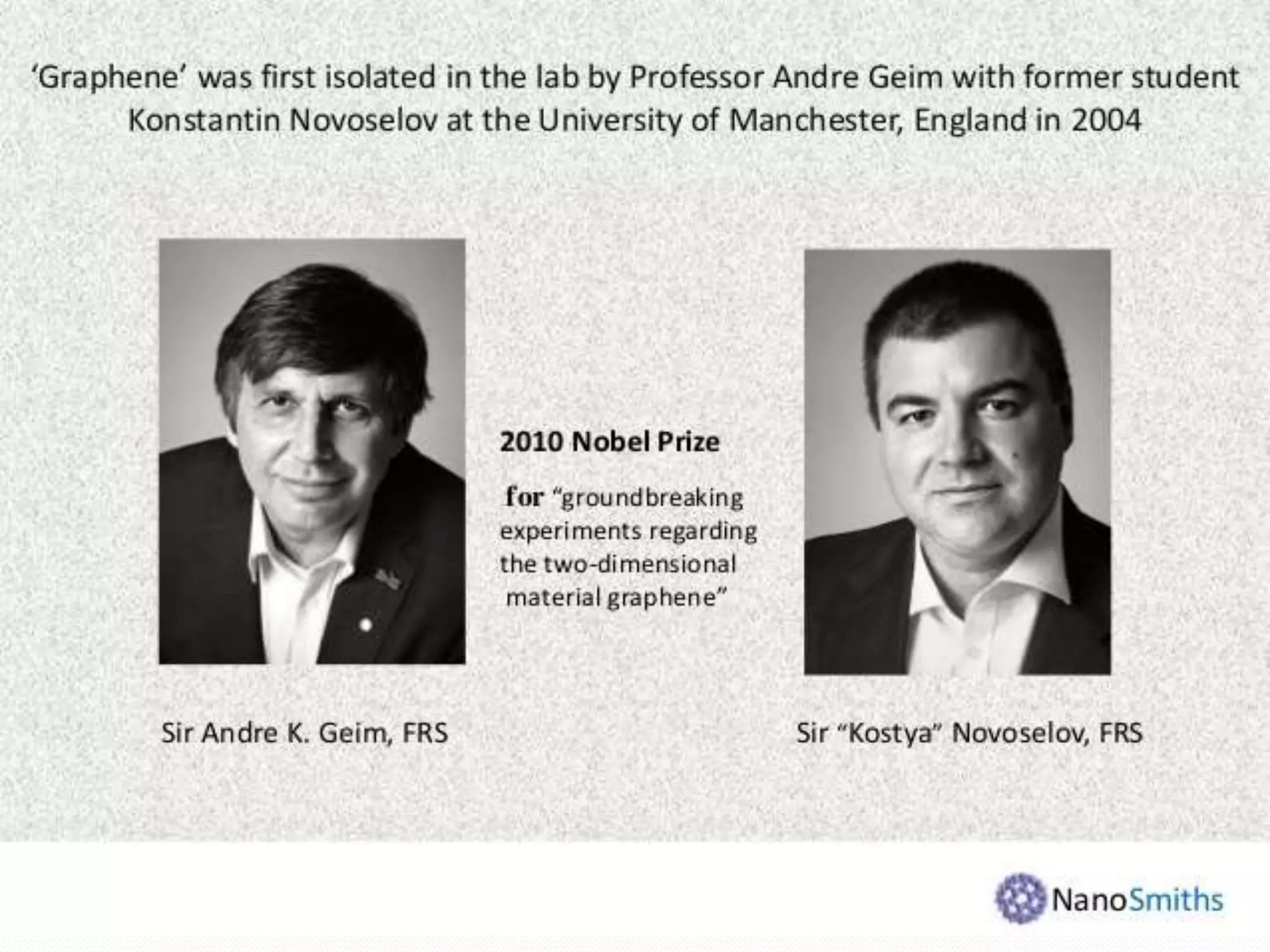
In 2004, Andre Geim and Konstantin Novoselov, two chemists at the University of
Manchester, United Kingdom, used this property to produce samples of graphene and
discover its remarkable properties.
They used sticky tape to separate the layers of carbon in graphite. To get an idea of how
their technique worked, think of pressing sticky tape onto a piece of graphite and pulling
it away, leaving the sticky surface covered with graphite flakes.
Then, press the sticky tape to itself and pull it apart. Repeat, and after a few rounds of
this, some flakes on the tape will be only a single one-atom thick layer—pure graphene.
 A diamond and a piece of coal are so
different that you would never guess that
they are both made of the same element—
carbon.
 Diamond is a hard and transparent
mineral that is ejected to the surface from
deep within the Earth’s interior through
volcanic eruptions, while graphite is a black
and lightweight material extracted from
coal.
 In diamond, each carbon atom is connected to
four other carbons. This is a very strong
arrangement that makes diamond one of the
hardest known materials.
 In graphite, each atom is linked to three others
in layers of hexagonal (six-sided) shapes that
look like chicken wire
 The bonds within the hexagonal sheets are
strong, but each layer is only weakly attracted to
the next, which allows the layers to slip by one
another.
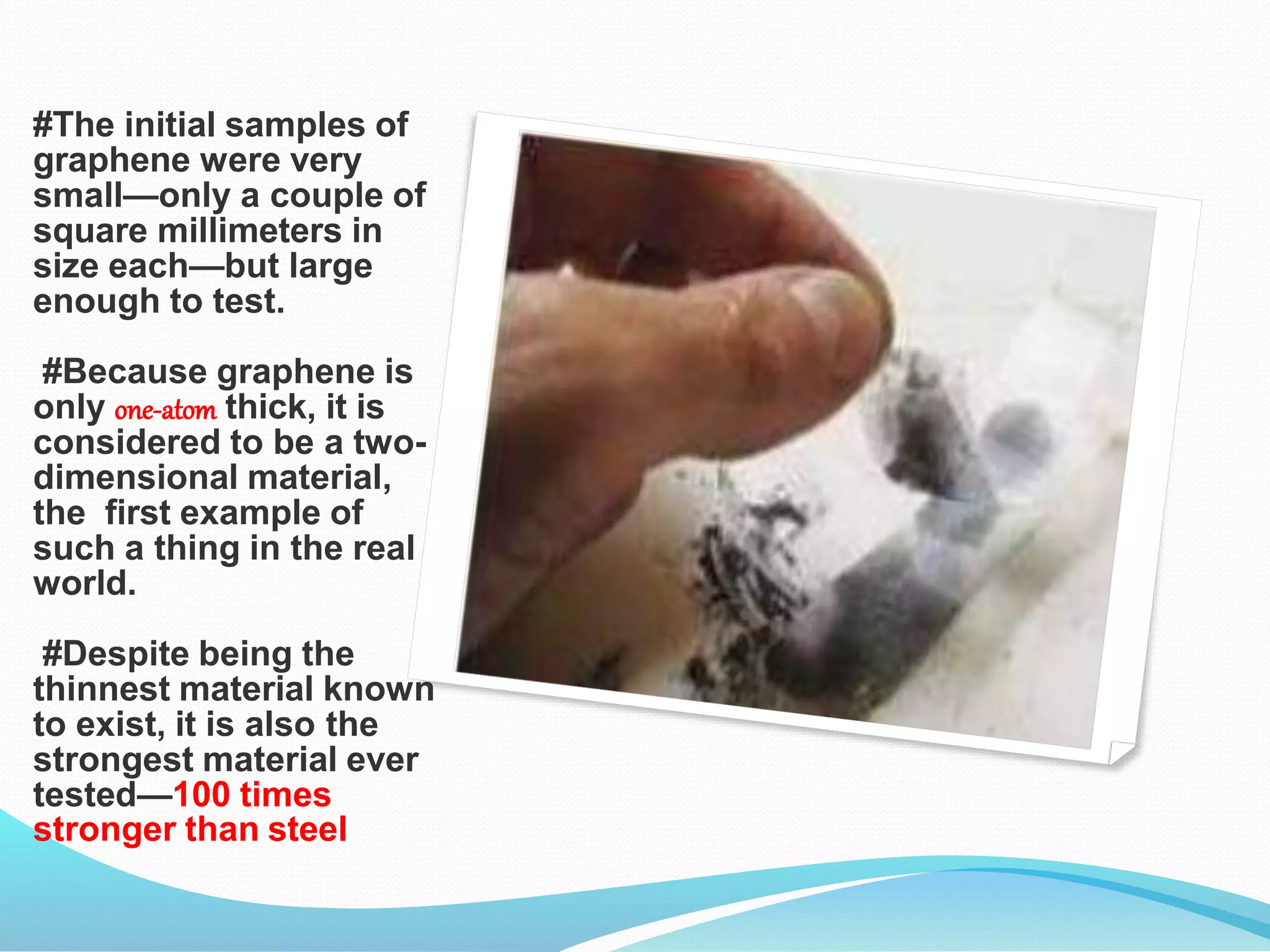
#The initial samples of
graphene were very
small—only a couple of
square millimeters in
size each—but large
enough to test.
#Because graphene is
only one-atom thick, it is
considered to be a two-
dimensional material,
the first example of
such a thing in the real
world.
#Despite being the
thinnest material known
to exist, it is also the
strongest material ever
tested—100 times
stronger than steel
Flexible solar panels
Graphene has sparked the interest of engineers who are trying to make
new,lightweight, and flexible solar panels that could be used to cover the outside
surface of a building, in addition to the roof—which is alreadybeing used
Graphene is nearly transparent to light—not only to visible
light but also to other forms of electromagnetic radiation,
including ultraviolet and infrared light.
Graphene absorbs only 2% of the light falling on it,
whether it is ultraviolet, infrared, or all of the wavelengths in
between.
Combine this with graphene’s ability to conduct electricity,
and you have very efficient, electrical conductors that are
transparent, thin, flexible, and cheap.
When a photovoltaic cell is sandwiched between two sheets of graphene, light crosses
the sheets of graphene and hits the photovoltaic cell.
 As a result, the photovoltaic cell generates electricity, which is carried by the sheets of
graphene.
These lightweight and flexible solar panels could be molded to fit an automobile body
or be wrapped around furniture or clothing.
When added to any surface, they could collect light and produce electricity.
Solar panels on these backpacks can charge your mobile phone or iPod. In the future,
flexible solar panels may even charge your laptop.
Foldable cell phones
At present we use the follow
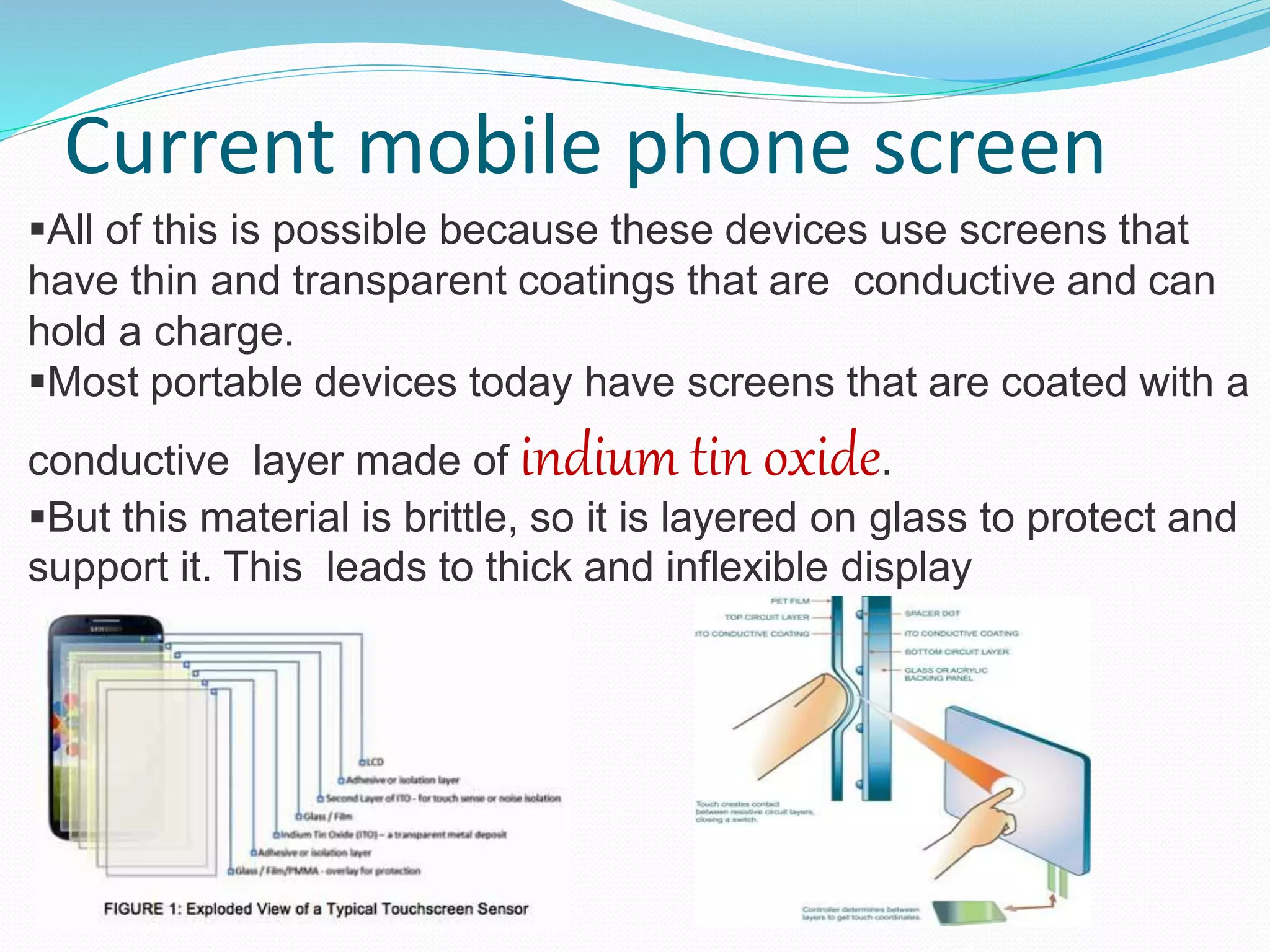
The basic idea of how most of these devices work is simple. A layer that stores
electrical charge is placed on the glass panel of the screen.
When a user touches the screen with his or her finger, or with a stylus pen, some of
the charge is transferred to the user, so the charge on the layer decreases.
This decrease is measured by sensors located at each corner of the screen, and this
information is relayed to a processor inside the device, which determines what kind of
action to take.
Current mobile phone screen
All of this is possible because these devices use screens that
have thin and transparent coatings that are conductive and can
hold a charge.
Most portable devices today have screens that are coated with a
conductive layer made of indium tin oxide.
But this material is brittle, so it is layered on glass to protect and
support it. This leads to thick and inflexible display
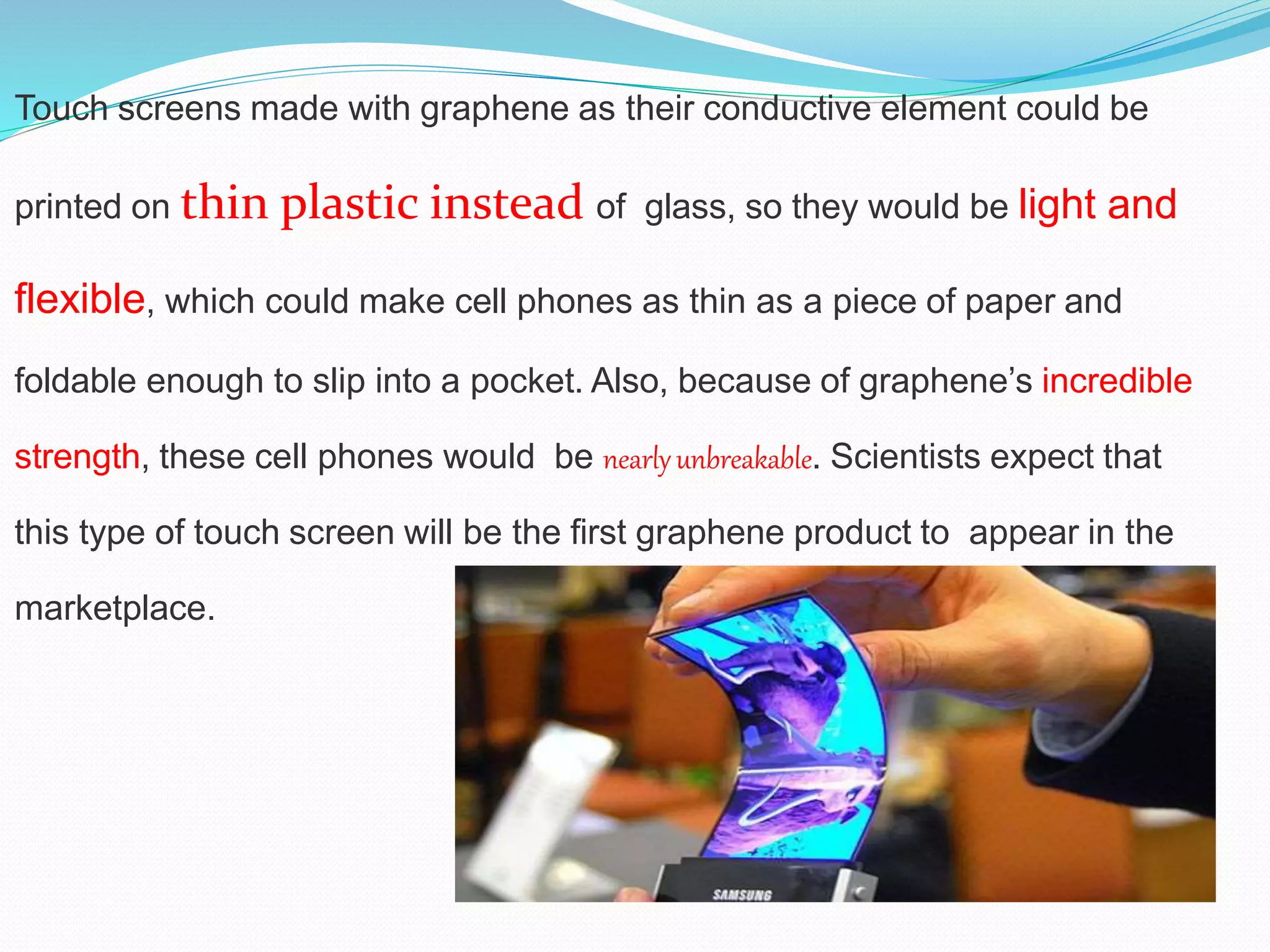
Touch screens made with graphene as their conductive element could be
printed on thin plastic instead of glass, so they would be light and
flexible, which could make cell phones as thin as a piece of paper and
foldable enough to slip into a pocket. Also, because of graphene’s incredible
strength, these cell phones would be nearly unbreakable. Scientists expect that
this type of touch screen will be the first graphene product to appear in the
marketplace.
Bionic devicesBecause graphene is thin and flexible, it could be integrated into “bionic” devices that
would be implanted in living tissue.
The term “bionic”—a mix of “biology” and “electronic”—refers to devices that help or
improve an organ or tissue, such as artificial hearts or cochlear implants, which assist
people with hearing loss.
Graphene is resistant to the salty ionic solutions inside living tissue, so bionic devices
made of graphene could have long shelf lives, perhaps lasting a lifetime.
This is in contrast to metallic parts that can corrode after a few years, possibly
releasing toxic metals into the body.
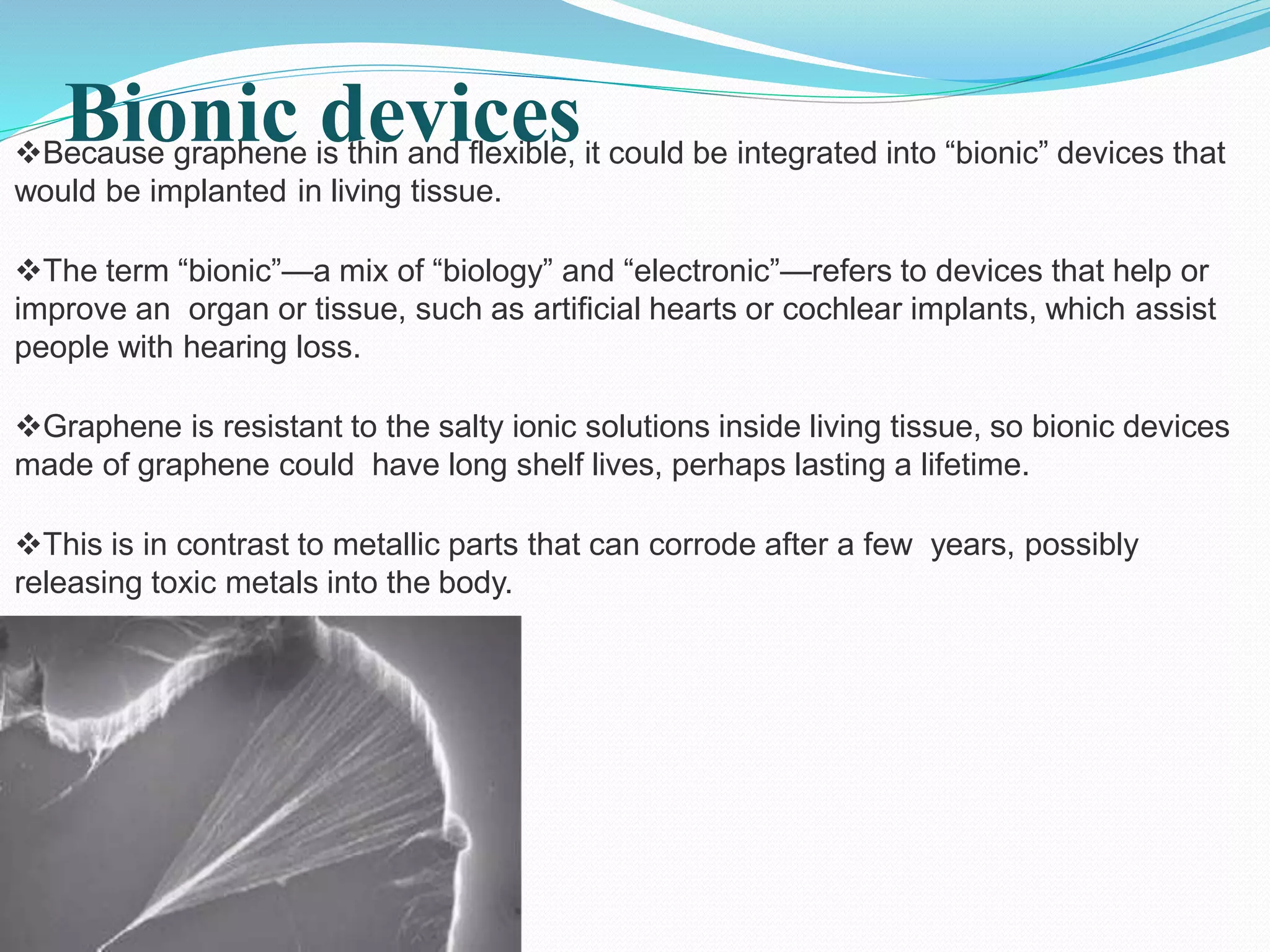
Nanoscale fibers drawn from multiwalled carbon nanotubes have strengths
comparable to spider silk. When they are stretched, they increase in width
(instead of getting thinner), so they might be used to make artificial muscles in
the future.
Also, because graphene conducts electrical signals, it can be connected with
neurons, which also send weak electric signals from cell to cell.
These electric signals are created when a nerve cell pumps ions—mainly
sodium ions (Na+) and potassium ions (K+)—in or out of the cell, causing a
difference in electric potential inside
and outside the cell.
For example, imagine putting transistors made of graphene along a damaged spinal
cord.
Such transistors could detect nerve impulses in the undamaged section of the spinal
cord and conduct them past the damaged area to the nerves in muscles.
This could allow people to regain the use of their arms or legs after a spinal cord
injury.
conclusion
 With all the above information's regarding this
wonder full material we can come to know that
one day the world will be more Tech-full
As a Engineer we do have responsibilities to develop
and innovate useful and eco-friendly devices
Graphene (noble material)

Graphene (noble material)

  • 1.
    A Nobel Material by:K.saran narayana samy
  • 2.
    The Next WonderMaterial?  There is a new wonder material in town that might change our future.  Imagine a coffee cup that streams the day’s headlines in real time.  A cooking pot that can detect the presence of E.coli bacteria that could make you sick.  Television screen that is as flexible and thin as a piece of paper.  All of these applications could be a reality if the wonder material, named graphene, lives up to its hype.
  • 4.
    High speed conduction wiremade up of carbon  Graphene rocked the world of chemistry in 2004 when scientists discovered that it had remarkable properties  It conducted electricity better than any other common substance  It was the thinnest known material—only one-atom thick—and it was stronger than steel!
  • 5.
    In 2004, AndreGeim and Konstantin Novoselov, two chemists at the University of Manchester, United Kingdom, used this property to produce samples of graphene and discover its remarkable properties. They used sticky tape to separate the layers of carbon in graphite. To get an idea of how their technique worked, think of pressing sticky tape onto a piece of graphite and pulling it away, leaving the sticky surface covered with graphite flakes. Then, press the sticky tape to itself and pull it apart. Repeat, and after a few rounds of this, some flakes on the tape will be only a single one-atom thick layer—pure graphene.
  • 7.
     A diamondand a piece of coal are so different that you would never guess that they are both made of the same element— carbon.  Diamond is a hard and transparent mineral that is ejected to the surface from deep within the Earth’s interior through volcanic eruptions, while graphite is a black and lightweight material extracted from coal.  In diamond, each carbon atom is connected to four other carbons. This is a very strong arrangement that makes diamond one of the hardest known materials.  In graphite, each atom is linked to three others in layers of hexagonal (six-sided) shapes that look like chicken wire  The bonds within the hexagonal sheets are strong, but each layer is only weakly attracted to the next, which allows the layers to slip by one another.
  • 8.
    #The initial samplesof graphene were very small—only a couple of square millimeters in size each—but large enough to test. #Because graphene is only one-atom thick, it is considered to be a two- dimensional material, the first example of such a thing in the real world. #Despite being the thinnest material known to exist, it is also the strongest material ever tested—100 times stronger than steel
  • 9.
    Flexible solar panels Graphenehas sparked the interest of engineers who are trying to make new,lightweight, and flexible solar panels that could be used to cover the outside surface of a building, in addition to the roof—which is alreadybeing used Graphene is nearly transparent to light—not only to visible light but also to other forms of electromagnetic radiation, including ultraviolet and infrared light. Graphene absorbs only 2% of the light falling on it, whether it is ultraviolet, infrared, or all of the wavelengths in between. Combine this with graphene’s ability to conduct electricity, and you have very efficient, electrical conductors that are transparent, thin, flexible, and cheap.
  • 11.
    When a photovoltaiccell is sandwiched between two sheets of graphene, light crosses the sheets of graphene and hits the photovoltaic cell.  As a result, the photovoltaic cell generates electricity, which is carried by the sheets of graphene. These lightweight and flexible solar panels could be molded to fit an automobile body or be wrapped around furniture or clothing. When added to any surface, they could collect light and produce electricity. Solar panels on these backpacks can charge your mobile phone or iPod. In the future, flexible solar panels may even charge your laptop.
  • 12.
    Foldable cell phones Atpresent we use the follow The basic idea of how most of these devices work is simple. A layer that stores electrical charge is placed on the glass panel of the screen. When a user touches the screen with his or her finger, or with a stylus pen, some of the charge is transferred to the user, so the charge on the layer decreases. This decrease is measured by sensors located at each corner of the screen, and this information is relayed to a processor inside the device, which determines what kind of action to take.
  • 13.
    Current mobile phonescreen All of this is possible because these devices use screens that have thin and transparent coatings that are conductive and can hold a charge. Most portable devices today have screens that are coated with a conductive layer made of indium tin oxide. But this material is brittle, so it is layered on glass to protect and support it. This leads to thick and inflexible display
  • 14.
    Touch screens madewith graphene as their conductive element could be printed on thin plastic instead of glass, so they would be light and flexible, which could make cell phones as thin as a piece of paper and foldable enough to slip into a pocket. Also, because of graphene’s incredible strength, these cell phones would be nearly unbreakable. Scientists expect that this type of touch screen will be the first graphene product to appear in the marketplace.
  • 15.
    Bionic devicesBecause grapheneis thin and flexible, it could be integrated into “bionic” devices that would be implanted in living tissue. The term “bionic”—a mix of “biology” and “electronic”—refers to devices that help or improve an organ or tissue, such as artificial hearts or cochlear implants, which assist people with hearing loss. Graphene is resistant to the salty ionic solutions inside living tissue, so bionic devices made of graphene could have long shelf lives, perhaps lasting a lifetime. This is in contrast to metallic parts that can corrode after a few years, possibly releasing toxic metals into the body.
  • 17.
    Nanoscale fibers drawnfrom multiwalled carbon nanotubes have strengths comparable to spider silk. When they are stretched, they increase in width (instead of getting thinner), so they might be used to make artificial muscles in the future. Also, because graphene conducts electrical signals, it can be connected with neurons, which also send weak electric signals from cell to cell. These electric signals are created when a nerve cell pumps ions—mainly sodium ions (Na+) and potassium ions (K+)—in or out of the cell, causing a difference in electric potential inside and outside the cell. For example, imagine putting transistors made of graphene along a damaged spinal cord. Such transistors could detect nerve impulses in the undamaged section of the spinal cord and conduct them past the damaged area to the nerves in muscles. This could allow people to regain the use of their arms or legs after a spinal cord injury.
  • 19.
    conclusion  With allthe above information's regarding this wonder full material we can come to know that one day the world will be more Tech-full As a Engineer we do have responsibilities to develop and innovate useful and eco-friendly devices