Selling 101 in B2B How to crack the industrial buyers nowadays Guest Lecture, June 26th 2009  International Buyers Behavior Herwig Kirchberger
Who is bugging you from 6:00 – 7:30pm?  Herwig Kirchberger 1975 St. Florian Enns Hargelsberg Steyr Wels Graz Dublin Schärding Krems
B2B Sales and its characteristics B2B Sales/Marketing Strategies Purchasing process in the investment goods industry International B2B Strategies Enterprise 2.0 Personal Experience in international B2B Sales  I know a bit about …
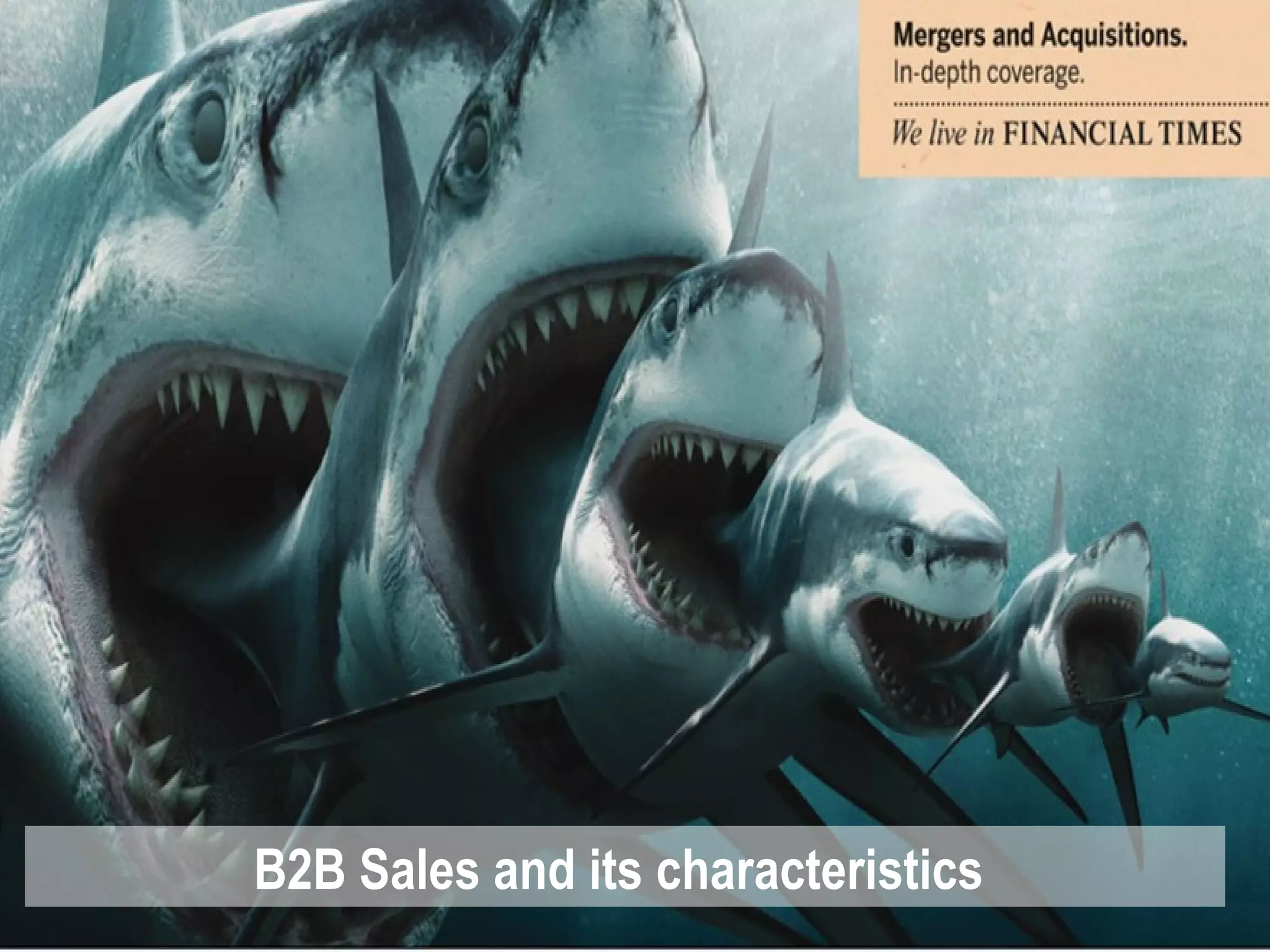
B2B Sales and its characteristics
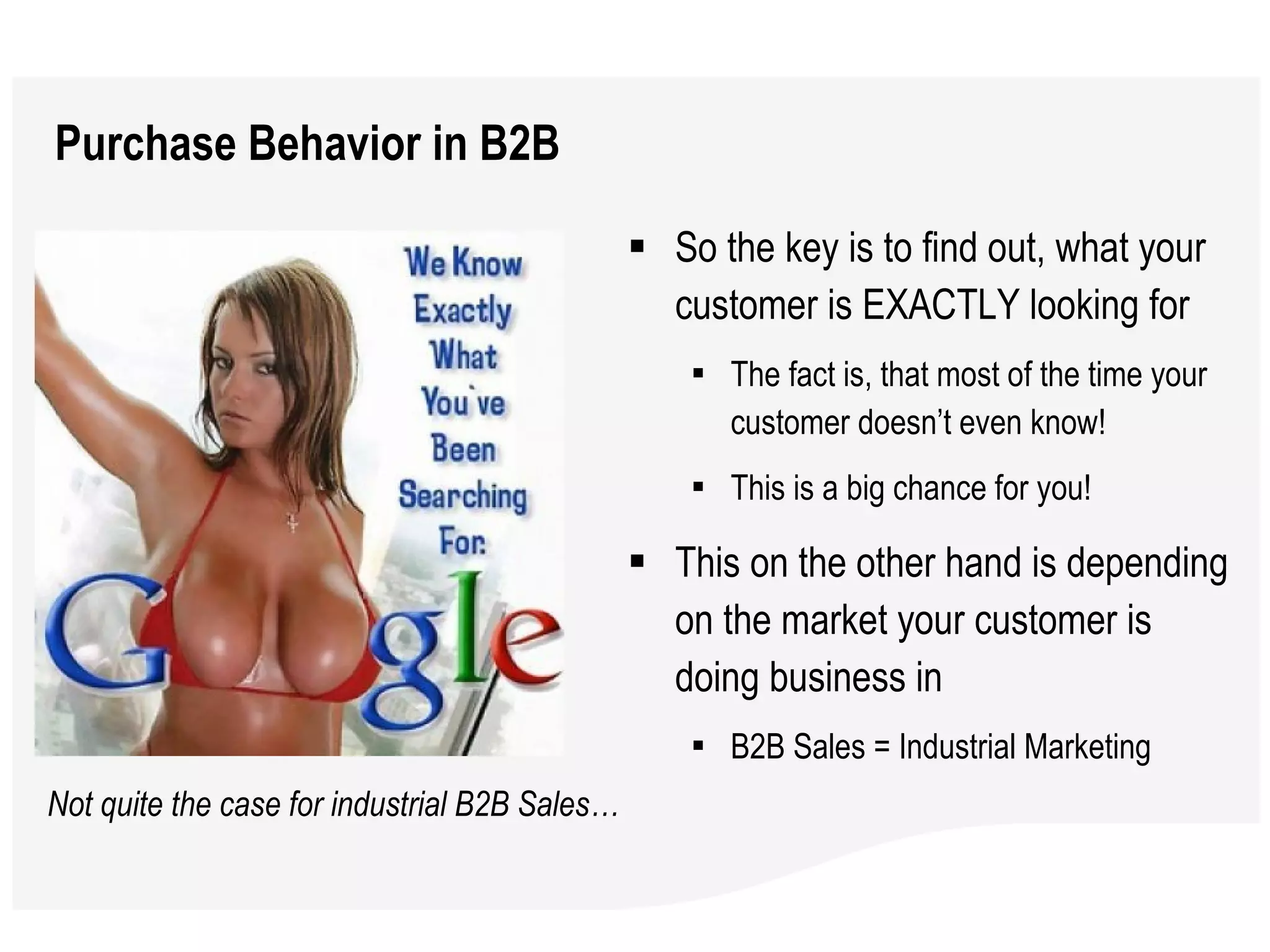
Purchase Behavior in B2B So the key is to find out, what your customer is EXACTLY looking for The fact is, that most of the time your customer doesn’t even know!  This is a big chance for you!  This on the other hand is depending on the market your customer is doing business in B2B Sales = Industrial Marketing  Not quite the case for industrial B2B Sales…
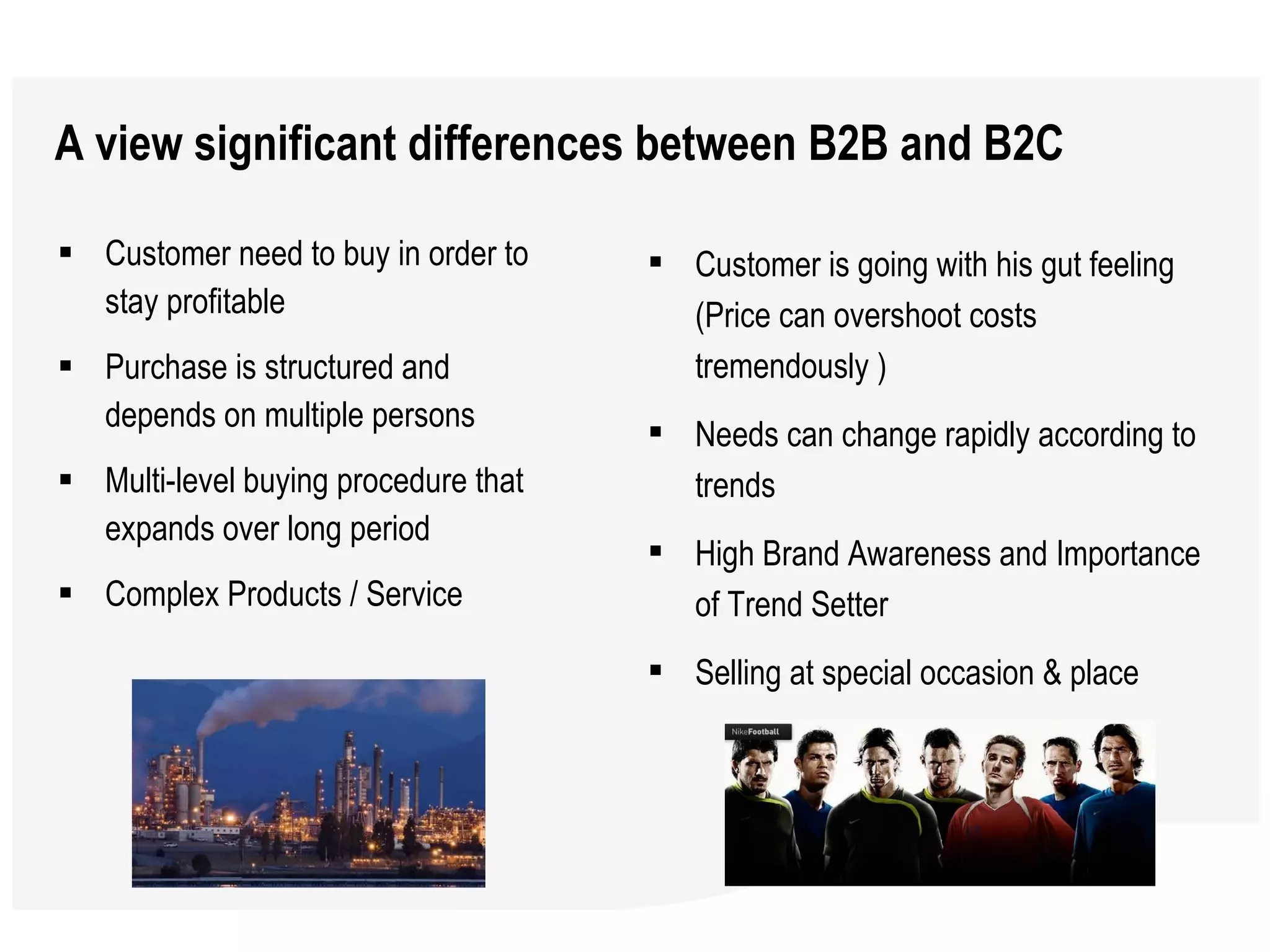
A view significant differences between B2B and B2C Customer need to buy in order to stay profitable Purchase is structured and depends on multiple persons Multi-level buying procedure that expands over long period Complex Products / Service Customer is going with his gut feeling (Price can overshoot costs tremendously ) Needs can change rapidly according to trends  High Brand Awareness and Importance of Trend Setter  Selling at special occasion & place
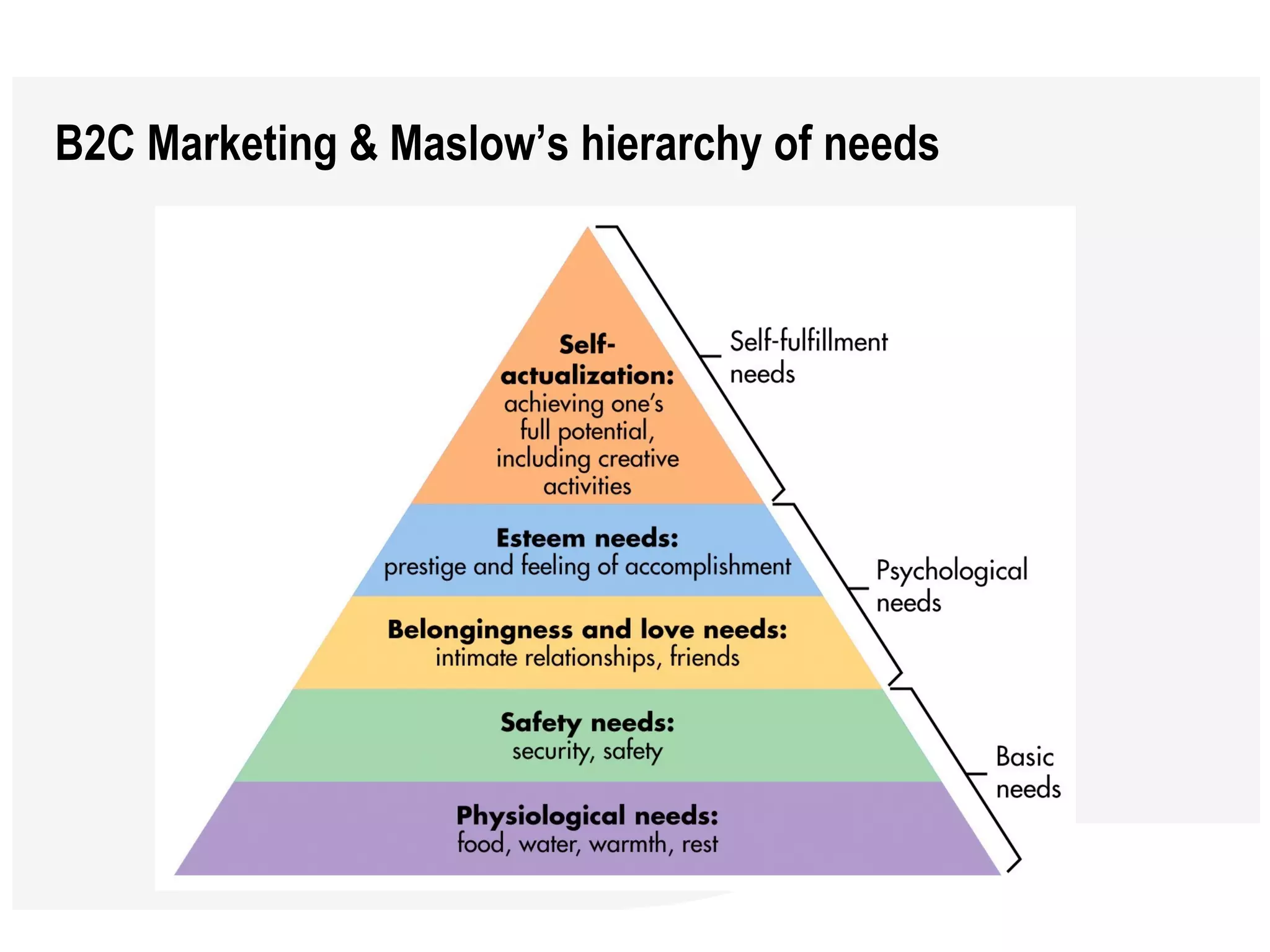
B2C Marketing & Maslow’s hierarchy of needs
B2C psychological multi-layered Buying Behavior Cultural Factors  Social Factors (family, friends, status, etc.)  Personal Factors (age, job, etc.)  Psychological Factors
Business-to-Business Sale  Its all about personal relationships (and power) Its all about strategies Business Life is a game and not a war, so don’t take Sun Tzu & Clausewitz literally! That’s your customer, not you!
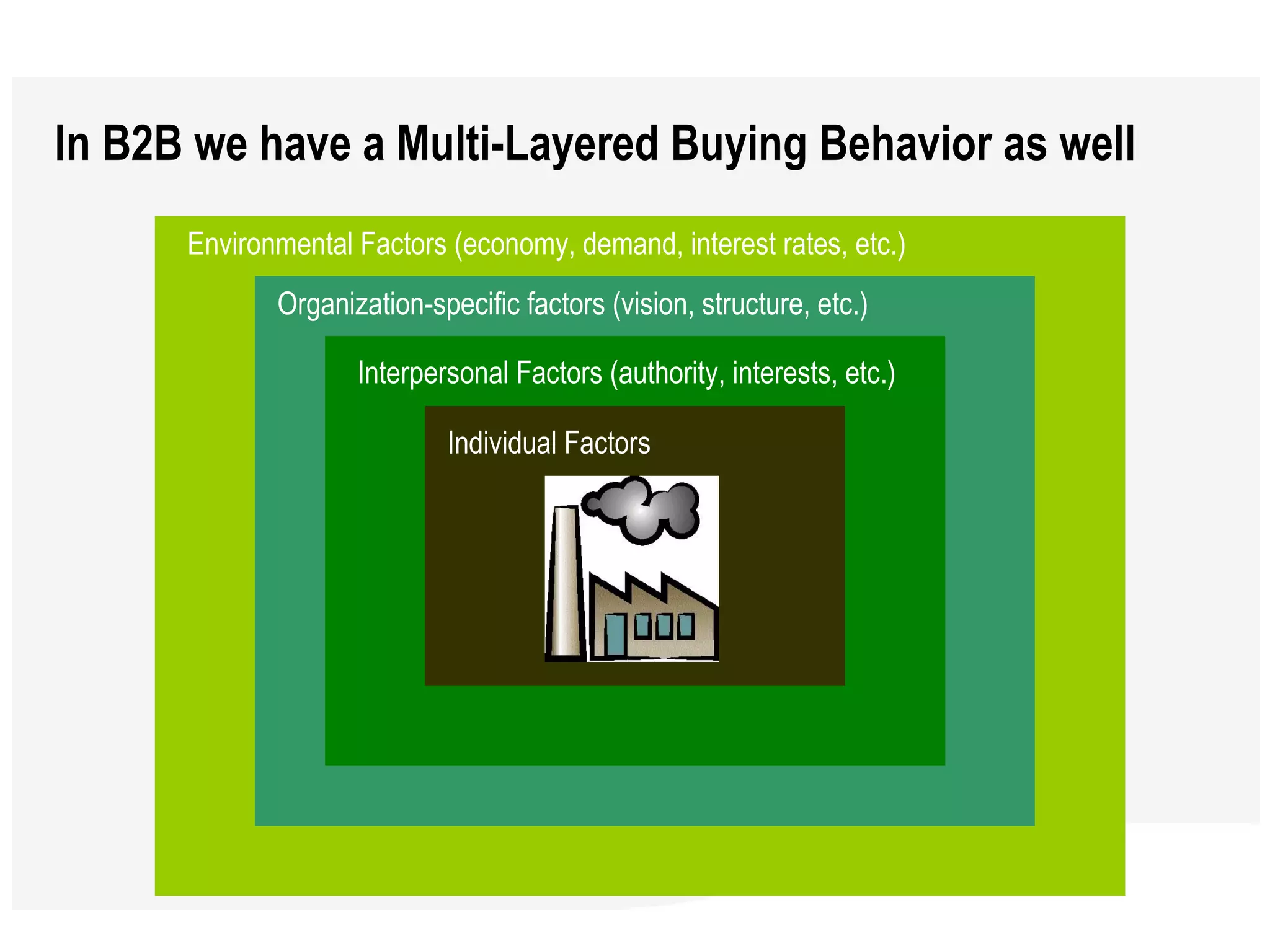
In B2B we have a Multi-Layered Buying Behavior as well Environmental Factors (economy, demand, interest rates, etc.)  Organization-specific factors (vision, structure, etc.) Interpersonal Factors (authority, interests, etc.) Individual Factors
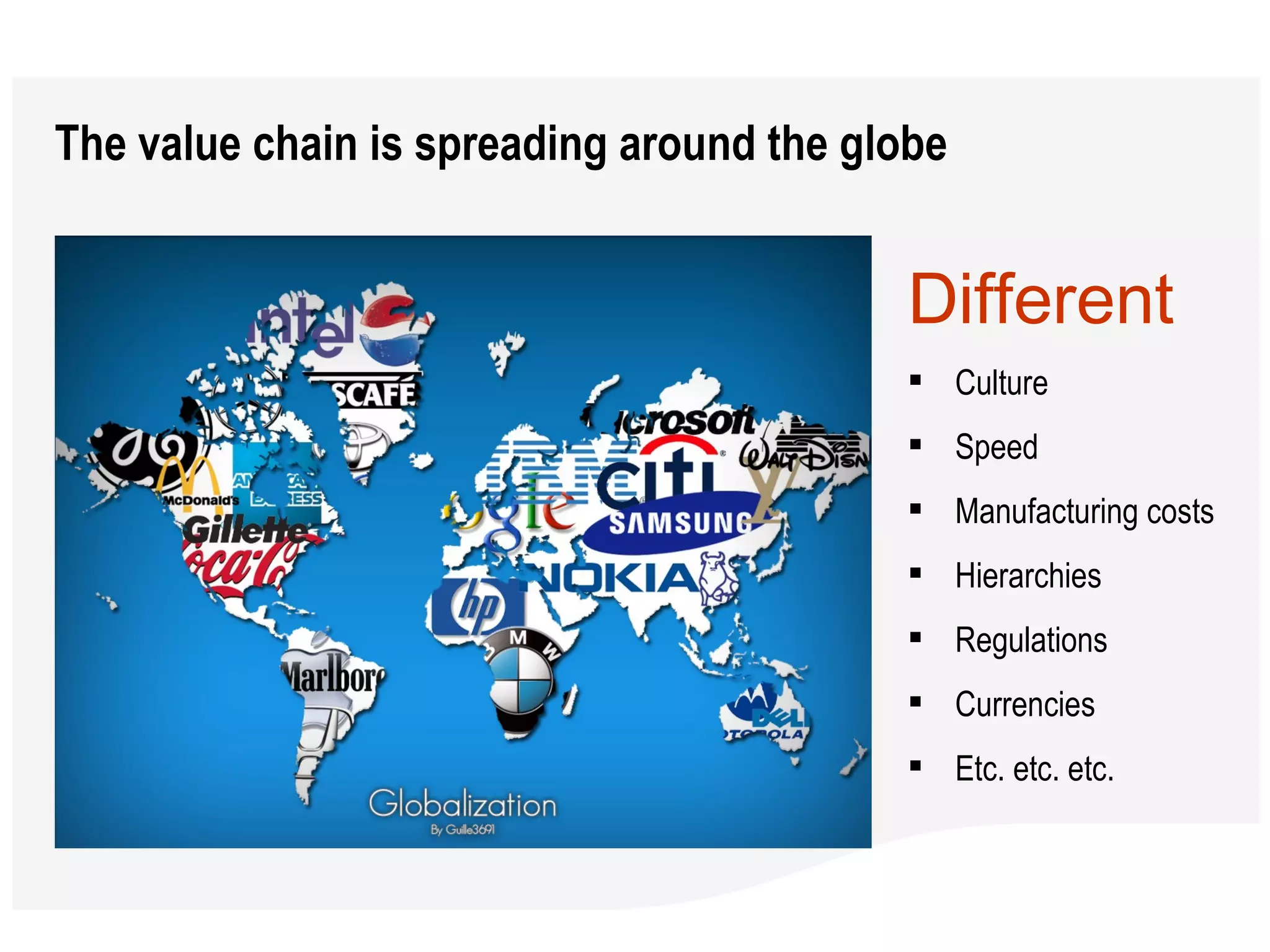
The value chain is spreading around the globe  Different   Culture Speed  Manufacturing costs Hierarchies  Regulations  Currencies  Etc. etc. etc.
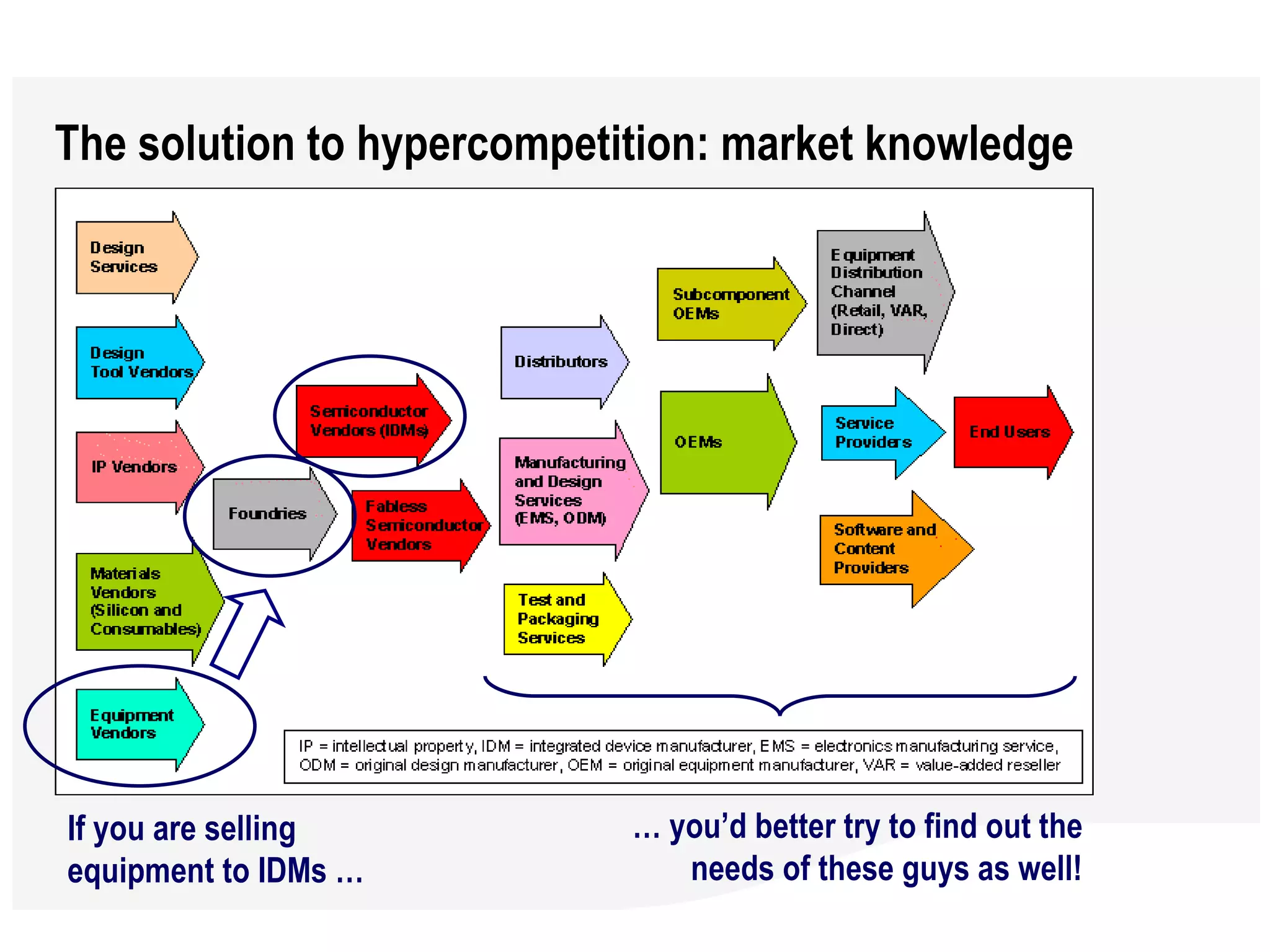
Business in a hypercompetitive market environment Competitive Advantages are of temporary nature only (product life cycles are getting shorter, flexible business strategies) Strike & Counterstrike Actions 4 Arenas according to D’Aveni Cost and Quality (Coke vs. Pepsi) Timing and Know-How (First Mover vs. Follower) Strongholds (UPS vs. FedEx) Deep pockets (big player vs. small player)
The solution to hypercompetition: market knowledge  If you are selling equipment to IDMs … …  you’d better try to find out the needs of these guys as well!
B2B Sales/Marketing Strategies
SAD BUT TRUE … Customers don’t want to see Salespeople anymore! John M. Coe Mc Graw-Hill Book, 2003 Marketing  is the way to make them call you!
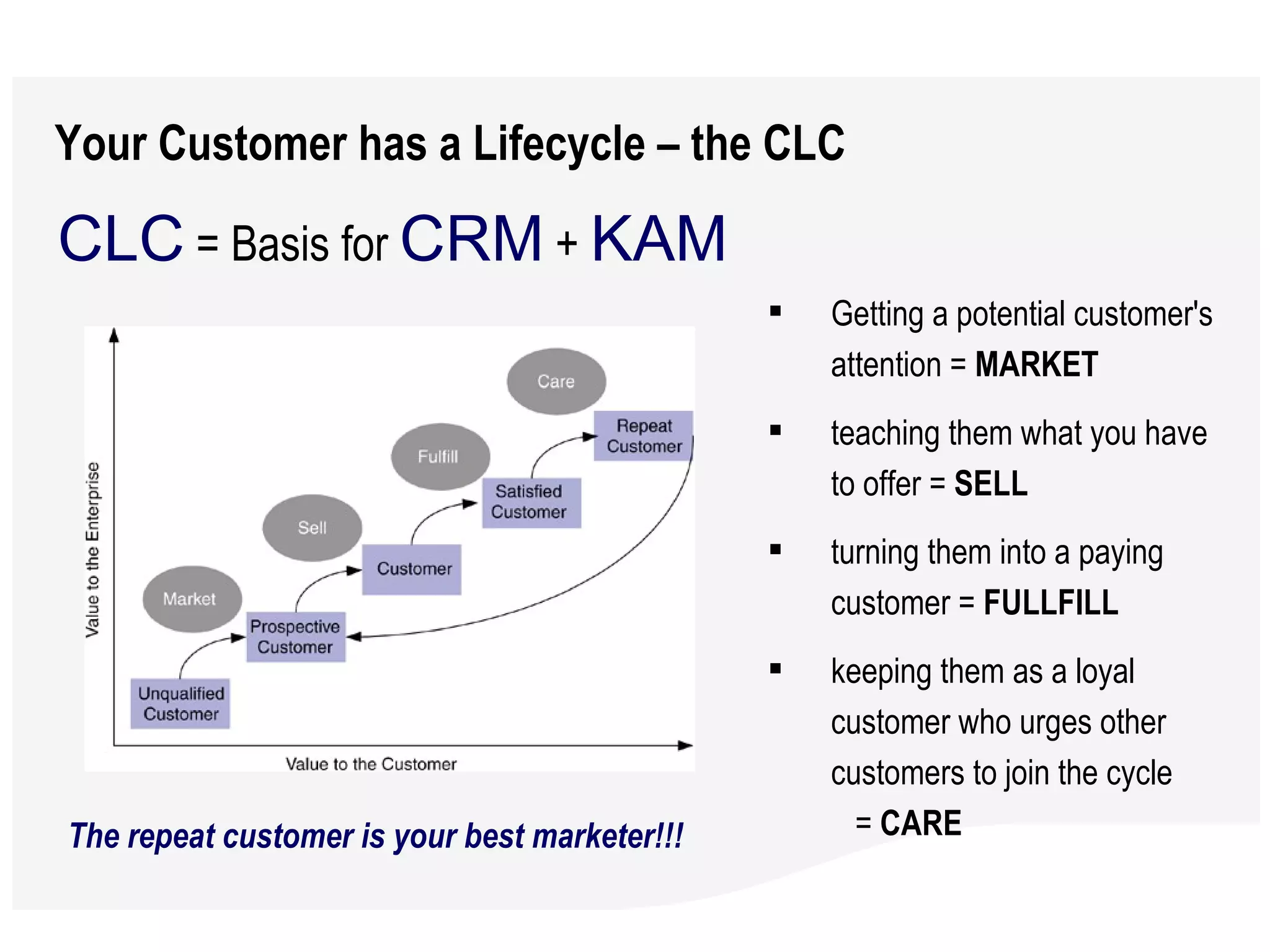
Your Customer has a Lifecycle – the CLC  CLC  = Basis for  CRM  +  KAM Getting a potential customer's attention =  MARKET teaching them what you have to offer =  SELL turning them into a paying customer =  FULLFILL keeping them as a loyal customer who urges other customers to join the cycle  =  CARE   The repeat customer is your best marketer!!!
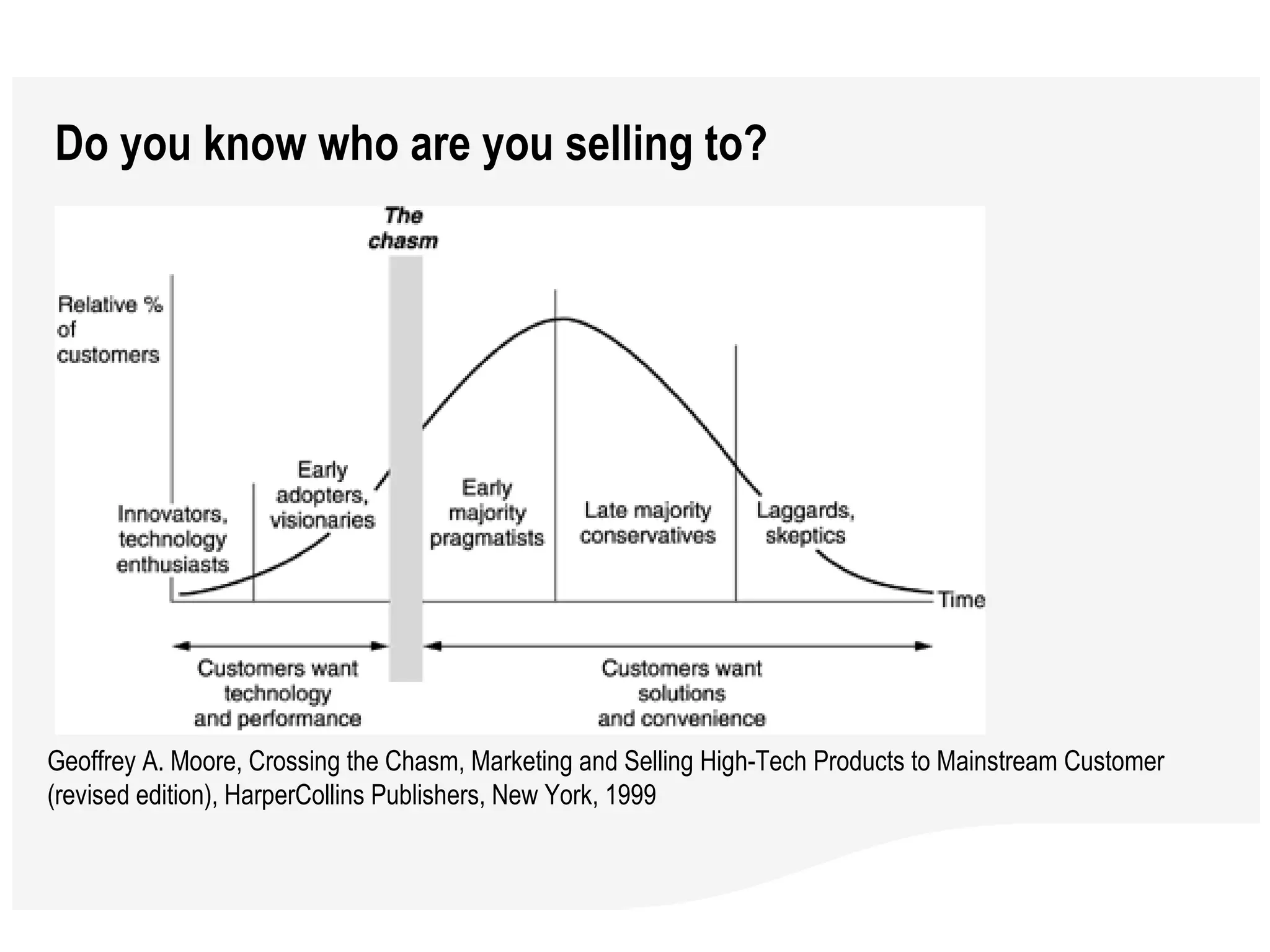
Do you know who are you selling to?  Geoffrey A. Moore, Crossing the Chasm, Marketing and Selling High-Tech Products to Mainstream Customer (revised edition), HarperCollins Publishers, New York, 1999
Strategies to cross cross the chasm  Early Adopters : Driven by a dream – take high risks to achieve a rent (ROI) of high magnitude Achieve leadership in specific niche Assembly Invasion Force by thinking through your customer’s problem Differentiate with your elevator pitch Cross the chasm with direct sales  Early Majority:  they won’t buy from you until you are established & you can’t get established until they buy from you.  REFERENCES PATIENCE
1 out of a 1.000.000.000 sales consulting advises in B2B  Get your value figured out, it is most important to your success  Decide who fits your model, who are your best prospective customers  Understand your strengths, and focus on them  Focus on asset-based thinking rather than deficit-based thinking  Prospect to warm leads and more probable-prospective customers  Grow your alliance network like a big web, and nurture it often  Appreciate existing customers and learn from them  Create systems and tools to track revenues, profits, expenses, and other metrics  Get great at selling - overcome the "selling is bad" mindset  Creatively build products, services, and the business as a whole
From my point of view it comes down to:  Technology Focus Market Focus Customer Focus Core Competence  Differentiate (or die)  (Jack Trout) Customer Value (in max. 2 sentences)  Your  personality Your  skills  Your  attitude
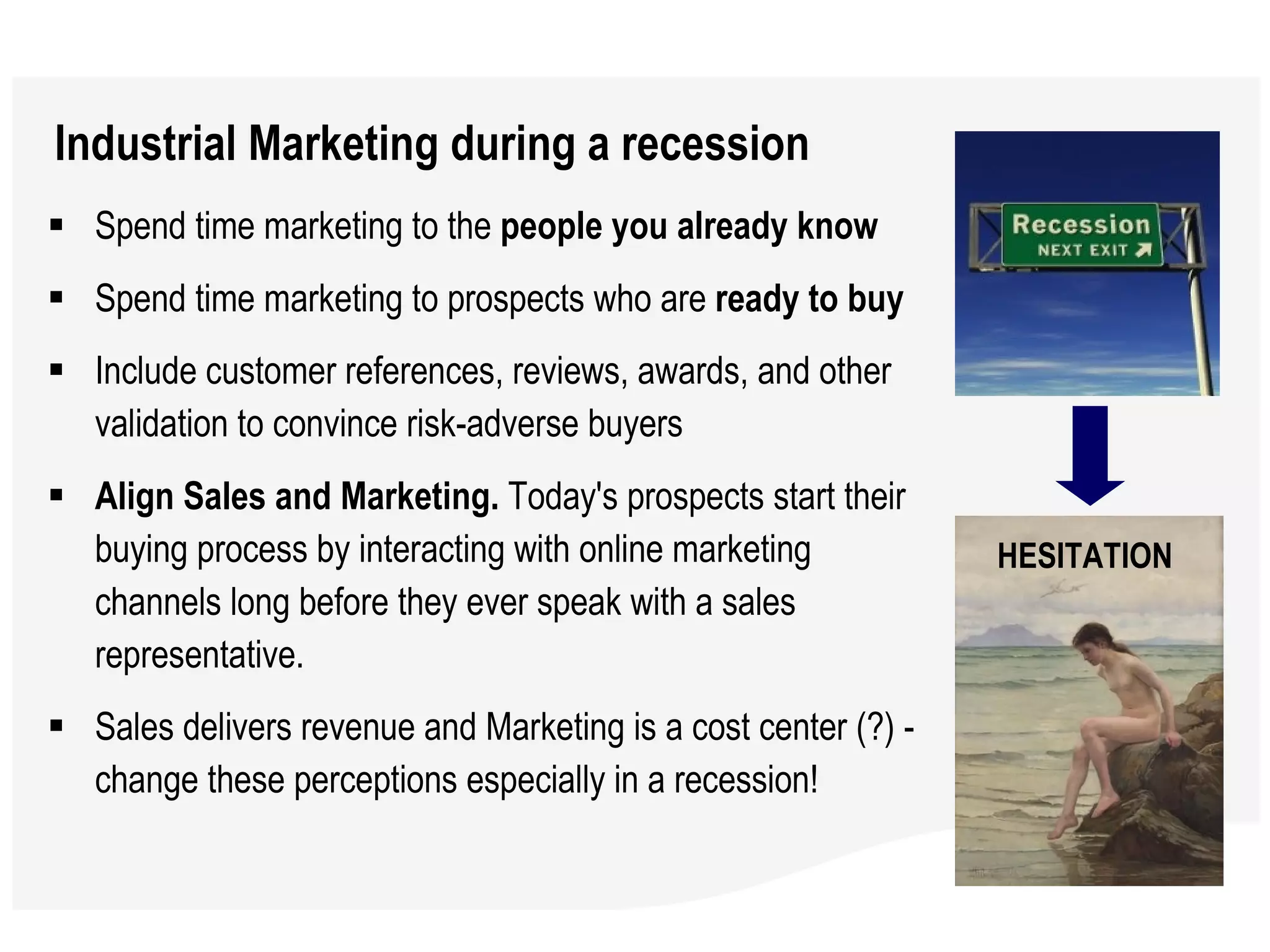
Industrial Marketing during a recession Spend time marketing to the  people you already know Spend time marketing to prospects who are  ready to buy Include customer references, reviews, awards, and other validation to convince risk-adverse buyers Align Sales and Marketing.  Today's prospects start their buying process by interacting with online marketing channels long before they ever speak with a sales representative.  Sales delivers revenue and Marketing is a cost center (?) - change these perceptions especially in a recession! HESITATION
Purchasing Process in the investment goods industry
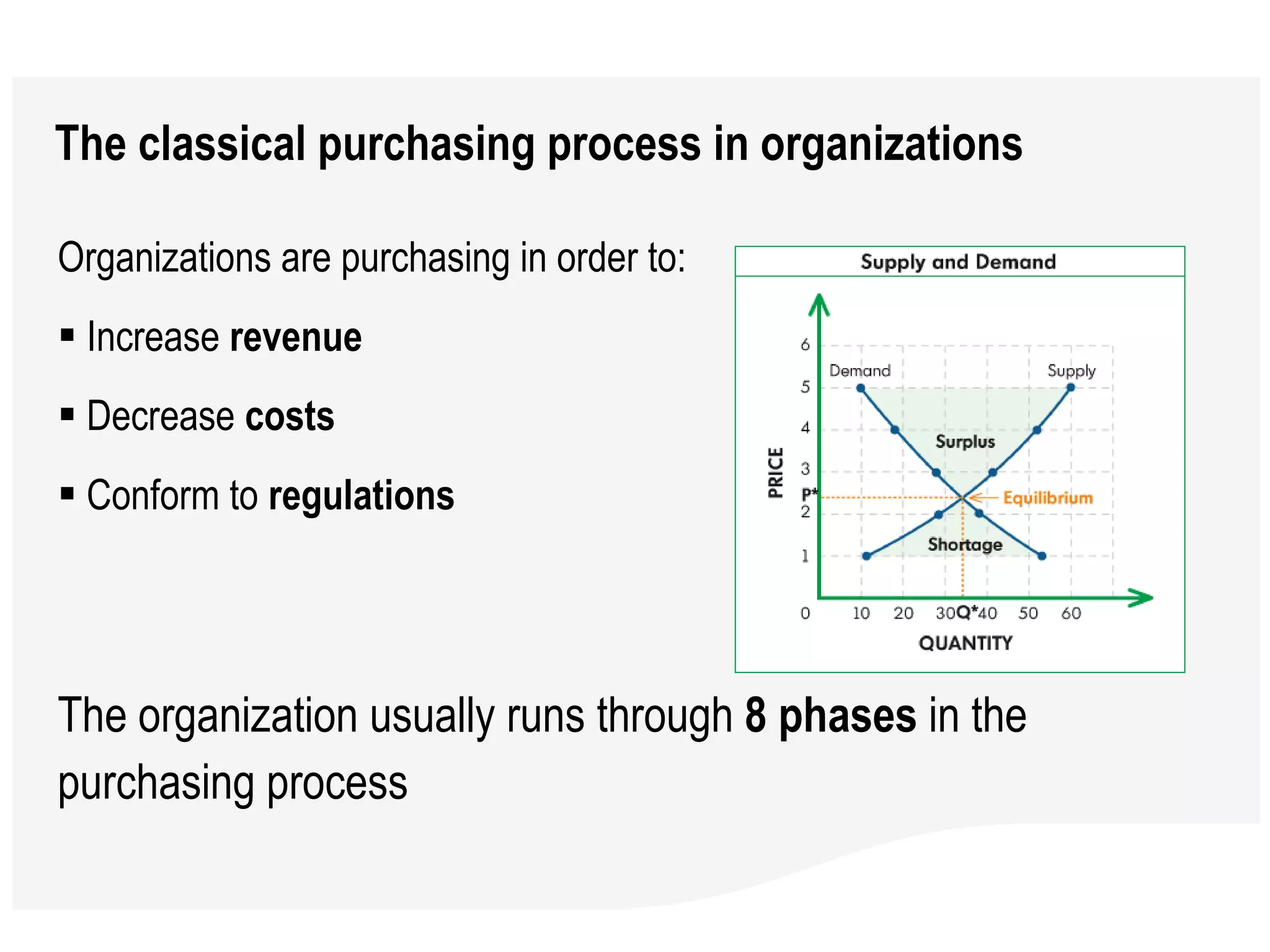
The classical purchasing process in organizations Organizations are purchasing in order to:   Increase  revenue Decrease  costs Conform to  regulations The organization usually runs through  8 phases  in the purchasing process
Addressing each phase in the purchasing process  Noticing Demand  Make them aware of the demand  Describing Demand  Get involved in the description Specifying Product  Make him specify your product Supplier Screening  Tell him what to screen for  Collecting Quotes  Find out his parameters for the deal Selecting Supplier  Again, show competence  Fixing order details Price is only a small portion of the deal  Evaluating Performance   This was a battle – win the war!  COMMUNICATION!!
Short Excursus to Key Account Management USER:  he registered demand & he defines the specification INFLUENCER:  he is a specialist and will be called in for important decisions  PURCHASER:  He negotiates conditions – he is the clerk and not the decision maker DECISION MAKER:  he relies on its specialists and knows nothing about the product. He is the one that judges the value and signs off.  SUPPORTER:  he is your internal pipeline to hidden information.  Varies between initial & repeated purchase! You are selling to a  GROUP  of people!
1. Noticing demand  ->  Make them aware of the demand It’s important to know the capabilities of the potential customer in relation to the one’s of its competitors  Make them aware of the fact that your solution provides a competitive advantage to his product & service  By decreasing his production costs By increasing his output  By improving his quality  By boosting his status in front of his customer / his competition TOTAL COST OF OWNERSHHIP
TCO – Total Cost of Ownership Value-to-Customer: what is the  REAL  value of your product – individual from customer to customer!  The purchasing price is just a small portion – what are the running costs??
2. Describing Demand  ->  Get involved in the description The description of the demand is the basis for the product specification  If you can not fulfill the product specification you are out of the race At this stage it is essential to establish personal contact with the person in charge (for the investment goods industry it is mainly the technician)  There are always more than 1 solution for a given problem , let him describe it the way that your product is addressing it  The description is the main part of the investment proposal that will run through a signature loop within the company
3. Specifying Product  ->  Make him specify your product This is the most horrifying part in the process Your goal is to make him create a  “lock out”   spec, so let him specify items, that can only be addressed by your product  That’s the phase where you have to link the technicians of your customers with your technicians  Give him options
4. Supplier Screening  ->  Tell him what to screen for That’s a done deal if you did your job during specification You know exactly your competition and thus the potential supplier for your customer  Often, there is not just an alternative product available but also an  alternative solution You have to know your potential competition vertically  AND  horizontally
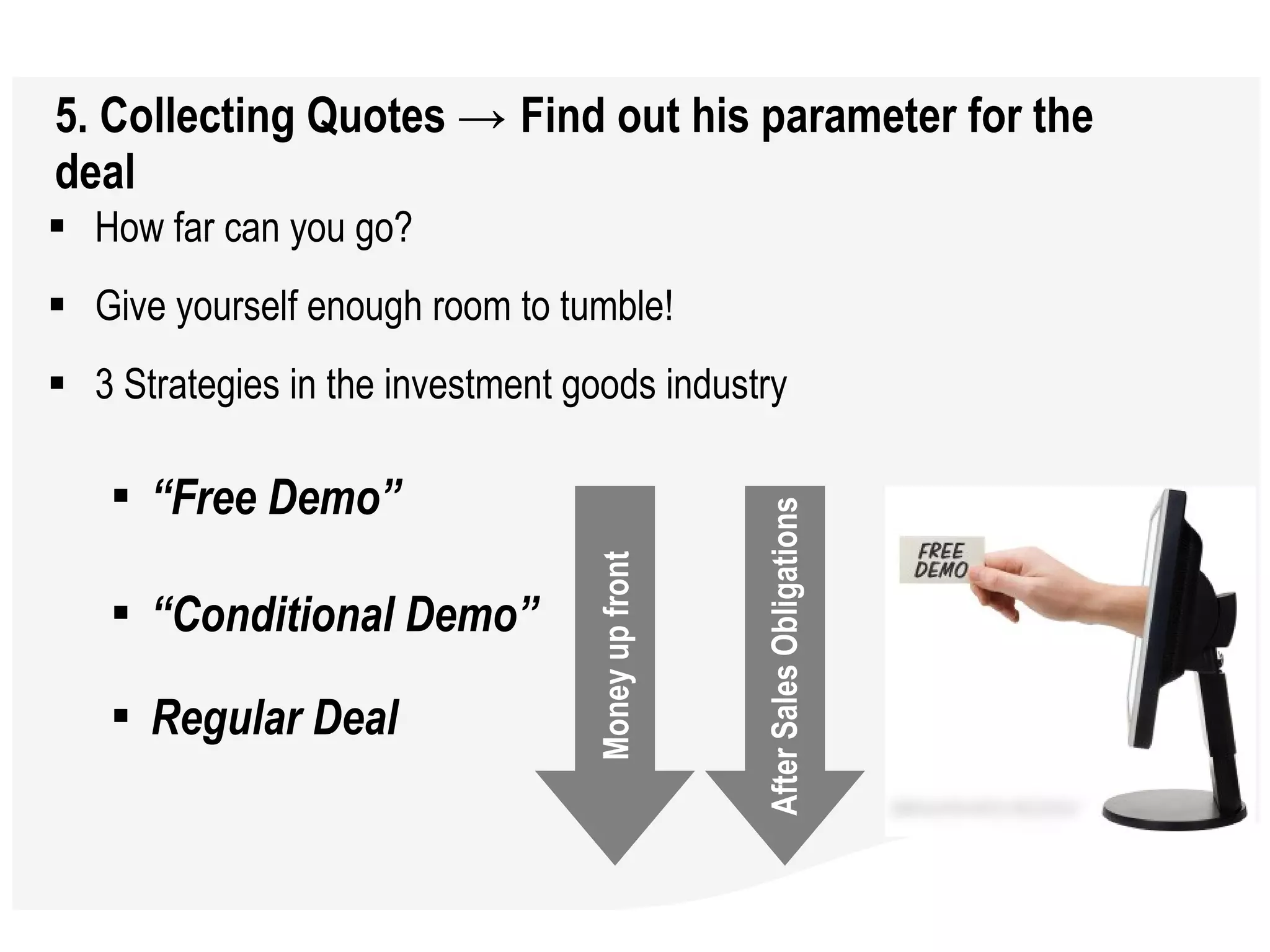
5. Collecting Quotes  ->  Find out his parameter for the deal How far can you go?  Give yourself enough room to tumble!  3 Strategies in the investment goods industry “ Free Demo”  “ Conditional Demo” Regular Deal   Money up front After Sales Obligations
6. Selecting Supplier  ->  next to last move: “Check”  The catwalk – you NEED to be the one that differentiates “ Is there anything else I can help you with?”  Innovation History  Financial Situation, Ownership  References, Sustainability  Problem solving capability, reaction time etc
7. Fixing order details  ->  Price is only a portion of the deal Payment Terms  Delivery Time  Acceptance Criteria  Service Obligations  Framework Agreements possible?  Legal Issues !! Agreement on Testimonial etc.
8. Evaluating Performance   ->  Last move: “Checkmate”  Lasting of competitive advantages
International B2B Strategies
The essence in International Business  The Ricardo Model You can never change a culture!
Affordable Loss and Opportunity Costs International Sales Strategy upfront is not wise – start local! If there is no local market – get a trustworthy international partner!  If there is no good partner Don’t enter the business  Use the internet What is your affordable loss considering: Cultural Risk   Control Risk Exchange Rate Risk Legal Risk Service Risk   Economic Risk   What else could you do instead?
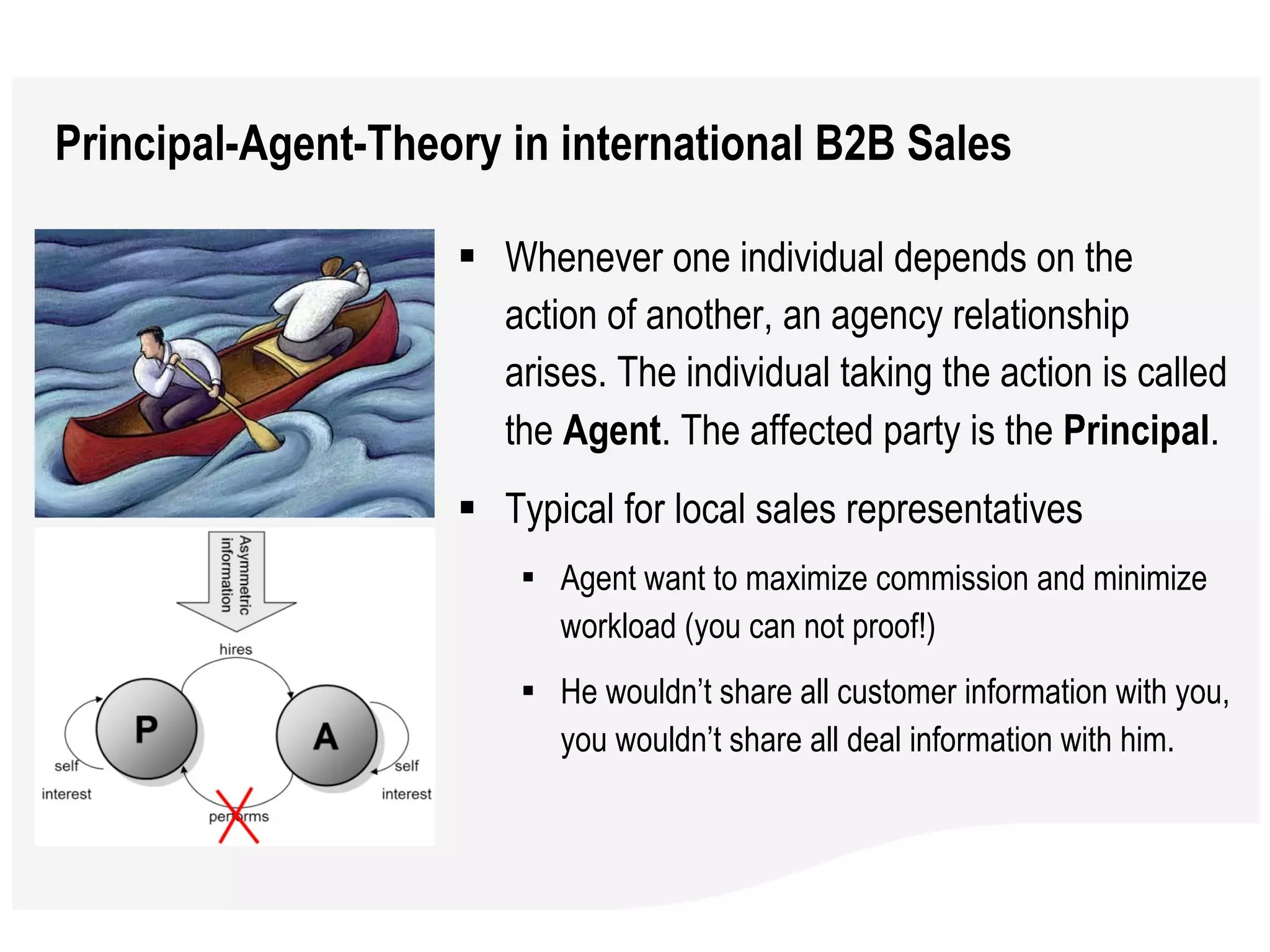
Principal-Agent-Theory in international B2B Sales Whenever one individual depends on the action of another, an agency relationship arises. The individual taking the action is called the  Agent . The affected party is the  Principal .  Typical for local sales representatives Agent want to maximize commission and minimize workload (you can not proof!)  He wouldn’t share all customer information with you, you wouldn’t share all deal information with him.
Enterprise 2.0
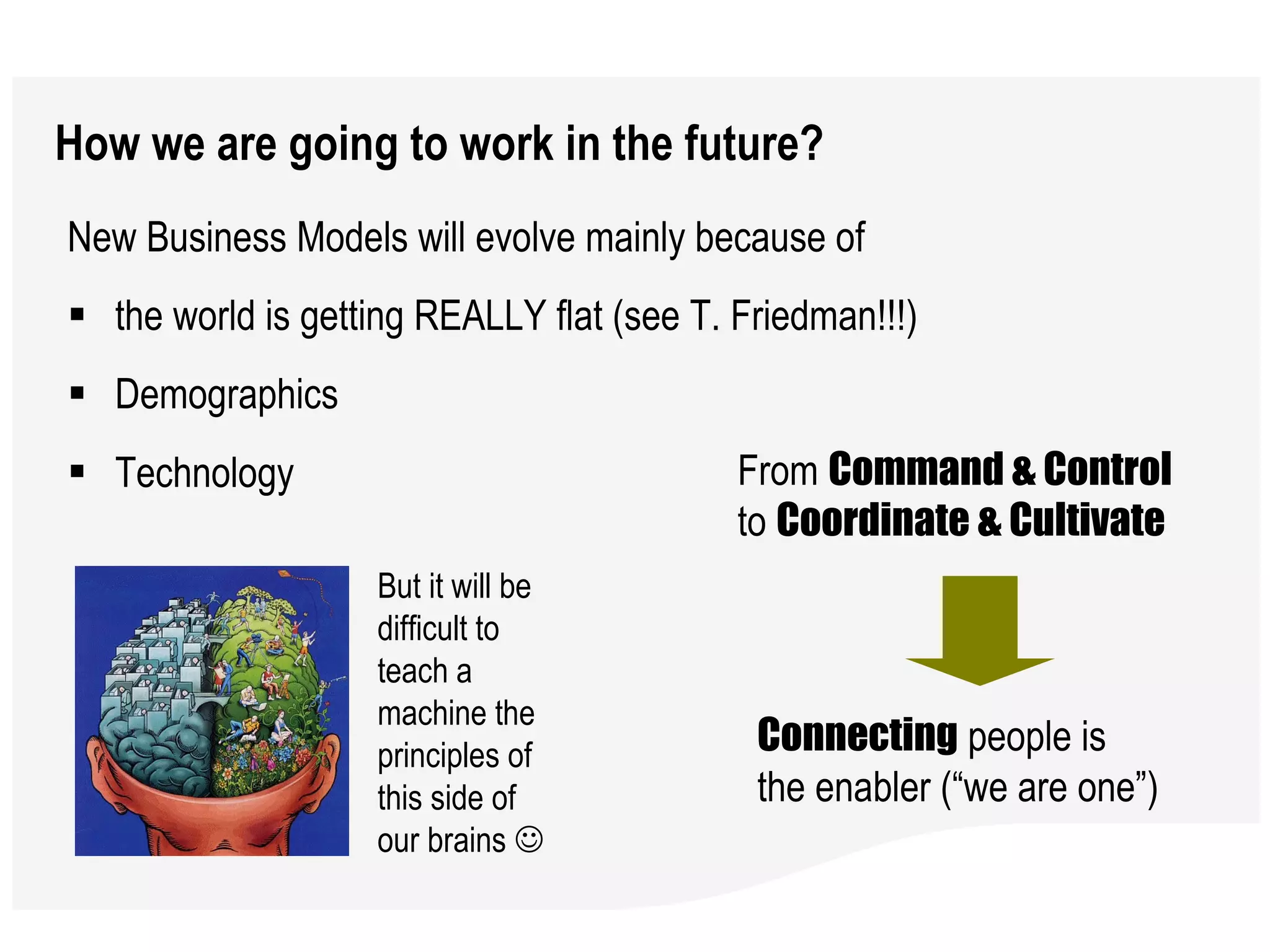
How we are going to work in the future? New Business Models will evolve mainly because of the world is getting REALLY flat (see T. Friedman!!!)  Demographics Technology  From  Command & Control  to  Coordinate & Cultivate Connecting  people is the enabler (“we are one”)  But it will be difficult to teach a machine the principles of this side of our brains  
The main reasons to get involved in Web 2.0 Enterprises will have to implement more and more Web 2.0 Technologies in order to provide the framework for the problem solution competence of the future workforce
Web 2.0 – The participation Web  Web 1.0: Webmaster is administrating web site, users are accessing data Web 2.0:
Catching the long tail for niche segments – a business?  Costs to reach the long tail (the niche segments) in traditional marketing are enormous, because demand in local areas is too small – but it isn’t globally!  Selling less to more, but still – quality is key Democratization of resources (e.g. wikipedia)  Democratization of sales (e.g. amazon, ebay)  Reduction of sourcing costs (e.g. amazon reviews)
Simplification combined with functionalism  Transparent and self-regulating Markets => Quality over Quantity REVIEWS
Personal Experience
Some Notes from my old trousers Speed  is trump !! Learn to be patient, always smile   Don’t get choked about anything  Be  different  but stay credible  The money you have is yours!  Refuse the sale before signing a bad deal Try to think like your customer  Strategic Marketing  is the key to success
Selling 101 in B2B Herwig Kirchberger Mail:  [email_address] Mobile: +43 660 810 2493 How to crack the industrial buyers nowadays

Selling 101 In B2 B

  • 1.
    Selling 101 inB2B How to crack the industrial buyers nowadays Guest Lecture, June 26th 2009 International Buyers Behavior Herwig Kirchberger
  • 2.
    Who is buggingyou from 6:00 – 7:30pm? Herwig Kirchberger 1975 St. Florian Enns Hargelsberg Steyr Wels Graz Dublin Schärding Krems
  • 3.
    B2B Sales andits characteristics B2B Sales/Marketing Strategies Purchasing process in the investment goods industry International B2B Strategies Enterprise 2.0 Personal Experience in international B2B Sales I know a bit about …
  • 4.
    B2B Sales andits characteristics
  • 5.
    Purchase Behavior inB2B So the key is to find out, what your customer is EXACTLY looking for The fact is, that most of the time your customer doesn’t even know! This is a big chance for you! This on the other hand is depending on the market your customer is doing business in B2B Sales = Industrial Marketing Not quite the case for industrial B2B Sales…
  • 6.
    A view significantdifferences between B2B and B2C Customer need to buy in order to stay profitable Purchase is structured and depends on multiple persons Multi-level buying procedure that expands over long period Complex Products / Service Customer is going with his gut feeling (Price can overshoot costs tremendously ) Needs can change rapidly according to trends High Brand Awareness and Importance of Trend Setter Selling at special occasion & place
  • 7.
    B2C Marketing &Maslow’s hierarchy of needs
  • 8.
    B2C psychological multi-layeredBuying Behavior Cultural Factors Social Factors (family, friends, status, etc.) Personal Factors (age, job, etc.) Psychological Factors
  • 9.
    Business-to-Business Sale Its all about personal relationships (and power) Its all about strategies Business Life is a game and not a war, so don’t take Sun Tzu & Clausewitz literally! That’s your customer, not you!
  • 10.
    In B2B wehave a Multi-Layered Buying Behavior as well Environmental Factors (economy, demand, interest rates, etc.) Organization-specific factors (vision, structure, etc.) Interpersonal Factors (authority, interests, etc.) Individual Factors
  • 11.
    The value chainis spreading around the globe Different Culture Speed Manufacturing costs Hierarchies Regulations Currencies Etc. etc. etc.
  • 12.
    Business in ahypercompetitive market environment Competitive Advantages are of temporary nature only (product life cycles are getting shorter, flexible business strategies) Strike & Counterstrike Actions 4 Arenas according to D’Aveni Cost and Quality (Coke vs. Pepsi) Timing and Know-How (First Mover vs. Follower) Strongholds (UPS vs. FedEx) Deep pockets (big player vs. small player)
  • 13.
    The solution tohypercompetition: market knowledge If you are selling equipment to IDMs … … you’d better try to find out the needs of these guys as well!
  • 14.
  • 15.
    SAD BUT TRUE… Customers don’t want to see Salespeople anymore! John M. Coe Mc Graw-Hill Book, 2003 Marketing is the way to make them call you!
  • 16.
    Your Customer hasa Lifecycle – the CLC CLC = Basis for CRM + KAM Getting a potential customer's attention = MARKET teaching them what you have to offer = SELL turning them into a paying customer = FULLFILL keeping them as a loyal customer who urges other customers to join the cycle = CARE The repeat customer is your best marketer!!!
  • 17.
    Do you knowwho are you selling to? Geoffrey A. Moore, Crossing the Chasm, Marketing and Selling High-Tech Products to Mainstream Customer (revised edition), HarperCollins Publishers, New York, 1999
  • 18.
    Strategies to crosscross the chasm Early Adopters : Driven by a dream – take high risks to achieve a rent (ROI) of high magnitude Achieve leadership in specific niche Assembly Invasion Force by thinking through your customer’s problem Differentiate with your elevator pitch Cross the chasm with direct sales Early Majority: they won’t buy from you until you are established & you can’t get established until they buy from you. REFERENCES PATIENCE
  • 19.
    1 out ofa 1.000.000.000 sales consulting advises in B2B Get your value figured out, it is most important to your success Decide who fits your model, who are your best prospective customers Understand your strengths, and focus on them Focus on asset-based thinking rather than deficit-based thinking Prospect to warm leads and more probable-prospective customers Grow your alliance network like a big web, and nurture it often Appreciate existing customers and learn from them Create systems and tools to track revenues, profits, expenses, and other metrics Get great at selling - overcome the "selling is bad" mindset Creatively build products, services, and the business as a whole
  • 20.
    From my pointof view it comes down to: Technology Focus Market Focus Customer Focus Core Competence Differentiate (or die) (Jack Trout) Customer Value (in max. 2 sentences) Your personality Your skills Your attitude
  • 21.
    Industrial Marketing duringa recession Spend time marketing to the people you already know Spend time marketing to prospects who are ready to buy Include customer references, reviews, awards, and other validation to convince risk-adverse buyers Align Sales and Marketing. Today's prospects start their buying process by interacting with online marketing channels long before they ever speak with a sales representative. Sales delivers revenue and Marketing is a cost center (?) - change these perceptions especially in a recession! HESITATION
  • 22.
    Purchasing Process inthe investment goods industry
  • 23.
    The classical purchasingprocess in organizations Organizations are purchasing in order to: Increase revenue Decrease costs Conform to regulations The organization usually runs through 8 phases in the purchasing process
  • 24.
    Addressing each phasein the purchasing process Noticing Demand Make them aware of the demand Describing Demand Get involved in the description Specifying Product Make him specify your product Supplier Screening Tell him what to screen for Collecting Quotes Find out his parameters for the deal Selecting Supplier Again, show competence Fixing order details Price is only a small portion of the deal Evaluating Performance This was a battle – win the war! COMMUNICATION!!
  • 25.
    Short Excursus toKey Account Management USER: he registered demand & he defines the specification INFLUENCER: he is a specialist and will be called in for important decisions PURCHASER: He negotiates conditions – he is the clerk and not the decision maker DECISION MAKER: he relies on its specialists and knows nothing about the product. He is the one that judges the value and signs off. SUPPORTER: he is your internal pipeline to hidden information. Varies between initial & repeated purchase! You are selling to a GROUP of people!
  • 26.
    1. Noticing demand -> Make them aware of the demand It’s important to know the capabilities of the potential customer in relation to the one’s of its competitors Make them aware of the fact that your solution provides a competitive advantage to his product & service By decreasing his production costs By increasing his output By improving his quality By boosting his status in front of his customer / his competition TOTAL COST OF OWNERSHHIP
  • 27.
    TCO – TotalCost of Ownership Value-to-Customer: what is the REAL value of your product – individual from customer to customer! The purchasing price is just a small portion – what are the running costs??
  • 28.
    2. Describing Demand -> Get involved in the description The description of the demand is the basis for the product specification If you can not fulfill the product specification you are out of the race At this stage it is essential to establish personal contact with the person in charge (for the investment goods industry it is mainly the technician) There are always more than 1 solution for a given problem , let him describe it the way that your product is addressing it The description is the main part of the investment proposal that will run through a signature loop within the company
  • 29.
    3. Specifying Product -> Make him specify your product This is the most horrifying part in the process Your goal is to make him create a “lock out” spec, so let him specify items, that can only be addressed by your product That’s the phase where you have to link the technicians of your customers with your technicians Give him options
  • 30.
    4. Supplier Screening -> Tell him what to screen for That’s a done deal if you did your job during specification You know exactly your competition and thus the potential supplier for your customer Often, there is not just an alternative product available but also an alternative solution You have to know your potential competition vertically AND horizontally
  • 31.
    5. Collecting Quotes -> Find out his parameter for the deal How far can you go? Give yourself enough room to tumble! 3 Strategies in the investment goods industry “ Free Demo” “ Conditional Demo” Regular Deal Money up front After Sales Obligations
  • 32.
    6. Selecting Supplier -> next to last move: “Check” The catwalk – you NEED to be the one that differentiates “ Is there anything else I can help you with?” Innovation History Financial Situation, Ownership References, Sustainability Problem solving capability, reaction time etc
  • 33.
    7. Fixing orderdetails -> Price is only a portion of the deal Payment Terms Delivery Time Acceptance Criteria Service Obligations Framework Agreements possible? Legal Issues !! Agreement on Testimonial etc.
  • 34.
    8. Evaluating Performance -> Last move: “Checkmate” Lasting of competitive advantages
  • 35.
  • 36.
    The essence inInternational Business The Ricardo Model You can never change a culture!
  • 37.
    Affordable Loss andOpportunity Costs International Sales Strategy upfront is not wise – start local! If there is no local market – get a trustworthy international partner! If there is no good partner Don’t enter the business Use the internet What is your affordable loss considering: Cultural Risk Control Risk Exchange Rate Risk Legal Risk Service Risk Economic Risk What else could you do instead?
  • 38.
    Principal-Agent-Theory in internationalB2B Sales Whenever one individual depends on the action of another, an agency relationship arises. The individual taking the action is called the Agent . The affected party is the Principal . Typical for local sales representatives Agent want to maximize commission and minimize workload (you can not proof!) He wouldn’t share all customer information with you, you wouldn’t share all deal information with him.
  • 39.
  • 40.
    How we aregoing to work in the future? New Business Models will evolve mainly because of the world is getting REALLY flat (see T. Friedman!!!) Demographics Technology From Command & Control to Coordinate & Cultivate Connecting people is the enabler (“we are one”) But it will be difficult to teach a machine the principles of this side of our brains 
  • 41.
    The main reasonsto get involved in Web 2.0 Enterprises will have to implement more and more Web 2.0 Technologies in order to provide the framework for the problem solution competence of the future workforce
  • 42.
    Web 2.0 –The participation Web Web 1.0: Webmaster is administrating web site, users are accessing data Web 2.0:
  • 43.
    Catching the longtail for niche segments – a business? Costs to reach the long tail (the niche segments) in traditional marketing are enormous, because demand in local areas is too small – but it isn’t globally! Selling less to more, but still – quality is key Democratization of resources (e.g. wikipedia) Democratization of sales (e.g. amazon, ebay) Reduction of sourcing costs (e.g. amazon reviews)
  • 44.
    Simplification combined withfunctionalism Transparent and self-regulating Markets => Quality over Quantity REVIEWS
  • 45.
  • 46.
    Some Notes frommy old trousers Speed is trump !! Learn to be patient, always smile  Don’t get choked about anything Be different but stay credible The money you have is yours! Refuse the sale before signing a bad deal Try to think like your customer Strategic Marketing is the key to success
  • 47.
    Selling 101 inB2B Herwig Kirchberger Mail: [email_address] Mobile: +43 660 810 2493 How to crack the industrial buyers nowadays