Sales Management
Selling Process
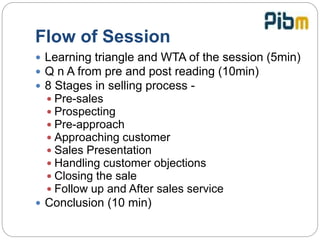
Flow of Session
 Learning triangle and WTA of the session (5min)
 Q n A from pre and post reading (10min)
 8 Stages in selling process -
 Pre-sales
 Prospecting
 Pre-approach
 Approaching customer
 Sales Presentation
 Handling customer objections
 Closing the sale
 Follow up and After sales service
 Conclusion (10 min)
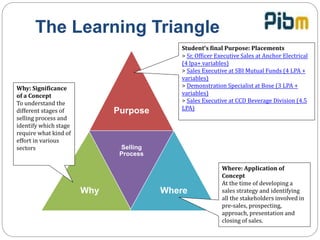
The Learning Triangle
Purpose
Why
Selling
Process
Where
Why: Significance
of a Concept
To understand the
different stages of
selling process and
identify which stage
require what kind of
effort in various
sectors
Student’s final Purpose: Placements
> Sr. Officer Executive Sales at Anchor Electrical
(4 lpa+ variables)
> Sales Executive at SBI Mutual Funds (4 LPA +
variables)
> Demonstration Specialist at Bose (3 LPA +
variables)
> Sales Executive at CCD Beverage Division (4.5
LPA)
Where: Application of
Concept
At the time of developing a
sales strategy and identifying
all the stakeholders involved in
pre-sales, prospecting,
approach, presentation and
closing of sales.
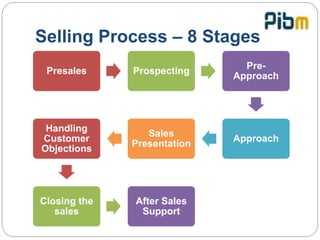
Selling Process – 8 Stages
Presales Prospecting
Pre-
Approach
Approach
Sales
Presentation
Handling
Customer
Objections
Closing the
sales
After Sales
Support
Pre Sales
Company Knowledge
• History, Finances,
Management, size,
policies
• Relevant information
required for sales
process
Product Knowledge
• Features, Benefits,
Styles, Origin and
Price
• Extent of product
knowledge sought
and sales training
needed
Competitor’s
Knowledge
• Industry Structure,
Market share,
market behavior and
other policies
• Comparative
information required
for negotiations and
closing
 Presales includes understand the market situation and
customer needs
 Providing market insights to sales team so that sales
process can be tailor made as per the customer
expectations
 It is a research intensive process; also involved
Prospecting
Potential
Prospects
(100)
Qualified
Prospects
(50)
Interviews
(35)
Sale (14)
 Distinguishing PROSPECTS from
SUSPECTS
 Qualifying prospects on the basis of
their buying capacity, financial
transaction capacity, volume of
transaction, special needs, location
preference, future sales, etc.
 Identifying primary and secondary
sources of accounts for new
business also part of Prospecting
 14% conversion rate is considered
as successful prospecting
 MAN – Money, Authority, Need
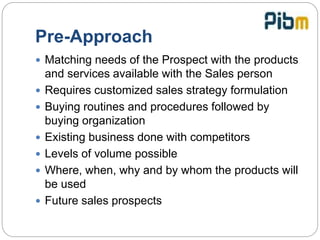
Pre-Approach
 Matching needs of the Prospect with the products
and services available with the Sales person
 Requires customized sales strategy formulation
 Buying routines and procedures followed by
buying organization
 Existing business done with competitors
 Levels of volume possible
 Where, when, why and by whom the products will
be used
 Future sales prospects
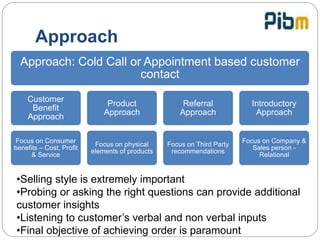
Approach
Approach: Cold Call or Appointment based customer
contact
Customer
Benefit
Approach
Focus on Consumer
benefits – Cost, Profit
& Service
Product
Approach
Focus on physical
elements of products
Referral
Approach
Focus on Third Party
recommendations
Introductory
Approach
Focus on Company &
Sales person -
Relational
•Selling style is extremely important
•Probing or asking the right questions can provide additional
customer insights
•Listening to customer’s verbal and non verbal inputs
•Final objective of achieving order is paramount
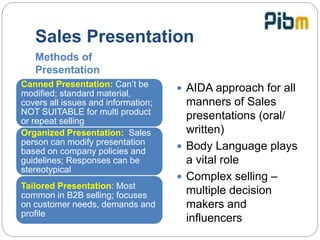
Sales Presentation
Methods of
Presentation
Canned Presentation: Can’t be
modified; standard material,
covers all issues and information;
NOT SUITABLE for multi product
or repeat selling
Organized Presentation: Sales
person can modify presentation
based on company policies and
guidelines; Responses can be
stereotypical
Tailored Presentation: Most
common in B2B selling; focuses
on customer needs, demands and
profile
 AIDA approach for all
manners of Sales
presentations (oral/
written)
 Body Language plays
a vital role
 Complex selling –
multiple decision
makers and
influencers
Handling customer objections
Types of objections
Objection Handling
methods
 Lack of MAN –
Denial/Alibi
 Blaming or
Justification
 Minimizing or
Derogation
 No choice or
helplessness
 Yes….but
 Boomerang – Basing the
pitch on objections
 Compensating objections
with superior features/
benefits
 Denial – Indirect and
Direct
 Another angle method
 Comparison method
 Price objections:
Breaking down price into
lower units; Low price
alternatives, postponing,
comparing, Sharing costs,
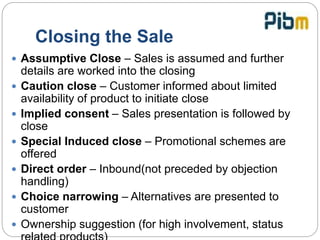
Closing the Sale
 Assumptive Close – Sales is assumed and further
details are worked into the closing
 Caution close – Customer informed about limited
availability of product to initiate close
 Implied consent – Sales presentation is followed by
close
 Special Induced close – Promotional schemes are
offered
 Direct order – Inbound(not preceded by objection
handling)
 Choice narrowing – Alternatives are presented to
customer
 Ownership suggestion (for high involvement, status
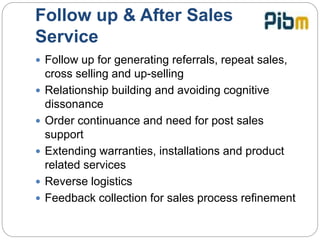
Follow up & After Sales
Service
 Follow up for generating referrals, repeat sales,
cross selling and up-selling
 Relationship building and avoiding cognitive
dissonance
 Order continuance and need for post sales
support
 Extending warranties, installations and product
related services
 Reverse logistics
 Feedback collection for sales process refinement
Conclusion
 Sales process entails understanding customer
needs, mapping products to customer
demands, resolving queries, closing sales and
providing after sales support
 Sales process varies in B2B, B2C and Retail
context
 Sales process varies from sector to sector
 Different stages of sales process can be
executed by the same member of the sales
team or by different members of sales team

selling_process

  • 1.
  • 2.
    Flow of Session Learning triangle and WTA of the session (5min)  Q n A from pre and post reading (10min)  8 Stages in selling process -  Pre-sales  Prospecting  Pre-approach  Approaching customer  Sales Presentation  Handling customer objections  Closing the sale  Follow up and After sales service  Conclusion (10 min)
  • 3.
    The Learning Triangle Purpose Why Selling Process Where Why:Significance of a Concept To understand the different stages of selling process and identify which stage require what kind of effort in various sectors Student’s final Purpose: Placements > Sr. Officer Executive Sales at Anchor Electrical (4 lpa+ variables) > Sales Executive at SBI Mutual Funds (4 LPA + variables) > Demonstration Specialist at Bose (3 LPA + variables) > Sales Executive at CCD Beverage Division (4.5 LPA) Where: Application of Concept At the time of developing a sales strategy and identifying all the stakeholders involved in pre-sales, prospecting, approach, presentation and closing of sales.
  • 4.
    Selling Process –8 Stages Presales Prospecting Pre- Approach Approach Sales Presentation Handling Customer Objections Closing the sales After Sales Support
  • 5.
    Pre Sales Company Knowledge •History, Finances, Management, size, policies • Relevant information required for sales process Product Knowledge • Features, Benefits, Styles, Origin and Price • Extent of product knowledge sought and sales training needed Competitor’s Knowledge • Industry Structure, Market share, market behavior and other policies • Comparative information required for negotiations and closing  Presales includes understand the market situation and customer needs  Providing market insights to sales team so that sales process can be tailor made as per the customer expectations  It is a research intensive process; also involved
  • 6.
    Prospecting Potential Prospects (100) Qualified Prospects (50) Interviews (35) Sale (14)  DistinguishingPROSPECTS from SUSPECTS  Qualifying prospects on the basis of their buying capacity, financial transaction capacity, volume of transaction, special needs, location preference, future sales, etc.  Identifying primary and secondary sources of accounts for new business also part of Prospecting  14% conversion rate is considered as successful prospecting  MAN – Money, Authority, Need
  • 7.
    Pre-Approach  Matching needsof the Prospect with the products and services available with the Sales person  Requires customized sales strategy formulation  Buying routines and procedures followed by buying organization  Existing business done with competitors  Levels of volume possible  Where, when, why and by whom the products will be used  Future sales prospects
  • 8.
    Approach Approach: Cold Callor Appointment based customer contact Customer Benefit Approach Focus on Consumer benefits – Cost, Profit & Service Product Approach Focus on physical elements of products Referral Approach Focus on Third Party recommendations Introductory Approach Focus on Company & Sales person - Relational •Selling style is extremely important •Probing or asking the right questions can provide additional customer insights •Listening to customer’s verbal and non verbal inputs •Final objective of achieving order is paramount
  • 9.
    Sales Presentation Methods of Presentation CannedPresentation: Can’t be modified; standard material, covers all issues and information; NOT SUITABLE for multi product or repeat selling Organized Presentation: Sales person can modify presentation based on company policies and guidelines; Responses can be stereotypical Tailored Presentation: Most common in B2B selling; focuses on customer needs, demands and profile  AIDA approach for all manners of Sales presentations (oral/ written)  Body Language plays a vital role  Complex selling – multiple decision makers and influencers
  • 10.
    Handling customer objections Typesof objections Objection Handling methods  Lack of MAN – Denial/Alibi  Blaming or Justification  Minimizing or Derogation  No choice or helplessness  Yes….but  Boomerang – Basing the pitch on objections  Compensating objections with superior features/ benefits  Denial – Indirect and Direct  Another angle method  Comparison method  Price objections: Breaking down price into lower units; Low price alternatives, postponing, comparing, Sharing costs,
  • 11.
    Closing the Sale Assumptive Close – Sales is assumed and further details are worked into the closing  Caution close – Customer informed about limited availability of product to initiate close  Implied consent – Sales presentation is followed by close  Special Induced close – Promotional schemes are offered  Direct order – Inbound(not preceded by objection handling)  Choice narrowing – Alternatives are presented to customer  Ownership suggestion (for high involvement, status
  • 12.
    Follow up &After Sales Service  Follow up for generating referrals, repeat sales, cross selling and up-selling  Relationship building and avoiding cognitive dissonance  Order continuance and need for post sales support  Extending warranties, installations and product related services  Reverse logistics  Feedback collection for sales process refinement
  • 13.
    Conclusion  Sales processentails understanding customer needs, mapping products to customer demands, resolving queries, closing sales and providing after sales support  Sales process varies in B2B, B2C and Retail context  Sales process varies from sector to sector  Different stages of sales process can be executed by the same member of the sales team or by different members of sales team