PERSONAL
DEVELOPMEN
T
WEEK 1
Knowing and
understanding
oneself during middle and
late adolescence.
WHAT IS PERSONAL
DEVELOPMENT?
Personal Development is one's conscious choice to
improve their lives to be a better person and grow as
individuals.
It allows people to evaluate their skills and qualities,
think about their goals, and set them to fulfill and
maximize their full potential as individuals.
WHY IS
PERSONAL
DEVELOPMENT
IMPORTANT?
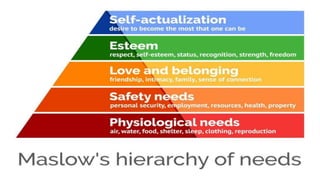
Maslow (1970) suggested that
all individuals have an in-
built need for personal
development, and this is
through the process called
RULES FOR
PERSONAL
DEVELOPMENT
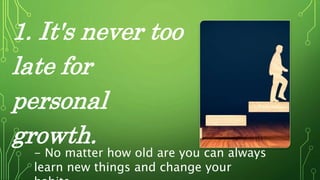
1. It's never too
late for
personal
growth.
- No matter how old are you can always
learn new things and change your
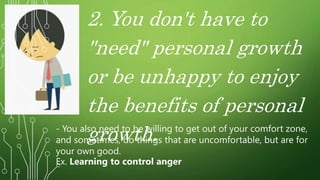
2. You don't have to
"need" personal growth
or be unhappy to enjoy
the benefits of personal
growth.
- You also need to be willing to get out of your comfort zone,
and sometimes, do things that are uncomfortable, but are for
your own good.
Ex. Learning to control anger
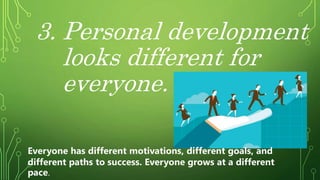
3. Personal development
looks different for
everyone.
Everyone has different motivations, different goals, and
different paths to success. Everyone grows at a different
pace.
4. Not all information out
there is created equal -
Just because one thing
didn't work out as planned
or you failed doesn't mean
5. Personal development
takes time it also takes
some work, effort, and
discomfort.
6. Personal growth
doesn't mean drastic
changes or becoming a
totally different person.
- It is a journey of self-discovery that helps you to
identify your strengths and weaknesses, and work on
them to become the best version of yourself.
7. Consistency is the
key
8. You don't have to get it
right the first time (in fact,
it's likely you won't, and
that's okay)
- It’s okay to make mistakes and learn from them. In fact,
making mistakes is a natural part of the learning process.
- making mistakes can actually help us learn better and
retain information longer . So don’t be afraid to make
mistakes and keep trying!
IMPORTANT
STEPS TO TAKE
IN YOUR
PERSONAL
GROWTH
JOURNEY
SELF-ASSESS
 There are instances where
other people know us better in
some aspects than we know
ourselves. Everyone has their
own blind spots.
OPEN YOUR MIND, BE CURIOUS,
AND START LEARNING.
There is no need to change the
way we live; we just have to
change our approach towards
life.
ACCEPT EVERYTHING THAT IS.
Acceptance creates a connection
between what is and what can be.
Without acceptance, change and growth
within cannot happen.
WELCOME, CHANGE.
Change is important to
personal growth.
Personal growth is just
positive change.
BE REALISTIC.
one start tearing themselves
apart by focusing on their flaws
and everything they want to
change in their life.
LEARN TO LET GO
Bringing new things into your
life is not the only way to grow as
a person. It is also about saying
goodbye to things and people.
LIVE WITH PURPOSE AND INTENTION
(DELIBERATE PRACTICE)
One must plan and act
towards what they aim to
achieve rather than hoping
and wishing for it to happen.
For example, someone who’s been divorced a few times reconnects with
an old flame may say something like, “I like him. I really hope it works
out this time around.”
SELF-DEVELOPMENT
taking steps to be
better for yourself,
such as by learning
new skills or
overcoming bad
habits.
An example of self-
development is taking
courses at the university to
learn new skills and
interesting things.
KNOWING ONESELF
Imagine yourself looking at
the mirror. What do you see?
Do you see your ideal self? Or
your actual self? Is it the self
that you aspire to be?
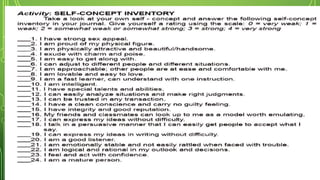
SELF-CONCEPT
This refers to the awareness of
self. Self-concept is divided into
two broad categories, namely, the
ideal self and the actual self.
1. IDEAL SELF
the version of yourself
that you wish to be.
2. ACTUAL SELF
The actual self is who we
actually are. It is how we think,
how we feel, look, and act.
SELF-KNOWLEDGE
is derived from social
interactions that provide
insight into how others react
to you.
Example.
- You choose a career in medicine because
you know it aligns with your core values.
- You decide to end a relationship because
you know your needs are not being met.
SOCIAL ROLES
derived from the results of
social interactions from
infant to adult development.
SKILLS
1. DETERMINATION
This allows you to
completely focus on achieving
your desired goals without
getting distracted
2. SELF-CONFIDENCE
•In order to develop self-confidence, one
needs to learn about themselves, their
capabilities, have a positive attitude,
and believe that they can achieve
success by doing the right actions and
focusing on the right goals.
3. PERSISTENCE
This refers to how an individual
moves forward in life despite the
obstacles and problems that come
in their way.
3. MANAGING STRESS
It helps combat stress that
arises in daily life from the
environment and other
people.
PROBLEM-SOLVING SKILLS
This allows one to cope with problems
they lack experience in. With this, an
individual’s efficiency is increased as
they are able to learn and adopt new
ways to achieve their goals when
obtaining a new experience.
CREATIVITY
It allows you to find
extraordinary ways to
carry out a specific action
that no one has tried yet.
GENERATING IDEAS
It helps you achieve
goals using new, original,
unconventional ideas.
BUILD ON YOUR
STRENGTHS AND
WORK ON YOUR
WEAKNESSES
THE POWER OF
JOURNAL WRITING:
UNFOLDING YOUR
PERSONAL JOURNEY
IT IS COST-EFFICIENT AND
AVAILABLE
Emotional stress can be dealt with in
many ways, like talking to a friend over a
cup of coffee, eating, traveling, shopping,
painting, and many more, but writing is the
most inexpensive. Notebooks and pens are
easy to find, available, and do not cost so
IT IS PREVENTIVE AND
PROACTIVE
Writing allows you to be self-aware. You
can discover your strengths and
weaknesses when you write. You will know
what your reactions are in different
situations and what better ways to
prevent, avoid, or face your fears.
IT IS CREATIVE AND
PRODUCTIVE
Journal writing expounds your
imagination. You will have a better
perspective on how you view your
problems, different points of view, and
better solutions.
IT IS PERSONAL AND
PRIVATE
Unless you want to share your stories,
you have the choice to keep them to
yourself. Writing is your safe space as
you will not be judged by your writing
style and what you are writing. It is your
method of expressing love to yourself.
THANK YOU
FOR
LISTENING

9e285de7f0bb4912aab48a5bf6311268.pptx

9e285de7f0bb4912aab48a5bf6311268.pptx

  • 1.
  • 2.
    Knowing and understanding oneself duringmiddle and late adolescence.
  • 3.
    WHAT IS PERSONAL DEVELOPMENT? PersonalDevelopment is one's conscious choice to improve their lives to be a better person and grow as individuals. It allows people to evaluate their skills and qualities, think about their goals, and set them to fulfill and maximize their full potential as individuals.
  • 4.
  • 5.
    Maslow (1970) suggestedthat all individuals have an in- built need for personal development, and this is through the process called
  • 7.
  • 8.
    1. It's nevertoo late for personal growth. - No matter how old are you can always learn new things and change your
  • 9.
    2. You don'thave to "need" personal growth or be unhappy to enjoy the benefits of personal growth. - You also need to be willing to get out of your comfort zone, and sometimes, do things that are uncomfortable, but are for your own good. Ex. Learning to control anger
  • 10.
    3. Personal development looksdifferent for everyone. Everyone has different motivations, different goals, and different paths to success. Everyone grows at a different pace.
  • 11.
    4. Not allinformation out there is created equal - Just because one thing didn't work out as planned or you failed doesn't mean
  • 12.
    5. Personal development takestime it also takes some work, effort, and discomfort.
  • 13.
    6. Personal growth doesn'tmean drastic changes or becoming a totally different person. - It is a journey of self-discovery that helps you to identify your strengths and weaknesses, and work on them to become the best version of yourself.
  • 14.
  • 15.
    8. You don'thave to get it right the first time (in fact, it's likely you won't, and that's okay) - It’s okay to make mistakes and learn from them. In fact, making mistakes is a natural part of the learning process. - making mistakes can actually help us learn better and retain information longer . So don’t be afraid to make mistakes and keep trying!
  • 16.
    IMPORTANT STEPS TO TAKE INYOUR PERSONAL GROWTH JOURNEY
  • 17.
    SELF-ASSESS  There areinstances where other people know us better in some aspects than we know ourselves. Everyone has their own blind spots.
  • 18.
    OPEN YOUR MIND,BE CURIOUS, AND START LEARNING. There is no need to change the way we live; we just have to change our approach towards life.
  • 19.
    ACCEPT EVERYTHING THATIS. Acceptance creates a connection between what is and what can be. Without acceptance, change and growth within cannot happen.
  • 20.
    WELCOME, CHANGE. Change isimportant to personal growth. Personal growth is just positive change.
  • 21.
    BE REALISTIC. one starttearing themselves apart by focusing on their flaws and everything they want to change in their life.
  • 22.
    LEARN TO LETGO Bringing new things into your life is not the only way to grow as a person. It is also about saying goodbye to things and people.
  • 23.
    LIVE WITH PURPOSEAND INTENTION (DELIBERATE PRACTICE) One must plan and act towards what they aim to achieve rather than hoping and wishing for it to happen. For example, someone who’s been divorced a few times reconnects with an old flame may say something like, “I like him. I really hope it works out this time around.”
  • 24.
    SELF-DEVELOPMENT taking steps tobe better for yourself, such as by learning new skills or overcoming bad habits. An example of self- development is taking courses at the university to learn new skills and interesting things.
  • 25.
    KNOWING ONESELF Imagine yourselflooking at the mirror. What do you see? Do you see your ideal self? Or your actual self? Is it the self that you aspire to be?
  • 26.
    SELF-CONCEPT This refers tothe awareness of self. Self-concept is divided into two broad categories, namely, the ideal self and the actual self.
  • 27.
    1. IDEAL SELF theversion of yourself that you wish to be.
  • 28.
    2. ACTUAL SELF Theactual self is who we actually are. It is how we think, how we feel, look, and act.
  • 29.
    SELF-KNOWLEDGE is derived fromsocial interactions that provide insight into how others react to you. Example. - You choose a career in medicine because you know it aligns with your core values. - You decide to end a relationship because you know your needs are not being met.
  • 30.
    SOCIAL ROLES derived fromthe results of social interactions from infant to adult development.
  • 31.
  • 32.
    1. DETERMINATION This allowsyou to completely focus on achieving your desired goals without getting distracted
  • 33.
    2. SELF-CONFIDENCE •In orderto develop self-confidence, one needs to learn about themselves, their capabilities, have a positive attitude, and believe that they can achieve success by doing the right actions and focusing on the right goals.
  • 34.
    3. PERSISTENCE This refersto how an individual moves forward in life despite the obstacles and problems that come in their way.
  • 35.
    3. MANAGING STRESS Ithelps combat stress that arises in daily life from the environment and other people.
  • 36.
    PROBLEM-SOLVING SKILLS This allowsone to cope with problems they lack experience in. With this, an individual’s efficiency is increased as they are able to learn and adopt new ways to achieve their goals when obtaining a new experience.
  • 37.
    CREATIVITY It allows youto find extraordinary ways to carry out a specific action that no one has tried yet.
  • 38.
    GENERATING IDEAS It helpsyou achieve goals using new, original, unconventional ideas.
  • 39.
    BUILD ON YOUR STRENGTHSAND WORK ON YOUR WEAKNESSES
  • 40.
    THE POWER OF JOURNALWRITING: UNFOLDING YOUR PERSONAL JOURNEY
  • 41.
    IT IS COST-EFFICIENTAND AVAILABLE Emotional stress can be dealt with in many ways, like talking to a friend over a cup of coffee, eating, traveling, shopping, painting, and many more, but writing is the most inexpensive. Notebooks and pens are easy to find, available, and do not cost so
  • 42.
    IT IS PREVENTIVEAND PROACTIVE Writing allows you to be self-aware. You can discover your strengths and weaknesses when you write. You will know what your reactions are in different situations and what better ways to prevent, avoid, or face your fears.
  • 43.
    IT IS CREATIVEAND PRODUCTIVE Journal writing expounds your imagination. You will have a better perspective on how you view your problems, different points of view, and better solutions.
  • 44.
    IT IS PERSONALAND PRIVATE Unless you want to share your stories, you have the choice to keep them to yourself. Writing is your safe space as you will not be judged by your writing style and what you are writing. It is your method of expressing love to yourself.
  • 45.