Self-healing concrete Presented by:-
•Muhammad Hassaan Sajid (17-CE-83)
•Muhammad Uzair Khan (17-CE-107)
•Salman Waseem Butt (17-CE-127)
Contents
• Introduction
• Bacteria Subtilis
• Preparation of Bacterial Culture
• Working Process
• Advantages & Disadvantages
• Applications
• Cost comparison
• SEM Analysis
• Conclusion
• IntroductIon
Formation of cracks in concrete is a common
phenomenon that allows water and many
chemical to seep inside, leading to decrease
in durability & progressive drop in strenght.
• Bio-concrete is self healing, using Bacteria
at the time of mixing.
• The bacteria to be added to concrete is
“Bacillus subtilis”.
• The precursor added that is added to
concrete for the activation of bacteria is
“Calcium lactate.
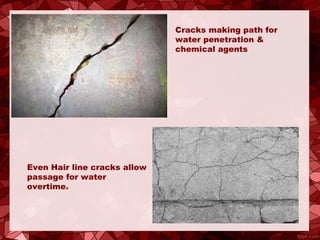
Cracks making path for
water penetration &
chemical agents
Even Hair line cracks allow
passage for water
overtime.
Dawn of a New age in Engineering
• BacterIa SuBtIlIS
There are many families in Bacterial
population, but why choose Subtilis? The
reason is because;
• It can adjust to alkaline conditions of
concrete for the production of Calcium
carbonate.
• It has the ability to form spores in
unfavorable conditions, which protect it
against mechanical pressures & alkaline
environment.
• It can withstand high pressure &
consumes surplus oxygen, thus
preventing steel corrosion.
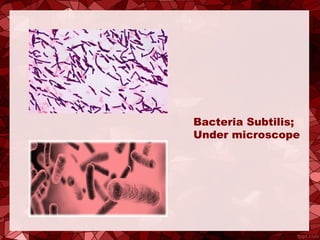
Bacteria Subtilis;
Under microscope
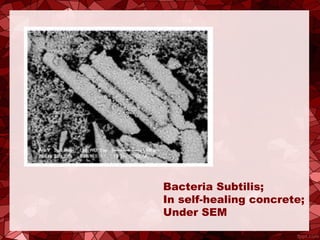
Bacteria Subtilis;
In self-healing concrete;
Under SEM
• PreParation of Bacterial culture
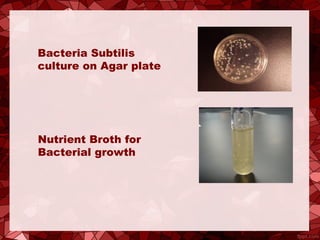
• Bacterial culture is casted on Agar plate.
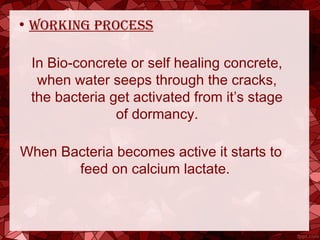
• For further growth, a nutrient broth
(NaCl,Peptone, yeast extract) is made.
• The broth is added to distilled water in a
conical flask (200ml broth prepped in 500ml
flask).
• Then a single colony of bacteria is added
to the nutrient broth from the agar plate.
• It is set to auto cultivate at 1210
C for 15
minutes.
• Then it is placed in incubator at 370
C for
24 hours.
• For Use it is placed in Refrigerator at 40
C.
Bacteria Subtilis
culture on Agar plate
Nutrient Broth for
Bacterial growth
• Working Process
In Bio-concrete or self healing concrete,
when water seeps through the cracks,
the bacteria get activated from it’s stage
of dormancy.
When Bacteria becomes active it starts to
feed on calcium lactate.
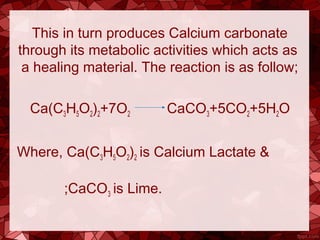
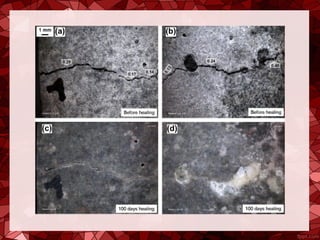
This in turn produces Calcium carbonate
through its metabolic activities which acts as
a healing material. The reaction is as follow;
Ca(C3H5O2)2+7O2 CaCO3+5CO2+5H2O
Where, Ca(C3H5O2)2 is Calcium Lactate &
;CaCO3 is Lime.
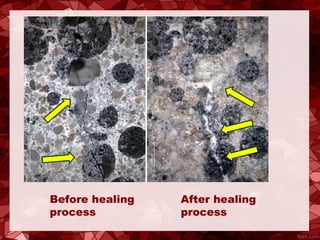
Before healing
process
After healing
process
• advantages & disadvantages
The advantages of Self healing concrete are as
follow:
• Improvement in compressive strength.
• Reduction in permeability.
• Reduction in corrosion of steel.
• Increases the service life of structure than
expected life.
•Bacteria consumes all the surplus oxygen which
eliminates any chance of its reaction with steel.
•It helps in reduced maintenance & repair costs of
RCC structures.
•It can be used where there is no or very little
access for repair & maintenance of the structure.
The Disadvantages of Self healing concrete are;
•Bio-concrete’s prep require Bacteria & calcium
lactate.
•Preparation of calcium lactate from milk is costly.
•Self- healing concrete costs double as compared
to the conventional concrete.
• applications
Self-healing concrete finds its use in ;
• Construction of underground retainers for
hazardous waste material.
• Construction of building in seismic zones & high
rise structures.
• Water retaining structures.
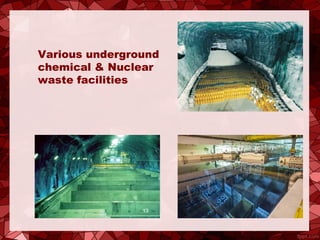
Various underground
chemical & Nuclear
waste facilities
• cost comparison
The cost of bio-concrete is about double as that of
conventional concrete, which is presently about
Rs. 9500/m3
for 1:1.5:3 while bio-concrete costs
about Rs 17500.
It would only viable for certain structures where the
cost of structures is much higher because of being
in higher quality. e.g. heavy marine & off-shore
structures where Factor of safety & Durability are
the governing factors.
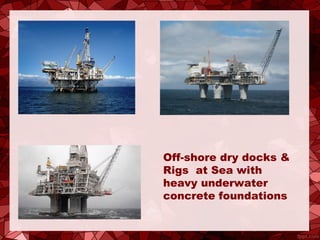
Off-shore dry docks &
Rigs at Sea with
heavy underwater
concrete foundations
Example:-
In United kingdom it is estimated that £40
billion are spent each year on structural
maintenance & most of these are concrete
structures.
By using Self-healing concrete this amount
can be reduced dramatically & save a lot of
expenses, time & man power.
• sem analysis
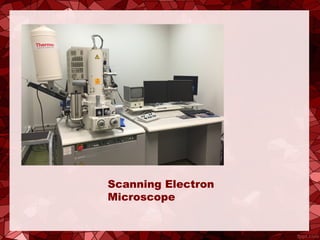
The Scanning Electron Microscope (SEM)
is one of the most versatile instruments
available for the analysis of microstructural
characteristics of solid objects.
The primary reason for SEM’s usefulness is
the high resolution that can be obtained
when bulky objects are examined.
Scanning Electron
Microscope
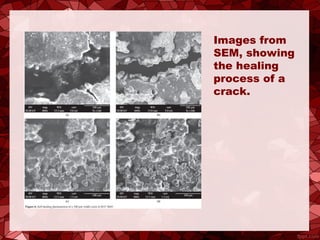
Images from
SEM, showing
the healing
process of a
crack.
Scope of Scanning Electron
Microscope
“Things never seen
before”
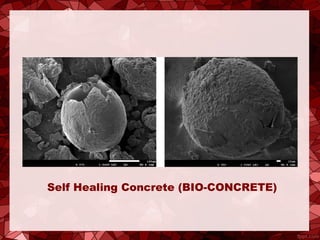
Self Healing Concrete (BIO-CONCRETE)
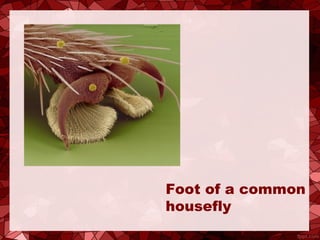
Foot of a common
housefly
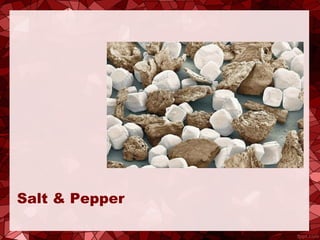
Salt & Pepper
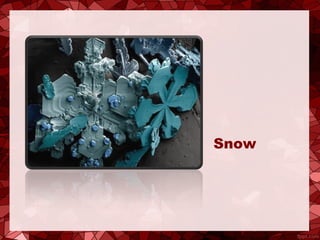
Snow
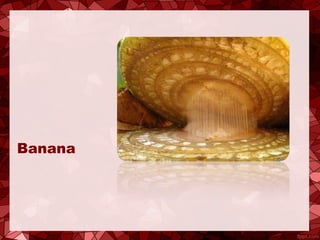
Banana
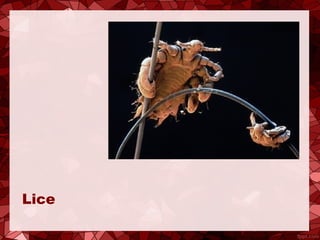
Lice
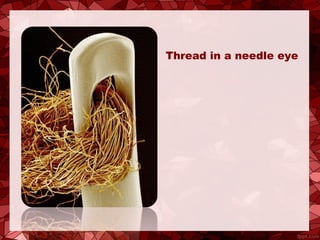
Thread in a needle eye
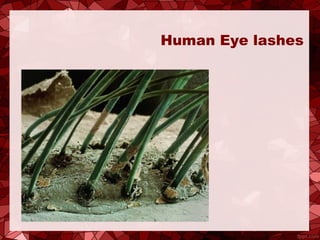
Human Eye lashes
• conclusion
From above discussion the following is
concluded ;
• Self-healing concrete is eco-friendly.
• Enhance compressive strength, reduce
permeability & reduce corrosion in bio-
concrete
• Bacterial concrete technology has proved
to be better than many conventional
technologies.
• Cementation by this method is very easy
& convenient for use.
• Bio-concrete enhances the life time of a
structure by more than the expected
value.
• Bacterial concrete technology has proved
to be better than many conventional
technologies.
• Cementation by this method is very easy
& convenient for use.
• Increase in age of structure is more than
the expected value of self-healing
concrete.

Self healing concrete

  • 1.
    Self-healing concrete Presentedby:- •Muhammad Hassaan Sajid (17-CE-83) •Muhammad Uzair Khan (17-CE-107) •Salman Waseem Butt (17-CE-127)
  • 2.
    Contents • Introduction • BacteriaSubtilis • Preparation of Bacterial Culture • Working Process • Advantages & Disadvantages • Applications • Cost comparison • SEM Analysis • Conclusion
  • 3.
    • IntroductIon Formation ofcracks in concrete is a common phenomenon that allows water and many chemical to seep inside, leading to decrease in durability & progressive drop in strenght. • Bio-concrete is self healing, using Bacteria at the time of mixing.
  • 4.
    • The bacteriato be added to concrete is “Bacillus subtilis”. • The precursor added that is added to concrete for the activation of bacteria is “Calcium lactate.
  • 5.
    Cracks making pathfor water penetration & chemical agents Even Hair line cracks allow passage for water overtime.
  • 6.
    Dawn of aNew age in Engineering
  • 7.
    • BacterIa SuBtIlIS Thereare many families in Bacterial population, but why choose Subtilis? The reason is because; • It can adjust to alkaline conditions of concrete for the production of Calcium carbonate.
  • 8.
    • It hasthe ability to form spores in unfavorable conditions, which protect it against mechanical pressures & alkaline environment. • It can withstand high pressure & consumes surplus oxygen, thus preventing steel corrosion.
  • 9.
  • 10.
  • 11.
    • PreParation ofBacterial culture • Bacterial culture is casted on Agar plate. • For further growth, a nutrient broth (NaCl,Peptone, yeast extract) is made. • The broth is added to distilled water in a conical flask (200ml broth prepped in 500ml flask).
  • 12.
    • Then asingle colony of bacteria is added to the nutrient broth from the agar plate. • It is set to auto cultivate at 1210 C for 15 minutes. • Then it is placed in incubator at 370 C for 24 hours. • For Use it is placed in Refrigerator at 40 C.
  • 13.
    Bacteria Subtilis culture onAgar plate Nutrient Broth for Bacterial growth
  • 14.
    • Working Process InBio-concrete or self healing concrete, when water seeps through the cracks, the bacteria get activated from it’s stage of dormancy. When Bacteria becomes active it starts to feed on calcium lactate.
  • 15.
    This in turnproduces Calcium carbonate through its metabolic activities which acts as a healing material. The reaction is as follow; Ca(C3H5O2)2+7O2 CaCO3+5CO2+5H2O Where, Ca(C3H5O2)2 is Calcium Lactate & ;CaCO3 is Lime.
  • 16.
  • 18.
    • advantages &disadvantages The advantages of Self healing concrete are as follow: • Improvement in compressive strength. • Reduction in permeability. • Reduction in corrosion of steel. • Increases the service life of structure than expected life.
  • 19.
    •Bacteria consumes allthe surplus oxygen which eliminates any chance of its reaction with steel. •It helps in reduced maintenance & repair costs of RCC structures. •It can be used where there is no or very little access for repair & maintenance of the structure.
  • 20.
    The Disadvantages ofSelf healing concrete are; •Bio-concrete’s prep require Bacteria & calcium lactate. •Preparation of calcium lactate from milk is costly. •Self- healing concrete costs double as compared to the conventional concrete.
  • 21.
    • applications Self-healing concretefinds its use in ; • Construction of underground retainers for hazardous waste material. • Construction of building in seismic zones & high rise structures. • Water retaining structures.
  • 22.
    Various underground chemical &Nuclear waste facilities
  • 23.
    • cost comparison Thecost of bio-concrete is about double as that of conventional concrete, which is presently about Rs. 9500/m3 for 1:1.5:3 while bio-concrete costs about Rs 17500. It would only viable for certain structures where the cost of structures is much higher because of being in higher quality. e.g. heavy marine & off-shore structures where Factor of safety & Durability are the governing factors.
  • 24.
    Off-shore dry docks& Rigs at Sea with heavy underwater concrete foundations
  • 25.
    Example:- In United kingdomit is estimated that £40 billion are spent each year on structural maintenance & most of these are concrete structures. By using Self-healing concrete this amount can be reduced dramatically & save a lot of expenses, time & man power.
  • 26.
    • sem analysis TheScanning Electron Microscope (SEM) is one of the most versatile instruments available for the analysis of microstructural characteristics of solid objects. The primary reason for SEM’s usefulness is the high resolution that can be obtained when bulky objects are examined.
  • 27.
  • 28.
    Images from SEM, showing thehealing process of a crack.
  • 29.
    Scope of ScanningElectron Microscope “Things never seen before”
  • 30.
    Self Healing Concrete(BIO-CONCRETE)
  • 31.
    Foot of acommon housefly
  • 32.
  • 33.
  • 34.
  • 35.
  • 36.
    Thread in aneedle eye
  • 37.
  • 38.
    • conclusion From abovediscussion the following is concluded ; • Self-healing concrete is eco-friendly. • Enhance compressive strength, reduce permeability & reduce corrosion in bio- concrete
  • 39.
    • Bacterial concretetechnology has proved to be better than many conventional technologies. • Cementation by this method is very easy & convenient for use. • Bio-concrete enhances the life time of a structure by more than the expected value.
  • 40.
    • Bacterial concretetechnology has proved to be better than many conventional technologies. • Cementation by this method is very easy & convenient for use. • Increase in age of structure is more than the expected value of self-healing concrete.