Quality Assessment in Higher
Education
Self assessment
Done by:
Munira Alhadhrami 94106
Hajer Al Abdual Sallam 93978
Zahra Bani Oraba 92138
Yusra Al Alawi 92456
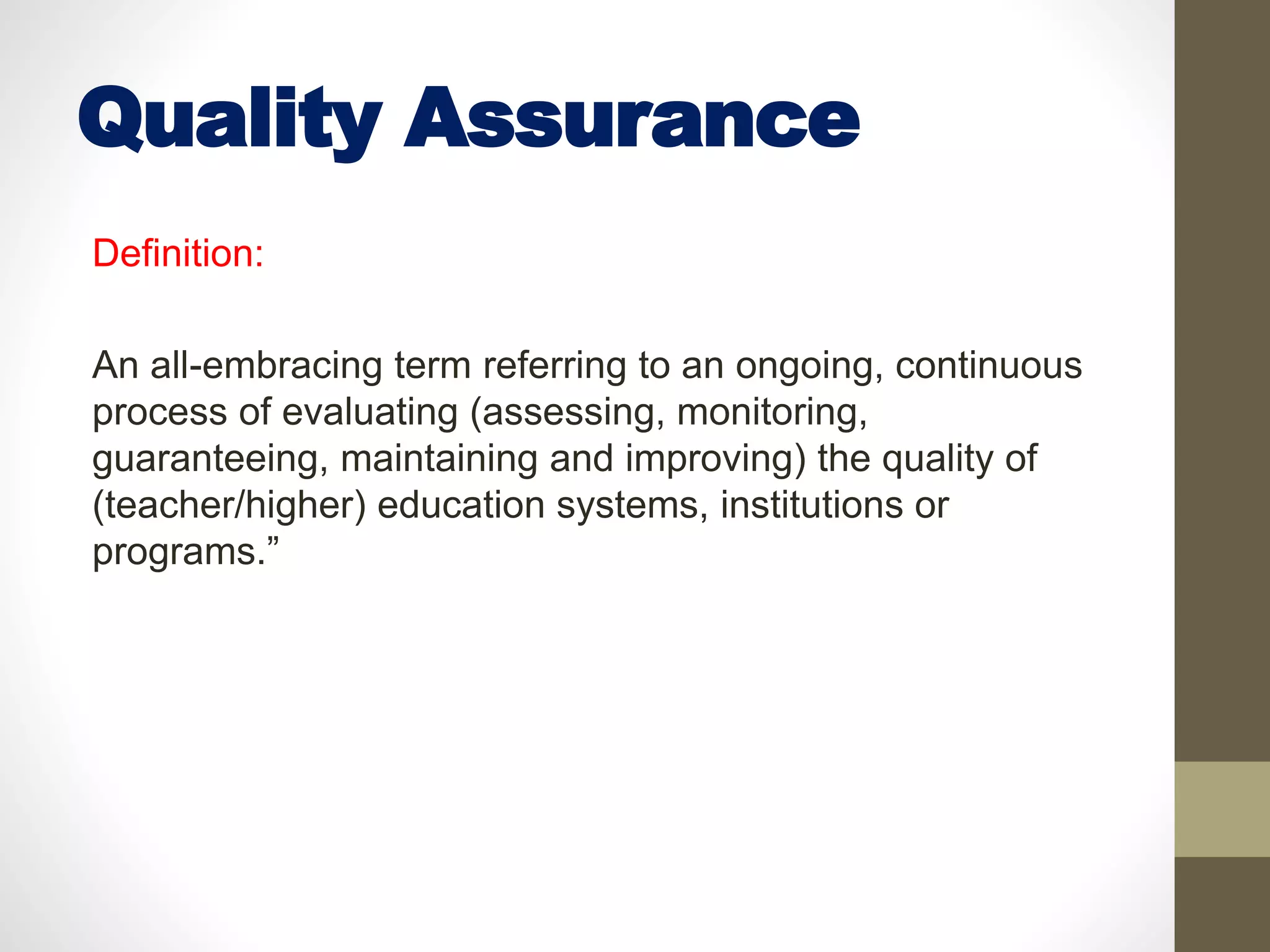
Quality Assurance
Definition:
An all-embracing term referring to an ongoing, continuous
process of evaluating (assessing, monitoring,
guaranteeing, maintaining and improving) the quality of
(teacher/higher) education systems, institutions or
programs.”
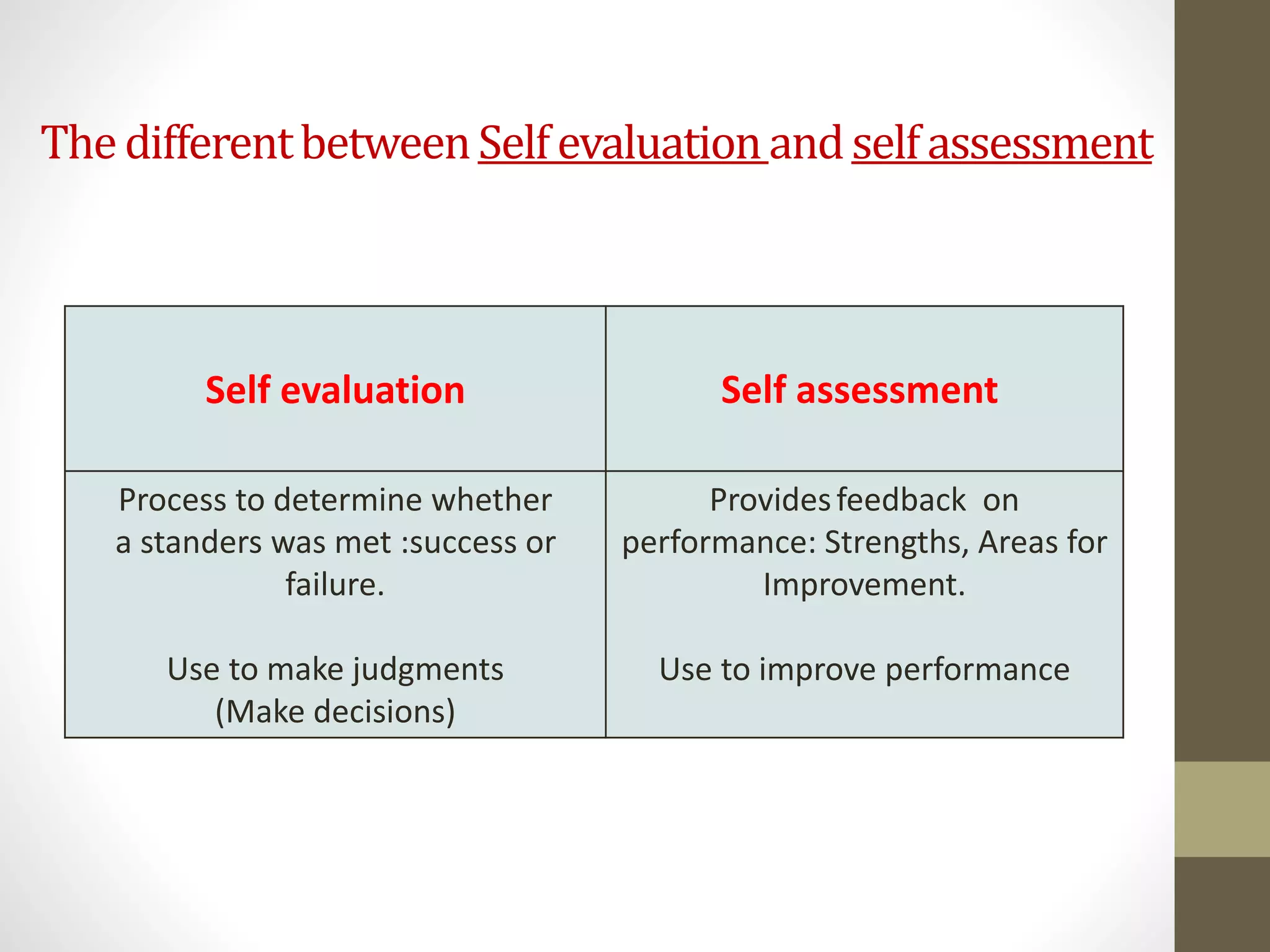
ThedifferentbetweenSelfevaluationandselfassessment
Self assessmentSelf evaluation
Providesfeedback on
performance: Strengths, Areas for
Improvement.
Use to improve performance
Process to determine whether
a standers was met :success or
failure.
Use to make judgments
(Make decisions)
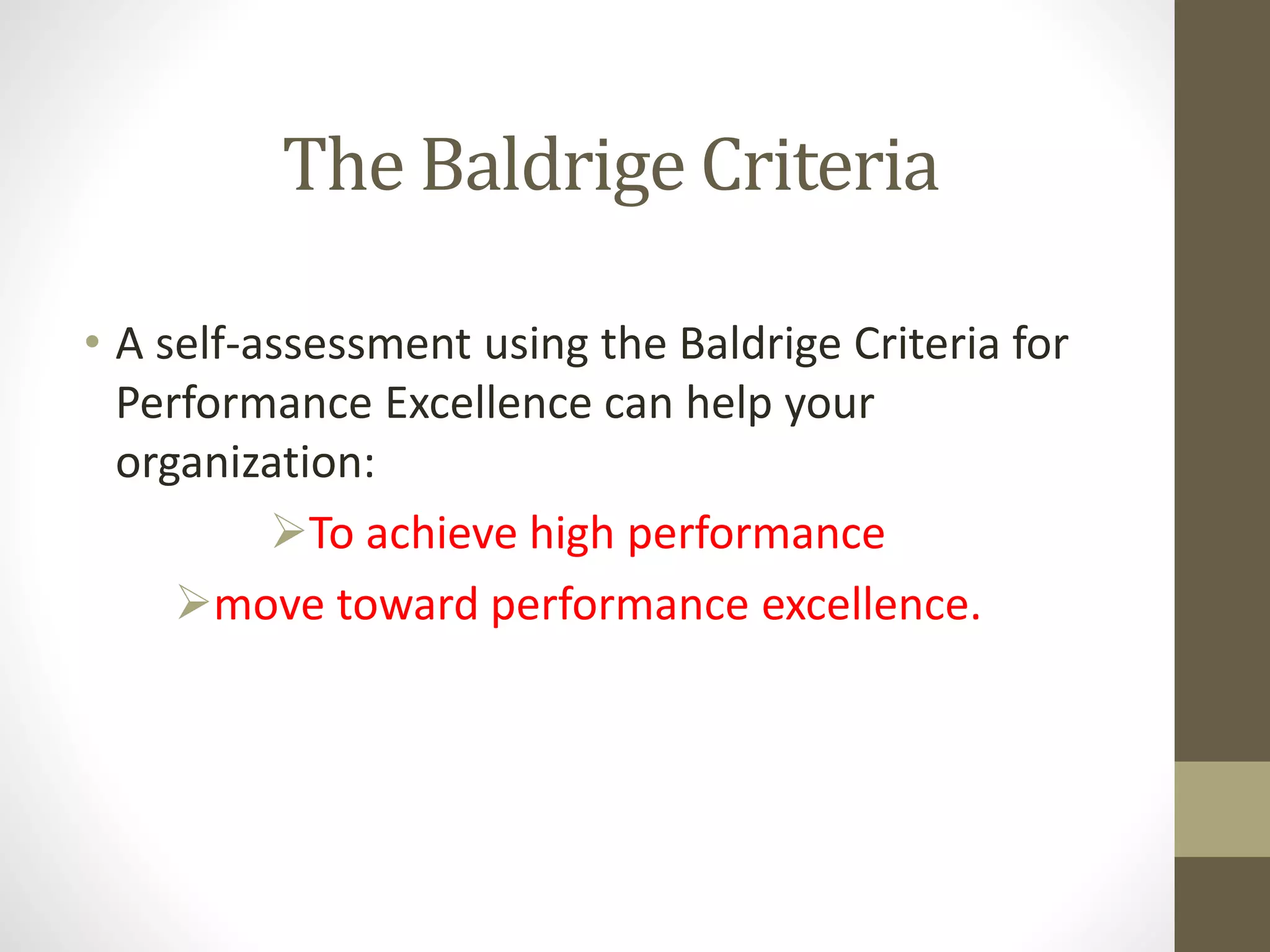
The Baldrige Criteria
• A self-assessment using the Baldrige Criteria for
Performance Excellence can help your
organization:
To achieve high performance
move toward performance excellence.
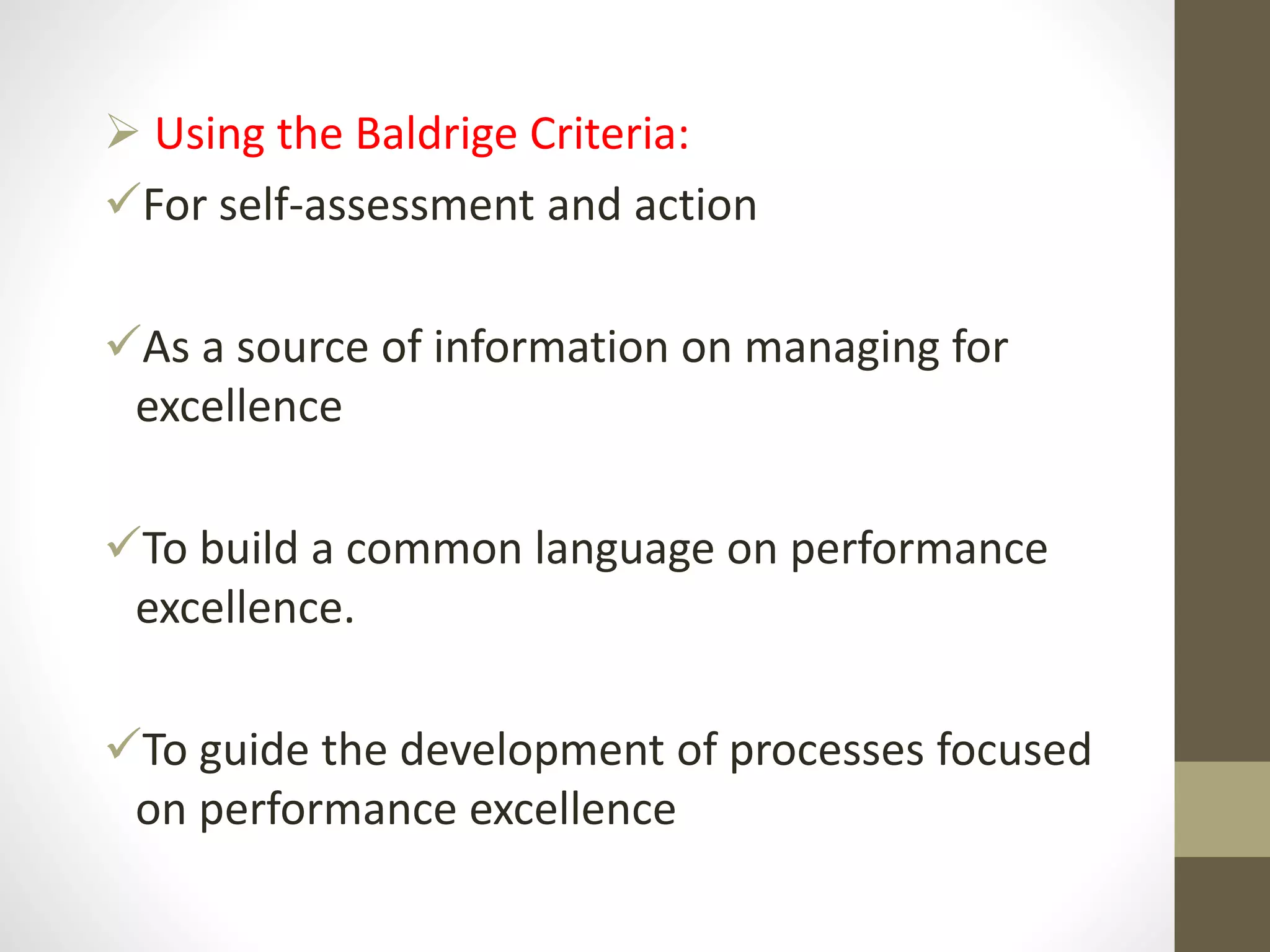
 Using the Baldrige Criteria:
For self-assessment and action
As a source of information on managing for
excellence
To build a common language on performance
excellence.
To guide the development of processes focused
on performance excellence
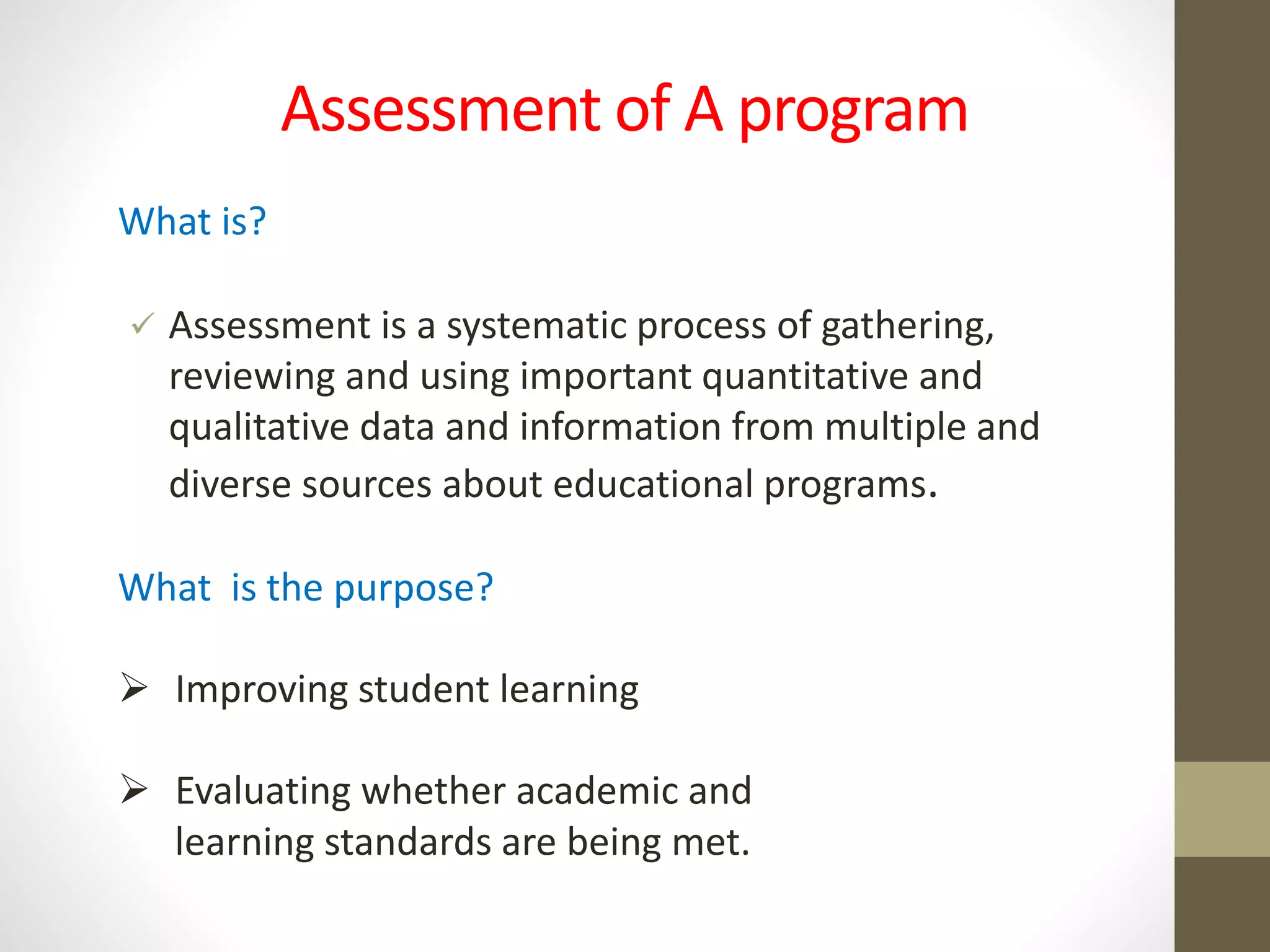
Assessment of A program
What is?
 Assessment is a systematic process of gathering,
reviewing and using important quantitative and
qualitative data and information from multiple and
diverse sources about educational programs.
What is the purpose?
 Improving student learning
 Evaluating whether academic and
learning standards are being met.
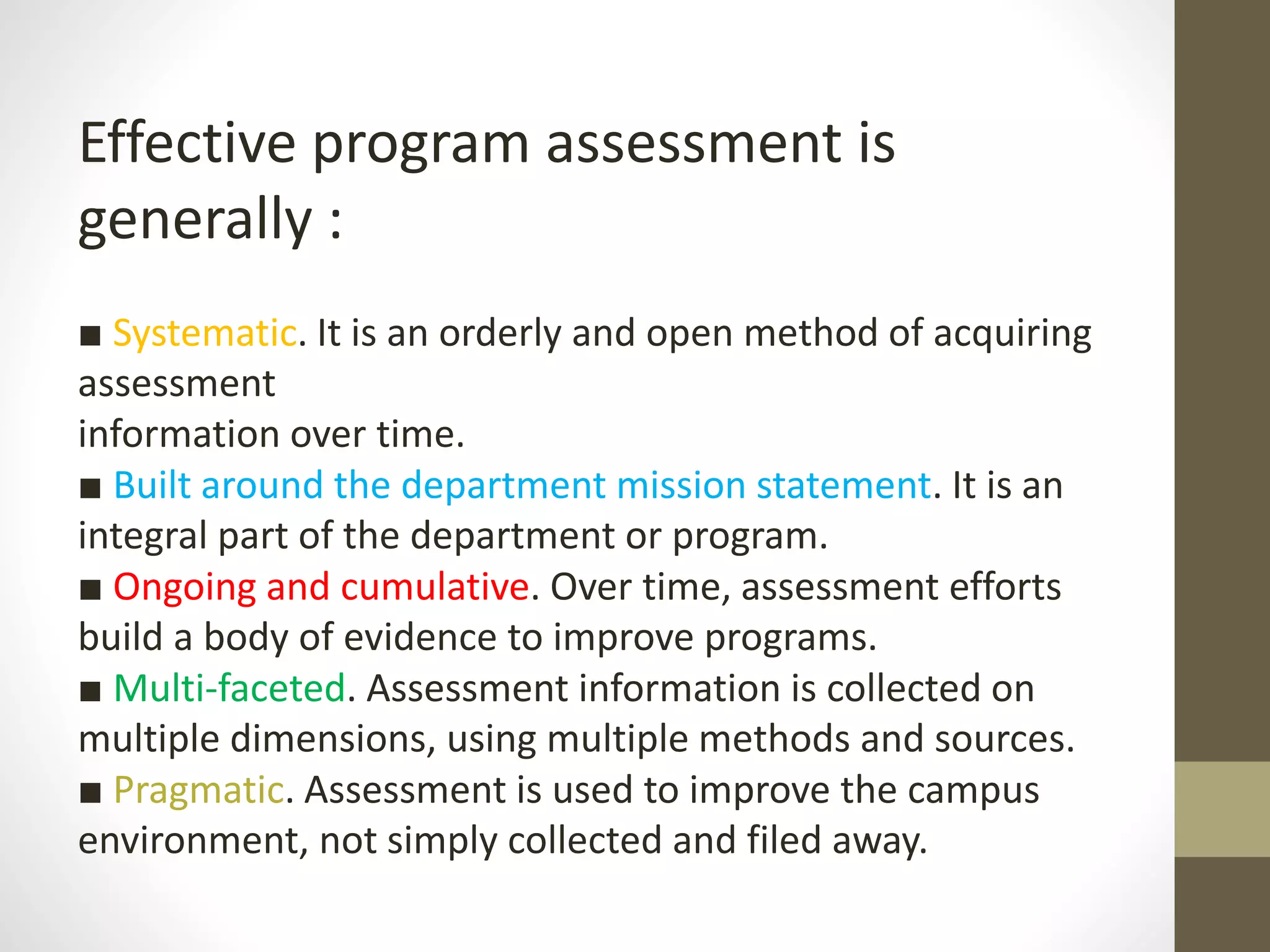
Effective program assessment is
generally :
■ Systematic. It is an orderly and open method of acquiring
assessment
information over time.
■ Built around the department mission statement. It is an
integral part of the department or program.
■ Ongoing and cumulative. Over time, assessment efforts
build a body of evidence to improve programs.
■ Multi-faceted. Assessment information is collected on
multiple dimensions, using multiple methods and sources.
■ Pragmatic. Assessment is used to improve the campus
environment, not simply collected and filed away.
8
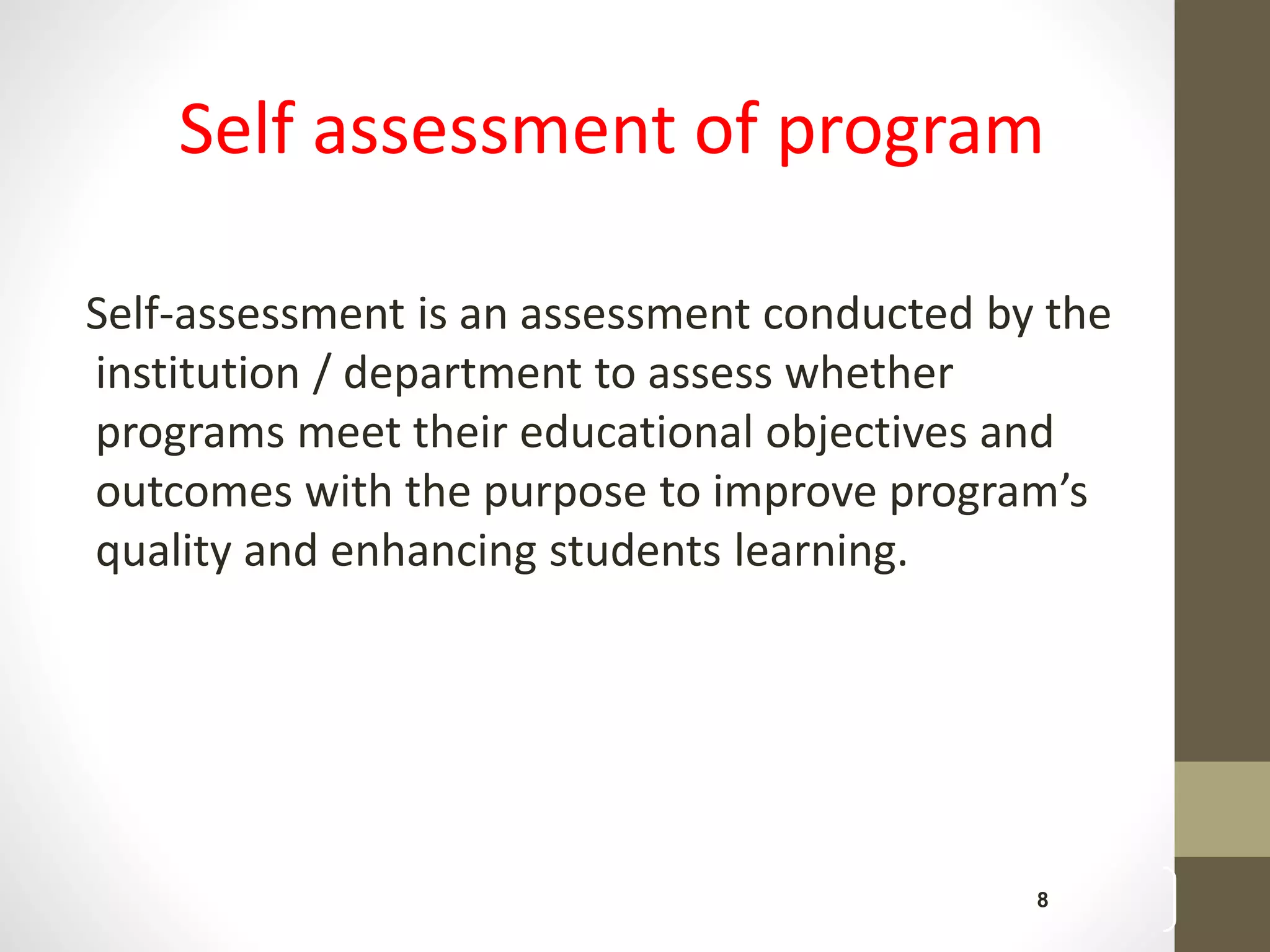
Self assessment of program
Self-assessment is an assessment conducted by the
institution / department to assess whether
programs meet their educational objectives and
outcomes with the purpose to improve program’s
quality and enhancing students learning.
Element of Assessment
• Purpose identification
• Outcomes identification
• Measurements and evaluation design
• Data collection
• Analysis and evaluation
• Decision-making regarding actions to be taken.
Self Assessment for Higher Education Programs
Self assessment for program may cover these areas :
• Mission Goals and Objectives
• Program Administration
• Management of Program Quality Assurance
• Learning and Teaching strategies
• Learning Resources
• Facilities and Equipment (Martials)
• Financial Planning and Management
• Activities
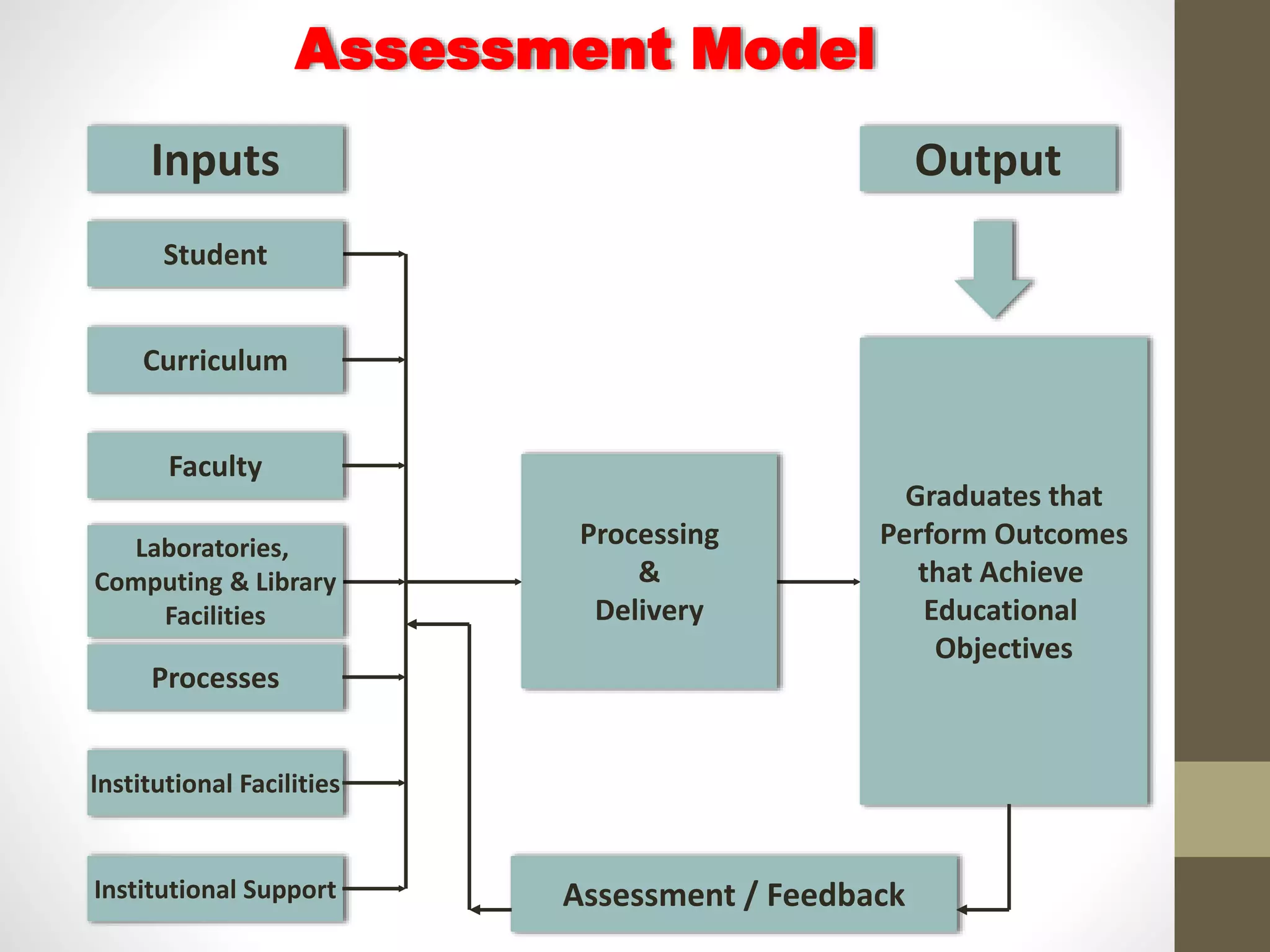
Assessment / Feedback
Inputs Output
Faculty
Processes
Curriculum
Institutional Support
Laboratories,
Computing & Library
Facilities
Institutional Facilities
Processing
&
Delivery
Graduates that
Perform Outcomes
that Achieve
Educational
Objectives
Assessment Model
Student
Objectives of Self assessment
- Self assessment is carried out with certain objectives, which
include,
 Verification that the existing programs meet their objectives
and institutional goals.
 Providing feedback for quality assurance of academic
programs
 Improvement and maintenance of academic standards
 Prepare the academic program for review by discipline
councils
 Enhance students’ learning.
Desired outcomes of Self assessment
• Outcomes include competencies and tasks graduates are
expected to perform after completing the program.
• These outcomes are,
1. Being proactive than reactive.
2. Systematizing the process of assessment
3. Remaining current with the day to day developments in the
field of education
4. Assisting in preparing good professionals by initiating
improvements to achieve academic excellence
- This can be done by conducting surveys of graduating
students, and employers.
How Will Your Organization Benefit?
A self-assessment can help you:
• Identify successes and opportunities for improvement
• Activate the workforce
• Focus the organization on common goals
• Assess your organization’s performance against the
competition

Self Assessment ( Quality Assurance)

  • 1.
    Quality Assessment inHigher Education Self assessment Done by: Munira Alhadhrami 94106 Hajer Al Abdual Sallam 93978 Zahra Bani Oraba 92138 Yusra Al Alawi 92456
  • 2.
    Quality Assurance Definition: An all-embracingterm referring to an ongoing, continuous process of evaluating (assessing, monitoring, guaranteeing, maintaining and improving) the quality of (teacher/higher) education systems, institutions or programs.”
  • 3.
    ThedifferentbetweenSelfevaluationandselfassessment Self assessmentSelf evaluation Providesfeedbackon performance: Strengths, Areas for Improvement. Use to improve performance Process to determine whether a standers was met :success or failure. Use to make judgments (Make decisions)
  • 4.
    The Baldrige Criteria •A self-assessment using the Baldrige Criteria for Performance Excellence can help your organization: To achieve high performance move toward performance excellence.
  • 5.
     Using theBaldrige Criteria: For self-assessment and action As a source of information on managing for excellence To build a common language on performance excellence. To guide the development of processes focused on performance excellence
  • 6.
    Assessment of Aprogram What is?  Assessment is a systematic process of gathering, reviewing and using important quantitative and qualitative data and information from multiple and diverse sources about educational programs. What is the purpose?  Improving student learning  Evaluating whether academic and learning standards are being met.
  • 7.
    Effective program assessmentis generally : ■ Systematic. It is an orderly and open method of acquiring assessment information over time. ■ Built around the department mission statement. It is an integral part of the department or program. ■ Ongoing and cumulative. Over time, assessment efforts build a body of evidence to improve programs. ■ Multi-faceted. Assessment information is collected on multiple dimensions, using multiple methods and sources. ■ Pragmatic. Assessment is used to improve the campus environment, not simply collected and filed away.
  • 8.
    8 Self assessment ofprogram Self-assessment is an assessment conducted by the institution / department to assess whether programs meet their educational objectives and outcomes with the purpose to improve program’s quality and enhancing students learning.
  • 9.
    Element of Assessment •Purpose identification • Outcomes identification • Measurements and evaluation design • Data collection • Analysis and evaluation • Decision-making regarding actions to be taken.
  • 10.
    Self Assessment forHigher Education Programs Self assessment for program may cover these areas : • Mission Goals and Objectives • Program Administration • Management of Program Quality Assurance • Learning and Teaching strategies • Learning Resources • Facilities and Equipment (Martials) • Financial Planning and Management • Activities
  • 11.
    Assessment / Feedback InputsOutput Faculty Processes Curriculum Institutional Support Laboratories, Computing & Library Facilities Institutional Facilities Processing & Delivery Graduates that Perform Outcomes that Achieve Educational Objectives Assessment Model Student
  • 12.
    Objectives of Selfassessment - Self assessment is carried out with certain objectives, which include,  Verification that the existing programs meet their objectives and institutional goals.  Providing feedback for quality assurance of academic programs  Improvement and maintenance of academic standards  Prepare the academic program for review by discipline councils  Enhance students’ learning.
  • 13.
    Desired outcomes ofSelf assessment • Outcomes include competencies and tasks graduates are expected to perform after completing the program. • These outcomes are, 1. Being proactive than reactive. 2. Systematizing the process of assessment 3. Remaining current with the day to day developments in the field of education 4. Assisting in preparing good professionals by initiating improvements to achieve academic excellence - This can be done by conducting surveys of graduating students, and employers.
  • 14.
    How Will YourOrganization Benefit? A self-assessment can help you: • Identify successes and opportunities for improvement • Activate the workforce • Focus the organization on common goals • Assess your organization’s performance against the competition