Technical skills and
knowledge for
producing materials
by:
AL Samihah Amni Dollah @
Abd.Aziz
Hamirah binti Wan Hamid
 Selection of raw materials
 Strengths and weaknesses of raw
materials
Introduction
Most of the time the exact materials for
the exact lessons the teacher wants to
present are not commercially available –
or if they are, they are way too pricey for
a humble teacher’s budget.
Part of the fun of teaching is producing
customised materials in order to present
lively engaging lessons for our young
students.
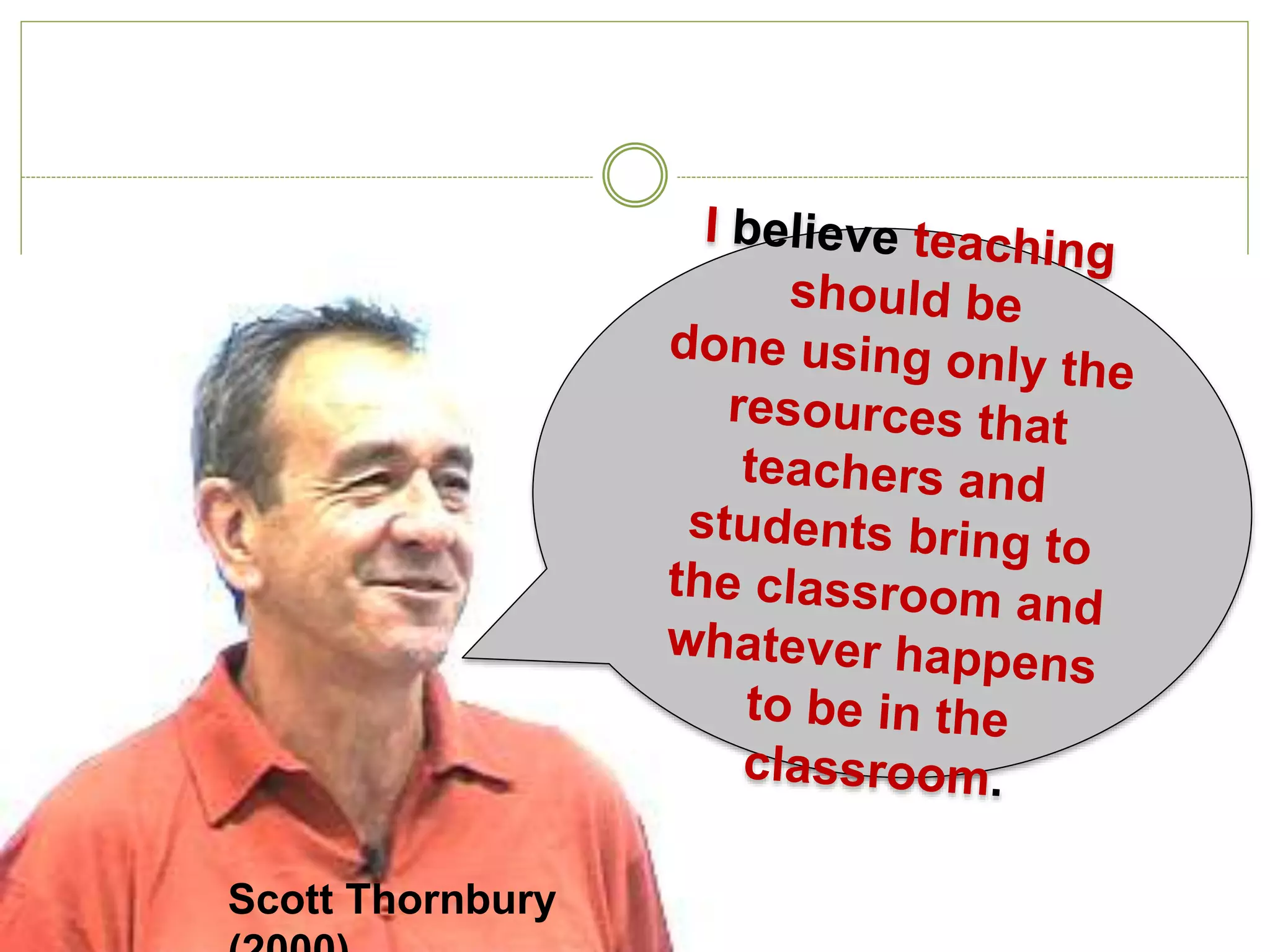
Scott Thornbury
 It places a premium on conversational
interaction among teacher and learners
where communication is authentic and
learner-driven rather than pedagogically
contrived and controlled by the teacher.
Selection of raw materials
 Raw material:
Noun: The basic material from which a
product is made.
 Help the teachers to teach with ease and
the learners to learn without stress.
 These materials appeal to the senses of
seeing, touching, smelling,
Examples of raw material:
Human-made resources:
Paper (newspaper, magazines, paper
box, paper bag), plastic (straw, reusable
plastic bag), computer (softwares),
string/thread
Natural resources:
Soil, small rocks, tree (cotton, leaves),
animal (feathers, shells)
Using Raw Materials in Classroom
 Posters/Displays
 Making Puppets
 Creating storybooks
 Creating Big Books
 Drama
 Craft materials
 Play Dough
 Realia
 Worksheets
BOARD
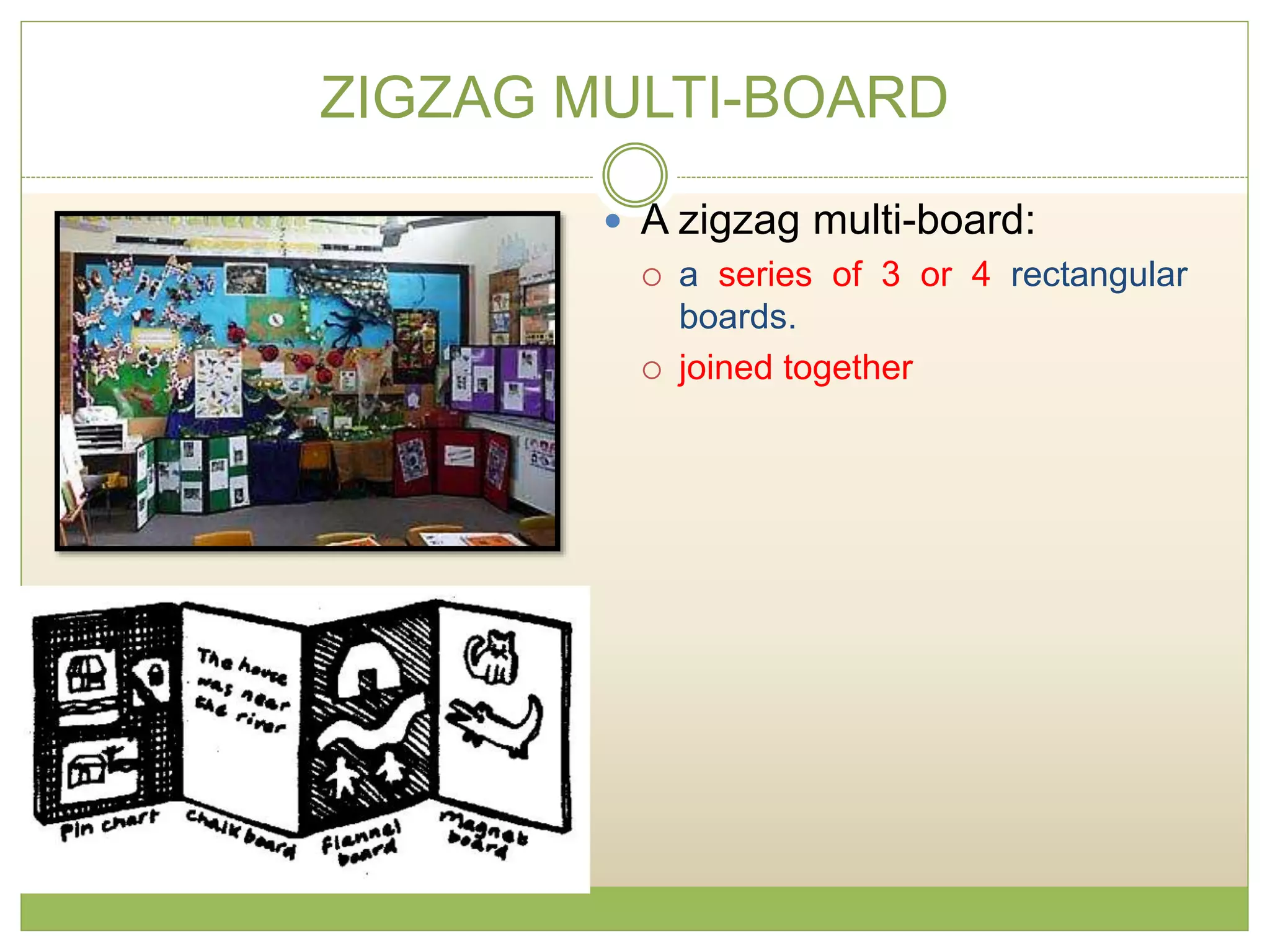
ZIGZAG MULTI-BOARD
 A zigzag multi-board:
 a series of 3 or 4 rectangular
boards.
 joined together
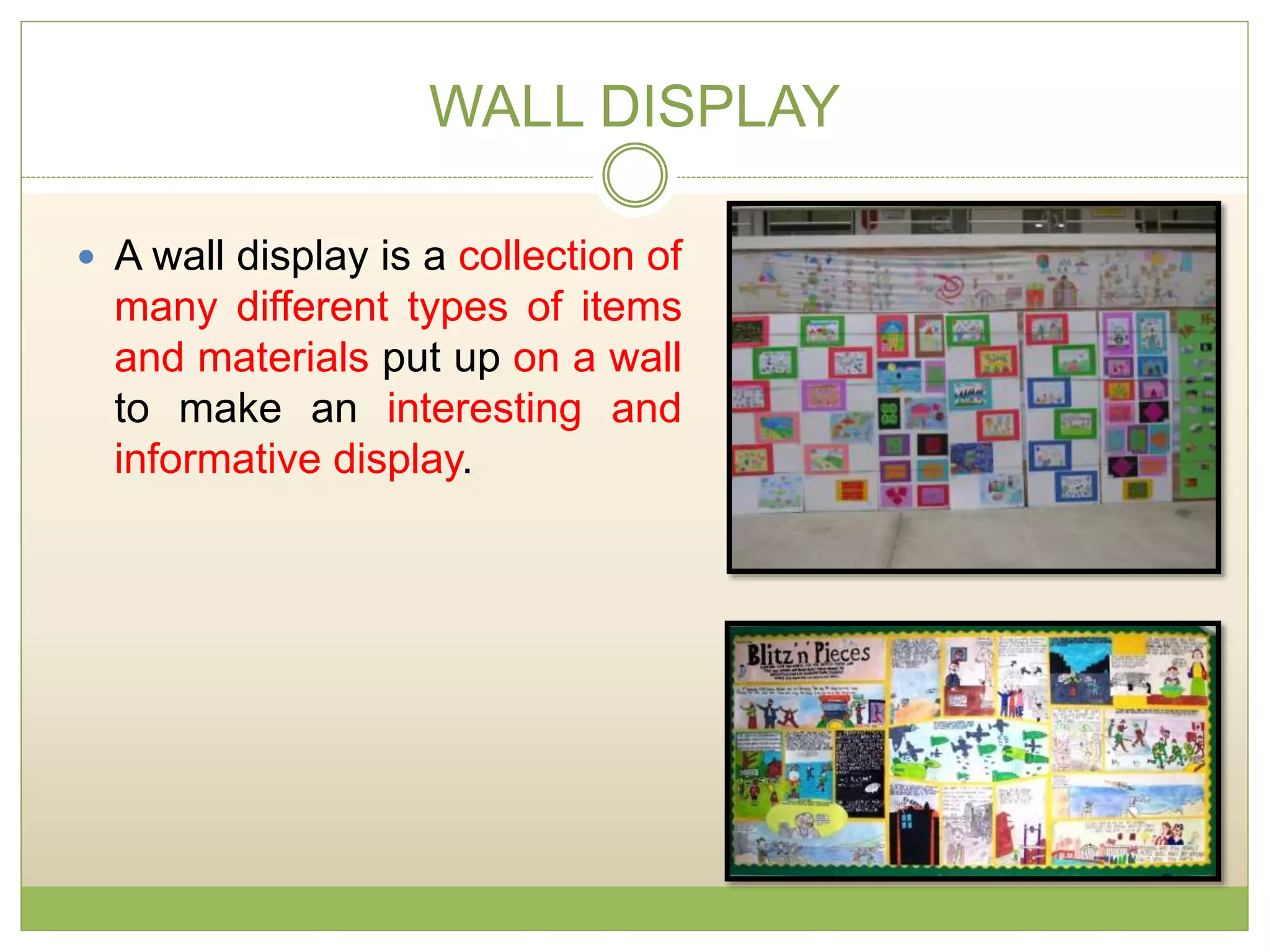
WALL DISPLAY
 A wall display is a collection of
many different types of items
and materials put up on a wall
to make an interesting and
informative display.
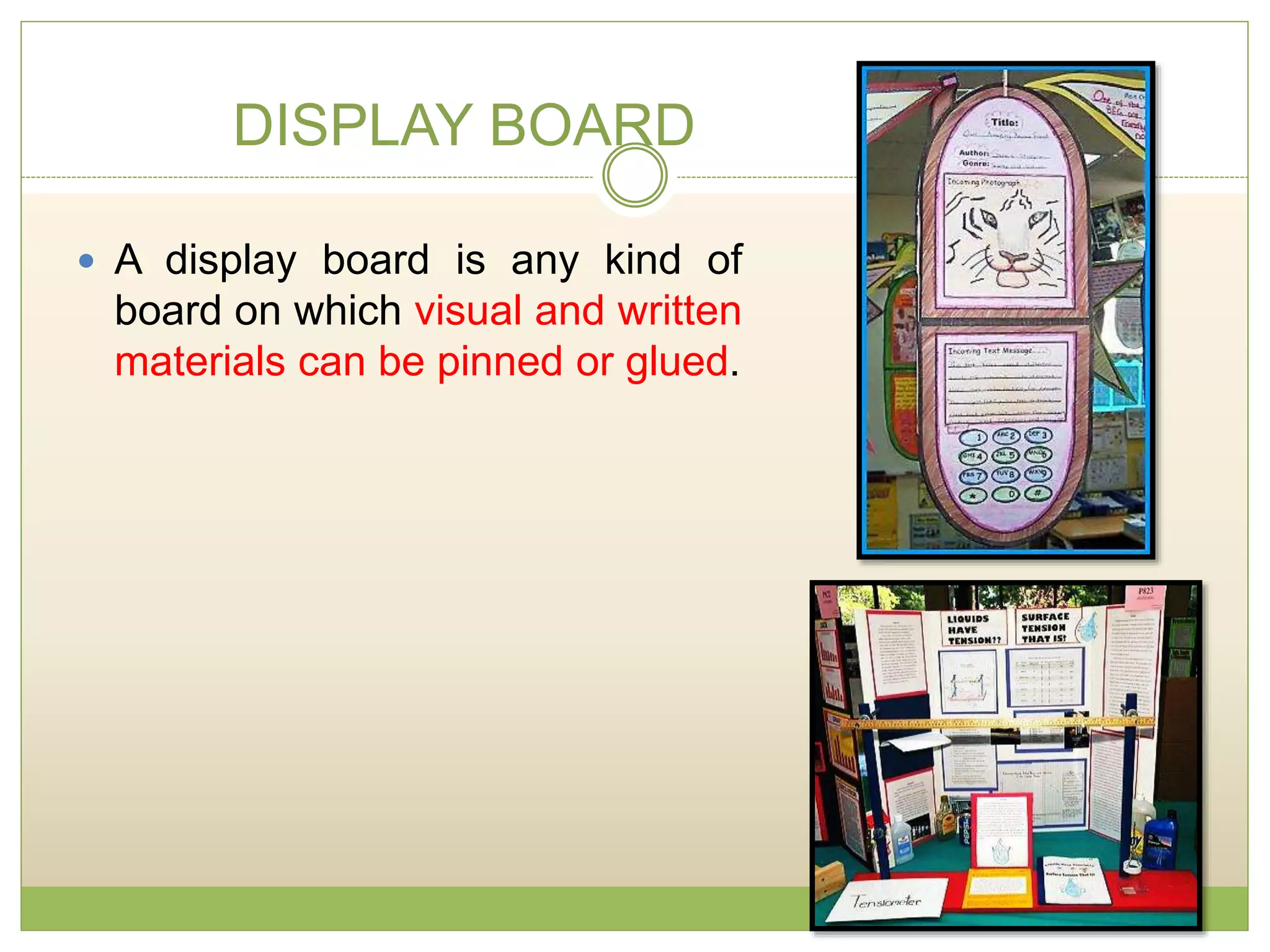
DISPLAY BOARD
 A display board is any kind of
board on which visual and written
materials can be pinned or glued.
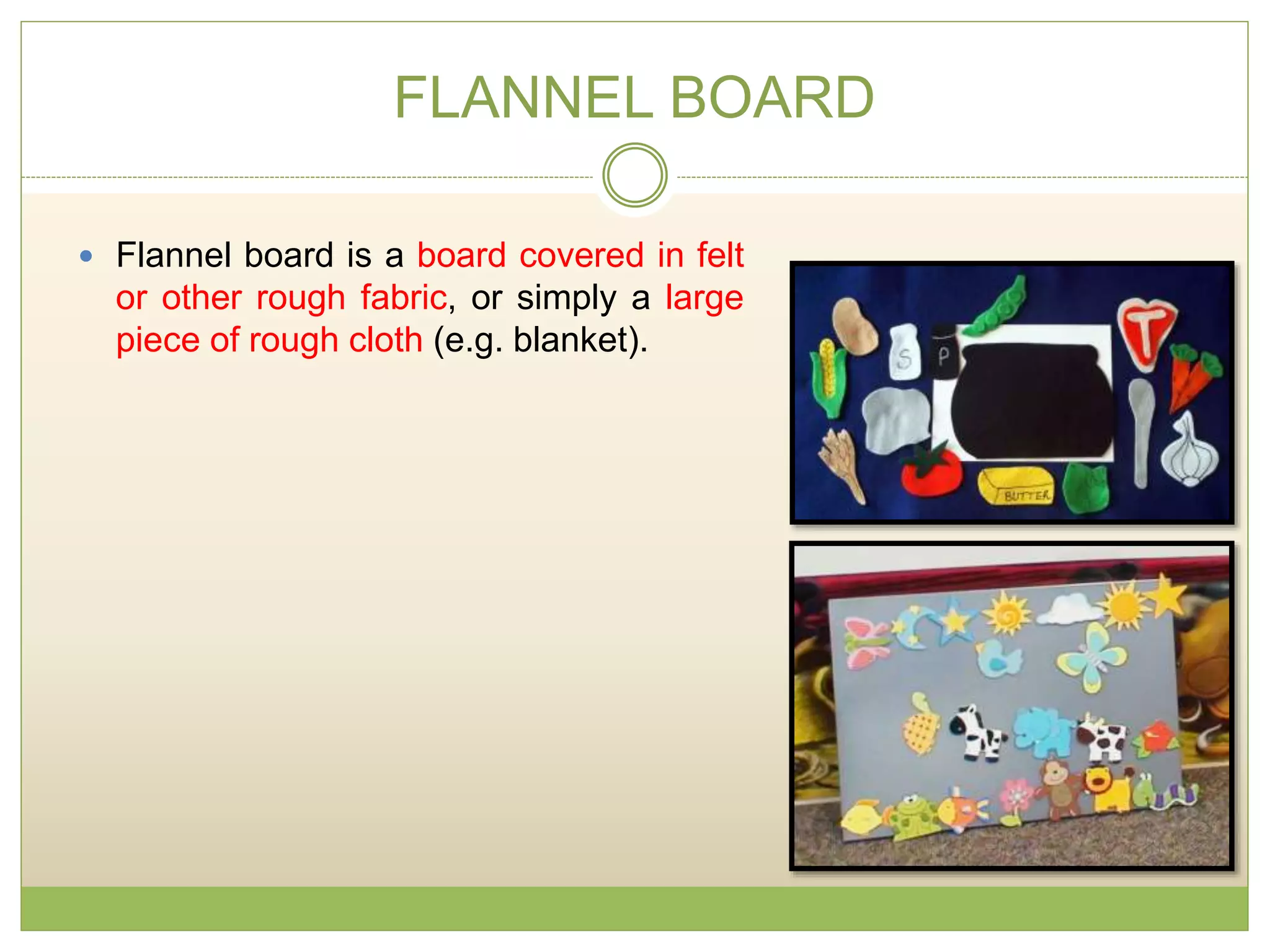
FLANNEL BOARD
 Flannel board is a board covered in felt
or other rough fabric, or simply a large
piece of rough cloth (e.g. blanket).
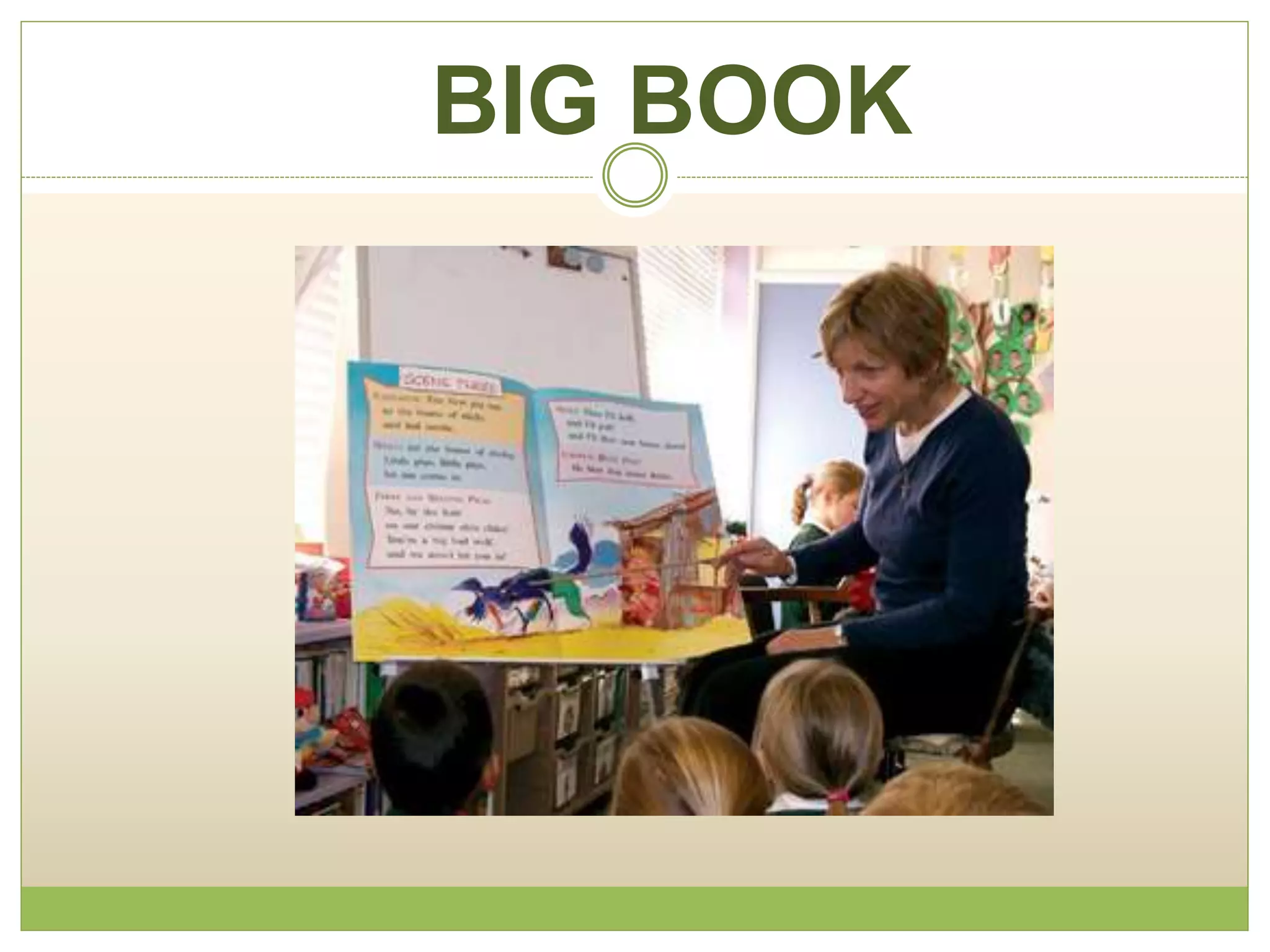
BIG BOOK
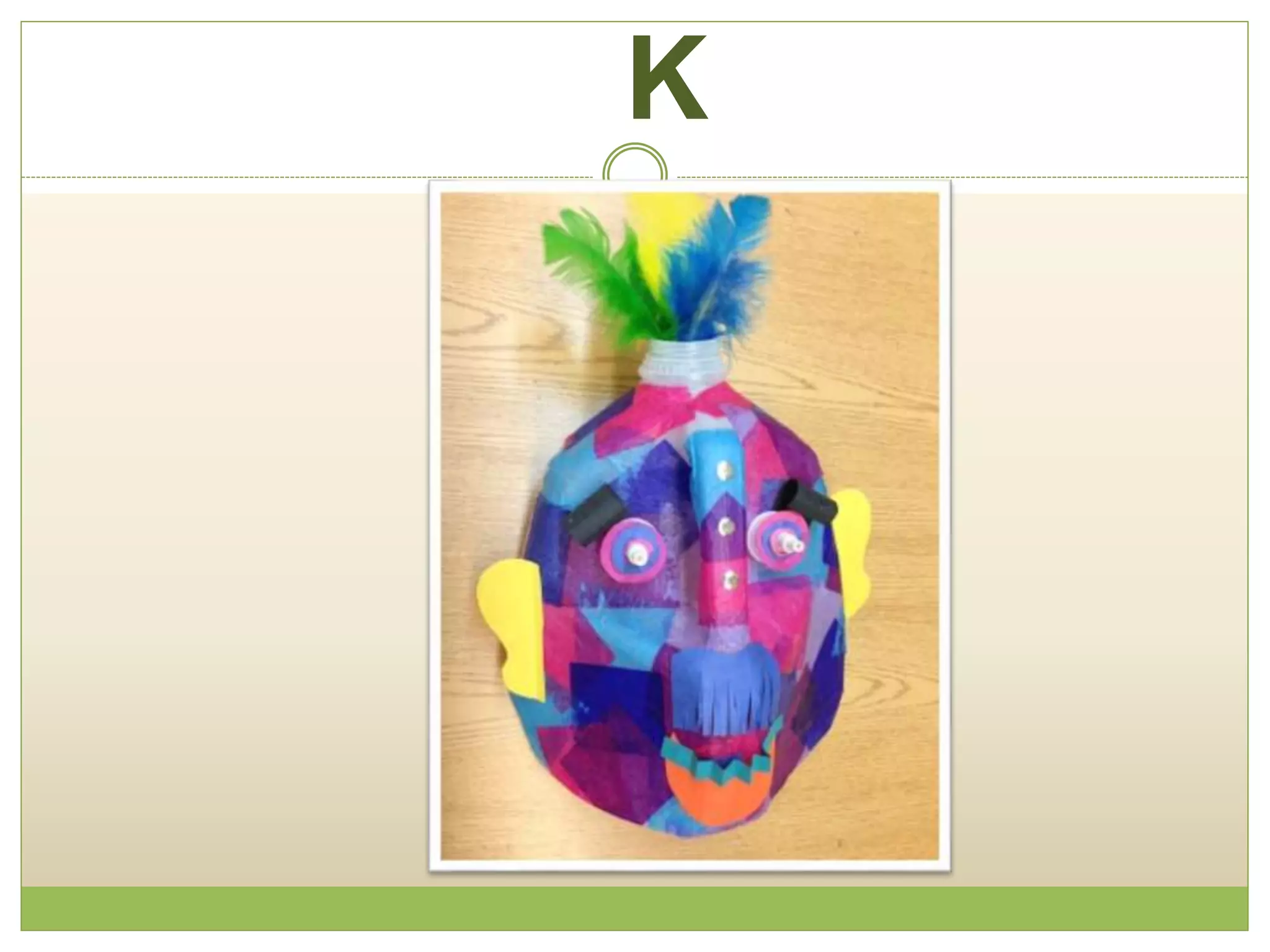
K
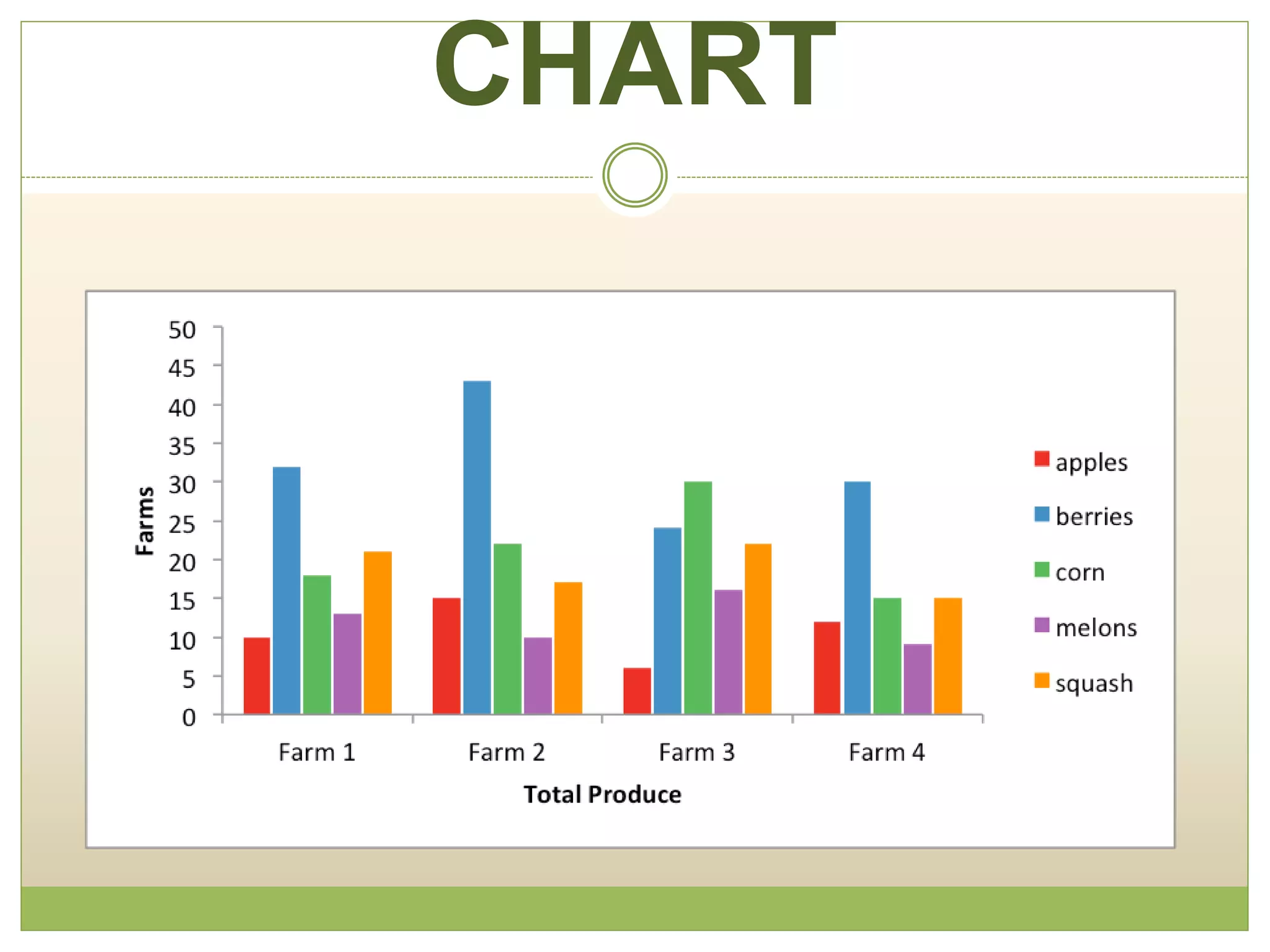
CHART
PUPPET
A puppet is an inanimate object or
representational figure animated or
manipulated by an entertainer, who is
called a puppeteer. It is used in
puppetry, which is a very ancient form
of theatre.
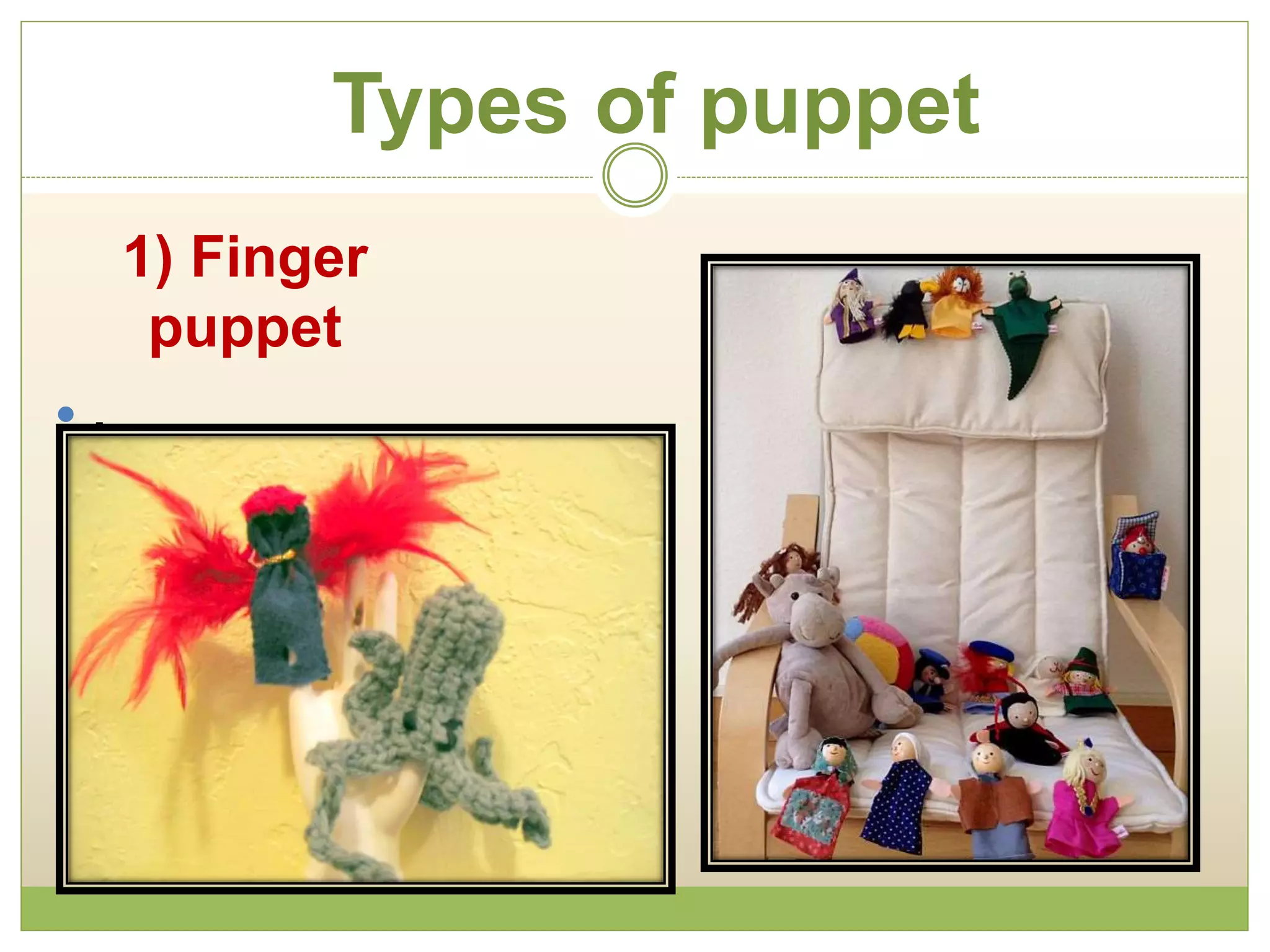
1) Finger
puppet
 .
Types of puppet
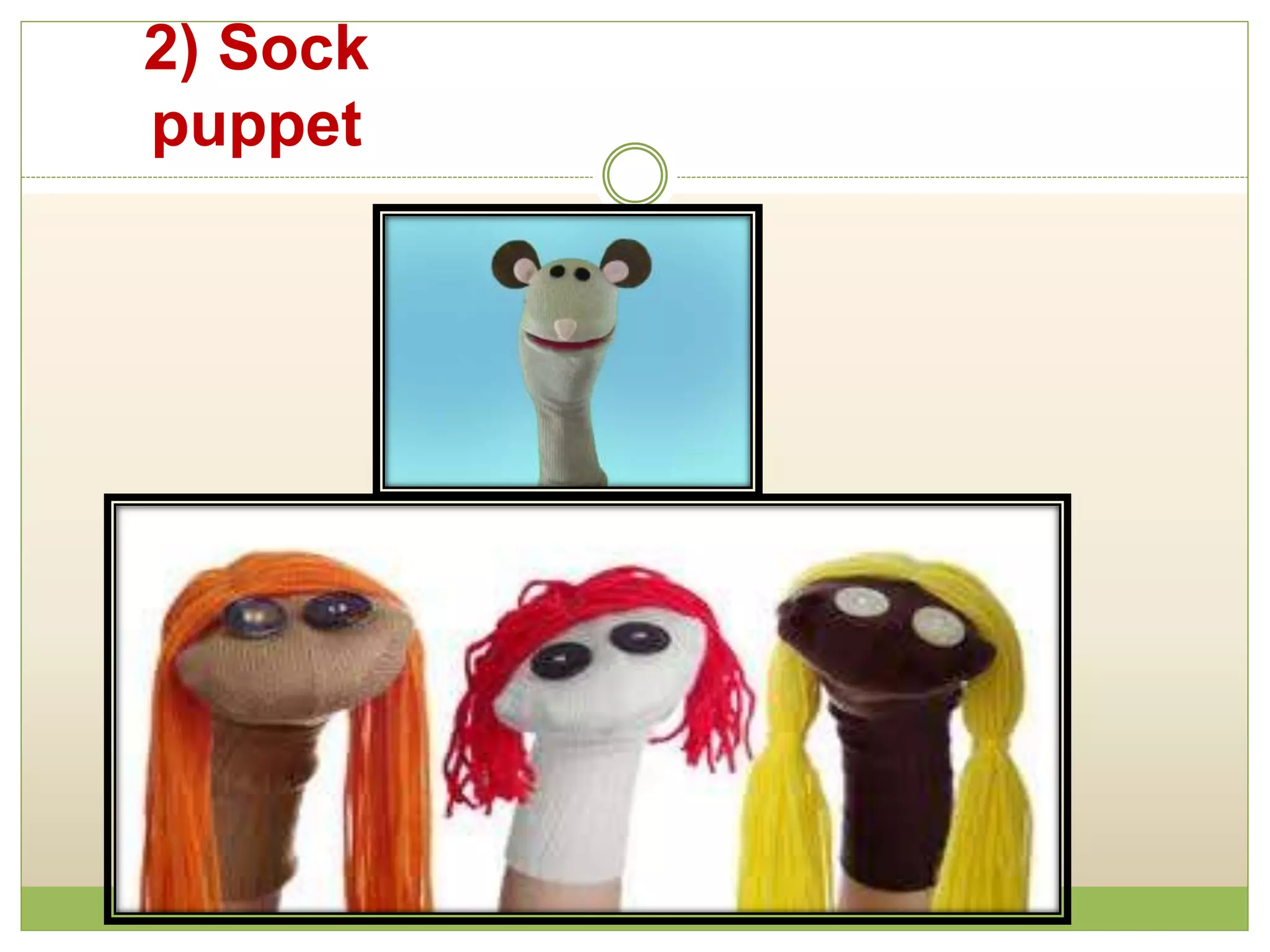
2) Sock
puppet
3)
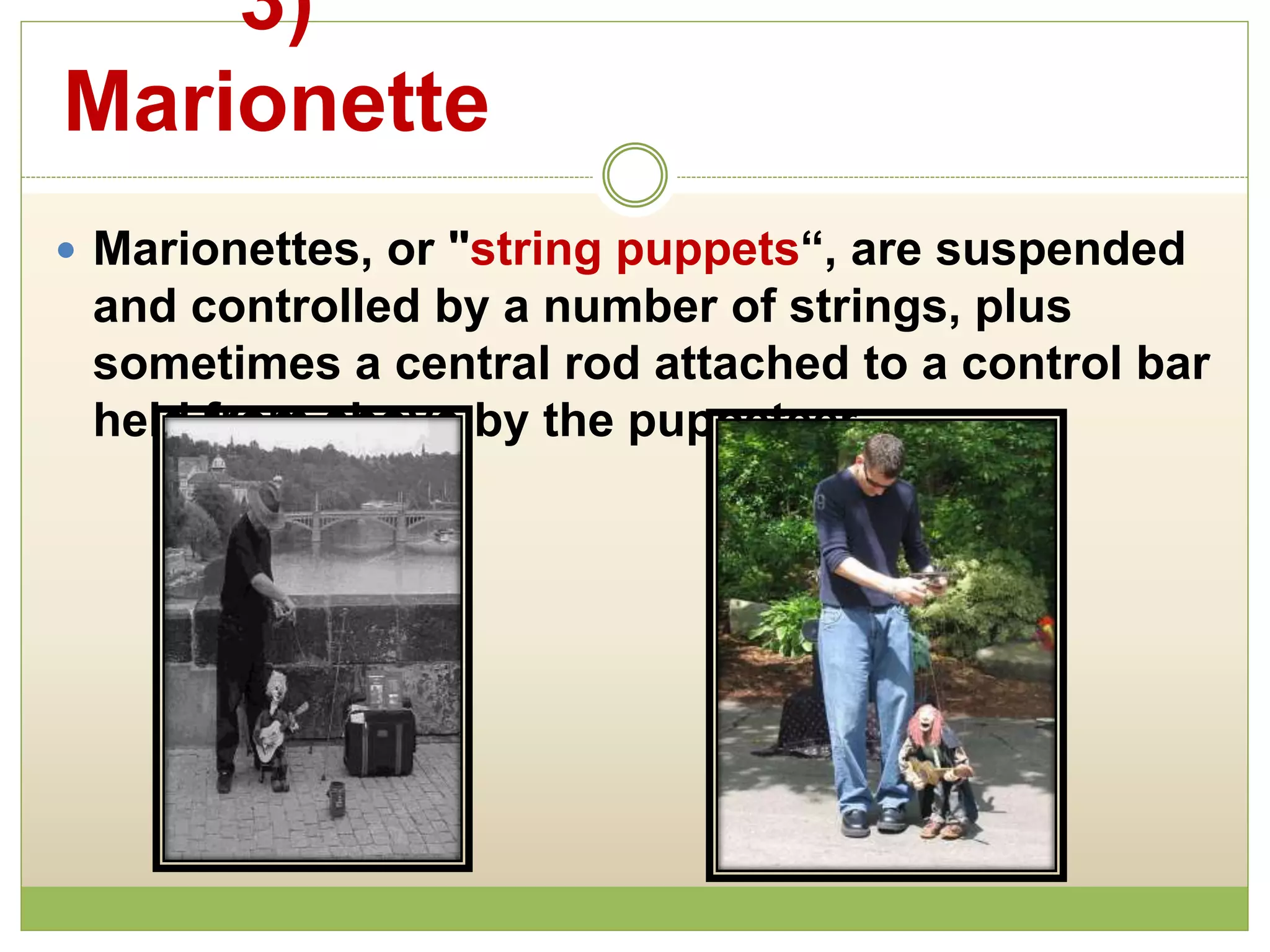
Marionette
 Marionettes, or "string puppets“, are suspended
and controlled by a number of strings, plus
sometimes a central rod attached to a control bar
held from above by the puppeteer.
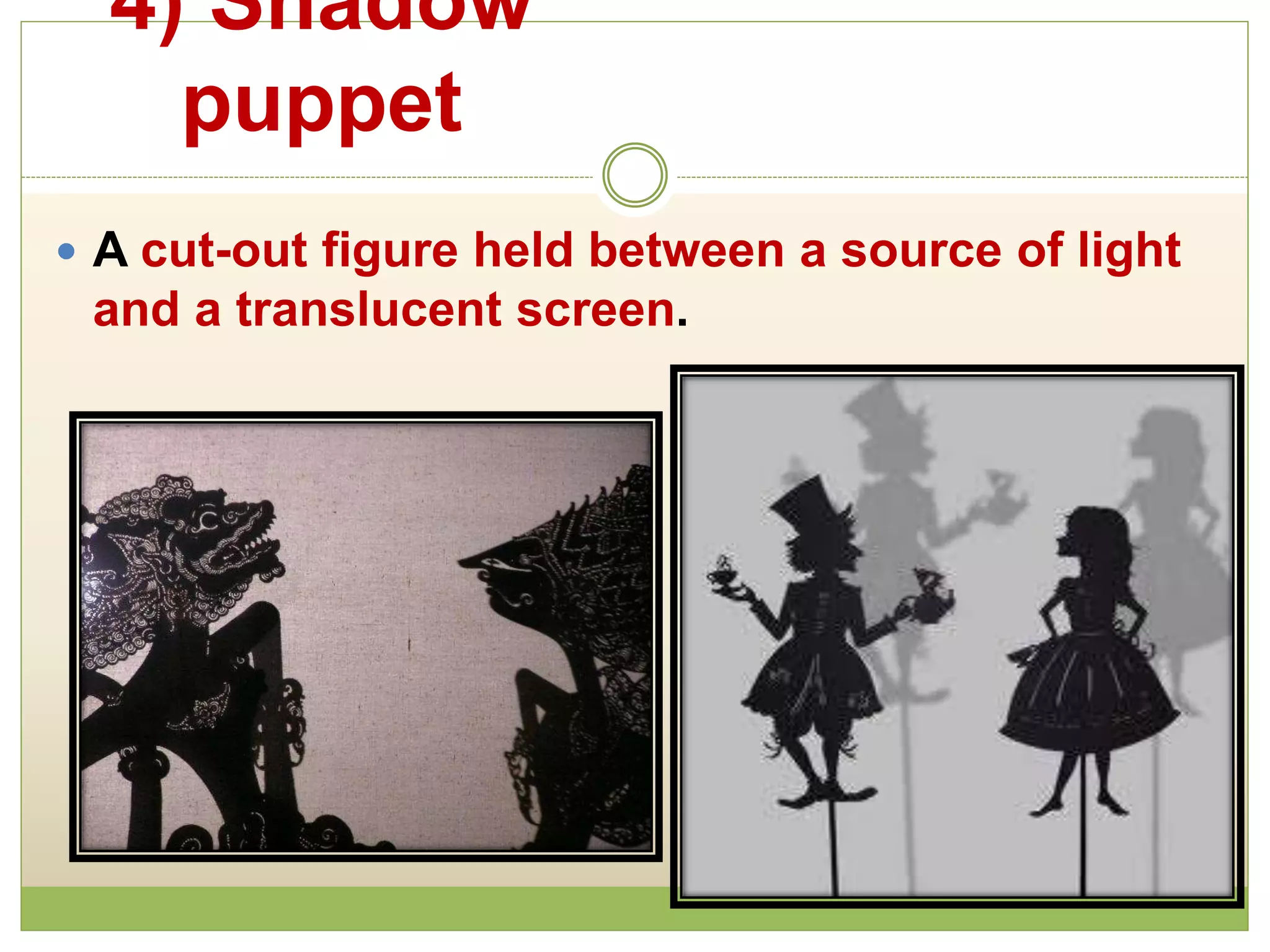
4) Shadow
puppet
 A cut-out figure held between a source of light
and a translucent screen.
Advantages of raw materials
1. Contextualization
 enables them to take into account their particular
particular learning environment and to overcome the
the lack of ‘fit’ of the course book.
 a lack of commercial materials forces teachers to fall
fall back on their own resources and designing their
their own teaching materials can enable them to make
make best use of the resources available in their
teaching context.
 teacher-produced materials can be the best option in
option in terms of both school and student budget.
2. Individual needs
 A teacher can develop materials that incorporate
elements of the learners’ first language and
culture, or at least provide opportunities for
acknowledgement and use alongside English.
 Teacher-prepared materials provide the
opportunity to select texts and activities at
exactly the right level for particular learners, to
ensure appropriate challenge and levels of
success.
 teachers can also make decisions about the most
appropriate organizing principle or focus for the
3. Personalization
 Tapping into the interests and taking account of
the learning styles of students is likely to
increase motivation and engagement in learning.
 greater choice freedom and scope for
spontaneity when teachers develop their own
materials.
4. Timeliness
 Teachers designing their own materials can
respond to local and international events with
up-to-date, relevant and high interest topics and
tasks.
 The teachable moment can be more readily
seized.
Weaknesses of raw materials
1. Organization
 may lack overall coherence and a clear
progression. Without some overall organizing
principle, materials may be piece meal and can
result in poorly focused activities lacking clear
direction.
2. Physical organization and storage of materials.
 may be difficult to locate for ongoing use, or may
end up damaged or with parts missing.
3. Quality
 may “seem ragged and unprofessional next to
those produced by professionals.” (Block, 1991
p.212, emphasis in original).
 They may contain errors, be poorly constructed,
lack clarity in layout and print and lack
durability.
4. Time
Thank you . Any questions? Let’s discuss together. :D
References
Al-Hooqani, A. M. (n.d.). A Survey of Teachers’ Attitudes Towards Big Books . Retrieved from
http://www.moe.gov.om/Portal/sitebuilder/sites/EPS/English/MOE/baproject/Ch15.pdf
Australian Capital Territory. (1997, November). Language for Understanding Across the Curriculum.
Retrieved from http://www.det.act.gov.au/__data/assets/pdf_file/0004/17338/LUAChandbook.pdf
Gaylord, S. K. (n.d.). Families. Retrieved from makingbooks.com:
http://www.makingbooks.com/families.shtml
Hudu, Z. (2012). Instructional Technology in Extension TeachingThe case of Audio—Visuals. Retrieved
from Academia.edu:
http://academia.edu/2474080/Instructional_Technology_in_Extension_Teaching_The_
case_of_Audio-Visuals
Kalyani, A. (n.d.). What Are Advantages and Disadvantages of Shared Reading? Retrieved from eHow:
http://www.ehow.com/info_8452224_advantages-disadvantages- shared-reading.html
Lynch, P. (1996). A Guide for Using Big Books in the Classroom. Canada: Scholastic Canada Ltd.
Sheahan, K. (n.d.). The Disadvantages of Bulletin Board. Retrieved from eHow:
http://www.ehow.com/info_8694803_disadvantages-bulletin-boards.html
http://www.medwelljournals.com/fulltext/?doi=ajit.2010.107.110
http://www.thornburyscott.com/tu/MET1rawmaterials.htm
https://en.wikipedia.org/wiki/Chart
http://agcj.tamu.edu/howto/GraphicsAdDisad.htm
http://en.wikipedia.org/wiki/Mask
http://ktf2013.weebly.com/uploads/8/7/6/1/8761106/tsl3111_topic_5_student_1.pdf
https://www.scribd.com/doc/229710103/Tsl-3111-Module#download

Selection of raw materials Technical skills and knowledge for producing materials

  • 1.
    Technical skills and knowledgefor producing materials by: AL Samihah Amni Dollah @ Abd.Aziz Hamirah binti Wan Hamid
  • 2.
     Selection ofraw materials  Strengths and weaknesses of raw materials
  • 3.
    Introduction Most of thetime the exact materials for the exact lessons the teacher wants to present are not commercially available – or if they are, they are way too pricey for a humble teacher’s budget. Part of the fun of teaching is producing customised materials in order to present lively engaging lessons for our young students.
  • 4.
  • 5.
     It placesa premium on conversational interaction among teacher and learners where communication is authentic and learner-driven rather than pedagogically contrived and controlled by the teacher.
  • 6.
    Selection of rawmaterials  Raw material: Noun: The basic material from which a product is made.  Help the teachers to teach with ease and the learners to learn without stress.  These materials appeal to the senses of seeing, touching, smelling,
  • 7.
    Examples of rawmaterial: Human-made resources: Paper (newspaper, magazines, paper box, paper bag), plastic (straw, reusable plastic bag), computer (softwares), string/thread Natural resources: Soil, small rocks, tree (cotton, leaves), animal (feathers, shells)
  • 8.
    Using Raw Materialsin Classroom  Posters/Displays  Making Puppets  Creating storybooks  Creating Big Books  Drama  Craft materials  Play Dough  Realia  Worksheets
  • 9.
  • 10.
    ZIGZAG MULTI-BOARD  Azigzag multi-board:  a series of 3 or 4 rectangular boards.  joined together
  • 11.
    WALL DISPLAY  Awall display is a collection of many different types of items and materials put up on a wall to make an interesting and informative display.
  • 12.
    DISPLAY BOARD  Adisplay board is any kind of board on which visual and written materials can be pinned or glued.
  • 13.
    FLANNEL BOARD  Flannelboard is a board covered in felt or other rough fabric, or simply a large piece of rough cloth (e.g. blanket).
  • 14.
  • 15.
  • 16.
  • 17.
  • 18.
    A puppet isan inanimate object or representational figure animated or manipulated by an entertainer, who is called a puppeteer. It is used in puppetry, which is a very ancient form of theatre.
  • 19.
  • 20.
  • 21.
    3) Marionette  Marionettes, or"string puppets“, are suspended and controlled by a number of strings, plus sometimes a central rod attached to a control bar held from above by the puppeteer.
  • 22.
    4) Shadow puppet  Acut-out figure held between a source of light and a translucent screen.
  • 23.
    Advantages of rawmaterials 1. Contextualization  enables them to take into account their particular particular learning environment and to overcome the the lack of ‘fit’ of the course book.  a lack of commercial materials forces teachers to fall fall back on their own resources and designing their their own teaching materials can enable them to make make best use of the resources available in their teaching context.  teacher-produced materials can be the best option in option in terms of both school and student budget.
  • 24.
    2. Individual needs A teacher can develop materials that incorporate elements of the learners’ first language and culture, or at least provide opportunities for acknowledgement and use alongside English.  Teacher-prepared materials provide the opportunity to select texts and activities at exactly the right level for particular learners, to ensure appropriate challenge and levels of success.  teachers can also make decisions about the most appropriate organizing principle or focus for the
  • 25.
    3. Personalization  Tappinginto the interests and taking account of the learning styles of students is likely to increase motivation and engagement in learning.  greater choice freedom and scope for spontaneity when teachers develop their own materials.
  • 26.
    4. Timeliness  Teachersdesigning their own materials can respond to local and international events with up-to-date, relevant and high interest topics and tasks.  The teachable moment can be more readily seized.
  • 27.
    Weaknesses of rawmaterials 1. Organization  may lack overall coherence and a clear progression. Without some overall organizing principle, materials may be piece meal and can result in poorly focused activities lacking clear direction.
  • 28.
    2. Physical organizationand storage of materials.  may be difficult to locate for ongoing use, or may end up damaged or with parts missing.
  • 29.
    3. Quality  may“seem ragged and unprofessional next to those produced by professionals.” (Block, 1991 p.212, emphasis in original).  They may contain errors, be poorly constructed, lack clarity in layout and print and lack durability.
  • 30.
  • 31.
    Thank you .Any questions? Let’s discuss together. :D
  • 32.
    References Al-Hooqani, A. M.(n.d.). A Survey of Teachers’ Attitudes Towards Big Books . Retrieved from http://www.moe.gov.om/Portal/sitebuilder/sites/EPS/English/MOE/baproject/Ch15.pdf Australian Capital Territory. (1997, November). Language for Understanding Across the Curriculum. Retrieved from http://www.det.act.gov.au/__data/assets/pdf_file/0004/17338/LUAChandbook.pdf Gaylord, S. K. (n.d.). Families. Retrieved from makingbooks.com: http://www.makingbooks.com/families.shtml Hudu, Z. (2012). Instructional Technology in Extension TeachingThe case of Audio—Visuals. Retrieved from Academia.edu: http://academia.edu/2474080/Instructional_Technology_in_Extension_Teaching_The_ case_of_Audio-Visuals Kalyani, A. (n.d.). What Are Advantages and Disadvantages of Shared Reading? Retrieved from eHow: http://www.ehow.com/info_8452224_advantages-disadvantages- shared-reading.html Lynch, P. (1996). A Guide for Using Big Books in the Classroom. Canada: Scholastic Canada Ltd. Sheahan, K. (n.d.). The Disadvantages of Bulletin Board. Retrieved from eHow: http://www.ehow.com/info_8694803_disadvantages-bulletin-boards.html http://www.medwelljournals.com/fulltext/?doi=ajit.2010.107.110 http://www.thornburyscott.com/tu/MET1rawmaterials.htm https://en.wikipedia.org/wiki/Chart http://agcj.tamu.edu/howto/GraphicsAdDisad.htm http://en.wikipedia.org/wiki/Mask http://ktf2013.weebly.com/uploads/8/7/6/1/8761106/tsl3111_topic_5_student_1.pdf https://www.scribd.com/doc/229710103/Tsl-3111-Module#download