Security in the age of
artificial intelligence
How A.I. will make our world more secure … or vulnerable
Filip Maertens (Faction XYZ) ● filip@faction.xyz
Artificial Intelligence
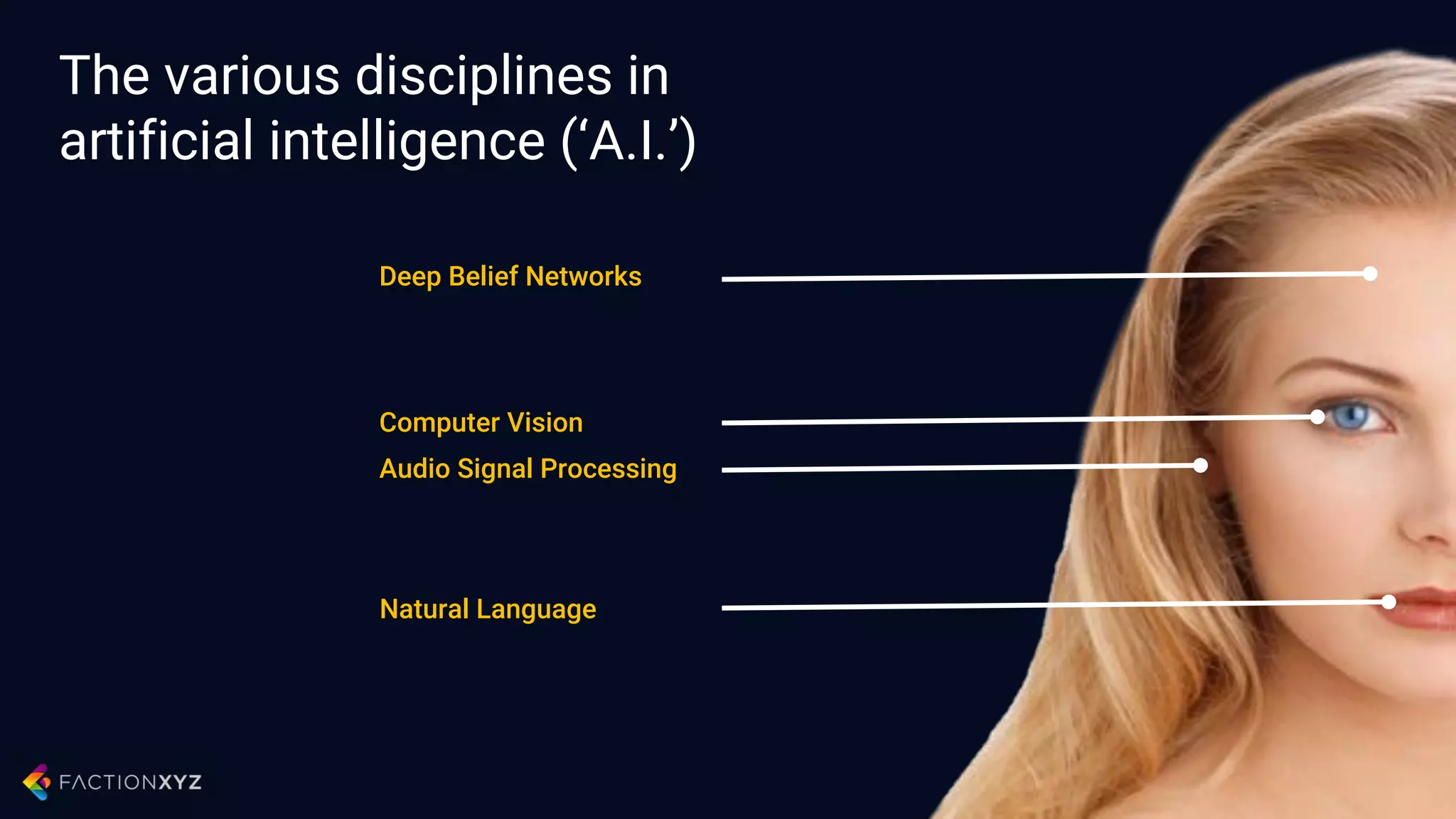
The various disciplines in
artificial intelligence (‘A.I.’)
Deep Belief Networks
Computer Vision
Audio Signal Processing
Natural Language
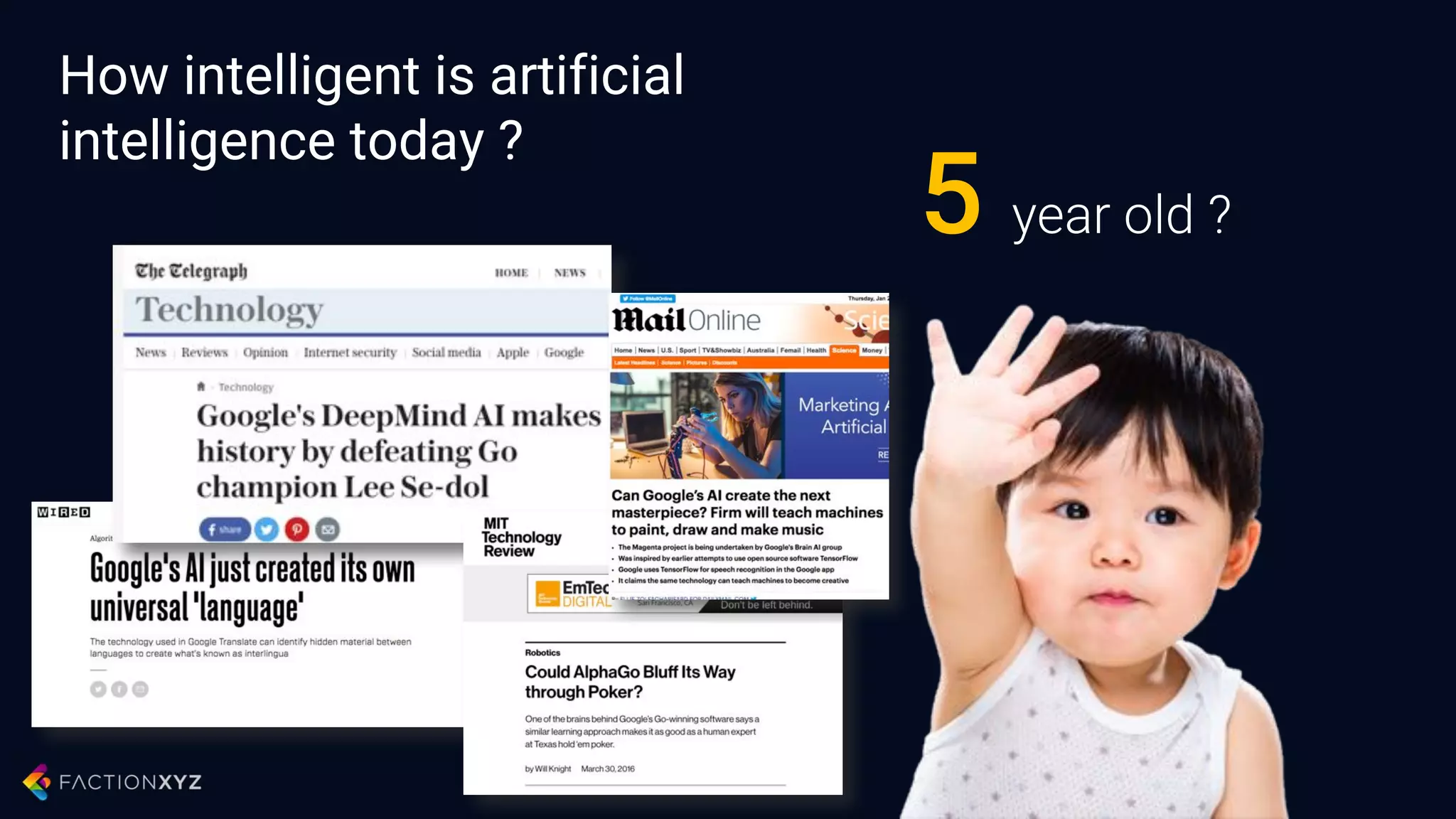
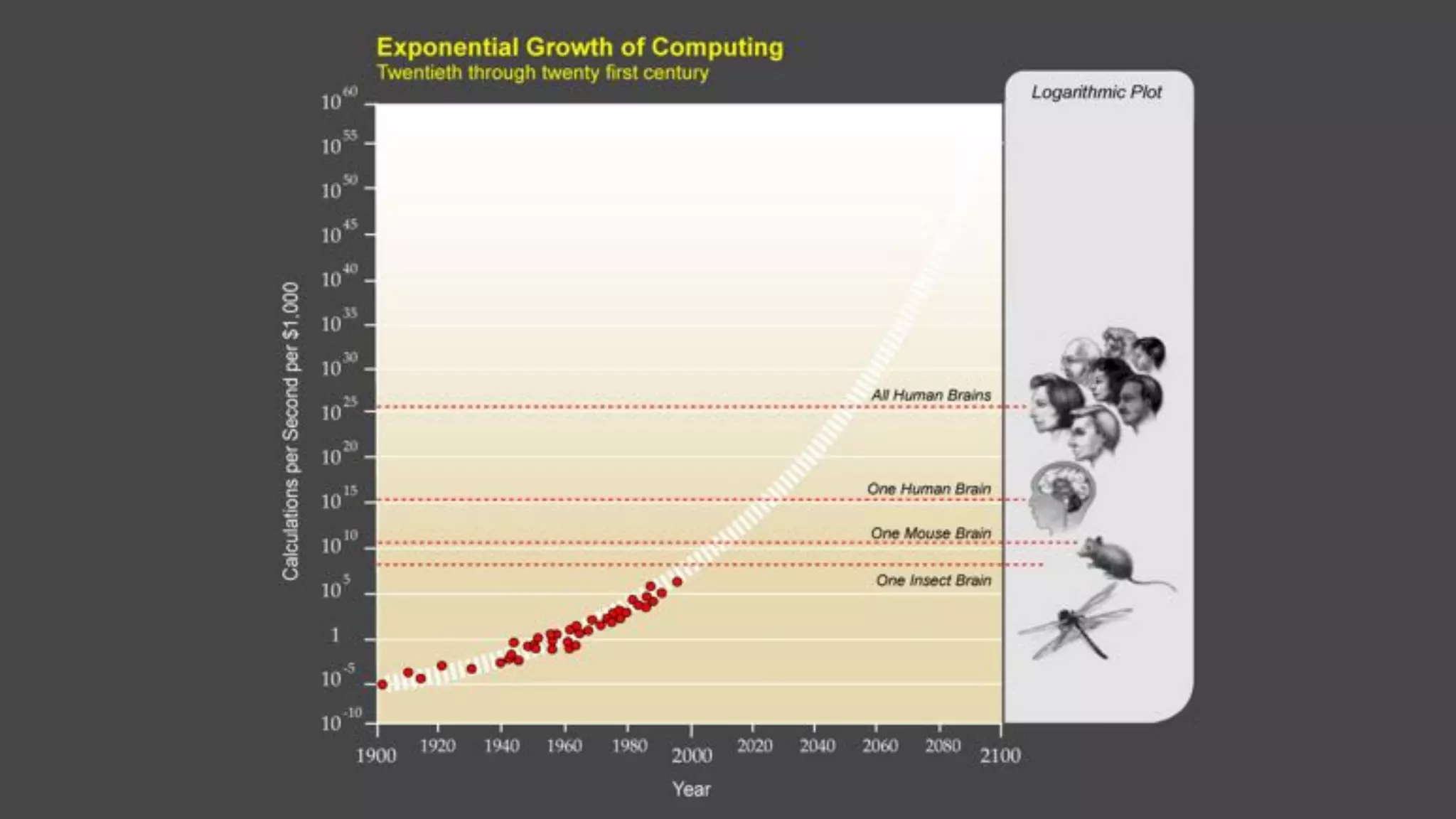
How intelligent is artificial
intelligence today ?
5 year old ?
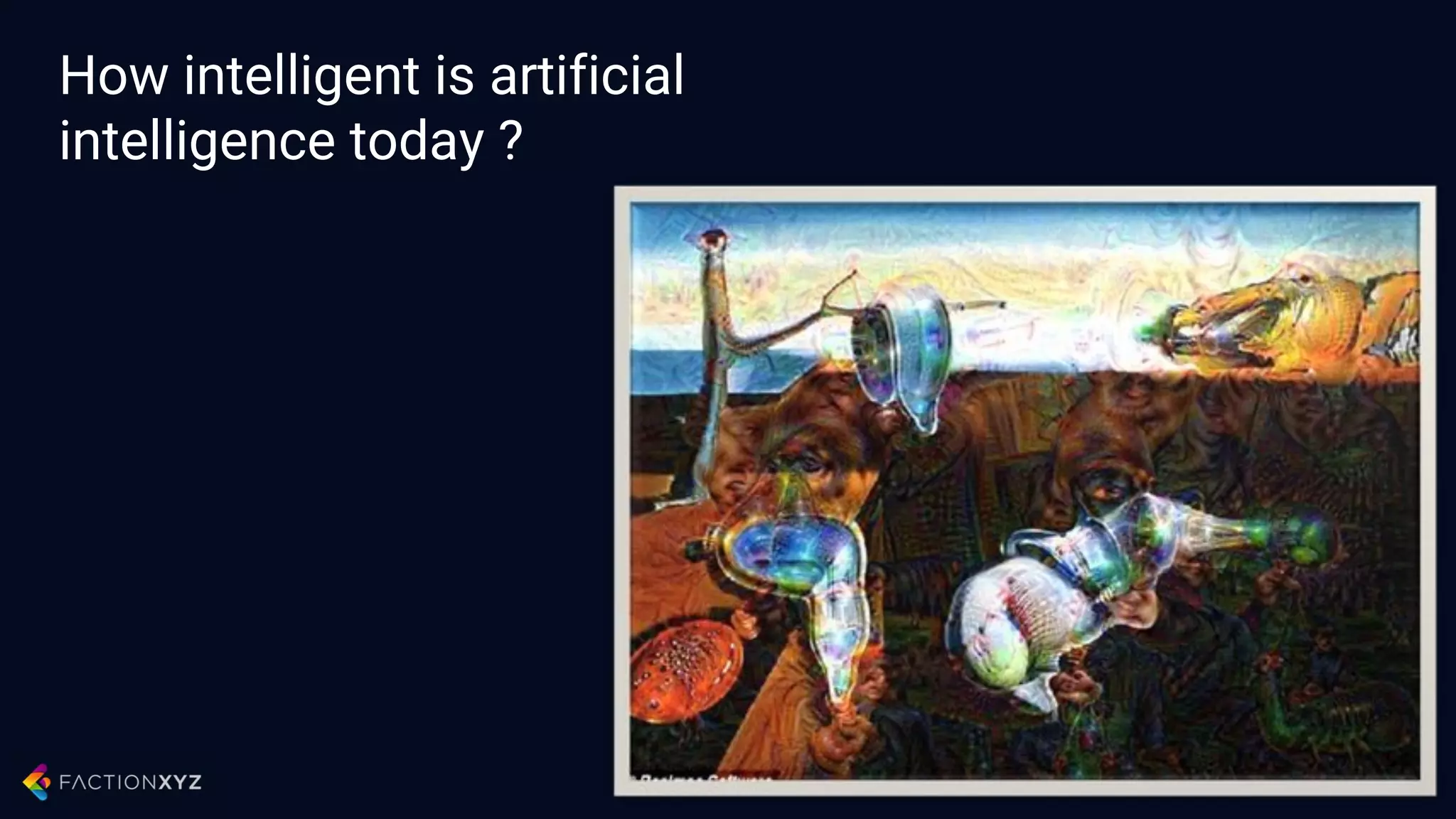
How intelligent is artificial
intelligence today ?
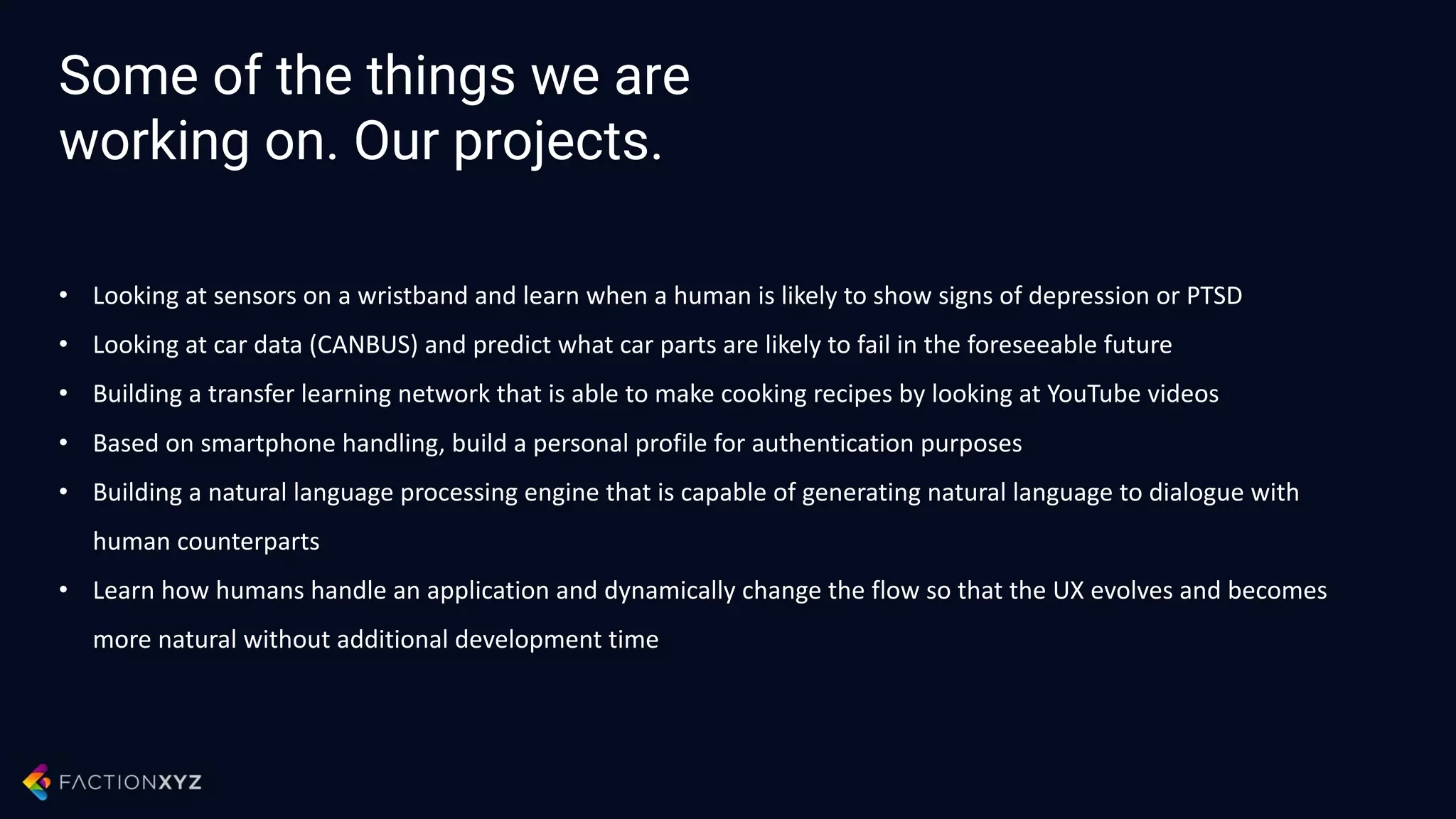
Some of the things we are
working on. Our projects.
• Looking	at	sensors	on	a	wristband	and	learn	when	a	human	is	likely	to	show	signs	of	depression	or	PTSD
• Looking	at	car	data	(CANBUS)	and	predict	what	car	parts	are	likely	to	fail	in	the	foreseeable	future
• Building	a	transfer	learning	network	that	is	able	to	make	cooking	recipes	by	looking	at	YouTube	videos
• Based	on	smartphone	handling,	build	a	personal	profile	for	authentication	purposes
• Building	a	natural	language	processing	engine	that	is	capable	of	generating	natural	language	to	dialogue	with	
human	counterparts
• Learn	how	humans	handle	an	application	and	dynamically	change	the	flow	so	that	the	UX	evolves	and	becomes	
more	natural	without	additional	development	time
Basics in machine learning
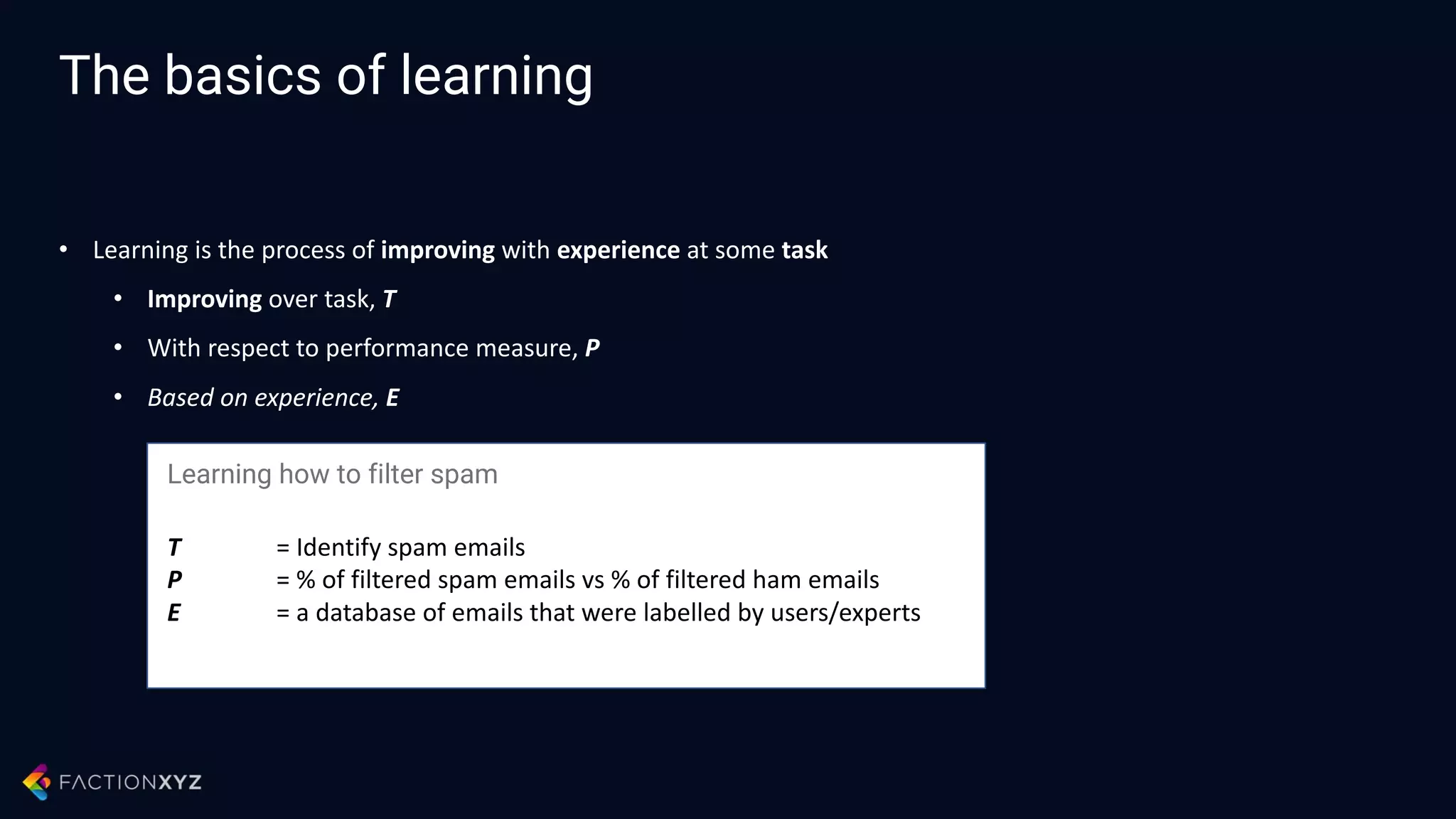
The basics of learning
• Learning	is	the	process	of	improving with	experience at	some	task
• Improving over	task,	T
• With	respect	to	performance	measure,	P
• Based	on	experience, E
Learning how to filter spam
T =	Identify	spam	emails
P =	%	of	filtered	spam	emails	vs	%	of	filtered	ham	emails
E =	a	database	of	emails	that	were	labelled	by	users/experts
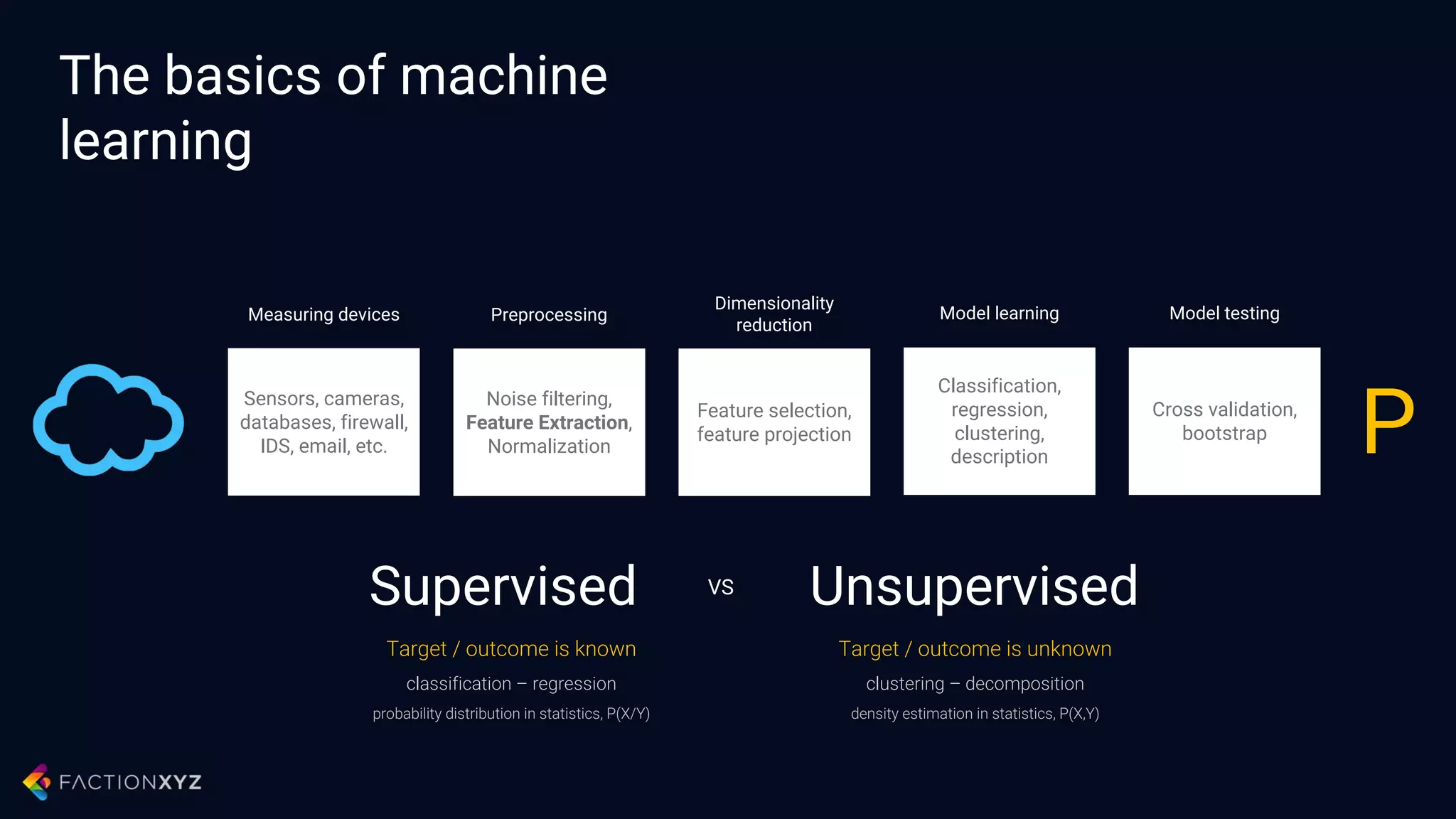
The basics of machine
learning
Sensors, cameras,
databases, firewall,
IDS, email, etc.
Measuring devices
Noise filtering,
Feature Extraction,
Normalization
Preprocessing
Feature selection,
feature projection
Dimensionality
reduction
Classification,
regression,
clustering,
description
Model learning
Cross validation,
bootstrap
Model testing
P
Supervised UnsupervisedVS
Target / outcome is known
classification – regression
probability distribution in statistics, P(X/Y)
Target / outcome is unknown
clustering – decomposition
density estimation in statistics, P(X,Y)
Introducing machine learning to cyber security
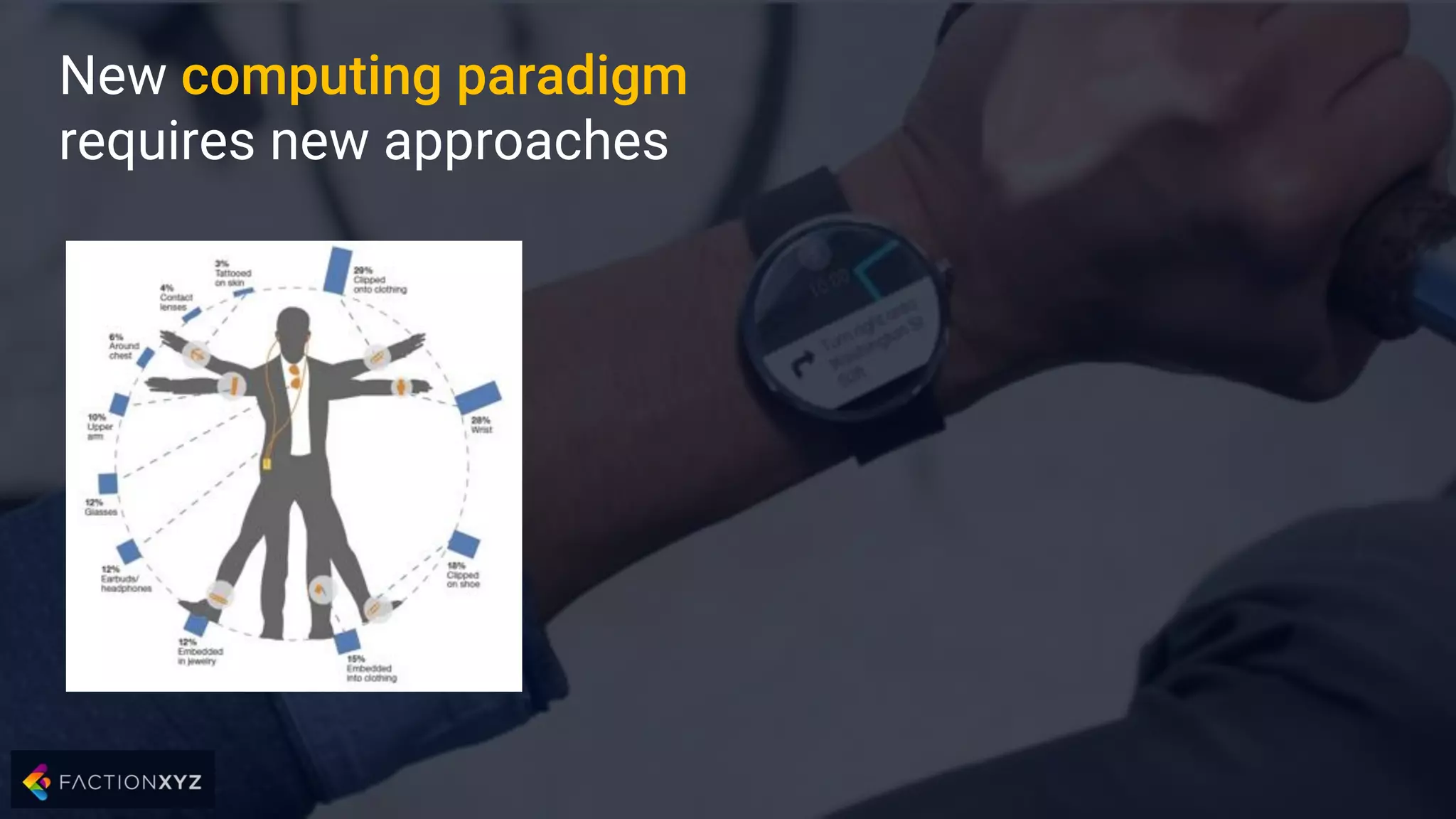
New computing paradigm
requires new approaches
New threats are rapidly
emerging
…
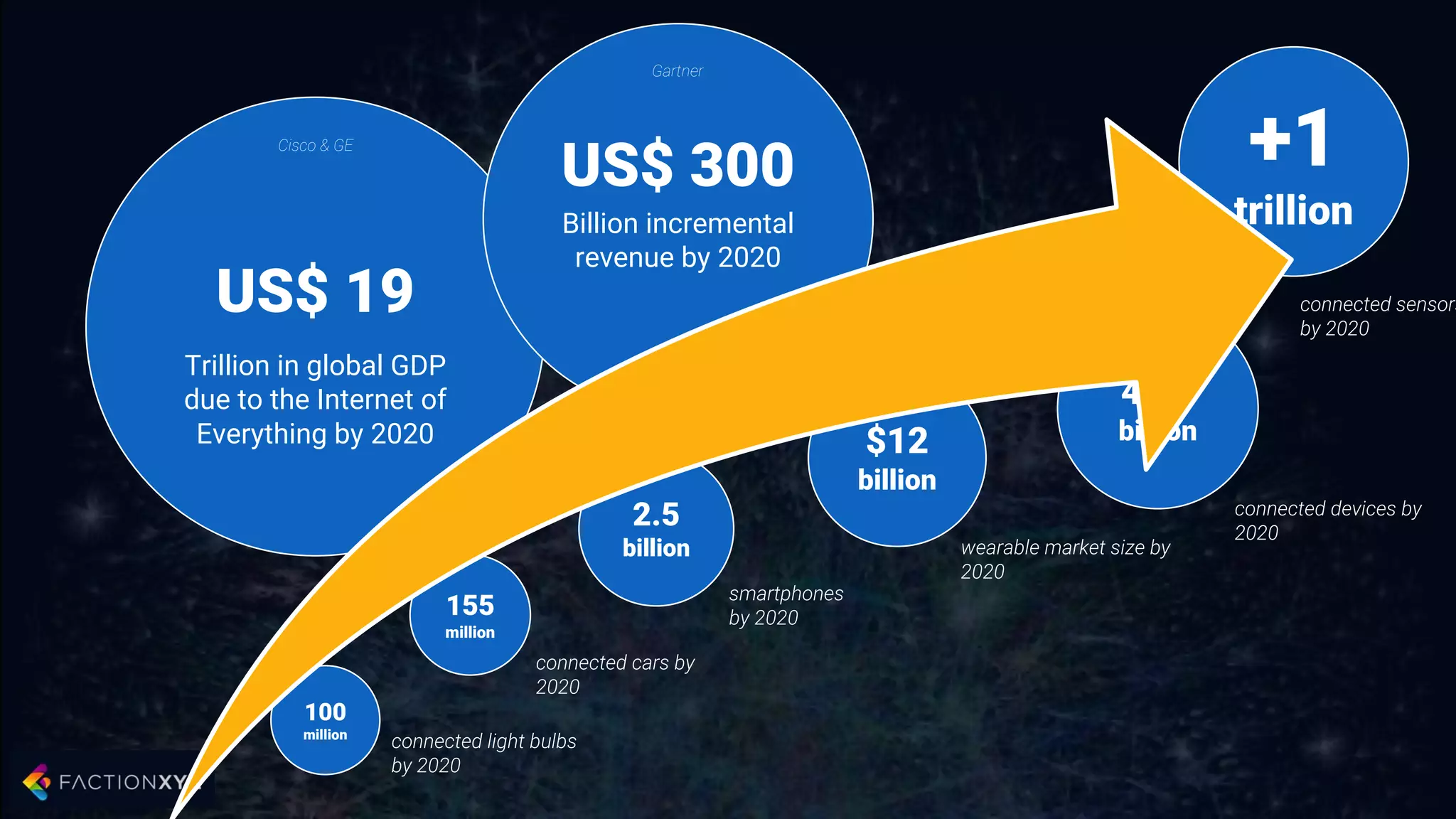
US$ 19
Trillion in global GDP
due to the Internet of
Everything by 2020
Cisco & GE
US$ 300
Billion incremental
revenue by 2020
Gartner
40.9
billion
connected devices by
2020
155
million
connected cars by
2020
100
million
connected light bulbs
by 2020
+1
trillion
connected sensors
by 2020
2.5
billion
smartphones
by 2020
$12
billion
wearable market size by
2020
New data paradigm is
growing exponentially
Observed, real time, signal data Declared, structured data
VS
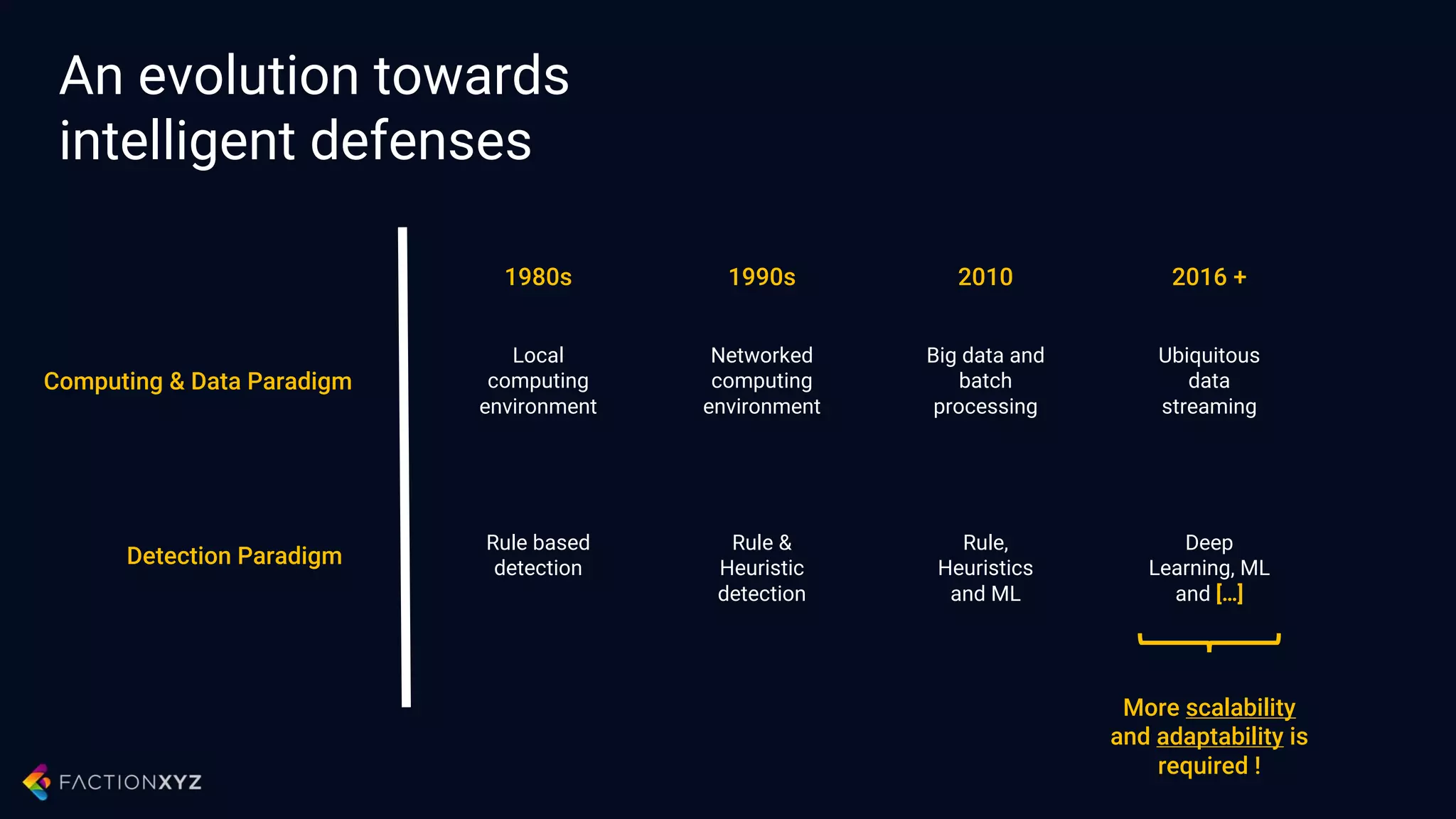
An evolution towards
intelligent defenses
Computing & Data Paradigm
Detection Paradigm
1980s 1990s 2010 2016 +
Local
computing
environment
Networked
computing
environment
Big data and
batch
processing
Ubiquitous
data
streaming
Rule based
detection
Rule &
Heuristic
detection
Rule,
Heuristics
and ML
Deep
Learning, ML
and […]
More scalability
and adaptability is
required !
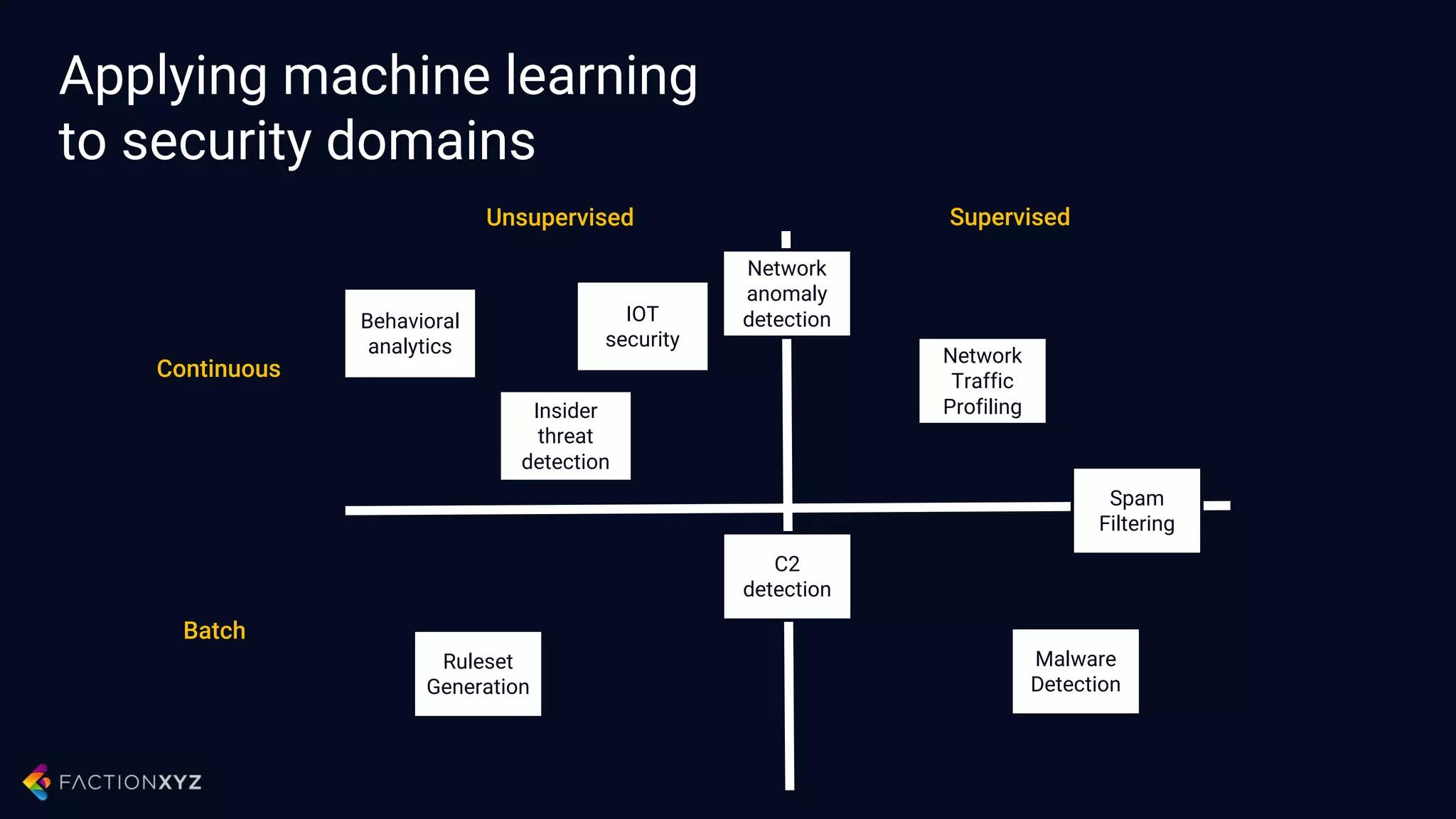
Applying machine learning
to security domains
Behavioral
analytics
SupervisedUnsupervised
Continuous
Batch
Insider
threat
detection
Network
anomaly
detection
C2
detection
Spam
Filtering
Malware
Detection
Ruleset
Generation
Network
Traffic
Profiling
IOT
security
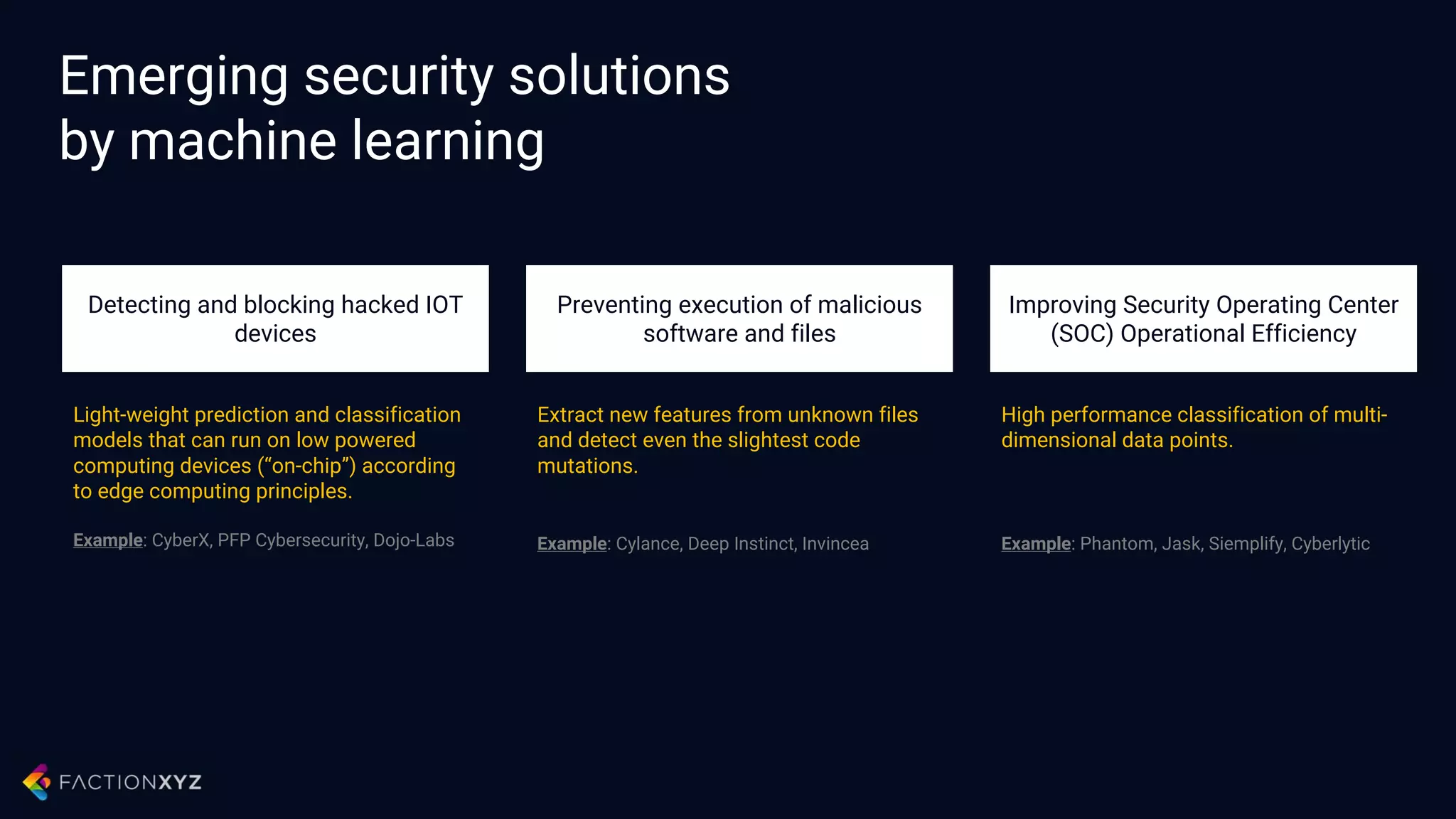
Emerging security solutions
by machine learning
Detecting and blocking hacked IOT
devices
Preventing execution of malicious
software and files
Light-weight prediction and classification
models that can run on low powered
computing devices (“on-chip”) according
to edge computing principles.
Example: CyberX, PFP Cybersecurity, Dojo-Labs
High performance classification of multi-
dimensional data points.
Example: Phantom, Jask, Siemplify, Cyberlytic
Improving Security Operating Center
(SOC) Operational Efficiency
Extract new features from unknown files
and detect even the slightest code
mutations.
Example: Cylance, Deep Instinct, Invincea
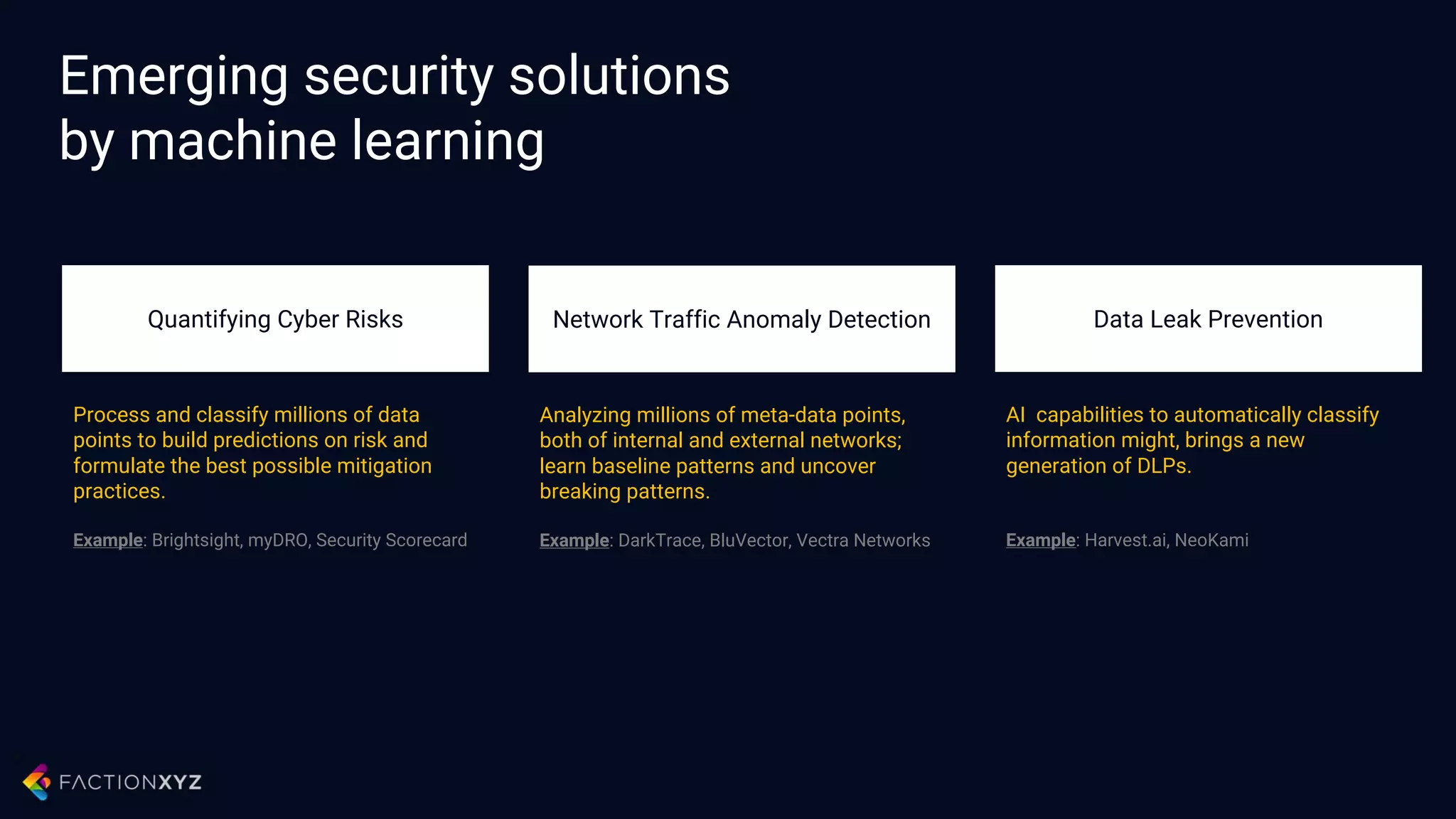
Emerging security solutions
by machine learning
Quantifying Cyber Risks
Process and classify millions of data
points to build predictions on risk and
formulate the best possible mitigation
practices.
Example: Brightsight, myDRO, Security Scorecard
Network Traffic Anomaly Detection
Analyzing millions of meta-data points,
both of internal and external networks;
learn baseline patterns and uncover
breaking patterns.
Example: DarkTrace, BluVector, Vectra Networks
Data Leak Prevention
AI capabilities to automatically classify
information might, brings a new
generation of DLPs.
Example: Harvest.ai, NeoKami
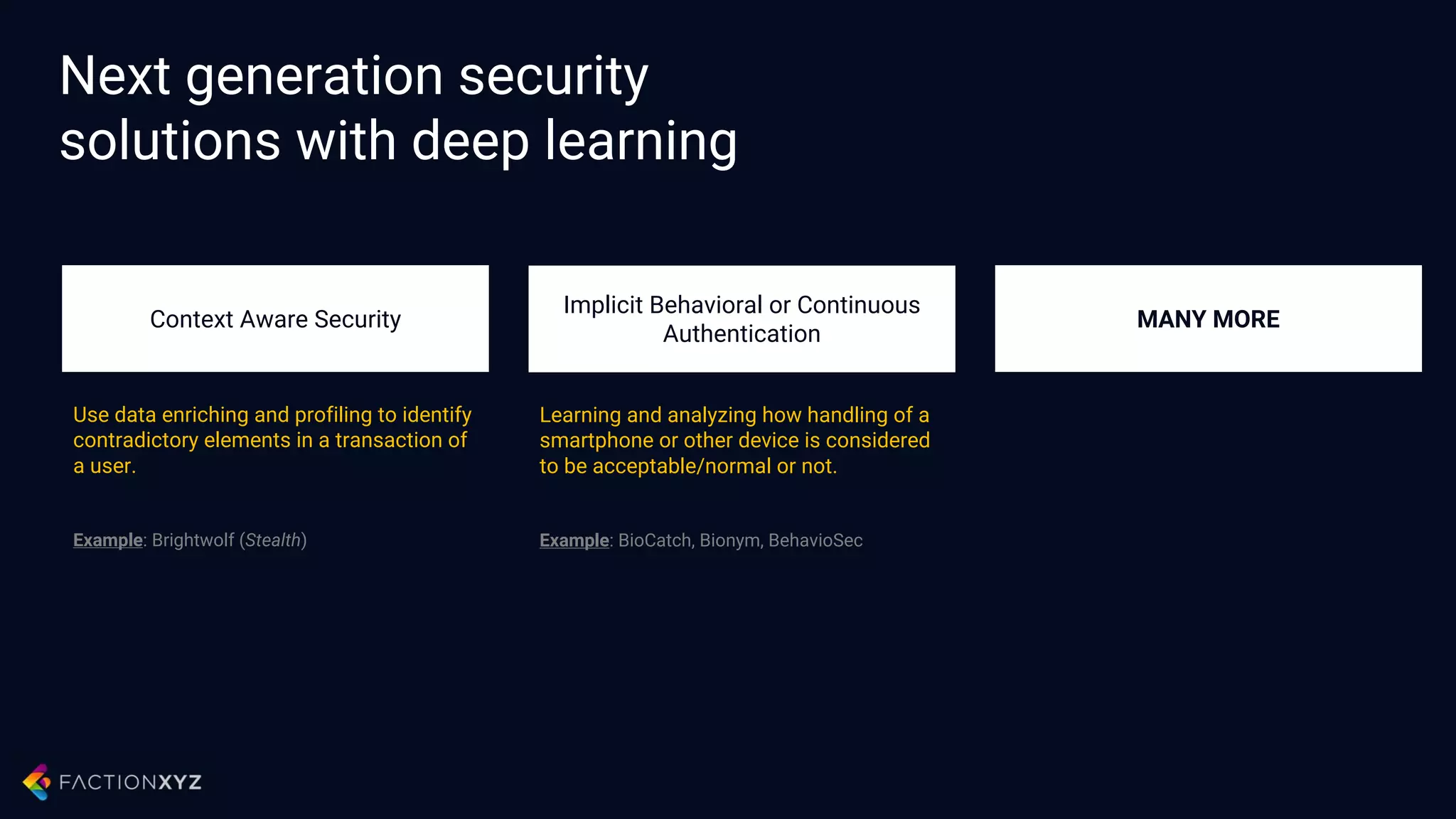
Next generation security
solutions with deep learning
Context Aware Security
Use data enriching and profiling to identify
contradictory elements in a transaction of
a user.
Example: Brightwolf (Stealth)
Implicit Behavioral or Continuous
Authentication
Learning and analyzing how handling of a
smartphone or other device is considered
to be acceptable/normal or not.
Example: BioCatch, Bionym, BehavioSec
MANY MORE
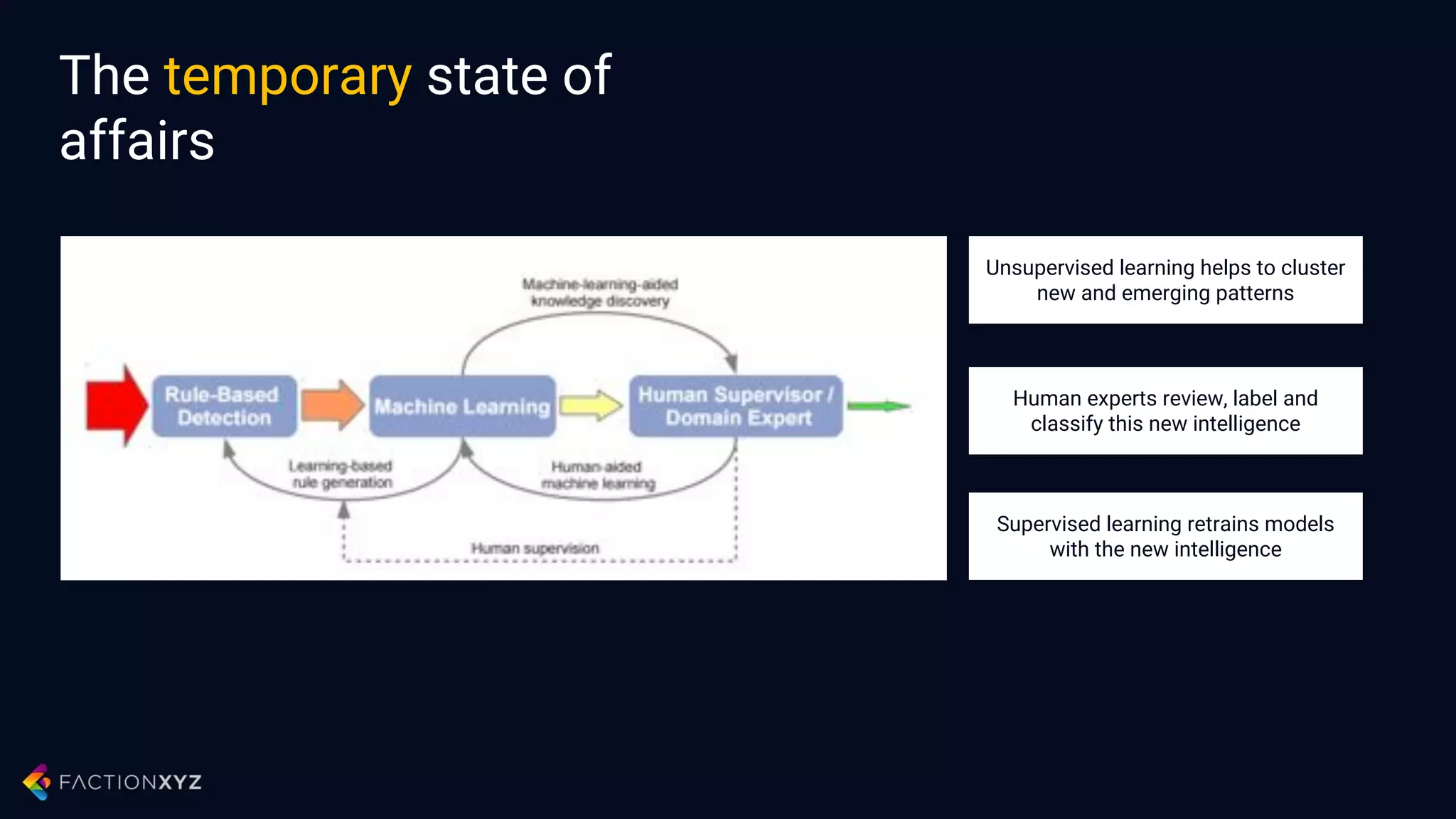
The temporary state of
affairs
Unsupervised learning helps to cluster
new and emerging patterns
Human experts review, label and
classify this new intelligence
Supervised learning retrains models
with the new intelligence
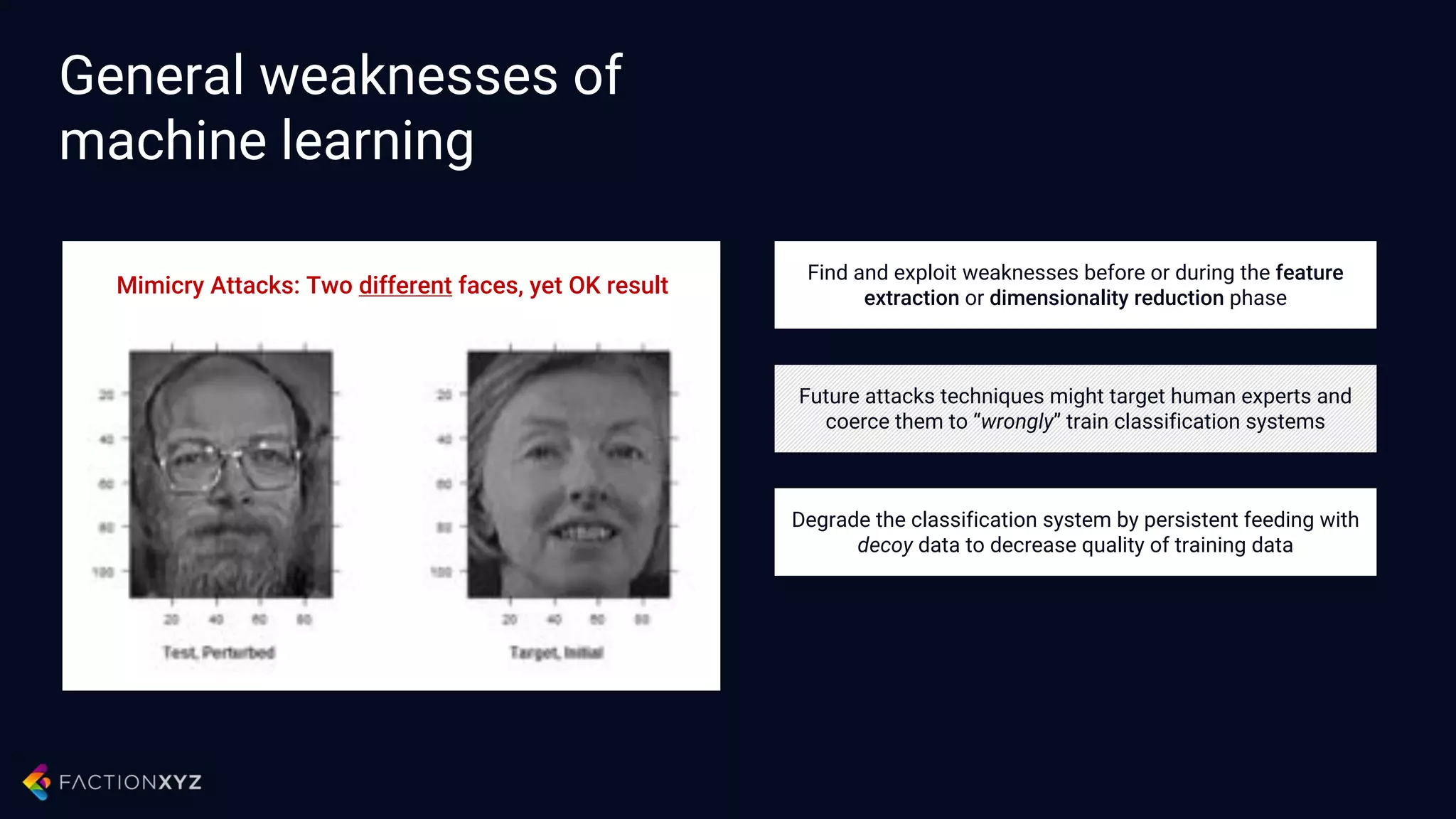
General weaknesses of
machine learning
Find and exploit weaknesses before or during the feature
extraction or dimensionality reduction phase
Mimicry Attacks: Two different faces, yet OK result
Future attacks techniques might target human experts and
coerce them to “wrongly” train classification systems
Degrade the classification system by persistent feeding with
decoy data to decrease quality of training data
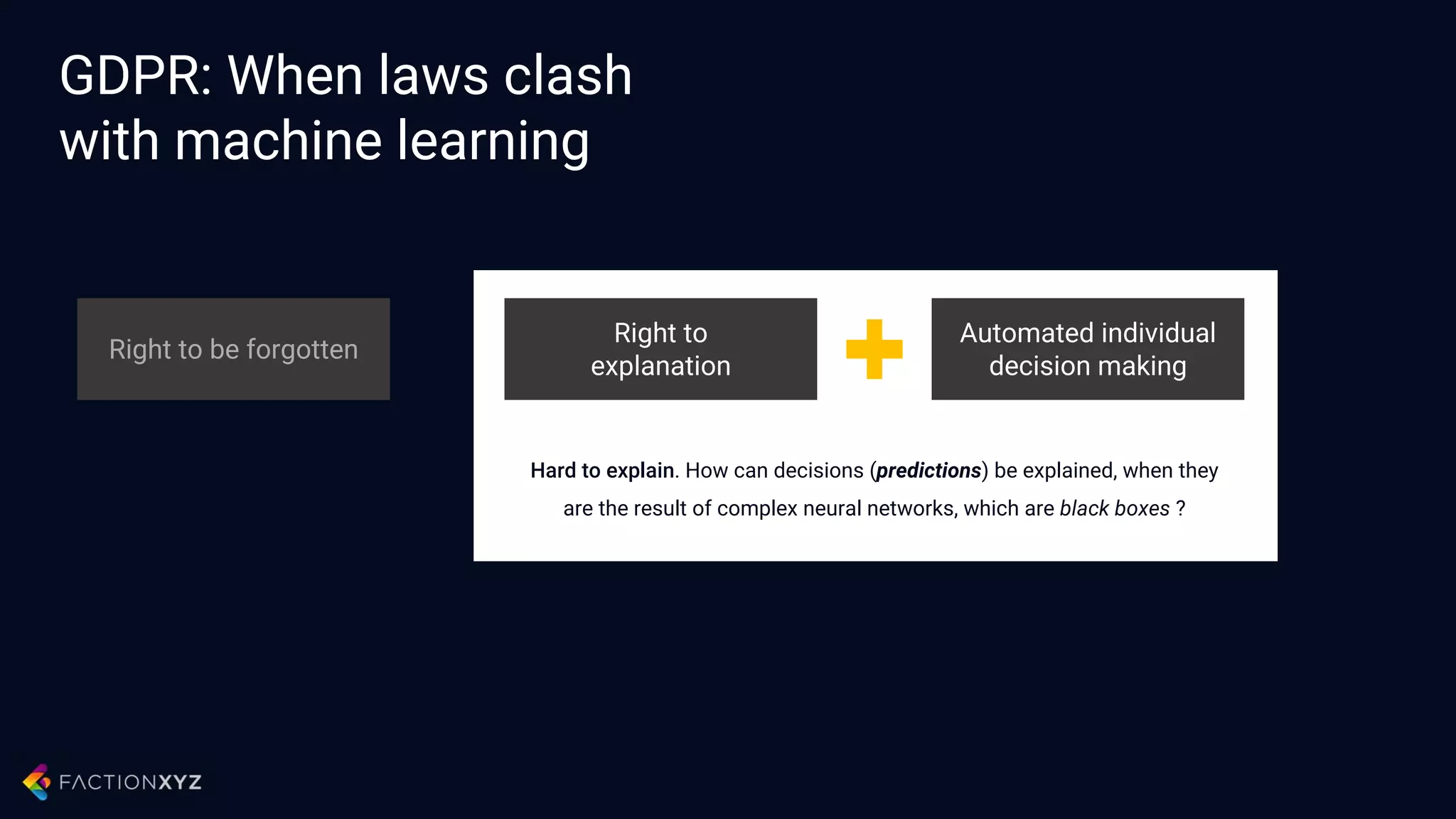
GDPR: When laws clash
with machine learning
Right to be forgotten
Right to
explanation
Automated individual
decision making
Hard to explain. How can decisions (predictions) be explained, when they
are the result of complex neural networks, which are black boxes ?
Beyond 2020
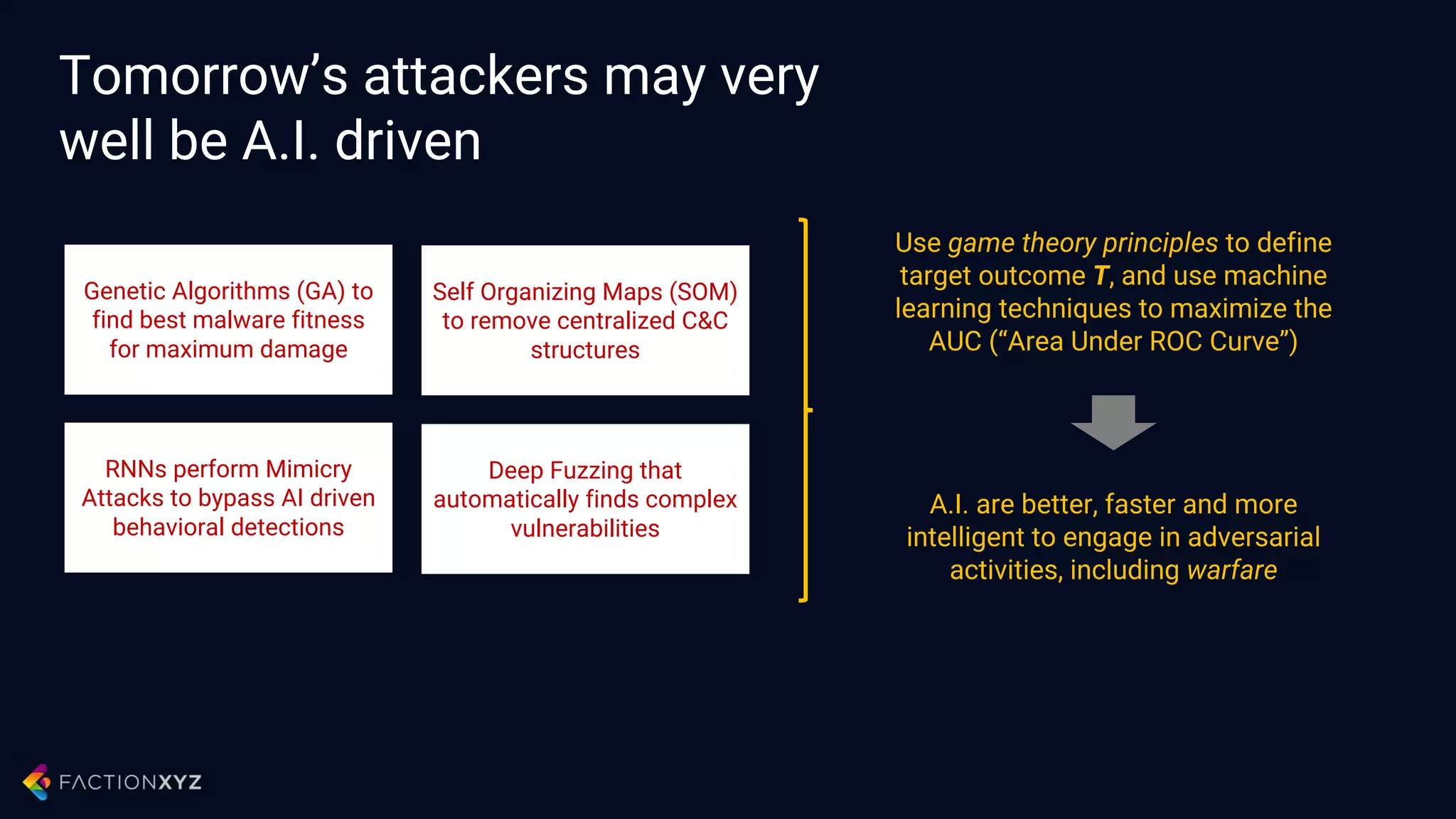
Tomorrow’s attackers may very
well be A.I. driven
Genetic Algorithms (GA) to
find best malware fitness
for maximum damage
Self Organizing Maps (SOM)
to remove centralized C&C
structures
Deep Fuzzing that
automatically finds complex
vulnerabilities
RNNs perform Mimicry
Attacks to bypass AI driven
behavioral detections
Use game theory principles to define
target outcome T, and use machine
learning techniques to maximize the
AUC (“Area Under ROC Curve”)
A.I. are better, faster and more
intelligent to engage in adversarial
activities, including warfare
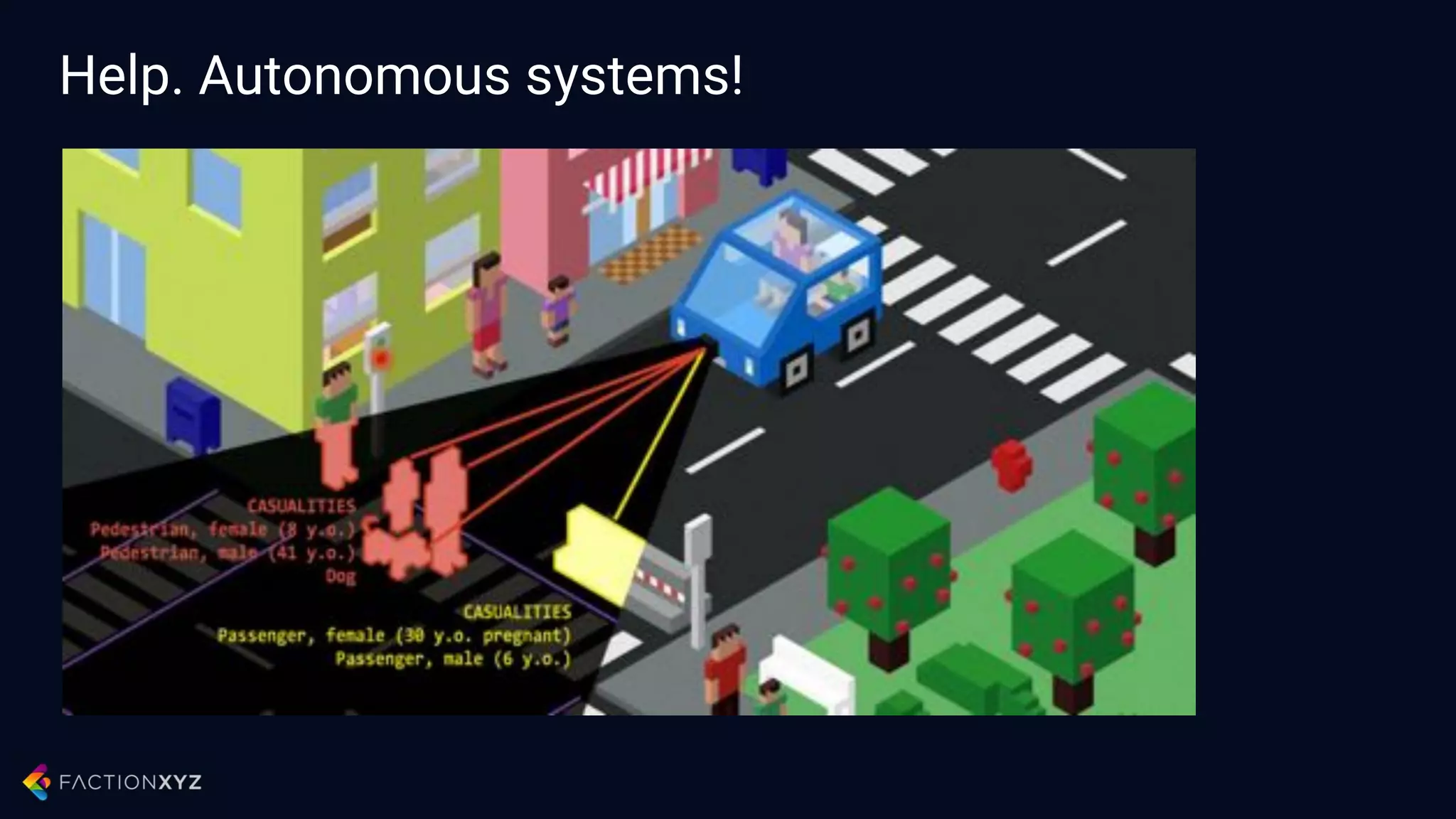
Help. Autonomous systems!
Morality systems. An
answer to deep cyber
security challenges
Morality. Morality systems are required to keep A.I.
systems in check and provide a framework to match with
desirable outcomes.
Survivability. Even when an autonomous system is
hacked, we expect these degraded systems to be able to
still make potentially moral decisions by themselves.
Security in the age of
artificial intelligence
How A.I. will make our world more secure and vulnerable
Filip Maertens (Faction XYZ) ● filip@faction.xyz

Security in the age of Artificial Intelligence

  • 1.
    Security in theage of artificial intelligence How A.I. will make our world more secure … or vulnerable Filip Maertens (Faction XYZ) ● filip@faction.xyz
  • 2.
  • 3.
    The various disciplinesin artificial intelligence (‘A.I.’) Deep Belief Networks Computer Vision Audio Signal Processing Natural Language
  • 4.
    How intelligent isartificial intelligence today ? 5 year old ?
  • 5.
    How intelligent isartificial intelligence today ?
  • 7.
    Some of thethings we are working on. Our projects. • Looking at sensors on a wristband and learn when a human is likely to show signs of depression or PTSD • Looking at car data (CANBUS) and predict what car parts are likely to fail in the foreseeable future • Building a transfer learning network that is able to make cooking recipes by looking at YouTube videos • Based on smartphone handling, build a personal profile for authentication purposes • Building a natural language processing engine that is capable of generating natural language to dialogue with human counterparts • Learn how humans handle an application and dynamically change the flow so that the UX evolves and becomes more natural without additional development time
  • 8.
  • 9.
    The basics oflearning • Learning is the process of improving with experience at some task • Improving over task, T • With respect to performance measure, P • Based on experience, E Learning how to filter spam T = Identify spam emails P = % of filtered spam emails vs % of filtered ham emails E = a database of emails that were labelled by users/experts
  • 10.
    The basics ofmachine learning Sensors, cameras, databases, firewall, IDS, email, etc. Measuring devices Noise filtering, Feature Extraction, Normalization Preprocessing Feature selection, feature projection Dimensionality reduction Classification, regression, clustering, description Model learning Cross validation, bootstrap Model testing P Supervised UnsupervisedVS Target / outcome is known classification – regression probability distribution in statistics, P(X/Y) Target / outcome is unknown clustering – decomposition density estimation in statistics, P(X,Y)
  • 11.
  • 12.
  • 13.
    New threats arerapidly emerging …
  • 14.
    US$ 19 Trillion inglobal GDP due to the Internet of Everything by 2020 Cisco & GE US$ 300 Billion incremental revenue by 2020 Gartner 40.9 billion connected devices by 2020 155 million connected cars by 2020 100 million connected light bulbs by 2020 +1 trillion connected sensors by 2020 2.5 billion smartphones by 2020 $12 billion wearable market size by 2020
  • 15.
    New data paradigmis growing exponentially Observed, real time, signal data Declared, structured data VS
  • 16.
    An evolution towards intelligentdefenses Computing & Data Paradigm Detection Paradigm 1980s 1990s 2010 2016 + Local computing environment Networked computing environment Big data and batch processing Ubiquitous data streaming Rule based detection Rule & Heuristic detection Rule, Heuristics and ML Deep Learning, ML and […] More scalability and adaptability is required !
  • 17.
    Applying machine learning tosecurity domains Behavioral analytics SupervisedUnsupervised Continuous Batch Insider threat detection Network anomaly detection C2 detection Spam Filtering Malware Detection Ruleset Generation Network Traffic Profiling IOT security
  • 18.
    Emerging security solutions bymachine learning Detecting and blocking hacked IOT devices Preventing execution of malicious software and files Light-weight prediction and classification models that can run on low powered computing devices (“on-chip”) according to edge computing principles. Example: CyberX, PFP Cybersecurity, Dojo-Labs High performance classification of multi- dimensional data points. Example: Phantom, Jask, Siemplify, Cyberlytic Improving Security Operating Center (SOC) Operational Efficiency Extract new features from unknown files and detect even the slightest code mutations. Example: Cylance, Deep Instinct, Invincea
  • 19.
    Emerging security solutions bymachine learning Quantifying Cyber Risks Process and classify millions of data points to build predictions on risk and formulate the best possible mitigation practices. Example: Brightsight, myDRO, Security Scorecard Network Traffic Anomaly Detection Analyzing millions of meta-data points, both of internal and external networks; learn baseline patterns and uncover breaking patterns. Example: DarkTrace, BluVector, Vectra Networks Data Leak Prevention AI capabilities to automatically classify information might, brings a new generation of DLPs. Example: Harvest.ai, NeoKami
  • 20.
    Next generation security solutionswith deep learning Context Aware Security Use data enriching and profiling to identify contradictory elements in a transaction of a user. Example: Brightwolf (Stealth) Implicit Behavioral or Continuous Authentication Learning and analyzing how handling of a smartphone or other device is considered to be acceptable/normal or not. Example: BioCatch, Bionym, BehavioSec MANY MORE
  • 21.
    The temporary stateof affairs Unsupervised learning helps to cluster new and emerging patterns Human experts review, label and classify this new intelligence Supervised learning retrains models with the new intelligence
  • 22.
    General weaknesses of machinelearning Find and exploit weaknesses before or during the feature extraction or dimensionality reduction phase Mimicry Attacks: Two different faces, yet OK result Future attacks techniques might target human experts and coerce them to “wrongly” train classification systems Degrade the classification system by persistent feeding with decoy data to decrease quality of training data
  • 23.
    GDPR: When lawsclash with machine learning Right to be forgotten Right to explanation Automated individual decision making Hard to explain. How can decisions (predictions) be explained, when they are the result of complex neural networks, which are black boxes ?
  • 24.
  • 25.
    Tomorrow’s attackers mayvery well be A.I. driven Genetic Algorithms (GA) to find best malware fitness for maximum damage Self Organizing Maps (SOM) to remove centralized C&C structures Deep Fuzzing that automatically finds complex vulnerabilities RNNs perform Mimicry Attacks to bypass AI driven behavioral detections Use game theory principles to define target outcome T, and use machine learning techniques to maximize the AUC (“Area Under ROC Curve”) A.I. are better, faster and more intelligent to engage in adversarial activities, including warfare
  • 26.
  • 27.
    Morality systems. An answerto deep cyber security challenges Morality. Morality systems are required to keep A.I. systems in check and provide a framework to match with desirable outcomes. Survivability. Even when an autonomous system is hacked, we expect these degraded systems to be able to still make potentially moral decisions by themselves.
  • 28.
    Security in theage of artificial intelligence How A.I. will make our world more secure and vulnerable Filip Maertens (Faction XYZ) ● filip@faction.xyz