
Security in microservices
architectures
maxime.thomas@stootie.com
https://www.linkedin.com/in/maximethomas
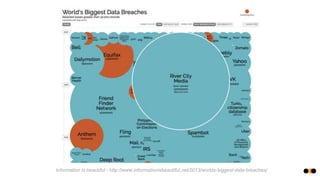
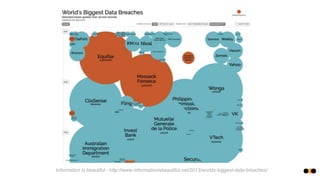
Information Is beautiful - http://www.informationisbeautiful.net/2013/worlds-biggest-data-breaches/
“Security is not a product,
it’s a process”
Bruce Schneier
Applied Cryptography Author
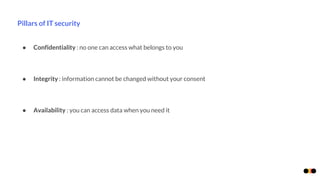
Pillars of IT security
● Confidentiality : no one can access what belongs to you
● Integrity : information cannot be changed without your consent
● Availability : you can access data when you need it
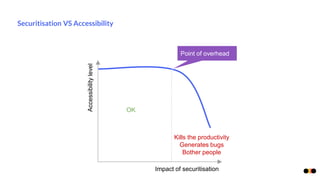
Securitisation VS Accessibility
Impact of securitisation
Accessibilitylevel
OK
Kills the productivity
Generates bugs
Bother people
Point of overhead
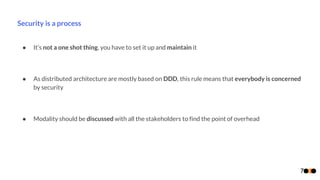
Security is a process
7
● It’s not a one shot thing, you have to set it up and maintain it
● As distributed architecture are mostly based on DDD, this rule means that everybody is concerned
by security
● Modality should be discussed with all the stakeholders to find the point of overhead
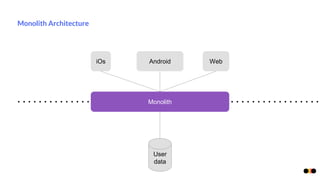
Monolith Architecture
iOs Android Web
Monolith
User
data
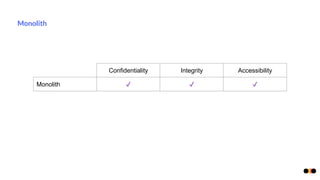
Monolith
Confidentiality Integrity Accessibility
Monolith ✔ ✔ ✔
Other API Other BFF
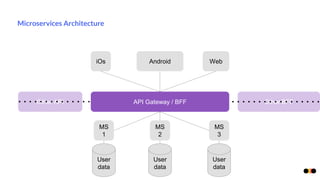
Microservices Architecture
API Gateway / BFF
User
data
User
data
User
data
MS
1
MS
2
MS
3
iOs Android Web
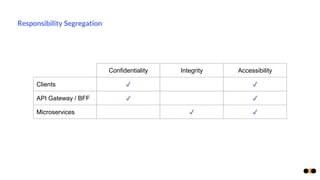
Responsibility Segregation
Confidentiality Integrity Accessibility
Clients ✔ ✔
API Gateway / BFF ✔ ✔
Microservices ✔ ✔
Distributed software does not allow
you to create security breaches
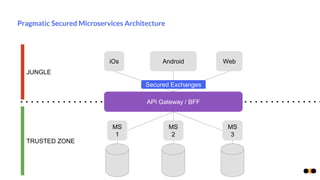
Pragmatic Secured Microservices Architecture
API Gateway / BFF
MS
1
MS
2
MS
3
Secured Exchanges
iOs Android Web
JUNGLE
TRUSTED ZONE
REST Cheat Sheet
Mobile Cheat Sheet
Network Cheat Sheet
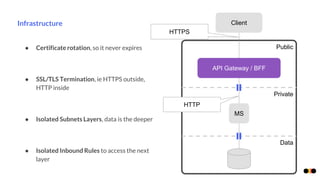
Infrastructure
● Certificate rotation, so it never expires
● SSL/TLS Termination, ie HTTPS outside,
HTTP inside
● Isolated Subnets Layers, data is the deeper
● Isolated Inbound Rules to access the next
layer
API Gateway / BFF
MS
Client
Public
Private
Data
HTTPS
HTTP
==
User Sessions
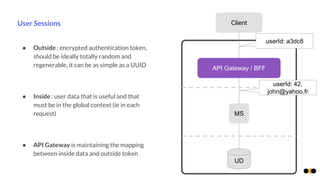
● Outside : encrypted authentication token,
should be ideally totally random and
regenerable, it can be as simple as a UUID
● Inside : user data that is useful and that
must be in the global context (ie in each
request)
● API Gateway is maintaining the mapping
between inside data and outside token
API Gateway / BFF
UD
MS
Client
userId: a3dc8
userId: 42,
john@yahoo.fr
Microservices 1/3 - Data Isolation
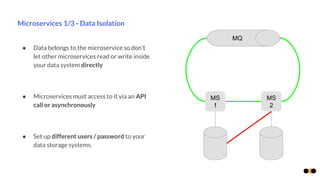
● Data belongs to the microservice so don’t
let other microservices read or write inside
your data system directly
● Microservices must access to it via an API
call or asynchronously
● Set up different users / password to your
data storage systems.
MS
1
MS
2
MQ
Microservices 2/3 - Ownership check
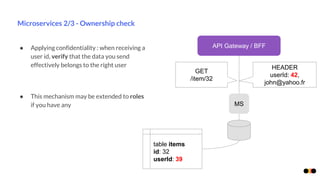
● Applying confidentiality : when receiving a
user id, verify that the data you send
effectively belongs to the right user
● This mechanism may be extended to roles
if you have any
API Gateway / BFF
MS
HEADER
userId: 42,
john@yahoo.fr
GET
/item/32
table items
id: 32
userId: 39
Microservices 3/3 - Diagnose and recover
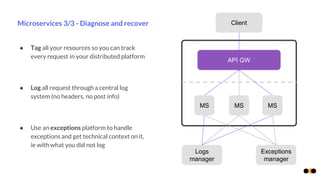
● Tag all your resources so you can track
every request in your distributed platform
● Log all request through a central log
system (no headers, no post info)
● Use an exceptions platform to handle
exceptions and get technical context on it,
ie with what you did not log
API GW
MS
Client
MS MS
Logs
manager
Exceptions
manager
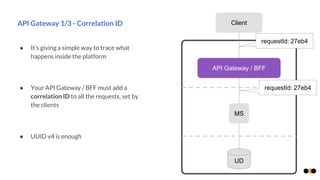
API Gateway 1/3 - Correlation ID
● It’s giving a simple way to trace what
happens inside the platform
● Your API Gateway / BFF must add a
correlation ID to all the requests, set by
the clients
● UUID v4 is enough
API Gateway / BFF
UD
MS
Client
requestId: 27eb4
requestId: 27eb4
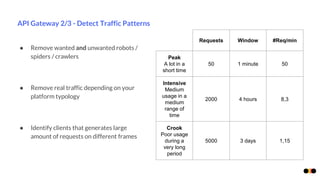
API Gateway 2/3 - Detect Traffic Patterns
● Remove wanted and unwanted robots /
spiders / crawlers
● Remove real traffic depending on your
platform typology
● Identify clients that generates large
amount of requests on different frames
Requests Window #Req/min
Peak
A lot in a
short time
50 1 minute 50
Intensive
Medium
usage in a
medium
range of
time
2000 4 hours 8,3
Crook
Poor usage
during a
very long
period
5000 3 days 1,15
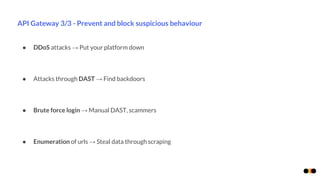
API Gateway 3/3 - Prevent and block suspicious behaviour
● DDoS attacks → Put your platform down
● Attacks through DAST → Find backdoors
● Brute force login → Manual DAST, scammers
● Enumeration of urls → Steal data through scraping
Mobile
● Master all the interfaces of your app
○ in its environment : file system, identity system, http layer, …
○ what you expose : share / publication system
● Be careful of what is left on the device after uninstall
● Certificate pinning : a user can usurp client identity through self signed certificate
Security is a process
Too much security kills the security
Security when needed
Thank you!
maxime.thomas@stootie.com
https://www.linkedin.com/in/maximethomas

Security in microservices architectures

  • 1.
  • 2.
    Information Is beautiful- http://www.informationisbeautiful.net/2013/worlds-biggest-data-breaches/
  • 3.
    Information Is beautiful- http://www.informationisbeautiful.net/2013/worlds-biggest-data-breaches/
  • 4.
    “Security is nota product, it’s a process” Bruce Schneier Applied Cryptography Author
  • 5.
    Pillars of ITsecurity ● Confidentiality : no one can access what belongs to you ● Integrity : information cannot be changed without your consent ● Availability : you can access data when you need it
  • 6.
    Securitisation VS Accessibility Impactof securitisation Accessibilitylevel OK Kills the productivity Generates bugs Bother people Point of overhead
  • 7.
    Security is aprocess 7 ● It’s not a one shot thing, you have to set it up and maintain it ● As distributed architecture are mostly based on DDD, this rule means that everybody is concerned by security ● Modality should be discussed with all the stakeholders to find the point of overhead
  • 8.
    Monolith Architecture iOs AndroidWeb Monolith User data
  • 9.
  • 10.
    Other API OtherBFF Microservices Architecture API Gateway / BFF User data User data User data MS 1 MS 2 MS 3 iOs Android Web
  • 11.
    Responsibility Segregation Confidentiality IntegrityAccessibility Clients ✔ ✔ API Gateway / BFF ✔ ✔ Microservices ✔ ✔
  • 12.
    Distributed software doesnot allow you to create security breaches
  • 13.
    Pragmatic Secured MicroservicesArchitecture API Gateway / BFF MS 1 MS 2 MS 3 Secured Exchanges iOs Android Web JUNGLE TRUSTED ZONE
  • 14.
    REST Cheat Sheet MobileCheat Sheet Network Cheat Sheet
  • 15.
    Infrastructure ● Certificate rotation,so it never expires ● SSL/TLS Termination, ie HTTPS outside, HTTP inside ● Isolated Subnets Layers, data is the deeper ● Isolated Inbound Rules to access the next layer API Gateway / BFF MS Client Public Private Data HTTPS HTTP ==
  • 16.
    User Sessions ● Outside: encrypted authentication token, should be ideally totally random and regenerable, it can be as simple as a UUID ● Inside : user data that is useful and that must be in the global context (ie in each request) ● API Gateway is maintaining the mapping between inside data and outside token API Gateway / BFF UD MS Client userId: a3dc8 userId: 42, john@yahoo.fr
  • 17.
    Microservices 1/3 -Data Isolation ● Data belongs to the microservice so don’t let other microservices read or write inside your data system directly ● Microservices must access to it via an API call or asynchronously ● Set up different users / password to your data storage systems. MS 1 MS 2 MQ
  • 18.
    Microservices 2/3 -Ownership check ● Applying confidentiality : when receiving a user id, verify that the data you send effectively belongs to the right user ● This mechanism may be extended to roles if you have any API Gateway / BFF MS HEADER userId: 42, john@yahoo.fr GET /item/32 table items id: 32 userId: 39
  • 19.
    Microservices 3/3 -Diagnose and recover ● Tag all your resources so you can track every request in your distributed platform ● Log all request through a central log system (no headers, no post info) ● Use an exceptions platform to handle exceptions and get technical context on it, ie with what you did not log API GW MS Client MS MS Logs manager Exceptions manager
  • 20.
    API Gateway 1/3- Correlation ID ● It’s giving a simple way to trace what happens inside the platform ● Your API Gateway / BFF must add a correlation ID to all the requests, set by the clients ● UUID v4 is enough API Gateway / BFF UD MS Client requestId: 27eb4 requestId: 27eb4
  • 21.
    API Gateway 2/3- Detect Traffic Patterns ● Remove wanted and unwanted robots / spiders / crawlers ● Remove real traffic depending on your platform typology ● Identify clients that generates large amount of requests on different frames Requests Window #Req/min Peak A lot in a short time 50 1 minute 50 Intensive Medium usage in a medium range of time 2000 4 hours 8,3 Crook Poor usage during a very long period 5000 3 days 1,15
  • 22.
    API Gateway 3/3- Prevent and block suspicious behaviour ● DDoS attacks → Put your platform down ● Attacks through DAST → Find backdoors ● Brute force login → Manual DAST, scammers ● Enumeration of urls → Steal data through scraping
  • 23.
    Mobile ● Master allthe interfaces of your app ○ in its environment : file system, identity system, http layer, … ○ what you expose : share / publication system ● Be careful of what is left on the device after uninstall ● Certificate pinning : a user can usurp client identity through self signed certificate
  • 24.
    Security is aprocess Too much security kills the security Security when needed
  • 25.

Editor's Notes

  • #6 Confidentiality : no one can access what belongs to you Integrity : information cannot be changed without your consent Availability : you can access data when you need it Better prevent than heal
  • #7 Applying securisation in production context may be difficult as there’s a point of overhead on accessibility level. Solution that are very secured are barely accessible as : the mechanism may be very counter intuitive, it’s complex so it generates bugs and most of the time it’s a pain for users Examples : Credit card and number, 2FA
  • #9 Classic monolith architecture with several clients and a source of users
  • #10 Monolith respects everything in one tenant, well, we all know classic gems or node modules that are common to securize apps
  • #11 Microservices architecture is distributed over API Gateways / BFF and Data spread through DDD oriented microservices
  • #12 The segregation of responsibility is also distributed Confidentiality is hold by Clients and API Examples : HTTPs, Oauth2 protocols Integrity by microservices Examples : databases or any storage facilities And everybody must be accessible
  • #14 The pragmatic way to secure microservices should be to get out with protection in the jungle and to be confident in the trusted zone User data may be distributed Microservices
  • #15 Open Web Application Security Project
  • #23 DAST = Dynamic Application Security Testing
  • #25 Takeways