



@muktaa
Kubernetes 101
Mukta Aphale
Founder & CEO, Crevise Technologies
www.crevise.com
@muktaa
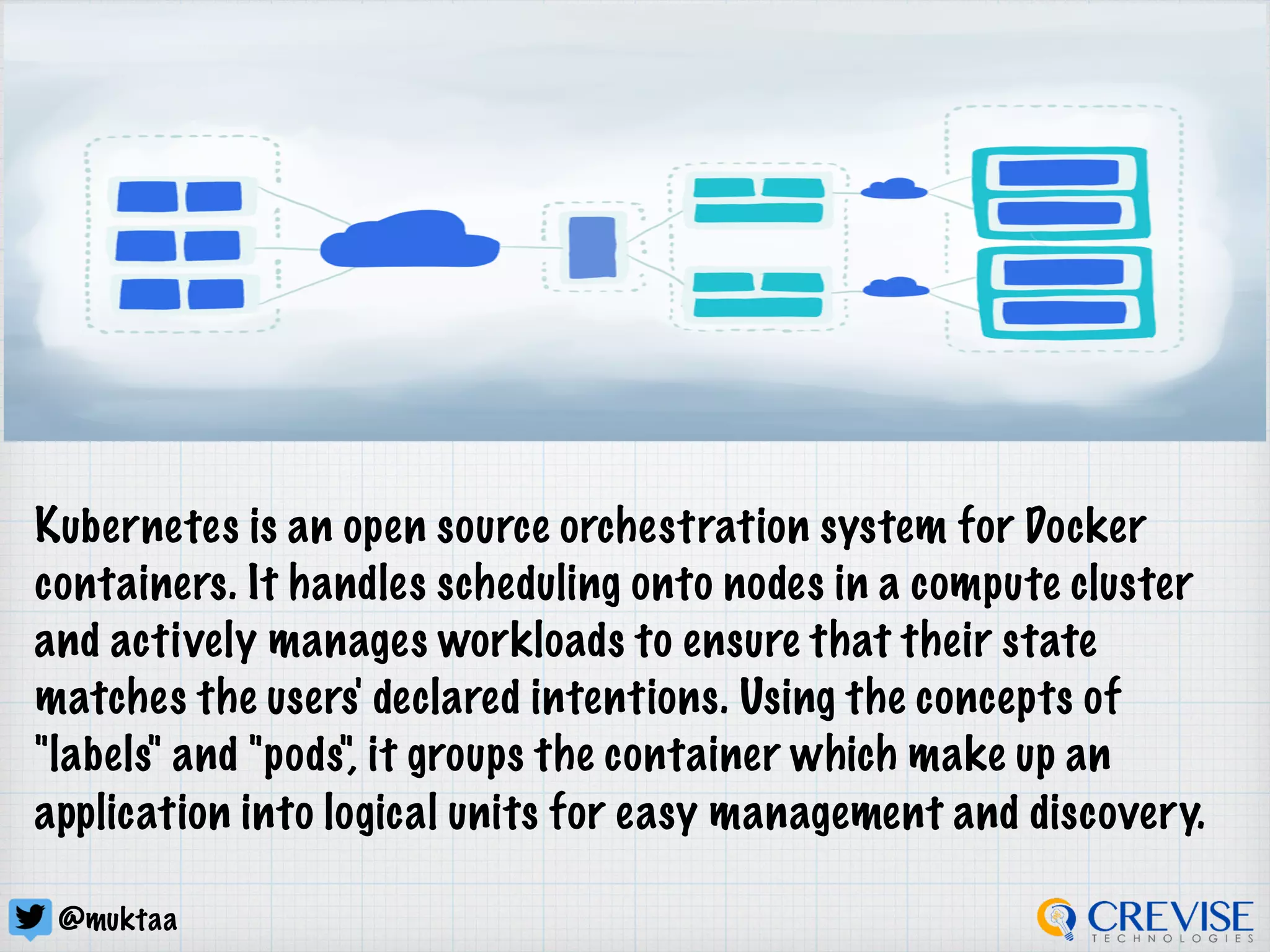
Kubernetes is an open source orchestration system for Docker
containers. It handles scheduling onto nodes in a compute cluster
and actively manages workloads to ensure that their state
matches the users' declared intentions. Using the concepts of
"labels" and "pods", it groups the container which make up an
application into logical units for easy management and discovery.
@muktaa
Got It?
@muktaa
@muktaa
Let’s Start from the
Start…
With some analogies!
@muktaa
@muktaa
@muktaa
@muktaa
@muktaa
@muktaa
Infrastructure
Virtualization
Physical Servers
Virtual Machines
Cloud
Containers
@muktaa
What are containers?
Virtual environment which is good
enough to run your application
Lightweight
Run anywhere
Jails, LXC Containers, CRI-O, Rkt, Docker
@muktaa
@muktaa
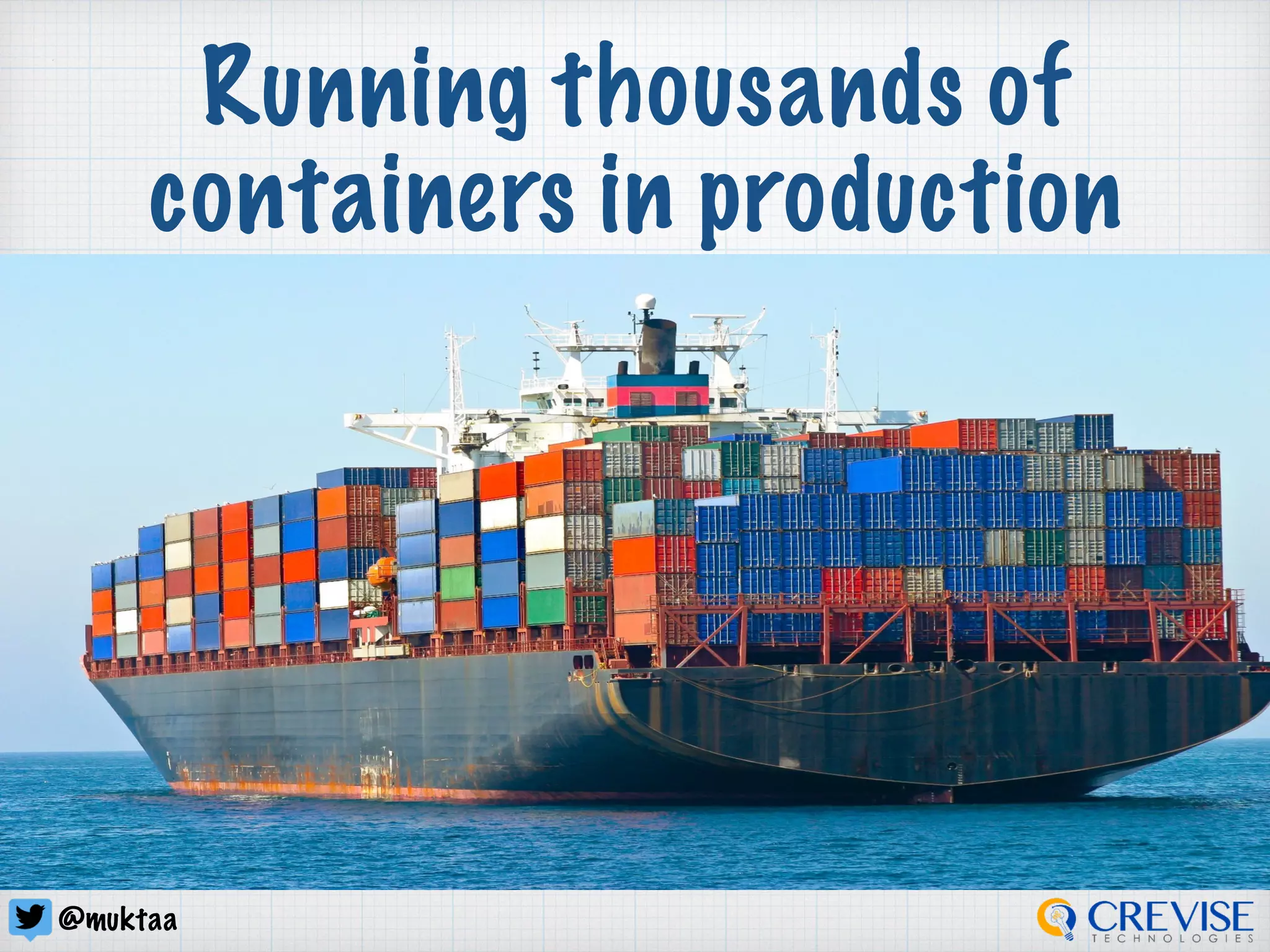
Running thousands of
containers in production
@muktaa
@muktaa
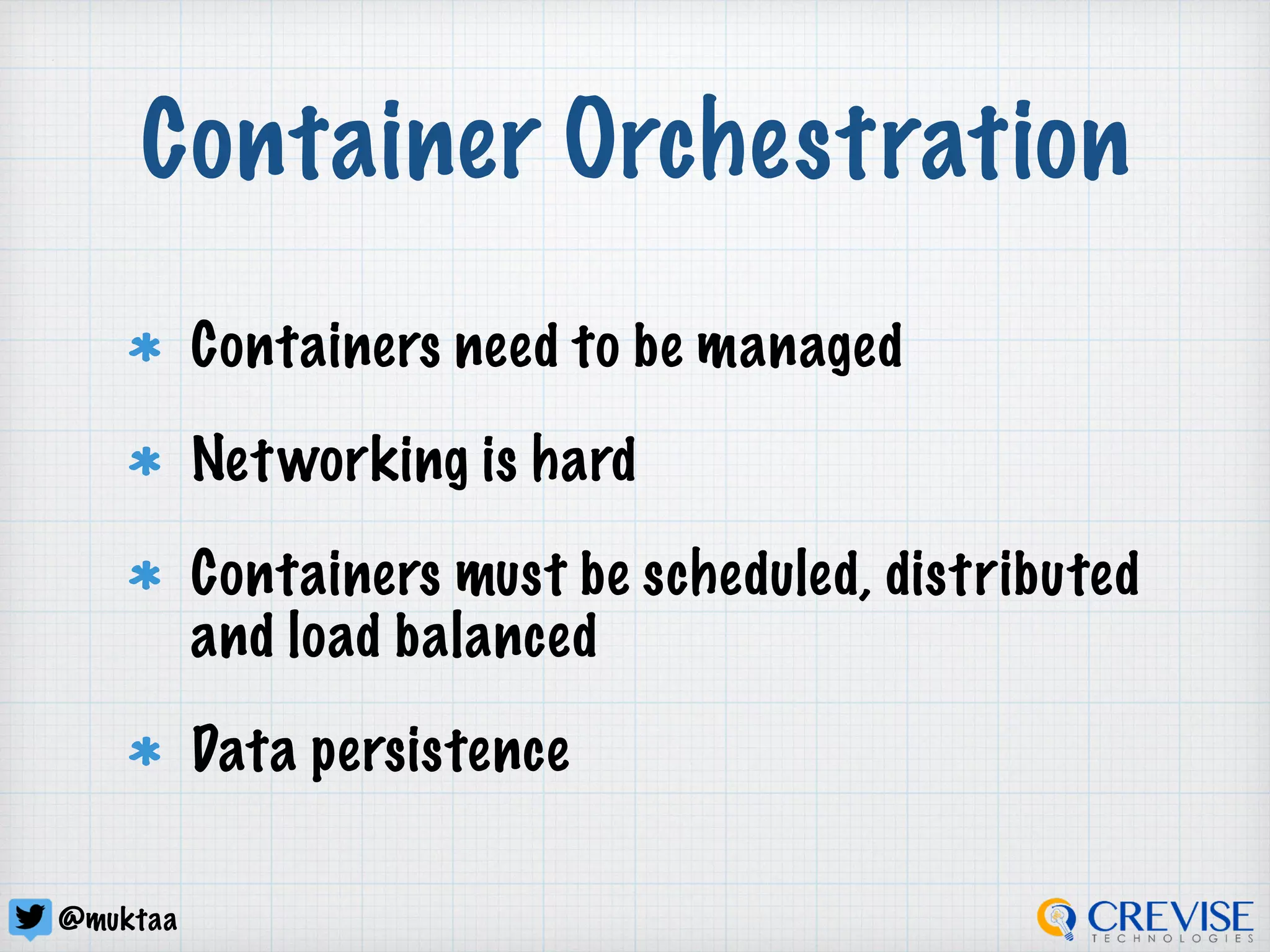
Container Orchestration
Containers need to be managed
Networking is hard
Containers must be scheduled, distributed
and load balanced
Data persistence
@muktaa
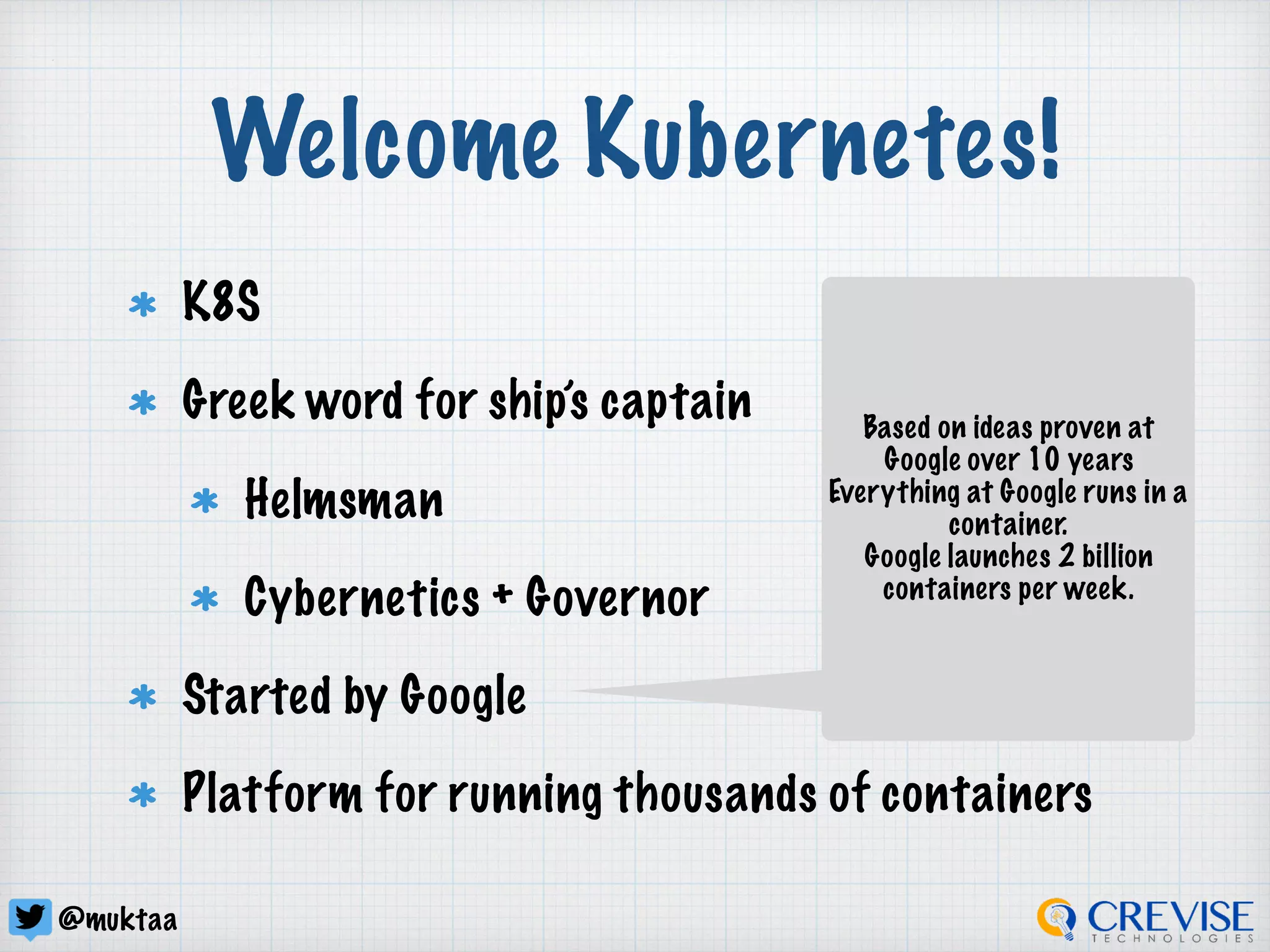
Welcome Kubernetes!
K8S
Greek word for ship’s captain
Helmsman
Cybernetics + Governor
Started by Google
Platform for running thousands of containers
Based on ideas proven at
Google over 10 years
Everything at Google runs in a
container.
Google launches 2 billion
containers per week.
@muktaa
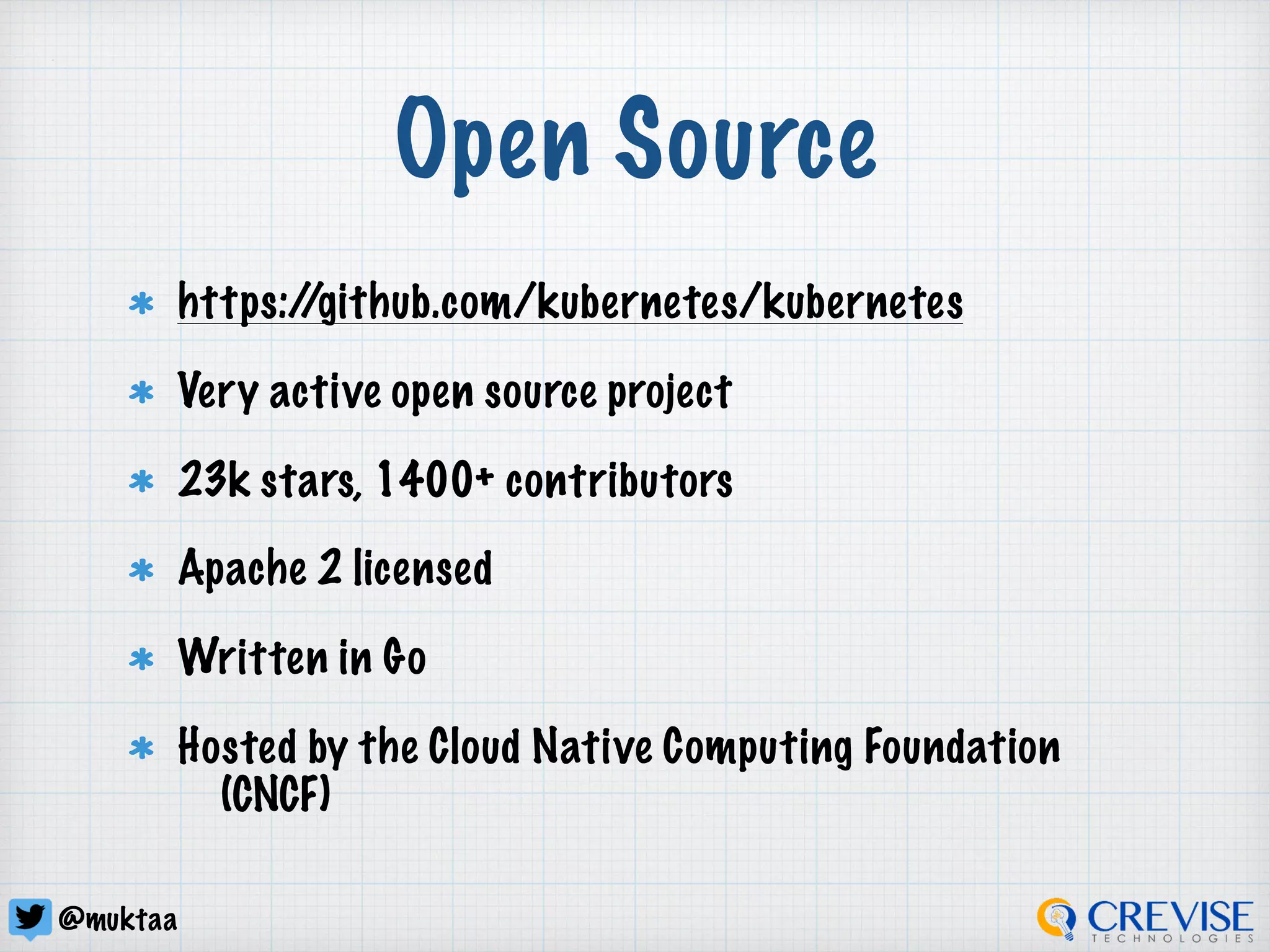
Open Source
https://github.com/kubernetes/kubernetes
Very active open source project
23k stars, 1400+ contributors
Apache 2 licensed
Written in Go
Hosted by the Cloud Native Computing Foundation
(CNCF)
@muktaa
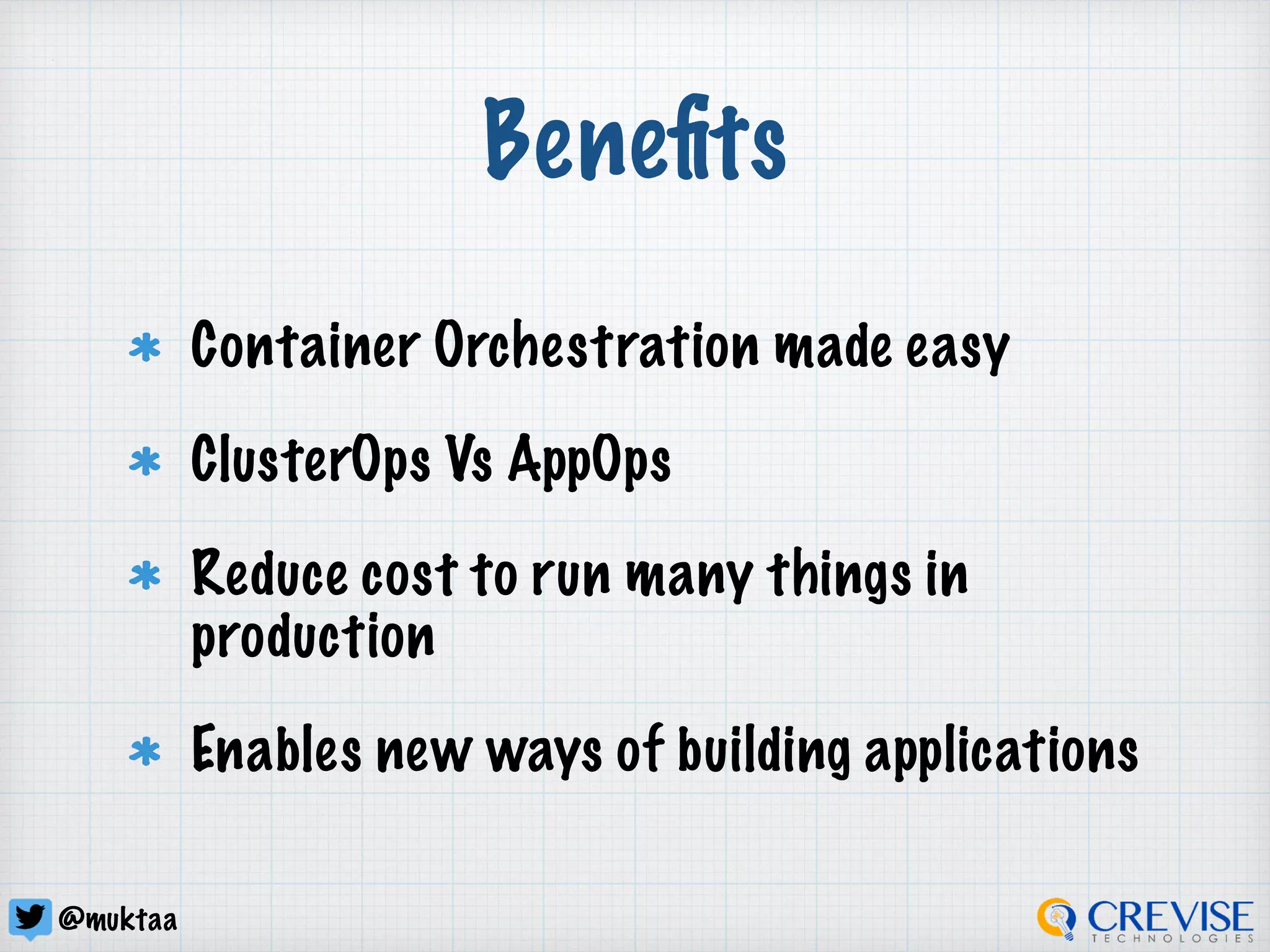
Benefits
Container Orchestration made easy
ClusterOps Vs AppOps
Reduce cost to run many things in
production
Enables new ways of building applications
@muktaa
Key Concepts
@muktaa
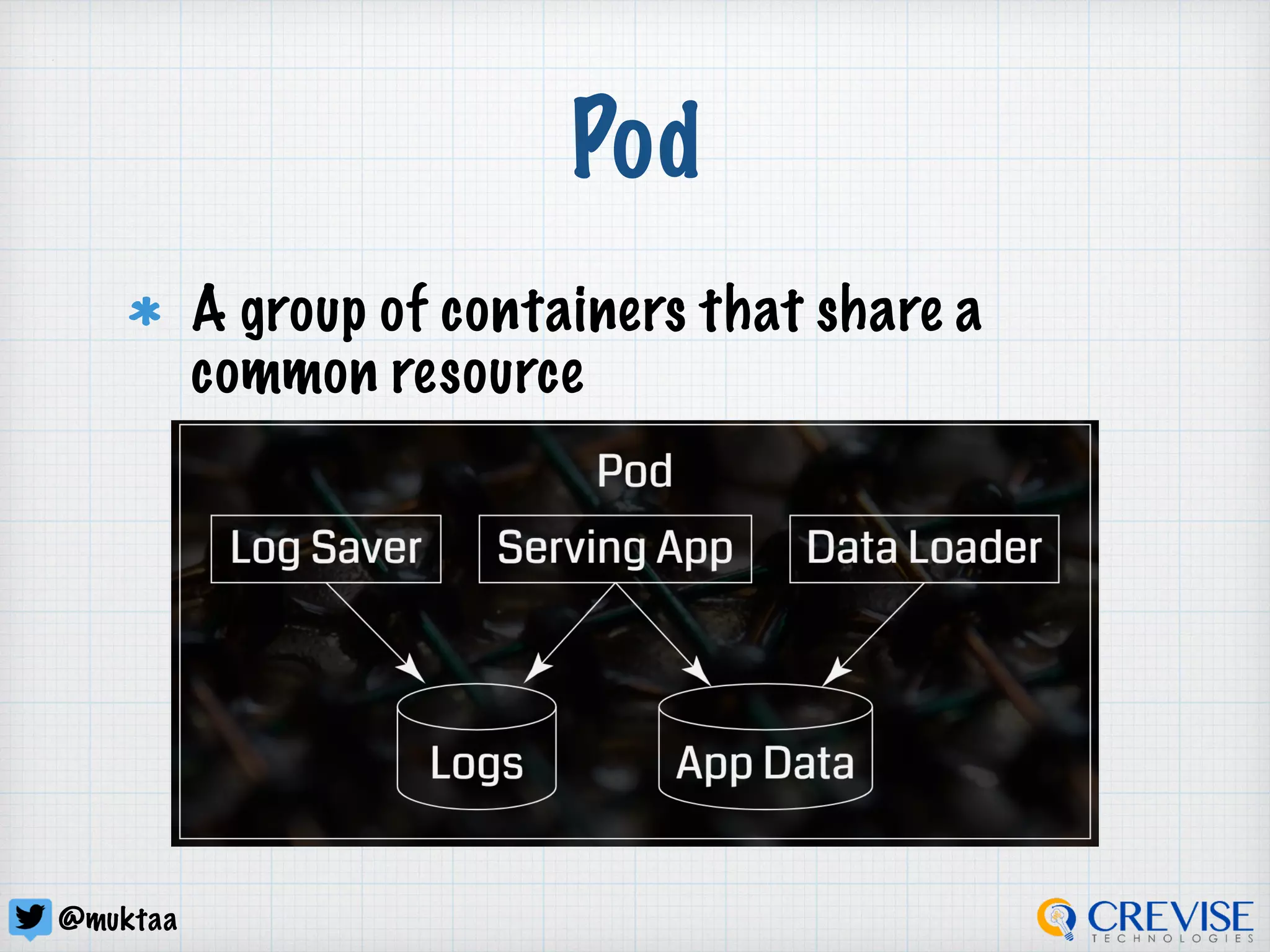
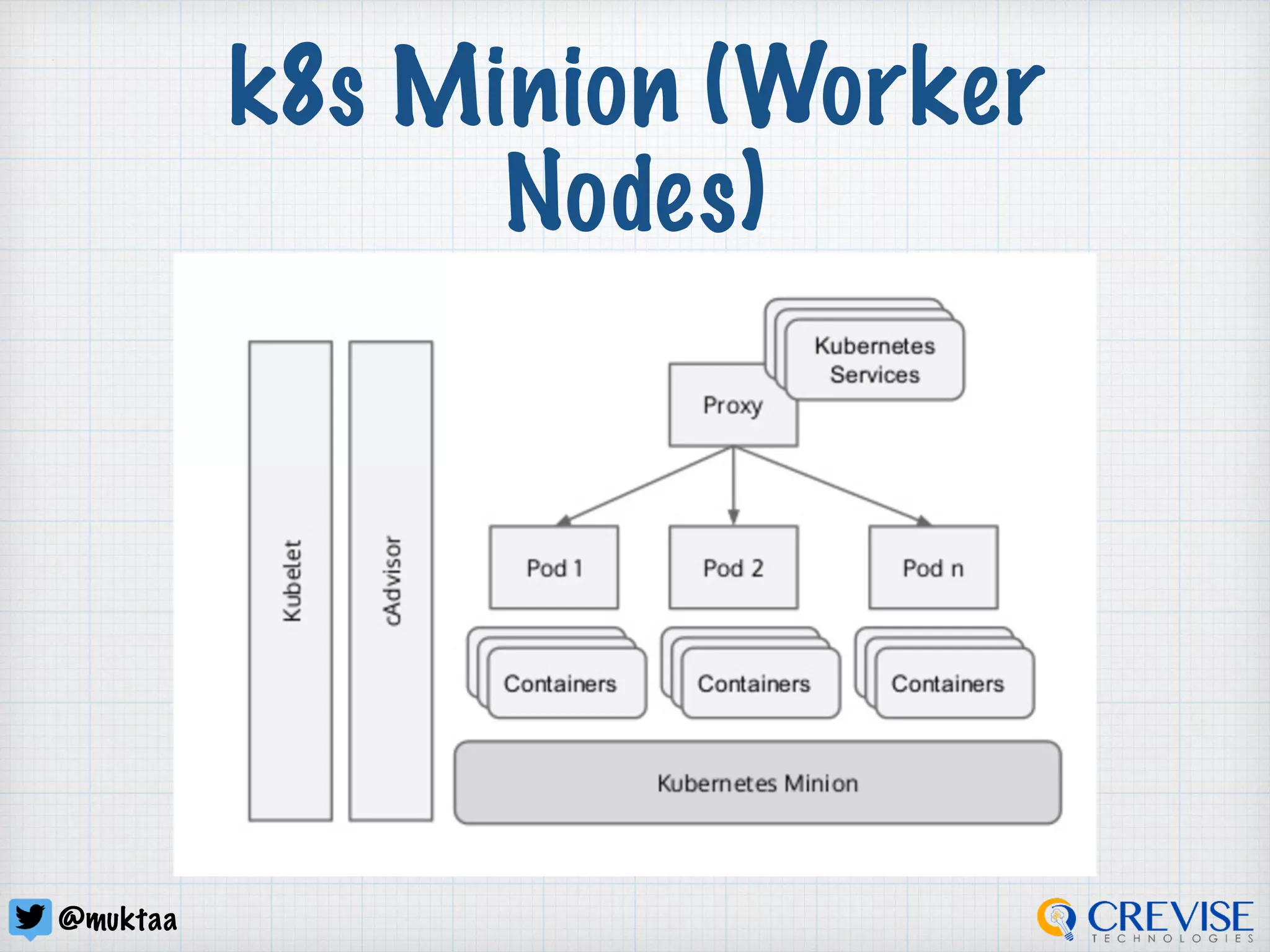
Pod
A group of containers that share a
common resource
@muktaa
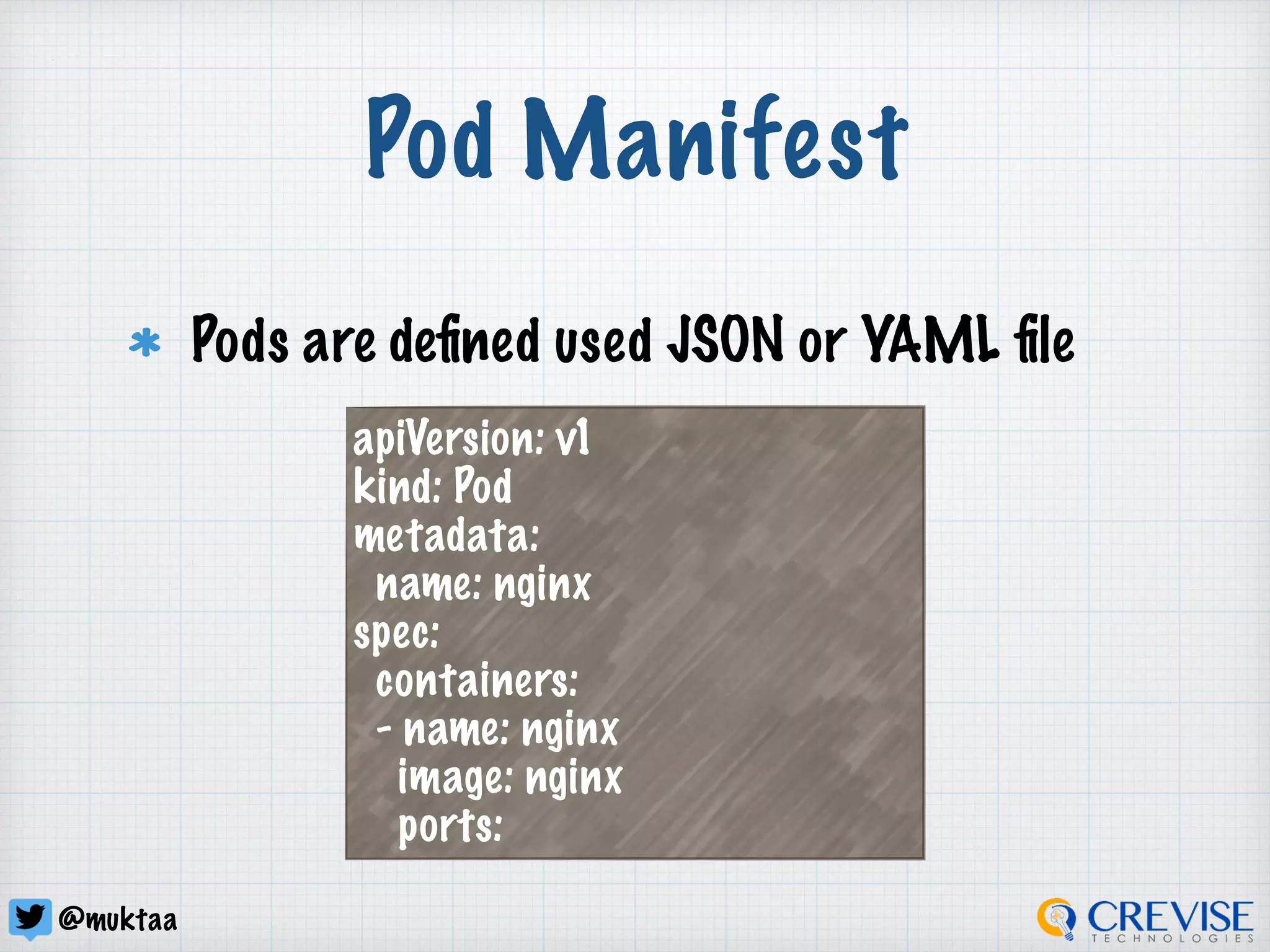
Pod Manifest
Pods are defined used JSON or YAML file
apiVersion: v1
kind: Pod
metadata:
name: nginx
spec:
containers:
- name: nginx
image: nginx
ports:
@muktaa
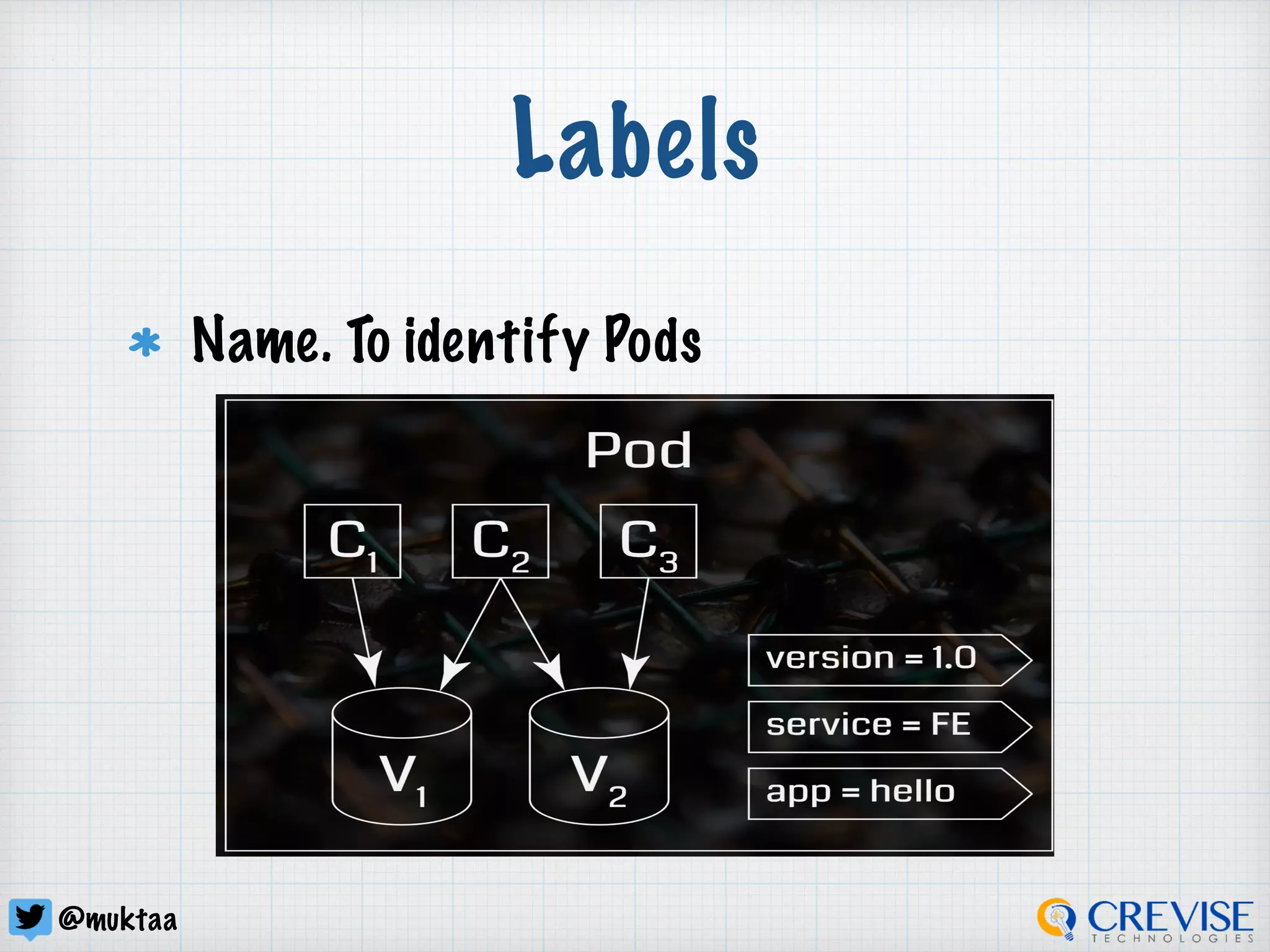
Labels
Name. To identify Pods
@muktaa
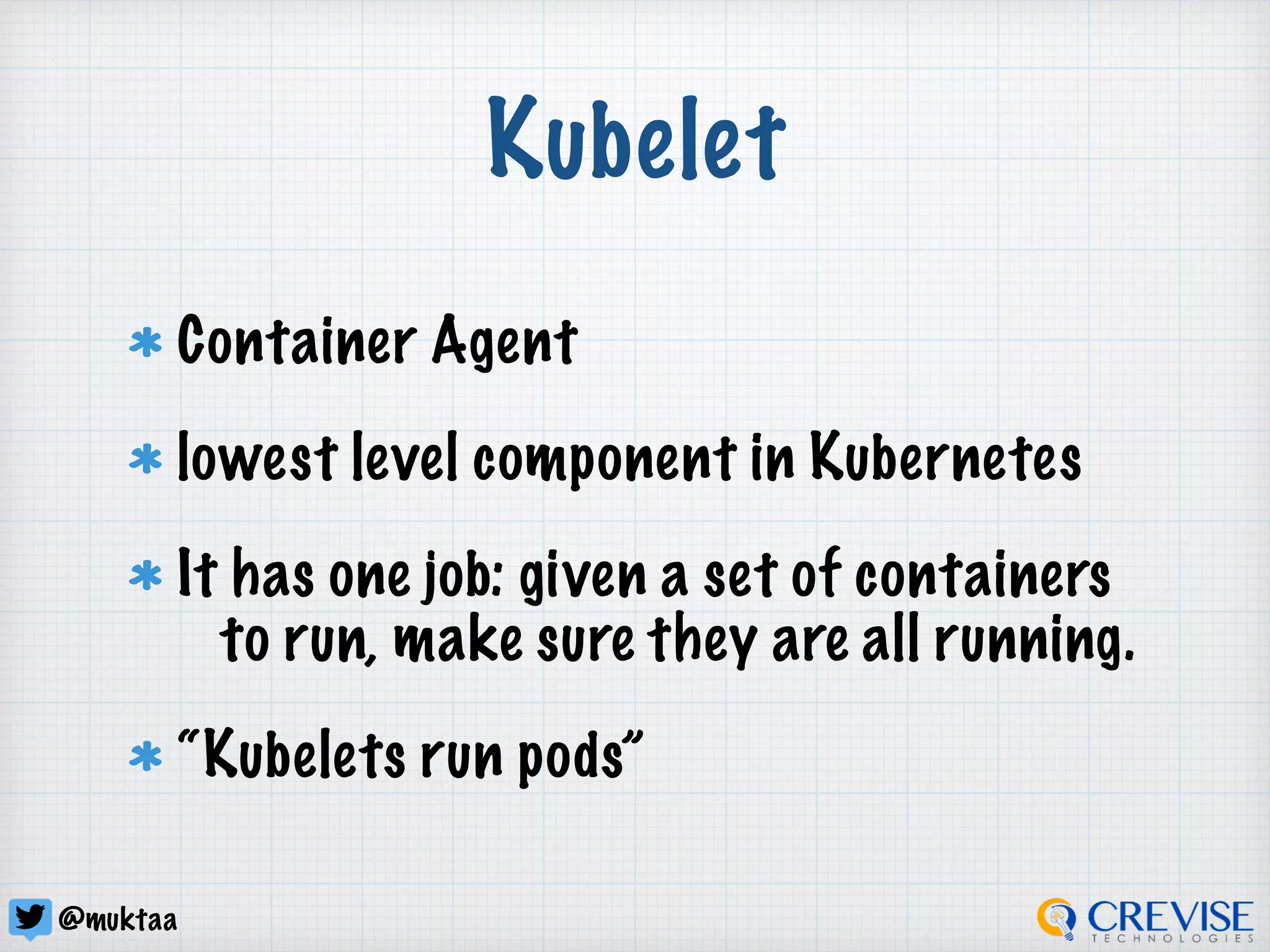
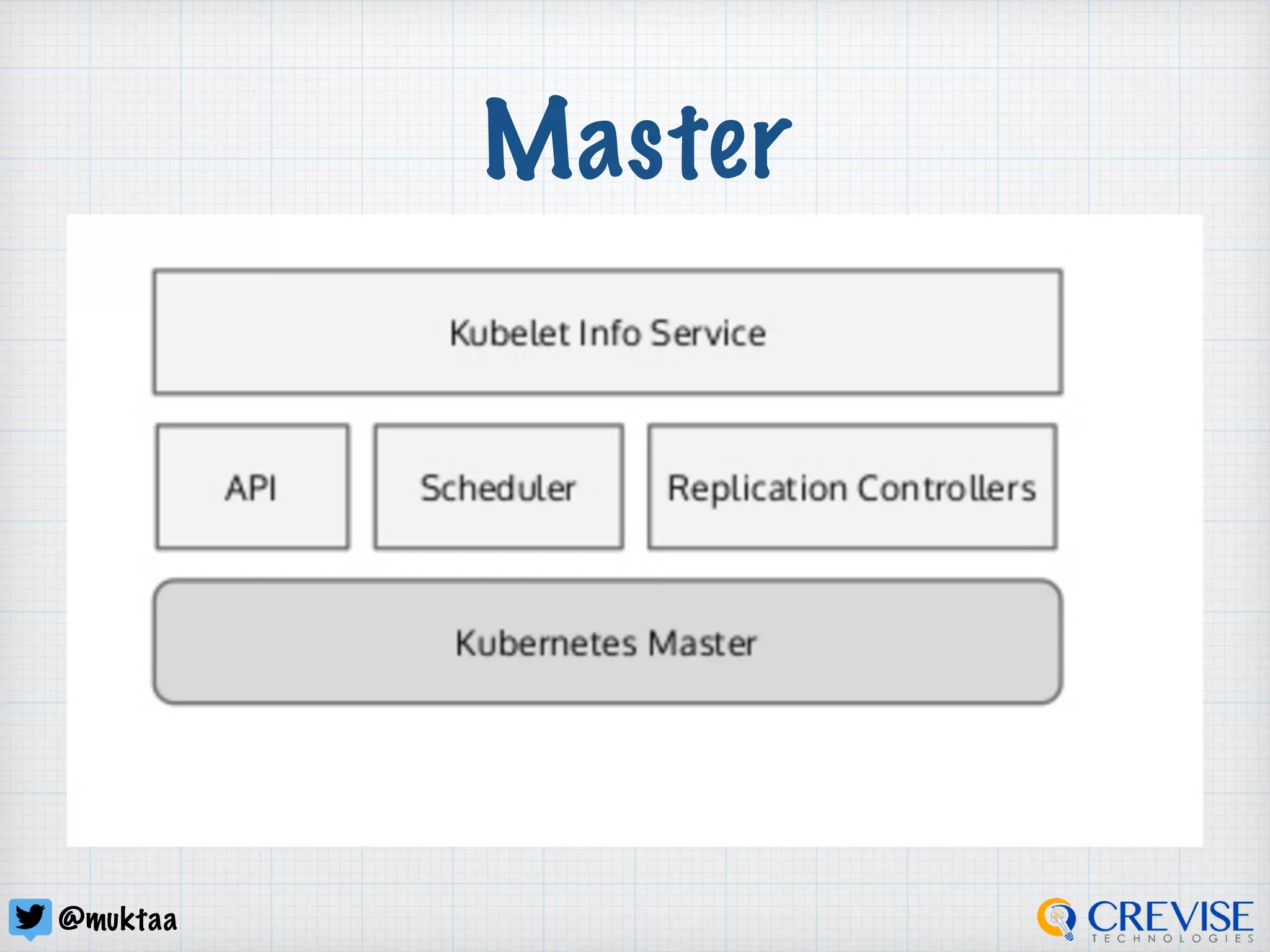
Kubelet
Container Agent
lowest level component in Kubernetes
It has one job: given a set of containers
to run, make sure they are all running.
“Kubelets run pods”
@muktaa
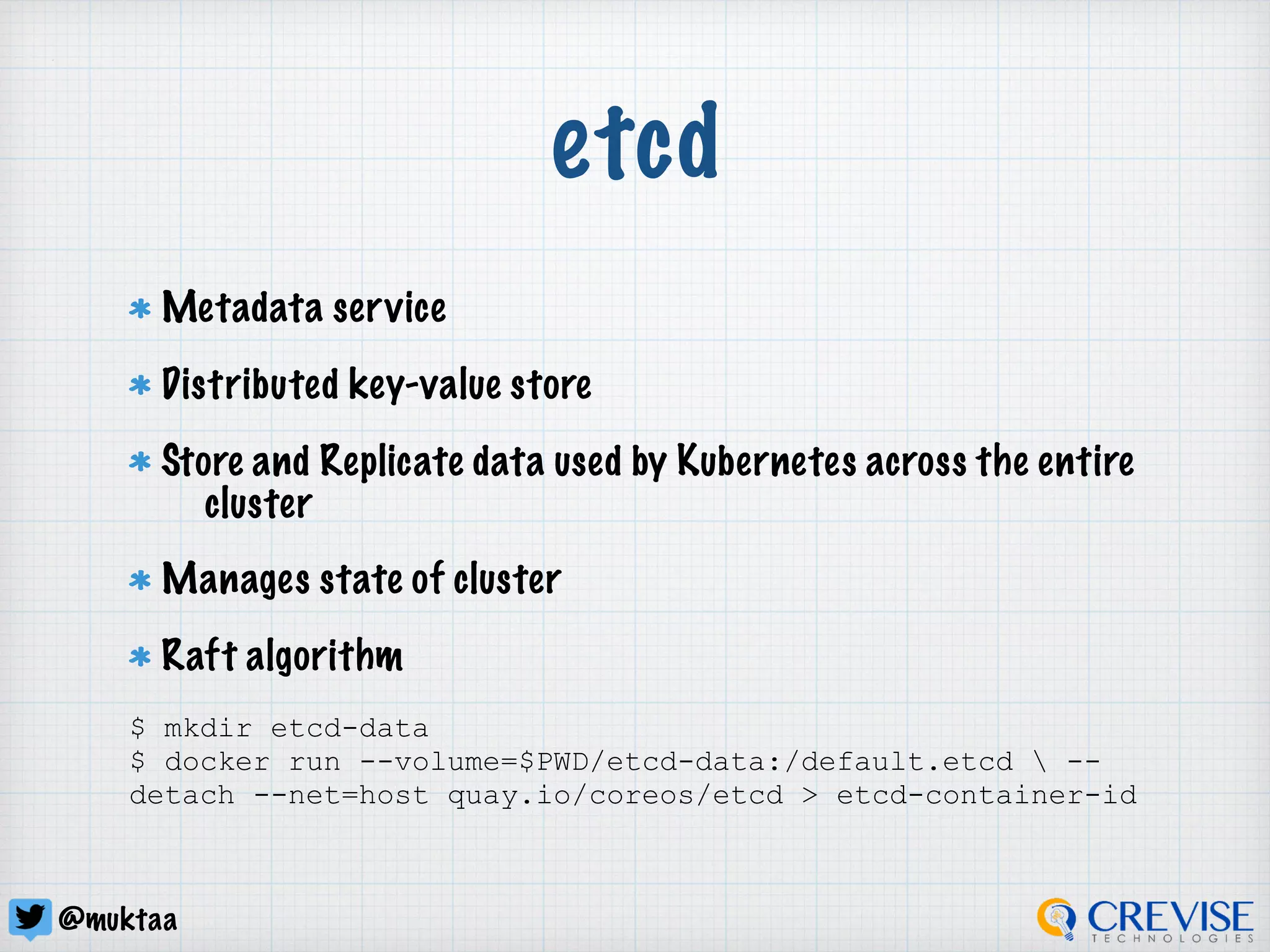
etcd
Metadata service
Distributed key-value store
Store and Replicate data used by Kubernetes across the entire
cluster
Manages state of cluster
Raft algorithm
$ mkdir etcd-data
$ docker run --volume=$PWD/etcd-data:/default.etcd  --
detach --net=host quay.io/coreos/etcd > etcd-container-id
@muktaa
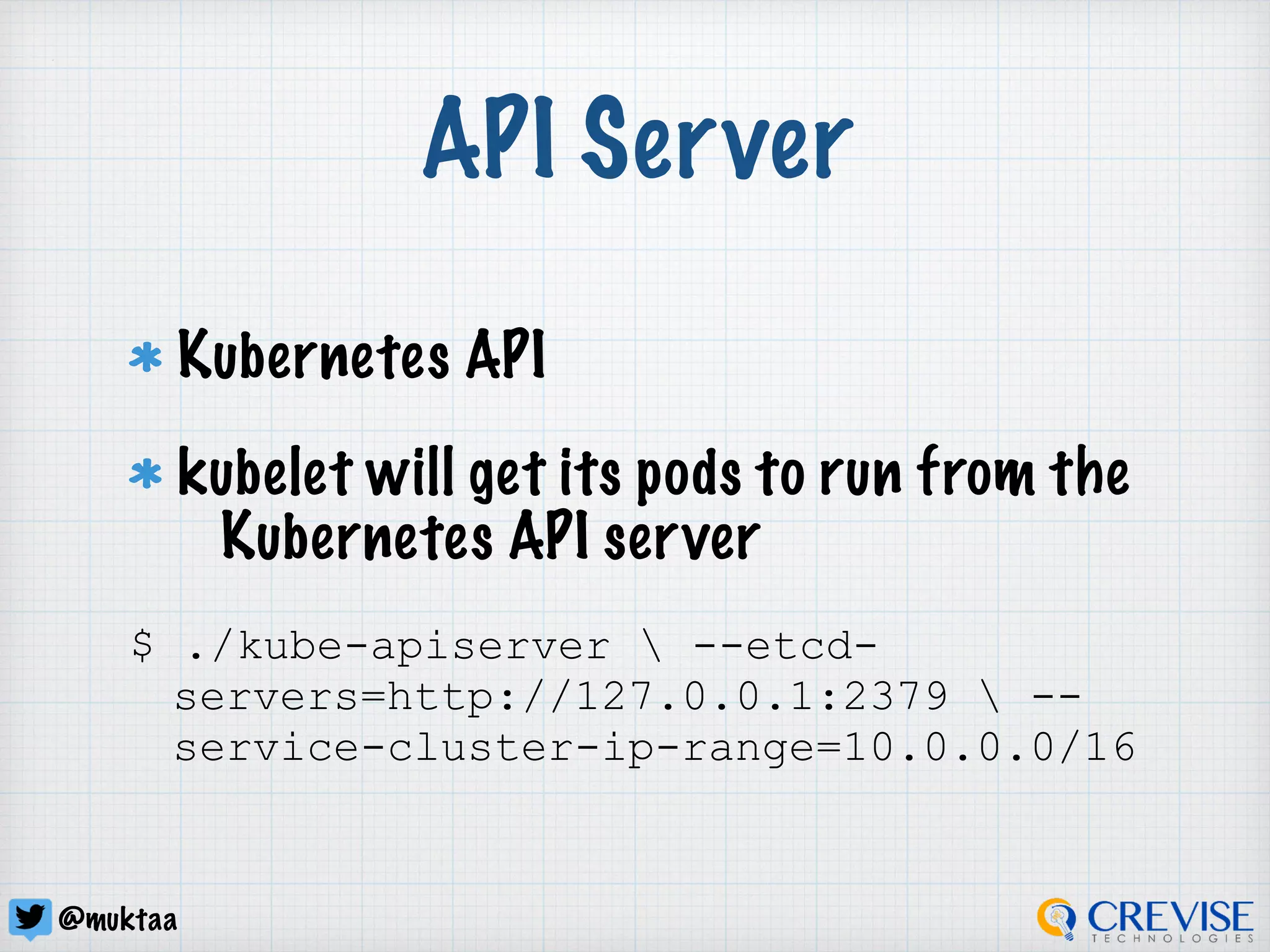
API Server
Kubernetes API
kubelet will get its pods to run from the
Kubernetes API server
$ ./kube-apiserver  --etcd-
servers=http://127.0.0.1:2379  --
service-cluster-ip-range=10.0.0.0/16
@muktaa
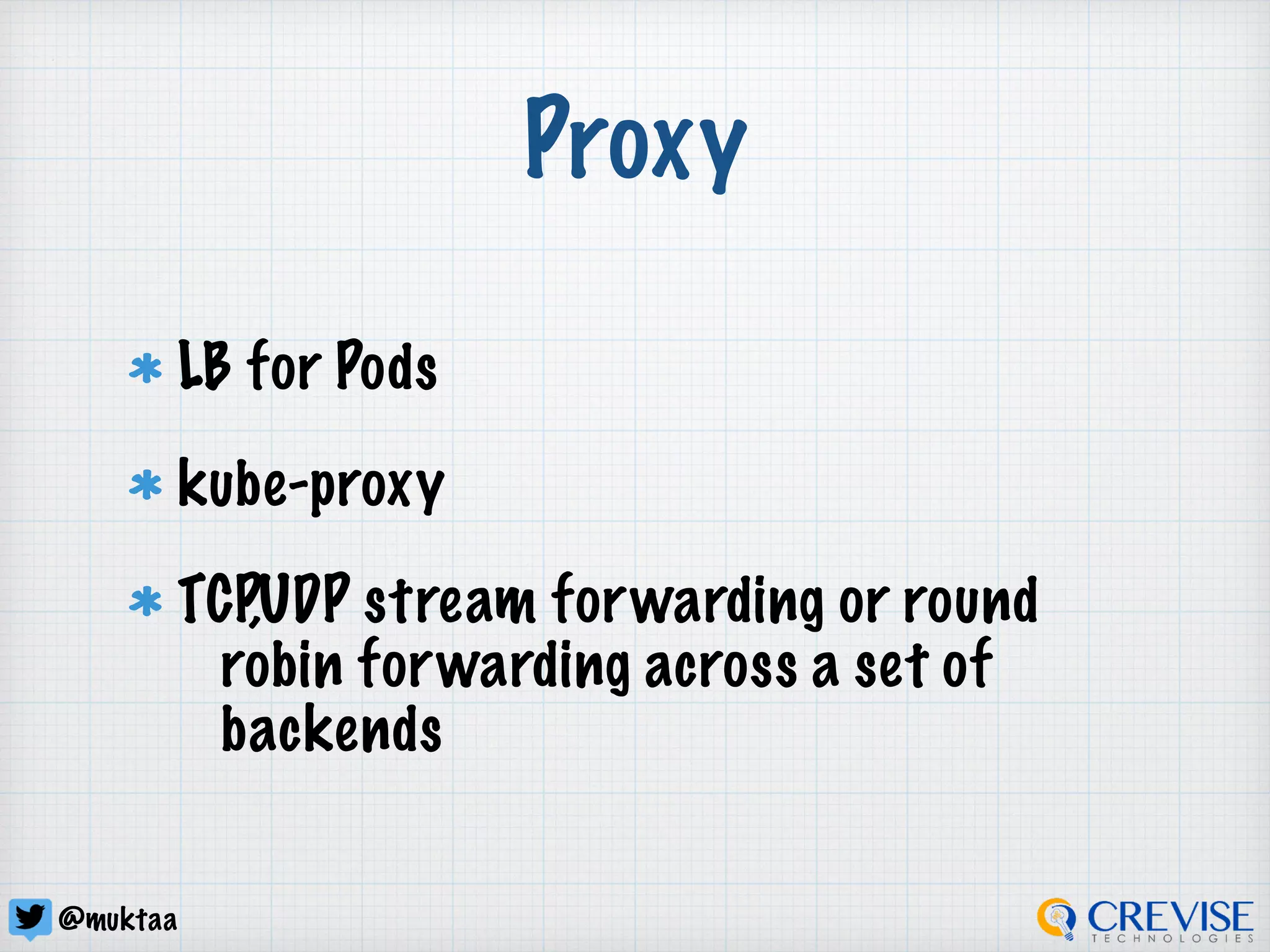
Proxy
LB for Pods
kube-proxy
TCP,UDP stream forwarding or round
robin forwarding across a set of
backends
@muktaa
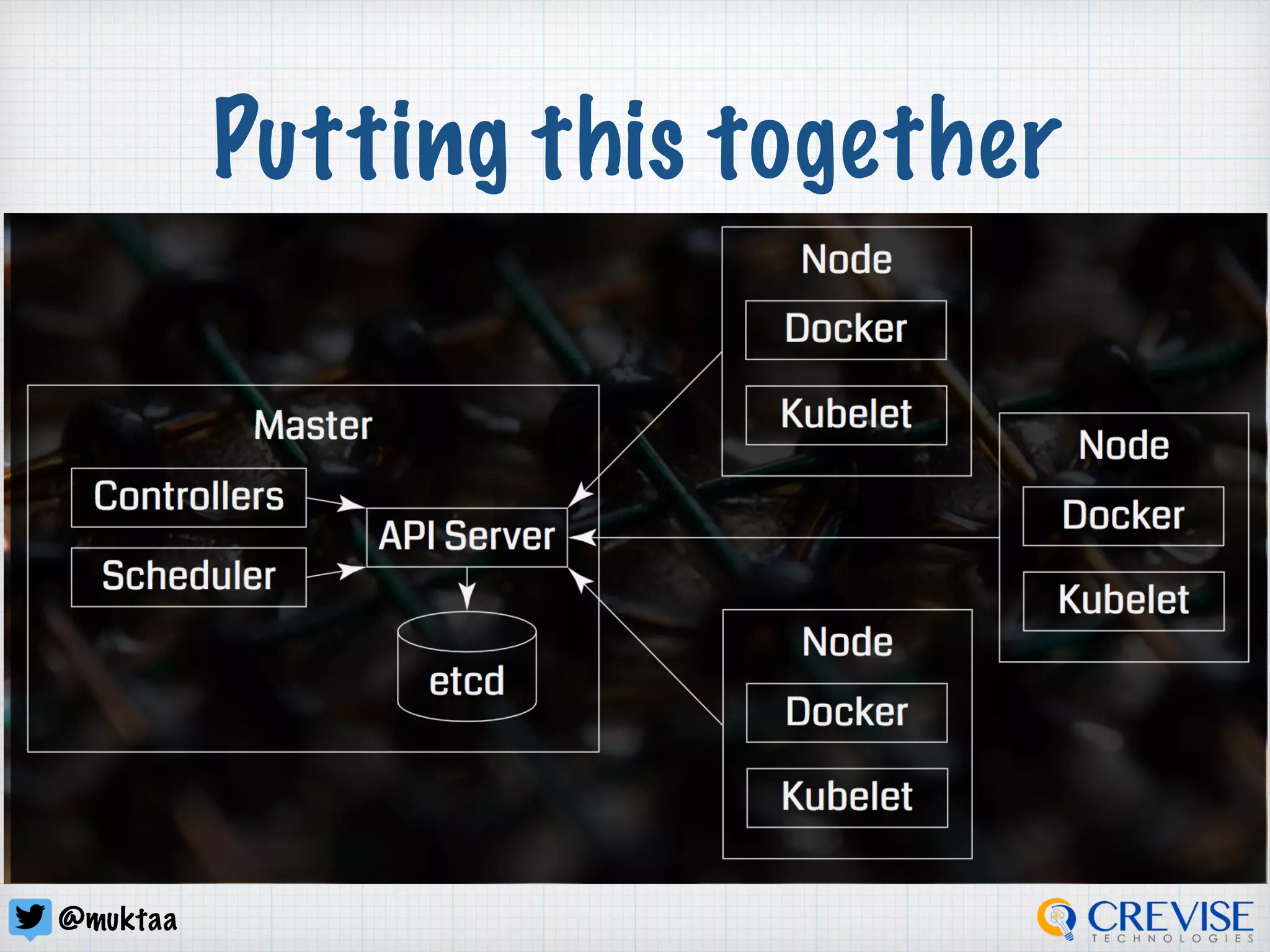
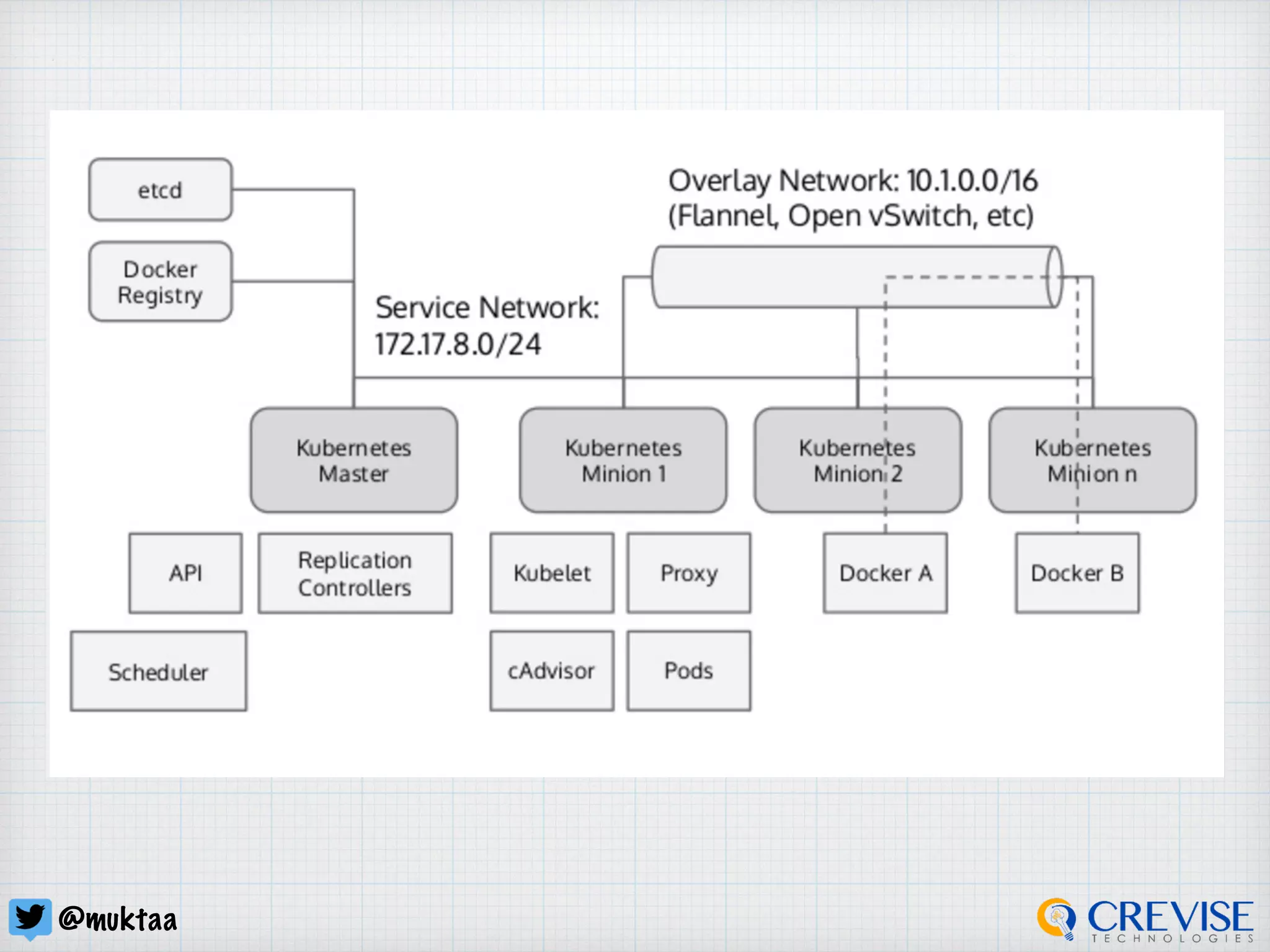
Putting this together
@muktaa
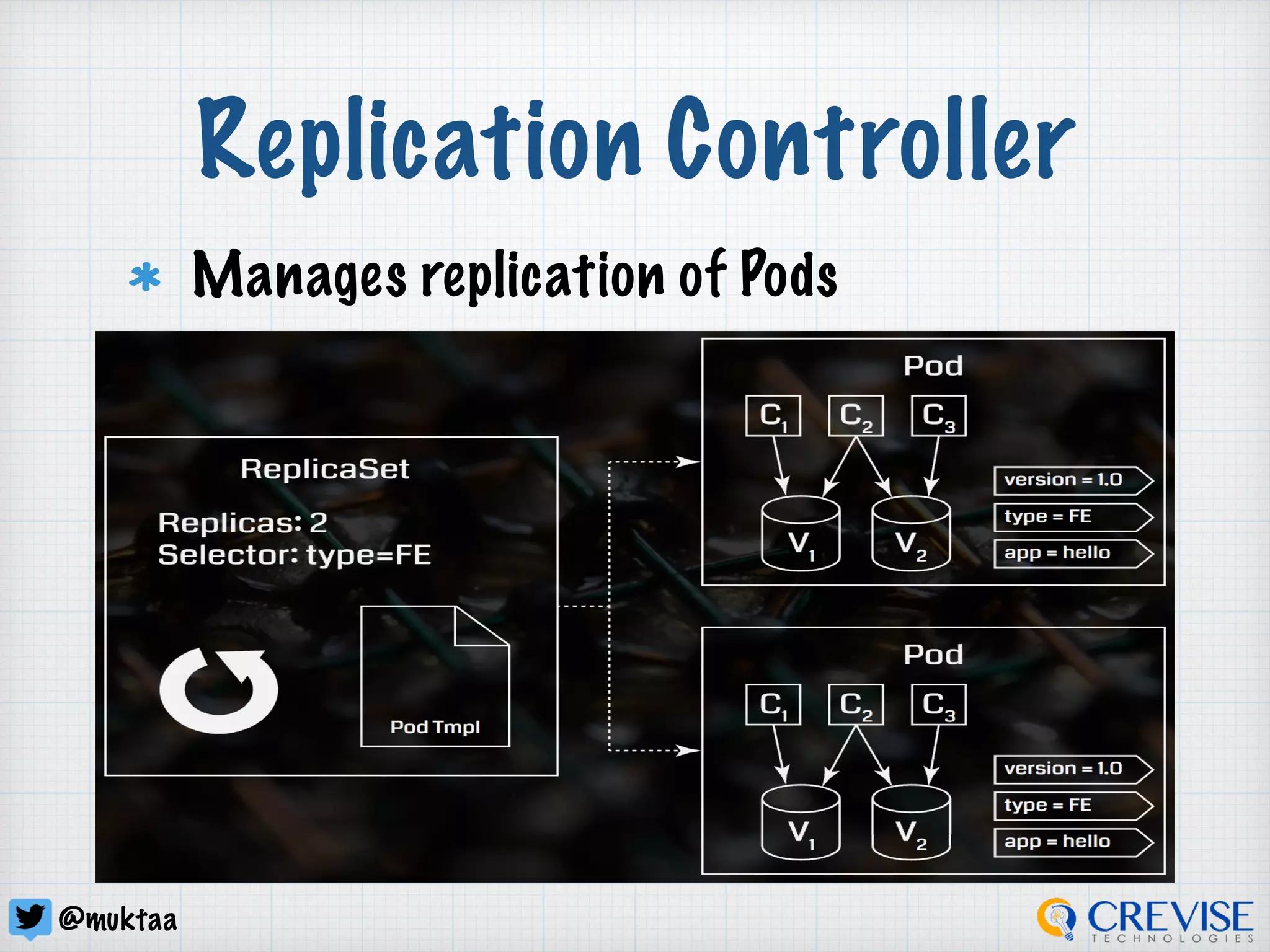
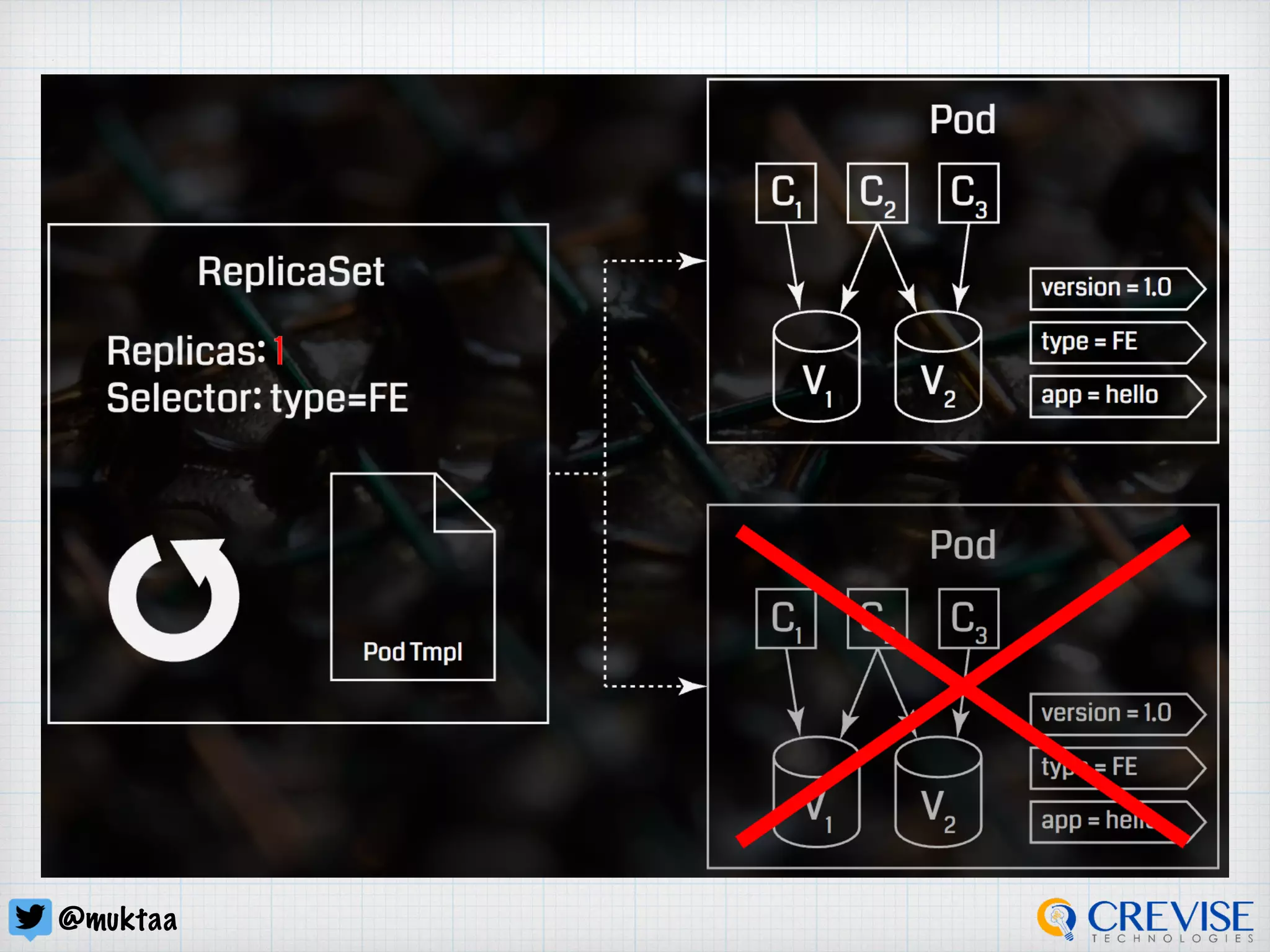
Replication Controller
Manages replication of Pods
@muktaa
@muktaa
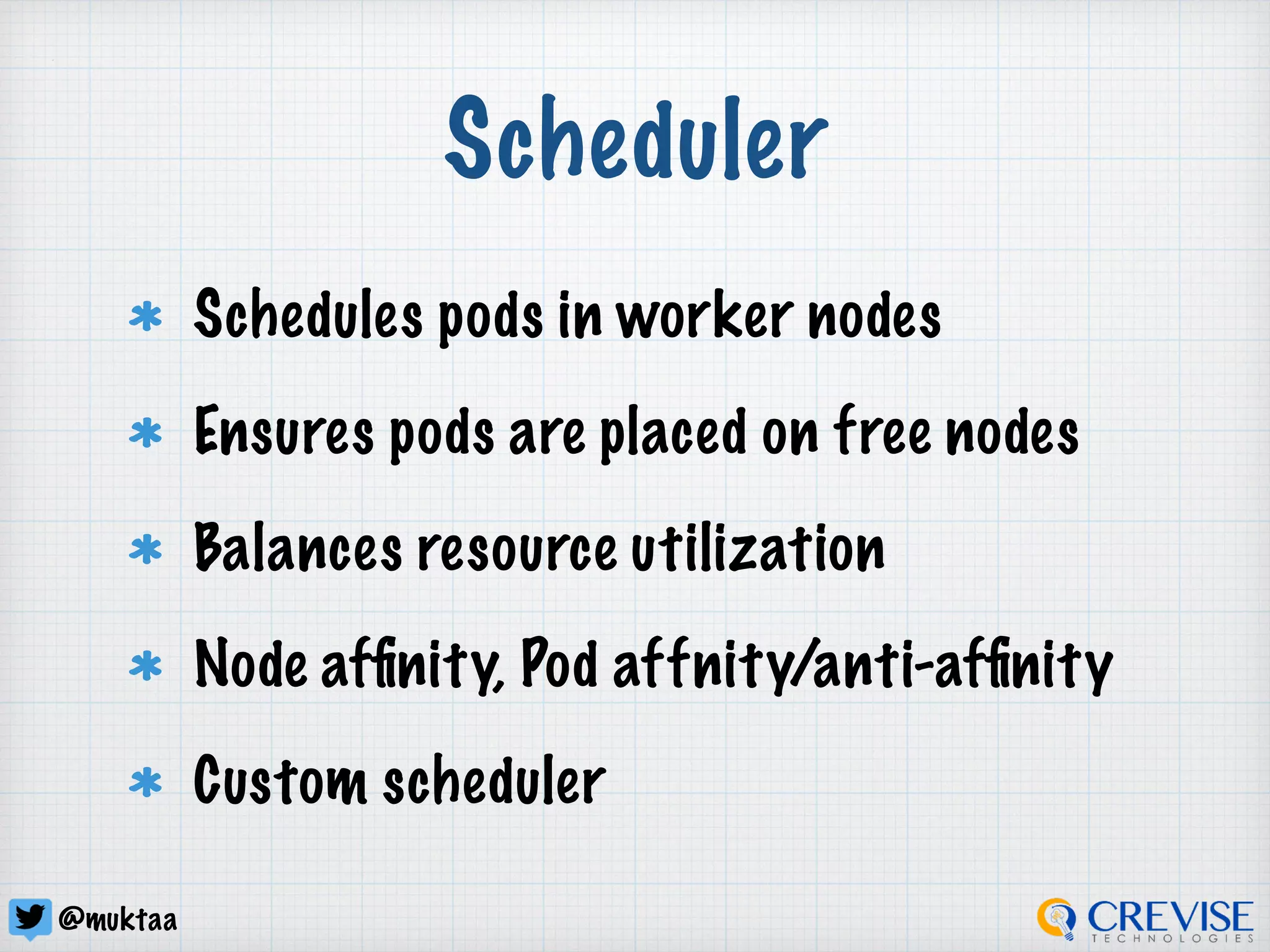
Scheduler
Schedules pods in worker nodes
Ensures pods are placed on free nodes
Balances resource utilization
Node affinity, Pod affnity/anti-affinity
Custom scheduler
@muktaa
k8s Architecture
@muktaa
Master
@muktaa
k8s Minion (Worker
Nodes)
@muktaa
@muktaa
Hands-on Workshop
At 2pm
Convention Centre
@muktaa
Hands-on Prerequisites
Laptop, Internet
Virtualbox
Workshop Setup:
https://gist.github.com/muktaa/
The 1st gist (name: Kubernetes 101)
@muktaa
https://www.slideshare.net/crevise/
kubernetes-101-79552184

Kubernetes 101