Overview
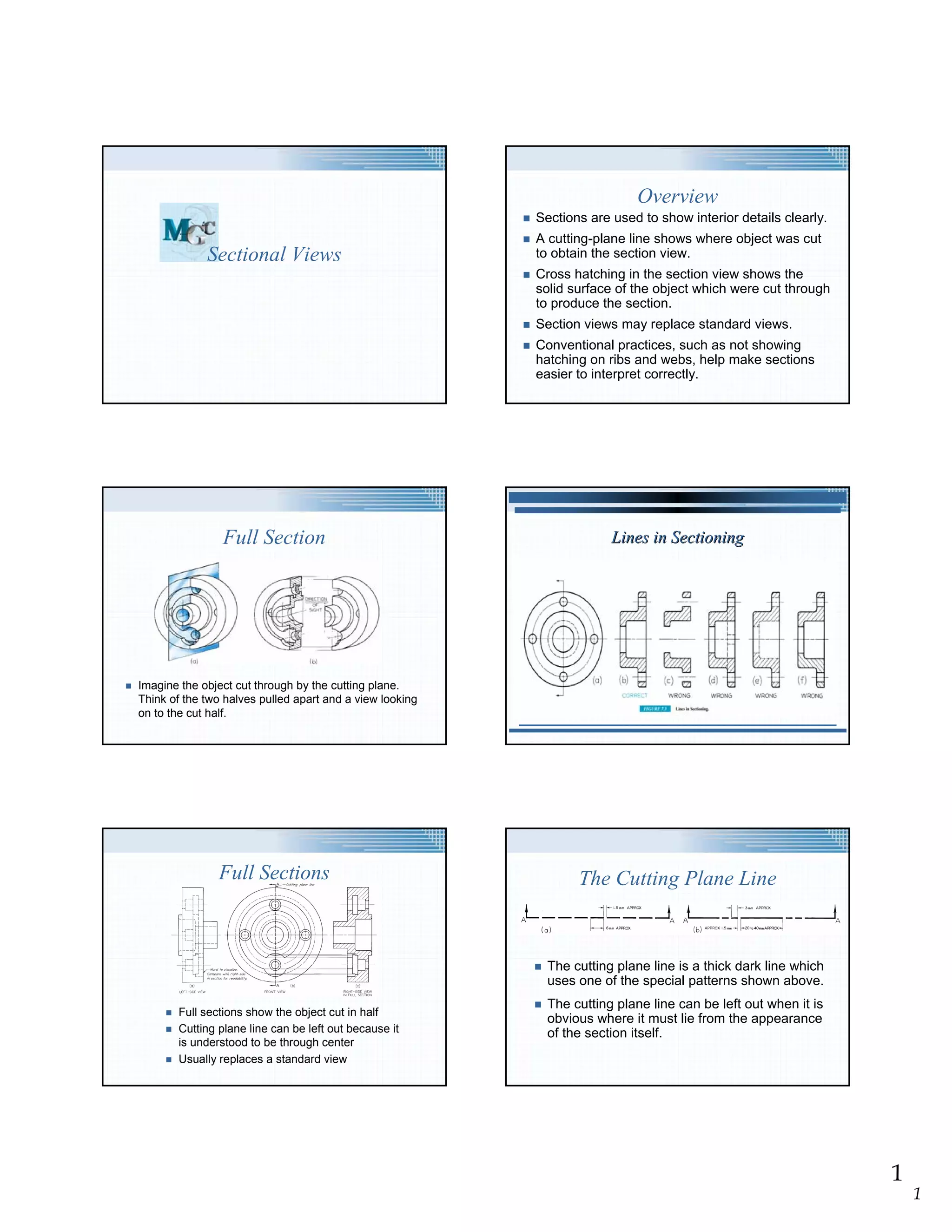
                                                          Sections are used to show interior details clearly.
                                                          A cutting-plane line shows where object was cut
             Sectional Views                              to obtain the section view.
                                                          Cross hatching in the section view shows the
                                                          solid surface of the object which were cut through
                                                          to produce the section.
                                                          Section views may replace standard views.
                                                          Conventional practices, such as not showing
                                                          hatching on ribs and webs, help make sections
                                                          easier to interpret correctly.


                Full Section                                           Lines in Sectioning


Imagine the object cut through by the cutting plane.
Think of the two halves pulled apart and a view looking
on to the cut half.


               Full Sections                                     The Cutting Plane Line


                                                            The cutting plane line is a thick dark line which
                                                            uses one of the special patterns shown above.
                                                            The cutting plane line can be left out when it is
       Full sections show the object cut in half
                                                            obvious where it must lie from the appearance
       Cutting plane line can be left out because it        of the section itself.
       is understood to be through center
       Usually replaces a standard view


                                                                                                                1
                                                                                                                    1
Hatch Patterns                                             Cutting Plane


   Cutting Planes & Sections                                  Lines in the Section View


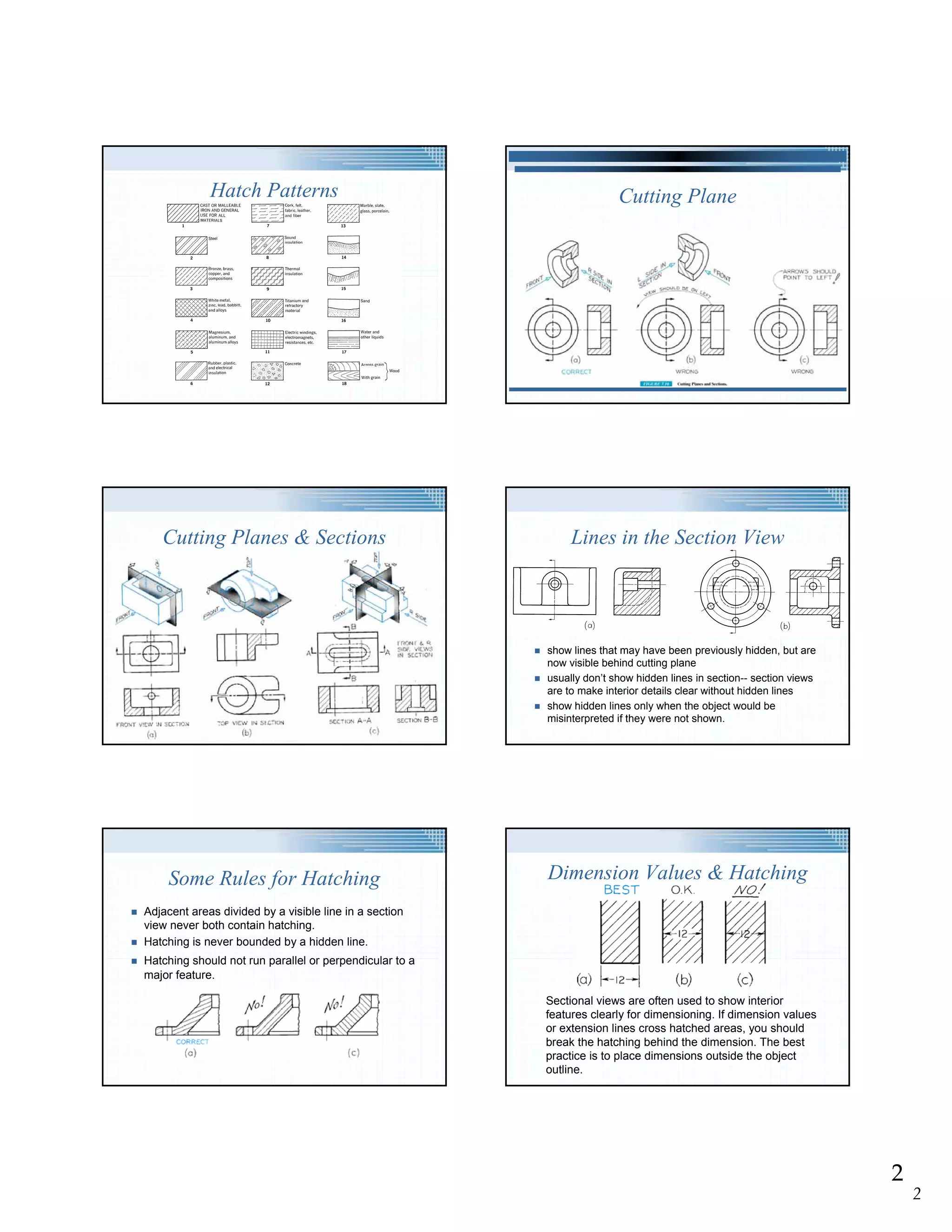
                                                         show lines that may have been previously hidden, but are
                                                         now visible behind cutting plane
                                                         usually don’t show hidden lines in section-- section views
                                                         are to make interior details clear without hidden lines
                                                         show hidden lines only when the object would be
                                                         misinterpreted if they were not shown.


    Some Rules for Hatching                              Dimension Values & Hatching
Adjacent areas divided by a visible line in a section
view never both contain hatching.
Hatching is never bounded by a hidden line.
Hatching should not run parallel or perpendicular to a
major feature.

                                                         Sectional views are often used to show interior
                                                         features clearly for dimensioning. If dimension values
                                                         or extension lines cross hatched areas, you should
                                                         break the hatching behind the dimension. The best
                                                         practice is to place dimensions outside the object
                                                         outline.


                                                                                                                      2
                                                                                                                          2
Half-Sections                   Broken-out Sections


        Half-section
                                         Removed Section
with break around a keyway


     Removed Section                    Revolved Sections


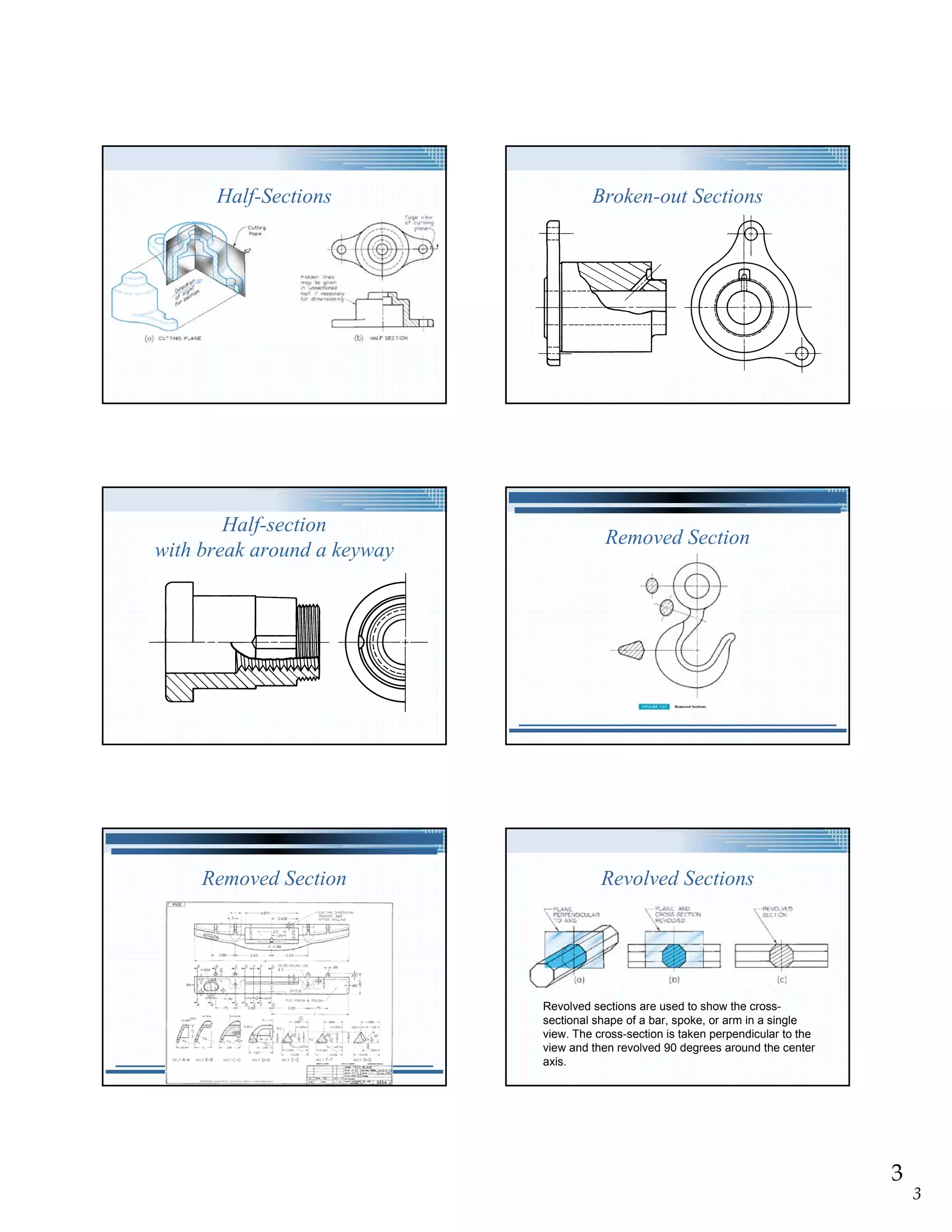
                             Revolved sections are used to show the cross-
                             sectional shape of a bar, spoke, or arm in a single
                             view. The cross-section is taken perpendicular to the
                             view and then revolved 90 degrees around the center
                             axis.


                                                                                     3
                                                                                         3
More revolved Sections                                   Revolved Sections


                              Examples of
                                                                     Offset Sections
                            Revolved Sections


            Three Offset Sections                               Do not hatch ribs & webs
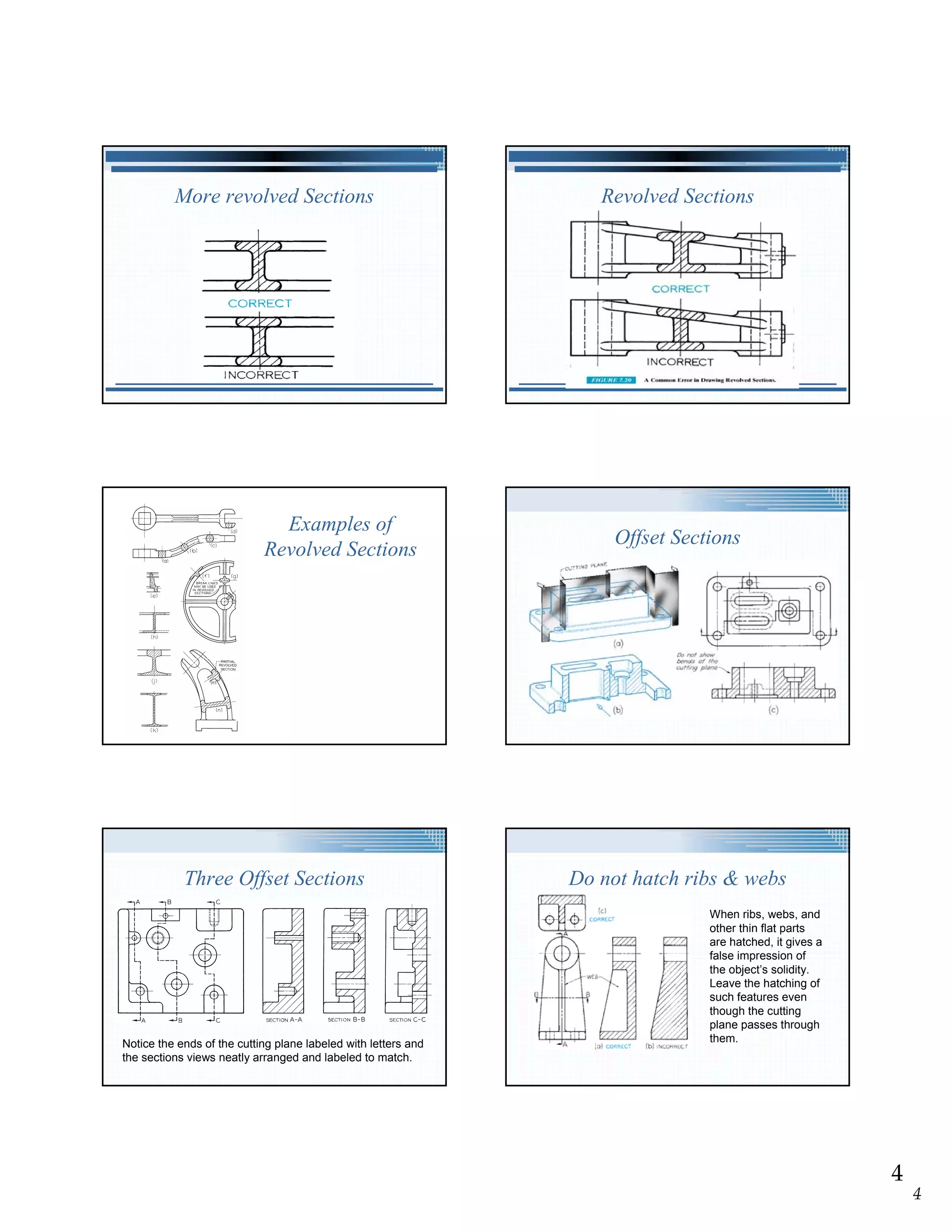
                                                                                When ribs, webs, and
                                                                                other thin flat parts
                                                                                are hatched, it gives a
                                                                                false impression of
                                                                                the object’s solidity.
                                                                                Leave the hatching of
                                                                                such features even
                                                                                though the cutting
                                                                                plane passes through
Notice the ends of the cutting plane labeled with letters and                   them.
the sections views neatly arranged and labeled to match.


                                                                                                          4
                                                                                                              4
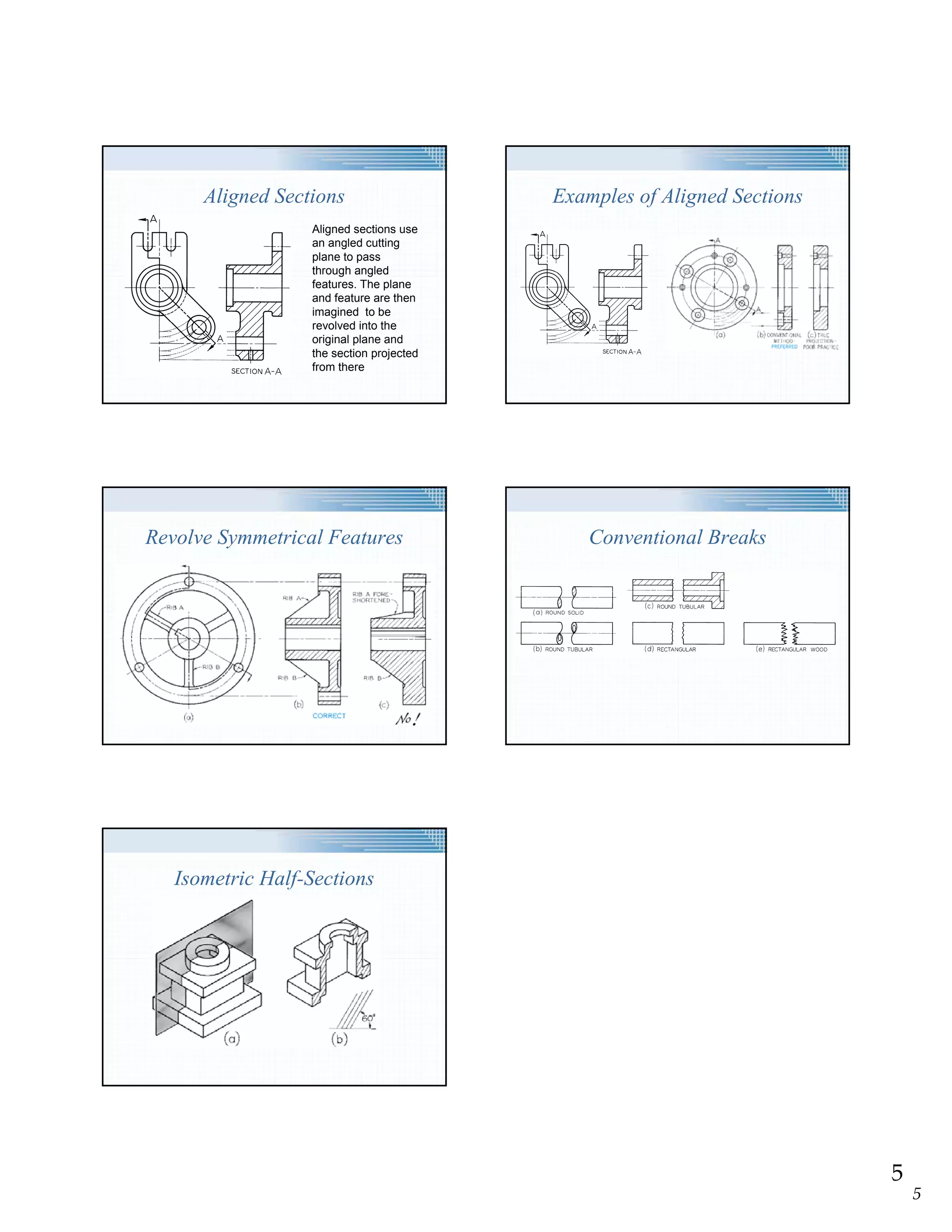
Aligned Sections                    Examples of Aligned Sections
                  Aligned sections use
                  an angled cutting
                  plane to pass
                  through angled
                  features. The plane
                  and feature are then
                  imagined to be
                  revolved into the
                  original plane and
                  the section projected
                  from there


Revolve Symmetrical Features                  Conventional Breaks


   Isometric Half-Sections


                                                                         5
                                                                             5

Sectioning

  • 1.
    Overview Sections are used to show interior details clearly. A cutting-plane line shows where object was cut Sectional Views to obtain the section view. Cross hatching in the section view shows the solid surface of the object which were cut through to produce the section. Section views may replace standard views. Conventional practices, such as not showing hatching on ribs and webs, help make sections easier to interpret correctly. Full Section Lines in Sectioning Imagine the object cut through by the cutting plane. Think of the two halves pulled apart and a view looking on to the cut half. Full Sections The Cutting Plane Line The cutting plane line is a thick dark line which uses one of the special patterns shown above. The cutting plane line can be left out when it is Full sections show the object cut in half obvious where it must lie from the appearance Cutting plane line can be left out because it of the section itself. is understood to be through center Usually replaces a standard view 1 1
  • 2.
    Hatch Patterns Cutting Plane Cutting Planes & Sections Lines in the Section View show lines that may have been previously hidden, but are now visible behind cutting plane usually don’t show hidden lines in section-- section views are to make interior details clear without hidden lines show hidden lines only when the object would be misinterpreted if they were not shown. Some Rules for Hatching Dimension Values & Hatching Adjacent areas divided by a visible line in a section view never both contain hatching. Hatching is never bounded by a hidden line. Hatching should not run parallel or perpendicular to a major feature. Sectional views are often used to show interior features clearly for dimensioning. If dimension values or extension lines cross hatched areas, you should break the hatching behind the dimension. The best practice is to place dimensions outside the object outline. 2 2
  • 3.
    Half-Sections Broken-out Sections Half-section Removed Section with break around a keyway Removed Section Revolved Sections Revolved sections are used to show the cross- sectional shape of a bar, spoke, or arm in a single view. The cross-section is taken perpendicular to the view and then revolved 90 degrees around the center axis. 3 3
  • 4.
    More revolved Sections Revolved Sections Examples of Offset Sections Revolved Sections Three Offset Sections Do not hatch ribs & webs When ribs, webs, and other thin flat parts are hatched, it gives a false impression of the object’s solidity. Leave the hatching of such features even though the cutting plane passes through Notice the ends of the cutting plane labeled with letters and them. the sections views neatly arranged and labeled to match. 4 4
  • 5.
    Aligned Sections Examples of Aligned Sections Aligned sections use an angled cutting plane to pass through angled features. The plane and feature are then imagined to be revolved into the original plane and the section projected from there Revolve Symmetrical Features Conventional Breaks Isometric Half-Sections 5 5