SECTION 5
Decisive Battles
THE TIDE TURNS
 1862 Battle of Antietam
ď‚— After this battle war began to go badly for the North
ď‚— Poor leadership was the result
ď‚— McClellan replaced with General Ambrose Burnside
CONFEDERATE VICTORIES
 December 1862
ď‚— Burnside marched army of 120,000 men toward Richmond
 General Lee massed 75,000 men at Fredericksburg, VA to block
his path
ď‚— Burnside ordered charge after charge during this battle
 Union lost 13,000 men to the Confederates 5,000
 Lincoln replaced Burnside with General Joseph Hooker
 May 1863
ď‚— Hooker marched Union army toward Richmond
 Union army was smashed at the Battle of Chancellorsville by a
force half its size
 Battle was costly for the South; Stonewall Jackson was shot
and wounded & later died
THE BATTLE OF GETTYSBURG
 After Lee’s army defeated Union forces at
Chancellorsville he gained confidence & headed north to
Pennsylvania
 Union forces now under the command of General
George G. Meade meet Lee accidentally at Gettysburg
ď‚— Confederates were in search of shoes desperately needed in
the South
ď‚— Bloody battle marked a turning point in the war
 Union troops took position on the crest of a low ridge
 Confederates’ task was to dislodge them from their position
ď‚— Confederate attempts failed several times, concluding with a
suicidal charge across an open field by General George
Pickett on July 3
 After 3 days 23,000 Union soldiers & 28,000
Confederate soldiers had been killed or wounded
 Lincoln wired Meade, “Do not let the enemy escape”
 July 4, Lee retreated to Virginia & the Union army failed
to pursue him
GETTYSBURG ADDRESS
 Both sides suffered heavy casualties at Gettysburg
ď‚— Sparsely populated South could not recover from
 November 19, 1863 President Lincoln visited
Gettysburg to dedicate the battlefield cemetery & to
honor the soldiers buried there
 He promised, “these dead shall not have died in vain”
THE FALL OF VICKSBURG
 July 4, 1863
ď‚— Vicksburg surrendered to General grant
 Was last city on the Mississippi River in Confederate hands
ď‚— Grant was able to capture Vicksburg not by force, but by
surrounding the city & cutting it off from supplies
 Day after day the Union bombarded Vicksburg
 Residents took shelter in cellars & caves they had dug in
hillsides
 They ate mules & rats to keep from starving
 After 6 weeks the Confederate troops gave up
ď‚— Last Confederate stronghold at Port Hudson, LA fell a
few days later
 Lee’s defeat at Gettysburg along with loses at
Vicksburg & Port Hudson made July 1863 a major
turning point in the war
CLOSING IN ON THE CONFEDERACY
 1864
ď‚— Grant given command of Union forces
ď‚— Decided to attack Richmond no matter how large the
Union losses
GRANT VS. LEE
 Grant’s huge army hammered the Confederates in
several battles in northern Virginia
ď‚— They were unable to break through, but continued to
attack
 Grant’s army suffered 55,000 casualties in 7 weeks
of fighting; Confederates suffered 35,000
ď‚— Grant knew he could count of a steady supply of men &
supplies while Lee was running low on both
 Petersburg
ď‚— Grant used the same tactic he used a Vicksburg of
besieging the Confederate troops
 While Grant & Lee battled, Union forces under
command of William T. Sherman advanced toward
Atlanta
SHERMAN’S MARCH
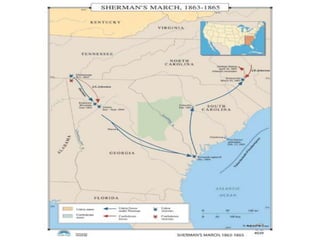
 Sherman believed in total war
 All-out attacks aimed at destroying an enemy’s army, its
resources, & it’s people’s will to fight
 Confederates were unable to stop Sherman’s advance
 Union troops captured Atlanta, GA on September 2,
1864
 Victory gave Lincoln’s reelection campaign a boost
 Northerners were growing tired of the war prior to this event &
support for Lincoln was also lagging; Lincoln won election victory
over General George McClellan
 November 1864
ď‚— Sherman ordered Atlanta to be burned & he continued his
march to the Atlantic Ocean
 Along the way Union forces set fires to buildings, seized crops &
livestock, & pulled up railroad tracks leaving a 60 mile path of
destruction
PEACE AT LAST
 March 1865
 Grant’s army continued to besiege Petersburg
ď‚— Grant extended his battle lines east & west
ď‚— Lee knew the city would fall
ď‚— Lincoln also saw end of war too
 2nd inaugural address
 “With malice toward none; with charity for all; …let us strive
together… to bind up the nation’s wounds”
SURRENDER AT APPOMATTOX
 April 2
 Grant’s troop broke through Confederate lines
ď‚— Richmond was captured by the Union
ď‚— Lee retreated to Appomattox Court House
 April 9, 1865
ď‚— Lee surrendered
ď‚— Grant offered:
 Confederates to give up their weapons & leave in peace
THE WAR’S TERRIBLE TOLL
 Bloodiest conflict U.S. ever fought
ď‚— Confederates: 260,000 men died
ď‚— Union: exceeded 360,000 men including 37,000 African
Americans
 ½ million were wounded
ď‚— Many returned home disfigured for life
 Key results of the war
ď‚— Reunited the nation
ď‚— Put an end to slavery

Section 5

  • 1.
  • 2.
    THE TIDE TURNS 1862 Battle of Antietam  After this battle war began to go badly for the North  Poor leadership was the result  McClellan replaced with General Ambrose Burnside
  • 3.
    CONFEDERATE VICTORIES  December1862  Burnside marched army of 120,000 men toward Richmond  General Lee massed 75,000 men at Fredericksburg, VA to block his path  Burnside ordered charge after charge during this battle  Union lost 13,000 men to the Confederates 5,000  Lincoln replaced Burnside with General Joseph Hooker  May 1863  Hooker marched Union army toward Richmond  Union army was smashed at the Battle of Chancellorsville by a force half its size  Battle was costly for the South; Stonewall Jackson was shot and wounded & later died
  • 4.
    THE BATTLE OFGETTYSBURG  After Lee’s army defeated Union forces at Chancellorsville he gained confidence & headed north to Pennsylvania  Union forces now under the command of General George G. Meade meet Lee accidentally at Gettysburg  Confederates were in search of shoes desperately needed in the South  Bloody battle marked a turning point in the war  Union troops took position on the crest of a low ridge  Confederates’ task was to dislodge them from their position  Confederate attempts failed several times, concluding with a suicidal charge across an open field by General George Pickett on July 3  After 3 days 23,000 Union soldiers & 28,000 Confederate soldiers had been killed or wounded  Lincoln wired Meade, “Do not let the enemy escape”  July 4, Lee retreated to Virginia & the Union army failed to pursue him
  • 5.
    GETTYSBURG ADDRESS  Bothsides suffered heavy casualties at Gettysburg  Sparsely populated South could not recover from  November 19, 1863 President Lincoln visited Gettysburg to dedicate the battlefield cemetery & to honor the soldiers buried there  He promised, “these dead shall not have died in vain”
  • 6.
    THE FALL OFVICKSBURG  July 4, 1863  Vicksburg surrendered to General grant  Was last city on the Mississippi River in Confederate hands  Grant was able to capture Vicksburg not by force, but by surrounding the city & cutting it off from supplies  Day after day the Union bombarded Vicksburg  Residents took shelter in cellars & caves they had dug in hillsides  They ate mules & rats to keep from starving  After 6 weeks the Confederate troops gave up  Last Confederate stronghold at Port Hudson, LA fell a few days later  Lee’s defeat at Gettysburg along with loses at Vicksburg & Port Hudson made July 1863 a major turning point in the war
  • 7.
    CLOSING IN ONTHE CONFEDERACY  1864  Grant given command of Union forces  Decided to attack Richmond no matter how large the Union losses
  • 8.
    GRANT VS. LEE Grant’s huge army hammered the Confederates in several battles in northern Virginia  They were unable to break through, but continued to attack  Grant’s army suffered 55,000 casualties in 7 weeks of fighting; Confederates suffered 35,000  Grant knew he could count of a steady supply of men & supplies while Lee was running low on both  Petersburg  Grant used the same tactic he used a Vicksburg of besieging the Confederate troops  While Grant & Lee battled, Union forces under command of William T. Sherman advanced toward Atlanta
  • 9.
    SHERMAN’S MARCH  Shermanbelieved in total war  All-out attacks aimed at destroying an enemy’s army, its resources, & it’s people’s will to fight  Confederates were unable to stop Sherman’s advance  Union troops captured Atlanta, GA on September 2, 1864  Victory gave Lincoln’s reelection campaign a boost  Northerners were growing tired of the war prior to this event & support for Lincoln was also lagging; Lincoln won election victory over General George McClellan  November 1864  Sherman ordered Atlanta to be burned & he continued his march to the Atlantic Ocean  Along the way Union forces set fires to buildings, seized crops & livestock, & pulled up railroad tracks leaving a 60 mile path of destruction
  • 11.
    PEACE AT LAST March 1865  Grant’s army continued to besiege Petersburg  Grant extended his battle lines east & west  Lee knew the city would fall  Lincoln also saw end of war too  2nd inaugural address  “With malice toward none; with charity for all; …let us strive together… to bind up the nation’s wounds”
  • 12.
    SURRENDER AT APPOMATTOX April 2  Grant’s troop broke through Confederate lines  Richmond was captured by the Union  Lee retreated to Appomattox Court House  April 9, 1865  Lee surrendered  Grant offered:  Confederates to give up their weapons & leave in peace
  • 13.
    THE WAR’S TERRIBLETOLL  Bloodiest conflict U.S. ever fought  Confederates: 260,000 men died  Union: exceeded 360,000 men including 37,000 African Americans  ½ million were wounded  Many returned home disfigured for life  Key results of the war  Reunited the nation  Put an end to slavery