Grammar
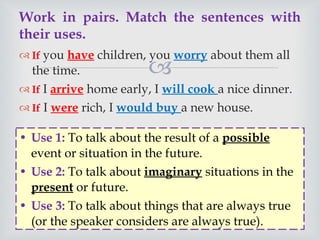
If  you  have  children, you  worry  about them all the time.  If  I  arrive  home early, I  will cook  a nice dinner.  If  I  were  rich, I  would buy  a new house.  Work in pairs. Match the sentences with their uses.  Use 1:  To talk about the result of a  possible  event or situation in the future.  Use 2:   To talk about  imaginary  situations in the  present  or future.  Use 3:  To talk about things that are always true (or the speaker considers are always true).  If  I  arrive  home early, I  will cook  a nice dinner.  If  I  were  rich, I  would buy  a new house.
Work in pairs. Match the sentences with their uses.  Use 1:  To talk about the result of a  possible  event or situation in the future.  If  I  arrive  home early, I  will cook  a nice dinner.  Use 2:   To talk about  imaginary  situations in the  present  or future.  If  I  were  rich, I  would buy  a new house.  Use 3:  To talk about things that are always true (or the speaker considers are always true).  If  you  have  children, you  worry  about them all the time.
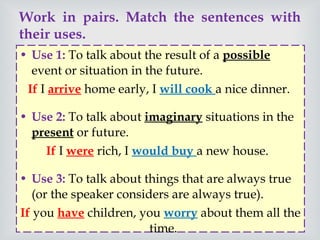
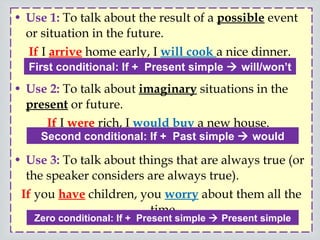
Use 1:  To talk about the result of a  possible  event or situation in the future.  If  I  arrive  home early, I  will cook  a nice dinner.  Use 2:   To talk about  imaginary  situations in the  present  or future.  If  I  were  rich, I  would buy  a new house.  Use 3:  To talk about things that are always true (or the speaker considers are always true).  If  you  have  children, you  worry  about them all the time.  First conditional: If +  Present simple    will/won’t  Zero conditional: If +  Present simple    Present simple Second conditional: If +  Past simple    would

Second Conditional Presentation

  • 1.
  • 2.
    If you have children, you worry about them all the time. If I arrive home early, I will cook a nice dinner. If I were rich, I would buy a new house. Work in pairs. Match the sentences with their uses. Use 1: To talk about the result of a possible event or situation in the future. Use 2: To talk about imaginary situations in the present or future. Use 3: To talk about things that are always true (or the speaker considers are always true). If I arrive home early, I will cook a nice dinner. If I were rich, I would buy a new house.
  • 3.
    Work in pairs.Match the sentences with their uses. Use 1: To talk about the result of a possible event or situation in the future. If I arrive home early, I will cook a nice dinner. Use 2: To talk about imaginary situations in the present or future. If I were rich, I would buy a new house. Use 3: To talk about things that are always true (or the speaker considers are always true). If you have children, you worry about them all the time.
  • 4.
    Use 1: To talk about the result of a possible event or situation in the future. If I arrive home early, I will cook a nice dinner. Use 2: To talk about imaginary situations in the present or future. If I were rich, I would buy a new house. Use 3: To talk about things that are always true (or the speaker considers are always true). If you have children, you worry about them all the time. First conditional: If + Present simple  will/won’t Zero conditional: If + Present simple  Present simple Second conditional: If + Past simple  would