


Chong Boon Secondary School 
Humanities Department (Geography Unit) 
Lower Secondary Geography (Sec Two) 
Prepared by Mr Kelwin Koh
 At the end of this unit, you will be able to 
 Identify and calculate 
▪ Population growth rate 
▪ Rate of Natural Increase 
▪ Population Density 
 Identify the factors that affect population growth 
 Identify the factors that affect population density
 The number of people who live on 
Earth. 
 Current global population stands at 
about 7.1 billion humans. 
 Population grows at an exponential 
rate 
 Rapidly increasing since the year 1000 
AD
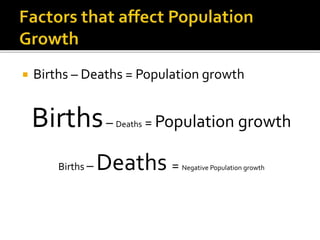
 Births – Deaths = Population growth 
Births– Deaths = Population growth 
Births – Deaths = Negative Population growth
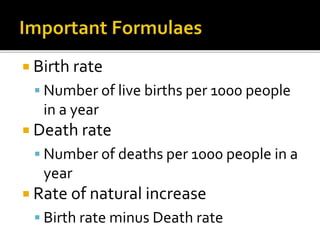
 Birth rate 
 Number of live births per 1000 people 
in a year 
 Death rate 
 Number of deaths per 1000 people in a 
year 
 Rate of natural increase 
 Birth rate minus Death rate
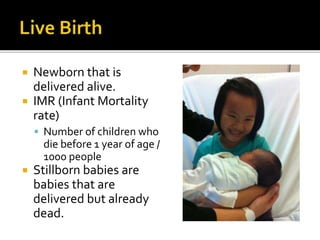
 Newborn that is 
delivered alive. 
 IMR (Infant Mortality 
rate) 
 Number of children who 
die before 1 year of age / 
1000 people 
 Stillborn babies are 
babies that are 
delivered but already 
dead.
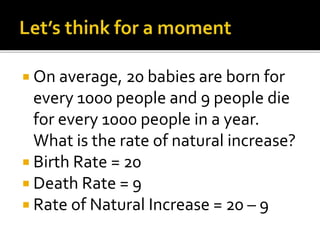
 On average, 20 babies are born for 
every 1000 people and 9 people die 
for every 1000 people in a year. 
What is the rate of natural increase? 
 Birth Rate = 20 
 Death Rate = 9 
 Rate of Natural Increase = 20 – 9
 In your groups, discuss and write down on the 
paper provided. (provide examples) 
1. What are 3 conditions that will encourage 
people to have a lot of children? 
2. What are 3 conditions that will result in a lot 
of deaths suddenly? 
5 
Minutes
 Take a look at the following clips and write down 
your feelings about them on the Leaf provided. 
 Reflection Qn: How do you think your world will 
be like in 2060?
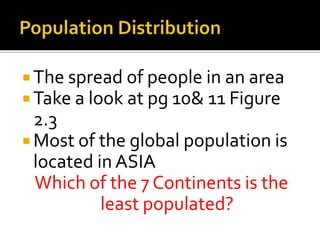
 The spread of people in an area 
Take a look at pg 10& 11 Figure 
2.3 
 Most of the global population is 
located in ASIA 
Which of the 7 Continents is the 
least populated?
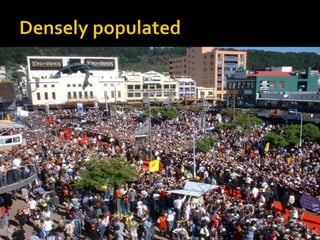
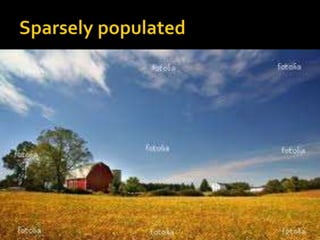
 The total number of people living in a square 
kilometre of land. 
Population density = Total population 
Area
1. Physical factors 
2. Human and 
Economic 
factors
 Relief 
 Flat terrain encourages growth 
 Climate 
 Harsh climate discourages growth 
 Soil & Minerals 
 Ease of cultivation and presence of minerals 
encourage growth 
 Natural Vegetation & Water 
 Source of food and water encourages 
growth
Agriculture 
Natural resources 
Industry 
Commerce 
Transport and Accessibility
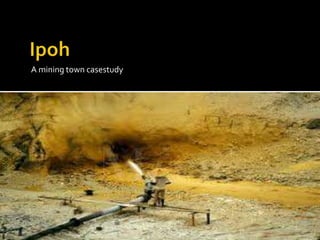
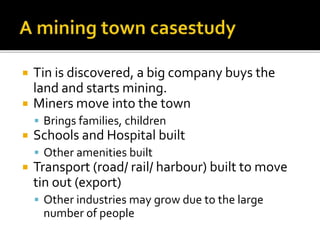
A mining town casestudy
 Tin is discovered, a big company buys the 
land and starts mining. 
 Miners move into the town 
 Brings families, children 
 Schools and Hospital built 
 Other amenities built 
 Transport (road/ rail/ harbour) built to move 
tin out (export) 
 Other industries may grow due to the large 
number of people
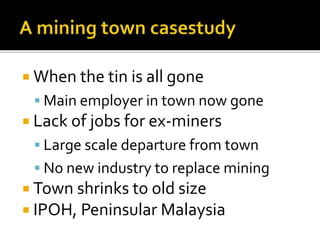
 When the tin is all gone 
 Main employer in town now gone 
 Lack of jobs for ex-miners 
 Large scale departure from town 
 No new industry to replace mining 
 Town shrinks to old size 
 IPOH, Peninsular Malaysia
1. What is the most famous natural 
resource from Ipoh? 
2. Who is the most famous celebrity from 
Ipoh in the past 20 years? 
3. Name a local delicacy that has ‘Ipoh’ in 
its name! 
Submit all answers in the BOX by 
next Monday. 
3 lucky winners will get prizes!
 Let’s take a look at the following questions 
1. Why is there a need for schools and 
hospitals in every densely populated mining 
town? 
2. What are 3 other services that every mining 
town will have. (provide an explanation for 
the purpose of that service) 
5 
Minutes
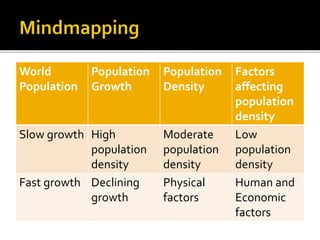
World 
Population 
Population 
Growth 
Population 
Density 
Factors 
affecting 
population 
density 
Slow growth High 
population 
density 
Moderate 
population 
density 
Low 
population 
density 
Fast growth Declining 
growth 
Physical 
factors 
Human and 
Economic 
factors
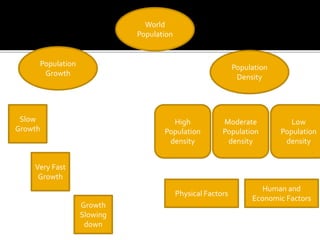
Population 
Growth 
Physical Factors 
Population 
Density 
Human and 
Economic Factors 
High 
Population 
density 
Moderate 
Population 
density 
Low 
Population 
density 
Slow 
Growth 
Very Fast 
Growth 
Growth 
Slowing 
down 
World 
Population
You cannot have your notes/ 
notebook with you. 
 Duration : 15 minutes 
NO TEXTBOOKS! 
 Write in Black / Dark Blue ink 
 Good Luck

Sec 2 Unit 2 world population

  • 1.
    Chong Boon SecondarySchool Humanities Department (Geography Unit) Lower Secondary Geography (Sec Two) Prepared by Mr Kelwin Koh
  • 2.
     At theend of this unit, you will be able to  Identify and calculate ▪ Population growth rate ▪ Rate of Natural Increase ▪ Population Density  Identify the factors that affect population growth  Identify the factors that affect population density
  • 3.
     The numberof people who live on Earth.  Current global population stands at about 7.1 billion humans.  Population grows at an exponential rate  Rapidly increasing since the year 1000 AD
  • 4.
     Births –Deaths = Population growth Births– Deaths = Population growth Births – Deaths = Negative Population growth
  • 5.
     Birth rate  Number of live births per 1000 people in a year  Death rate  Number of deaths per 1000 people in a year  Rate of natural increase  Birth rate minus Death rate
  • 6.
     Newborn thatis delivered alive.  IMR (Infant Mortality rate)  Number of children who die before 1 year of age / 1000 people  Stillborn babies are babies that are delivered but already dead.
  • 7.
     On average,20 babies are born for every 1000 people and 9 people die for every 1000 people in a year. What is the rate of natural increase?  Birth Rate = 20  Death Rate = 9  Rate of Natural Increase = 20 – 9
  • 8.
     In yourgroups, discuss and write down on the paper provided. (provide examples) 1. What are 3 conditions that will encourage people to have a lot of children? 2. What are 3 conditions that will result in a lot of deaths suddenly? 5 Minutes
  • 9.
     Take alook at the following clips and write down your feelings about them on the Leaf provided.  Reflection Qn: How do you think your world will be like in 2060?
  • 10.
     The spreadof people in an area Take a look at pg 10& 11 Figure 2.3  Most of the global population is located in ASIA Which of the 7 Continents is the least populated?
  • 11.
     The totalnumber of people living in a square kilometre of land. Population density = Total population Area
  • 14.
    1. Physical factors 2. Human and Economic factors
  • 15.
     Relief Flat terrain encourages growth  Climate  Harsh climate discourages growth  Soil & Minerals  Ease of cultivation and presence of minerals encourage growth  Natural Vegetation & Water  Source of food and water encourages growth
  • 16.
    Agriculture Natural resources Industry Commerce Transport and Accessibility
  • 17.
    A mining towncasestudy
  • 18.
     Tin isdiscovered, a big company buys the land and starts mining.  Miners move into the town  Brings families, children  Schools and Hospital built  Other amenities built  Transport (road/ rail/ harbour) built to move tin out (export)  Other industries may grow due to the large number of people
  • 19.
     When thetin is all gone  Main employer in town now gone  Lack of jobs for ex-miners  Large scale departure from town  No new industry to replace mining  Town shrinks to old size  IPOH, Peninsular Malaysia
  • 21.
    1. What isthe most famous natural resource from Ipoh? 2. Who is the most famous celebrity from Ipoh in the past 20 years? 3. Name a local delicacy that has ‘Ipoh’ in its name! Submit all answers in the BOX by next Monday. 3 lucky winners will get prizes!
  • 22.
     Let’s takea look at the following questions 1. Why is there a need for schools and hospitals in every densely populated mining town? 2. What are 3 other services that every mining town will have. (provide an explanation for the purpose of that service) 5 Minutes
  • 23.
    World Population Population Growth Population Density Factors affecting population density Slow growth High population density Moderate population density Low population density Fast growth Declining growth Physical factors Human and Economic factors
  • 24.
    Population Growth PhysicalFactors Population Density Human and Economic Factors High Population density Moderate Population density Low Population density Slow Growth Very Fast Growth Growth Slowing down World Population
  • 25.
    You cannot haveyour notes/ notebook with you.  Duration : 15 minutes NO TEXTBOOKS!  Write in Black / Dark Blue ink  Good Luck

Editor's Notes

  • #10 http://www.youtube.com/watch?v=pMLolhlXaHc 2 min population growth video http://www.youtube.com/watch?v=4B2xOvKFFz4 2 min Are you typical vid http://www.youtube.com/watch?v=px6SS06rxt0 Robot transformer Japan http://www.youtube.com/watch?v=kgcvZtxSU4Q Elder Iron Man suit
  • #21 Click on star to show video on Tin mining and its effects (4min)