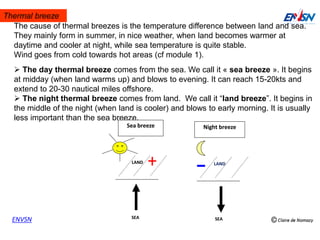
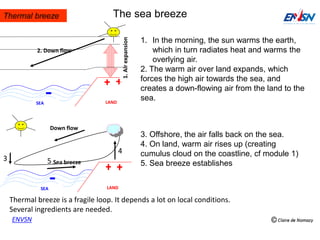
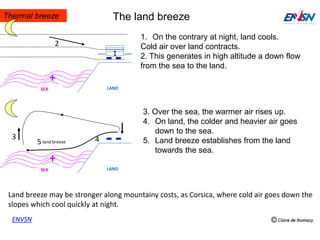
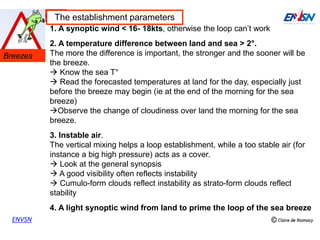
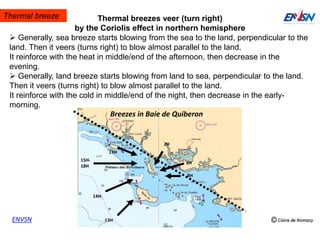
Thermal breezes form due to temperature differences between land and sea. During the day, sea breezes blow from the sea to land as the land warms up more than the sea. At night, land breezes form as the land cools faster than the sea. Thermal breezes depend on factors like a temperature difference of over 2°C, light winds under 16 knots, and unstable air conditions. They typically veer to the right due to the Coriolis effect.