Presented By 
Name:Karuna Kak 
Institute:SICSR 
PRN:12030121030 
Programme :BCA (2012-15) 
Semester :III 
Division :A
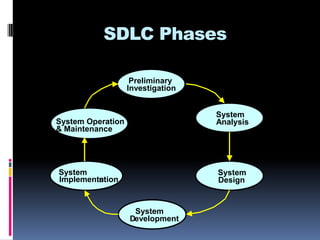
SDLC PhasesPreliminaryInvestigation 
System Operation 
& Maintenance 
System 
Analysis 
System 
Implementation 
n 
System 
Design 
System 
D 
evelopment
Phase 1: Preliminary Investigation 
Determineifanewsystemisneeded 
Threeprimarytasks: 
Definetheproblem 
Byobservationandinterview,determinewhatinformationisneededbywhom,when,whereandwhy 
Suggestalternativesolutions 
Prepareashortreport
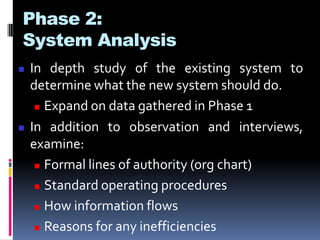
Indepthstudyoftheexistingsystemtodeterminewhatthenewsystemshoulddo. 
ExpandondatagatheredinPhase1 
Inadditiontoobservationandinterviews, examine: 
Formallinesofauthority(orgchart) 
Standardoperatingprocedures 
Howinformationflows 
Reasonsforanyinefficiencies 
Phase 2: System Analysis
Phase 2: System Analysis Tools Used 
Checklists-listofquestions 
Top-downanalysis-startwithtoplevelcomponents,breakdownintosmallerpartsthrougheachsuccessivelevel 
Gridcharts-toshowrelationshipbetweeninputsandoutputs 
Systemflowcharts-chartsflowofinputdata, processing,andoutputwhichshowsystemelementsandinteractions
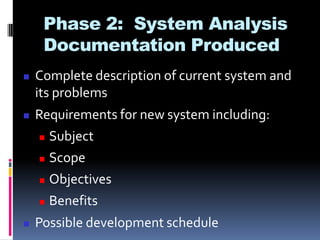
Phase 2: System Analysis Documentation Produced 
Complete description of current system and its problems 
Requirements for new system including: 
Subject 
Scope 
Objectives 
Benefits 
Possible development schedule
Phase 3: System Design 
Usesspecificationsfromthesystemsanalysistodesignalternativesystems 
Evaluatealternativesbasedupon: 
Economicfeasibility-Dobenefitsjustifycosts? 
Technicalfeasibility-Isreliabletechnologyandtrainingavailable? 
Operationalfeasibility-Willthemanagersanduserssupportit?
Phase 3: System Design Tools Used 
Computer-Aided Software Engineering (CASE) tools are software-based products designed to help automate the production of information systems. 
Examples: 
Diagramming Tools 
Data Repositories 
Prototyping Tools 
Documentation Tools 
Project Management Tools
Phase 3: System Design Documentation Produced 
System Design Report 
Describe Alternatives including: 
Inputs/Outputs 
Processing 
Storage and Backup 
Recommend Top Alternative based upon: 
System Fit into the Organization 
Flexibility for the future 
Costs vs. benefits
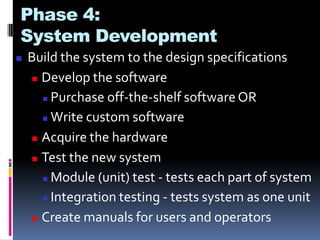
Phase 4: System Development 
Build the system to the design specifications 
Develop the software 
Purchase off-the-shelf software OR 
Write custom software 
Acquire the hardware 
Test the new system 
Module (unit) test -tests each part of system 
Integration testing -tests system as one unit 
Create manuals for users and operators
Phase 5: System Implementation 
Convert from old system to new system 
Train users 
Compile final documentation 
Evaluate the new system
Phase 5: System ImplementationTypes of Conversion 
Direct/plunge/crashapproach–entirenewsystemcompletelyreplacesentireoldsystem,inonestep 
Parallelapproach-bothsystemsareoperatedsidebysideuntilthenewsystemprovesitself 
Pilotapproach-launchednewsystemforonlyonegroupwithinthebusiness--oncenewsystemisoperatingsmoothly,implementationgoescompany- wide 
Phased/incrementalapproach-individualpartsofnewsystemaregraduallyphased-inovertime,usingeithercrashorparallelforeachpiece.
Phase 5: System Implementation 
User Training 
Ease into system, make them comfortable, and gain their support 
Most commonly overlooked 
Can be commenced before equipment delivery 
Outside trainers sometimes used
Phase 6: Operations & Maintenance 
Types of changes: 
Physical repair of the system 
Correction of new bugs found (corrective) 
System adjustments to environmental changes 
Adjustments for users’ changing needs (adaptive) 
Changes to user better techniques when they become available (perfective)
Phase 6: Operations & Maintenance 
Evaluation Methods 
Systems audit -performance compared to original specifications 
Periodic evaluation -“checkups” from time to time, modifications if necessary
Deliverables of the SDLCBegin buildingnew system 
System converted 
Users trained 
Coded and 
Tested System 
Design Specifications 
Preliminary 
Investigation 
System 
Analysis 
System 
Design 
System 
Implementation 
System 
Development 
System 
Maintenance 
Approved Feasibility 
StudyOperational System Documentation completed 
Abort Project 
Goto next phase 
GotoPrevious phase 
Problem 
Specifications
Sdlc

Sdlc

  • 1.
    Presented By Name:KarunaKak Institute:SICSR PRN:12030121030 Programme :BCA (2012-15) Semester :III Division :A
  • 2.
    SDLC PhasesPreliminaryInvestigation SystemOperation & Maintenance System Analysis System Implementation n System Design System D evelopment
  • 3.
    Phase 1: PreliminaryInvestigation Determineifanewsystemisneeded Threeprimarytasks: Definetheproblem Byobservationandinterview,determinewhatinformationisneededbywhom,when,whereandwhy Suggestalternativesolutions Prepareashortreport
  • 4.
    Indepthstudyoftheexistingsystemtodeterminewhatthenewsystemshoulddo. ExpandondatagatheredinPhase1 Inadditiontoobservationandinterviews,examine: Formallinesofauthority(orgchart) Standardoperatingprocedures Howinformationflows Reasonsforanyinefficiencies Phase 2: System Analysis
  • 5.
    Phase 2: SystemAnalysis Tools Used Checklists-listofquestions Top-downanalysis-startwithtoplevelcomponents,breakdownintosmallerpartsthrougheachsuccessivelevel Gridcharts-toshowrelationshipbetweeninputsandoutputs Systemflowcharts-chartsflowofinputdata, processing,andoutputwhichshowsystemelementsandinteractions
  • 6.
    Phase 2: SystemAnalysis Documentation Produced Complete description of current system and its problems Requirements for new system including: Subject Scope Objectives Benefits Possible development schedule
  • 7.
    Phase 3: SystemDesign Usesspecificationsfromthesystemsanalysistodesignalternativesystems Evaluatealternativesbasedupon: Economicfeasibility-Dobenefitsjustifycosts? Technicalfeasibility-Isreliabletechnologyandtrainingavailable? Operationalfeasibility-Willthemanagersanduserssupportit?
  • 8.
    Phase 3: SystemDesign Tools Used Computer-Aided Software Engineering (CASE) tools are software-based products designed to help automate the production of information systems. Examples: Diagramming Tools Data Repositories Prototyping Tools Documentation Tools Project Management Tools
  • 9.
    Phase 3: SystemDesign Documentation Produced System Design Report Describe Alternatives including: Inputs/Outputs Processing Storage and Backup Recommend Top Alternative based upon: System Fit into the Organization Flexibility for the future Costs vs. benefits
  • 10.
    Phase 4: SystemDevelopment Build the system to the design specifications Develop the software Purchase off-the-shelf software OR Write custom software Acquire the hardware Test the new system Module (unit) test -tests each part of system Integration testing -tests system as one unit Create manuals for users and operators
  • 11.
    Phase 5: SystemImplementation Convert from old system to new system Train users Compile final documentation Evaluate the new system
  • 12.
    Phase 5: SystemImplementationTypes of Conversion Direct/plunge/crashapproach–entirenewsystemcompletelyreplacesentireoldsystem,inonestep Parallelapproach-bothsystemsareoperatedsidebysideuntilthenewsystemprovesitself Pilotapproach-launchednewsystemforonlyonegroupwithinthebusiness--oncenewsystemisoperatingsmoothly,implementationgoescompany- wide Phased/incrementalapproach-individualpartsofnewsystemaregraduallyphased-inovertime,usingeithercrashorparallelforeachpiece.
  • 13.
    Phase 5: SystemImplementation User Training Ease into system, make them comfortable, and gain their support Most commonly overlooked Can be commenced before equipment delivery Outside trainers sometimes used
  • 14.
    Phase 6: Operations& Maintenance Types of changes: Physical repair of the system Correction of new bugs found (corrective) System adjustments to environmental changes Adjustments for users’ changing needs (adaptive) Changes to user better techniques when they become available (perfective)
  • 15.
    Phase 6: Operations& Maintenance Evaluation Methods Systems audit -performance compared to original specifications Periodic evaluation -“checkups” from time to time, modifications if necessary
  • 16.
    Deliverables of theSDLCBegin buildingnew system System converted Users trained Coded and Tested System Design Specifications Preliminary Investigation System Analysis System Design System Implementation System Development System Maintenance Approved Feasibility StudyOperational System Documentation completed Abort Project Goto next phase GotoPrevious phase Problem Specifications