Continuous and Staged Choice of CMMI Representations Chris Lazaris
Structure of CMMI models  The basic building blocks in every CMMI model are called “ process areas ” A process area describes  what  those using an effective process do (practices) and  why   they do those things (goals).
What is a CMMI model representation?  Process areas can be organized into one of two representations.  continuous  representation.  staged  representation.  Process areas describe key aspects of such processes as: configuration management requirements management product verification systems integration ……and others
Continuous Representation  Offers maximum flexibility when using a CMMI model for process improvement.  Improves the performance of a  single  process-related trouble spot, or it can work on  several  areas that are closely aligned to the organization’s business objectives.   Allows an organization to improve different processes at different rates.
Continuous Representation If you know the processes that need to be improved in your organization and you understand the dependencies among the process areas described in CMMI.
Staged Representation Offers a systematic, structured way to approach model-based process improvement  one stage at a time.  Process areas are organized by  maturity levels  that take some of the guess work out of process improvement.   Prescribes an order for implementing process areas according to maturity levels, which define the improvement path for an organization from the initial level to the optimizing level.
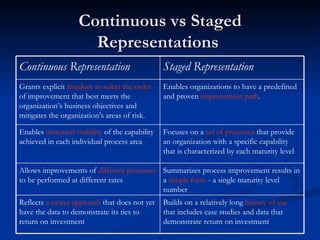
Continuous vs Staged Representations   Builds on a relatively long  history of use  that includes case studies and data that demonstrate return on investment   Reflects  a newer approach  that does not yet have the data to demonstrate its ties to return on investment   Summarizes process improvement results in a  simple form  - a single maturity level number   Allows improvements of  different processes  to be performed at different rates   Focuses on a  set of processes  that provide an organization with a specific capability that is characterized by each maturity level   Enables  increased visibility  of the capability achieved in each individual process area   Enables organizations to have a predefined and proven  improvement path .   Grants explicit  freedom to select the order  of improvement that best meets the organization’s business objectives and mitigates the organization’s areas of risk. Staged   Representation Continuous Representation
Factors in Your Decision Business Factors. Cultural Factors. Legacy.
Business Factors Mature knowledge of its own business objectives (continuous) Product-line focus decides to improve processes across the entire organization (staged)
Cultural Factors To consider when selecting a representation have to do with an organization’s  capability  to deploy a process improvement program.  If the corporate culture is  process based  and experienced in process improvement or has a specific process that needs to be improved quickly (continuous). Little experience in process improvement may choose the staged representation, which provides  additional   guidance  on the order in which changes should occur.
Legacy If an organization has  experience  with another model that has a staged representation, it may be wise to continue with the staged representation when using CMMI . The same is true for the continuous representation.

3-CMMI Continuous And Staged

  • 1.
    Continuous and StagedChoice of CMMI Representations Chris Lazaris
  • 2.
    Structure of CMMImodels The basic building blocks in every CMMI model are called “ process areas ” A process area describes what those using an effective process do (practices) and why they do those things (goals).
  • 3.
    What is aCMMI model representation? Process areas can be organized into one of two representations. continuous representation. staged representation. Process areas describe key aspects of such processes as: configuration management requirements management product verification systems integration ……and others
  • 4.
    Continuous Representation Offers maximum flexibility when using a CMMI model for process improvement. Improves the performance of a single process-related trouble spot, or it can work on several areas that are closely aligned to the organization’s business objectives. Allows an organization to improve different processes at different rates.
  • 5.
    Continuous Representation Ifyou know the processes that need to be improved in your organization and you understand the dependencies among the process areas described in CMMI.
  • 6.
    Staged Representation Offersa systematic, structured way to approach model-based process improvement one stage at a time. Process areas are organized by maturity levels that take some of the guess work out of process improvement. Prescribes an order for implementing process areas according to maturity levels, which define the improvement path for an organization from the initial level to the optimizing level.
  • 7.
    Continuous vs StagedRepresentations Builds on a relatively long history of use that includes case studies and data that demonstrate return on investment Reflects a newer approach that does not yet have the data to demonstrate its ties to return on investment Summarizes process improvement results in a simple form - a single maturity level number Allows improvements of different processes to be performed at different rates Focuses on a set of processes that provide an organization with a specific capability that is characterized by each maturity level Enables increased visibility of the capability achieved in each individual process area Enables organizations to have a predefined and proven improvement path . Grants explicit freedom to select the order of improvement that best meets the organization’s business objectives and mitigates the organization’s areas of risk. Staged Representation Continuous Representation
  • 8.
    Factors in YourDecision Business Factors. Cultural Factors. Legacy.
  • 9.
    Business Factors Matureknowledge of its own business objectives (continuous) Product-line focus decides to improve processes across the entire organization (staged)
  • 10.
    Cultural Factors Toconsider when selecting a representation have to do with an organization’s capability to deploy a process improvement program. If the corporate culture is process based and experienced in process improvement or has a specific process that needs to be improved quickly (continuous). Little experience in process improvement may choose the staged representation, which provides additional guidance on the order in which changes should occur.
  • 11.
    Legacy If anorganization has experience with another model that has a staged representation, it may be wise to continue with the staged representation when using CMMI . The same is true for the continuous representation.