Download as PDF, PPTX






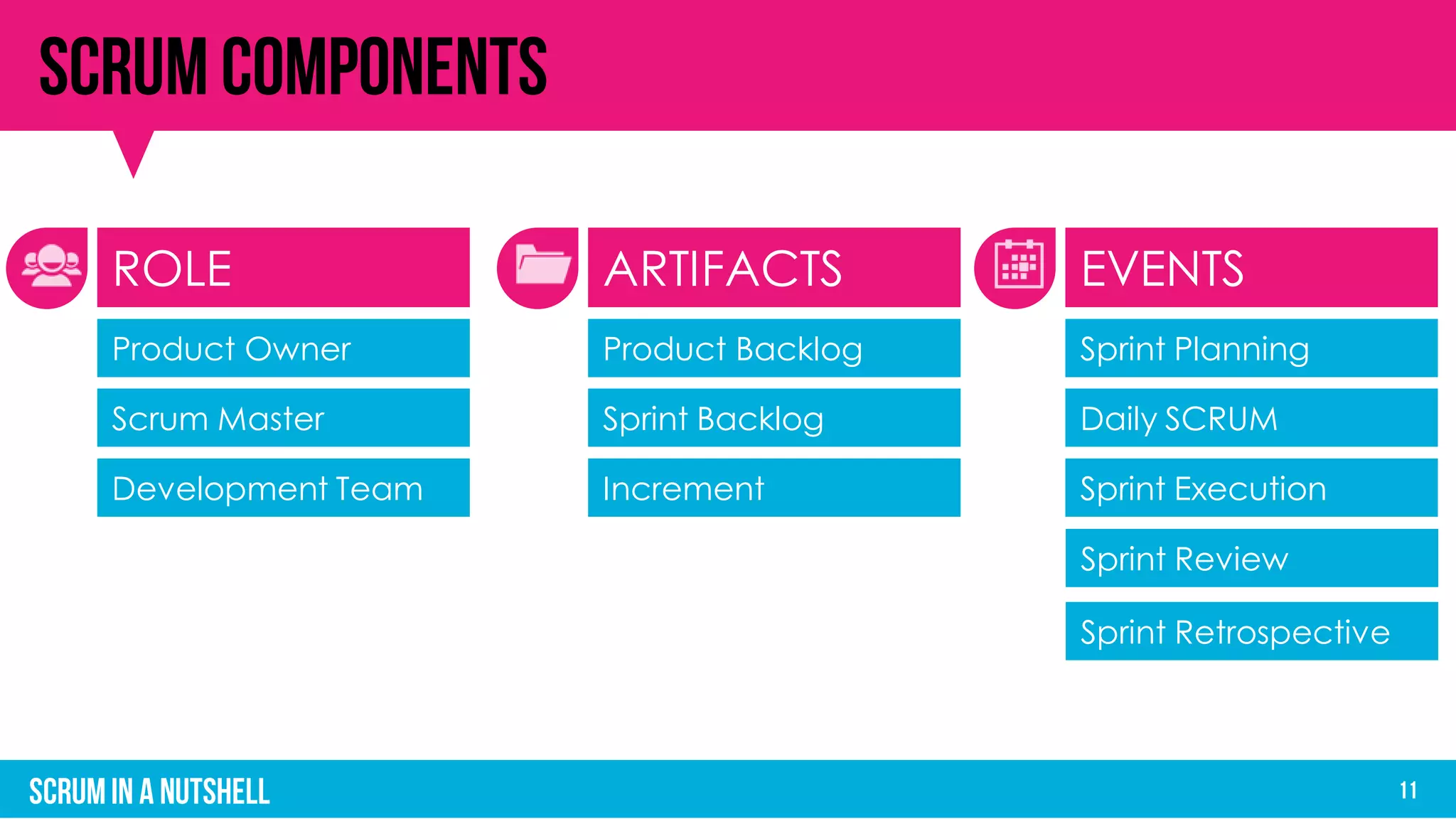


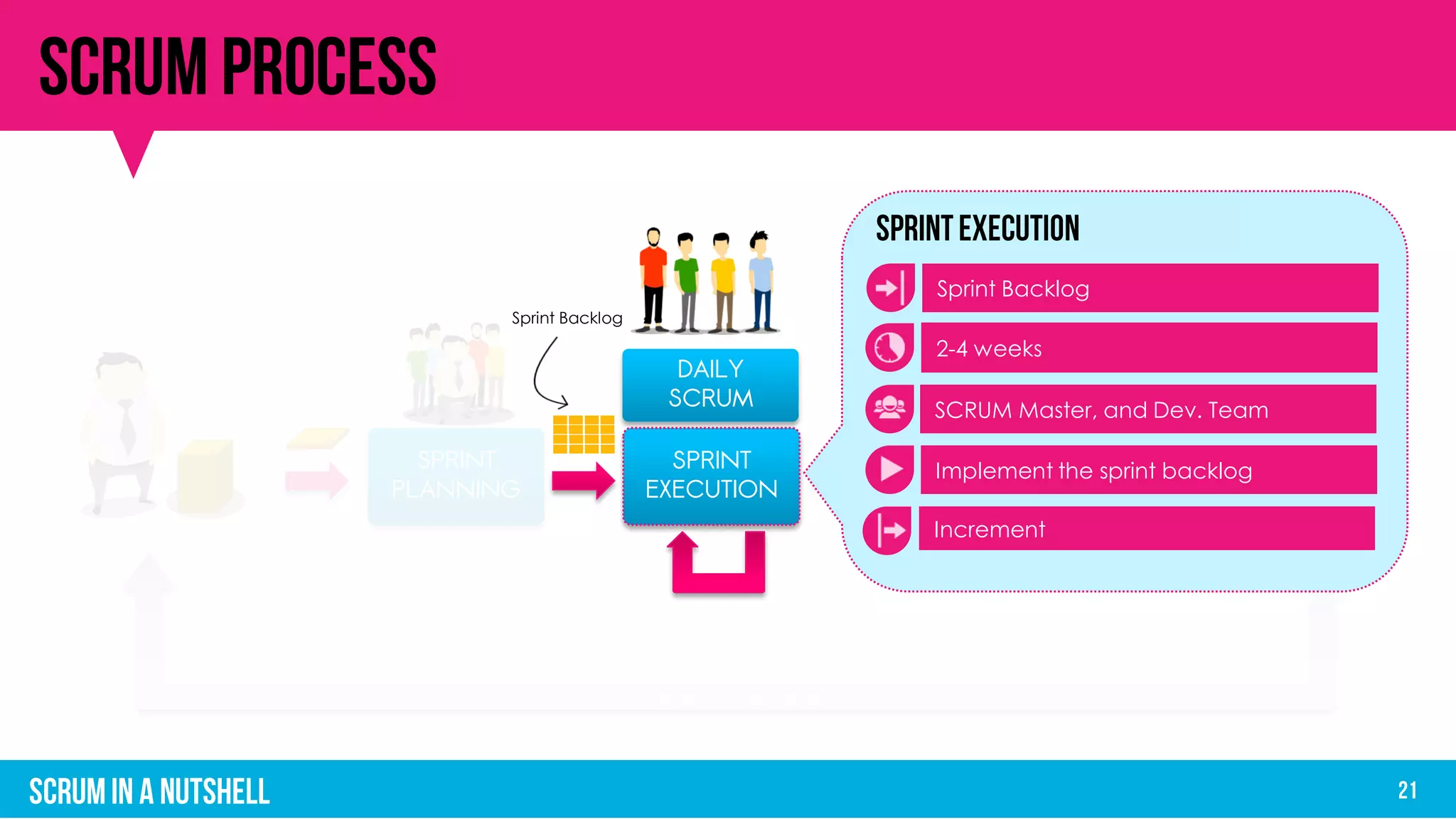
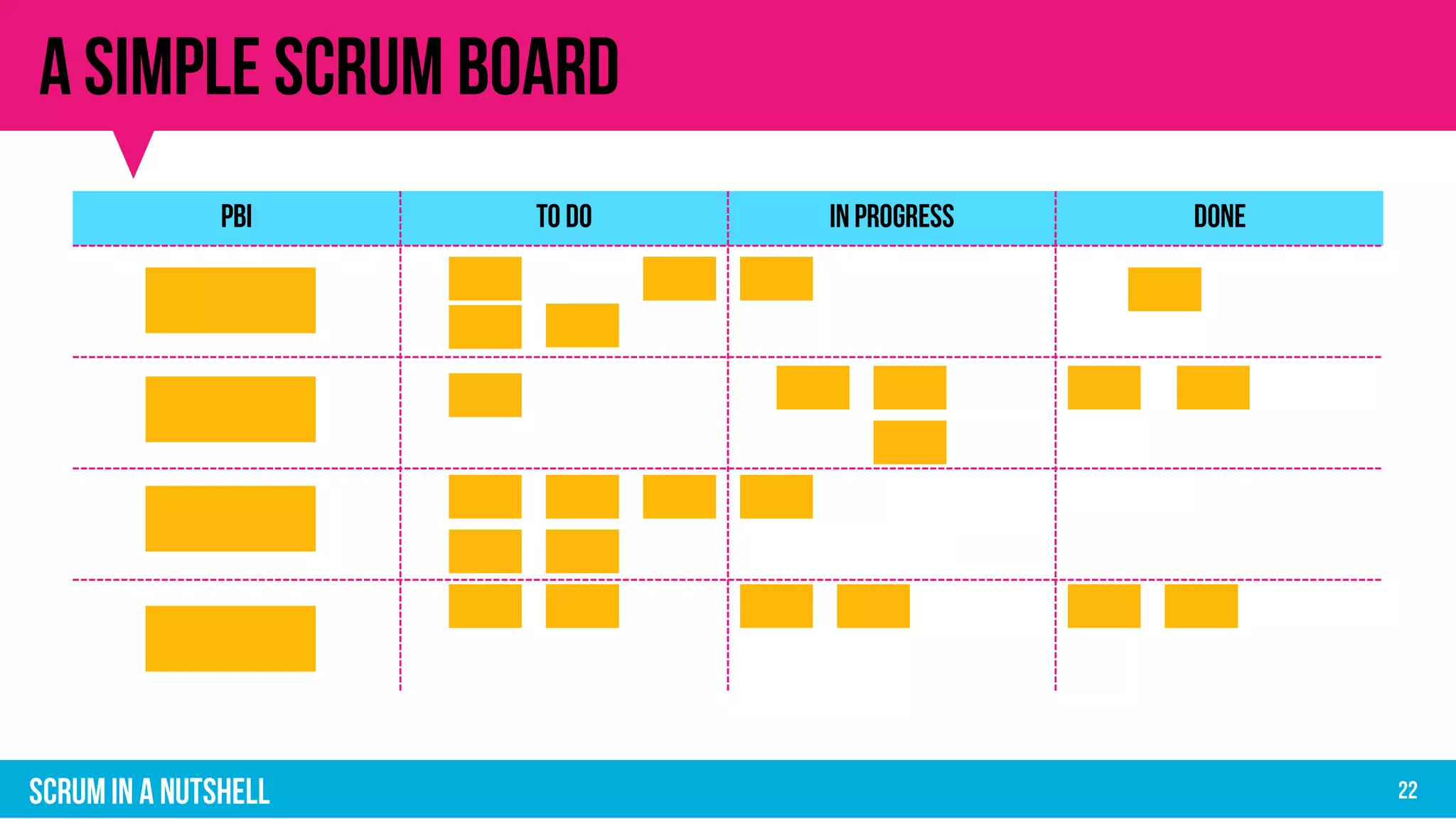
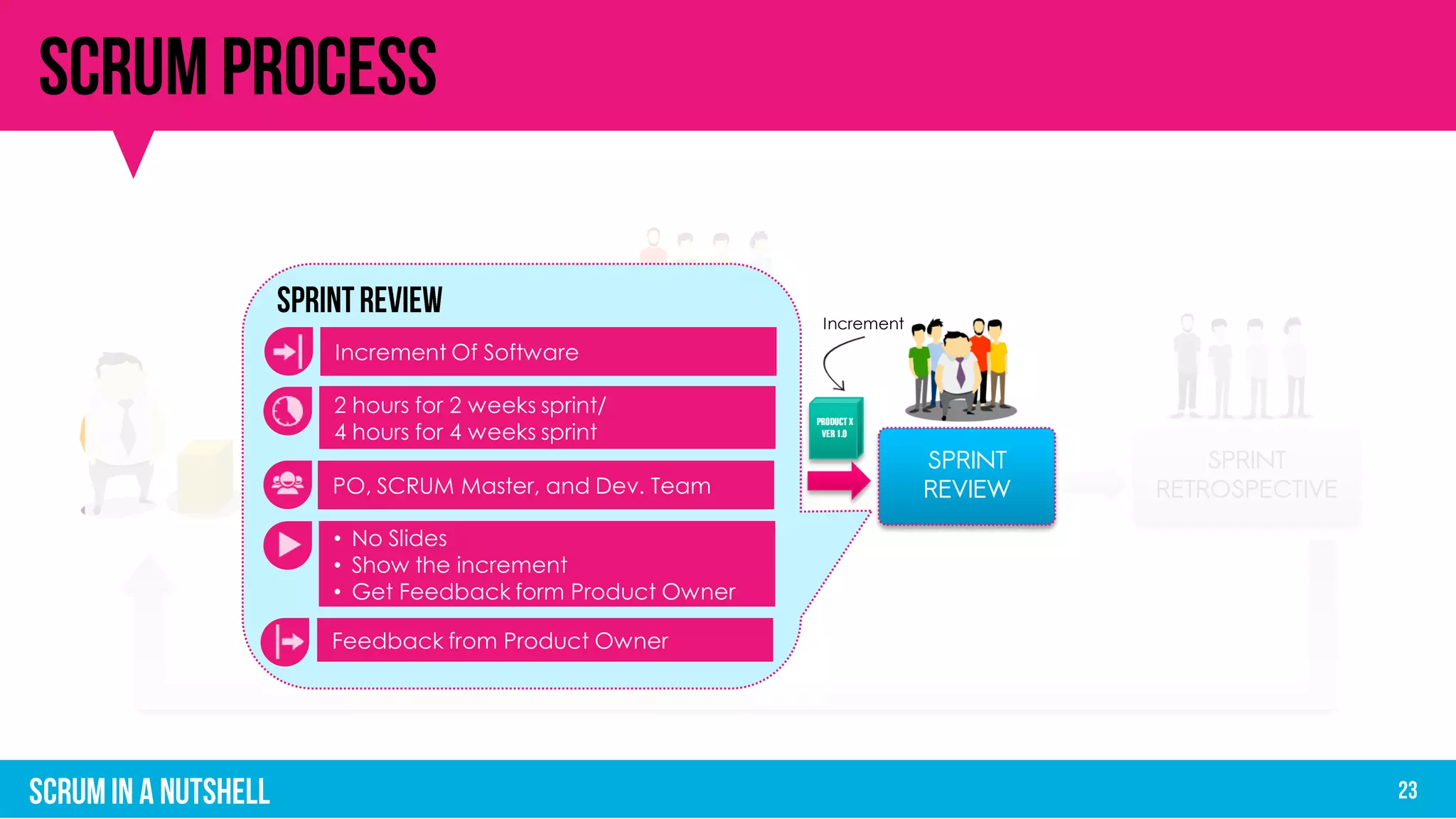
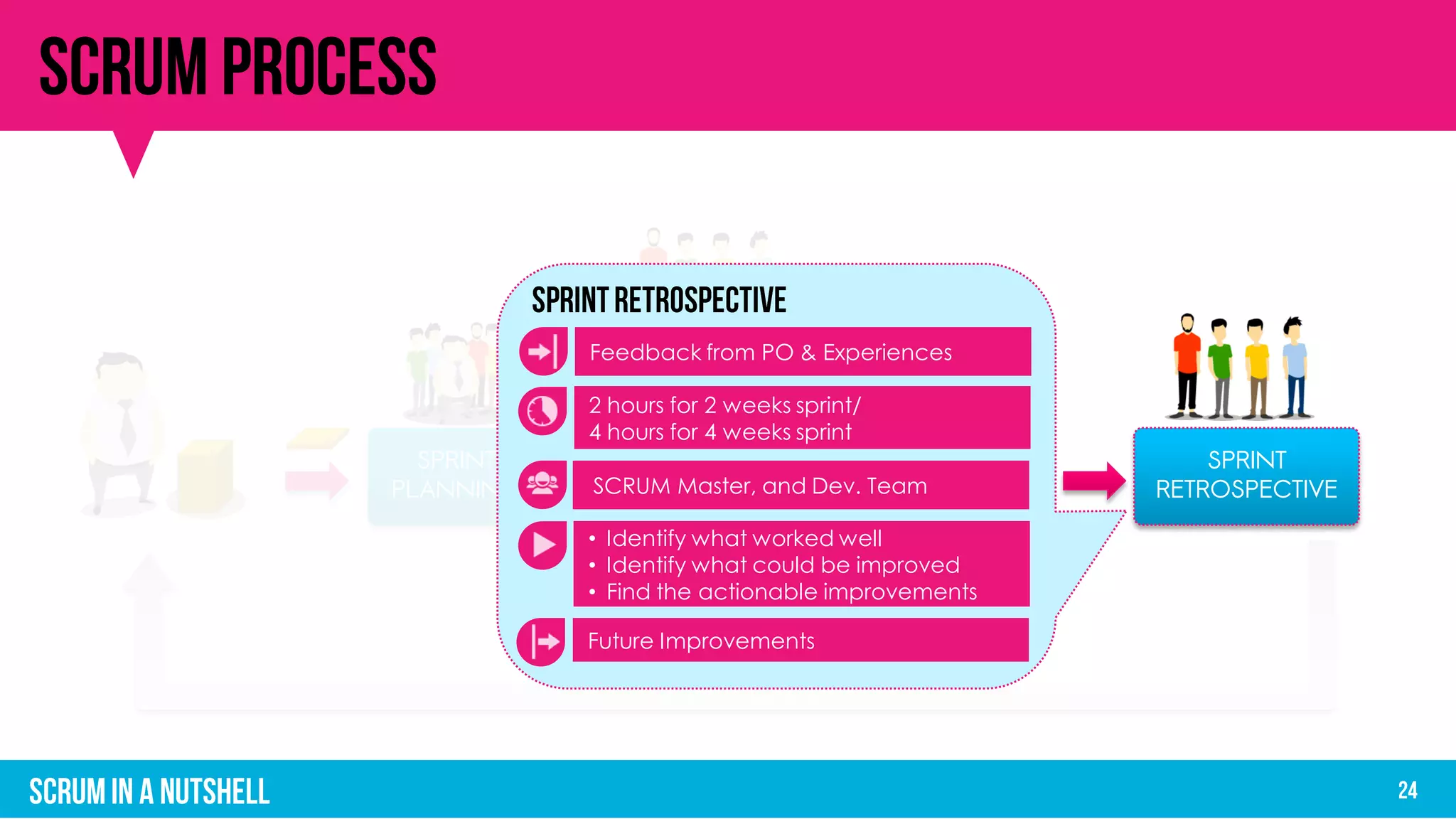
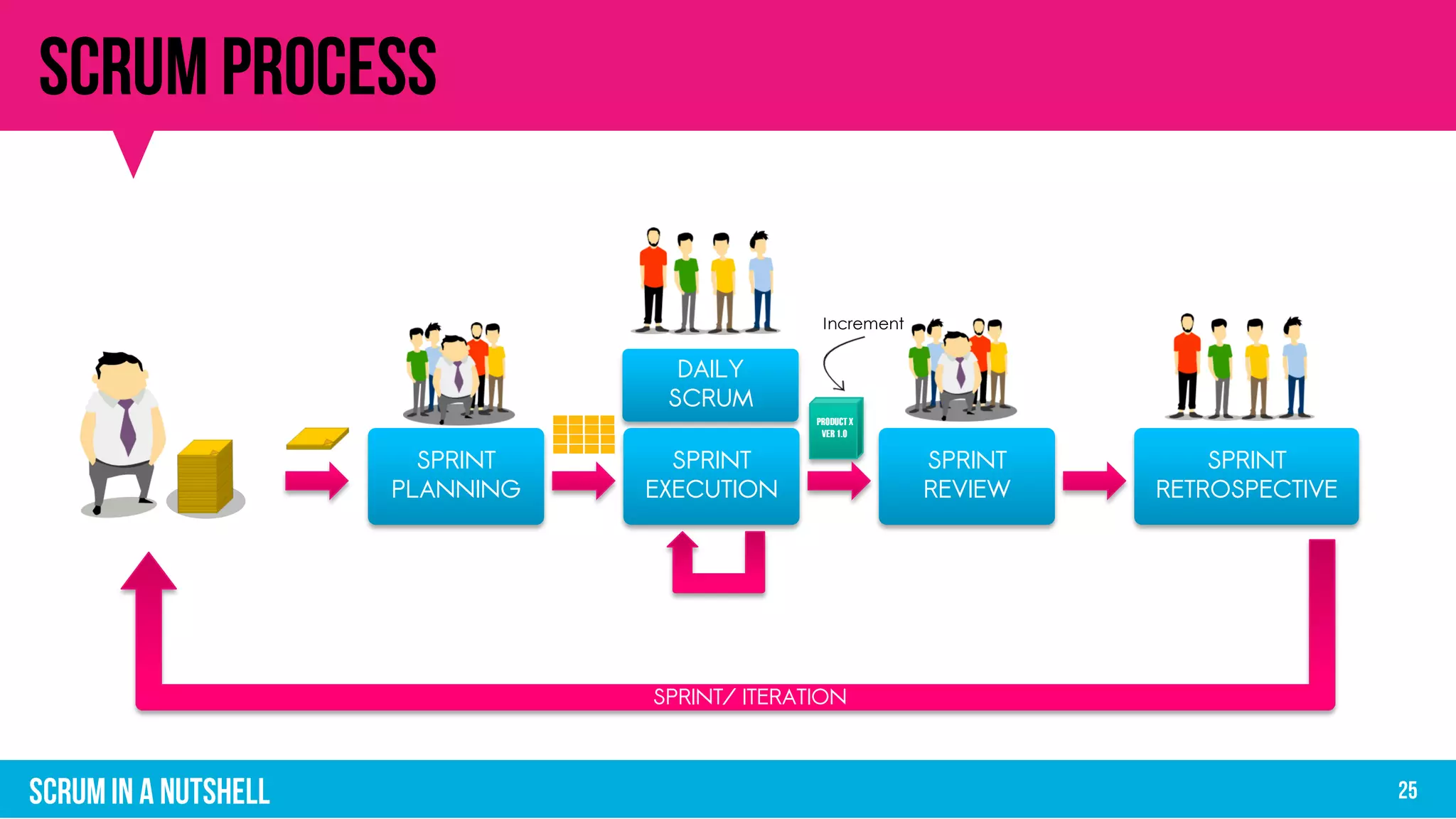
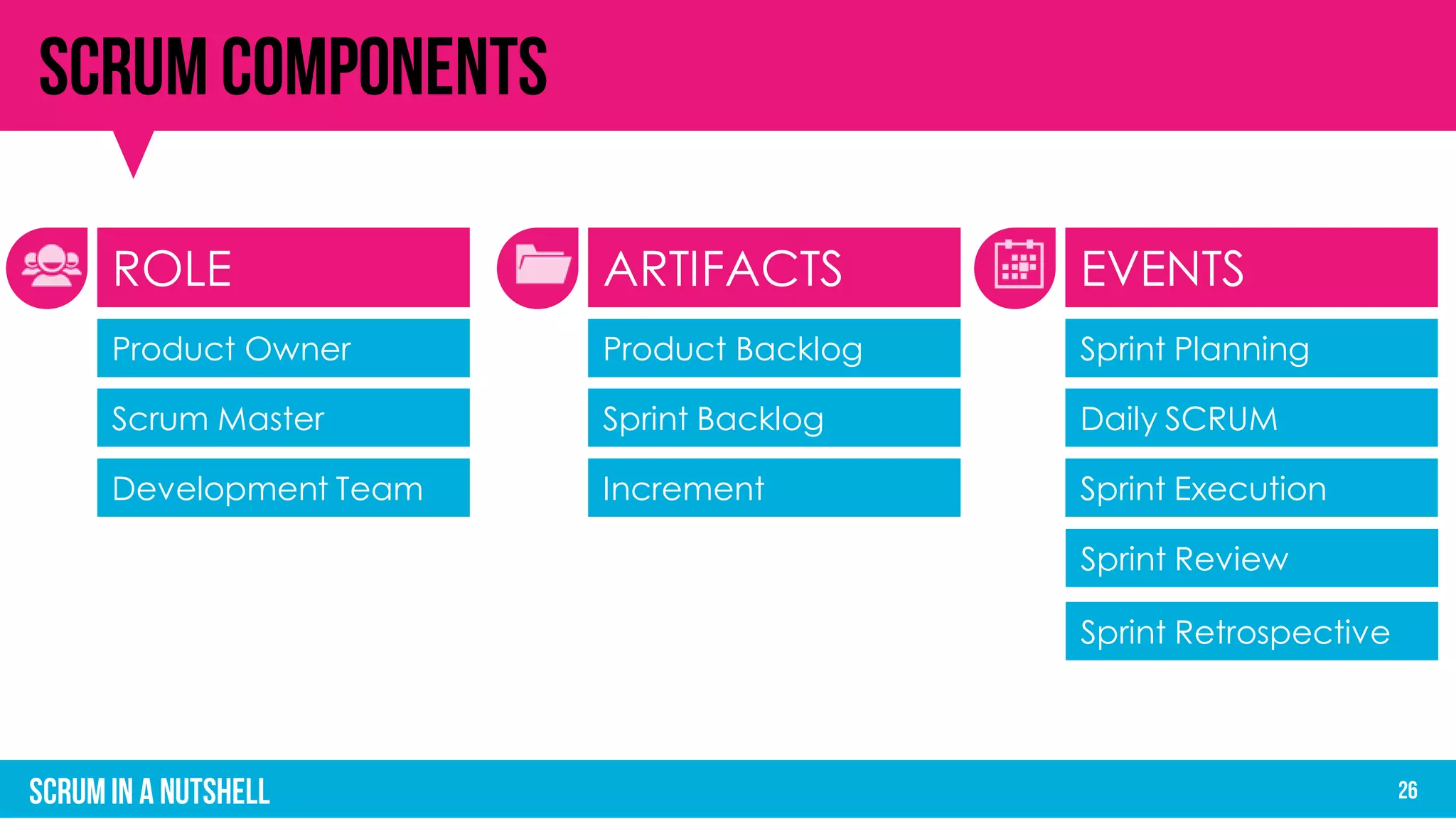


SCRUM is a framework for managing complex projects that emphasizes iterative development, daily self-organization, and regular inspection of progress and results. Key components of SCRUM include roles like the Product Owner, Scrum Master, and Development Team. Artifacts include the Product Backlog, Sprint Backlog, and Increment. Events in each Sprint include Sprint Planning, Daily Scrums, Sprint Execution, Sprint Review, and Sprint Retrospective. The goal is to optimize predictability, risk control, and value delivery through short cycles of work called Sprints.
Introduces SCRUM with its definition and components, and outlines the SCRUM process.
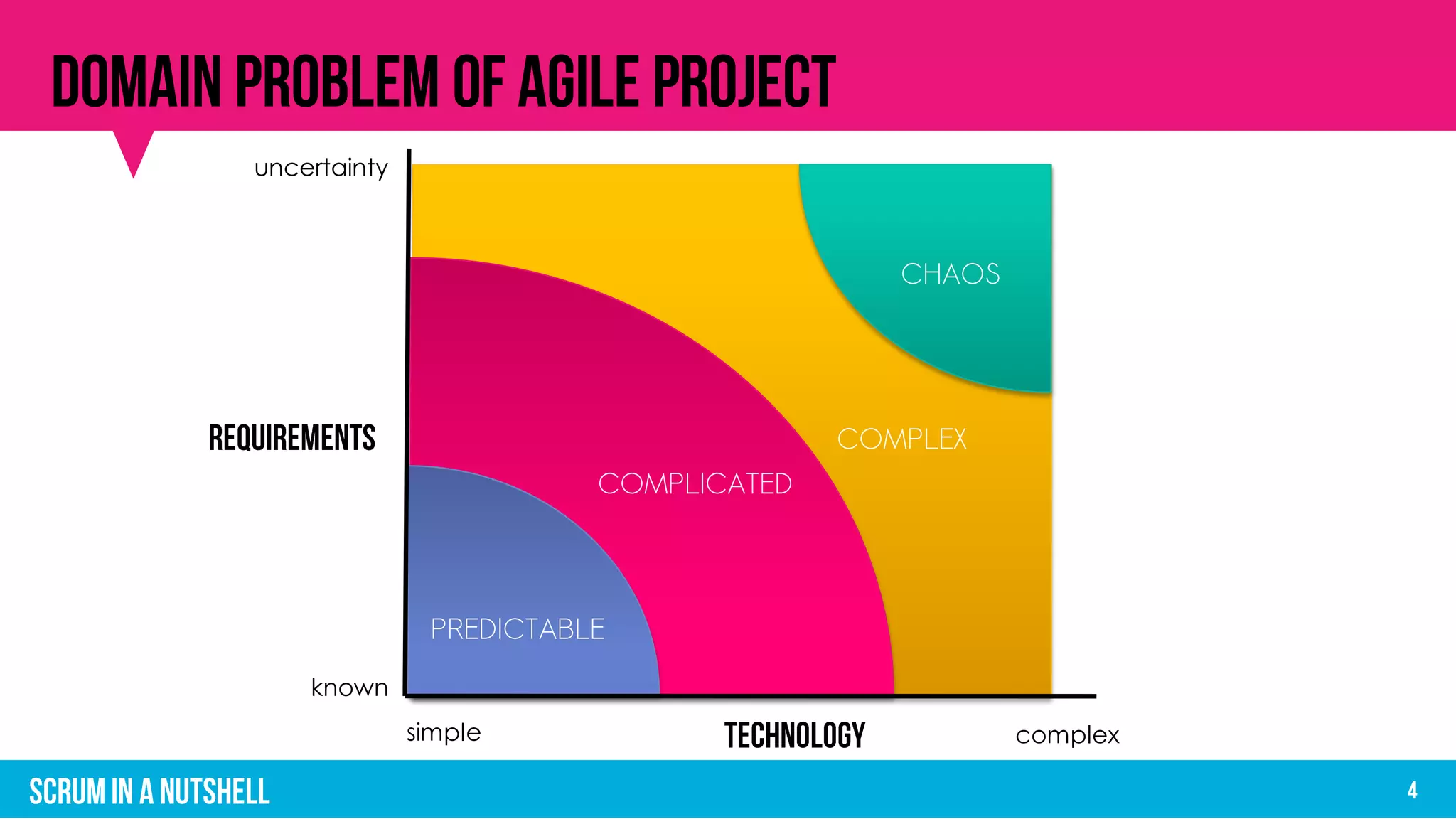
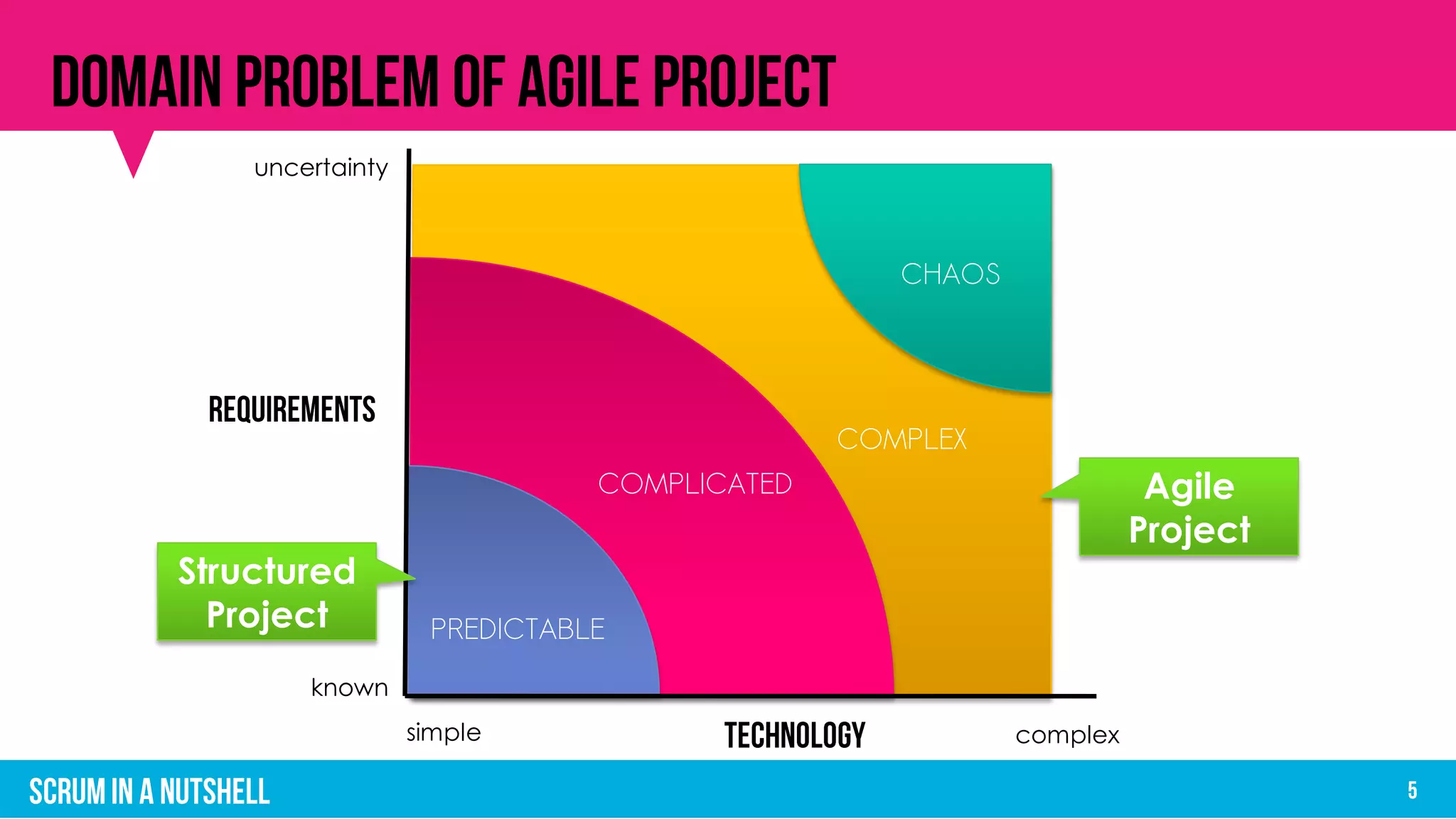
Describes the project complexity spectrum, outlining terms like simple, complicated, complex, and chaos.
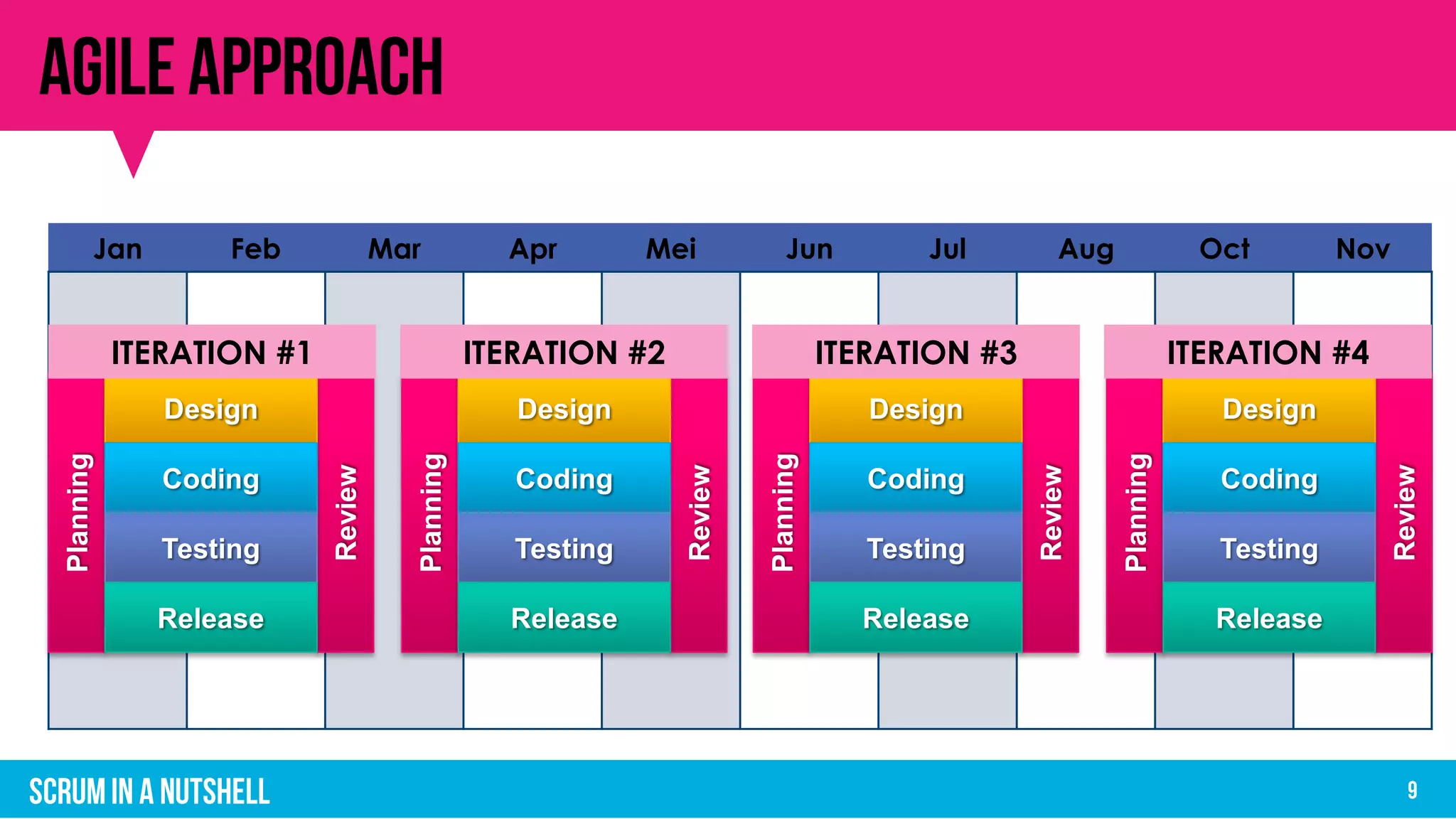
Highlights SCRUM's iterative approach for optimizing predictability and risk management in projects.
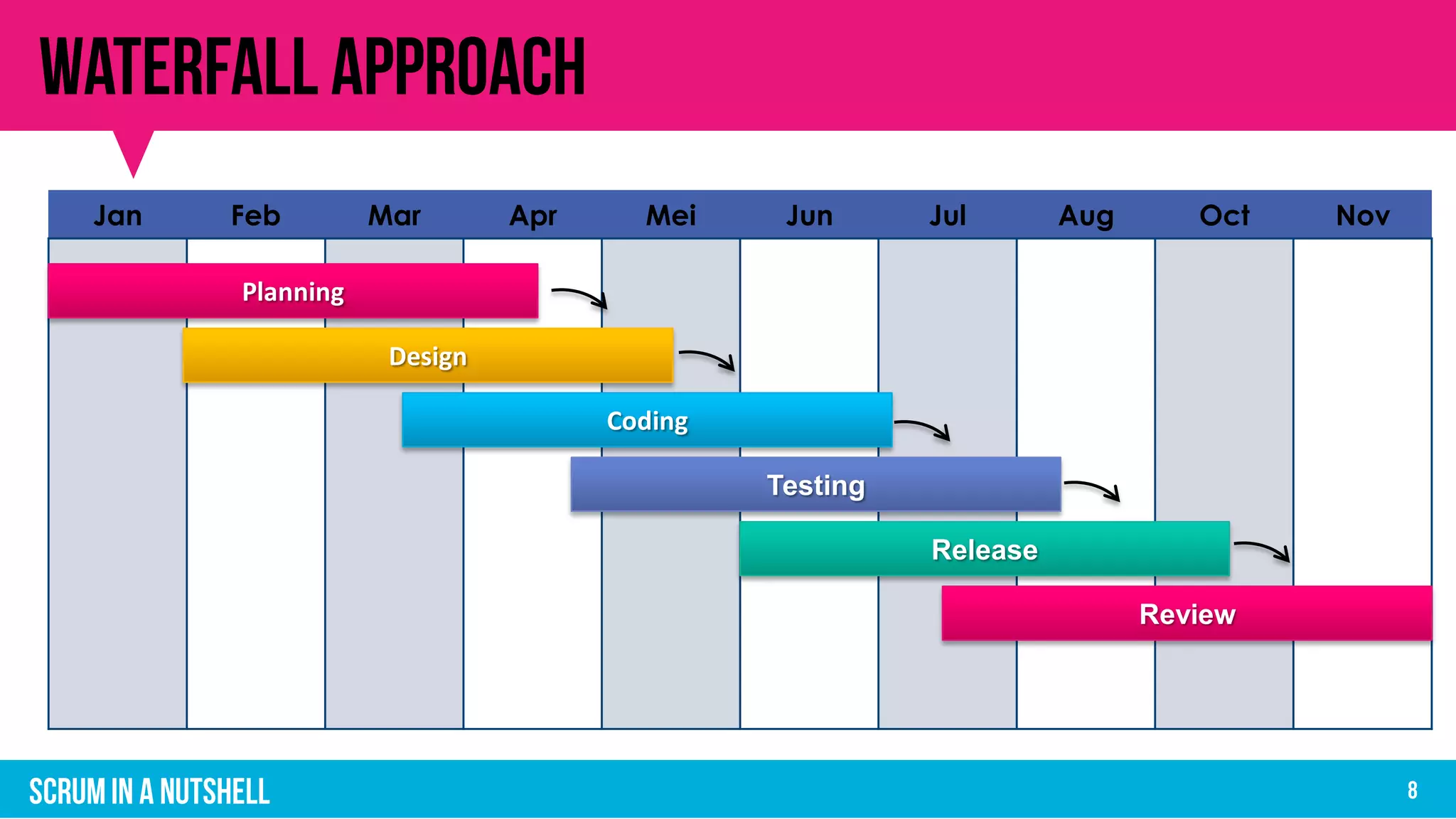
Presents the SCRUM workflow timeline detailing planning, design, coding, testing, and release activities across iterations.
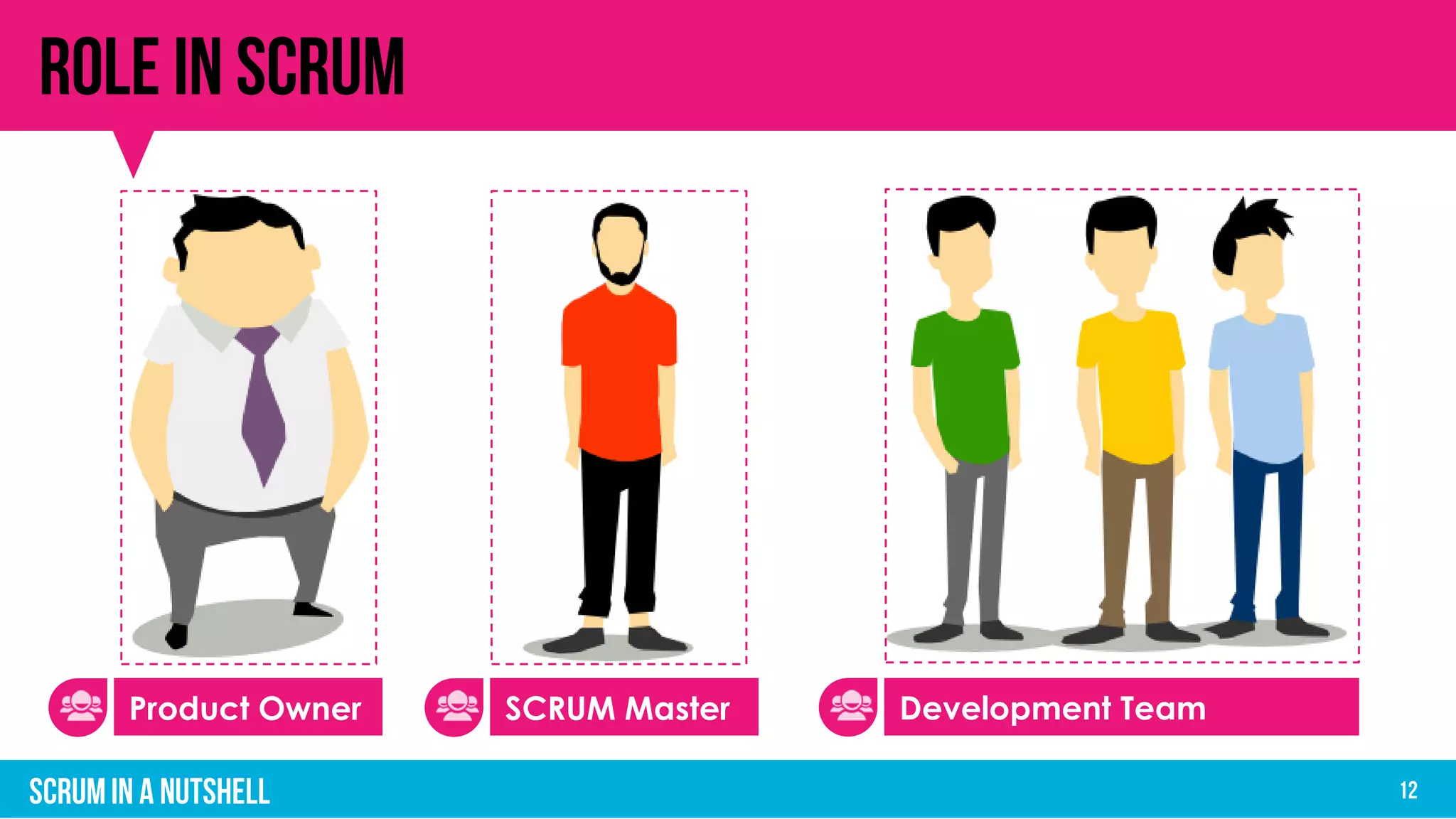
Identifies key SCRUM roles: Product Owner, Scrum Master, and Development Team, fundamental for project success.
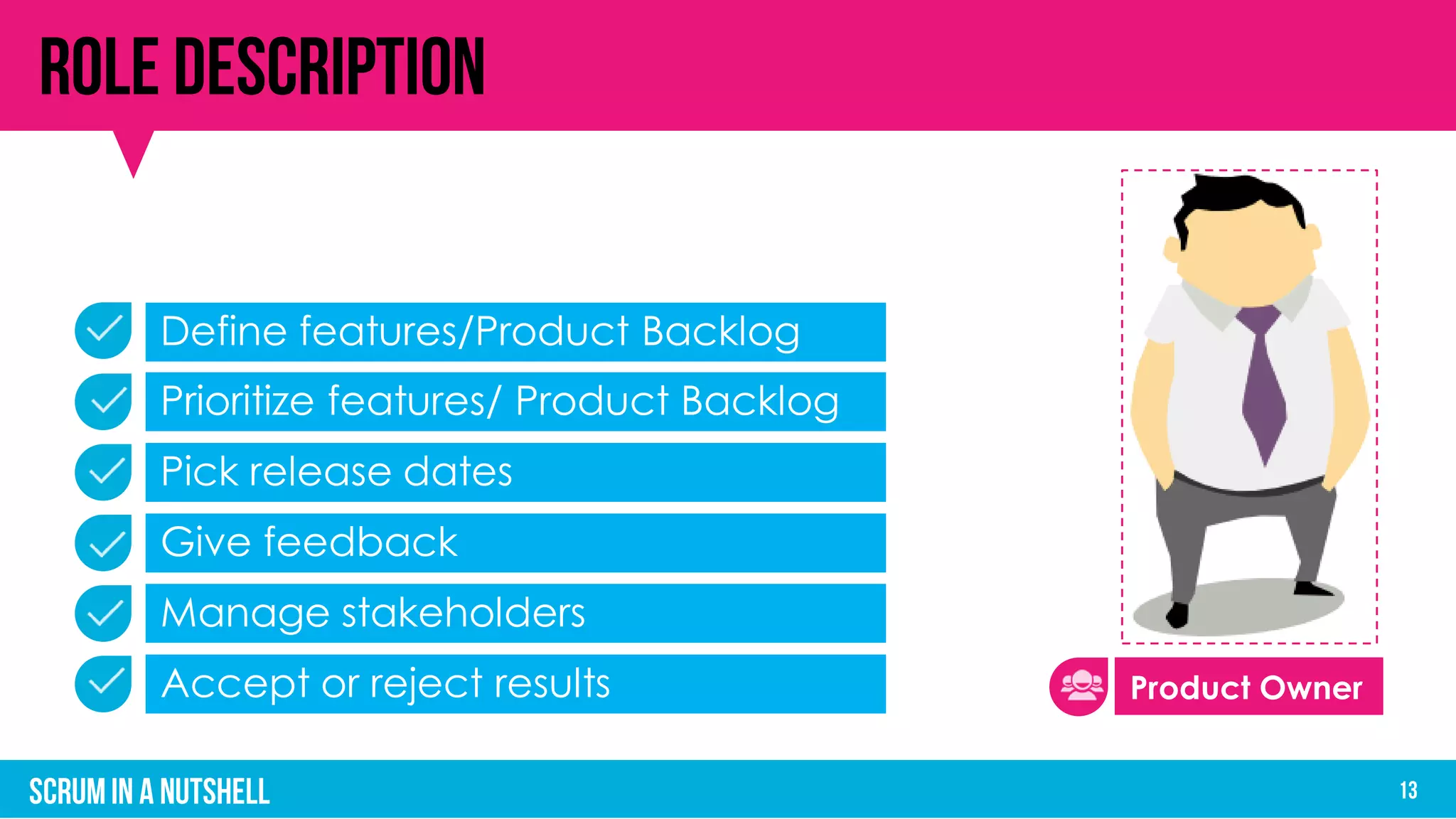
Details the Product Owner's role in managing the Product Backlog and engaging with stakeholders.
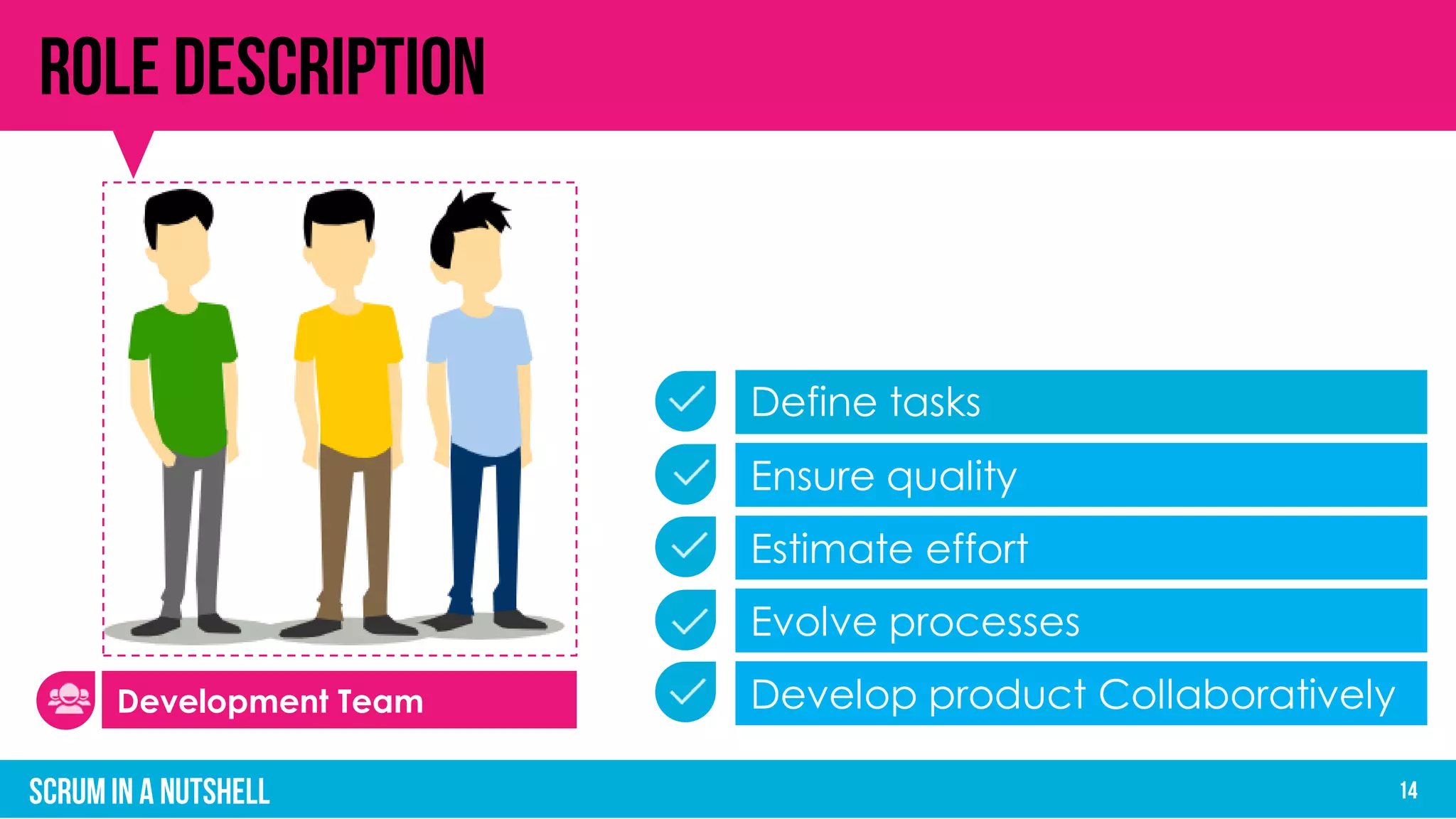
Outlines Development Team's collaborative responsibilities for developing the product and ensuring quality.
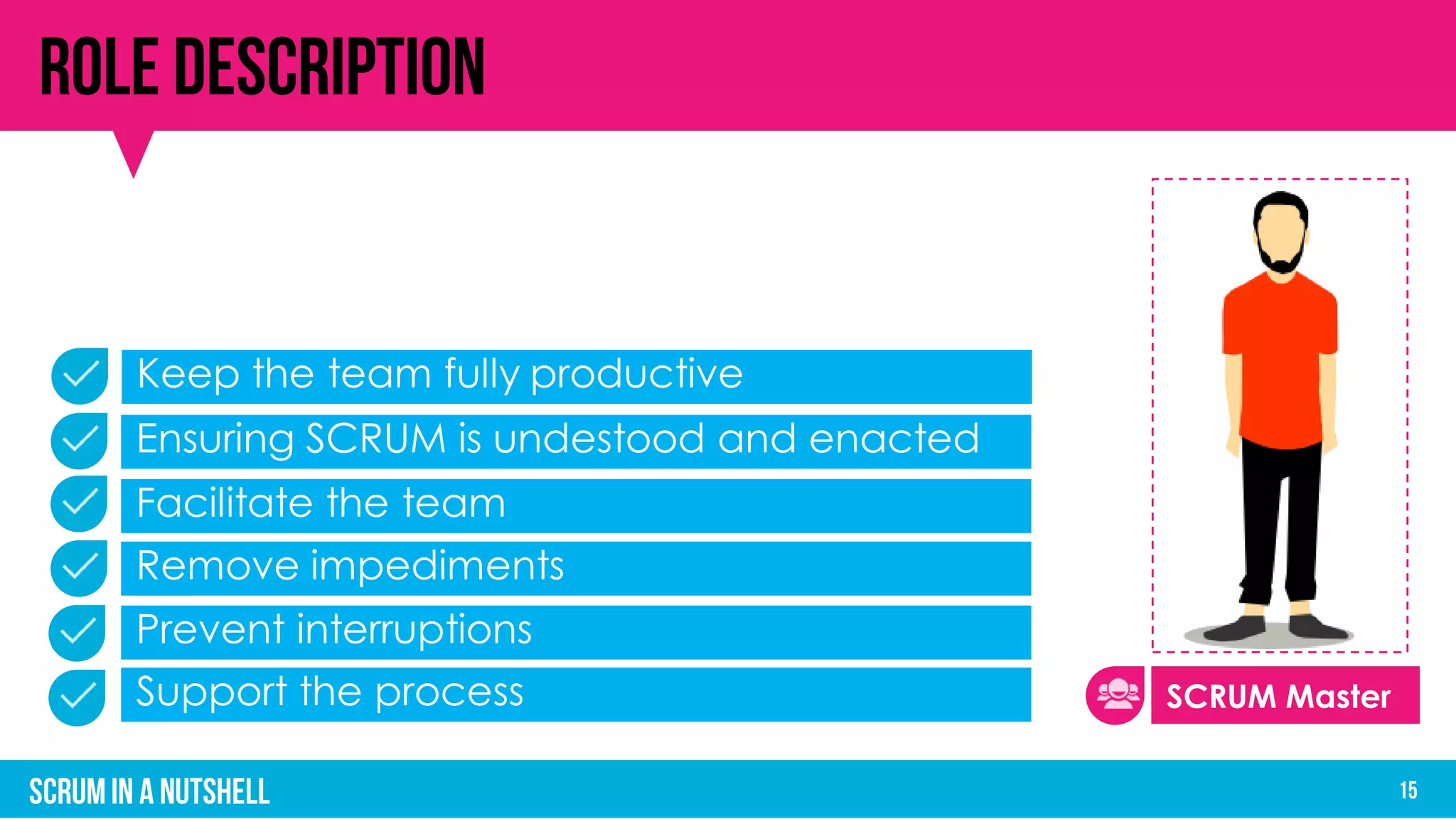
Describes the Scrum Master's role in facilitating the SCRUM process, removing impediments, and maintaining productivity.
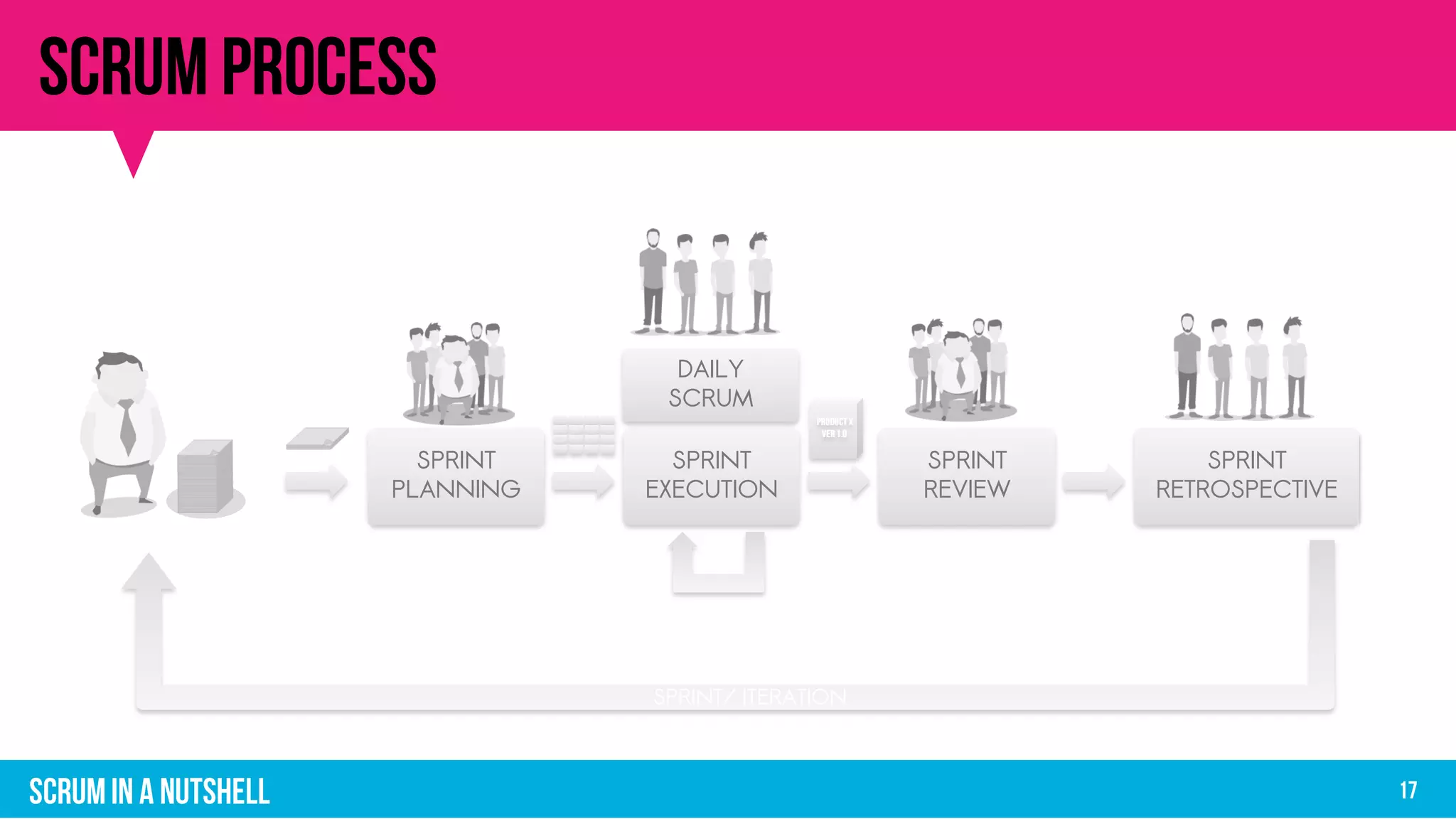
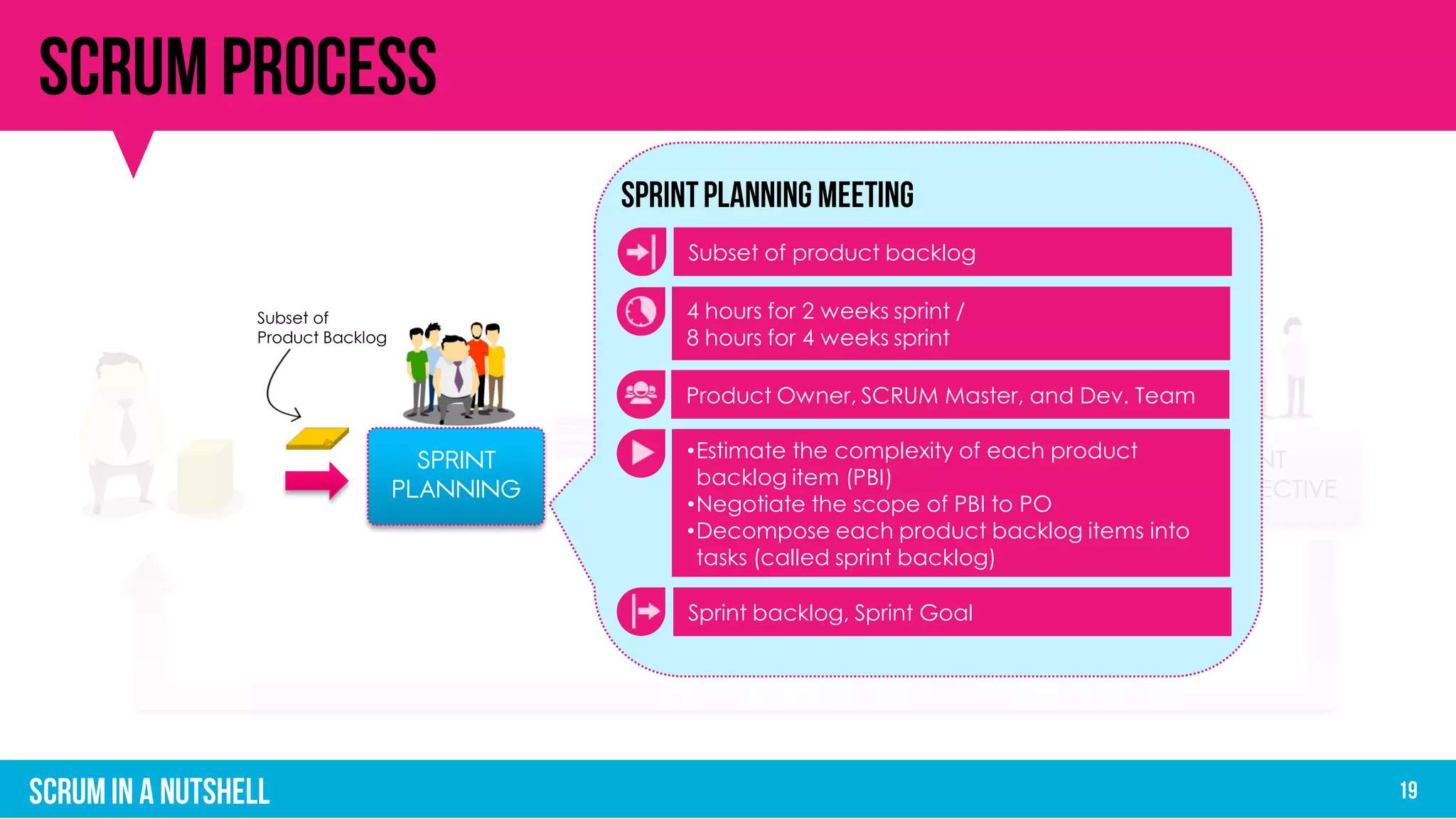
Explains the critical events in SCRUM, including sprint planning, execution, review, and retrospective.
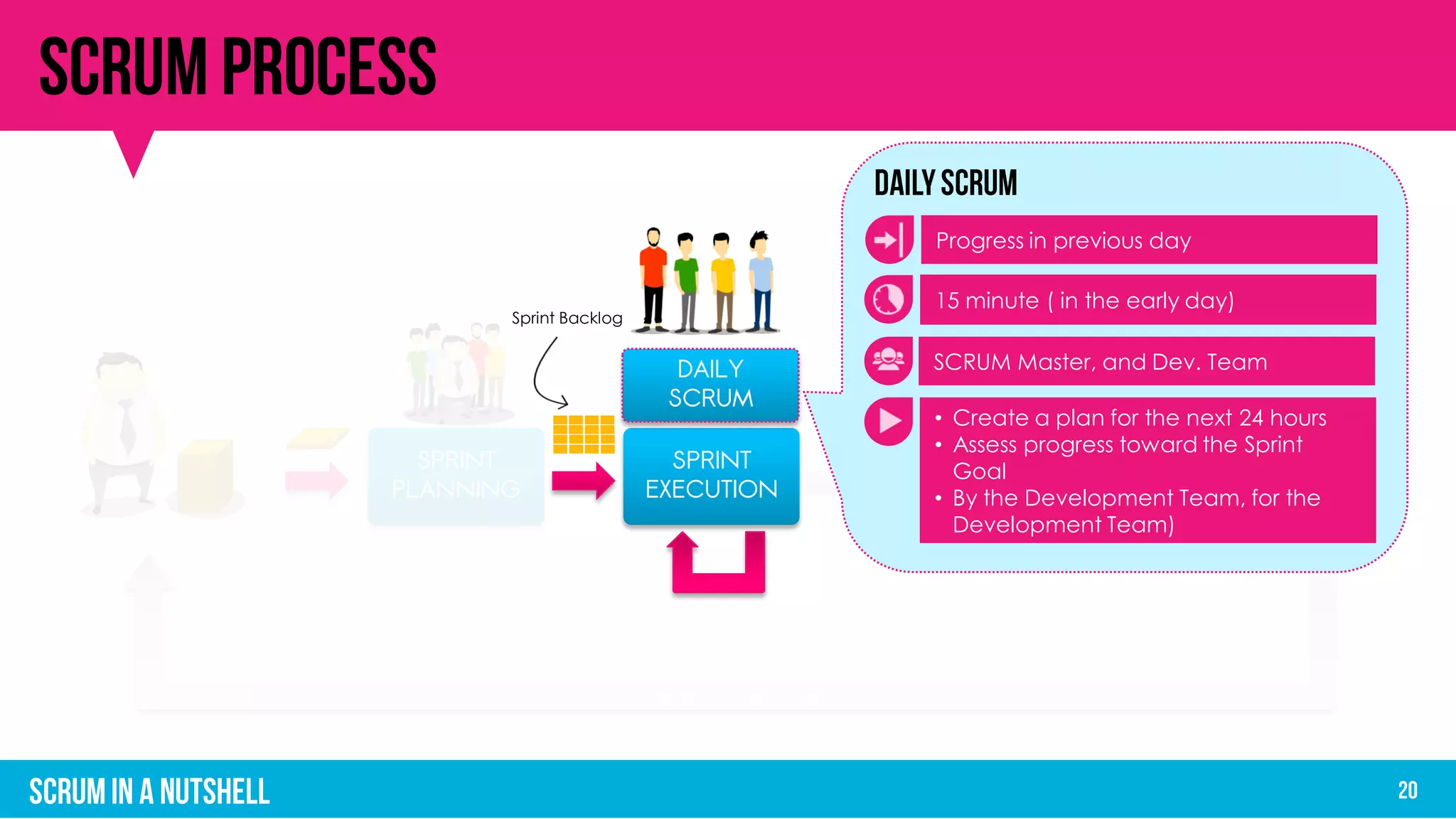
Details the daily SCRUM meetings, focusing on planning and progress assessment to ensure effective collaboration.
Summarizes the key SCRUM artifacts such as Product Backlog, Sprint Backlog, and Increment.
Lists key sources for deeper understanding of SCRUM, including The Scrum Guide and training resources.


![Vibe Coding vs. Spec-Driven Development [Free Meetup]](https://cdn.slidesharecdn.com/ss_thumbnails/vibecodingvsspecdrivendevelopment-251209105622-43f455e7-thumbnail.jpg?width=640&height=640&fit=bounds)


