SCRUM
MUHAMMAD SHARIQ
M.SHARIQ@HOTMAIL.COM
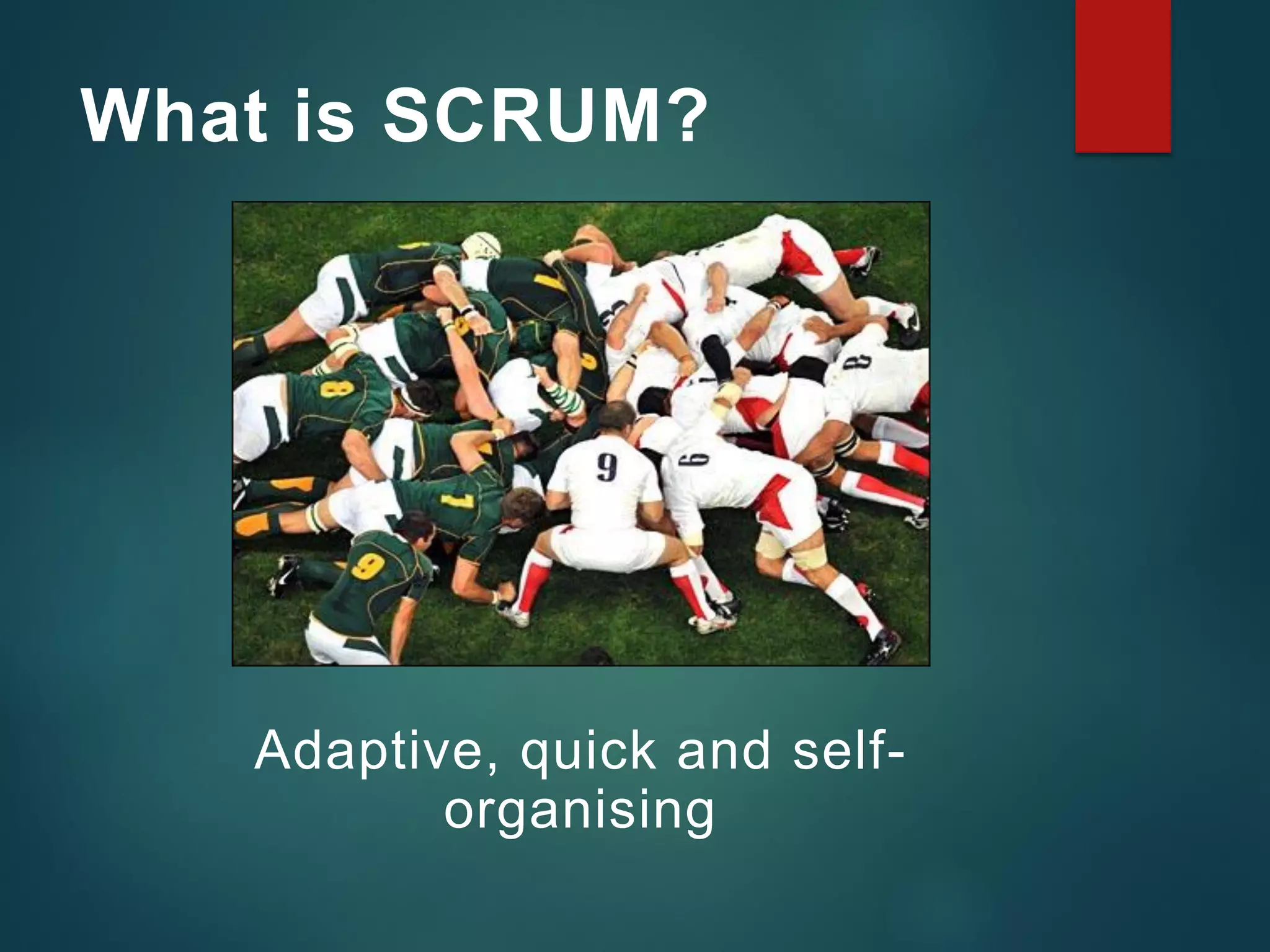
What is SCRUM?
Adaptive, quick and self-
organising
What is Srum
“The… ‘relay race’ approach to product
development…may conflict with the
goals of maximum speed and flexibility.
Instead a holistic or ‘rugby’ approach—
where a team tries to go the distance as
a unit, passing the ball back and forth—
may better serve today’s competitive
requirements.”
Hirotaka Takeuchi and Ikujiro Nonaka, “The New New Product Development
Game”,
Harvard Business Review, January 1986
What is SCRUM?
Originated in 1980s, as new new product
development game out of Japan.
Agile process for managing projects
(often but not necessarily software)
Project management, not technology
management.
No engineering practices (ie unit testing,
continuous integration)
What is SCRUM?
Simple method for managing complex projects.
Delivering business value early and frequently.
Emperical approach, frequent inspection and
adaption.
Replace illusion of predictability with a flexible
approach.
Software development is not a well defined repeatable task,
each task is different.
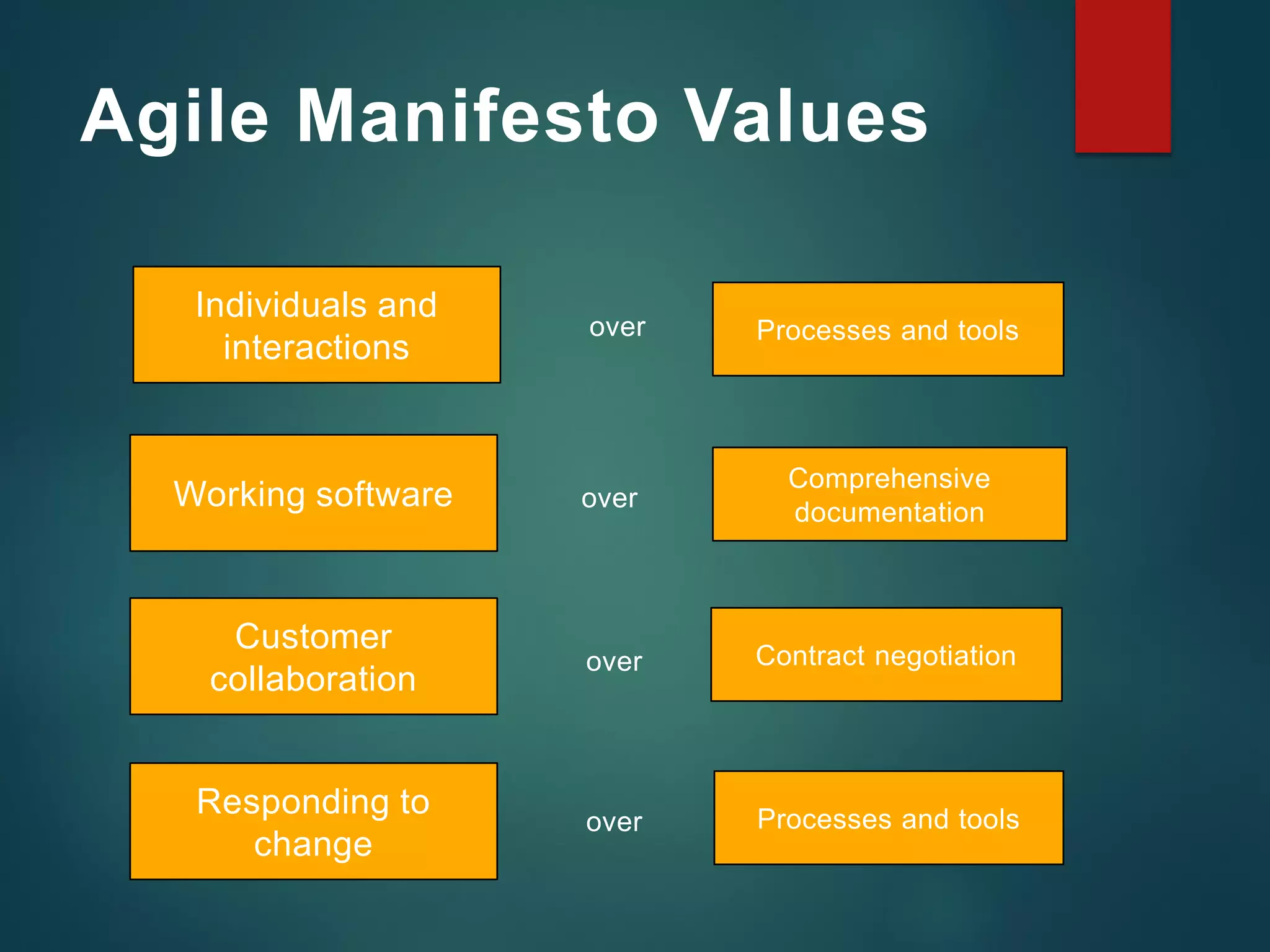
Agile Manifesto Values
Individuals and
interactions
Processes and tools
Working software
Customer
collaboration
Responding to
change
Comprehensive
documentation
Contract negotiation
Processes and tools
over
over
over
over
SCRUM Roles
ScrumMaster
Implements and encourages Scrum process.
Coaches team.
Removes impediments.
Interface between outside world and team.
Focus team on here and now.
Product Owner
Represents the customer.
Compiles all changes for the product.
Priortizes changes.
Maintains Product Backlog.
Team
-Ideally 5-9 people. Should be full
time.
-Cross-functional.
No specific roles, but some have
specific expertise
-Self organizing.
-Joint responsibility.
-Collaboration.
Next is scrum flow
Users
Stakeholders
Managers
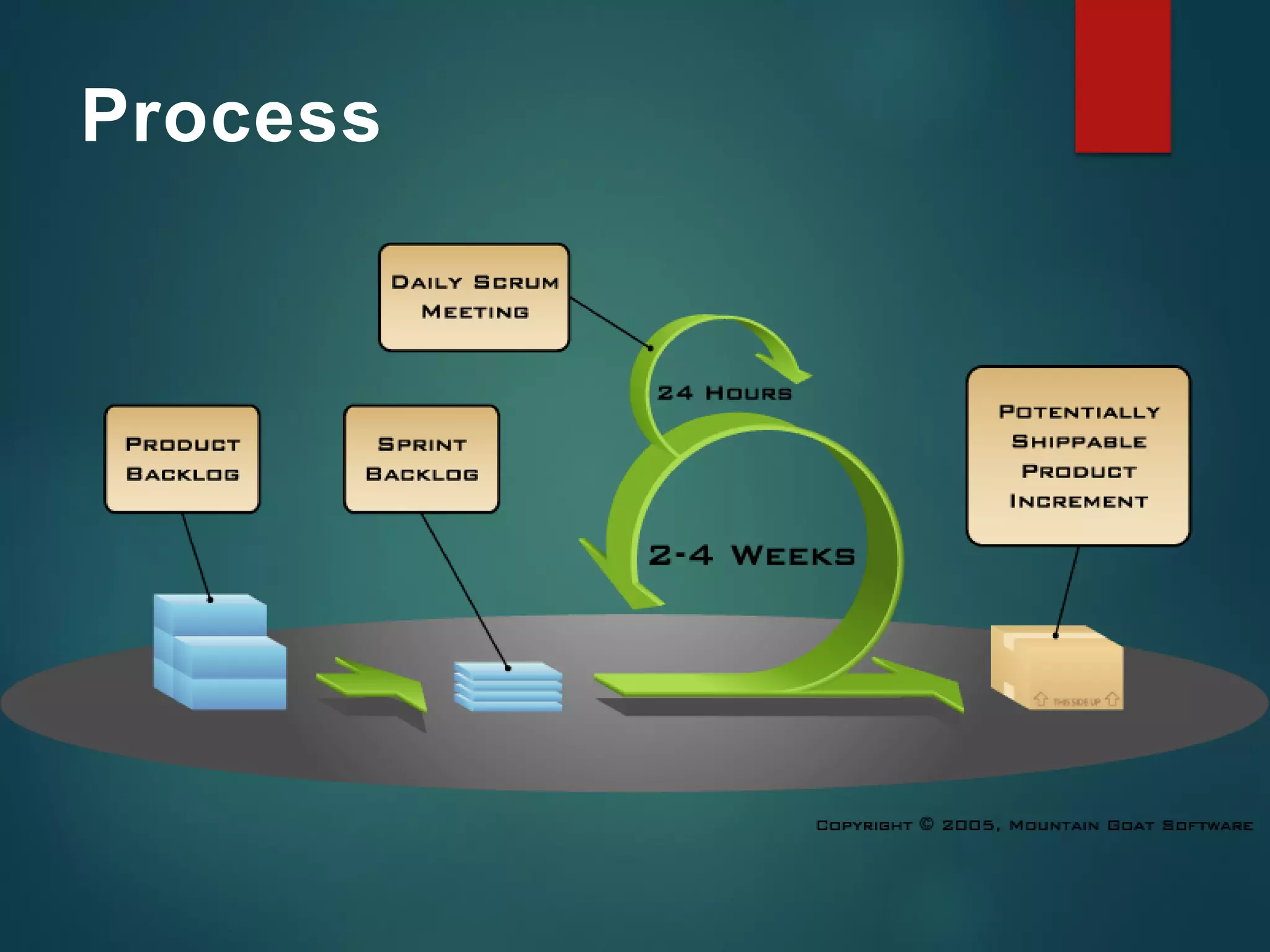
Process
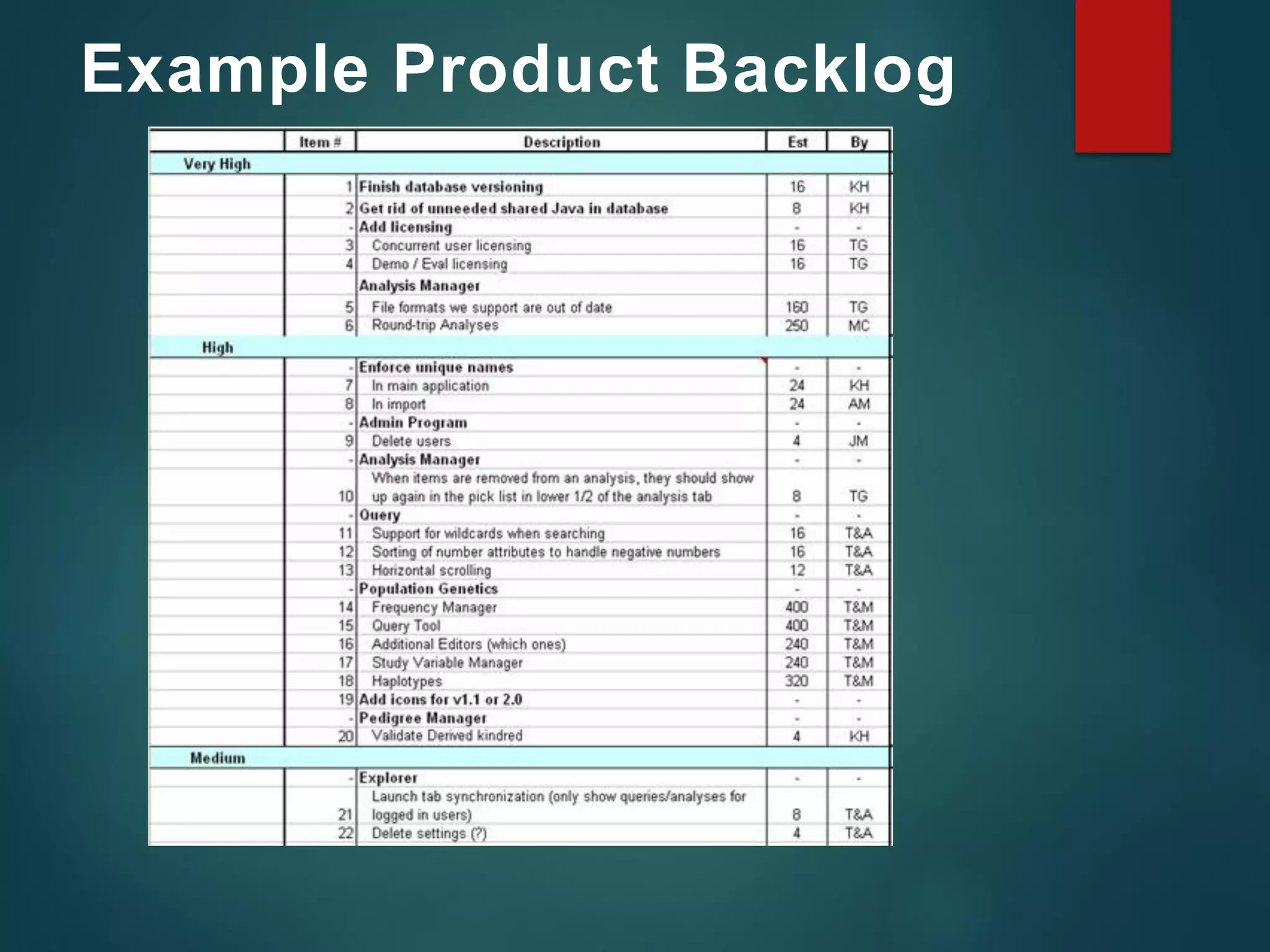
Product Backlog
Managed, controlled by Product Owner (one
person).
Items originate from many sources.
ToDo list, constantly updated, and prioritzed.
Estimates added by team (for ROI), as items
added.
Might be made up of simple list, might be user
stories.
Example Product Backlog
Sprint
Project progresses as number of sprints.
Each sprint is typically 2 - 4 weeks. Time
boxed.
No new requirements mid-sprint.
Working product delivered at the end of each
sprint.
Constant duration leads to a better rhythm.
Sprint Backlog
Features to be delivered in next sprint.
Focus on features with best ROI.
Each feature split into small tasks.
Team sign up for tasks, they are not
allocated.
Backlog updated to reflect progress through
the sprint.
Daily Scrum (meeting)
All are welcome, but only 'pigs' may speak.
Each team member answers three
questions:
What have you done since yesterday?
What are you planning to do today?
Do you have any impediments?
These are not status for the ScrumMaster,
they are commitments in front of peers.
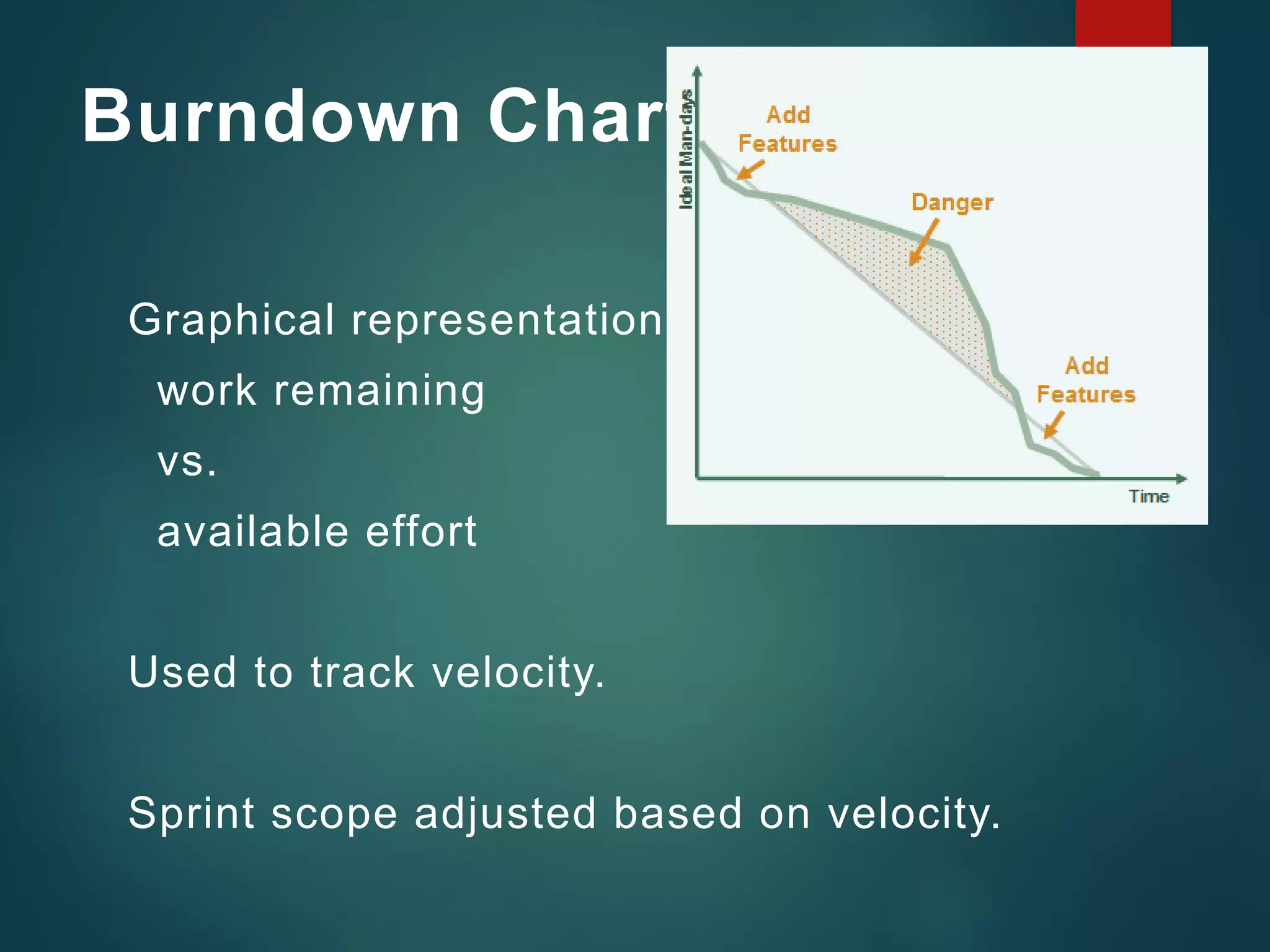
Burndown Chart
Graphical representation
work remaining
vs.
available effort
Used to track velocity.
Sprint scope adjusted based on velocity.
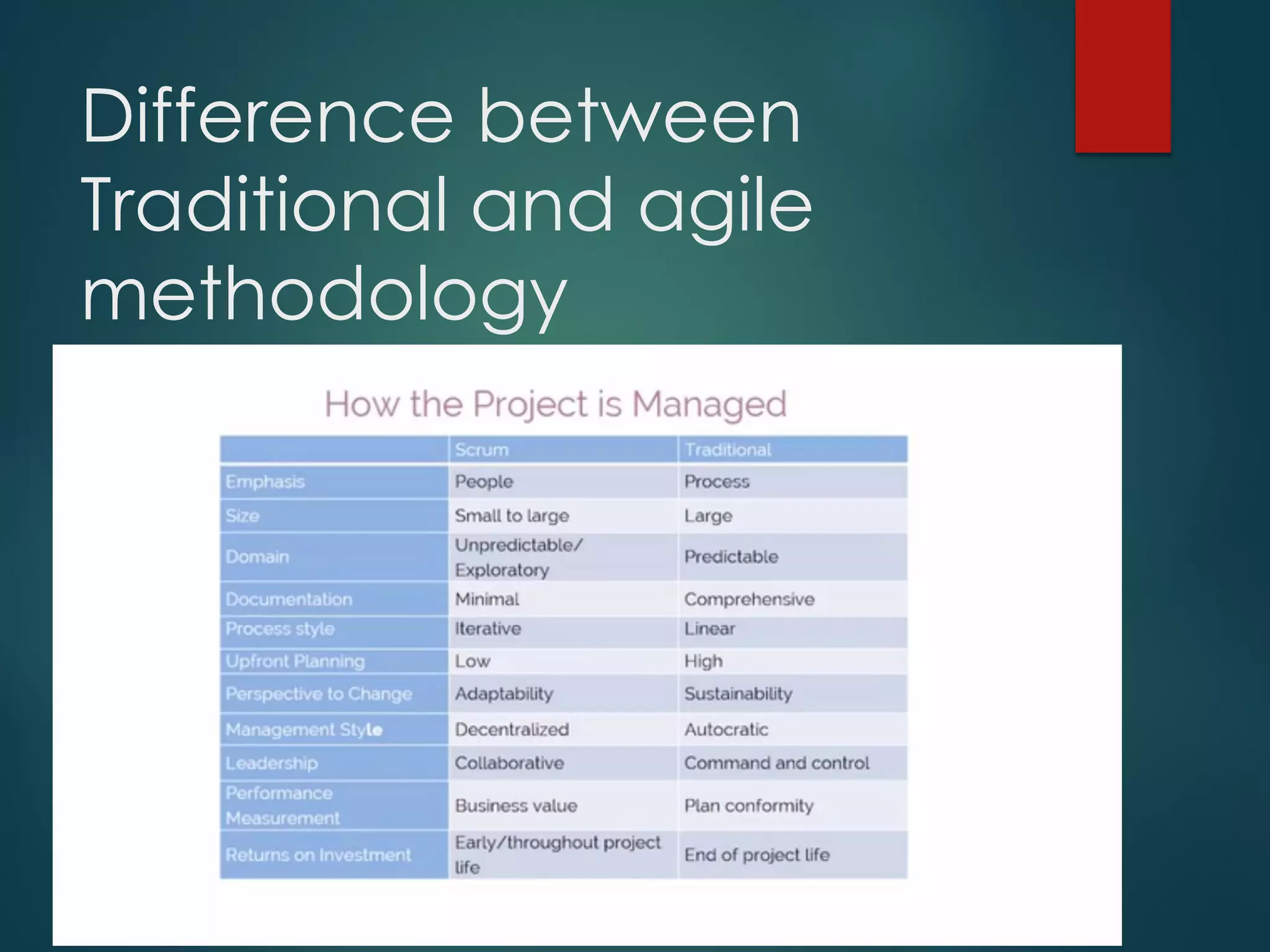
Difference between
Traditional and agile
methodology
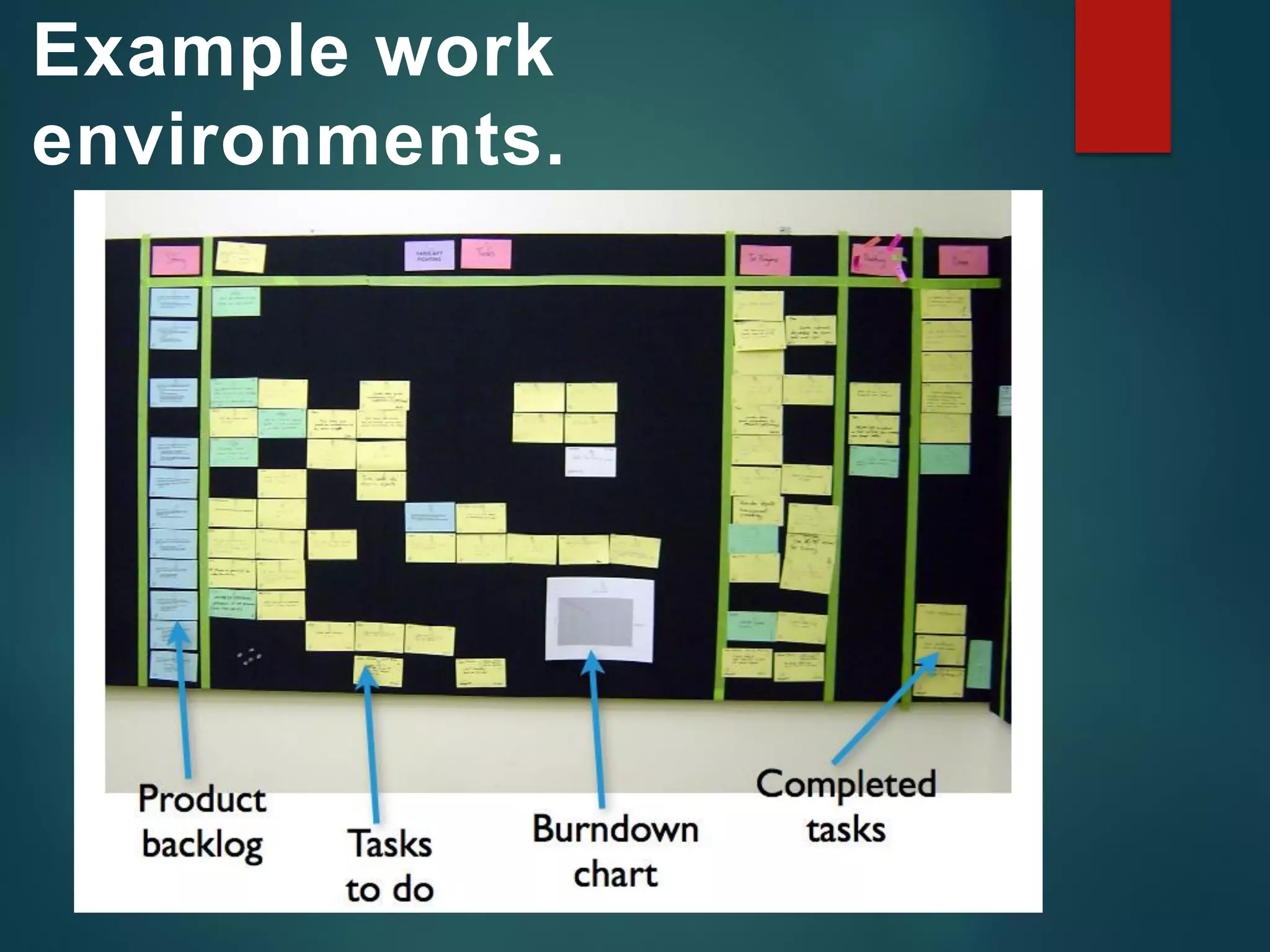
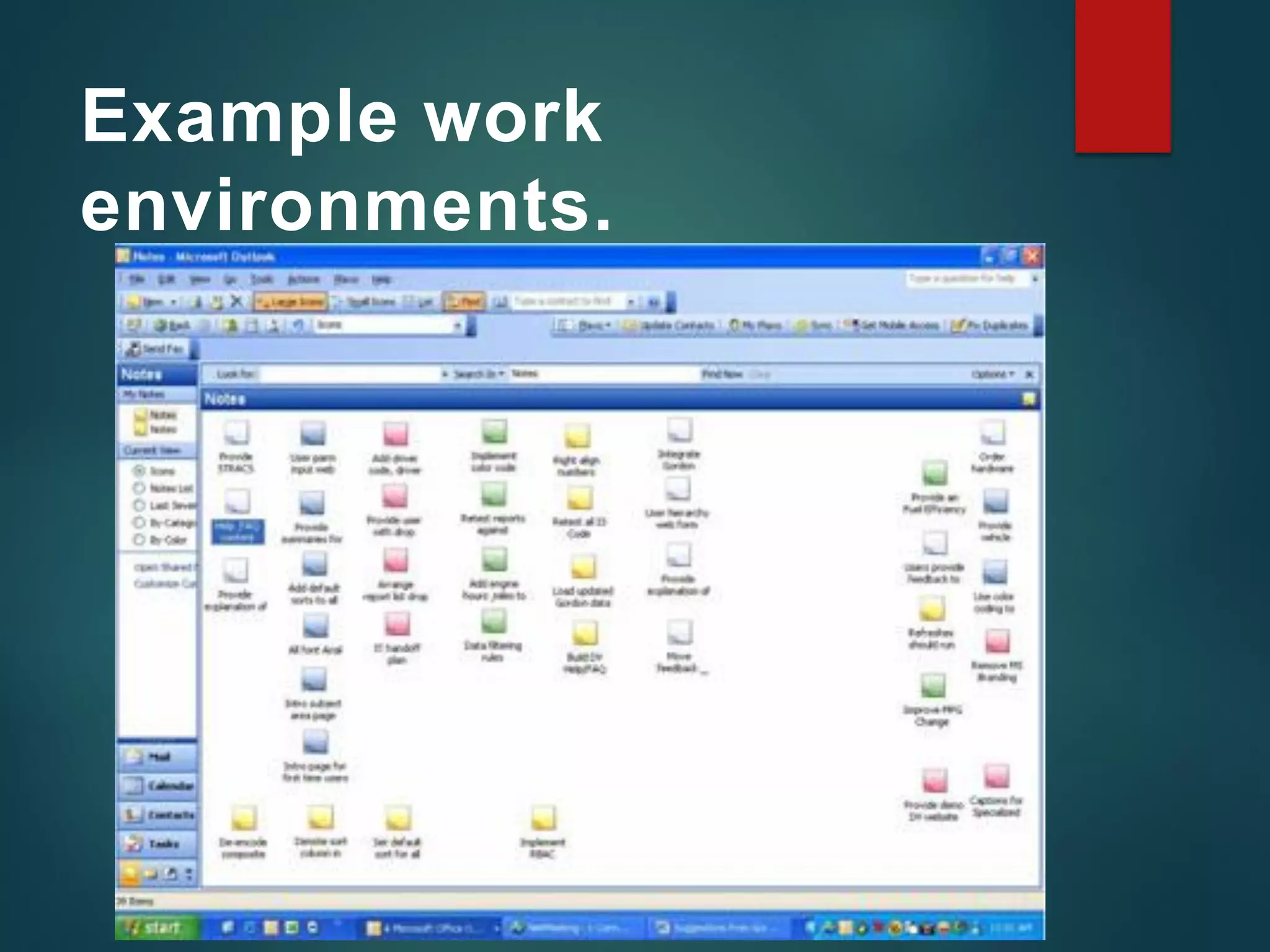
Example work
environments.
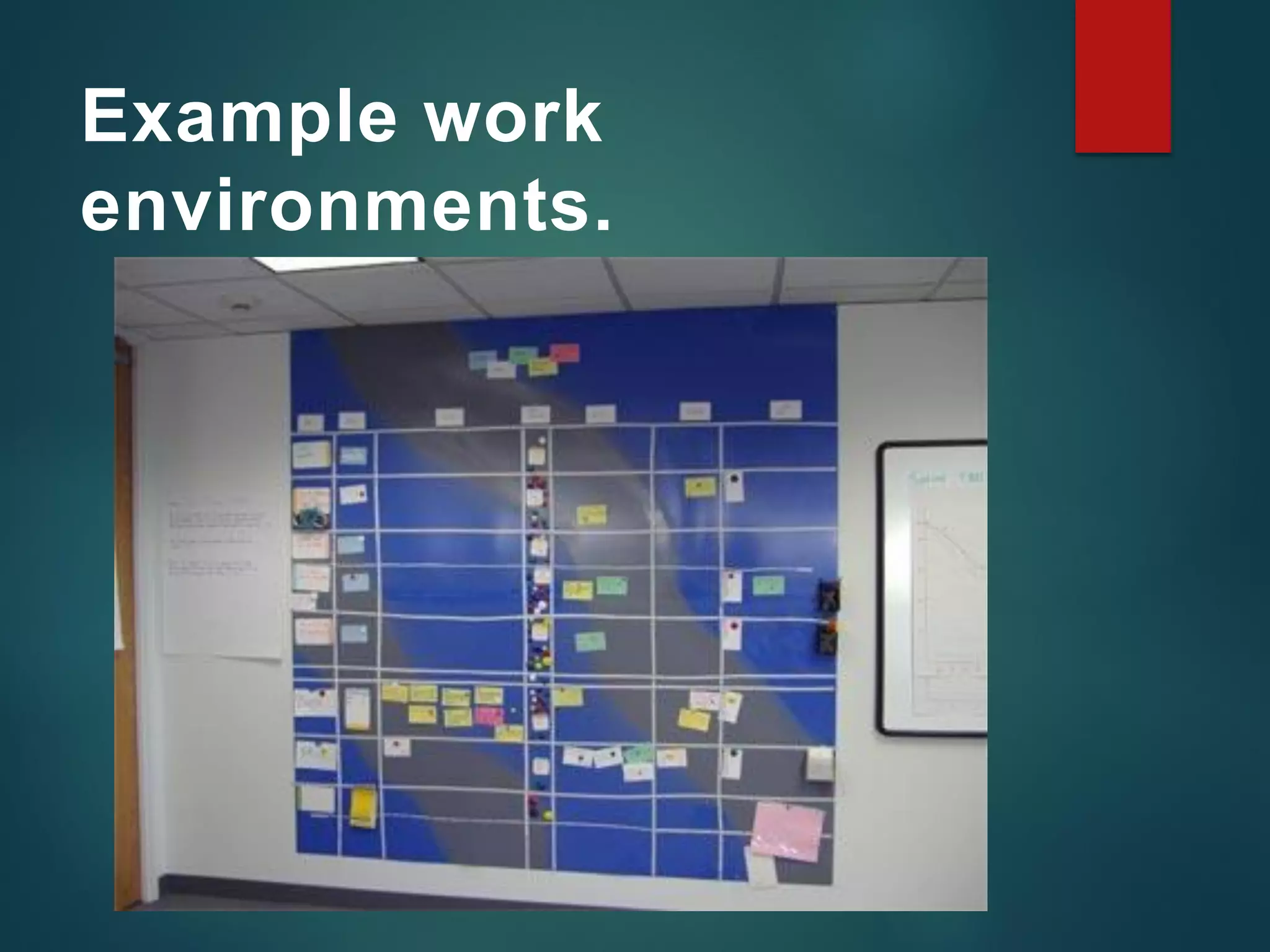
Example work
environments.
Example work
environments.

Scrum By muhammad shariq

  • 1.
  • 2.
    What is SCRUM? Adaptive,quick and self- organising
  • 3.
    What is Srum “The…‘relay race’ approach to product development…may conflict with the goals of maximum speed and flexibility. Instead a holistic or ‘rugby’ approach— where a team tries to go the distance as a unit, passing the ball back and forth— may better serve today’s competitive requirements.” Hirotaka Takeuchi and Ikujiro Nonaka, “The New New Product Development Game”, Harvard Business Review, January 1986
  • 4.
    What is SCRUM? Originatedin 1980s, as new new product development game out of Japan. Agile process for managing projects (often but not necessarily software) Project management, not technology management. No engineering practices (ie unit testing, continuous integration)
  • 5.
    What is SCRUM? Simplemethod for managing complex projects. Delivering business value early and frequently. Emperical approach, frequent inspection and adaption. Replace illusion of predictability with a flexible approach. Software development is not a well defined repeatable task, each task is different.
  • 6.
    Agile Manifesto Values Individualsand interactions Processes and tools Working software Customer collaboration Responding to change Comprehensive documentation Contract negotiation Processes and tools over over over over
  • 7.
  • 8.
    ScrumMaster Implements and encouragesScrum process. Coaches team. Removes impediments. Interface between outside world and team. Focus team on here and now.
  • 9.
    Product Owner Represents thecustomer. Compiles all changes for the product. Priortizes changes. Maintains Product Backlog.
  • 10.
    Team -Ideally 5-9 people.Should be full time. -Cross-functional. No specific roles, but some have specific expertise -Self organizing. -Joint responsibility. -Collaboration.
  • 11.
    Next is scrumflow Users Stakeholders Managers
  • 12.
  • 13.
    Product Backlog Managed, controlledby Product Owner (one person). Items originate from many sources. ToDo list, constantly updated, and prioritzed. Estimates added by team (for ROI), as items added. Might be made up of simple list, might be user stories.
  • 14.
  • 15.
    Sprint Project progresses asnumber of sprints. Each sprint is typically 2 - 4 weeks. Time boxed. No new requirements mid-sprint. Working product delivered at the end of each sprint. Constant duration leads to a better rhythm.
  • 16.
    Sprint Backlog Features tobe delivered in next sprint. Focus on features with best ROI. Each feature split into small tasks. Team sign up for tasks, they are not allocated. Backlog updated to reflect progress through the sprint.
  • 17.
    Daily Scrum (meeting) Allare welcome, but only 'pigs' may speak. Each team member answers three questions: What have you done since yesterday? What are you planning to do today? Do you have any impediments? These are not status for the ScrumMaster, they are commitments in front of peers.
  • 18.
    Burndown Chart Graphical representation workremaining vs. available effort Used to track velocity. Sprint scope adjusted based on velocity.
  • 19.
  • 20.
  • 21.
  • 22.