

Scrum 
Suhail Jamaldeen 
@jsuhail 
http://jsuhail.blogspot.com
Agenda 
• Agile Software Development 
• Introduction to Scrum 
• Scrum Roles 
• Scrum Ceremonies 
• Scrum Artifacts 
• Demo 
• Q & A
Agile Software Development 
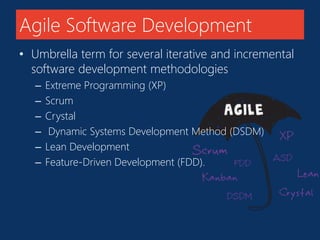
• Umbrella term for several iterative and incremental 
software development methodologies 
– Extreme Programming (XP) 
– Scrum 
– Crystal 
– Dynamic Systems Development Method (DSDM) 
– Lean Development 
– Feature-Driven Development (FDD).
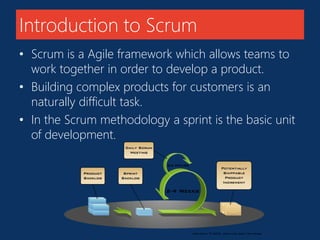
Introduction to Scrum 
• Scrum is a Agile framework which allows teams to 
work together in order to develop a product. 
• Building complex products for customers is an 
naturally difficult task. 
• In the Scrum methodology a sprint is the basic unit 
of development.
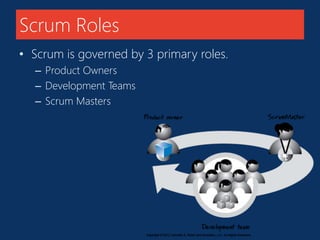
Scrum Roles 
• Scrum is governed by 3 primary roles. 
– Product Owners 
– Development Teams 
– Scrum Masters
Product Owner 
• The Product Owner represents the stake 
holders and is the voice of the customer. 
• Product Owner an empowered individual applying 
their personal and professional judgment to make 
decisions in the best interest of different.
Scrum Master 
• Scrum Master a dedicated individual responsible for 
improving the performance of the Team and the 
business by any means necessary. 
• Facilitates scrum events 
• Not a traditional project manager
Development Teams 
• Team dedicated collection of self-organizing, 
interdependent, co-located individuals 
• Team represents different functional roles with all 
the necessary skills to turn Product Backlog items 
into a potentially shippable increment within the 
iteration. 
• 4 to 9 person
Scrum Ceremonies 
• Sprint planning meeting 
• Daily scrum meeting 
• Sprint Review 
• Sprint Retrospective
Sprint planning meeting 
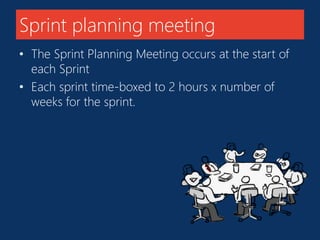
• The Sprint Planning Meeting occurs at the start of 
each Sprint 
• Each sprint time-boxed to 2 hours x number of 
weeks for the sprint.
Daily scrum meeting 
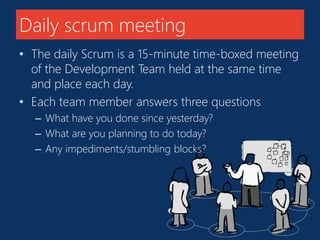
• The daily Scrum is a 15-minute time-boxed meeting 
of the Development Team held at the same time 
and place each day. 
• Each team member answers three questions 
– What have you done since yesterday? 
– What are you planning to do today? 
– Any impediments/stumbling blocks?
Sprint review 
• The Sprint Review occurs on the last day of the 
Sprint and is time-boxed to one hour per week of 
the Sprint. 
• The Product Owner and other interested parties 
should be present along with the Development 
Team. 
• The Development Team demonstrates the work that 
was “Done” during the Sprint and as well as 
reporting on any issues that were encountered
Sprint retrospective 
• The Sprint Retrospective follows the Sprint Review. 
• Primarily for the Scrum Team. 
• The Scrum Team assesses how the last Sprint went 
(people, processes and tools), identifying items that 
went well and areas for improvement. 
• The Retrospective lasts approximately ¾ hour
Scrum Artifacts 
• Product Backlog 
• Sprint Backlog 
• Sprint Burn down chart
Product Backlog 
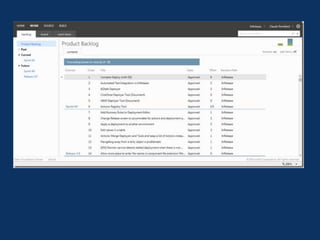
• The product backlog is an ordered list of 
requirements that is maintained for a product. 
• It consists of features, bug fixes, non-functional 
requirements, etc.—whatever needs to be done in 
order to successfully deliver a viable product. 
• The product backlog items (PBIs) are ordered by 
the Product Owner based on considerations like 
risk, business value, dependencies, date needed, 
etc.
Sprint Backlog 
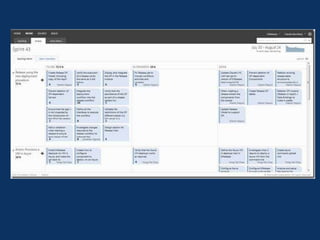
• The sprint backlog is the list of work the 
Development Team must address during the next 
sprint. 
• The list is derived by selecting product backlog 
items from the top of the product backlog until the 
Development Team feels it has enough work to fill 
the sprint.
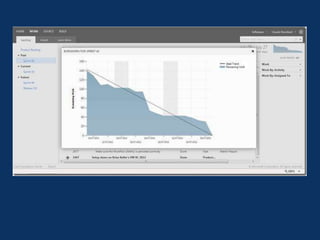
Burn down chart 
• The sprint burn down chart is a publicly displayed 
chart showing remaining work in the sprint backlog. 
• Updated every day, it gives a simple view of the 
sprint progress. 
• It also provides quick visualizations for reference.
Demo 
• TFS Online 
https://jsuhail.visualstudio.com
Recap 
• Agile is a umbrella term for several iterative and incremental 
software development methodologies 
• Scrum is a Agile framework which allows teams to work 
together in order to develop a product 
• Scrum roles 
• Scrum Ceremonies 
• Scrum Artifacts 
• Demo of TFS Online
Q & A
Thank you 
@jsuhail 
http://jsuhail.blogspot.com

Scrum Software Development Methodology

  • 1.
    Scrum Suhail Jamaldeen @jsuhail http://jsuhail.blogspot.com
  • 2.
    Agenda • AgileSoftware Development • Introduction to Scrum • Scrum Roles • Scrum Ceremonies • Scrum Artifacts • Demo • Q & A
  • 3.
    Agile Software Development • Umbrella term for several iterative and incremental software development methodologies – Extreme Programming (XP) – Scrum – Crystal – Dynamic Systems Development Method (DSDM) – Lean Development – Feature-Driven Development (FDD).
  • 4.
    Introduction to Scrum • Scrum is a Agile framework which allows teams to work together in order to develop a product. • Building complex products for customers is an naturally difficult task. • In the Scrum methodology a sprint is the basic unit of development.
  • 5.
    Scrum Roles •Scrum is governed by 3 primary roles. – Product Owners – Development Teams – Scrum Masters
  • 6.
    Product Owner •The Product Owner represents the stake holders and is the voice of the customer. • Product Owner an empowered individual applying their personal and professional judgment to make decisions in the best interest of different.
  • 7.
    Scrum Master •Scrum Master a dedicated individual responsible for improving the performance of the Team and the business by any means necessary. • Facilitates scrum events • Not a traditional project manager
  • 8.
    Development Teams •Team dedicated collection of self-organizing, interdependent, co-located individuals • Team represents different functional roles with all the necessary skills to turn Product Backlog items into a potentially shippable increment within the iteration. • 4 to 9 person
  • 9.
    Scrum Ceremonies •Sprint planning meeting • Daily scrum meeting • Sprint Review • Sprint Retrospective
  • 10.
    Sprint planning meeting • The Sprint Planning Meeting occurs at the start of each Sprint • Each sprint time-boxed to 2 hours x number of weeks for the sprint.
  • 11.
    Daily scrum meeting • The daily Scrum is a 15-minute time-boxed meeting of the Development Team held at the same time and place each day. • Each team member answers three questions – What have you done since yesterday? – What are you planning to do today? – Any impediments/stumbling blocks?
  • 12.
    Sprint review •The Sprint Review occurs on the last day of the Sprint and is time-boxed to one hour per week of the Sprint. • The Product Owner and other interested parties should be present along with the Development Team. • The Development Team demonstrates the work that was “Done” during the Sprint and as well as reporting on any issues that were encountered
  • 13.
    Sprint retrospective •The Sprint Retrospective follows the Sprint Review. • Primarily for the Scrum Team. • The Scrum Team assesses how the last Sprint went (people, processes and tools), identifying items that went well and areas for improvement. • The Retrospective lasts approximately ¾ hour
  • 14.
    Scrum Artifacts •Product Backlog • Sprint Backlog • Sprint Burn down chart
  • 15.
    Product Backlog •The product backlog is an ordered list of requirements that is maintained for a product. • It consists of features, bug fixes, non-functional requirements, etc.—whatever needs to be done in order to successfully deliver a viable product. • The product backlog items (PBIs) are ordered by the Product Owner based on considerations like risk, business value, dependencies, date needed, etc.
  • 17.
    Sprint Backlog •The sprint backlog is the list of work the Development Team must address during the next sprint. • The list is derived by selecting product backlog items from the top of the product backlog until the Development Team feels it has enough work to fill the sprint.
  • 19.
    Burn down chart • The sprint burn down chart is a publicly displayed chart showing remaining work in the sprint backlog. • Updated every day, it gives a simple view of the sprint progress. • It also provides quick visualizations for reference.
  • 21.
    Demo • TFSOnline https://jsuhail.visualstudio.com
  • 22.
    Recap • Agileis a umbrella term for several iterative and incremental software development methodologies • Scrum is a Agile framework which allows teams to work together in order to develop a product • Scrum roles • Scrum Ceremonies • Scrum Artifacts • Demo of TFS Online
  • 23.
  • 24.
    Thank you @jsuhail http://jsuhail.blogspot.com