This document provides an overview of screen translation. It defines key terms like audiovisual translation and media translation. It discusses various methods of screen translation like subtitling, dubbing, and surtitling. For subtitling, it covers paradigms like interlingual and technical parameters like open and closed subtitles. It also compares dubbing and subtitling and constraints of each. The document concludes by noting challenges in the 20th century from new technologies and calling for an interdisciplinary approach to research on screen translation issues.
Name: Shahzaib Sharif
Roll#28
Subject: Translation Studies
Topic: Screen Translation
Department of English Linguistics
Government College University, Faisalabad
2.
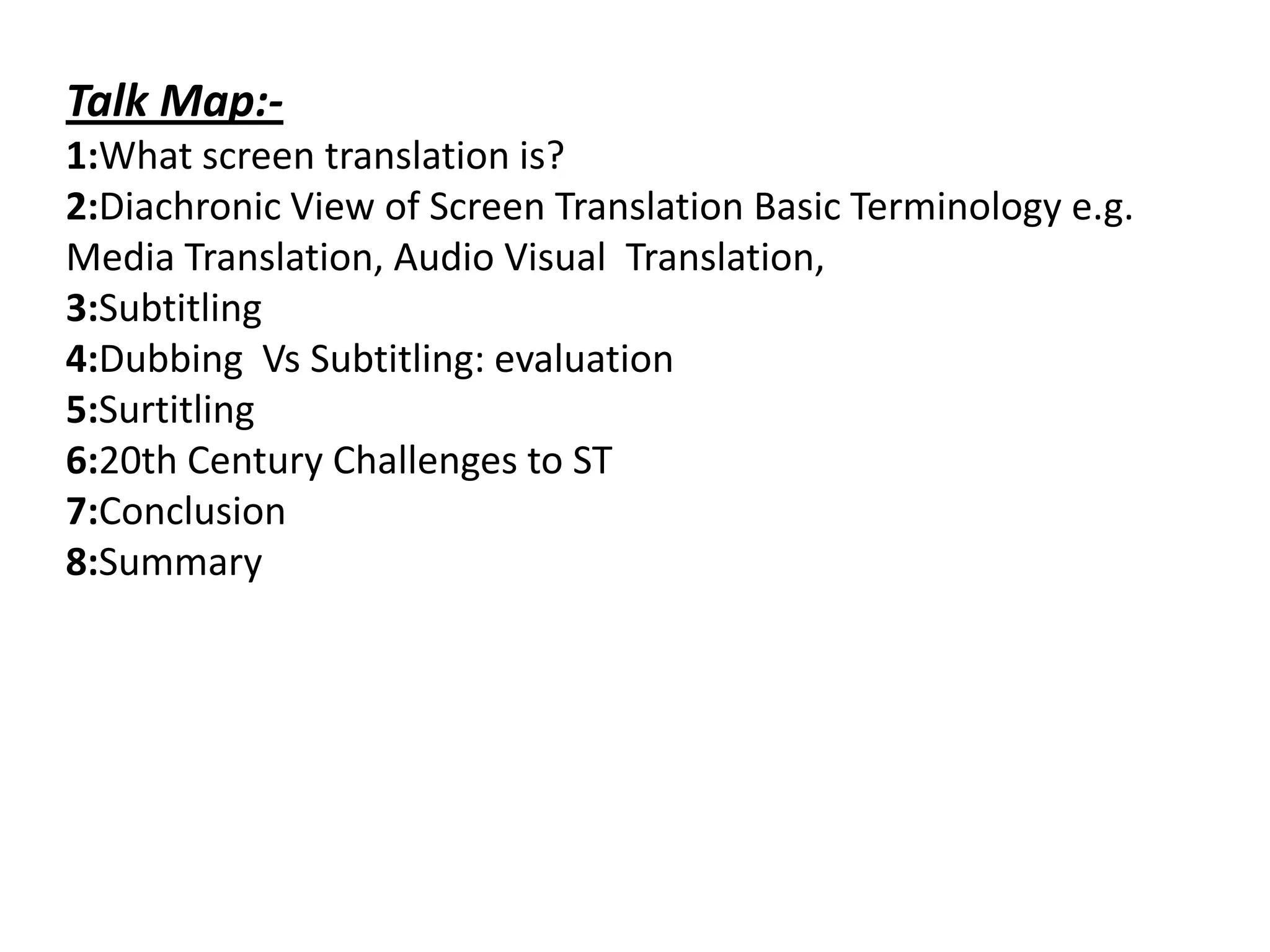
Talk Map:1:What screentranslation is?
2:Diachronic View of Screen Translation Basic Terminology e.g.
Media Translation, Audio Visual Translation,
3:Subtitling
4:Dubbing Vs Subtitling: evaluation
5:Surtitling
6:20th Century Challenges to ST
7:Conclusion
8:Summary
3.
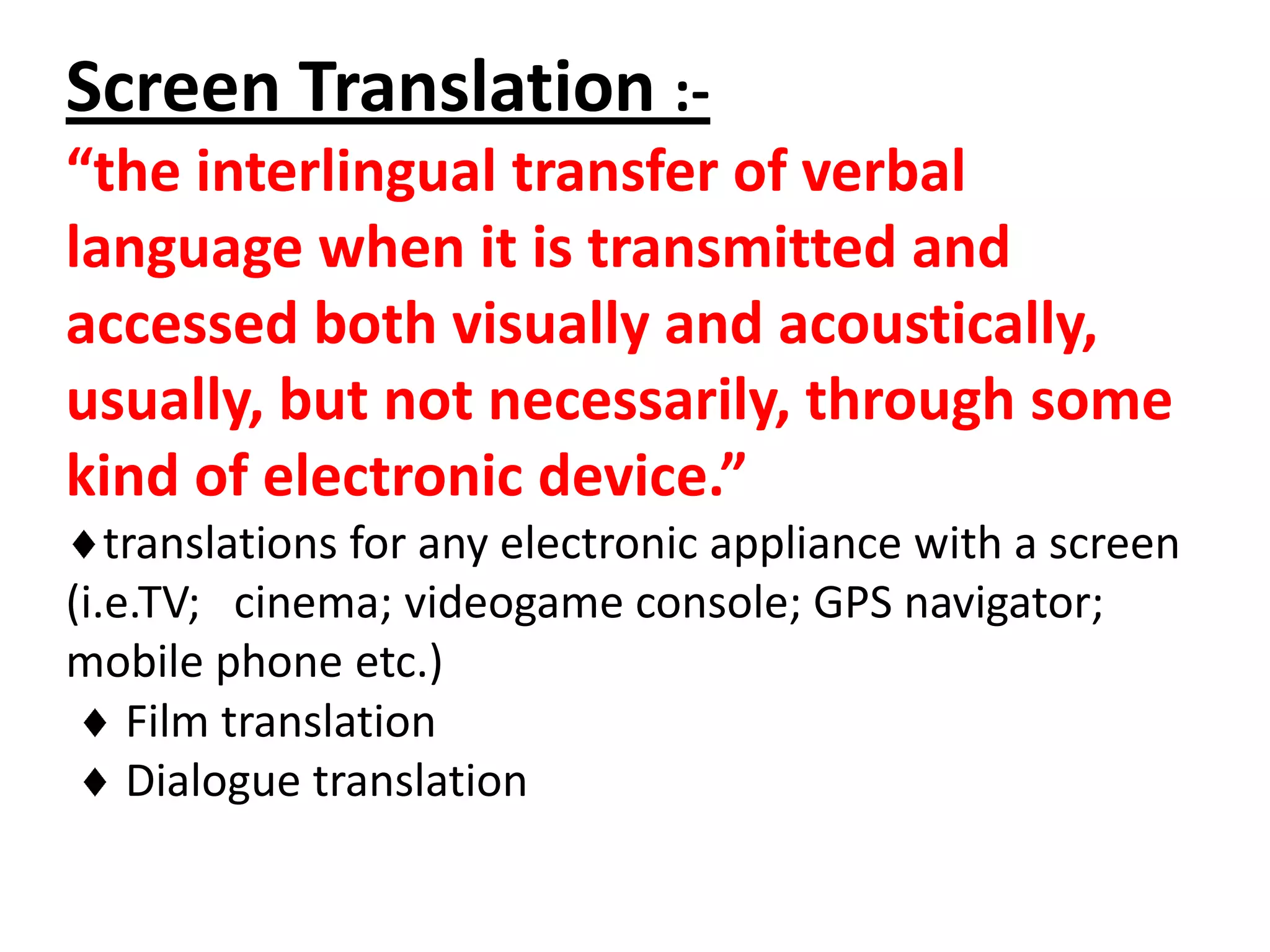
Screen Translation :“theinterlingual transfer of verbal
language when it is transmitted and
accessed both visually and acoustically,
usually, but not necessarily, through some
kind of electronic device.”
translations for any electronic appliance with a screen
(i.e.TV; cinema; videogame console; GPS navigator;
mobile phone etc.)
Film translation
Dialogue translation
4.
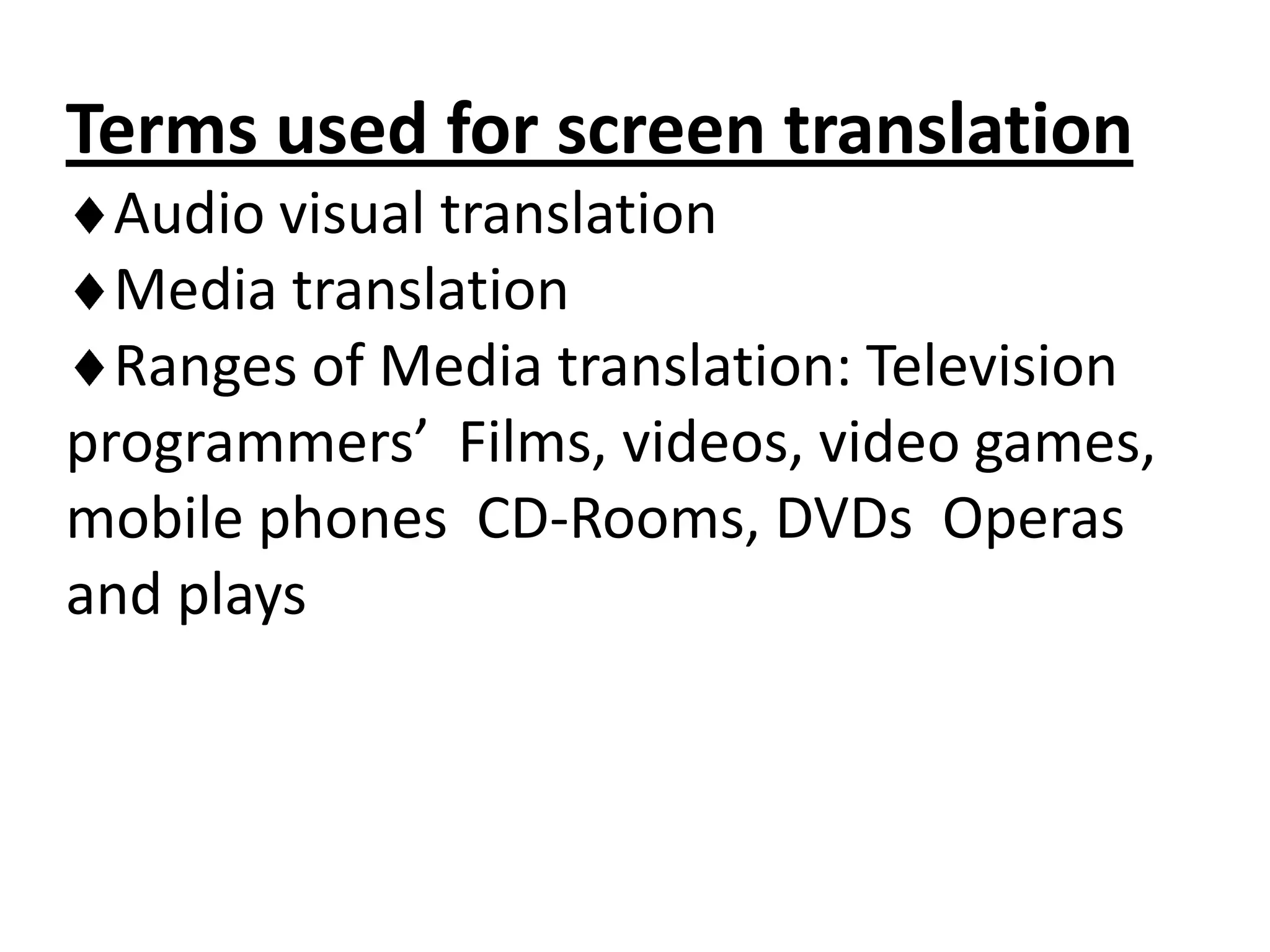
Terms used forscreen translation
Audio visual translation
Media translation
Ranges of Media translation: Television
programmers’ Films, videos, video games,
mobile phones CD-Rooms, DVDs Operas
and plays
5.
Audiovisual translation:“[a] semioticconstruct comprising several
signifying codes that operate
simultaneously in the production of
meaning.” (Chaume 2004:16)
Films, plays, opera, video-games and hypertexts are examples
of audiovisual products that are intended to be both seen and
heard at the same time
6.
Multimedia translation:Multimedia productsare both produced and
consumed by means of several media. In other
words, typical multimedia products such as a
films and hypertexts, will be created through
the implementation of diverse technological
equipment (i.e. cameras, computers, software
programs etc.) and subsequently consumed by
end- users via some sort of electronic device
such as a television; a computer screen
7.
Subtitling
Subtitling may bedefined as a translation practice
that consists of presenting a written text, generally on
the lower part of the screen, that end eavours to
recount the original dialogue of the speakers, as well
as the discursive elements that appear in the image
(letters, inserts, graffiti, inscriptions, placards, and the
like), and the information that is contained on the
soundtrack (songs, voices off). (Diaz Cintas, 2007)
8.
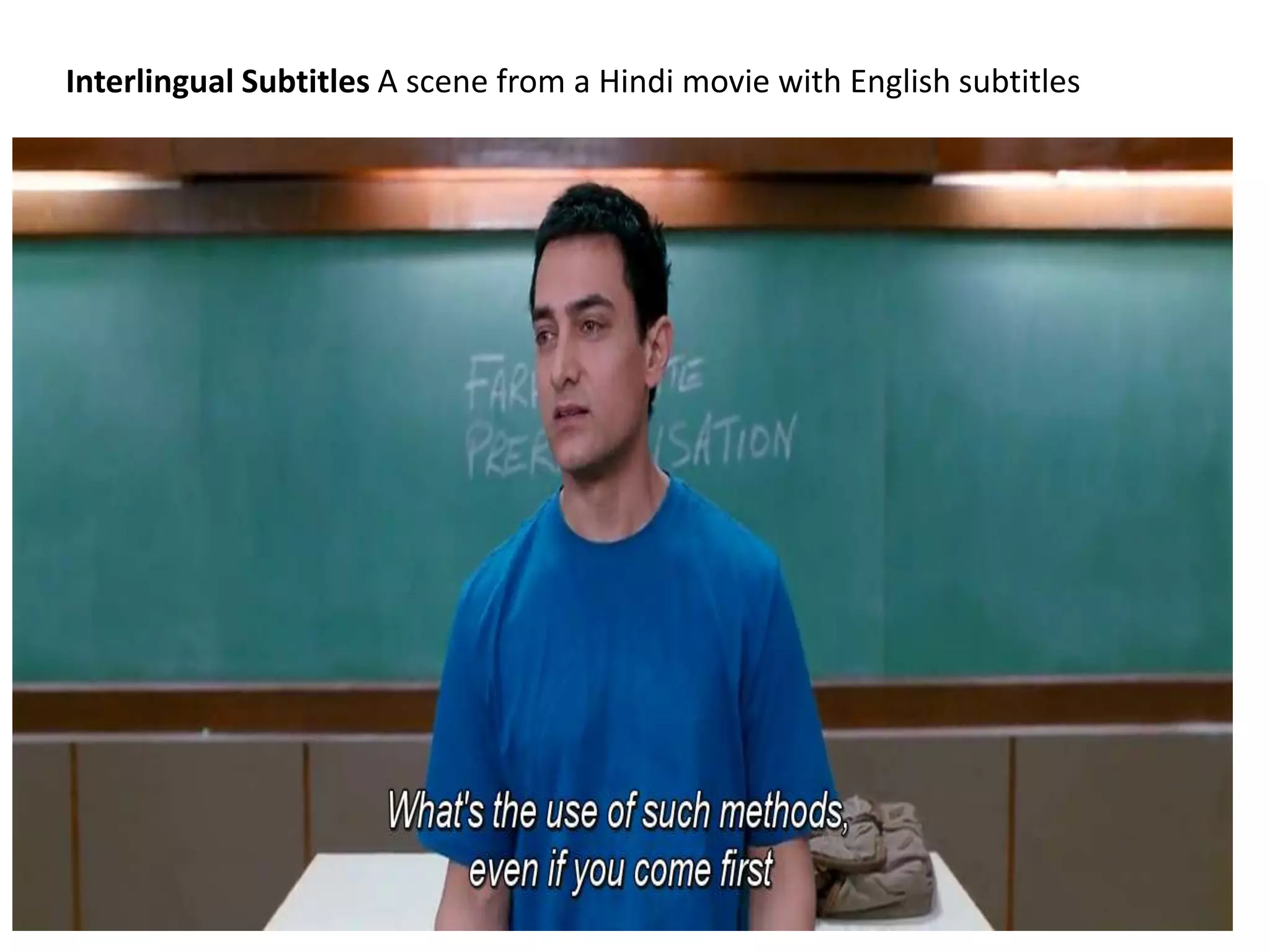
Paradigms of Subtilting:Interlingualsame language other languages for deaf and hard of
hearing immigrants, minorities
Technical parameters:Open subtitles (viewer has no choice as to the presence of subtitles on screen)
Closed subtitles (translation can be added to the programme at the viewer’s will)
Dubbing VS SubtitlingDubbing
Subtitling Ten times expensive Ten times cheaper Time consuming long
Quick process Spoils the original It doesn’t mess with voices; original,
You can hear original film; original voices; It can reach audience
Promotes the use of a with lower literacy rate foreign language13 who
tend not to along with creating an understand the foreign interest in the
foreign language culture.
Translation or Adaptation?
It has to be understood that the subtitled text is not a proper translation,
but rather a simple adaptation that preserves the general meaning of the
original. Pommier (1988:22)
13.
Constraints of Subtitling:Overtform of translation (Gottlieb, 1992), i.e. it can be evaluated by those
who know the source language of the voice track.
Time
Space
Spatial Considerations:Maximum of 2 lines
Safe area
Position on screen
Background
28 to 40 spaces per line
Type of font
Font size
14.
Constraints of Dubbing:phoneticsynchrony, matching sounds and lip movements.
matching the dubbing voice (timbre, tempo, etc.) and the original actors
physique and manner and gestures.
matching the semantic content of the original and dubbed script versions
closely.
Surtitles (supertitles, supratitles):Surtitles are relative newcomers on the international stage, first appeared in
1983 in Canada
They are rather like the interlingual subtitles provided on some foreign films
Live performances: opera, concerts, musicals theatre conferences.
15.
20th Century Challengesto ST & Conclusion:Advent in digital technology and IT added speed and quality to subtitling and
dubbing
Improved access and choice of ST mode e.g. multilingual DVD, and digital TV
closed subtitles
Present and future researches focusing on machine translation and software
development
Linguistics, pedagogical, cultural, commercial and political issues in screen
translation are being ignored
Conclusion:Interdisciplinary approach in research projects can solve the
problem.
16.
Summary:Screen Translation
Terms usedfor screen translation (Audio visual
translation, Media translation)
Subtitling (Open & closed subtitling)
Dubbing vs. Subtitles
Surtitling
Challenges of 20th Century
Conclusion