VIVEKANANDHA ARTS AND SCIENCE COLLEGE FOR WOMEN,
SANGAGIRI, SALEM636303. TAMIL NADU
DEPARTMENT OF MICROBIOLOGY
SUBJECT: ENVIRONMENT OL MICROBIOLOGY
TITLE: CONCEPT AND SCOPE OF ENVIRONMENTAL MICROBIOLOGY
SUBJECT INCHARGE :
Dr.R. MATHILI RAVICHANDRAN
ASSISTANT PROFESSOR
HEAD OF THE DEPARTMENT
SUBMITTED BY
T.PRIYA
III-BSc-MICROBIOLOGY
DEPARTMENT OF MICROBIOLOGY
•THEMES IN MICROBIOLOGY
TOPICS COVERED
•Scope of microbiology
•Importance of microorganisms
SCOPE OF MICROBIOLOGY
• MICROBIOLOGY
• Study of organisms too small to be seen by the naked eye.
MICROBES OR MICROORGANISMS
• Commonly referred to as “germs’
• Include bacteria,viruses,fungi,algae, protozoa.
SPECIALIZATION IN MICROBIOLOGY
• Epidemiology and Public Health Microbiology distribution and spread of
diseases and their control and prevention
• Food Microbiology use of microbes in the production of food products and
drinks
• Agricultural and Veterinary Microbiology use of microbes to increase crop
and livestock yield and control of plant pests and animal diseases
• Environmental Microbiology study of the beneficial and harmful effects of
microbes on the environment
IMPORTANCE OF MICROBIOLOGY
• First bacteria
• Photosynthesis and decomposition
• Human use of microorganisms
• Infectious diseases
PHOTOSYNTHETIC MICROBES
• Microbes are involved in photosynthesis and accounts for >50% of earth’s oxygen
• Also involved in decomposition and nutrient recycling.
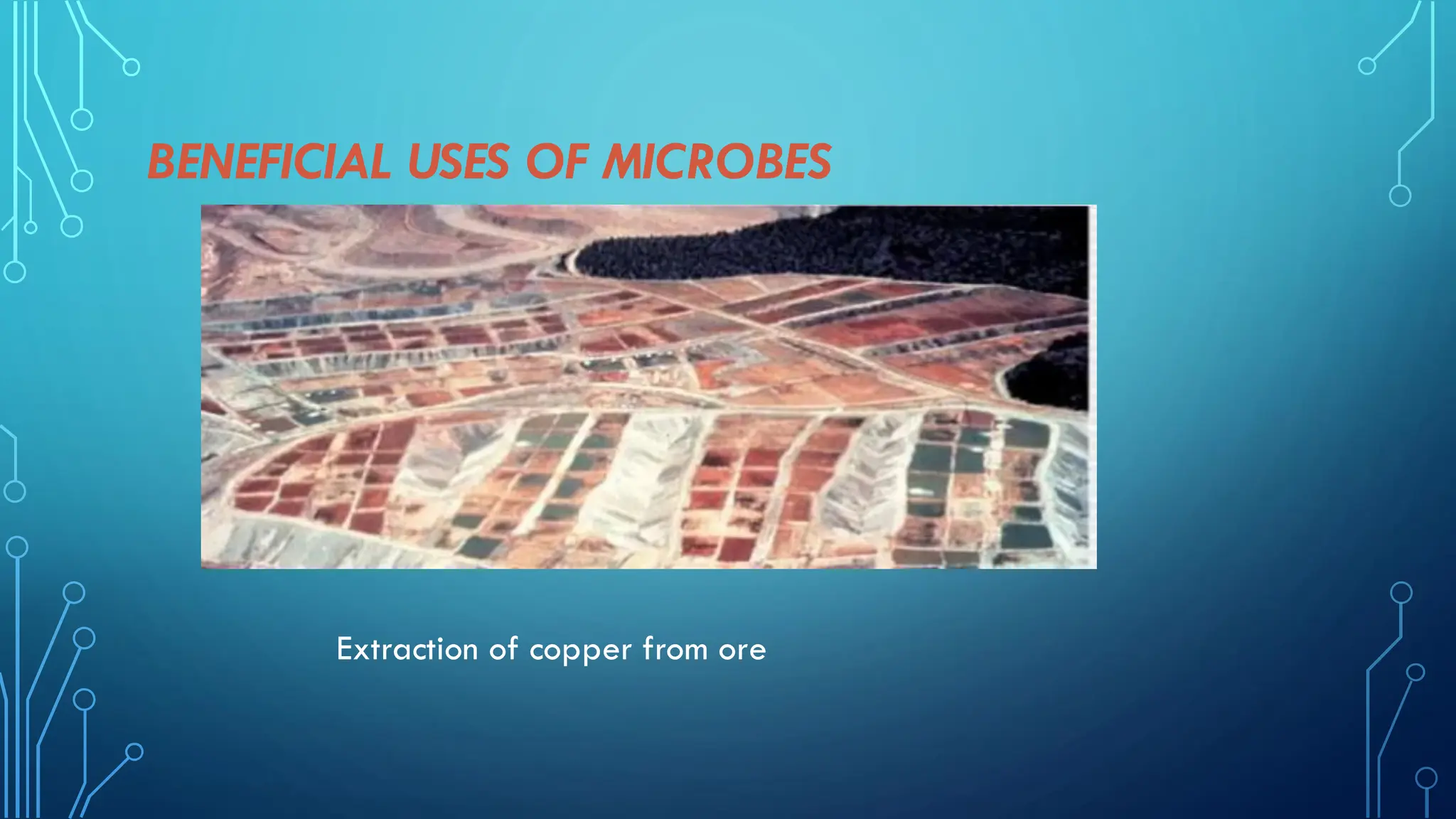
BENEFICIAL USES OF MICROBES
Extraction of copper from ore
HUMAN USES OF MICROORGANISMS
• Humans have been using microorganisms for thousands of years
• Baker’s and brewer’s yeast
• Sugar Alcohol in wine and beer
• Cheeses
• Moldy bread on wounds
MICROBES IN THE ENVIRONMEN
• Microbial photosynthesis (CO, light organic mat’l) account for most of the
atmospheric oxygen on Earth
• Anoxgyenic. Oxygenic (70% oxygen)
• Microbes are essential for decomposition of dead organisms into simple
compouns
MODERN USES OF MICROBE
• Genetic engineering makes use of molecular biology and recombinant DNA
techniques as new tools for biotechnology.
• Gene therapy replaces missing or defective genes in human cells through
genetic engineering.
• Genetically modified bacteria are used to protect crops from pests and
freezing.
UBIQUITY OF MICROORGANISMS
• Found nearly everywhere
• Occur in large numbers
• Live in places many other organisms cannot
HUMAN INSULIN
• Prior to the development of this technique, insulin was extracted
from the pancreas glands of cattle, pigs, and other farm animals,
While generally efficacious in the treatment of diabetes, animal-
derived insulin is not indistinguishable from human insulin, and may
therefore produce allergic reactions..
PRODUCTION OF VITAMINS
• Bacteria like E. Coli present in human colon are involved in synthesis of
vitamins like vitamin b12, folic acid, biotin and K. Which may be used by the
host. Such bacteria are often used for commercial preparation of vitamins like
riboflavin.
MEDICAL MICROBIOLOGY
• Medical Microbiology helps in the diagonostic protocol for identification of
causative agents of various human aliments, alimentes & subsepuents
preventive measures. Some are stated blew.
PHARMACEUTICAL MICROBIOLOGY
• Pharmaceutical Microbiology is the part of industrial microbiology that IS
responsible for creating medications. The making of life-saving drugs,
antibiotics e.g. Penicillin’s, ampicillin, chloramphenicol, ciprofloxacin,
tetracycline's, and streptomycin belong to the sector of pharmaceutical
microbiology. There are many useful products made by microbes.
FOOD MICROBIOLOGY
• Food chain are an important component of the food chain. They allow for
recycling of nutrients and some microbes are actual parts of food chain.
• Brewing and backing have been carried out for thousands of years and both
are depend on the conversion of sugar into alcohol and carbon dioxide by
yeasts.
THANK YOU

Scope of environmental MICROBIOLOGY- environment

  • 1.
    VIVEKANANDHA ARTS ANDSCIENCE COLLEGE FOR WOMEN, SANGAGIRI, SALEM636303. TAMIL NADU DEPARTMENT OF MICROBIOLOGY SUBJECT: ENVIRONMENT OL MICROBIOLOGY TITLE: CONCEPT AND SCOPE OF ENVIRONMENTAL MICROBIOLOGY SUBJECT INCHARGE : Dr.R. MATHILI RAVICHANDRAN ASSISTANT PROFESSOR HEAD OF THE DEPARTMENT SUBMITTED BY T.PRIYA III-BSc-MICROBIOLOGY DEPARTMENT OF MICROBIOLOGY
  • 2.
  • 3.
    TOPICS COVERED •Scope ofmicrobiology •Importance of microorganisms
  • 4.
    SCOPE OF MICROBIOLOGY •MICROBIOLOGY • Study of organisms too small to be seen by the naked eye. MICROBES OR MICROORGANISMS • Commonly referred to as “germs’ • Include bacteria,viruses,fungi,algae, protozoa.
  • 5.
    SPECIALIZATION IN MICROBIOLOGY •Epidemiology and Public Health Microbiology distribution and spread of diseases and their control and prevention • Food Microbiology use of microbes in the production of food products and drinks • Agricultural and Veterinary Microbiology use of microbes to increase crop and livestock yield and control of plant pests and animal diseases • Environmental Microbiology study of the beneficial and harmful effects of microbes on the environment
  • 6.
    IMPORTANCE OF MICROBIOLOGY •First bacteria • Photosynthesis and decomposition • Human use of microorganisms • Infectious diseases
  • 7.
    PHOTOSYNTHETIC MICROBES • Microbesare involved in photosynthesis and accounts for >50% of earth’s oxygen • Also involved in decomposition and nutrient recycling.
  • 8.
    BENEFICIAL USES OFMICROBES Extraction of copper from ore
  • 9.
    HUMAN USES OFMICROORGANISMS • Humans have been using microorganisms for thousands of years • Baker’s and brewer’s yeast • Sugar Alcohol in wine and beer • Cheeses • Moldy bread on wounds
  • 10.
    MICROBES IN THEENVIRONMEN • Microbial photosynthesis (CO, light organic mat’l) account for most of the atmospheric oxygen on Earth • Anoxgyenic. Oxygenic (70% oxygen) • Microbes are essential for decomposition of dead organisms into simple compouns
  • 11.
    MODERN USES OFMICROBE • Genetic engineering makes use of molecular biology and recombinant DNA techniques as new tools for biotechnology. • Gene therapy replaces missing or defective genes in human cells through genetic engineering. • Genetically modified bacteria are used to protect crops from pests and freezing.
  • 12.
    UBIQUITY OF MICROORGANISMS •Found nearly everywhere • Occur in large numbers • Live in places many other organisms cannot
  • 13.
    HUMAN INSULIN • Priorto the development of this technique, insulin was extracted from the pancreas glands of cattle, pigs, and other farm animals, While generally efficacious in the treatment of diabetes, animal- derived insulin is not indistinguishable from human insulin, and may therefore produce allergic reactions..
  • 14.
    PRODUCTION OF VITAMINS •Bacteria like E. Coli present in human colon are involved in synthesis of vitamins like vitamin b12, folic acid, biotin and K. Which may be used by the host. Such bacteria are often used for commercial preparation of vitamins like riboflavin.
  • 15.
    MEDICAL MICROBIOLOGY • MedicalMicrobiology helps in the diagonostic protocol for identification of causative agents of various human aliments, alimentes & subsepuents preventive measures. Some are stated blew.
  • 16.
    PHARMACEUTICAL MICROBIOLOGY • PharmaceuticalMicrobiology is the part of industrial microbiology that IS responsible for creating medications. The making of life-saving drugs, antibiotics e.g. Penicillin’s, ampicillin, chloramphenicol, ciprofloxacin, tetracycline's, and streptomycin belong to the sector of pharmaceutical microbiology. There are many useful products made by microbes.
  • 17.
    FOOD MICROBIOLOGY • Foodchain are an important component of the food chain. They allow for recycling of nutrients and some microbes are actual parts of food chain. • Brewing and backing have been carried out for thousands of years and both are depend on the conversion of sugar into alcohol and carbon dioxide by yeasts.
  • 18.