Ecosystem: Tropical
Rainforests, Coral
Reefs and Mangrove
Swamps
What is an ecosystem?
An ecosystem is a system consisting
of biotic and abiotic components that
function together as a unit.
The biotic components include all the living
things. Basically, there are two major types of living
things, such as plants, trees, animals, fungi and
bacteria.
The abiotic components include all the non-
living things, such as rocks, soil, minerals, water
sources, and the local atmosphere.
Plants are referred to as the producers because they
are capable of producing their own food through
photosynthesis.
The animals are examples of consumers. The animals
that feed on plants are called herbivores whereas those that
feed on other animals are carnivores. Then, there are those that
feed on both plants and animals. They are called omnivores.
Ecosystem:
Tropical Rainforests
Rainforest has different layers namely emergent,
canopy, understory and forest floor. Emergent refers to trees
that are 130 to 180 feet tall. Canopy, on the other hand, has tall
slender trees from a dense platform of vegetation with 60 to 129
feet of the ground. The understory is about 59 feet and below
and consists of trunks of canopy, shrubs, trees and small plants.
The forest floor is home to animals like jaguars, tigers
and cassowaries which thrive in a deep shade part of the forest
where plant life is thin. This is because only a small percent of
sunlight gets through the thick canopy and understory and
reaches the forest floor. Organisms like fungi, insects, worms
and litter from taller trees that fall on the forest floor can be
found here.
Producers provide food for the consumers which include herbivores
plant eating animals and carnivores-flesh eating animals.
Herbivores provide food to the carnivores. Producers include trees,
shrubs and other plant life in the forest.
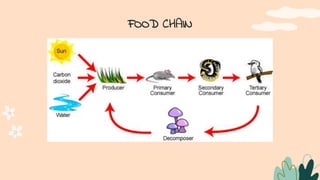
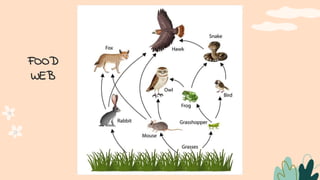
Feeding relationships like food chain and food web occur among
species in the forest ecosystem. Food chain starts with producer, a
series of consumers and decomposers. Food web results from the
interconnected food chains.
FOOD CHAIN
FOOD
WEB
INTERATIONS IN
TROPICAL RAINFOREST
Commensalism is an interaction
where organisms live together
without harming one another for
example orchids is attached to the
trunk of a tree without harming it.
In mutualism both organisms
benefit in the relationship for
example, a bee or butterfly
suck nectar from a flower and
the flower reproduces.
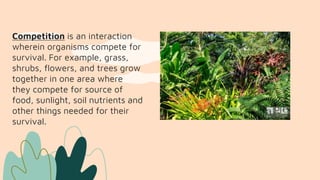
Competition is an interaction
wherein organisms compete for
survival. For example, grass,
shrubs, flowers, and trees grow
together in one area where
they compete for source of
food, sunlight, soil nutrients and
other things needed for their
survival.
Predation is a kind of
interaction in which one
organism kills smaller
organisms for food. An
example of this is when a
snake eats a rat for food.
Predator usually organisms
which are stronger, bigger
and fiercer compared to
prey.
Ecosystem:
Coral Reefs
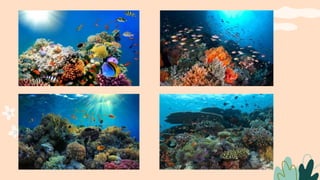
Coral reefs serve as habitat for many animals. They are
a breeding ground of marine life. It is composed of non-living
components such as water and sand and living components such
as fish, crustaceans, mollusks, cnidarians, sponges and
echinoderms.
Just like in other ecosystems, in coral reefs, organisms
interact with each other. The producers like sea grass, provide
food and nutrients to the consumers. These consumers include
sea turtles, crabs, manatees (dugong), fishes and other marine
animals.
INTERATIONS IN
CORAL REEFS
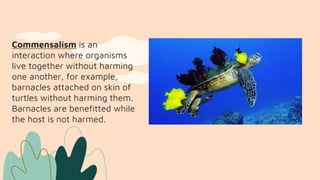
Commensalism is an
interaction where organisms
live together without harming
one another, for example,
barnacles attached on skin of
turtles without harming them.
Barnacles are benefitted while
the host is not harmed.
In mutualism, both organisms benefit in the
relationship, for example, the corals receive oxygen
from the algae; the algae get protection from them.
Competition is an interaction
wherein organisms compete for
survival. For example, the
fishes compete for source of
food and space in the coral
reef.
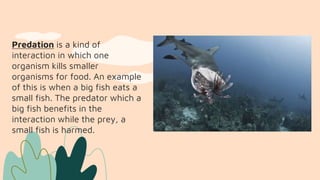
Predation is a kind of
interaction in which one
organism kills smaller
organisms for food. An example
of this is when a big fish eats a
small fish. The predator which a
big fish benefits in the
interaction while the prey, a
small fish is harmed.
Parasitism is a kind of
interaction where one
organism, the parasite, depends
on another organism for food,
production and reproduction.
An example of this is when the
worm lives in the guts and flesh
of fish. The worm is benefitted
while the fish is harmed by the
parasite.
Ecosystem:
Mangrove Swamps
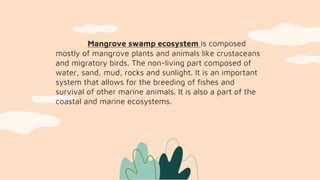
Mangrove swamp ecosystem is composed
mostly of mangrove plants and animals like crustaceans
and migratory birds. The non-living part composed of
water, sand, mud, rocks and sunlight. It is an important
system that allows for the breeding of fishes and
survival of other marine animals. It is also a part of the
coastal and marine ecosystems.
INTERATIONS IN
MANNGROVE SWAMPS
The symbiotic interaction
found in a mangrove ecosystem
includes many organisms that
depend on mangrove for
survival. Animals like oysters,
mollusks and barnacles are
dependent on mangrove for
their source of food and
habitat.
Commensalism is shown
when barnacles and
oysters attach themselves
to the roots of mangroves.
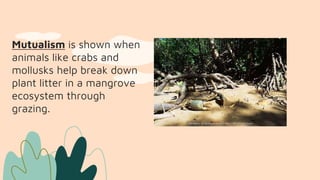
Mutualism is shown when
animals like crabs and
mollusks help break down
plant litter in a mangrove
ecosystem through
grazing.
White heron (tagak)
eating a fish shows
predation in this kind
of ecosystem.
Any questions?
What is an ecosystem?
What are the biotic and abiotic components in an
ecosystem?
What are the three types of ecosystem?
Explain the following interactions in an ecosystem.
• Commensalism
• Mutualism
• Competition
• Predation
• Parasitism
Assessment
Thank you. 

Science Quarter 2 Module 6.pptx

  • 1.
  • 2.
    What is anecosystem? An ecosystem is a system consisting of biotic and abiotic components that function together as a unit.
  • 3.
    The biotic componentsinclude all the living things. Basically, there are two major types of living things, such as plants, trees, animals, fungi and bacteria. The abiotic components include all the non- living things, such as rocks, soil, minerals, water sources, and the local atmosphere.
  • 4.
    Plants are referredto as the producers because they are capable of producing their own food through photosynthesis. The animals are examples of consumers. The animals that feed on plants are called herbivores whereas those that feed on other animals are carnivores. Then, there are those that feed on both plants and animals. They are called omnivores.
  • 6.
  • 8.
    Rainforest has differentlayers namely emergent, canopy, understory and forest floor. Emergent refers to trees that are 130 to 180 feet tall. Canopy, on the other hand, has tall slender trees from a dense platform of vegetation with 60 to 129 feet of the ground. The understory is about 59 feet and below and consists of trunks of canopy, shrubs, trees and small plants. The forest floor is home to animals like jaguars, tigers and cassowaries which thrive in a deep shade part of the forest where plant life is thin. This is because only a small percent of sunlight gets through the thick canopy and understory and reaches the forest floor. Organisms like fungi, insects, worms and litter from taller trees that fall on the forest floor can be found here.
  • 10.
    Producers provide foodfor the consumers which include herbivores plant eating animals and carnivores-flesh eating animals. Herbivores provide food to the carnivores. Producers include trees, shrubs and other plant life in the forest. Feeding relationships like food chain and food web occur among species in the forest ecosystem. Food chain starts with producer, a series of consumers and decomposers. Food web results from the interconnected food chains.
  • 11.
  • 12.
  • 13.
  • 14.
    Commensalism is aninteraction where organisms live together without harming one another for example orchids is attached to the trunk of a tree without harming it.
  • 15.
    In mutualism bothorganisms benefit in the relationship for example, a bee or butterfly suck nectar from a flower and the flower reproduces.
  • 16.
    Competition is aninteraction wherein organisms compete for survival. For example, grass, shrubs, flowers, and trees grow together in one area where they compete for source of food, sunlight, soil nutrients and other things needed for their survival.
  • 17.
    Predation is akind of interaction in which one organism kills smaller organisms for food. An example of this is when a snake eats a rat for food. Predator usually organisms which are stronger, bigger and fiercer compared to prey.
  • 18.
  • 20.
    Coral reefs serveas habitat for many animals. They are a breeding ground of marine life. It is composed of non-living components such as water and sand and living components such as fish, crustaceans, mollusks, cnidarians, sponges and echinoderms. Just like in other ecosystems, in coral reefs, organisms interact with each other. The producers like sea grass, provide food and nutrients to the consumers. These consumers include sea turtles, crabs, manatees (dugong), fishes and other marine animals.
  • 21.
  • 22.
    Commensalism is an interactionwhere organisms live together without harming one another, for example, barnacles attached on skin of turtles without harming them. Barnacles are benefitted while the host is not harmed.
  • 23.
    In mutualism, bothorganisms benefit in the relationship, for example, the corals receive oxygen from the algae; the algae get protection from them.
  • 24.
    Competition is aninteraction wherein organisms compete for survival. For example, the fishes compete for source of food and space in the coral reef.
  • 25.
    Predation is akind of interaction in which one organism kills smaller organisms for food. An example of this is when a big fish eats a small fish. The predator which a big fish benefits in the interaction while the prey, a small fish is harmed.
  • 26.
    Parasitism is akind of interaction where one organism, the parasite, depends on another organism for food, production and reproduction. An example of this is when the worm lives in the guts and flesh of fish. The worm is benefitted while the fish is harmed by the parasite.
  • 27.
  • 29.
    Mangrove swamp ecosystemis composed mostly of mangrove plants and animals like crustaceans and migratory birds. The non-living part composed of water, sand, mud, rocks and sunlight. It is an important system that allows for the breeding of fishes and survival of other marine animals. It is also a part of the coastal and marine ecosystems.
  • 30.
  • 31.
    The symbiotic interaction foundin a mangrove ecosystem includes many organisms that depend on mangrove for survival. Animals like oysters, mollusks and barnacles are dependent on mangrove for their source of food and habitat.
  • 32.
    Commensalism is shown whenbarnacles and oysters attach themselves to the roots of mangroves.
  • 33.
    Mutualism is shownwhen animals like crabs and mollusks help break down plant litter in a mangrove ecosystem through grazing.
  • 34.
    White heron (tagak) eatinga fish shows predation in this kind of ecosystem.
  • 35.
  • 36.
    What is anecosystem? What are the biotic and abiotic components in an ecosystem? What are the three types of ecosystem? Explain the following interactions in an ecosystem. • Commensalism • Mutualism • Competition • Predation • Parasitism
  • 37.
  • 38.

Editor's Notes

  • #19 Living things and non-living things interact with each other in a Tropical Rainforest Ecosystem. Living things include plants and animals. Non-living things include soil, air, humidity, water and sunlight.
  • #28 Living things and non-living things interact with each other in a Tropical Rainforest Ecosystem. Living things include plants and animals. Non-living things include soil, air, humidity, water and sunlight.