SCIENCE 6
FRICTION
Infer how friction and gravity affect the movements of different objects
(S6FE-IIIa-c-1)
OBJECTIVES
After the lesson, the learners are expected to:
1. Describe friction.
2. Explain how friction affect the motion of different
objects.
3. Display concern by preventing accident from
happening while using the road and ramps.
WHO AM I?
ROLL AND
STOP
Guide Questions:
1.What happened to the ball after it was pushed?
2.What caused the ball to stop?
3.How does friction occur?
GROUP
ACTIVITY -
DIRECTIONS
1. Group yourselves into four.
2. Choose your leader.
3. Go to your respective area assigned to you.
4. Begin doing the activity following the group standards.
5. Finish in ten minutes, and then present your output in less
than 3 minutes.
STANDARDS FOR THE SIMPLE SCIENCE ACTIVITY.
1. Work with the group cooperatively.
2. Listen and understand the direction of your leader.
3. Perform your group activity orderly.
4. Be ready to present your collaborative output.
What is
friction?
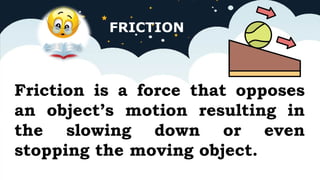
Friction is a force that opposes
an object’s motion resulting in
the slowing down or even
stopping the moving object.
FRICTION
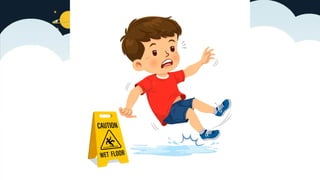
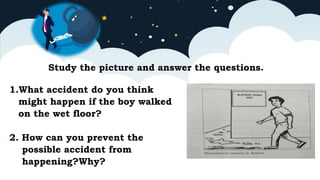
Study the picture and answer the questions.
1.What accident do you think
might happen if the boy walked
on the wet floor?
2. How can you prevent the
possible accident from
happening?Why?
1.What was our lesson all about?
2. Can you describe friction?
GENERALIZATION
EVALUATION
Directions: Answer the following questions carefully by choose the
letter of your choice.
1. A ball rolled being kicked and slowed down until it stopped.
Which of the following forces caused the ball to slow down?
A. electrical
B. friction
C. gravity
D. magnetic
EVALUATION
2. Is friction between the floor and a cabinet present when a person
pushes the cabinet?
A. Yes, because the bottom surface of the cabinet is in contact
with the floor.
B. Yes, because the bottom surface of the cabinet does not
rub against the floor.
C. No, because the bottom surface of the cabinet has nothing
to do with the floor.
D. No, because the bottom surface of the cabinet is only
rubbing against the floor
EVALUATION
3. Which of the following is NOT TRUE about
friction?
A. Friction opposes motion of subjects.
B. Friction occurs between non-rubbing
surfaces.
C. Friction causes moving objects to slow
down to stop.
EVALUATION
4. Which of the following can friction do to a
glass of water on a table?
A. It moves the glass.
B. It allows the glass to slide.
C. It does not affect the glass.
D. It prevents the glass from sliding.
EVALUATION
5. Study the diagram, which force does B
represents?
A. friction
B. gravity
C. magnetic
D. motion
Describe friction by completing the
following graphic organizer. fill in the
blanks with the words listed inside the
box to complete the given sentences.
ASSIGNMENT

Grade Six - Third Quarter - FRICTION.pptx

  • 1.
  • 2.
    FRICTION Infer how frictionand gravity affect the movements of different objects (S6FE-IIIa-c-1)
  • 3.
    OBJECTIVES After the lesson,the learners are expected to: 1. Describe friction. 2. Explain how friction affect the motion of different objects. 3. Display concern by preventing accident from happening while using the road and ramps.
  • 4.
  • 6.
    ROLL AND STOP Guide Questions: 1.Whathappened to the ball after it was pushed? 2.What caused the ball to stop? 3.How does friction occur?
  • 7.
    GROUP ACTIVITY - DIRECTIONS 1. Groupyourselves into four. 2. Choose your leader. 3. Go to your respective area assigned to you. 4. Begin doing the activity following the group standards. 5. Finish in ten minutes, and then present your output in less than 3 minutes.
  • 8.
    STANDARDS FOR THESIMPLE SCIENCE ACTIVITY. 1. Work with the group cooperatively. 2. Listen and understand the direction of your leader. 3. Perform your group activity orderly. 4. Be ready to present your collaborative output.
  • 9.
  • 10.
    Friction is aforce that opposes an object’s motion resulting in the slowing down or even stopping the moving object. FRICTION
  • 11.
    Study the pictureand answer the questions. 1.What accident do you think might happen if the boy walked on the wet floor? 2. How can you prevent the possible accident from happening?Why?
  • 12.
    1.What was ourlesson all about? 2. Can you describe friction? GENERALIZATION
  • 13.
    EVALUATION Directions: Answer thefollowing questions carefully by choose the letter of your choice. 1. A ball rolled being kicked and slowed down until it stopped. Which of the following forces caused the ball to slow down? A. electrical B. friction C. gravity D. magnetic
  • 14.
    EVALUATION 2. Is frictionbetween the floor and a cabinet present when a person pushes the cabinet? A. Yes, because the bottom surface of the cabinet is in contact with the floor. B. Yes, because the bottom surface of the cabinet does not rub against the floor. C. No, because the bottom surface of the cabinet has nothing to do with the floor. D. No, because the bottom surface of the cabinet is only rubbing against the floor
  • 15.
    EVALUATION 3. Which ofthe following is NOT TRUE about friction? A. Friction opposes motion of subjects. B. Friction occurs between non-rubbing surfaces. C. Friction causes moving objects to slow down to stop.
  • 16.
    EVALUATION 4. Which ofthe following can friction do to a glass of water on a table? A. It moves the glass. B. It allows the glass to slide. C. It does not affect the glass. D. It prevents the glass from sliding.
  • 17.
    EVALUATION 5. Study thediagram, which force does B represents? A. friction B. gravity C. magnetic D. motion
  • 18.
    Describe friction bycompleting the following graphic organizer. fill in the blanks with the words listed inside the box to complete the given sentences. ASSIGNMENT

Editor's Notes

  • #5 What do you see on the picture? What is the reason why the boy slips on the floor? What will you do so it will never happen again?