Balanced
and
Unbalanced
Forces
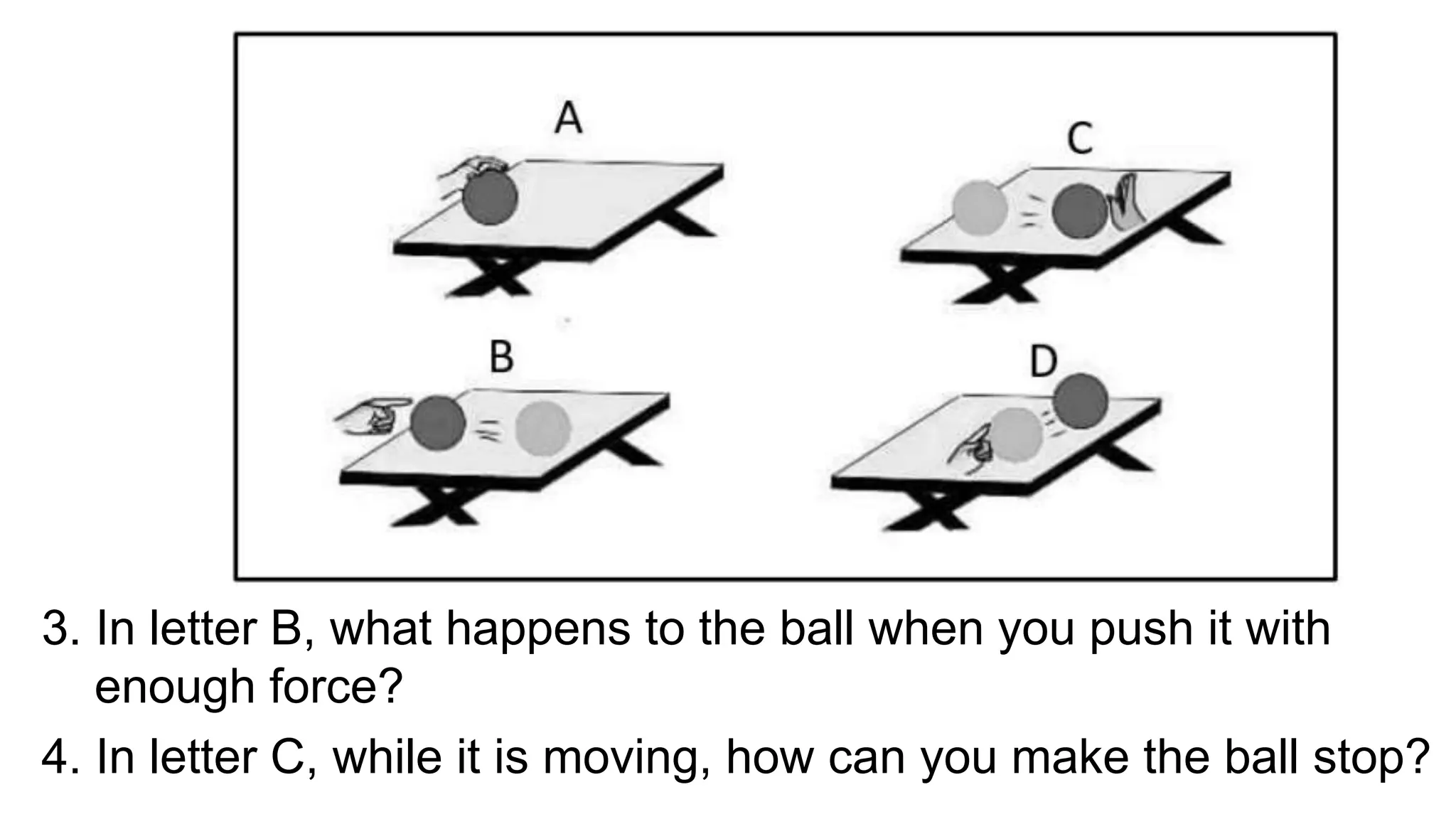
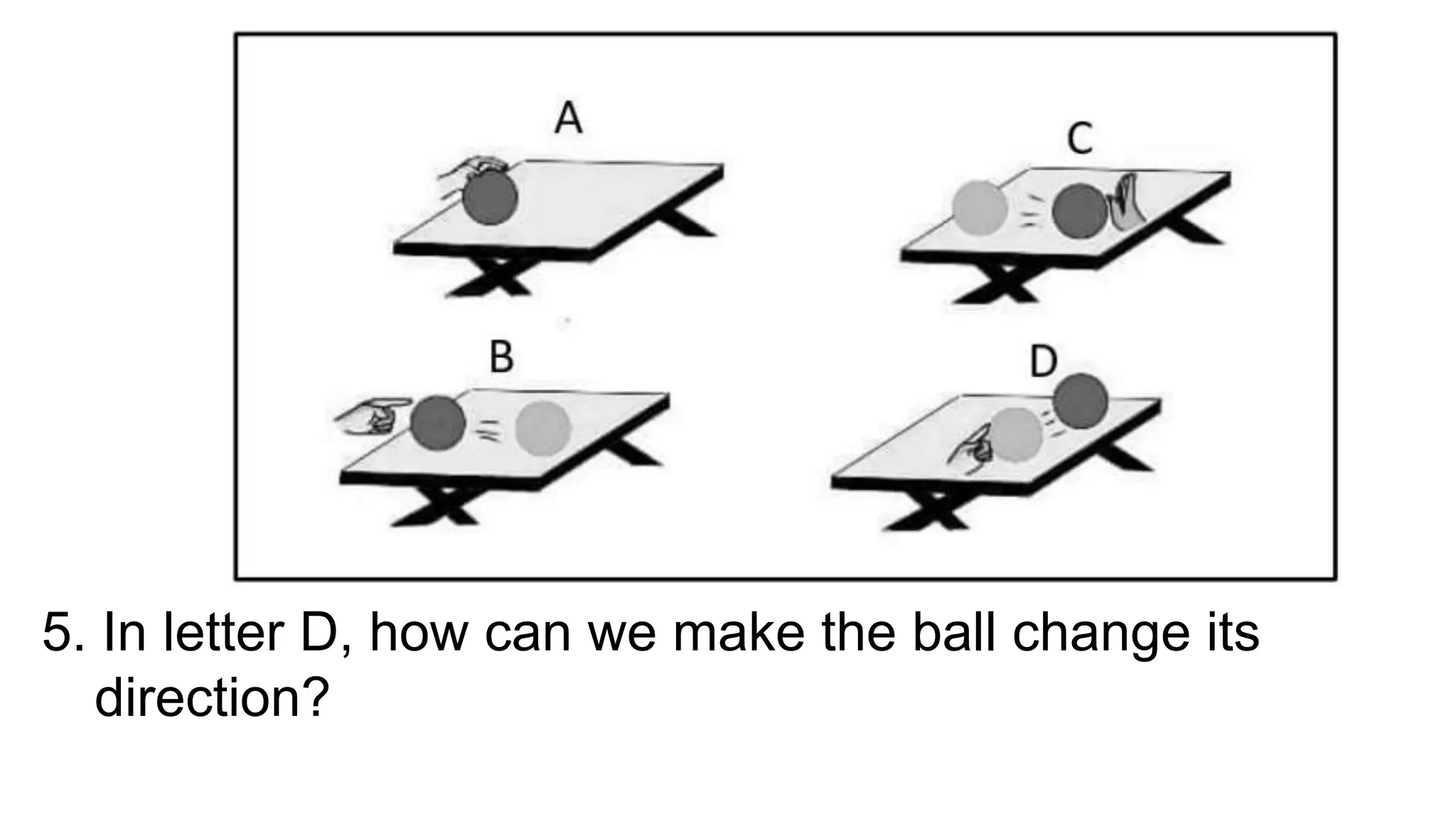
1. In letter A, is the ball at rest?
2. How can you make the ball move?
3. In letter B, what happens to the ball when you push it with
enough force?
4. In letter C, while it is moving, how can you make the ball stop?
5. In letter D, how can we make the ball change its
direction?
is a push or pull upon an
object resulting from the
object's interaction with
another object. Whenever there
is an interaction between two
objects, there is a force upon
each of the objects. When the
interaction ceases, the two
objects no longer experience the
force.
Force
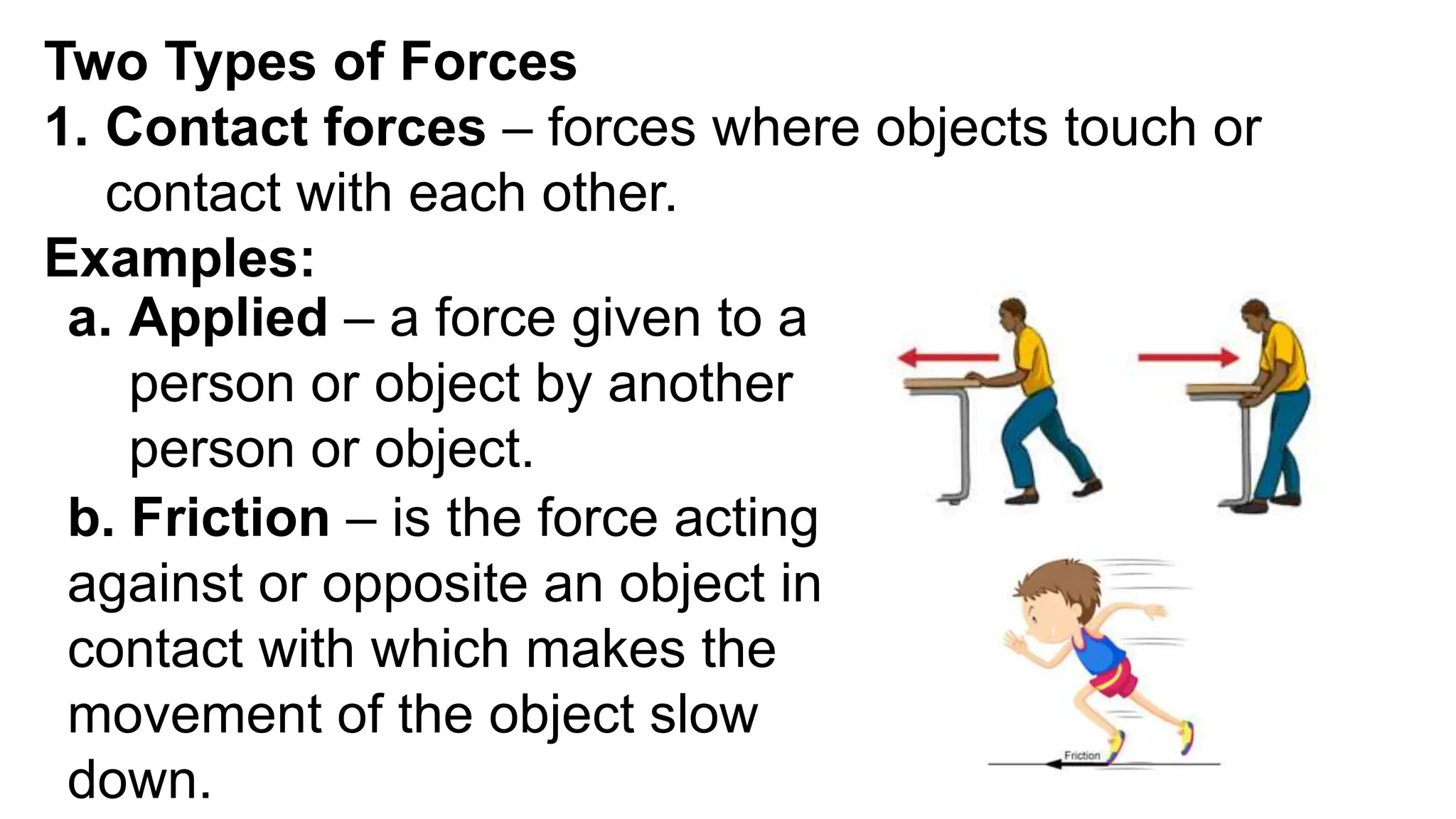
Two Types of Forces
1. Contact forces – forces where objects touch or
contact with each other.
Examples:
a. Applied – a force given to a
person or object by another
person or object.
b. Friction – is the force acting
against or opposite an object in
contact with which makes the
movement of the object slow
down.
c. Normal – is the force that
acts perpendicular to the
surface of the object in
contact with.
d. Tension – is the force
applied to string, rope, chain
or cable.
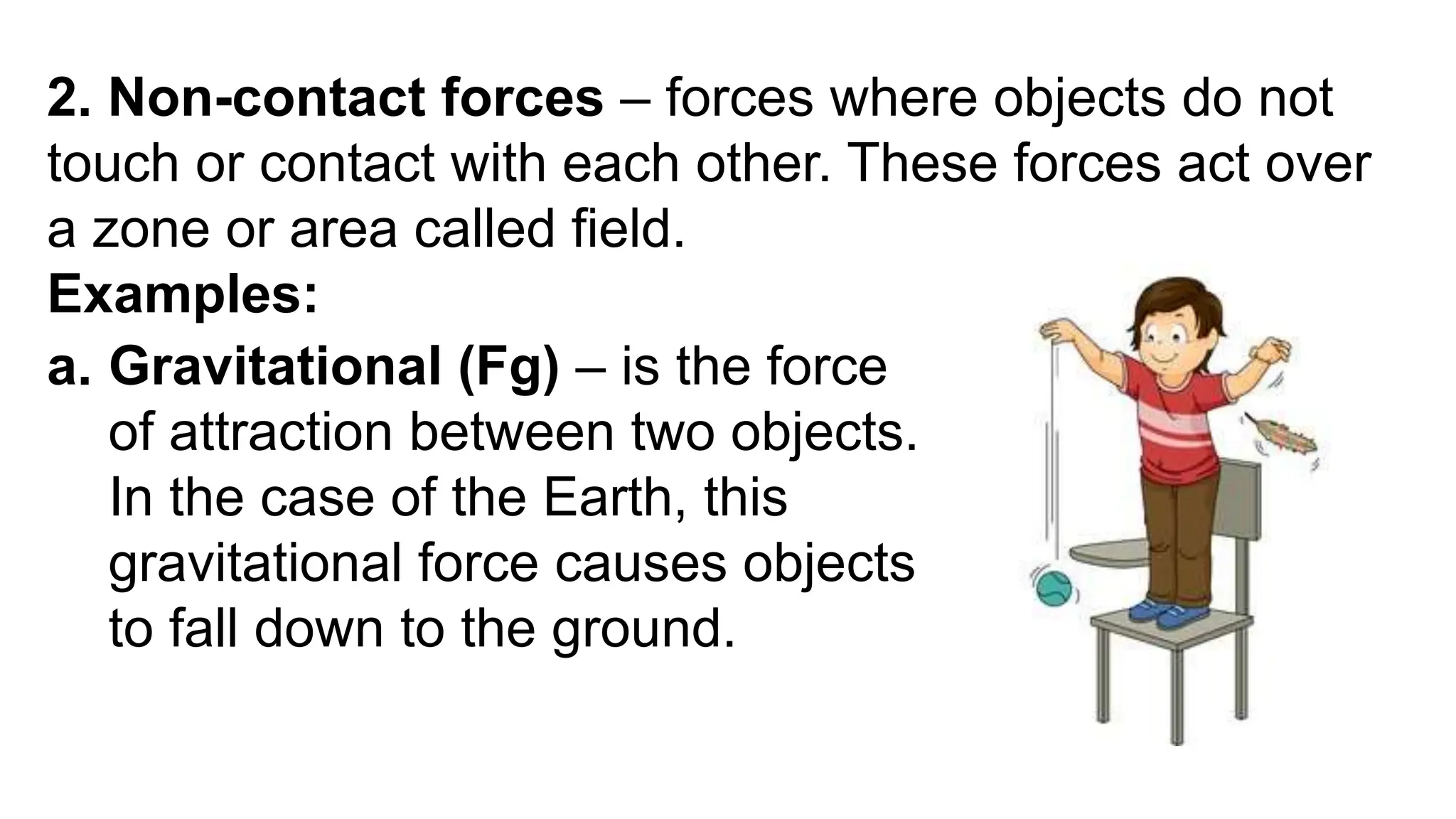
2. Non-contact forces – forces where objects do not
touch or contact with each other. These forces act over
a zone or area called field.
Examples:
a. Gravitational (Fg) – is the force
of attraction between two objects.
In the case of the Earth, this
gravitational force causes objects
to fall down to the ground.
b. Magnetic– are forces
exerted on a field of
attraction or repulsion as in
the case of magnets and
other magnetic materials.
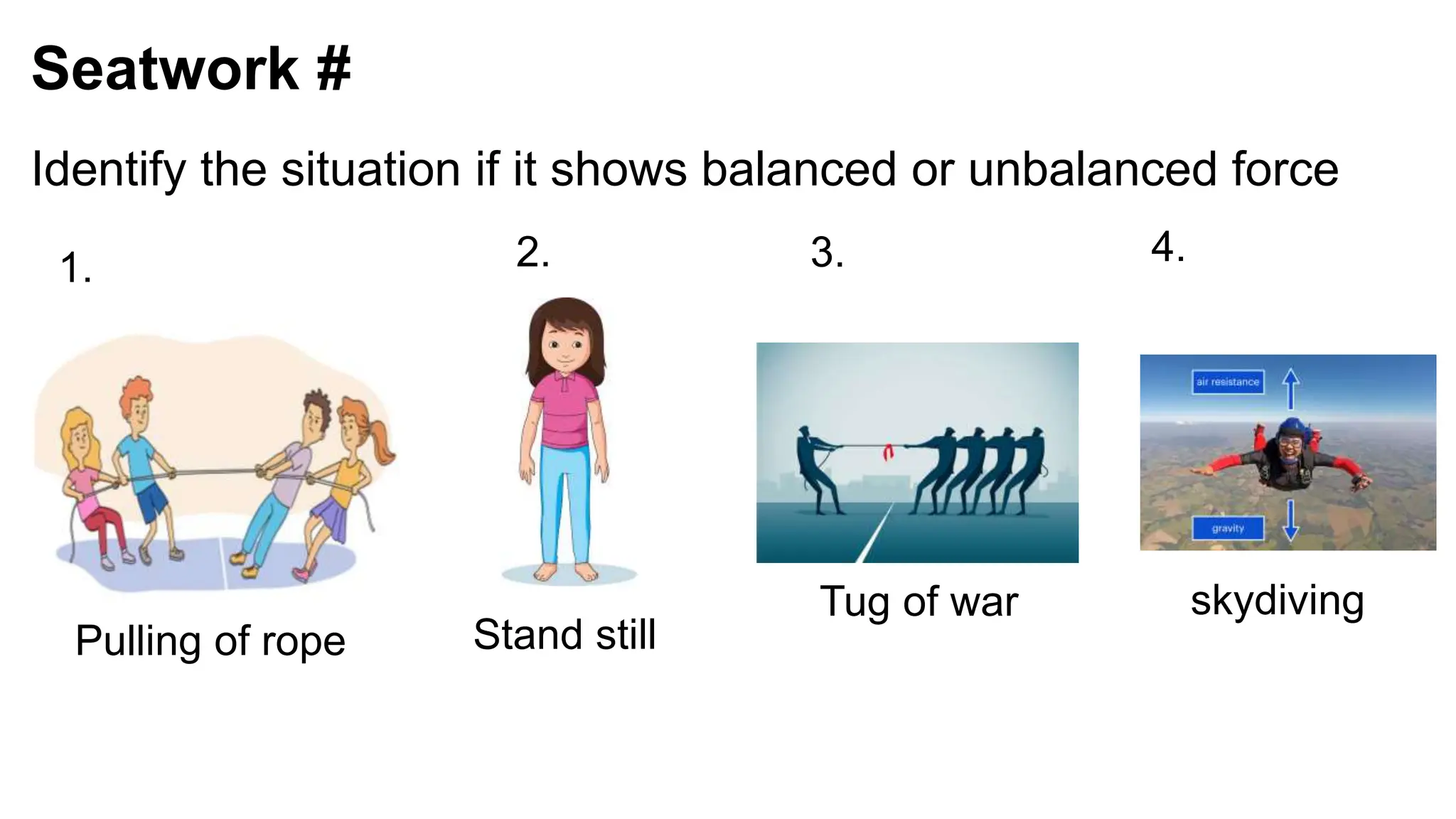
Seatwork #
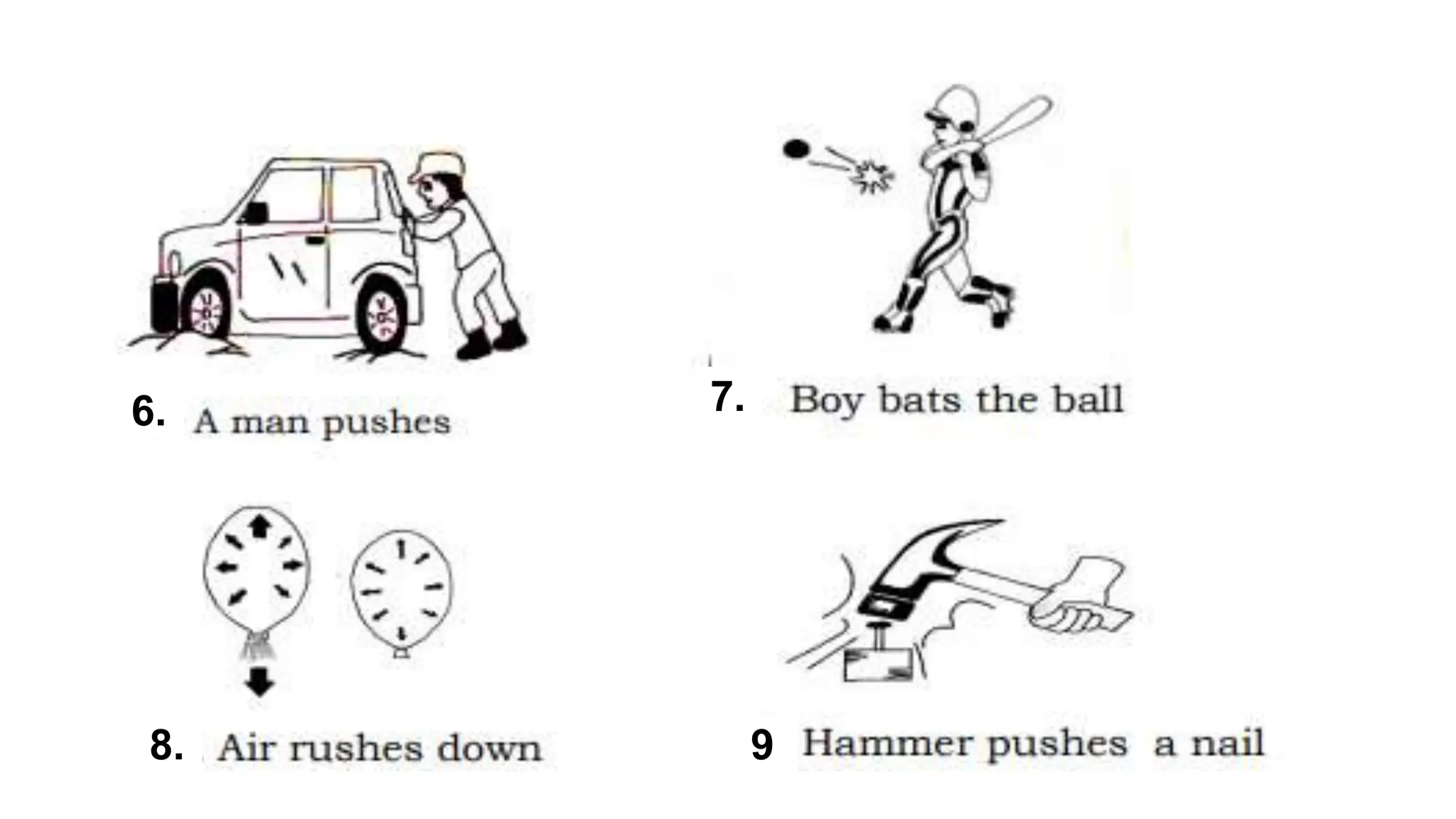
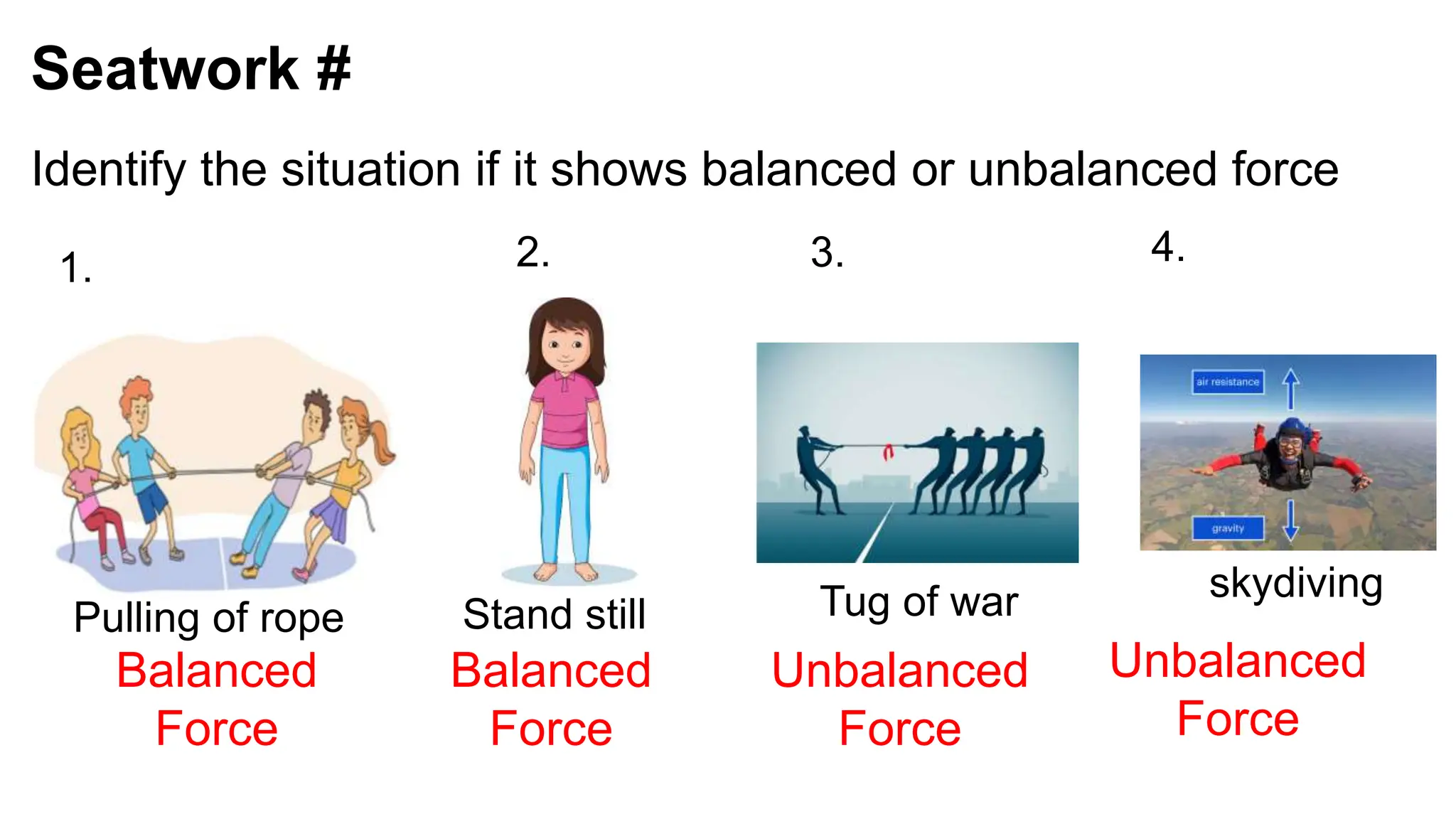
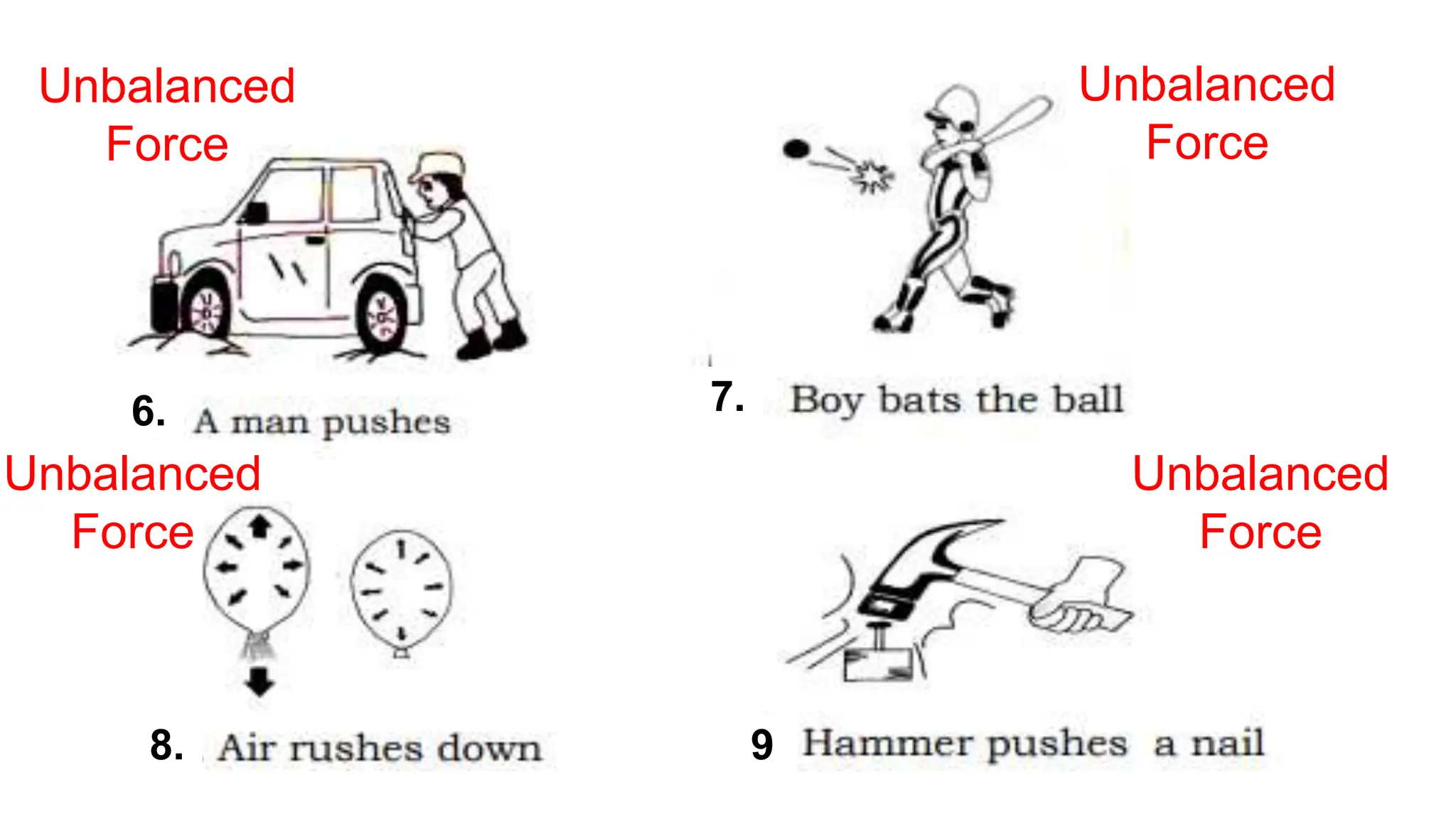
Identify the situation if it shows balanced or unbalanced force
1. 2. 3. 4.
Pulling of rope Stand still
Tug of war skydiving
6. 7.
8. 9
Balanced
Force
Balanced
Force
Unbalanced
Force
Unbalanced
Force
Seatwork #
Identify the situation if it shows balanced or unbalanced force
1. 2. 3. 4.
Pulling of rope Stand still Tug of war skydiving
6. 7.
8. 9
Unbalanced
Force
Unbalanced
Force
Unbalanced
Force
Unbalanced
Force
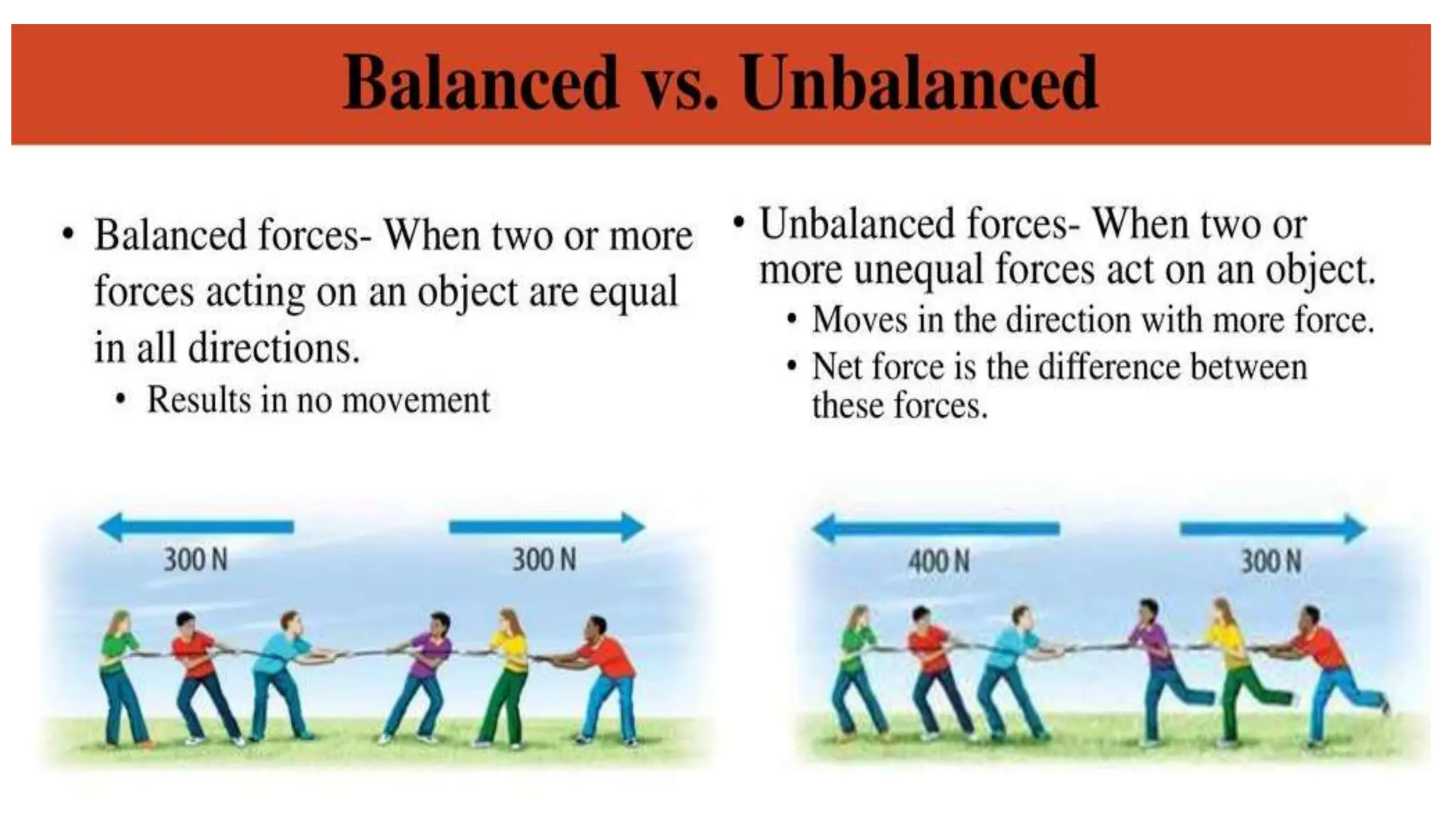
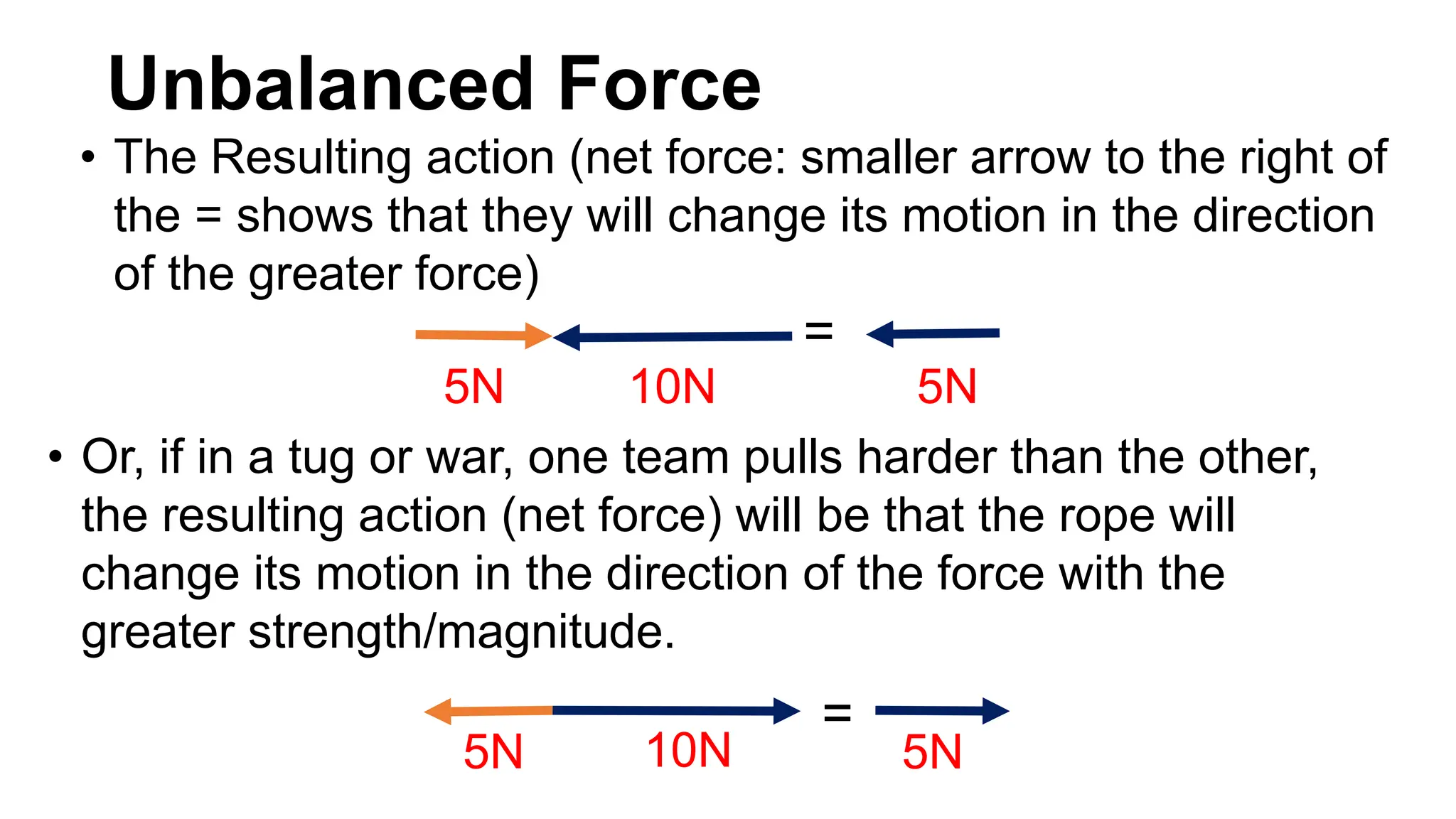
Unbalanced Force
• The Resulting action (net force: smaller arrow to the right of
the = shows that they will change its motion in the direction
of the greater force)
=
5N 10N 5N
• Or, if in a tug or war, one team pulls harder than the other,
the resulting action (net force) will be that the rope will
change its motion in the direction of the force with the
greater strength/magnitude.
=
5N 10N 5N
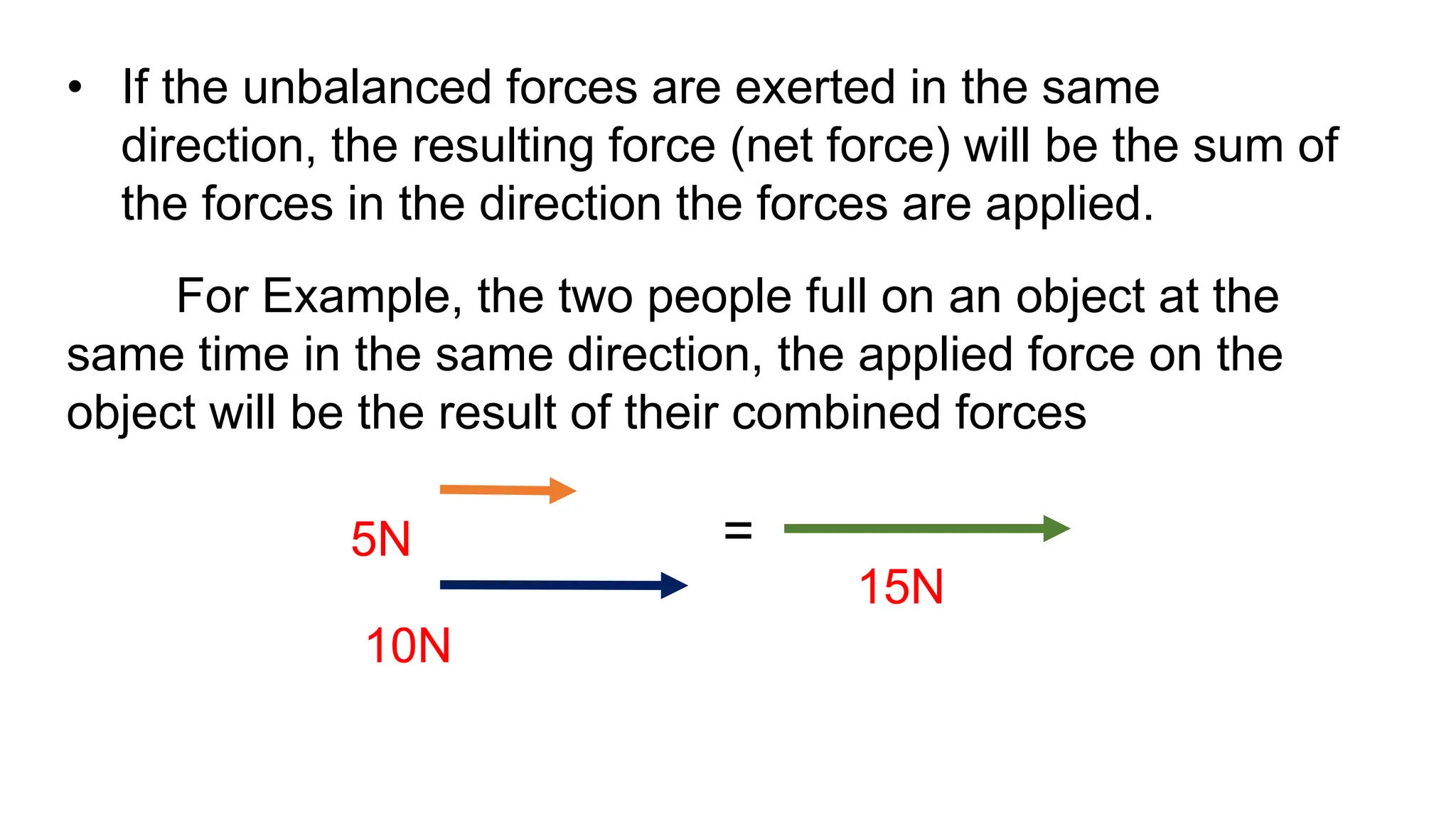
• If the unbalanced forces are exerted in the same
direction, the resulting force (net force) will be the sum of
the forces in the direction the forces are applied.
For Example, the two people full on an object at the
same time in the same direction, the applied force on the
object will be the result of their combined forces
=
5N
10N
15N
• When forces act in the same direction, their forces are
added. When forces act in opposite directions, their
forces are subtracted from each other.
• Unbalanced forces also cause a nonmoving object to
change its motion.
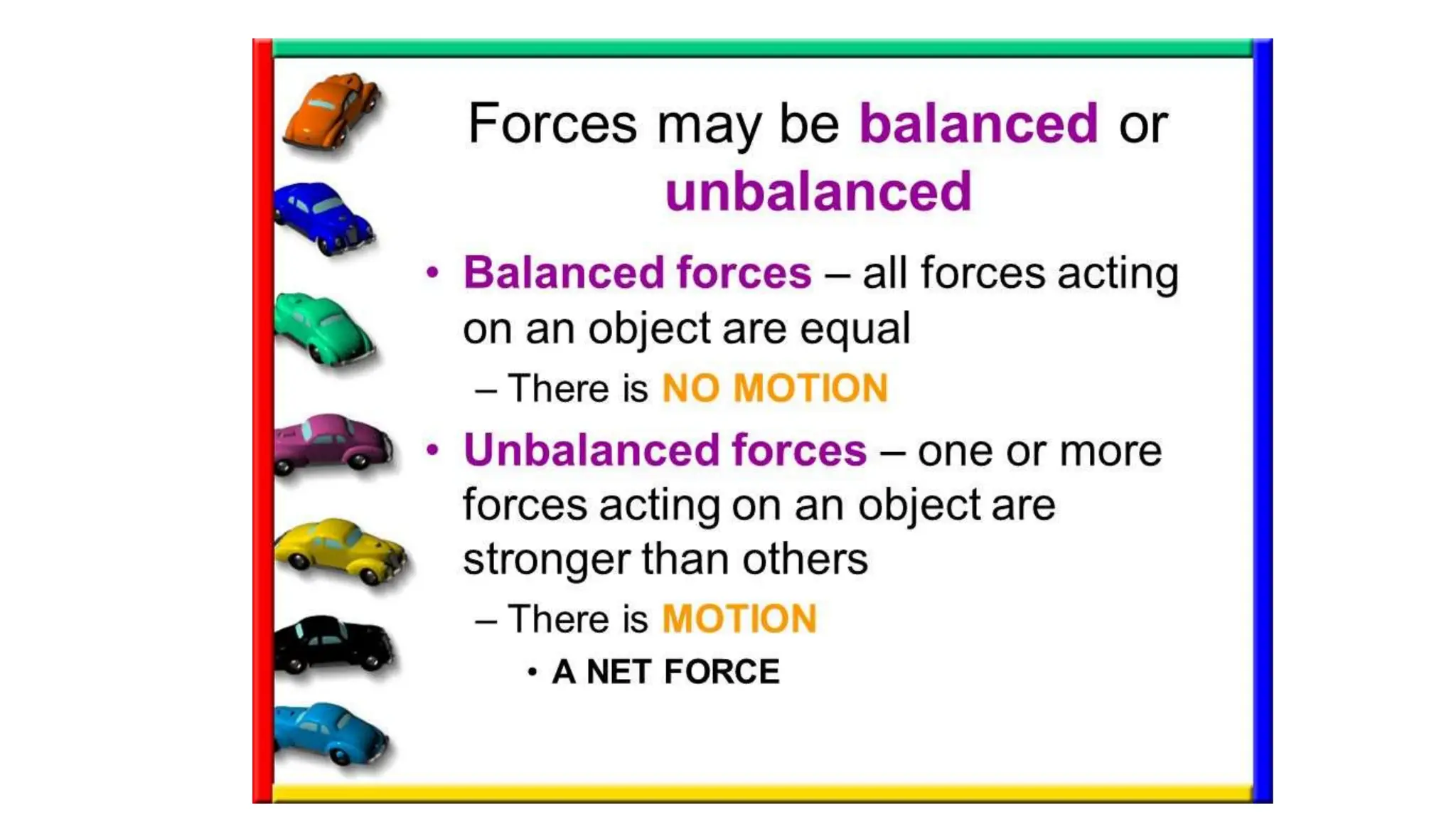
• If there is no net force acting on the object, the motion
does not change. If there is net force on an object, the
speed of the object will change in the direction of the
net force.
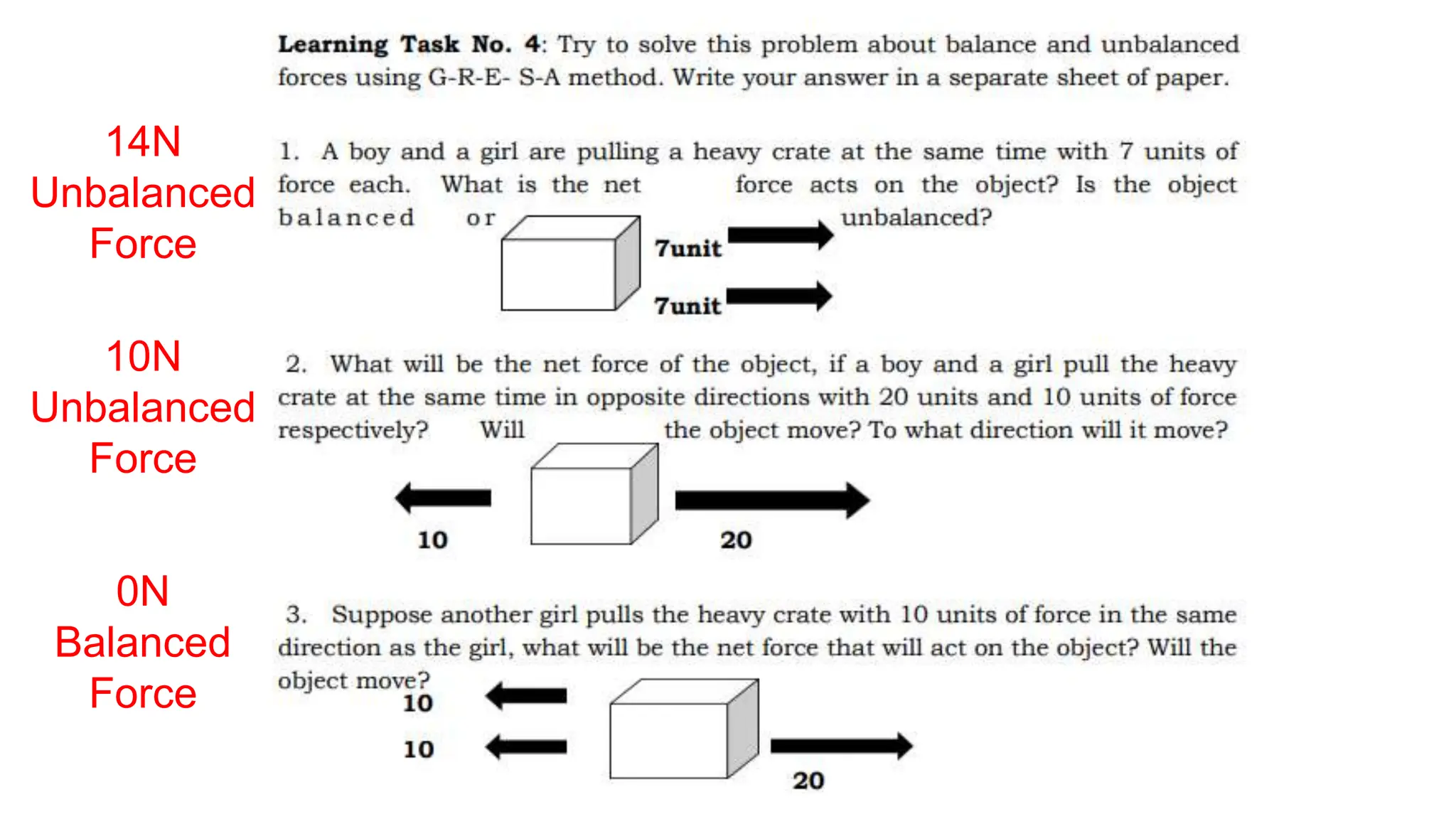
14N
Unbalanced
Force
10N
Unbalanced
Force
0N
Balanced
Force

Science 8 Quarter 1: balanced and Unbalanced Forces.pptx

  • 1.
  • 2.
    1. In letterA, is the ball at rest? 2. How can you make the ball move?
  • 3.
    3. In letterB, what happens to the ball when you push it with enough force? 4. In letter C, while it is moving, how can you make the ball stop?
  • 4.
    5. In letterD, how can we make the ball change its direction?
  • 5.
    is a pushor pull upon an object resulting from the object's interaction with another object. Whenever there is an interaction between two objects, there is a force upon each of the objects. When the interaction ceases, the two objects no longer experience the force. Force
  • 6.
    Two Types ofForces 1. Contact forces – forces where objects touch or contact with each other. Examples: a. Applied – a force given to a person or object by another person or object. b. Friction – is the force acting against or opposite an object in contact with which makes the movement of the object slow down.
  • 7.
    c. Normal –is the force that acts perpendicular to the surface of the object in contact with. d. Tension – is the force applied to string, rope, chain or cable.
  • 8.
    2. Non-contact forces– forces where objects do not touch or contact with each other. These forces act over a zone or area called field. Examples: a. Gravitational (Fg) – is the force of attraction between two objects. In the case of the Earth, this gravitational force causes objects to fall down to the ground.
  • 9.
    b. Magnetic– areforces exerted on a field of attraction or repulsion as in the case of magnets and other magnetic materials.
  • 12.
    Seatwork # Identify thesituation if it shows balanced or unbalanced force 1. 2. 3. 4. Pulling of rope Stand still Tug of war skydiving
  • 13.
  • 14.
    Balanced Force Balanced Force Unbalanced Force Unbalanced Force Seatwork # Identify thesituation if it shows balanced or unbalanced force 1. 2. 3. 4. Pulling of rope Stand still Tug of war skydiving
  • 15.
  • 16.
    Unbalanced Force • TheResulting action (net force: smaller arrow to the right of the = shows that they will change its motion in the direction of the greater force) = 5N 10N 5N • Or, if in a tug or war, one team pulls harder than the other, the resulting action (net force) will be that the rope will change its motion in the direction of the force with the greater strength/magnitude. = 5N 10N 5N
  • 17.
    • If theunbalanced forces are exerted in the same direction, the resulting force (net force) will be the sum of the forces in the direction the forces are applied. For Example, the two people full on an object at the same time in the same direction, the applied force on the object will be the result of their combined forces = 5N 10N 15N
  • 18.
    • When forcesact in the same direction, their forces are added. When forces act in opposite directions, their forces are subtracted from each other. • Unbalanced forces also cause a nonmoving object to change its motion. • If there is no net force acting on the object, the motion does not change. If there is net force on an object, the speed of the object will change in the direction of the net force.
  • 19.