Learning Objectives
• I can recognize forces that affect the motion of
matter.
• I can compare balanced and unbalanced forces.
• I can determine the net force on an object.
What is a force?
• A force is a push or pull that causes an object to move, stop, or
change direction
• In physics a force is anything that makes an object accelerate
• If an object is stationary, it won’t start moving without a force.
Force
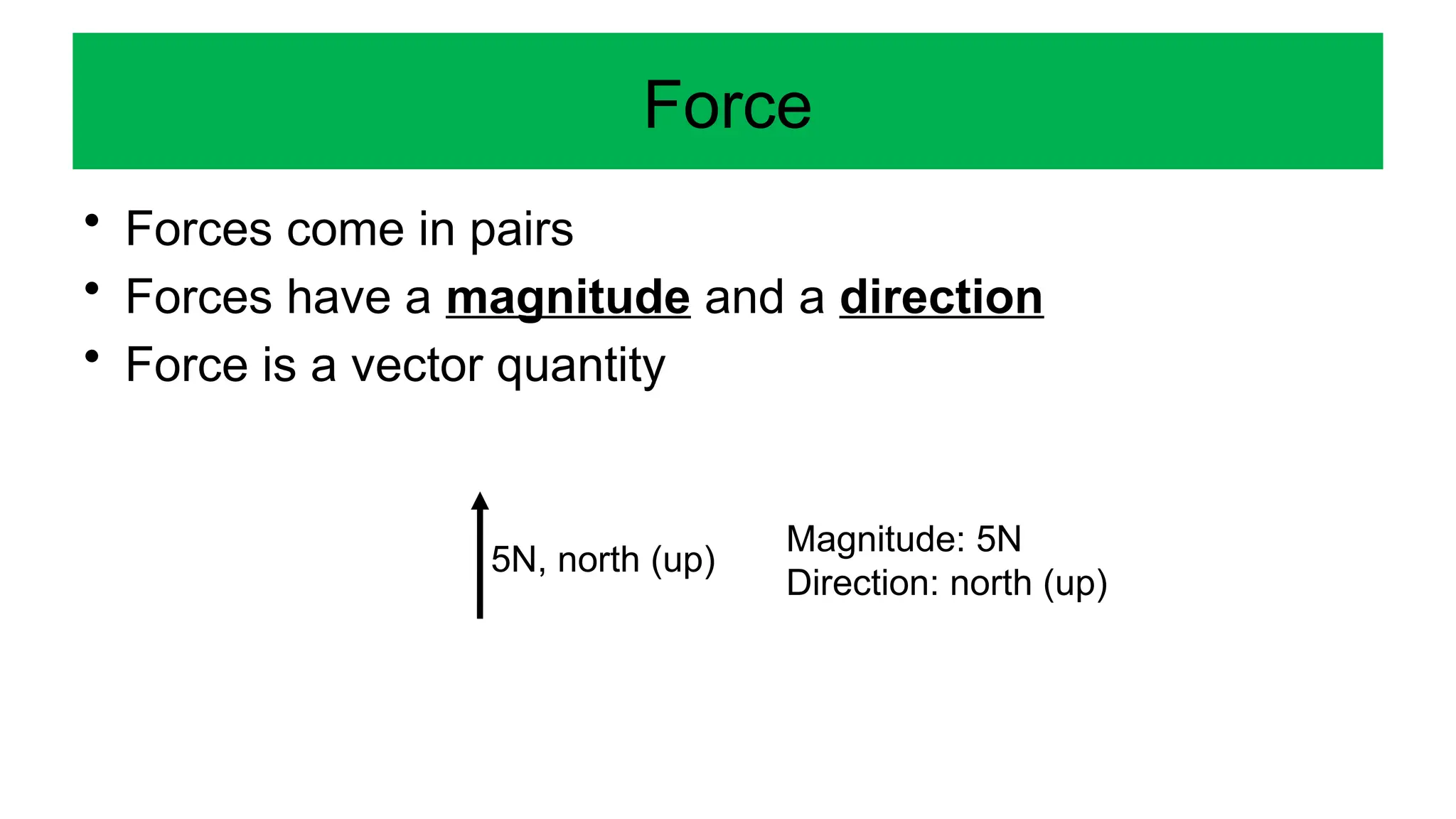
• Forces come in pairs
• Forces have a magnitude and a direction
• Force is a vector quantity
5N, north (up)
Magnitude: 5N
Direction: north (up)
Force Measurement and Units
• SI unit for force is the Newton
• A Newton is a force that causes a 1kg mass to accelerate
at a rate of 1m/s/s.
• 1 N (Newton) = 1 kg * m/s/s
• We use a spring scale to measure force.
Combining Forces
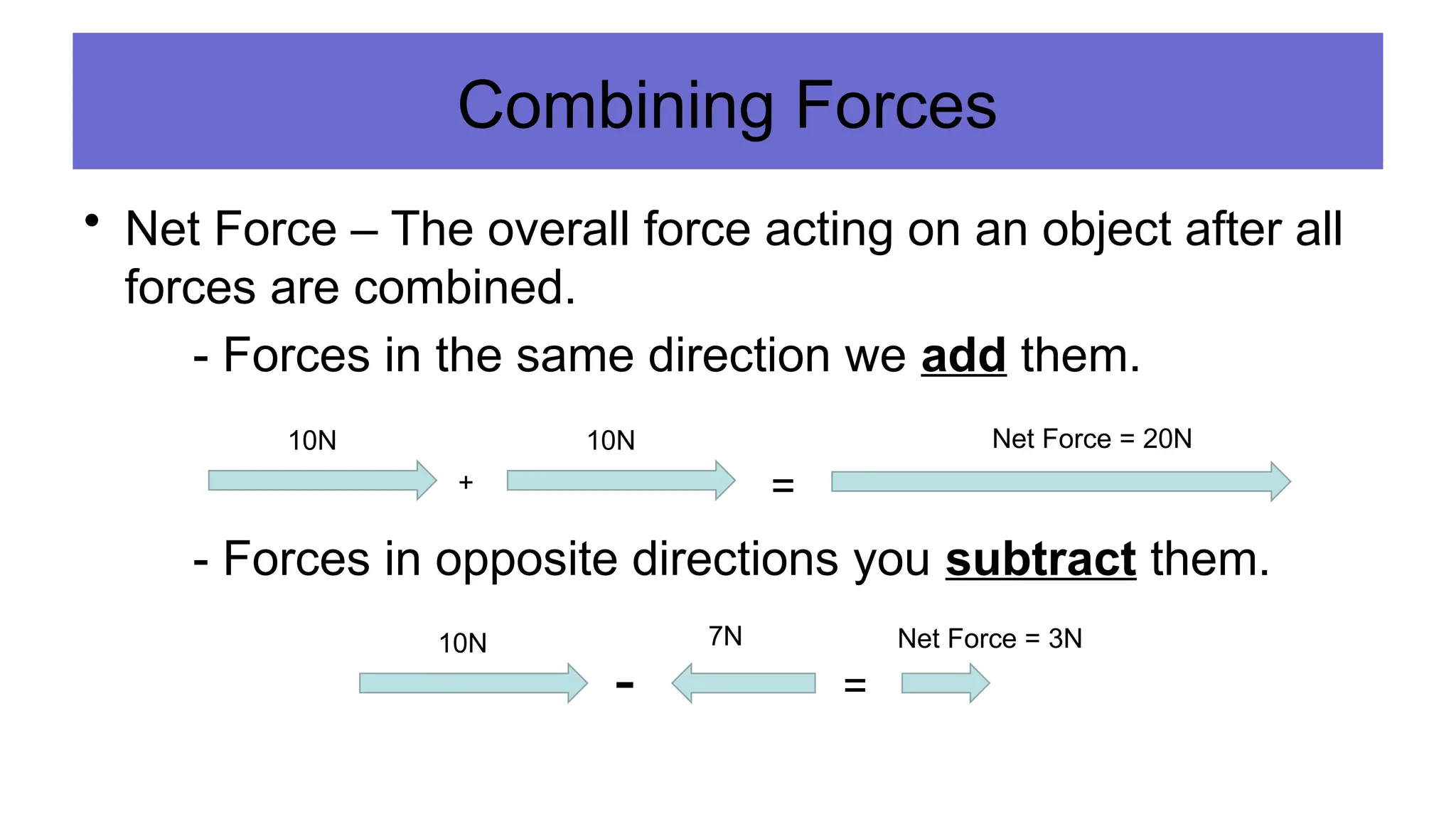
• Net Force – The overall force acting on an object after all
forces are combined.
- Forces in the same direction we add them.
- Forces in opposite directions you subtract them.
10N 10N
=
+
Net Force = 20N
10N 7N
- =
Net Force = 3N
Forces in the Same Direction
• When forces are applied in the
same direction, they are added to
determine the size of the net force.
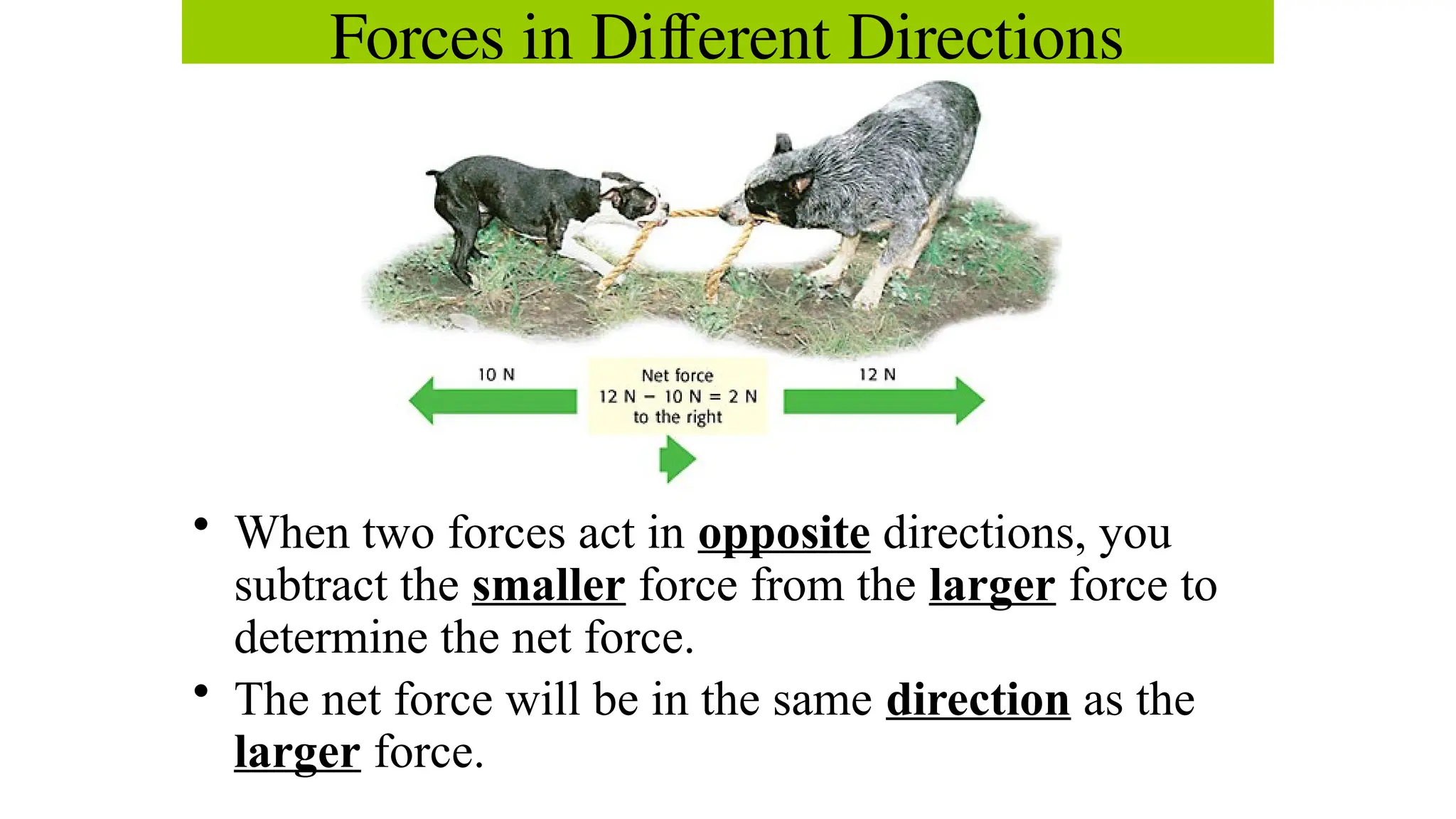
• When two forces act in opposite directions, you
subtract the smaller force from the larger force to
determine the net force.
• The net force will be in the same direction as the
larger force.
Forces in Different Directions
Balanced and Unbalanced Forces
• Forces occur in pairs and they can be either balanced or
unbalanced
Balanced Forces:The forces in each
direction are“equal”.
 If more than one force is present, it does not
have to cause an acceleration on an object.
 If another force “balances” the first out, there
will be no acceleration at all.
Think: If both guys (who weight the same)
pull on a rope in opposite directions, with
an equal amount of force, how much will they move?
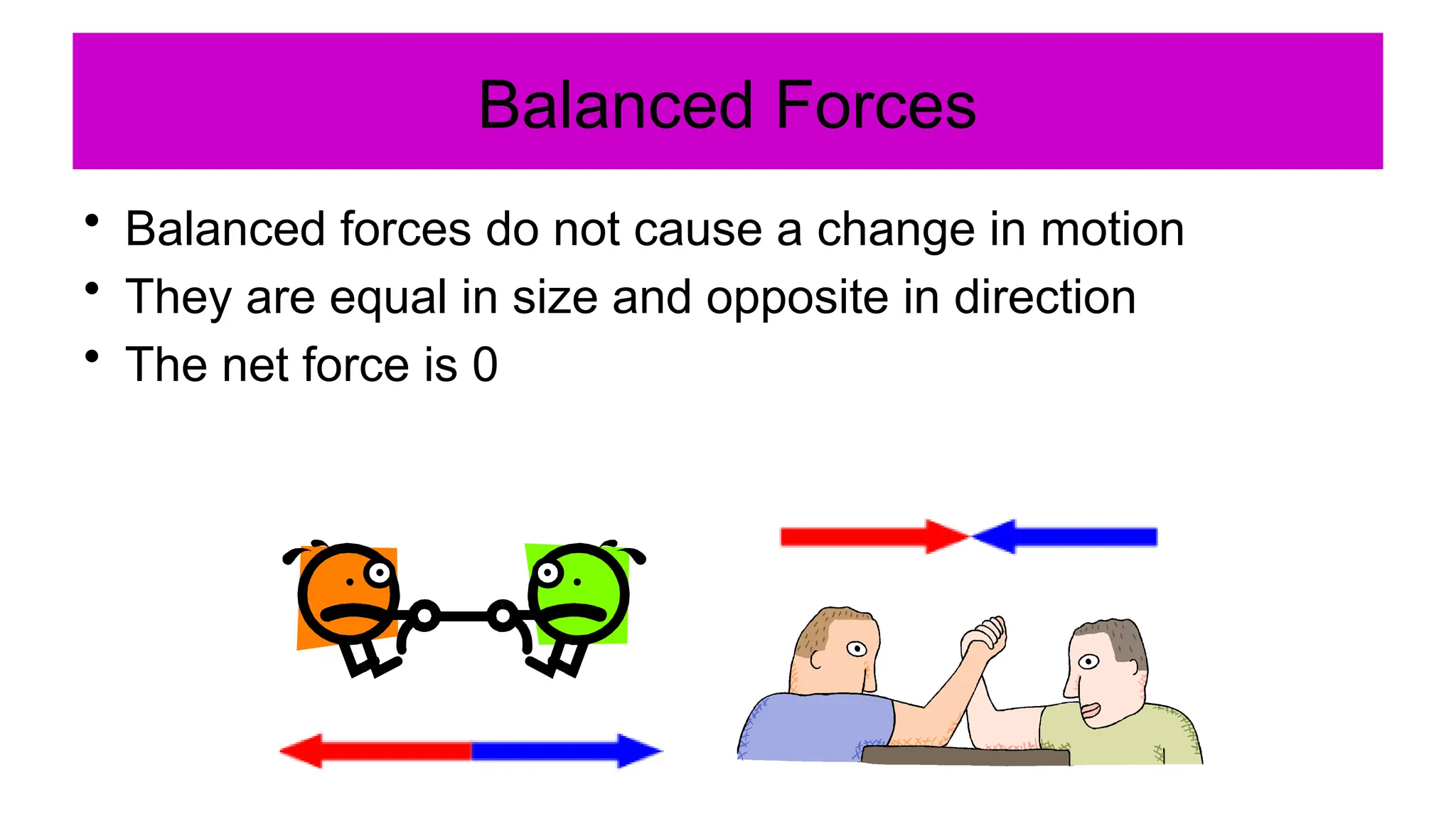
Balanced Forces
• Balanced forces do not cause a change in motion
• They are equal in size and opposite in direction
• The net force is 0
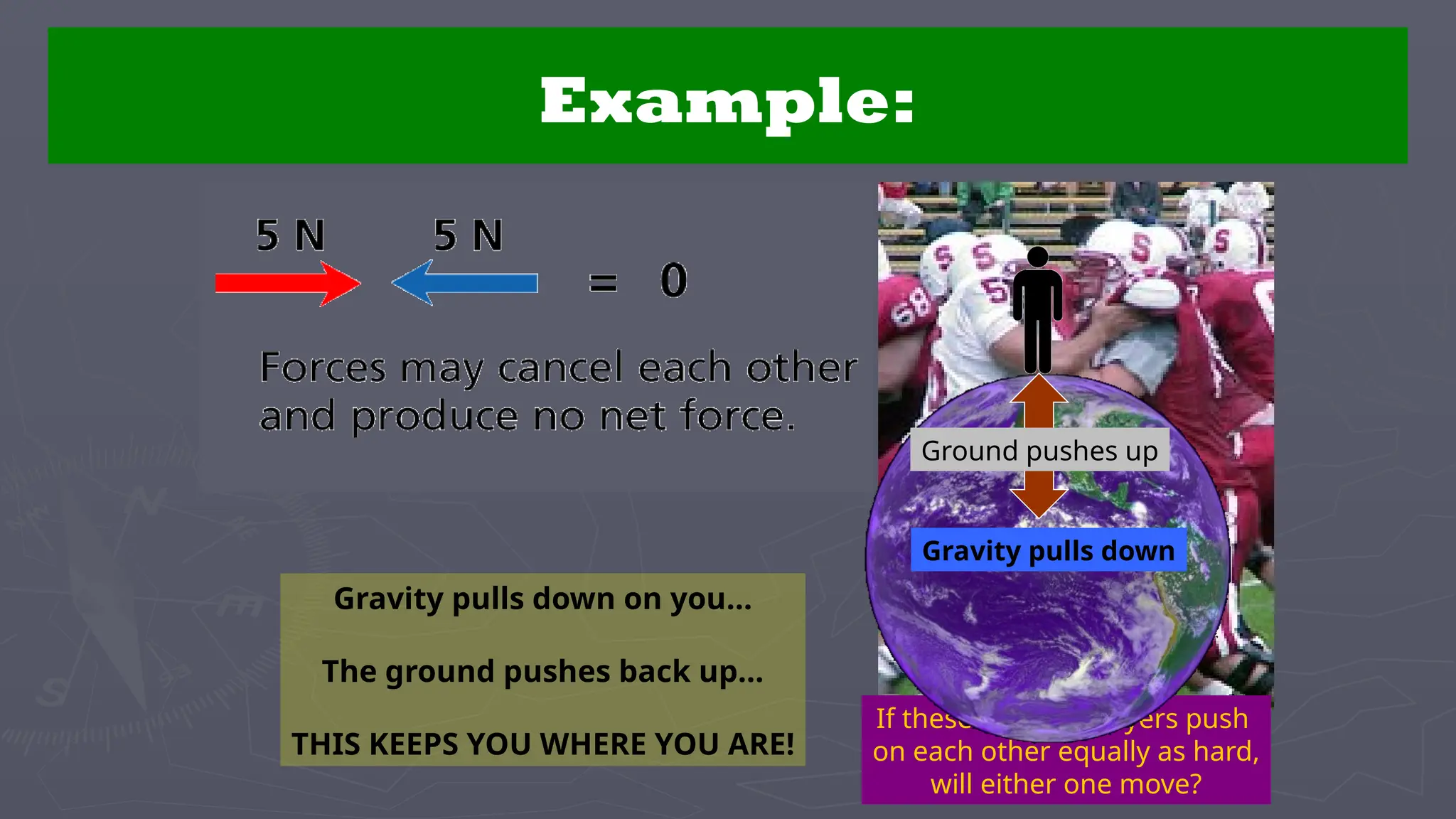
Example:
Gravity pulls down on you…
The ground pushes back up…
THIS KEEPS YOU WHERE YOU ARE!
If these football players push
on each other equally as hard,
will either one move?
Gravity pulls down
Ground pushes up
Forces may cancel each other and
produce no movement
=No Acceleration!
More Balanced Forces…
5 N
5 N
5 N 5 N
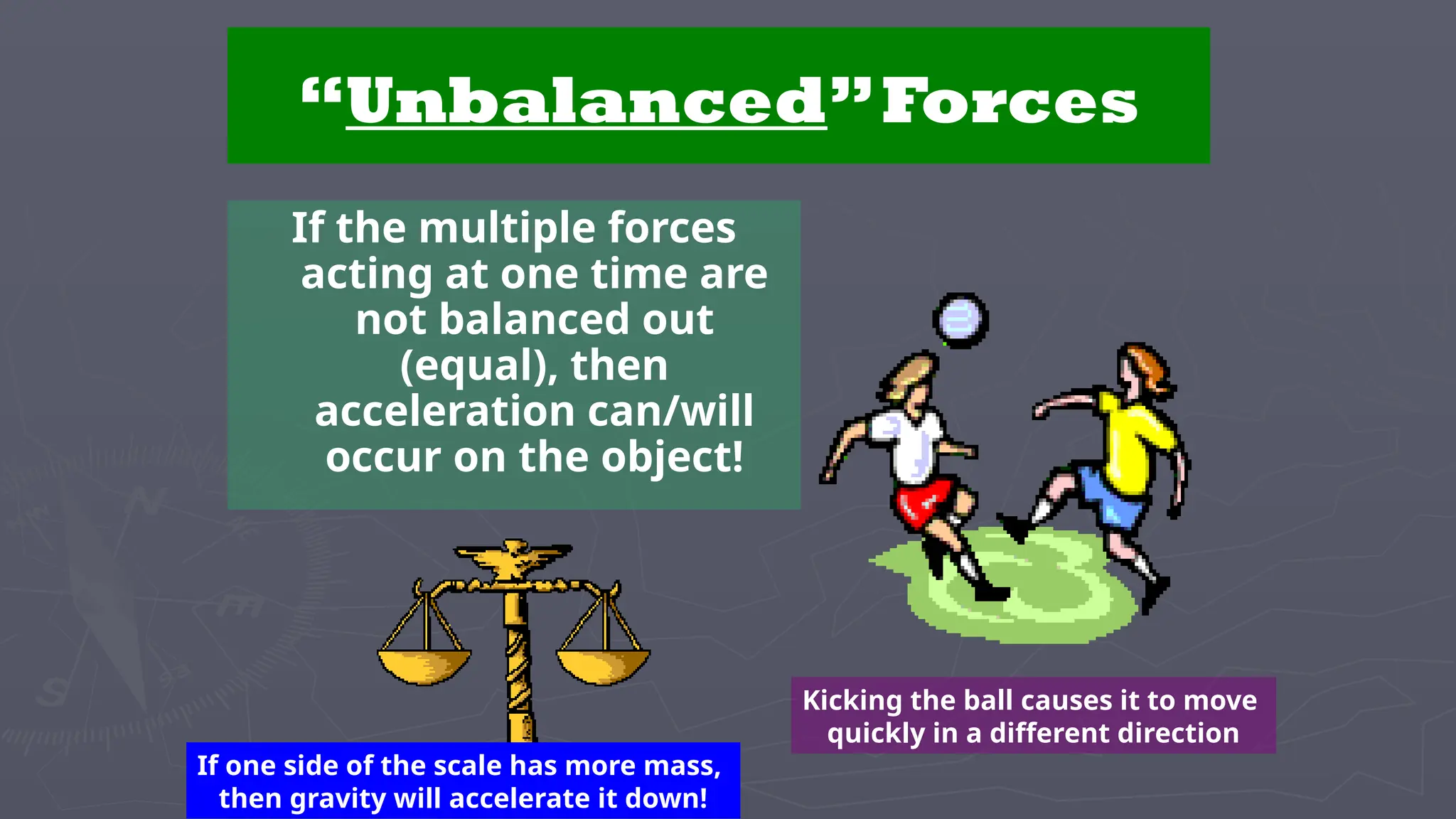
“Unbalanced”Forces
If the multiple forces
acting at one time are
not balanced out
(equal), then
acceleration can/will
occur on the object!
Kicking the ball causes it to move
quickly in a different direction
If one side of the scale has more mass,
then gravity will accelerate it down!
Unbalanced Forces
• An unbalanced force always causes a change in motion
• The net force is greater than 0
• When unbalanced forces act in opposite directions you can find
the net force
– Net force
• Magnitude
–The difference between the two forces
• Direction
–Direction of the largest force
Unbalanced Forces
Cause Acceleration
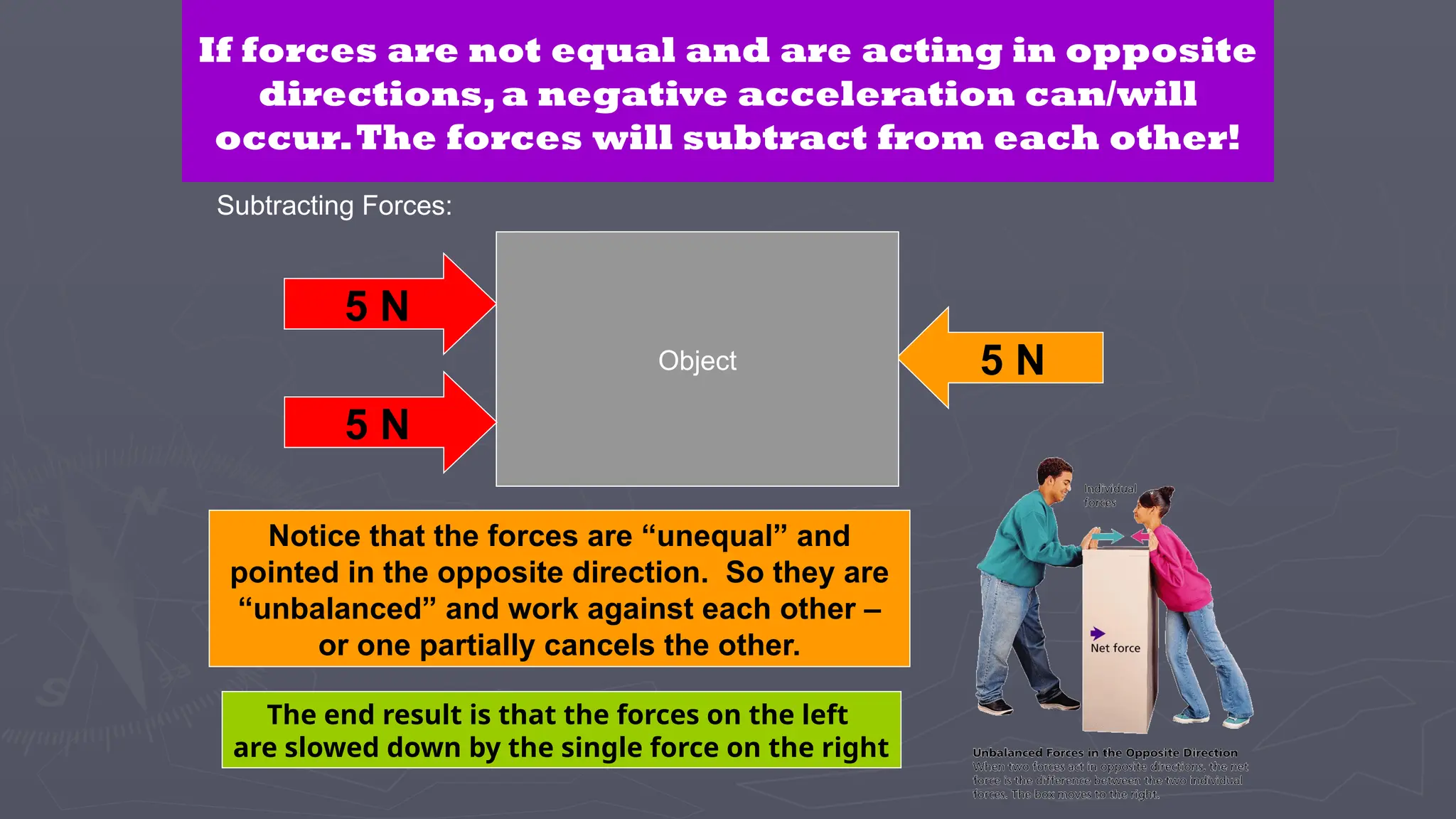
Subtracting Forces:
5 N
5 N
Object
5 N
Notice that the forces are “unequal” and
pointed in the opposite direction. So they are
“unbalanced” and work against each other –
or one partially cancels the other.
The end result is that the forces on the left
are slowed down by the single force on the right
If forces are not equal and are acting in opposite
directions,a negative acceleration can/will
occur.The forces will subtract from each other!
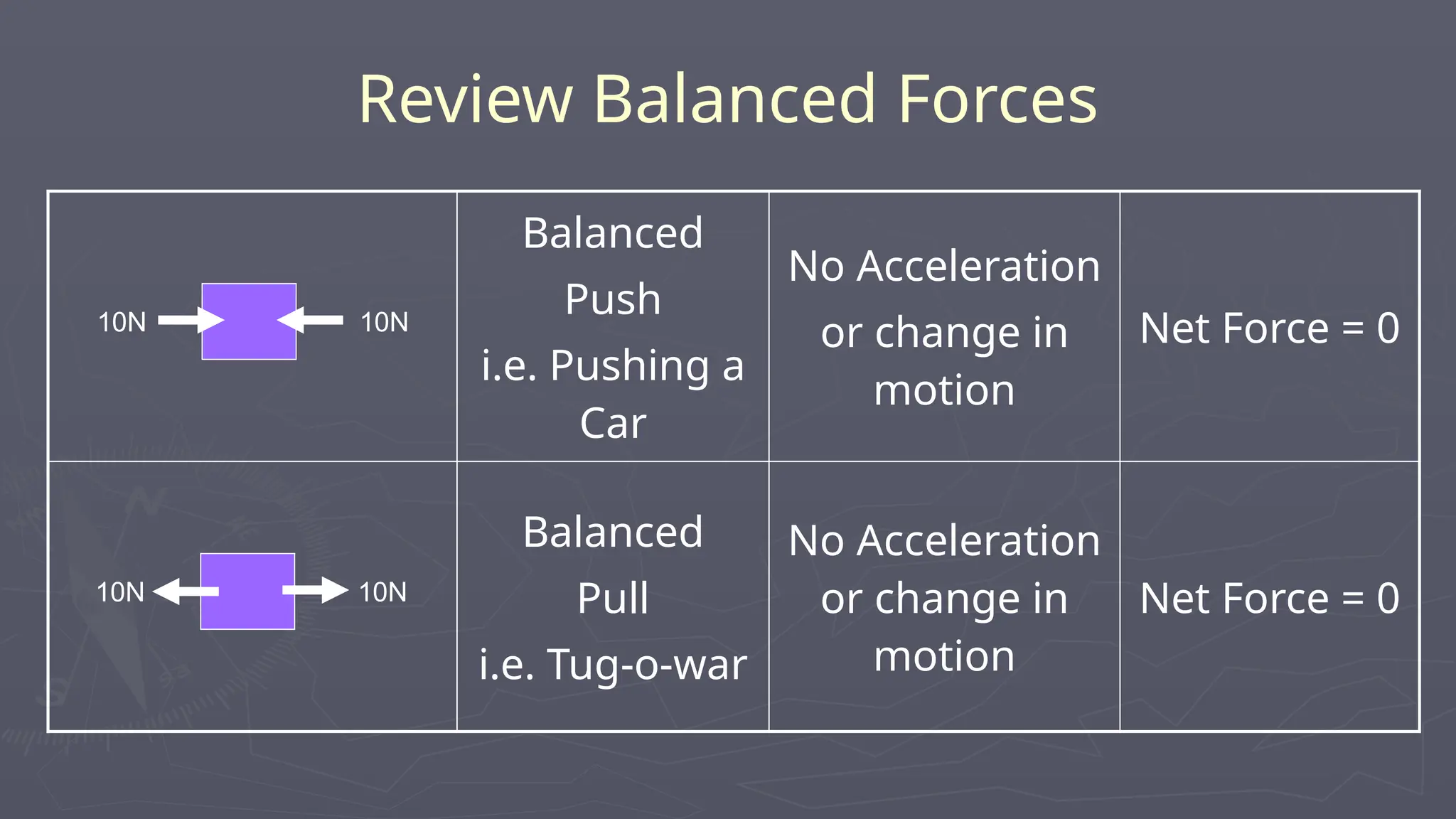
Review Balanced Forces
Balanced
Push
i.e. Pushing a
Car
No Acceleration
or change in
motion
Net Force = 0
Balanced
Pull
i.e. Tug-o-war
No Acceleration
or change in
motion
Net Force = 0
10N
10N
10N
10N
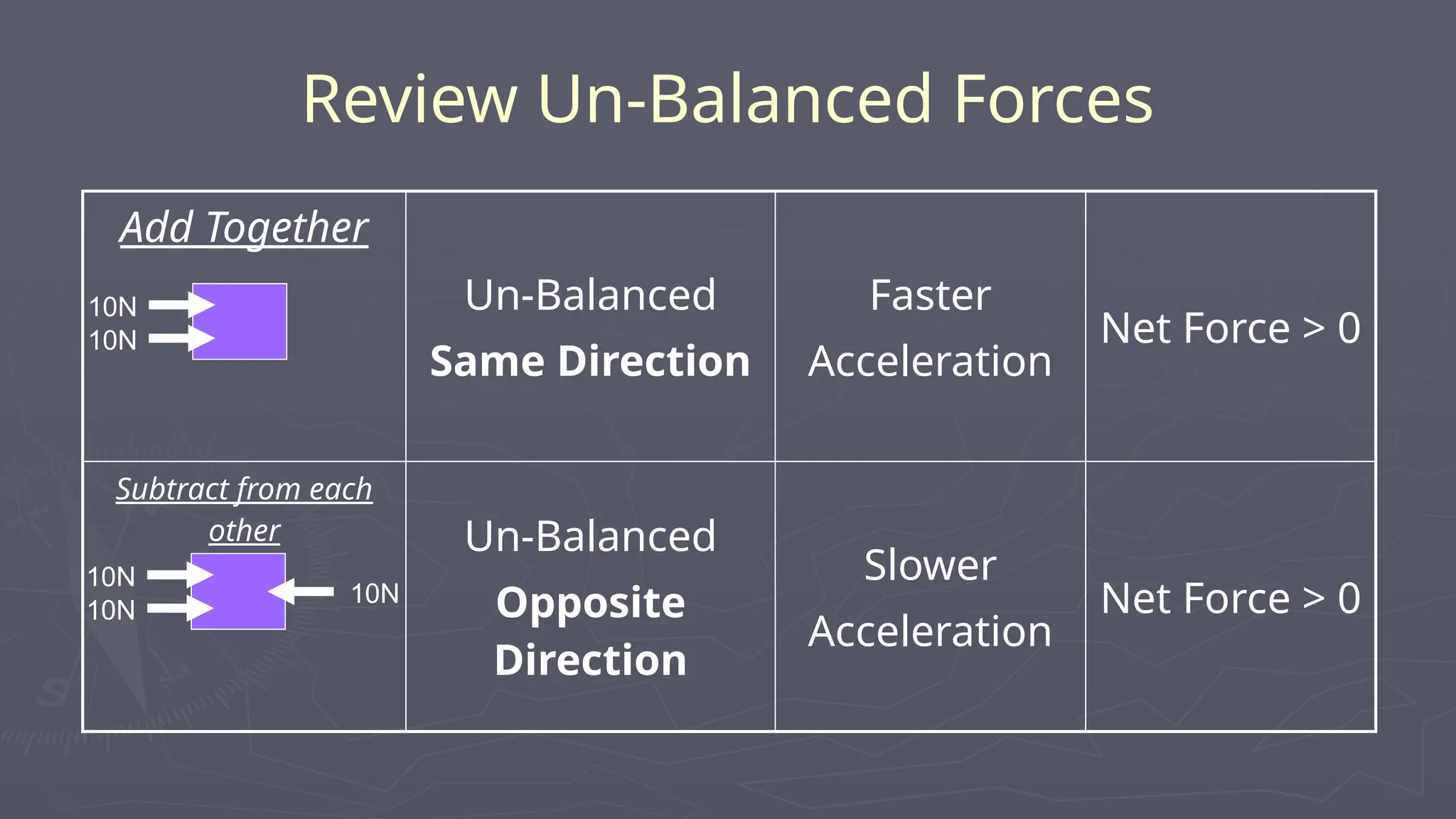
Review Un-Balanced Forces
Add Together
Un-Balanced
Same Direction
Faster
Acceleration
Net Force > 0
Subtract from each
other Un-Balanced
Opposite
Direction
Slower
Acceleration
Net Force > 0
10N
10N
10N
10N
10N

Forces Balanced and Unbalanced forces.pptx

  • 2.
    Learning Objectives • Ican recognize forces that affect the motion of matter. • I can compare balanced and unbalanced forces. • I can determine the net force on an object.
  • 3.
    What is aforce? • A force is a push or pull that causes an object to move, stop, or change direction • In physics a force is anything that makes an object accelerate • If an object is stationary, it won’t start moving without a force.
  • 4.
    Force • Forces comein pairs • Forces have a magnitude and a direction • Force is a vector quantity 5N, north (up) Magnitude: 5N Direction: north (up)
  • 5.
    Force Measurement andUnits • SI unit for force is the Newton • A Newton is a force that causes a 1kg mass to accelerate at a rate of 1m/s/s. • 1 N (Newton) = 1 kg * m/s/s • We use a spring scale to measure force.
  • 6.
    Combining Forces • NetForce – The overall force acting on an object after all forces are combined. - Forces in the same direction we add them. - Forces in opposite directions you subtract them. 10N 10N = + Net Force = 20N 10N 7N - = Net Force = 3N
  • 7.
    Forces in theSame Direction • When forces are applied in the same direction, they are added to determine the size of the net force.
  • 8.
    • When twoforces act in opposite directions, you subtract the smaller force from the larger force to determine the net force. • The net force will be in the same direction as the larger force. Forces in Different Directions
  • 9.
    Balanced and UnbalancedForces • Forces occur in pairs and they can be either balanced or unbalanced
  • 10.
    Balanced Forces:The forcesin each direction are“equal”.  If more than one force is present, it does not have to cause an acceleration on an object.  If another force “balances” the first out, there will be no acceleration at all. Think: If both guys (who weight the same) pull on a rope in opposite directions, with an equal amount of force, how much will they move?
  • 11.
    Balanced Forces • Balancedforces do not cause a change in motion • They are equal in size and opposite in direction • The net force is 0
  • 12.
    Example: Gravity pulls downon you… The ground pushes back up… THIS KEEPS YOU WHERE YOU ARE! If these football players push on each other equally as hard, will either one move? Gravity pulls down Ground pushes up
  • 13.
    Forces may canceleach other and produce no movement =No Acceleration! More Balanced Forces… 5 N 5 N 5 N 5 N
  • 14.
    “Unbalanced”Forces If the multipleforces acting at one time are not balanced out (equal), then acceleration can/will occur on the object! Kicking the ball causes it to move quickly in a different direction If one side of the scale has more mass, then gravity will accelerate it down!
  • 15.
    Unbalanced Forces • Anunbalanced force always causes a change in motion • The net force is greater than 0 • When unbalanced forces act in opposite directions you can find the net force – Net force • Magnitude –The difference between the two forces • Direction –Direction of the largest force
  • 16.
    Unbalanced Forces Cause Acceleration SubtractingForces: 5 N 5 N Object 5 N Notice that the forces are “unequal” and pointed in the opposite direction. So they are “unbalanced” and work against each other – or one partially cancels the other. The end result is that the forces on the left are slowed down by the single force on the right If forces are not equal and are acting in opposite directions,a negative acceleration can/will occur.The forces will subtract from each other!
  • 17.
    Review Balanced Forces Balanced Push i.e.Pushing a Car No Acceleration or change in motion Net Force = 0 Balanced Pull i.e. Tug-o-war No Acceleration or change in motion Net Force = 0 10N 10N 10N 10N
  • 18.
    Review Un-Balanced Forces AddTogether Un-Balanced Same Direction Faster Acceleration Net Force > 0 Subtract from each other Un-Balanced Opposite Direction Slower Acceleration Net Force > 0 10N 10N 10N 10N 10N