Composting at Schools Janice McPhillips Holly Hill Farm Cohasset, MA
What is compost? Decomposed organic matter (leaves, manure, kitchen scraps, grass and other yard waste), also known as humus The process of decomposition of organic matter into humus
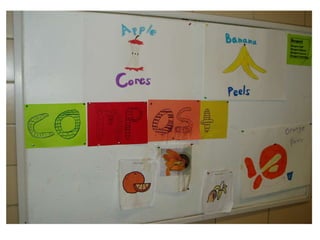
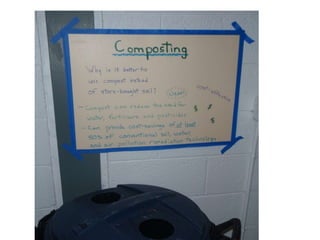
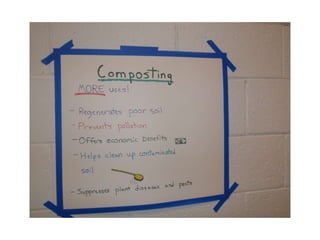
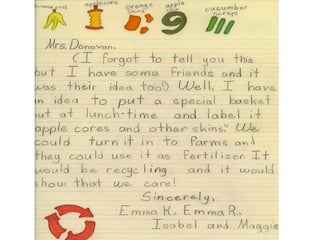
Why bother making compost? recycling spent resource into a useful one saves on garbage disposal costs (transportation, bags, dump fees, etc.) creates a valuable organic material for the garden for free (almost) learning about decomposition, soil structure, and returning nutrients to the soil
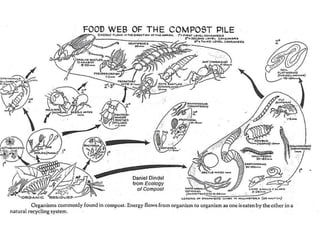
What makes compost happen? microorganisms including bacteria, fungi, and molds earthworms insects including spiders, beetles, pill bugs, millipedes, and more air, water, sunshine, occasional mixing, and time
 
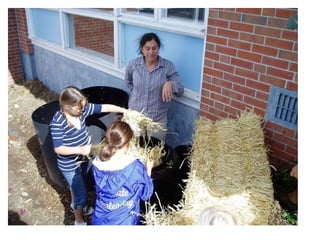
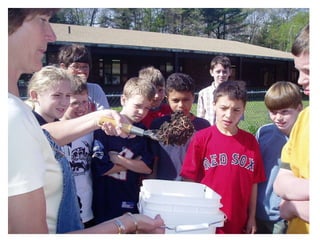
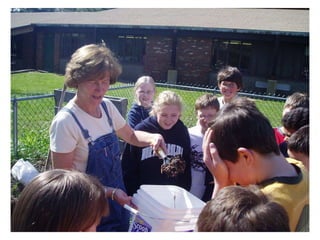
How can you compost at your school? interested and committed teachers, administrators and custodial staff? cooperative kitchen staff? parents or other volunteers? help the students “own” the process! find a convenient site (near the garden, or cafeteria) ideal site should be partially shaded, near water source


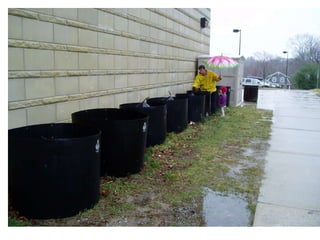
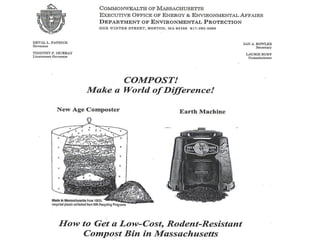
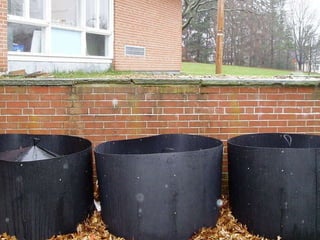
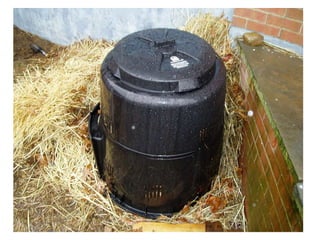
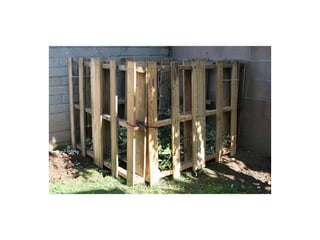
How do you get started? get a free compost bin from MA DEP ( www.thegreenteam.org ) get a free compost bin from your town DPW or local garden club make a bin out of pallets or chicken wire or other containment system buy or make a worm bin for indoor composting


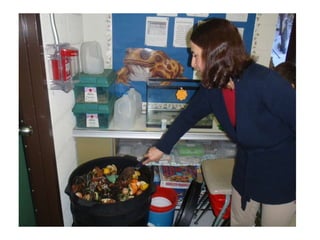
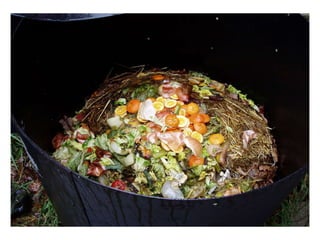
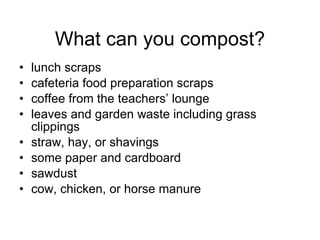
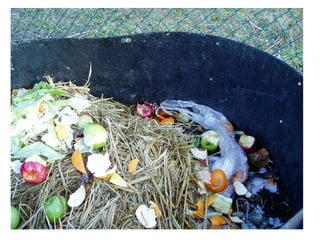
What can you compost? lunch scraps  cafeteria food preparation scraps coffee from the teachers’ lounge leaves and garden waste including grass clippings straw, hay, or shavings some paper and cardboard sawdust cow, chicken, or horse manure


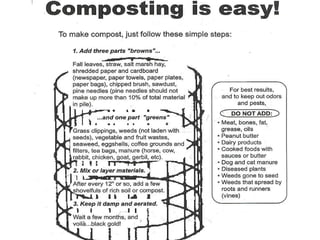
How do you make an outdoor compost pile? layers of  “brown” (carbon-rich)  and  “green” (nitrogen-rich)  materials, about a 3:1 ratio by volume add a shovelful of soil every 8-12” water stir frequently
Nitrogen  and  Carbon  sources Nitrogen-rich materials: food scraps including  coffee grounds manures seaweed grass clippings Carbon-rich materials: leaves sawdust newspaper  paper towels straw or shavings
 
Do NOT to put into a compost pile: meat, dairy, bones, fatty foods like salads with dressing or peanut butter dog or cat waste weeds that have gone to seed diseased plants weeds that spread with runners
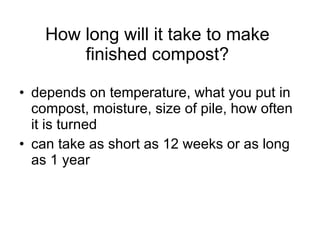
How long will it take to make finished compost? depends on temperature, what you put in compost, moisture, size of pile, how often it is turned can take as short as 12 weeks or as long as 1 year
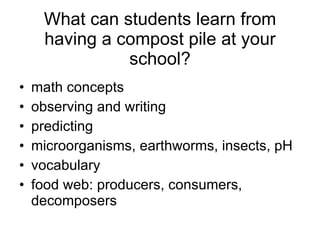
What can students learn from having a compost pile at your school? math concepts observing and writing  predicting microorganisms, earthworms, insects, pH vocabulary food web: producers, consumers, decomposers


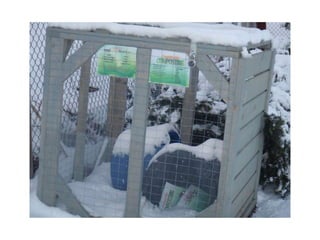
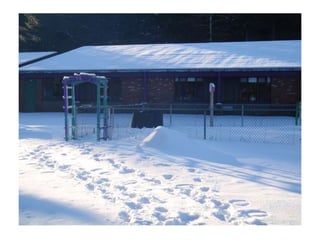
What can go wrong? attract unwanted animals bad smell fruit flies students putting things in compost that don’t belong SNOW!
 
 
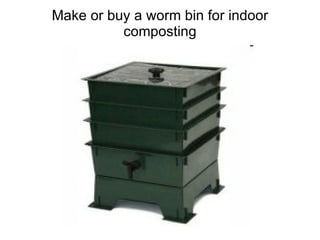
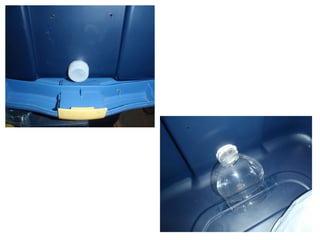
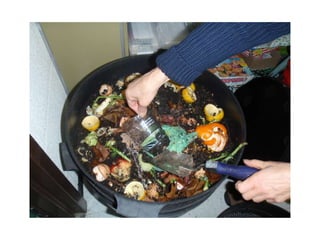
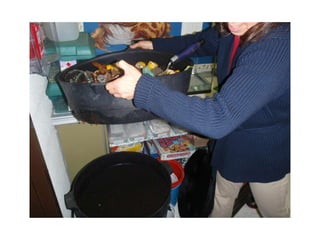
Make or buy a worm bin for indoor composting


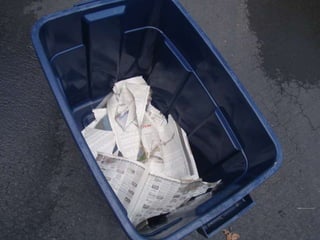
How do you make a worm bin? buy a Rubbermaid Tough Tote drill 1/8” holes every 3” around the bottom and in the cover start with a damp layer of carbon rich “bedding” material like leaves, straw, or shredded paper layer  “greens”  and  “browns”  in the same way you would for an outdoor bin make sure to bury food scraps under a layer of bedding to prevent fruit flies add red wiggler worms
Need more information? www.mass.gov/dep or  www.thegreenteam.org Ann McGovern [email_address] (617) 292-5834

Schools#2 Cafeteria Composting Programs - Holly Hill Farm

  • 1.
    Composting at SchoolsJanice McPhillips Holly Hill Farm Cohasset, MA
  • 2.
    What is compost?Decomposed organic matter (leaves, manure, kitchen scraps, grass and other yard waste), also known as humus The process of decomposition of organic matter into humus
  • 3.
    Why bother makingcompost? recycling spent resource into a useful one saves on garbage disposal costs (transportation, bags, dump fees, etc.) creates a valuable organic material for the garden for free (almost) learning about decomposition, soil structure, and returning nutrients to the soil
  • 4.
    What makes composthappen? microorganisms including bacteria, fungi, and molds earthworms insects including spiders, beetles, pill bugs, millipedes, and more air, water, sunshine, occasional mixing, and time
  • 5.
  • 6.
    How can youcompost at your school? interested and committed teachers, administrators and custodial staff? cooperative kitchen staff? parents or other volunteers? help the students “own” the process! find a convenient site (near the garden, or cafeteria) ideal site should be partially shaded, near water source
  • 7.
  • 8.
  • 9.
  • 10.
  • 11.
    How do youget started? get a free compost bin from MA DEP ( www.thegreenteam.org ) get a free compost bin from your town DPW or local garden club make a bin out of pallets or chicken wire or other containment system buy or make a worm bin for indoor composting
  • 12.
  • 13.
  • 14.
  • 15.
  • 16.
  • 17.
    What can youcompost? lunch scraps cafeteria food preparation scraps coffee from the teachers’ lounge leaves and garden waste including grass clippings straw, hay, or shavings some paper and cardboard sawdust cow, chicken, or horse manure
  • 18.
  • 19.
  • 20.
  • 21.
    How do youmake an outdoor compost pile? layers of “brown” (carbon-rich) and “green” (nitrogen-rich) materials, about a 3:1 ratio by volume add a shovelful of soil every 8-12” water stir frequently
  • 22.
    Nitrogen and Carbon sources Nitrogen-rich materials: food scraps including coffee grounds manures seaweed grass clippings Carbon-rich materials: leaves sawdust newspaper paper towels straw or shavings
  • 23.
  • 24.
    Do NOT toput into a compost pile: meat, dairy, bones, fatty foods like salads with dressing or peanut butter dog or cat waste weeds that have gone to seed diseased plants weeds that spread with runners
  • 25.
    How long willit take to make finished compost? depends on temperature, what you put in compost, moisture, size of pile, how often it is turned can take as short as 12 weeks or as long as 1 year
  • 26.
    What can studentslearn from having a compost pile at your school? math concepts observing and writing predicting microorganisms, earthworms, insects, pH vocabulary food web: producers, consumers, decomposers
  • 27.
  • 28.
  • 29.
  • 30.
  • 31.
  • 32.
  • 33.
  • 34.
  • 35.
  • 36.
  • 37.
    What can gowrong? attract unwanted animals bad smell fruit flies students putting things in compost that don’t belong SNOW!
  • 38.
  • 39.
  • 40.
    Make or buya worm bin for indoor composting
  • 41.
  • 42.
  • 43.
  • 44.
  • 45.
    How do youmake a worm bin? buy a Rubbermaid Tough Tote drill 1/8” holes every 3” around the bottom and in the cover start with a damp layer of carbon rich “bedding” material like leaves, straw, or shredded paper layer “greens” and “browns” in the same way you would for an outdoor bin make sure to bury food scraps under a layer of bedding to prevent fruit flies add red wiggler worms
  • 46.
    Need more information?www.mass.gov/dep or www.thegreenteam.org Ann McGovern [email_address] (617) 292-5834