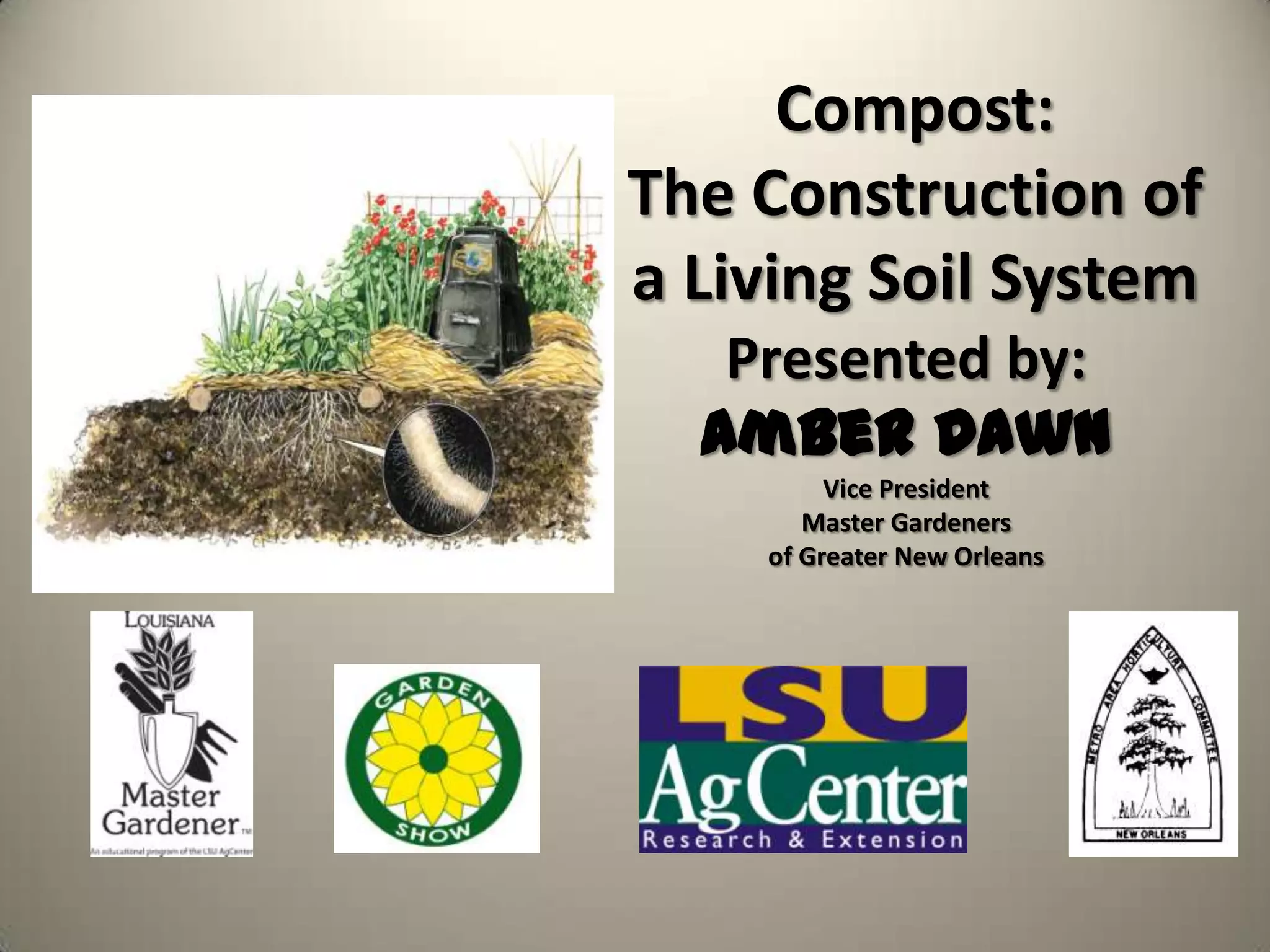
Compost:
The Construction of
a Living Soil System
   Presented by:
  Amber Dawn
         Vice President
       Master Gardeners
    of Greater New Orleans
Why Compost?
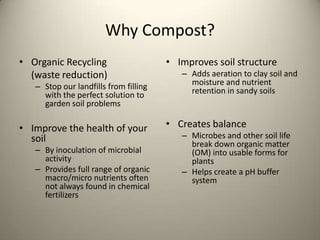
• Organic Recycling                    • Improves soil structure
  (waste reduction)                       – Adds aeration to clay soil and
   – Stop our landfills from filling        moisture and nutrient
     with the perfect solution to           retention in sandy soils
     garden soil problems

• Improve the health of your           • Creates balance
  soil                                    – Microbes and other soil life
                                            break down organic matter
   – By inoculation of microbial            (OM) into usable forms for
     activity                               plants
   – Provides full range of organic       – Helps create a pH buffer
     macro/micro nutrients often            system
     not always found in chemical
     fertilizers
What is going on?
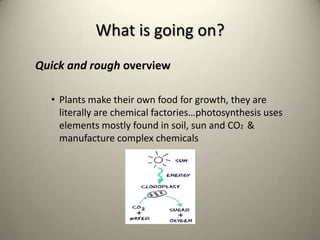
Quick and rough overview

  • Plants make their own food for growth, they are
    literally are chemical factories…photosynthesis uses
    elements mostly found in soil, sun and CO2 &
    manufacture complex chemicals
Decomposition

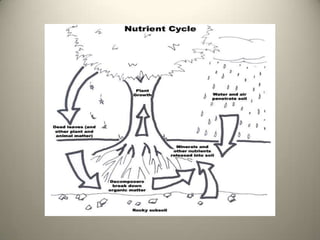
• As plant parts return to the surface of the earth (garden
  pile), microorganisms (saprophytes – eat dead plant
  matter) consume these complex chemical compounds
  for their colonial growth

• Mineralization: These organisms break these chemical
  bonds and leave elemental forms of macro/micro
  nutrients which are then available to the plant (by-
  product = heat)
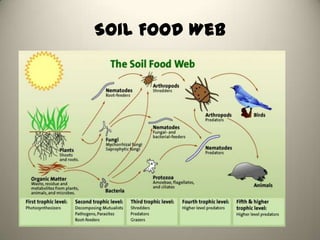
Soil Food Web
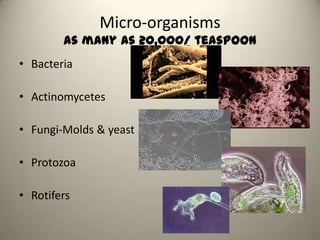
Micro-organisms
        as many as 20,000/ teaspoon
• Bacteria

• Actinomycetes

• Fungi-Molds & yeast

• Protozoa

• Rotifers
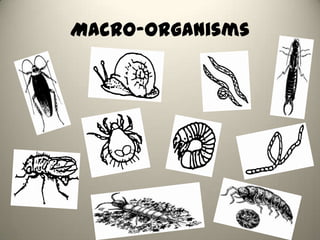
Macro-organisms
Moral of the story
• The waste products of these organisms act in
  nature to fertilize the flora life cycle.

• A healthy soil life system with dense microbial
  activity will mineralize the soil and provide
  plants with the nutrients needed for growth.
Organic Matter
• Expressed as a percentage
• Measures the resistant state of O.M. in
  soil
Consider this:
      An acre of soil measured to a depth of six inches
 weighs about 2,000,000 pounds, (2,000 tons) meaning
 that 1% organic matter in the soil would weigh about
 20,000 pounds (20 tons). It takes about 10 pounds of
 organic material to decompose to 1 pound of organic
 matter, so it takes at least 200,000 pounds (100 tons) of
 organic material applied to the soil to add 1% stable
 organic matter under favorable conditions.
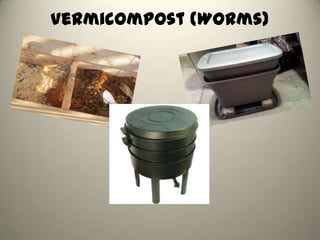
Vermicompost (Worms)
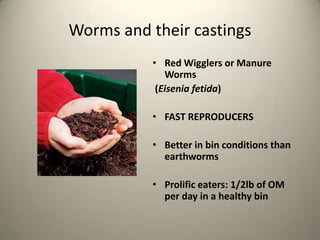
Worms and their castings
           • Red Wigglers or Manure
              Worms
            (Eisenia fetida)

           • FAST REPRODUCERS

           • Better in bin conditions than
             earthworms

           • Prolific eaters: 1/2lb of OM
             per day in a healthy bin
Benefits of Worm Compost
• Indoor/small spaces option

• More manageable/less labor than backyard bins

• Compost is nutrient dense filled with a rich organic form
  of fertilizer from your own yard and kitchen
      •   Nitrogen- 1.5 – 2.5 %
      •   Calcium- 0.5 – 1.0 %
      •   Phosphorus- 0.9 – 1.7 %
      •   Magnessium- 0.2 – 0.3 %
      •   Potash- 1.5 – 2.4 %
      •   Sulphur- 0.4 - 0.5 %
Troubleshooting Vermicompost Bins

          SYMPTOM                     SOLUTION
• Smell             – Anaerobic bacterial takeover (rot), add
                      paper or dried leaves, bury food

• Moisture          – Add Dry material, worms love
                      newspaper, shredded paper and card-
                      board
                    – Add ventilation, plenty of air holes

                    – Many other pests love fresh
• Pest species        produce…secure lid.

• Worms escaping    – Generally a sign of too much moisture,
                      see above
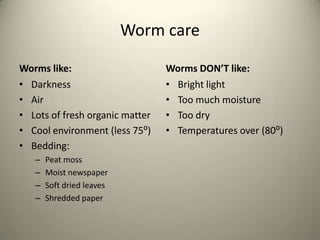
Worm care

Worms like:                      Worms DON’T like:
• Darkness                       • Bright light
• Air                            • Too much moisture
• Lots of fresh organic matter   • Too dry
• Cool environment (less 75⁰)    • Temperatures over (80⁰)
• Bedding:
   –   Peat moss
   –   Moist newspaper
   –   Soft dried leaves
   –   Shredded paper
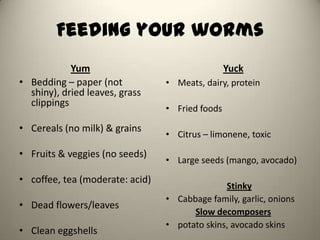
Feeding your worms
            Yum                                  Yuck
• Bedding – paper (not           • Meats, dairy, protein
  shiny), dried leaves, grass
  clippings
                                 • Fried foods

• Cereals (no milk) & grains
                                 • Citrus – limonene, toxic

• Fruits & veggies (no seeds)
                                 • Large seeds (mango, avocado)

• coffee, tea (moderate: acid)
                                               Stinky
                                 • Cabbage family, garlic, onions
• Dead flowers/leaves
                                       Slow decomposers
                                 • potato skins, avocado skins
• Clean eggshells
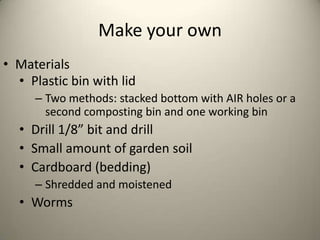
Make your own
• Materials
  • Plastic bin with lid
     – Two methods: stacked bottom with AIR holes or a
       second composting bin and one working bin
  • Drill 1/8” bit and drill
  • Small amount of garden soil
  • Cardboard (bedding)
     – Shredded and moistened
  • Worms
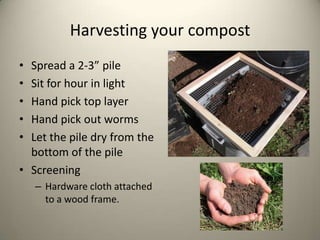
Harvesting your compost
• Spread a 2-3” pile
• Sit for hour in light
• Hand pick top layer
• Hand pick out worms
• Let the pile dry from the
  bottom of the pile
• Screening
    – Hardware cloth attached
      to a wood frame.
Resources
• LSU Ag Center – Publications
  – Static Pile Composting:
     • Pub # 2516

  – Troubleshooting Your Compost Pile
     • Pub # 2517

  – Backyard composting: Wastes to Resources
     • Pub # 2610-A

  – Worm Composting Bin
     • Pub # 2610-J
Further Material
                             personal favorites
Books:
• DIRT: The Ecstatic Skin of the Earth
          – William Bryant Logan
• In Defense of Food – An Eaters Manifesto
          – Michael Pollan
• Teaming with Microbes – The Organic Gardener’s
  Guide to the Soil Food Web
          – Jeff Lowernfels & Wayne Lewis


Documentary:
• Dirt! THE MOVIE
          – Gene Rosow: Director, Producer


YouTube: Setting Up a Composting Bin

Macros and micros

  • 1.
    Compost: The Construction of aLiving Soil System Presented by: Amber Dawn Vice President Master Gardeners of Greater New Orleans
  • 2.
    Why Compost? • OrganicRecycling • Improves soil structure (waste reduction) – Adds aeration to clay soil and – Stop our landfills from filling moisture and nutrient with the perfect solution to retention in sandy soils garden soil problems • Improve the health of your • Creates balance soil – Microbes and other soil life break down organic matter – By inoculation of microbial (OM) into usable forms for activity plants – Provides full range of organic – Helps create a pH buffer macro/micro nutrients often system not always found in chemical fertilizers
  • 4.
    What is goingon? Quick and rough overview • Plants make their own food for growth, they are literally are chemical factories…photosynthesis uses elements mostly found in soil, sun and CO2 & manufacture complex chemicals
  • 5.
    Decomposition • As plantparts return to the surface of the earth (garden pile), microorganisms (saprophytes – eat dead plant matter) consume these complex chemical compounds for their colonial growth • Mineralization: These organisms break these chemical bonds and leave elemental forms of macro/micro nutrients which are then available to the plant (by- product = heat)
  • 7.
  • 8.
    Micro-organisms as many as 20,000/ teaspoon • Bacteria • Actinomycetes • Fungi-Molds & yeast • Protozoa • Rotifers
  • 9.
  • 10.
    Moral of thestory • The waste products of these organisms act in nature to fertilize the flora life cycle. • A healthy soil life system with dense microbial activity will mineralize the soil and provide plants with the nutrients needed for growth.
  • 11.
    Organic Matter • Expressedas a percentage • Measures the resistant state of O.M. in soil Consider this: An acre of soil measured to a depth of six inches weighs about 2,000,000 pounds, (2,000 tons) meaning that 1% organic matter in the soil would weigh about 20,000 pounds (20 tons). It takes about 10 pounds of organic material to decompose to 1 pound of organic matter, so it takes at least 200,000 pounds (100 tons) of organic material applied to the soil to add 1% stable organic matter under favorable conditions.
  • 12.
  • 13.
    Worms and theircastings • Red Wigglers or Manure Worms (Eisenia fetida) • FAST REPRODUCERS • Better in bin conditions than earthworms • Prolific eaters: 1/2lb of OM per day in a healthy bin
  • 14.
    Benefits of WormCompost • Indoor/small spaces option • More manageable/less labor than backyard bins • Compost is nutrient dense filled with a rich organic form of fertilizer from your own yard and kitchen • Nitrogen- 1.5 – 2.5 % • Calcium- 0.5 – 1.0 % • Phosphorus- 0.9 – 1.7 % • Magnessium- 0.2 – 0.3 % • Potash- 1.5 – 2.4 % • Sulphur- 0.4 - 0.5 %
  • 15.
    Troubleshooting Vermicompost Bins SYMPTOM SOLUTION • Smell – Anaerobic bacterial takeover (rot), add paper or dried leaves, bury food • Moisture – Add Dry material, worms love newspaper, shredded paper and card- board – Add ventilation, plenty of air holes – Many other pests love fresh • Pest species produce…secure lid. • Worms escaping – Generally a sign of too much moisture, see above
  • 16.
    Worm care Worms like: Worms DON’T like: • Darkness • Bright light • Air • Too much moisture • Lots of fresh organic matter • Too dry • Cool environment (less 75⁰) • Temperatures over (80⁰) • Bedding: – Peat moss – Moist newspaper – Soft dried leaves – Shredded paper
  • 17.
    Feeding your worms Yum Yuck • Bedding – paper (not • Meats, dairy, protein shiny), dried leaves, grass clippings • Fried foods • Cereals (no milk) & grains • Citrus – limonene, toxic • Fruits & veggies (no seeds) • Large seeds (mango, avocado) • coffee, tea (moderate: acid) Stinky • Cabbage family, garlic, onions • Dead flowers/leaves Slow decomposers • potato skins, avocado skins • Clean eggshells
  • 18.
    Make your own •Materials • Plastic bin with lid – Two methods: stacked bottom with AIR holes or a second composting bin and one working bin • Drill 1/8” bit and drill • Small amount of garden soil • Cardboard (bedding) – Shredded and moistened • Worms
  • 19.
    Harvesting your compost •Spread a 2-3” pile • Sit for hour in light • Hand pick top layer • Hand pick out worms • Let the pile dry from the bottom of the pile • Screening – Hardware cloth attached to a wood frame.
  • 20.
    Resources • LSU AgCenter – Publications – Static Pile Composting: • Pub # 2516 – Troubleshooting Your Compost Pile • Pub # 2517 – Backyard composting: Wastes to Resources • Pub # 2610-A – Worm Composting Bin • Pub # 2610-J
  • 21.
    Further Material personal favorites Books: • DIRT: The Ecstatic Skin of the Earth – William Bryant Logan • In Defense of Food – An Eaters Manifesto – Michael Pollan • Teaming with Microbes – The Organic Gardener’s Guide to the Soil Food Web – Jeff Lowernfels & Wayne Lewis Documentary: • Dirt! THE MOVIE – Gene Rosow: Director, Producer YouTube: Setting Up a Composting Bin