Composting
Recycling Organic Matter

           Dan Gill
         LSU AgCenter
     Consumer Horticulturist
For an outline of this
program, send a request to:

dgill@agcenter.lsu.edu
Organic Matter
• Material derived from plants

• May be used as is or in a decayed state or
  processed

• Has many horticultural uses, including
  bed preparation, mulching, potting mixes
Coming to Terms
• Compost, Compost, Composting,
  Composted, Composter

• Amendment, Amend, Amended,
  Amending

• Mulch, Mulch, Mulching, Mulched
Compost
• Organic matter that has gone through a
  period of decomposition.

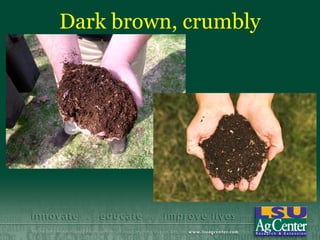
• Finished compost is a dark brown,
  crumbly material with an earthy smell.
  The original organic materials are no
  longer recognizable.
Dark brown, crumbly
Amendments
• Materials added to the soil to improve it
  in some way for plant growth.

• May be organic: compost, leaf mold,
  composted manure, peat moss, soil
  conditioner

• Or inorganic: lime, sulfur, green sand,
  fertilizer, sand
Mulch
• Any material spread over the soil surface.
• May be organic or inorganic.

• Organic mulches provide many benefits:
     Reduce weeds
     Conserve soil moisture
     Moderate soil temperature
     Prevent compaction
     Provide nutrients/encourage earthworms
COMPOST
HAPPENS
Why Compost?
• Recycling organic yard waste reduces
  materials going into municipal waste
  streams and landfills.

• Save money not purchasing organic
  matter from nurseries.

• May be the best organic matter for bed
  preparation.
A Natural Process of Decay
• Happens on the forest floor
• In lawn
• When organic mulch is used
• Prevents the world from being
  overwhelmed by organic matter
• Carried out primarily by naturally
  occurring fungi and bacteria
Controlled Composting

• Speeds up the process through
  proper management.

• What is the most important thing to
  understand about composting….?
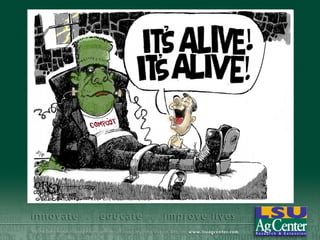
It’s not a Pile – It’s a Pet
• The transformation of organic matter to
  compost is carried out by living
  organisms – mostly fungi and bacteria.

• Everything we do in composting caters to
  the needs of these living organisms to
  help them work more efficiently.
So, what do they need?
   • Large surface areas

   • Air/Oxygen

   • Food

   • Water
Large Surface Areas
• Chopping or grinding organic matter
  greatly enhances the composting process.

• Smaller particles expose more surface
  area to the action of the microorganisms.

• This allows the fungi and bacteria to
  more rapidly decay the organic matter.
Air/Oxygen
•   The microorganism we want to be active in
    the process need oxygen to live. They are
    aerobic organisms.

•   We do not want microorganisms that live in
    an oxygen-free environment – anaerobic
    organisms. They stink.

•   So, the compost pile should not be too dense
    or stay too wet.
Air/Oxygen
• To ensure adequate oxygen, piles are
  enclosed by ventilated sides.

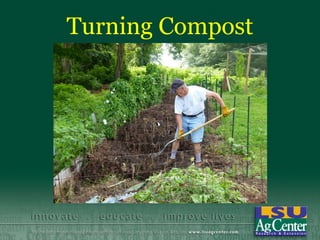
• Piles may be turned.

• Maintain proper moisture.
Turning Compost
Food
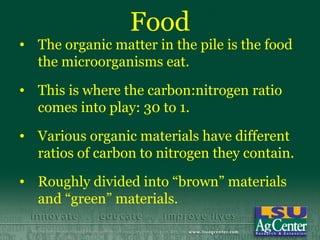
• The organic matter in the pile is the food
  the microorganisms eat.
• This is where the carbon:nitrogen ratio
  comes into play: 30 to 1.
• Various organic materials have different
  ratios of carbon to nitrogen they contain.
• Roughly divided into “brown” materials
  and “green” materials.
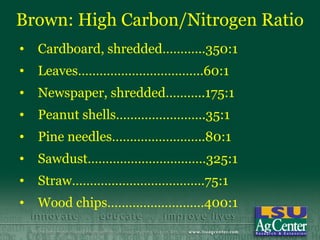
Brown: High Carbon/Nitrogen Ratio
•   Cardboard, shredded………...350:1
•   Leaves……………………………..60:1
•   Newspaper, shredded………..175:1
•   Peanut shells…………………….35:1
•   Pine needles……………………..80:1
•   Sawdust……………………………325:1
•   Straw……………………………….75:1
•   Wood chips………………………400:1
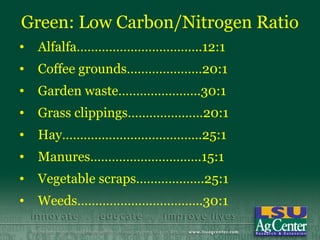
Green: Low Carbon/Nitrogen Ratio
•   Alfalfa……………………………..12:1
•   Coffee grounds…………………20:1
•   Garden waste…………………..30:1
•   Grass clippings…………………20:1
•   Hay…………………………………25:1
•   Manures………………………….15:1
•   Vegetable scraps……………….25:1
•   Weeds……………………………..30:1
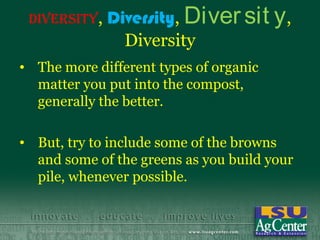
Diversity,   Diversity, Diver sit y ,
                Diversity
• The more different types of organic
  matter you put into the compost,
  generally the better.

• But, try to include some of the browns
  and some of the greens as you build your
  pile, whenever possible.
But…
• Be cautious about relying on recipes
• Gardens rarely generate organic
  materials in proportions matching
  recipes.
• It’s generally better to be flexible, but
  mindful.
High Carbon/Nitrogen Ratio
• Add some nitrogen fertilizer –
  commercial or organic (blood meal,
  cotton seed meal)

• Or some low carbon/nitrogen ratio
  material, such as manure.

• Should be composted before adding to
  the garden.
Low Carbon/Nitrogen Ratio

• Add high carbon/nitrogen ratio
  material, such as shredded
  newspaper, shredded cardboard or
  ground wood.

• Turn frequently.
Water
• Dry organic matter will not
  decompose.
• Fungi and bacteria must have water
  to decompose organic matter.
• You may need to water a pile
  occasionally. Rain helps much of the
  year.
• Not too wet.
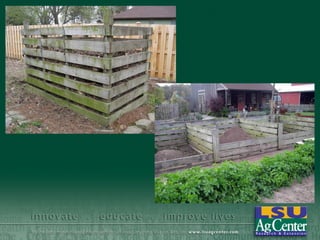
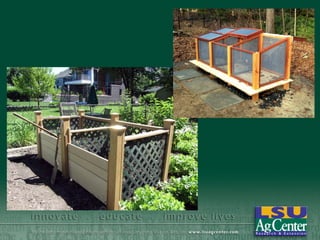
Making Compost
•   Enclose the pile, no need for expensive compost
    bins, but you can use them.
•   Chop organic matter.
•   Add nitrogen if the organic matter is low in
    nitrogen
•   Keep the pile moist – not soggy.
•   Turn the pile if possible.
•   Harvest when the organic matter has turned
    into a dark brown, crumbly material.
Some Like it Hot
• Well constructed and maintained
  compost piles can achieve remarkably
  high temperatures
• Around 140 to 16 0 degrees F
• Carried out by thermophilic organisms
• Temperatures this high can kill weed
  seeds and disease organisms
• But, can’t always be relied on
Compost Starters
• Are they really necessary?

• They are certainly not critical to the
  process, but feel free to give them a
  try.

• Shovel of soil.
Safety Concerns
• Some issues with fresh manures and
  bacteria, such as E. coli.

• Compost fresh manure. Incorporate it.

• Do not topdress with fresh manure.

• Leafy vegetables eaten raw. Wash.
Using Compost
• Outstanding amendment for bed
  preparation.

• Great addition to potting mixes.

• Not a great mulch.

• Compost tea
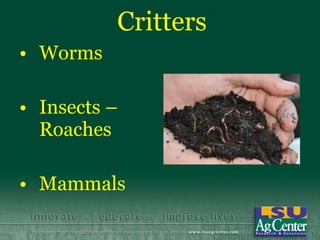
Critters
• Worms

• Insects –
  Roaches

• Mammals
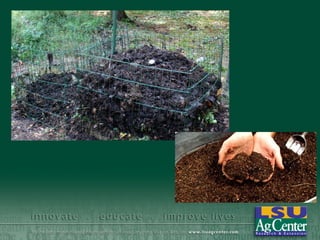
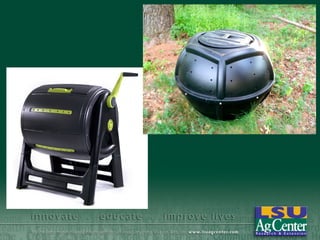
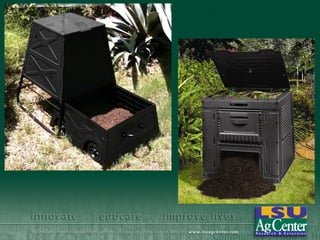
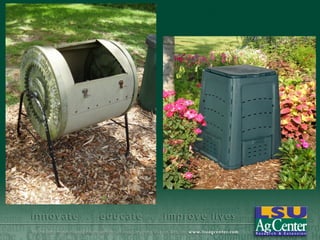
Do you need a bin?
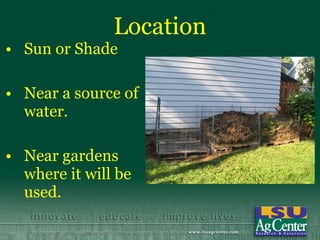
Location
• Sun or Shade

• Near a source of
  water.

• Near gardens
  where it will be
  used.
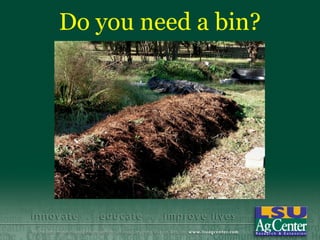
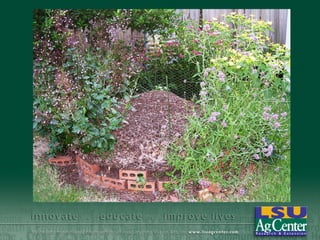
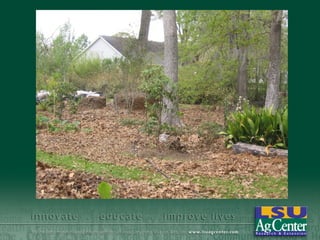
My Compost Piles
Passive Composting
Green Manures and Cover Crops
•   Add organic matter to the soil.
•   Useful when beds are not being used to grow
    crops.
•   Different for different seasons.
•   For winter, rye, wheat, green peas and crimson
    clover are possible choices.
•   Legumes may provide a net gain in nitrogen.
•   Turn under while still young and tender, before
    seeds form.
QUESTIONS?

Composting

  • 1.
    Composting Recycling Organic Matter Dan Gill LSU AgCenter Consumer Horticulturist
  • 2.
    For an outlineof this program, send a request to: dgill@agcenter.lsu.edu
  • 3.
    Organic Matter • Materialderived from plants • May be used as is or in a decayed state or processed • Has many horticultural uses, including bed preparation, mulching, potting mixes
  • 4.
    Coming to Terms •Compost, Compost, Composting, Composted, Composter • Amendment, Amend, Amended, Amending • Mulch, Mulch, Mulching, Mulched
  • 5.
    Compost • Organic matterthat has gone through a period of decomposition. • Finished compost is a dark brown, crumbly material with an earthy smell. The original organic materials are no longer recognizable.
  • 6.
  • 7.
    Amendments • Materials addedto the soil to improve it in some way for plant growth. • May be organic: compost, leaf mold, composted manure, peat moss, soil conditioner • Or inorganic: lime, sulfur, green sand, fertilizer, sand
  • 8.
    Mulch • Any materialspread over the soil surface. • May be organic or inorganic. • Organic mulches provide many benefits: Reduce weeds Conserve soil moisture Moderate soil temperature Prevent compaction Provide nutrients/encourage earthworms
  • 9.
  • 10.
    Why Compost? • Recyclingorganic yard waste reduces materials going into municipal waste streams and landfills. • Save money not purchasing organic matter from nurseries. • May be the best organic matter for bed preparation.
  • 12.
    A Natural Processof Decay • Happens on the forest floor • In lawn • When organic mulch is used • Prevents the world from being overwhelmed by organic matter • Carried out primarily by naturally occurring fungi and bacteria
  • 13.
    Controlled Composting • Speedsup the process through proper management. • What is the most important thing to understand about composting….?
  • 15.
    It’s not aPile – It’s a Pet • The transformation of organic matter to compost is carried out by living organisms – mostly fungi and bacteria. • Everything we do in composting caters to the needs of these living organisms to help them work more efficiently.
  • 16.
    So, what dothey need? • Large surface areas • Air/Oxygen • Food • Water
  • 17.
    Large Surface Areas •Chopping or grinding organic matter greatly enhances the composting process. • Smaller particles expose more surface area to the action of the microorganisms. • This allows the fungi and bacteria to more rapidly decay the organic matter.
  • 18.
    Air/Oxygen • The microorganism we want to be active in the process need oxygen to live. They are aerobic organisms. • We do not want microorganisms that live in an oxygen-free environment – anaerobic organisms. They stink. • So, the compost pile should not be too dense or stay too wet.
  • 19.
    Air/Oxygen • To ensureadequate oxygen, piles are enclosed by ventilated sides. • Piles may be turned. • Maintain proper moisture.
  • 20.
  • 21.
    Food • The organicmatter in the pile is the food the microorganisms eat. • This is where the carbon:nitrogen ratio comes into play: 30 to 1. • Various organic materials have different ratios of carbon to nitrogen they contain. • Roughly divided into “brown” materials and “green” materials.
  • 22.
    Brown: High Carbon/NitrogenRatio • Cardboard, shredded………...350:1 • Leaves……………………………..60:1 • Newspaper, shredded………..175:1 • Peanut shells…………………….35:1 • Pine needles……………………..80:1 • Sawdust……………………………325:1 • Straw……………………………….75:1 • Wood chips………………………400:1
  • 23.
    Green: Low Carbon/NitrogenRatio • Alfalfa……………………………..12:1 • Coffee grounds…………………20:1 • Garden waste…………………..30:1 • Grass clippings…………………20:1 • Hay…………………………………25:1 • Manures………………………….15:1 • Vegetable scraps……………….25:1 • Weeds……………………………..30:1
  • 24.
    Diversity, Diversity, Diver sit y , Diversity • The more different types of organic matter you put into the compost, generally the better. • But, try to include some of the browns and some of the greens as you build your pile, whenever possible.
  • 25.
    But… • Be cautiousabout relying on recipes • Gardens rarely generate organic materials in proportions matching recipes. • It’s generally better to be flexible, but mindful.
  • 26.
    High Carbon/Nitrogen Ratio •Add some nitrogen fertilizer – commercial or organic (blood meal, cotton seed meal) • Or some low carbon/nitrogen ratio material, such as manure. • Should be composted before adding to the garden.
  • 27.
    Low Carbon/Nitrogen Ratio •Add high carbon/nitrogen ratio material, such as shredded newspaper, shredded cardboard or ground wood. • Turn frequently.
  • 28.
    Water • Dry organicmatter will not decompose. • Fungi and bacteria must have water to decompose organic matter. • You may need to water a pile occasionally. Rain helps much of the year. • Not too wet.
  • 29.
    Making Compost • Enclose the pile, no need for expensive compost bins, but you can use them. • Chop organic matter. • Add nitrogen if the organic matter is low in nitrogen • Keep the pile moist – not soggy. • Turn the pile if possible. • Harvest when the organic matter has turned into a dark brown, crumbly material.
  • 30.
    Some Like itHot • Well constructed and maintained compost piles can achieve remarkably high temperatures • Around 140 to 16 0 degrees F • Carried out by thermophilic organisms • Temperatures this high can kill weed seeds and disease organisms • But, can’t always be relied on
  • 31.
    Compost Starters • Arethey really necessary? • They are certainly not critical to the process, but feel free to give them a try. • Shovel of soil.
  • 32.
    Safety Concerns • Someissues with fresh manures and bacteria, such as E. coli. • Compost fresh manure. Incorporate it. • Do not topdress with fresh manure. • Leafy vegetables eaten raw. Wash.
  • 33.
    Using Compost • Outstandingamendment for bed preparation. • Great addition to potting mixes. • Not a great mulch. • Compost tea
  • 34.
    Critters • Worms • Insects– Roaches • Mammals
  • 35.
  • 36.
    Location • Sun orShade • Near a source of water. • Near gardens where it will be used.
  • 43.
  • 46.
    Green Manures andCover Crops • Add organic matter to the soil. • Useful when beds are not being used to grow crops. • Different for different seasons. • For winter, rye, wheat, green peas and crimson clover are possible choices. • Legumes may provide a net gain in nitrogen. • Turn under while still young and tender, before seeds form.
  • 47.