
COronary	
  interven-on	
  in	
  pa-ents	
  
    with	
  FIstula	
  for	
  DIalysiS	
  :	
  
  Transradial	
  or	
  transfemoral	
  
              approach?	


            The	
  COFIDIS	
  study	
  
Background	
  
•  Radial	
   approach	
   is	
   safe	
   and	
   effec-ve	
   with	
  
     s i g n i fi c a n t	
   d e c r e a s e	
   f o r	
   b l e e d i n g	
  
     complica-ons	
   compare	
   to	
   femoral	
   approach	
  
     and	
   is	
   well-­‐recognized	
   to	
   improve	
   health’s	
  
     pa-ent	


•  Dialysis	
   pa-ents	
   are	
   a	
   growing	
   popula-on	
  
     with	
  aging	
  and	
  lack	
  of	
  graI	
  
Why	
  not	
  Radial	
  approach	
  in	
  dialysis	
  
                    pa-ents	
  ?	


•  To	
  preserve	
  controlateral	
  radial	
  in	
  case	
  of	
  
   problem	
  with	
  the	
  fistula	
  
And	
  why	
  radial	
  approach?	
  
•  Peripheral	
   artery	
   disease	
   is	
   frequent	
   in	
   this	
  
   p o p u l a - o n	
   w i t h	
   v a s c u l a r	
   f r a g i l i t y	
  
   (calcifica-ons,	
  s-ffness…)	
  
•  Renal	
  failure	
  is	
  a	
  major	
  risk	
  factor	
  of	
  bleeding	
  
•  AND	
  radial	
  occlusion	
  is	
  very	
  rare	
  with	
  radial	
  
   approach	
  (experienced	
  operator,	
  
   an-thrombo-c	
  cocktail,	
  improve	
  material…)	
  
OBJECTIVE	
  

•  To	
   prove	
   the	
   superiority	
   of	
   radial	
   approach	
  
   versus	
   femoral	
   according	
   vascular	
   and	
  
   bleeding	
  complica-ons	
  without	
  compromising	
  
   the	
  arterial	
  radial	
  flow	
  
METHODS	
  (1)	
  
•  Design:	
   a	
   prospec-ve,	
   mul-centric	
   and	
  
   randomized	
  1:1	
  interna-onal	
  study	
  
•  Primary	
   endpoint:	
   Total	
   in-­‐hospital	
   vascular	
   and	
  
   bleeding	
   complica-ons	
   including	
   cholesterol	
  
   embolism	
   (bleeding	
   are	
   defined	
   according	
   TIMI	
  
   defini-ons)	
  
•  Secondary	
   endpoints:	
   in-­‐hospital	
   major	
   and	
  
   minor	
   bleeding,	
   vascular	
   complica-ons,	
   radial	
  
   occlusion	
   rate,	
   MACE	
   and	
   mortality	
   in-­‐hospital	
  
   and	
   at	
   6	
   months,	
   total	
   bleeding	
   and	
   vascular	
  
   complica-ons	
  at	
  6	
  months	
  
METHODS	
  (2)	
  
•  Inclusion	
   criteria:	
   all	
   pa-ents	
   with	
   fistula	
   for	
  
     end-­‐stage	
   renal	
   failure	
   who	
   need	
   scheduled	
  
     coronary	
  interven-on	


•  Exclusion	
   criteria:	
   STEMI	
   and	
   NSTEMI,	
  
     previous	
   CABG,	
   previous	
   peripheral	
   artery	
  
     surgery,	
   pa-ents	
   not	
   eligible	
   for	
   radial	
  
     approach	
  (plethysmography)	
  
METHODS	
  (3)	
  
•  Technical’s	
   considera-ons:	
   according	
   to	
   the	
  
     habits	
   of	
   the	
   operators.	
   Femoral	
   closure	
  
     system	
  and	
  Radial	
  compression	
  with	
  system	
  to	
  
     allow	
  persistent	
  radial	
  flow	
  are	
  encouraged.	


•  Radial	
   flow	
   evalua-on	
   with	
   doppler	
   before	
  
     hospital	
  discharge	
  and	
  at	
  6	
  months	
  
Number	
  of	
  pa-ents	
  needed	
  to	
  be	
  
                 randomized	
  

•  Assuming	
  a	
  frequency	
  of	
  the	
  event	
  by	
  5%	
  with	
  
   femoral	
   approach	
   and	
   2%	
   with	
   the	
   radial	
  
   approach,	
   it	
   is	
   necessary	
   to	
   include	
   784	
  
   pa-ents	
  (with	
  a	
  90%	
  power	
  and	
  a	
  alpha	
  risk	
  of	
  
   5%)	
  
CONTACT	
  

•  Dr	
  Patrick	
  SCHIANO,	
  HIA	
  Val	
  de	
  Grâce,	
  PARIS,	
  
   patrick.schiano@gmail.com	
  

Schiano P

  • 1.
    COronary  interven-on  in  pa-ents   with  FIstula  for  DIalysiS  :   Transradial  or  transfemoral   approach?     The  COFIDIS  study  
  • 2.
    Background   •  Radial   approach   is   safe   and   effec-ve   with   s i g n i fi c a n t   d e c r e a s e   f o r   b l e e d i n g   complica-ons   compare   to   femoral   approach   and   is   well-­‐recognized   to   improve   health’s   pa-ent     •  Dialysis   pa-ents   are   a   growing   popula-on   with  aging  and  lack  of  graI  
  • 3.
    Why  not  Radial  approach  in  dialysis   pa-ents  ?   •  To  preserve  controlateral  radial  in  case  of   problem  with  the  fistula  
  • 4.
    And  why  radial  approach?   •  Peripheral   artery   disease   is   frequent   in   this   p o p u l a - o n   w i t h   v a s c u l a r   f r a g i l i t y   (calcifica-ons,  s-ffness…)   •  Renal  failure  is  a  major  risk  factor  of  bleeding   •  AND  radial  occlusion  is  very  rare  with  radial   approach  (experienced  operator,   an-thrombo-c  cocktail,  improve  material…)  
  • 5.
    OBJECTIVE   •  To   prove   the   superiority   of   radial   approach   versus   femoral   according   vascular   and   bleeding  complica-ons  without  compromising   the  arterial  radial  flow  
  • 6.
    METHODS  (1)   • Design:   a   prospec-ve,   mul-centric   and   randomized  1:1  interna-onal  study   •  Primary   endpoint:   Total   in-­‐hospital   vascular   and   bleeding   complica-ons   including   cholesterol   embolism   (bleeding   are   defined   according   TIMI   defini-ons)   •  Secondary   endpoints:   in-­‐hospital   major   and   minor   bleeding,   vascular   complica-ons,   radial   occlusion   rate,   MACE   and   mortality   in-­‐hospital   and   at   6   months,   total   bleeding   and   vascular   complica-ons  at  6  months  
  • 7.
    METHODS  (2)   • Inclusion   criteria:   all   pa-ents   with   fistula   for   end-­‐stage   renal   failure   who   need   scheduled   coronary  interven-on     •  Exclusion   criteria:   STEMI   and   NSTEMI,   previous   CABG,   previous   peripheral   artery   surgery,   pa-ents   not   eligible   for   radial   approach  (plethysmography)  
  • 8.
    METHODS  (3)   • Technical’s   considera-ons:   according   to   the   habits   of   the   operators.   Femoral   closure   system  and  Radial  compression  with  system  to   allow  persistent  radial  flow  are  encouraged.     •  Radial   flow   evalua-on   with   doppler   before   hospital  discharge  and  at  6  months  
  • 9.
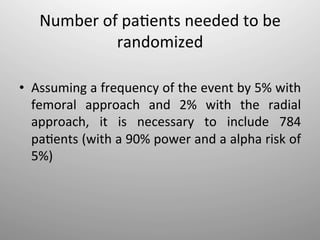
    Number  of  pa-ents  needed  to  be   randomized   •  Assuming  a  frequency  of  the  event  by  5%  with   femoral   approach   and   2%   with   the   radial   approach,   it   is   necessary   to   include   784   pa-ents  (with  a  90%  power  and  a  alpha  risk  of   5%)  
  • 10.
    CONTACT   •  Dr  Patrick  SCHIANO,  HIA  Val  de  Grâce,  PARIS,   patrick.schiano@gmail.com