




Transradial Approach in
Patients With Coronary
     Bypass Grafts
       Carlos Cafri, MD
     Soroka Medical Center
       Beer Sheva, Israel
The Case
n    69 years old men
n    Hypertension, Dyslipidemia
n    CABG (2000): LIMA to LAD, Free RIMA “T” graft to OM,
      SVG to PDA

n    On Admission:
      n  STEMI - Inferior wall.

      n  Ischemic time: 10 hours
      n  Ongoing chest pain (2/10)
      n  ECG: Q waves & minimal ST elevation

      n  Killip I
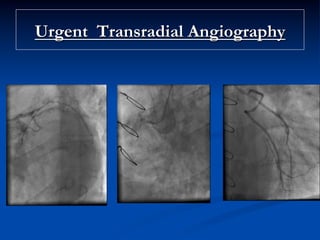
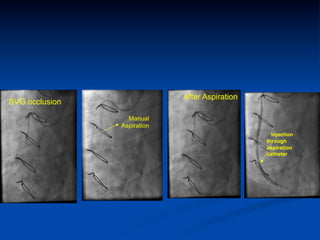
Urgent Transradial Angiography
After Aspiration
SVG occlusion

                  Manual
                Aspiration
                                                  Injection
                                                through
                                                aspiration
                                                catheter
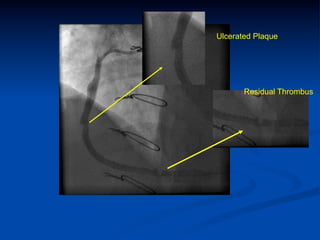
Ulcerated Plaque


       Residual Thrombus
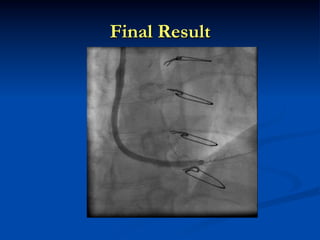
Final Result
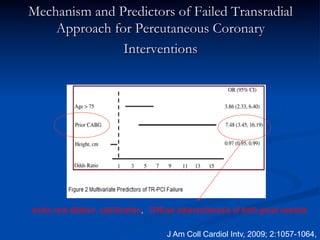
Mechanism and Predictors of Failed Transradial
          Approach for Percutaneous Coronary
                     Interventions

n    Transradial Failure: 4.7% (98/2100)
       n  Inabilityto advance guide catheter to ascending
          aorta in 50 (51%).
       n  Inadequate guide catheter support in 35 (36%)

       n  Unsuccessful radial artery puncture in 13
          (13%) patients


                                   J Am Coll Cardiol Intv, 2009; 2:1057-1064,
Mechanism and Predictors of Failed Transradial
    Approach for Percutaneous Coronary
               Interventions


aortic root dilation, calcification, Diffuse atherosclerosis of both great vessels

                                        J Am Coll Cardiol Intv, 2009; 2:1057-1064,
Patient Evaluation

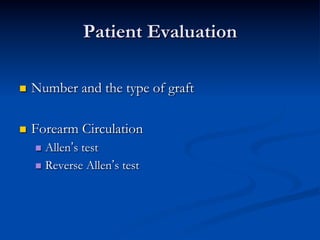
n    Number and the type of graft

n    Forearm Circulation
      n  Allen’stest
      n  Reverse Allen’s test
Homolateral IMA Graft

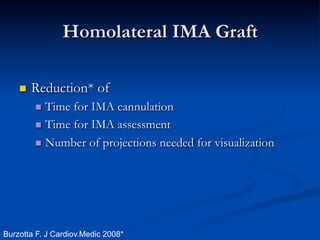
    n    Reduction* of
          n  Time for IMA cannulation
          n  Time for IMA assessment

          n  Number of projections needed for visualization


Burzotta F. J Cardiov.Medic 2008*
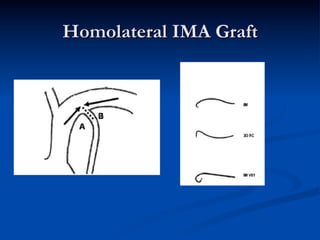
Homolateral IMA Graft
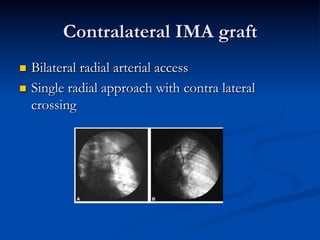
Contralateral IMA graft
n  Bilateral radial arterial access
n  Single radial approach with contra lateral
    crossing
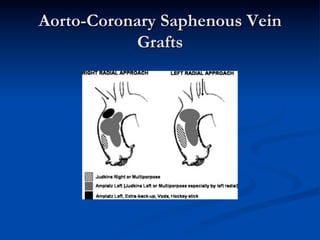
Aorto-Coronary Saphenous Vein
           Grafts
Efficacy and Safety of the
Transradial Approach for
SaphenousVein Graft PCI
                Cafri C. et al.

              Soroka Medical Center
 Faculty of Health Sciences. Ben Gurion University
                 Beer Sheva. Israel
Aims


To compare the efficacy and
   safety of transradial and
 transfemoral approaches for
PCI to saphenous vein grafts.
Methods
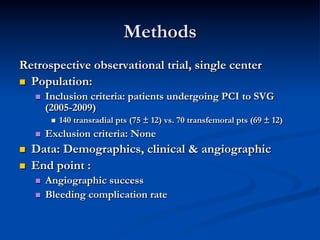
Retrospective observational trial, single center
n  Population:
      n    Inclusion criteria: patients undergoing PCI to SVG
            (2005-2009)
             n    140 transradial pts (75 ± 12) vs. 70 transfemoral pts (69 ± 12)
      n    Exclusion criteria: None
n    Data: Demographics, clinical & angiographic
n    End point :
      n    Angiographic success
      n    Bleeding complication rate
Characteristics

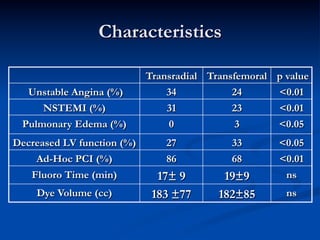
                            Transradial Transfemoral p value
  Unstable Angina (%)           34           24      <0.01
     NSTEMI (%)                 31           23      <0.01
 Pulmonary Edema (%)             0            3      <0.05
Decreased LV function (%)       27          33        <0.05
    Ad-Hoc PCI (%)              86          68        <0.01
   Fluoro Time (min)          17± 9        19±9        ns
    Dye Volume (cc)          183 ±77      182±85       ns
Characteristics
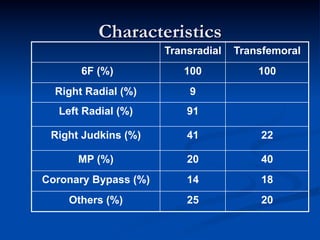
                      Transradial   Transfemoral
       6F (%)            100            100
  Right Radial (%)        9
  Left Radial (%)         91

 Right Judkins (%)        41            22

      MP (%)              20            40
Coronary Bypass (%)       14            18
    Others (%)            25            20
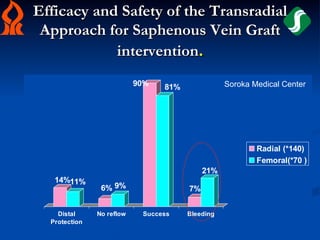
Efficacy and Safety of the Transradial
 Approach for Saphenous Vein Graft
            intervention.
                           90%   81%              Soroka Medical Center


                                                          Radial (*140)
                                                          Femoral(*70 )
                                            21%
   14%11%
                6% 9%                  7%


    Distal     No reflow    Success    Bleeding
  Protection
Conclusions
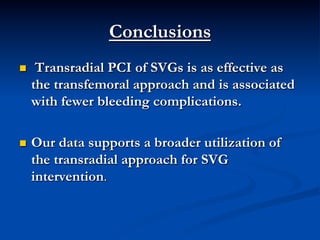
n     Transradial PCI of SVGs is as effective as
      the transfemoral approach and is associated
      with fewer bleeding complications.

n    Our data supports a broader utilization of
      the transradial approach for SVG
      intervention.
Radial is not perfect, however..
The radial approach is safe
The radial approach is successful
THANK YOU!!!
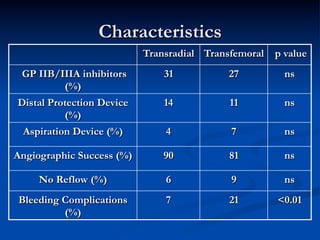
Characteristics
                           Transradial Transfemoral   p value
 GP IIB/IIIA inhibitors        31           27          ns
         (%)
Distal Protection Device       14           11          ns
          (%)
 Aspiration Device (%)         4            7           ns

Angiographic Success (%)       90           81          ns

     No Reflow (%)             6            9           ns
Bleeding Complications         7            21        <0.01
         (%)

Cafri C

  • 1.
    Transradial Approach in PatientsWith Coronary Bypass Grafts Carlos Cafri, MD Soroka Medical Center Beer Sheva, Israel
  • 2.
    The Case n  69 years old men n  Hypertension, Dyslipidemia n  CABG (2000): LIMA to LAD, Free RIMA “T” graft to OM, SVG to PDA n  On Admission: n  STEMI - Inferior wall. n  Ischemic time: 10 hours n  Ongoing chest pain (2/10) n  ECG: Q waves & minimal ST elevation n  Killip I
  • 3.
  • 4.
    After Aspiration SVG occlusion Manual Aspiration Injection through aspiration catheter
  • 5.
    Ulcerated Plaque Residual Thrombus
  • 6.
  • 7.
    Mechanism and Predictorsof Failed Transradial Approach for Percutaneous Coronary Interventions n  Transradial Failure: 4.7% (98/2100) n  Inabilityto advance guide catheter to ascending aorta in 50 (51%). n  Inadequate guide catheter support in 35 (36%) n  Unsuccessful radial artery puncture in 13 (13%) patients J Am Coll Cardiol Intv, 2009; 2:1057-1064,
  • 8.
    Mechanism and Predictorsof Failed Transradial Approach for Percutaneous Coronary Interventions aortic root dilation, calcification, Diffuse atherosclerosis of both great vessels J Am Coll Cardiol Intv, 2009; 2:1057-1064,
  • 9.
    Patient Evaluation n  Number and the type of graft n  Forearm Circulation n  Allen’stest n  Reverse Allen’s test
  • 10.
    Homolateral IMA Graft n  Reduction* of n  Time for IMA cannulation n  Time for IMA assessment n  Number of projections needed for visualization Burzotta F. J Cardiov.Medic 2008*
  • 11.
  • 12.
    Contralateral IMA graft n Bilateral radial arterial access n  Single radial approach with contra lateral crossing
  • 13.
  • 14.
    Efficacy and Safetyof the Transradial Approach for SaphenousVein Graft PCI Cafri C. et al. Soroka Medical Center Faculty of Health Sciences. Ben Gurion University Beer Sheva. Israel
  • 15.
    Aims To compare theefficacy and safety of transradial and transfemoral approaches for PCI to saphenous vein grafts.
  • 16.
    Methods Retrospective observational trial,single center n  Population: n  Inclusion criteria: patients undergoing PCI to SVG (2005-2009) n  140 transradial pts (75 ± 12) vs. 70 transfemoral pts (69 ± 12) n  Exclusion criteria: None n  Data: Demographics, clinical & angiographic n  End point : n  Angiographic success n  Bleeding complication rate
  • 17.
    Characteristics Transradial Transfemoral p value Unstable Angina (%) 34 24 <0.01 NSTEMI (%) 31 23 <0.01 Pulmonary Edema (%) 0 3 <0.05 Decreased LV function (%) 27 33 <0.05 Ad-Hoc PCI (%) 86 68 <0.01 Fluoro Time (min) 17± 9 19±9 ns Dye Volume (cc) 183 ±77 182±85 ns
  • 18.
    Characteristics Transradial Transfemoral 6F (%) 100 100 Right Radial (%) 9 Left Radial (%) 91 Right Judkins (%) 41 22 MP (%) 20 40 Coronary Bypass (%) 14 18 Others (%) 25 20
  • 19.
    Efficacy and Safetyof the Transradial Approach for Saphenous Vein Graft intervention. 90% 81% Soroka Medical Center Radial (*140) Femoral(*70 ) 21% 14%11% 6% 9% 7% Distal No reflow Success Bleeding Protection
  • 20.
    Conclusions n  Transradial PCI of SVGs is as effective as the transfemoral approach and is associated with fewer bleeding complications. n  Our data supports a broader utilization of the transradial approach for SVG intervention.
  • 21.
    Radial is notperfect, however..
  • 22.
  • 23.
    The radial approachis successful
  • 25.
  • 26.
    Characteristics Transradial Transfemoral p value GP IIB/IIIA inhibitors 31 27 ns (%) Distal Protection Device 14 11 ns (%) Aspiration Device (%) 4 7 ns Angiographic Success (%) 90 81 ns No Reflow (%) 6 9 ns Bleeding Complications 7 21 <0.01 (%)