Access vs non-access site bleeding and
risk of subsequent mortality and MACE
Mamas Mamas
Professor of Cardiology
Keele University
• Previous literature reported conflicting data about both the
incidence of access and non–access site-related bleeding
complications and their relative prognostic impacts
• Both incidence and prognostic impact will be determined by
definition of major bleeding, severity of bleeding event, cohort
studied, pharmacology used and way the bleed treated.
• No previous systematic review or meta-analysis published
studying the prevalence or prognostic impact of site-specific
bleeding complications after PCI.
Background
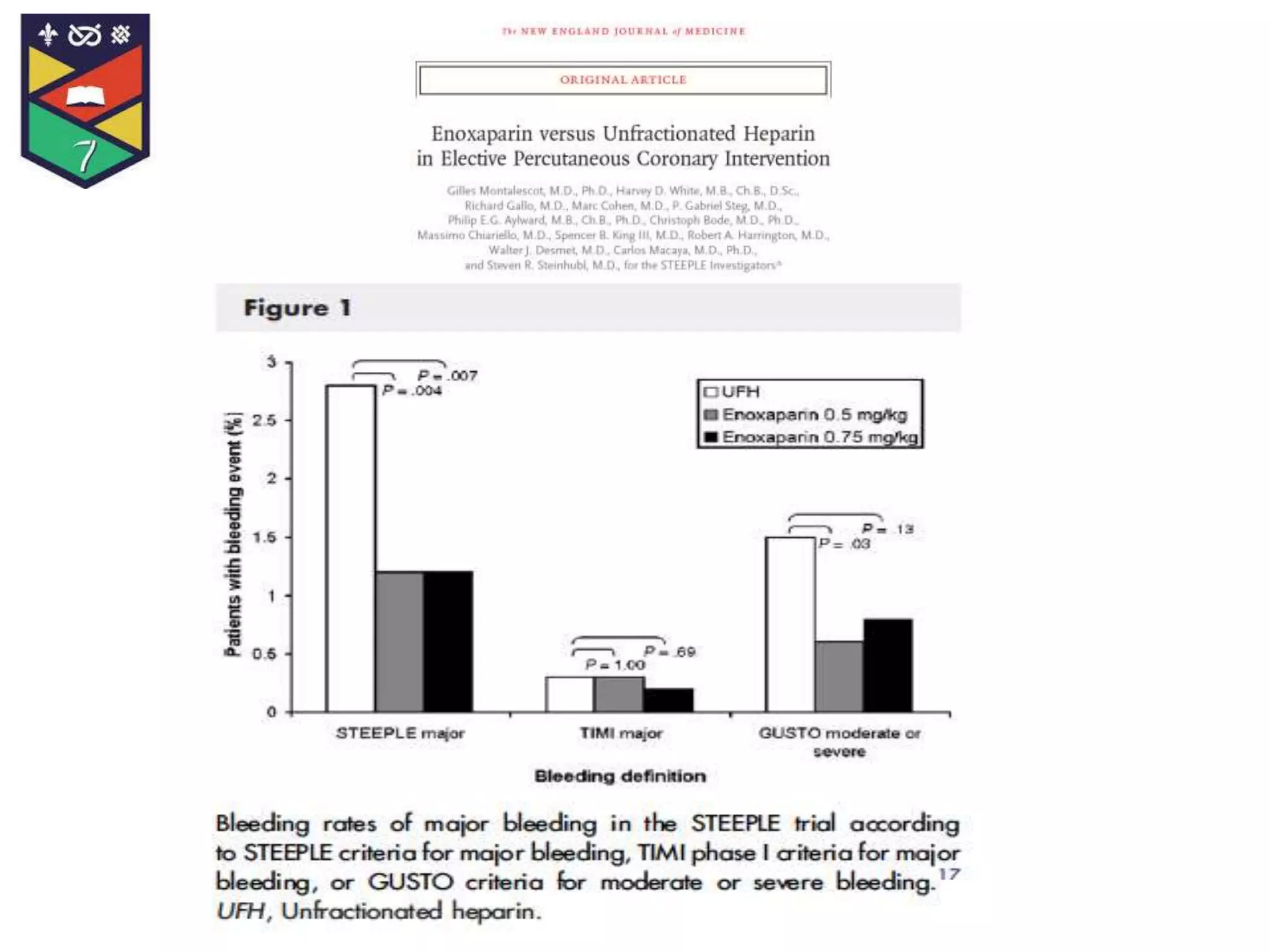
Incidence: Depends on definition
Bleeding definitions composed of:
• Clinical events: intracranial haemorrhagic, retroperitoneal
bleed, haematomas etc
• Change in laboratory parameters such as differing values of
Hb drops, HCT changes
• A clinical outcome such as death, receipt of blood transfusion
Different definitions are composed of different
combinations of above
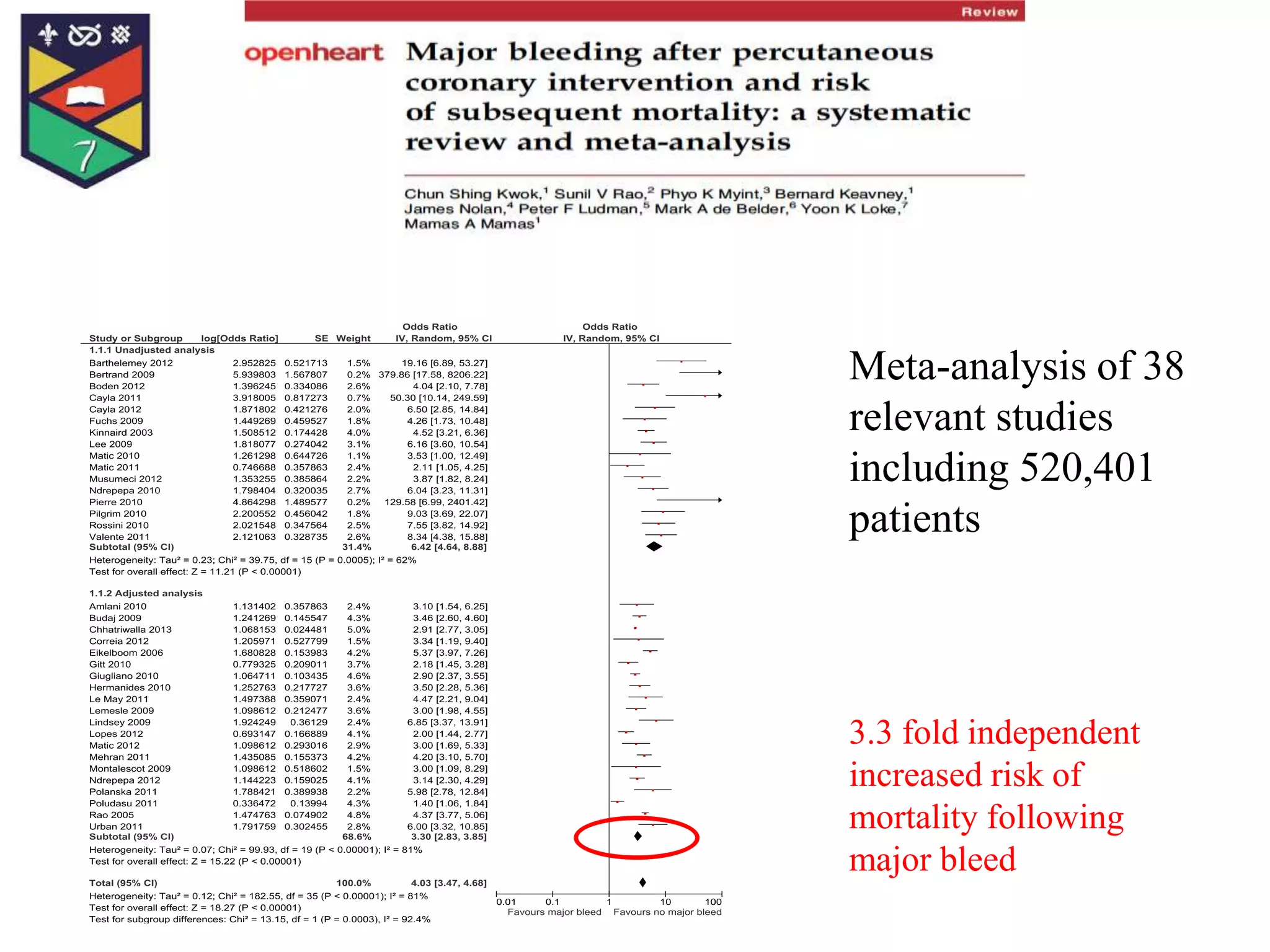
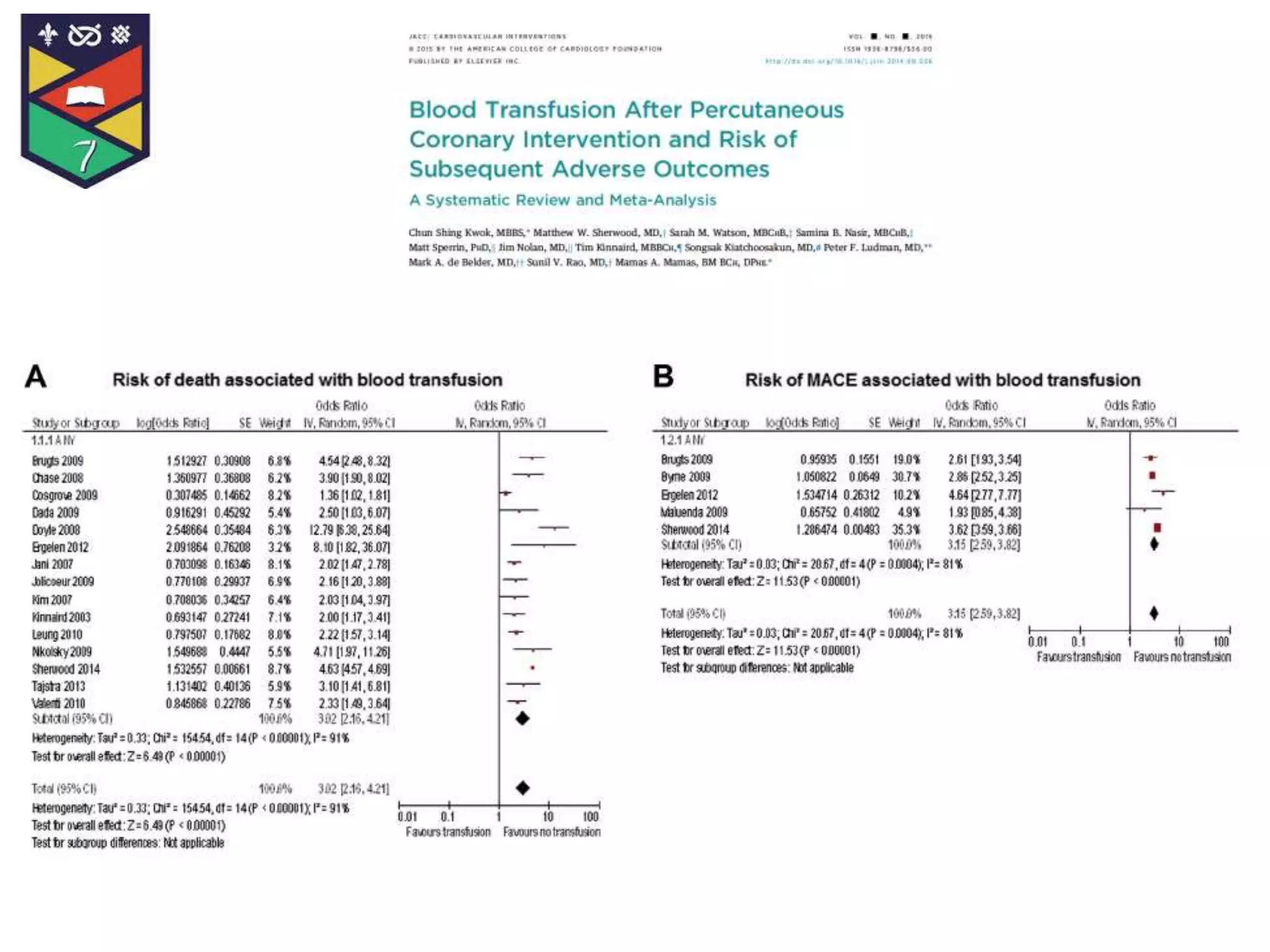
Meta-analysis of 38
relevant studies
including 520,401
patients
3.3 fold independent
increased risk of
mortality following
major bleed
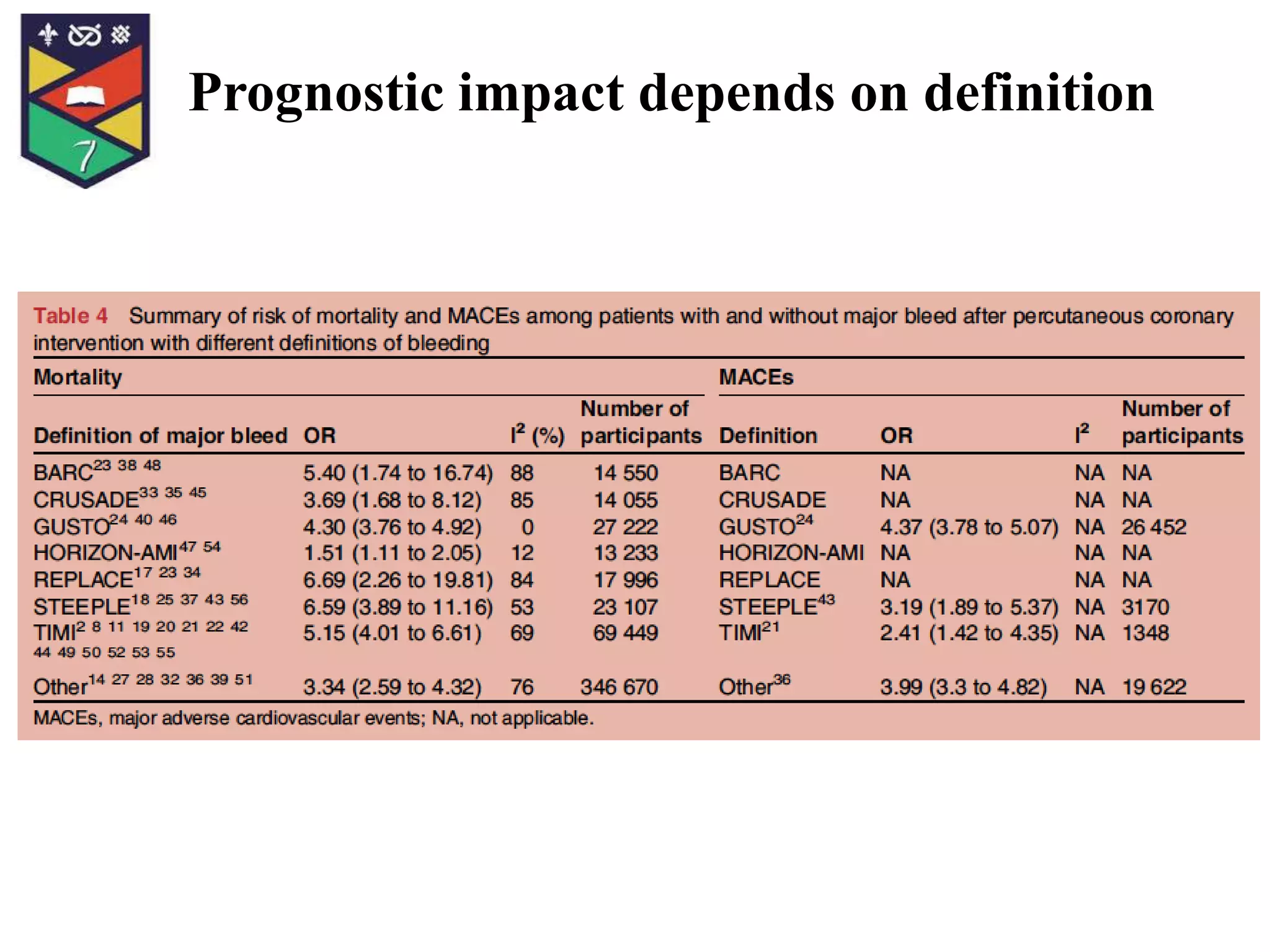
Prognostic impact depends on definition
Aim
• The aim of the study is to provide an overview
of site specific bleeding events and study their
prognostic impact on mortality and MACE
Methods
• Studies selected that investigated the impact of site-specific
bleeding on mortality or MACE in patients who underwent
PCI
• A search of Embase (1974-March 2014) and Medline (1946-
March 2014) on Ovid using search terms:
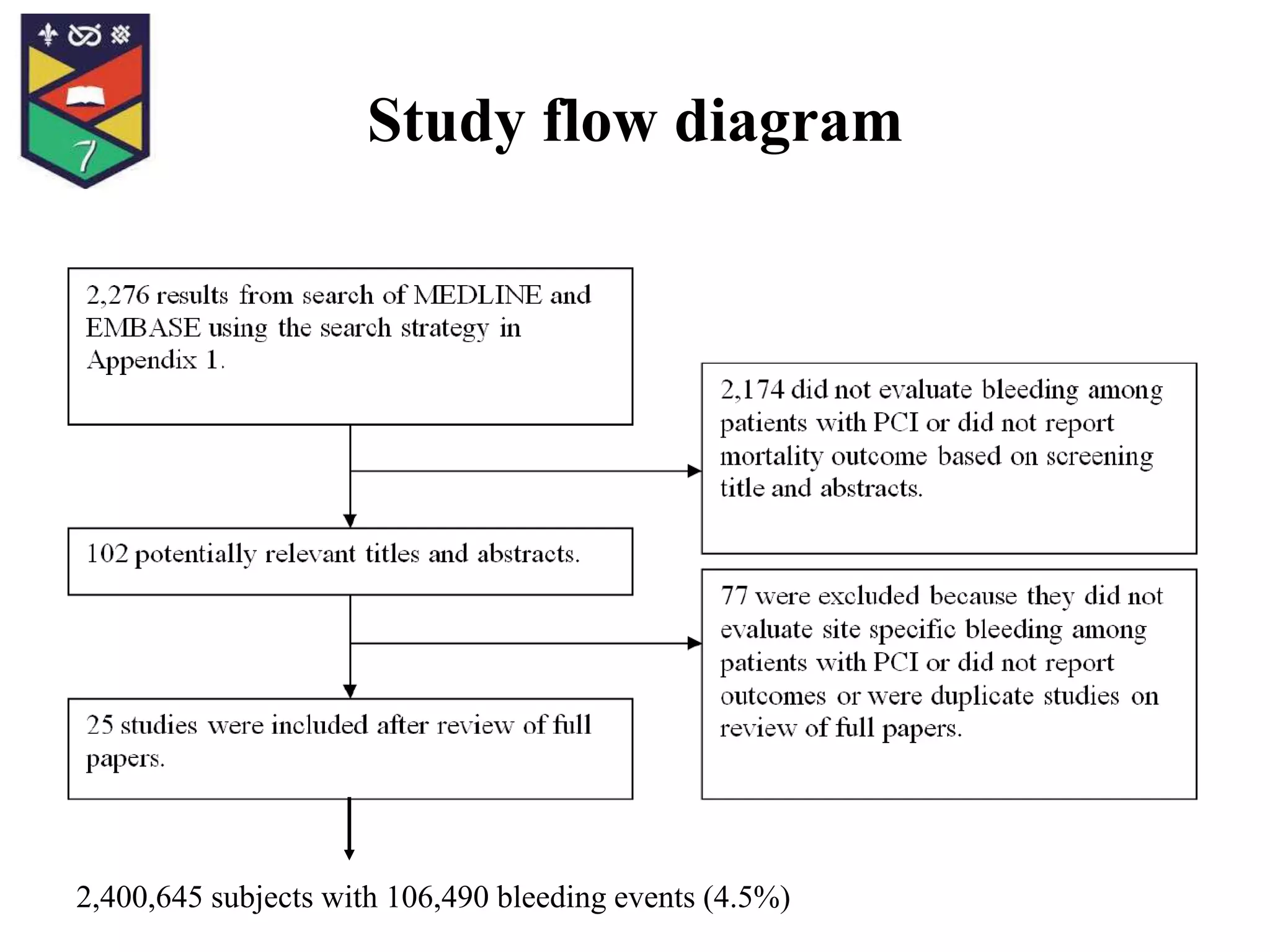
Study flow diagram
2,400,645 subjects with 106,490 bleeding events (4.5%)
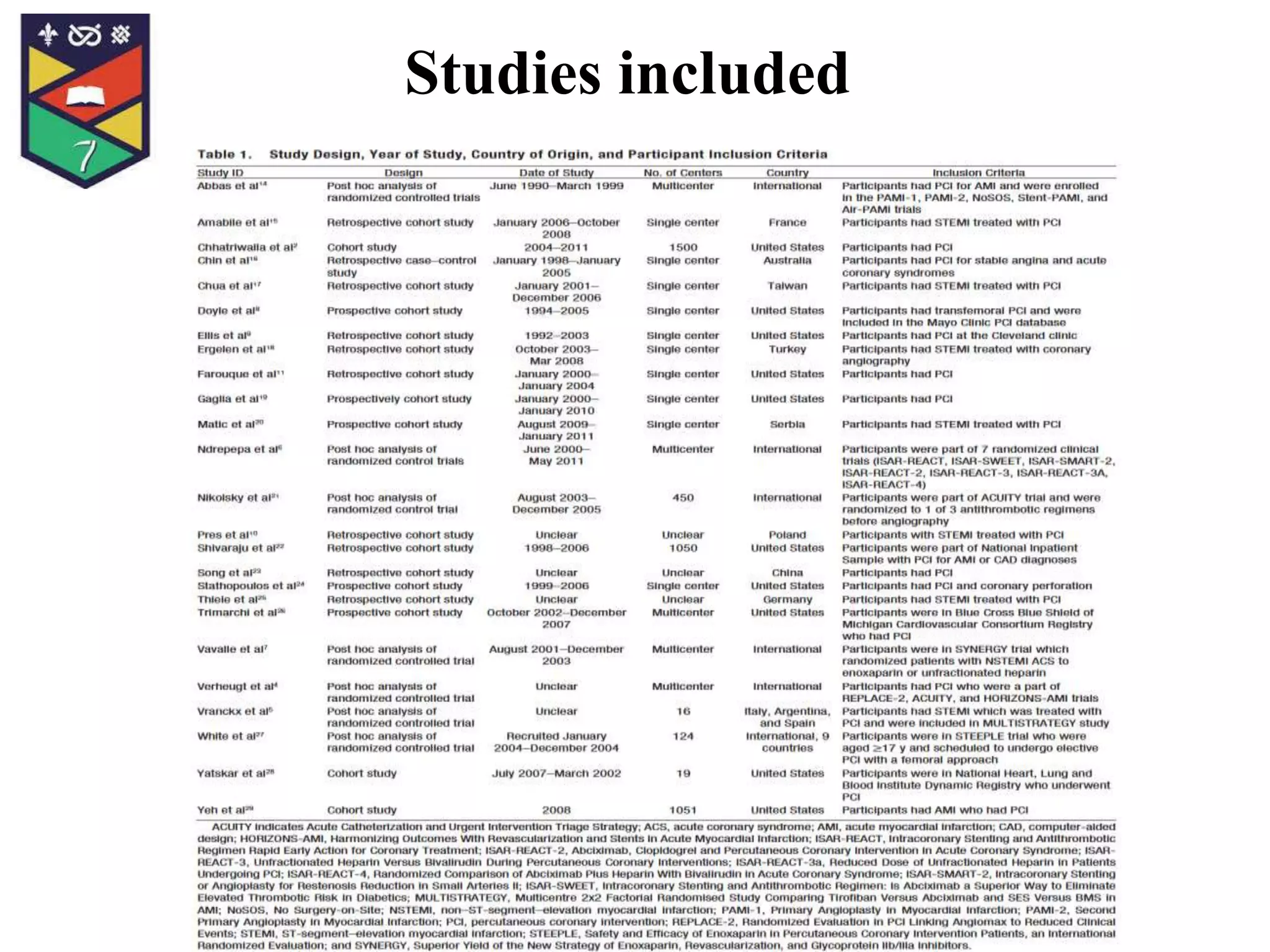
Studies included
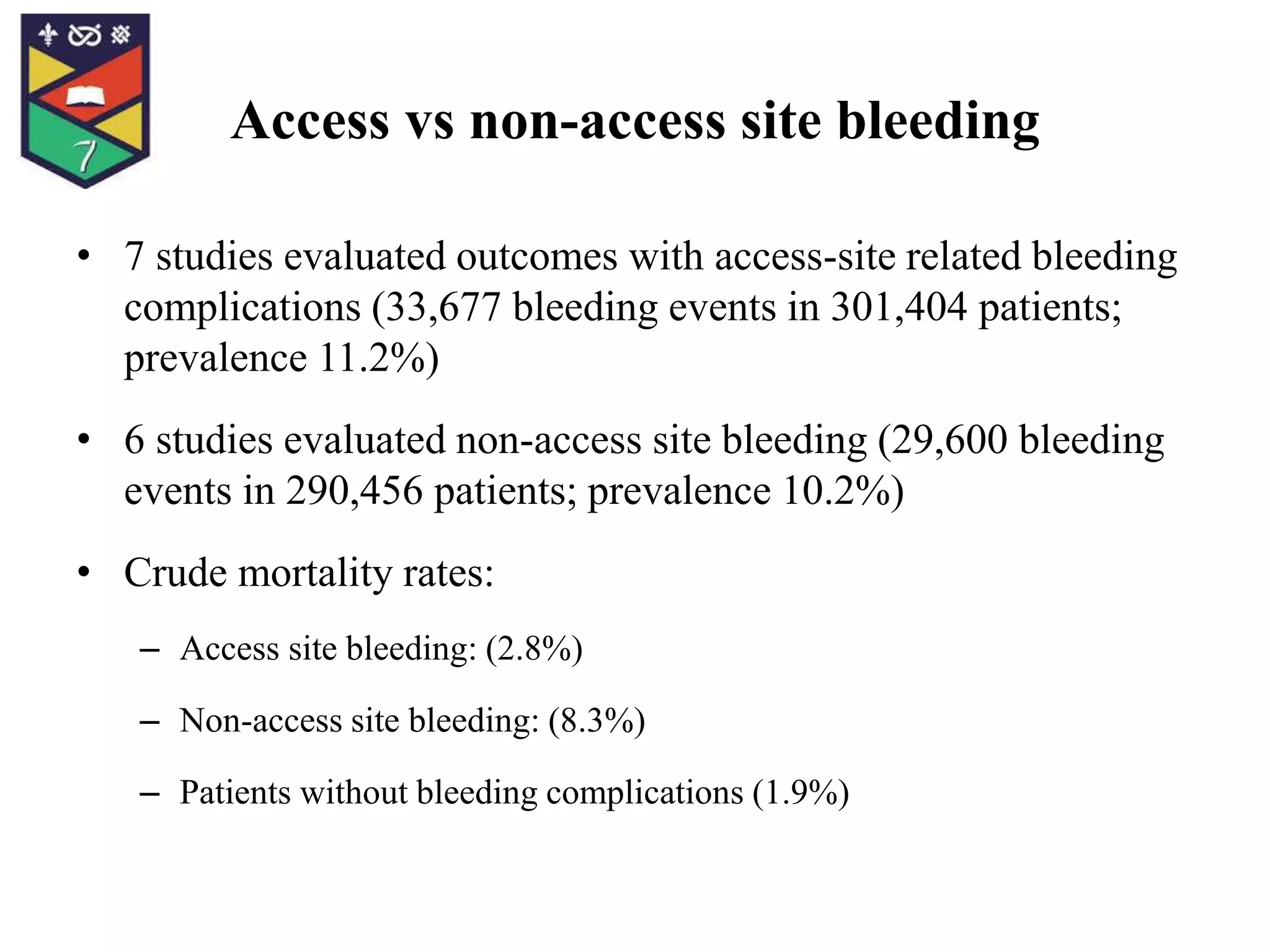
Access vs non-access site bleeding
• 7 studies evaluated outcomes with access-site related bleeding
complications (33,677 bleeding events in 301,404 patients;
prevalence 11.2%)
• 6 studies evaluated non-access site bleeding (29,600 bleeding
events in 290,456 patients; prevalence 10.2%)
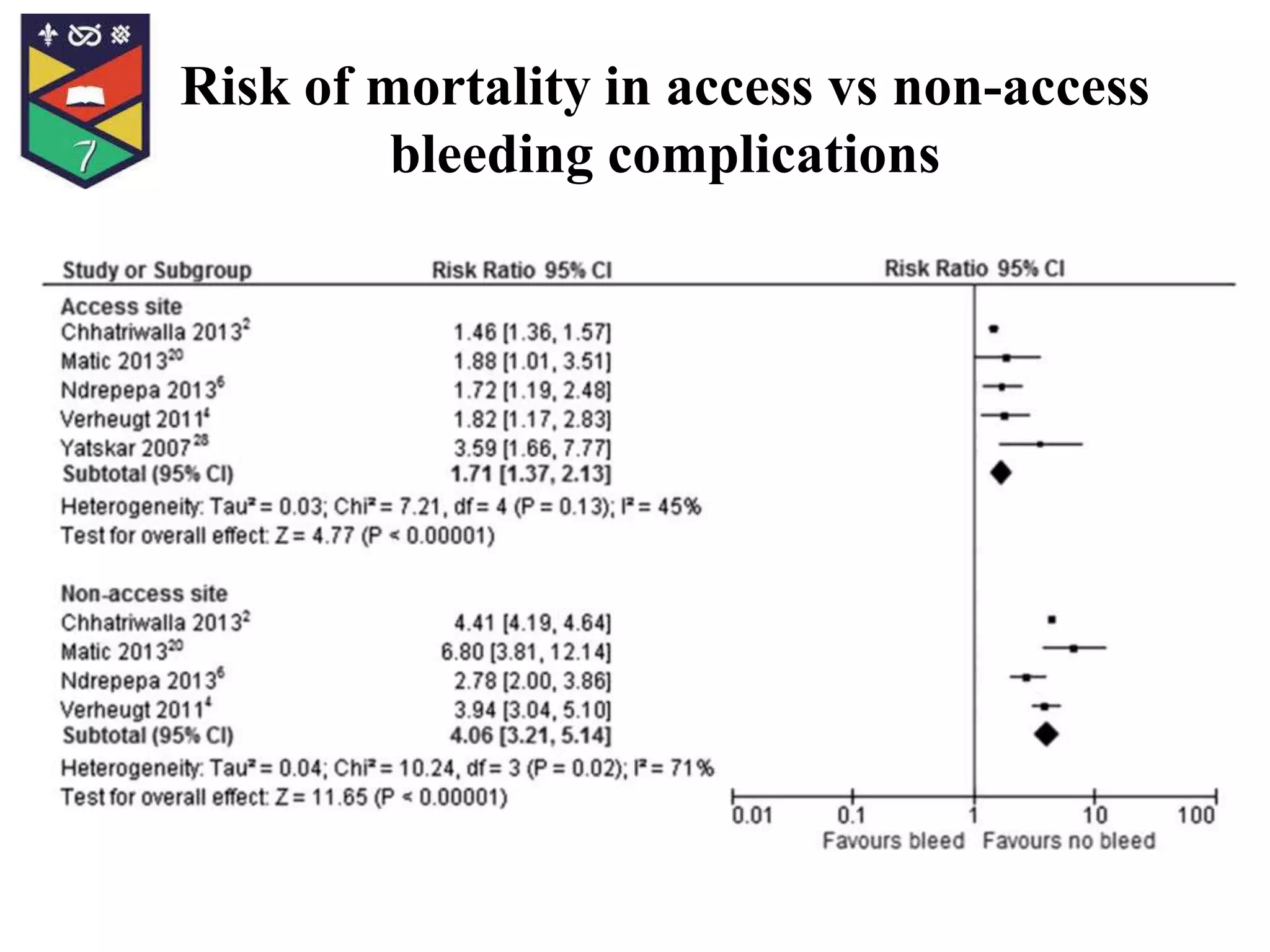
• Crude mortality rates:
– Access site bleeding: (2.8%)
– Non-access site bleeding: (8.3%)
– Patients without bleeding complications (1.9%)
Risk of mortality in access vs non-access
bleeding complications
Sensitivity analyses
• Similar findings in sensitivity analyses:
– RCTs only
– Studies that adjusted for anti-coagulant use
– Studies that adjusted for ACS vs non ACS
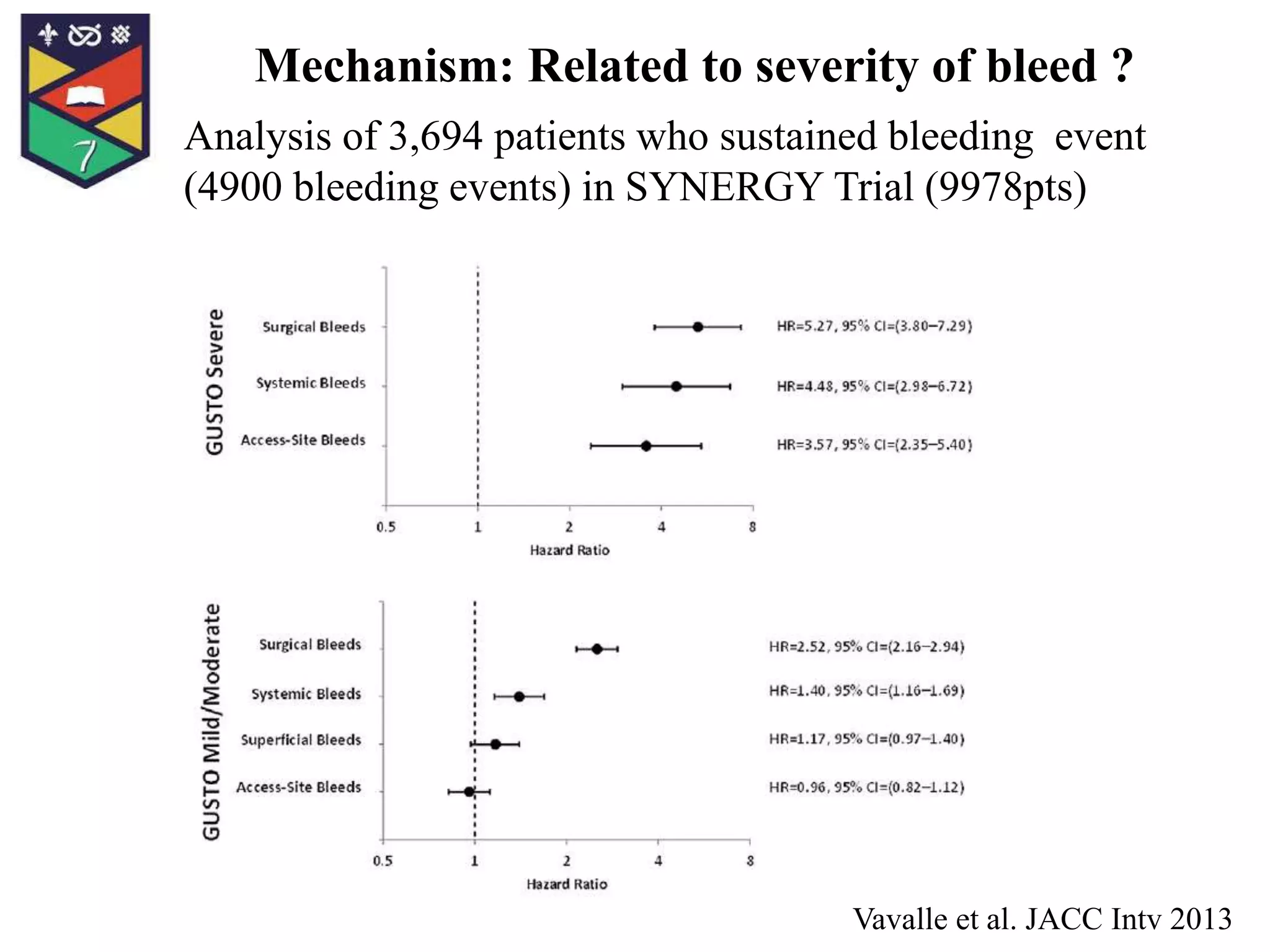
Mechanism: Related to severity of bleed ?
• Analysis of 3,694 patients who sustained bleeding event
(4900 bleeding events) in SYNERGY Trial (9978pts)
Vavalle et al. JACC Intv 2013
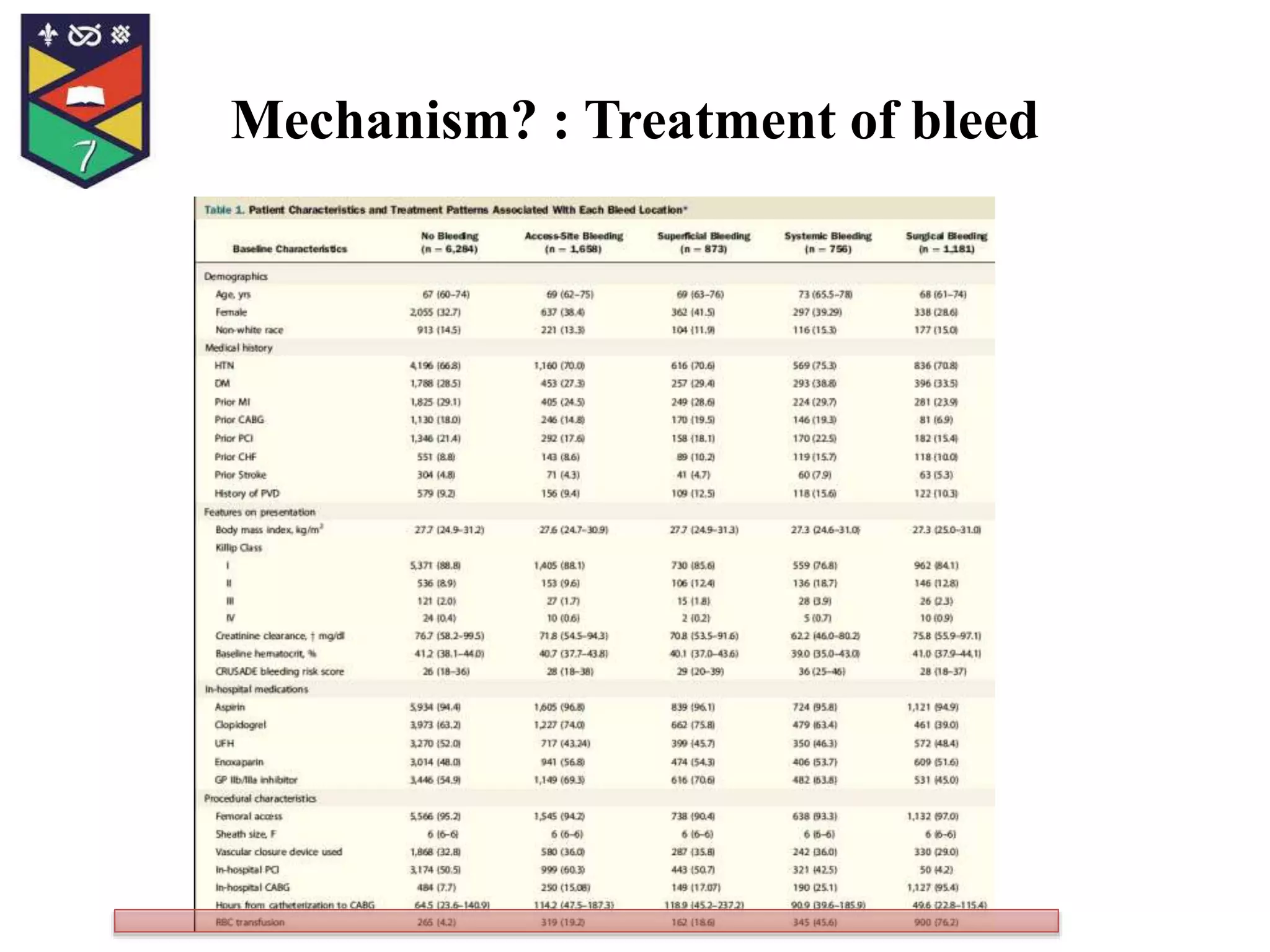
Mechanism? : Treatment of bleed
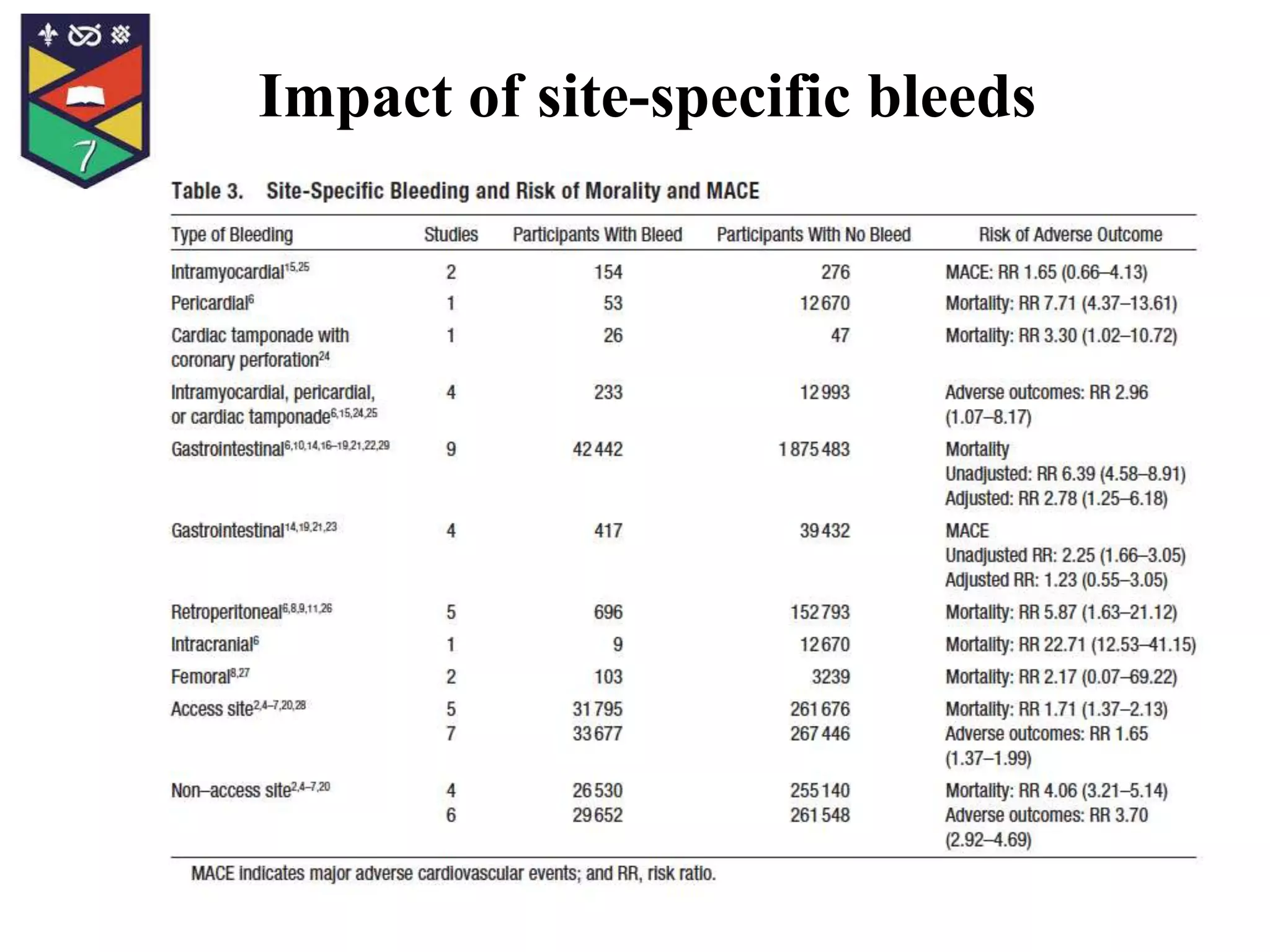
Impact of site-specific bleeds
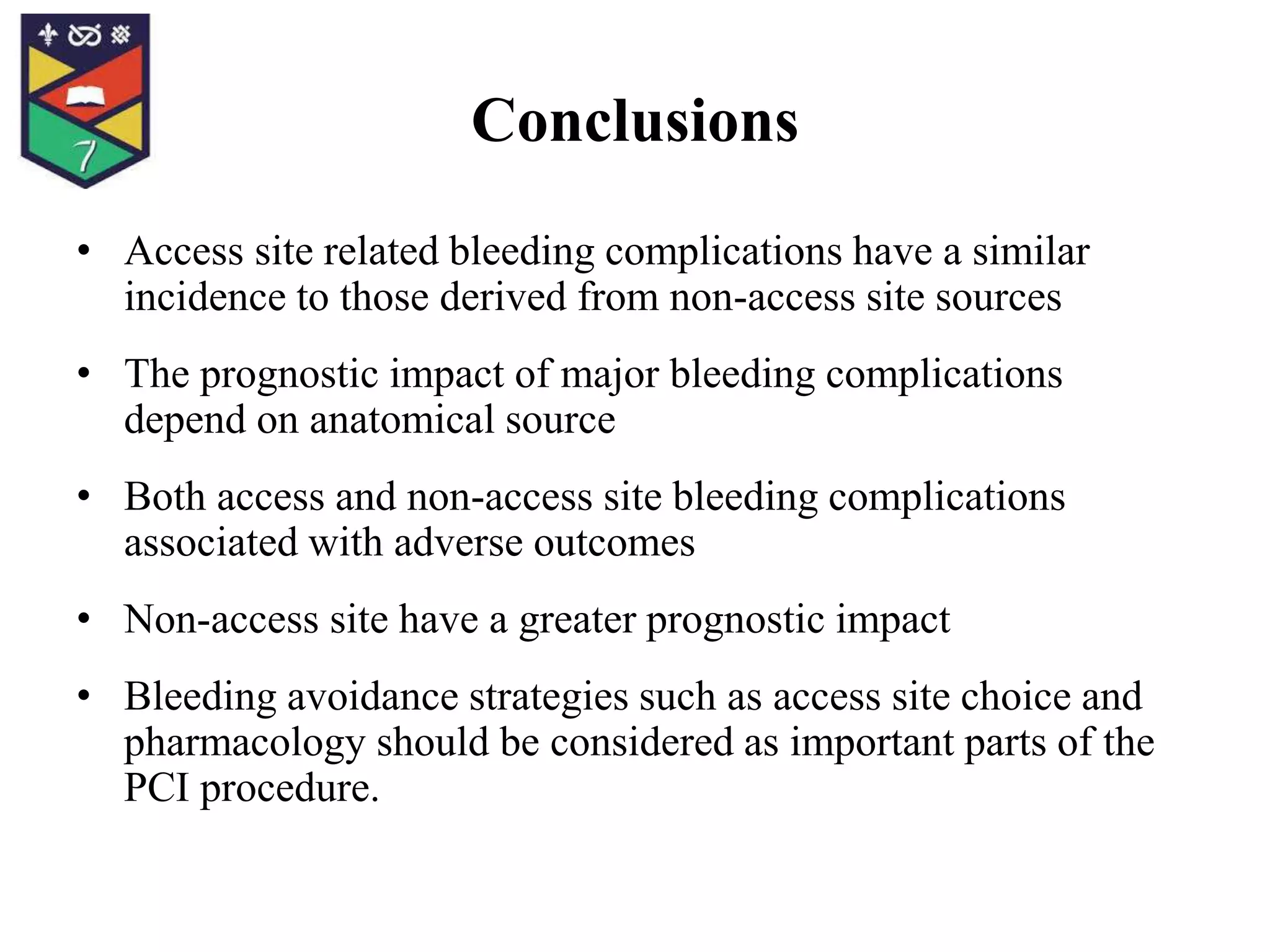
Conclusions
• Access site related bleeding complications have a similar
incidence to those derived from non-access site sources
• The prognostic impact of major bleeding complications
depend on anatomical source
• Both access and non-access site bleeding complications
associated with adverse outcomes
• Non-access site have a greater prognostic impact
• Bleeding avoidance strategies such as access site choice and
pharmacology should be considered as important parts of the
PCI procedure.

Mamas M - AIMRADIAL 2015 - Access vs. non-access site bleeding

  • 1.
    Access vs non-accesssite bleeding and risk of subsequent mortality and MACE Mamas Mamas Professor of Cardiology Keele University
  • 3.
    • Previous literaturereported conflicting data about both the incidence of access and non–access site-related bleeding complications and their relative prognostic impacts • Both incidence and prognostic impact will be determined by definition of major bleeding, severity of bleeding event, cohort studied, pharmacology used and way the bleed treated. • No previous systematic review or meta-analysis published studying the prevalence or prognostic impact of site-specific bleeding complications after PCI. Background
  • 4.
    Incidence: Depends ondefinition Bleeding definitions composed of: • Clinical events: intracranial haemorrhagic, retroperitoneal bleed, haematomas etc • Change in laboratory parameters such as differing values of Hb drops, HCT changes • A clinical outcome such as death, receipt of blood transfusion Different definitions are composed of different combinations of above
  • 6.
    Meta-analysis of 38 relevantstudies including 520,401 patients 3.3 fold independent increased risk of mortality following major bleed
  • 7.
  • 8.
    Aim • The aimof the study is to provide an overview of site specific bleeding events and study their prognostic impact on mortality and MACE
  • 9.
    Methods • Studies selectedthat investigated the impact of site-specific bleeding on mortality or MACE in patients who underwent PCI • A search of Embase (1974-March 2014) and Medline (1946- March 2014) on Ovid using search terms:
  • 10.
    Study flow diagram 2,400,645subjects with 106,490 bleeding events (4.5%)
  • 11.
  • 12.
    Access vs non-accesssite bleeding • 7 studies evaluated outcomes with access-site related bleeding complications (33,677 bleeding events in 301,404 patients; prevalence 11.2%) • 6 studies evaluated non-access site bleeding (29,600 bleeding events in 290,456 patients; prevalence 10.2%) • Crude mortality rates: – Access site bleeding: (2.8%) – Non-access site bleeding: (8.3%) – Patients without bleeding complications (1.9%)
  • 13.
    Risk of mortalityin access vs non-access bleeding complications
  • 14.
    Sensitivity analyses • Similarfindings in sensitivity analyses: – RCTs only – Studies that adjusted for anti-coagulant use – Studies that adjusted for ACS vs non ACS
  • 15.
    Mechanism: Related toseverity of bleed ? • Analysis of 3,694 patients who sustained bleeding event (4900 bleeding events) in SYNERGY Trial (9978pts) Vavalle et al. JACC Intv 2013
  • 16.
  • 18.
  • 19.
    Conclusions • Access siterelated bleeding complications have a similar incidence to those derived from non-access site sources • The prognostic impact of major bleeding complications depend on anatomical source • Both access and non-access site bleeding complications associated with adverse outcomes • Non-access site have a greater prognostic impact • Bleeding avoidance strategies such as access site choice and pharmacology should be considered as important parts of the PCI procedure.