ENVIRONMENT SCANNING
Natural Environment

GROUP NO. 8
CHITTRESH DHAWAN
DEEP DAGA
HIMANSHU ARORA
NIKHIL SINGHVI
SWATI SINGHAL
CONTENTS
• Environment Scanning Approach
• Natural Environment Trends at HUL
–
–
–
–
–

What Customer Wants
Packaging
Water Footprint
Reducing Wastes
Greenhouse Gases

• Future Marketing Strategy
• Ethical Aspect
Environmental Scanning Approach
Does trend
create a
marketing
opportunity
?

Identify
relevant
environment
al factors
and trends

Decide how
to take
advantage
of
opportunity

Does trend
a pose a
marketing
threat

Decide how
to minimize
threat

Assess
impact of
trends on
markets &
marketing
activities
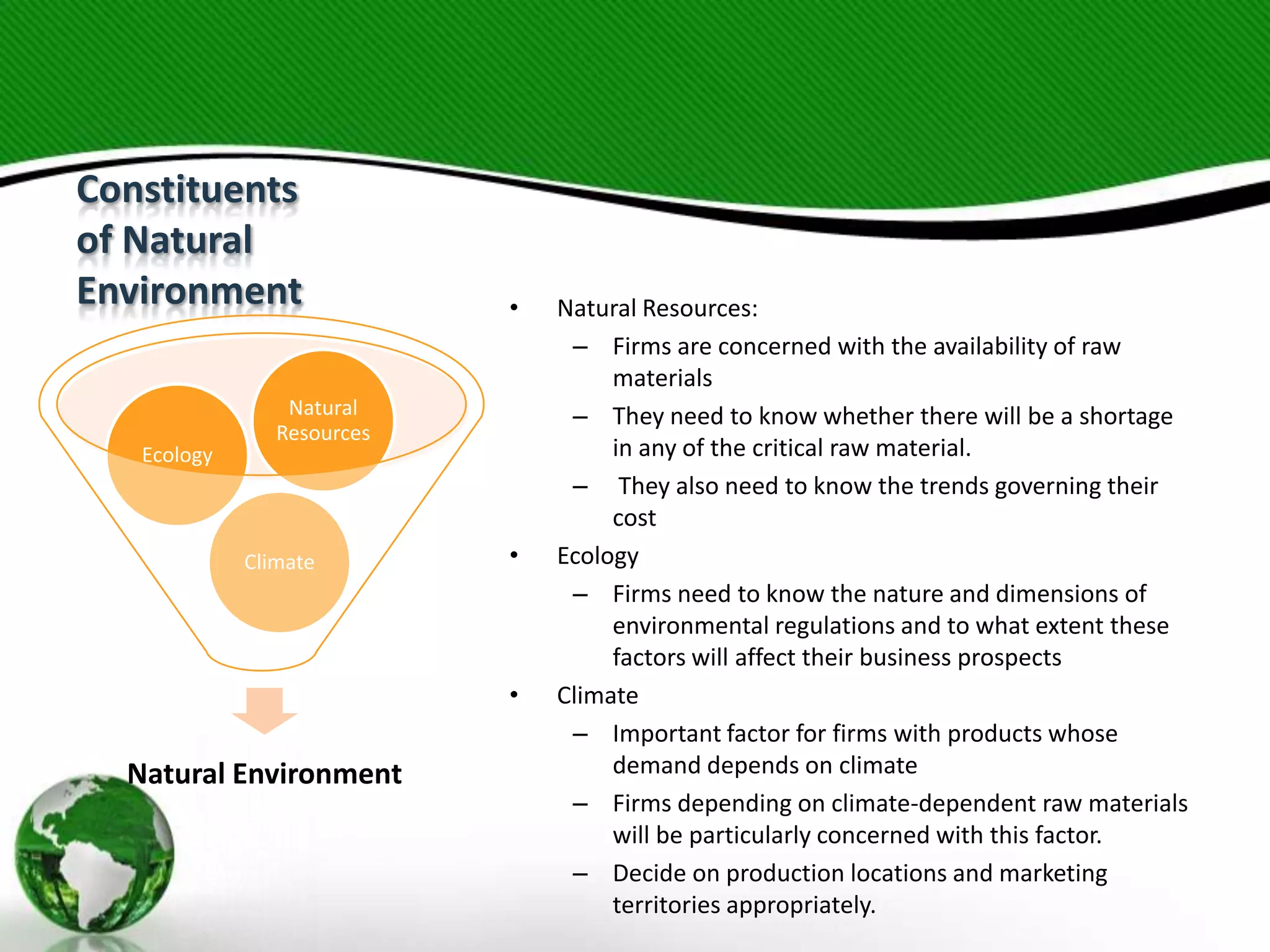
Constituents
of Natural
Environment

Ecology

•

Natural
Resources

Climate

•

•

Natural Environment

Natural Resources:
– Firms are concerned with the availability of raw
materials
– They need to know whether there will be a shortage
in any of the critical raw material.
– They also need to know the trends governing their
cost
Ecology
– Firms need to know the nature and dimensions of
environmental regulations and to what extent these
factors will affect their business prospects
Climate
– Important factor for firms with products whose
demand depends on climate
– Firms depending on climate-dependent raw materials
will be particularly concerned with this factor.
– Decide on production locations and marketing
territories appropriately.
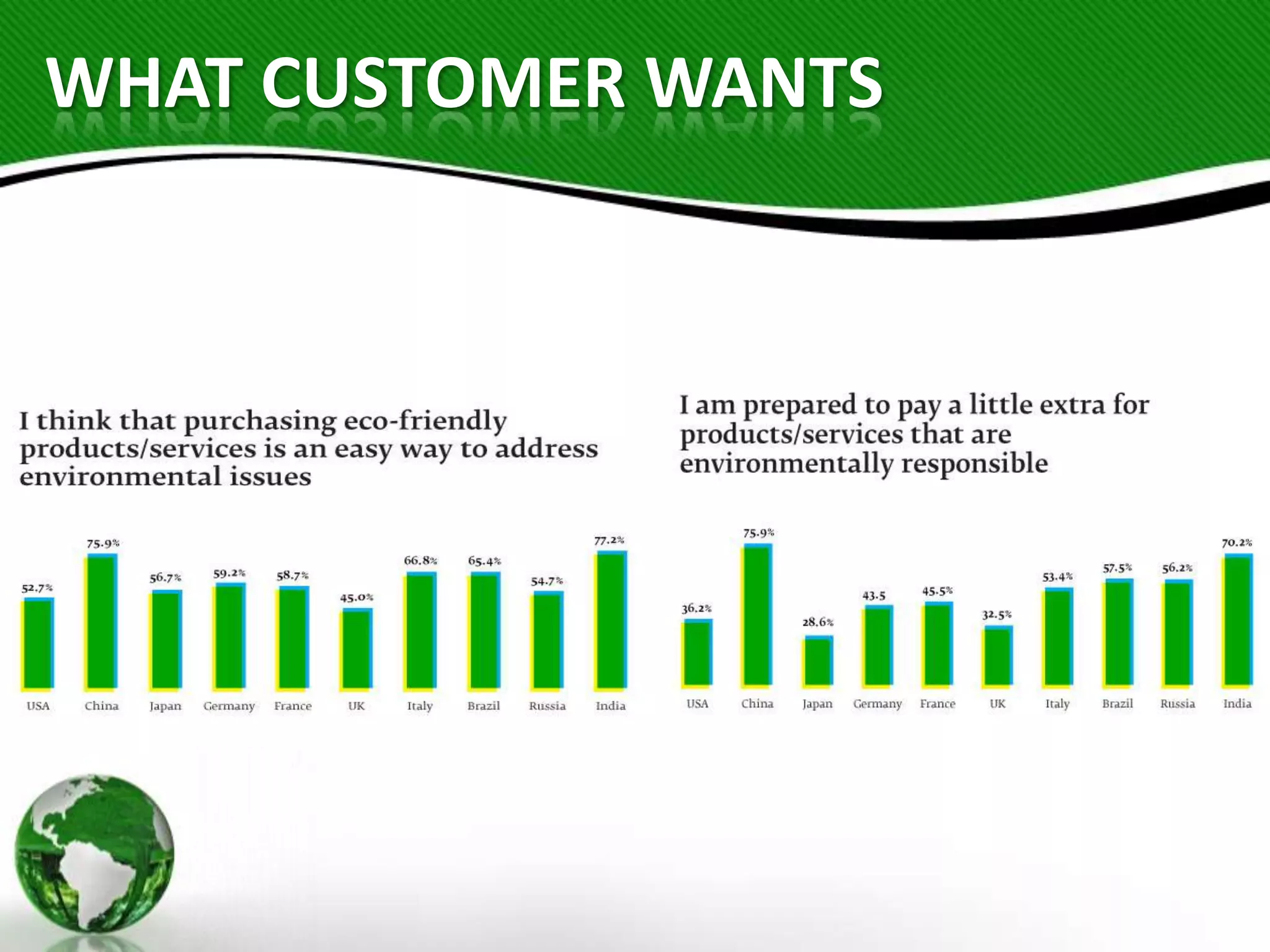
WHAT CUSTOMER WANTS
PACKAGING
WHAT HAS BEEN DONE TILL NOW
REDUCE

An approximate 9.5% reduction in weight per consumer use over
2011-12 compared to 2010, achieved through a combination of light
weighting and material design optimisation

REUSE

Introduced refills in several markets during 2012, including China,
India, South Africa and the UK

RECYCLE

3,126 tonnes of post-consumer recycled materials incorporated into
rigid plastic packaging
3.5% increase in recycling and recovery rates, over the 2010 average
Recycling and Recovery Index (RRI), averaged across top 14 countries
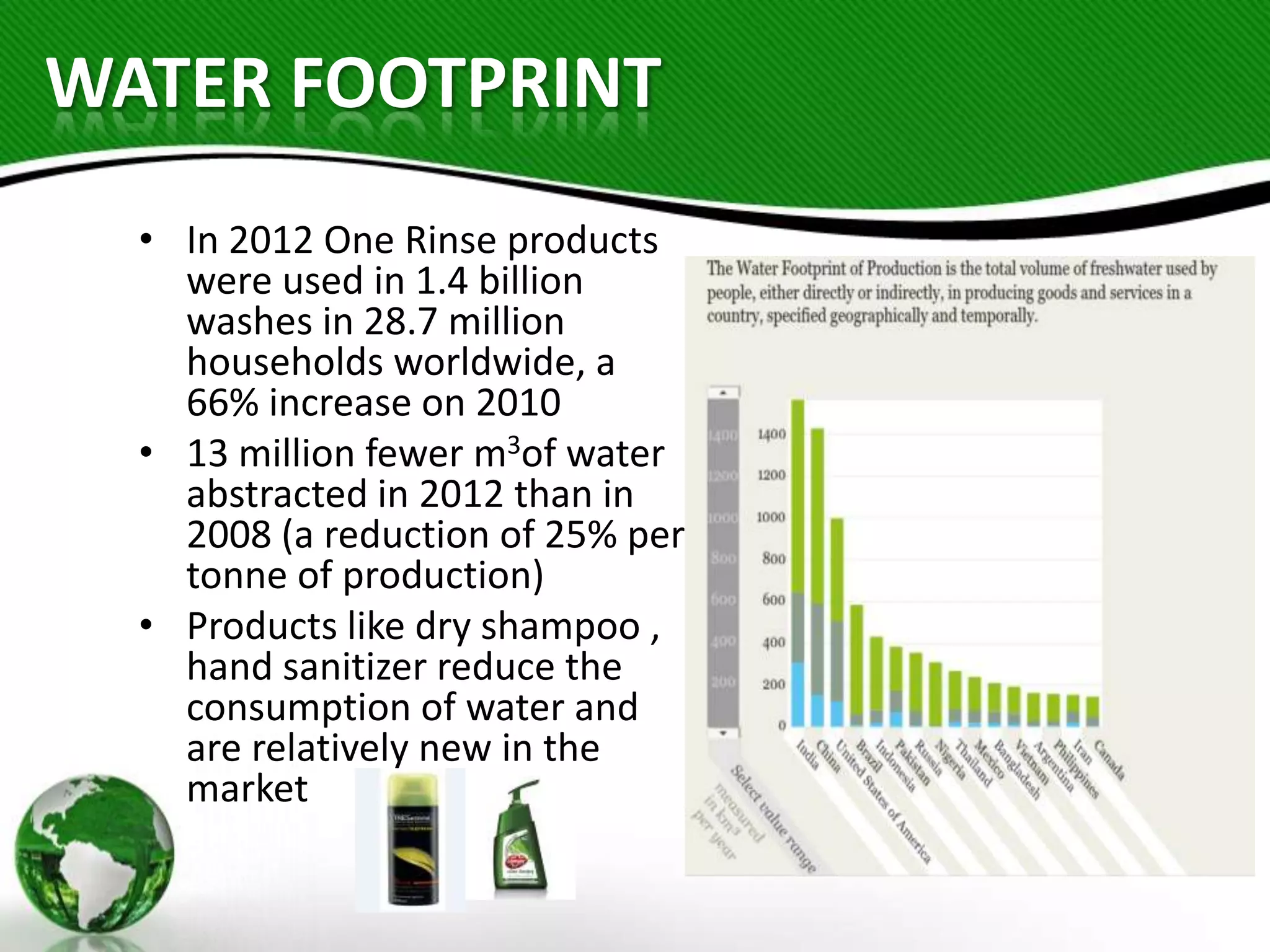
WATER FOOTPRINT
• In 2012 One Rinse products
were used in 1.4 billion
washes in 28.7 million
households worldwide, a
66% increase on 2010
• 13 million fewer m3of water
abstracted in 2012 than in
2008 (a reduction of 25% per
tonne of production)
• Products like dry shampoo ,
hand sanitizer reduce the
consumption of water and
are relatively new in the
market
REDUCING WASTES
• 76,000 fewer tonnes of total waste in 2012
than in 2008
• 7 new factories bound to open in 2013
with eco-efficient designs to reduce waste
up to 50 %
• Reducing the environment impact of
sachets
• Turning Sachet waste into fuel through
Pyrolysis
GREENHOUSE GASES
• Concentrating the laundry products helps to
reduce greenhouse gas emissions.
– 14% of portfolio made up of concentrated and
compacted products at end 2012, compared to
baseline of 4% in 2008

• Increasing the use of energy from renewable
sources at our manufacturing sites.
– a reduction of 31.5% per tonne of production
from 2008 to 2012

• Reduced energy consumption in offices
– 11% reduction in energy (kWh) purchased per
occupant since 2010
FUTURE MARKETING STRATEGY
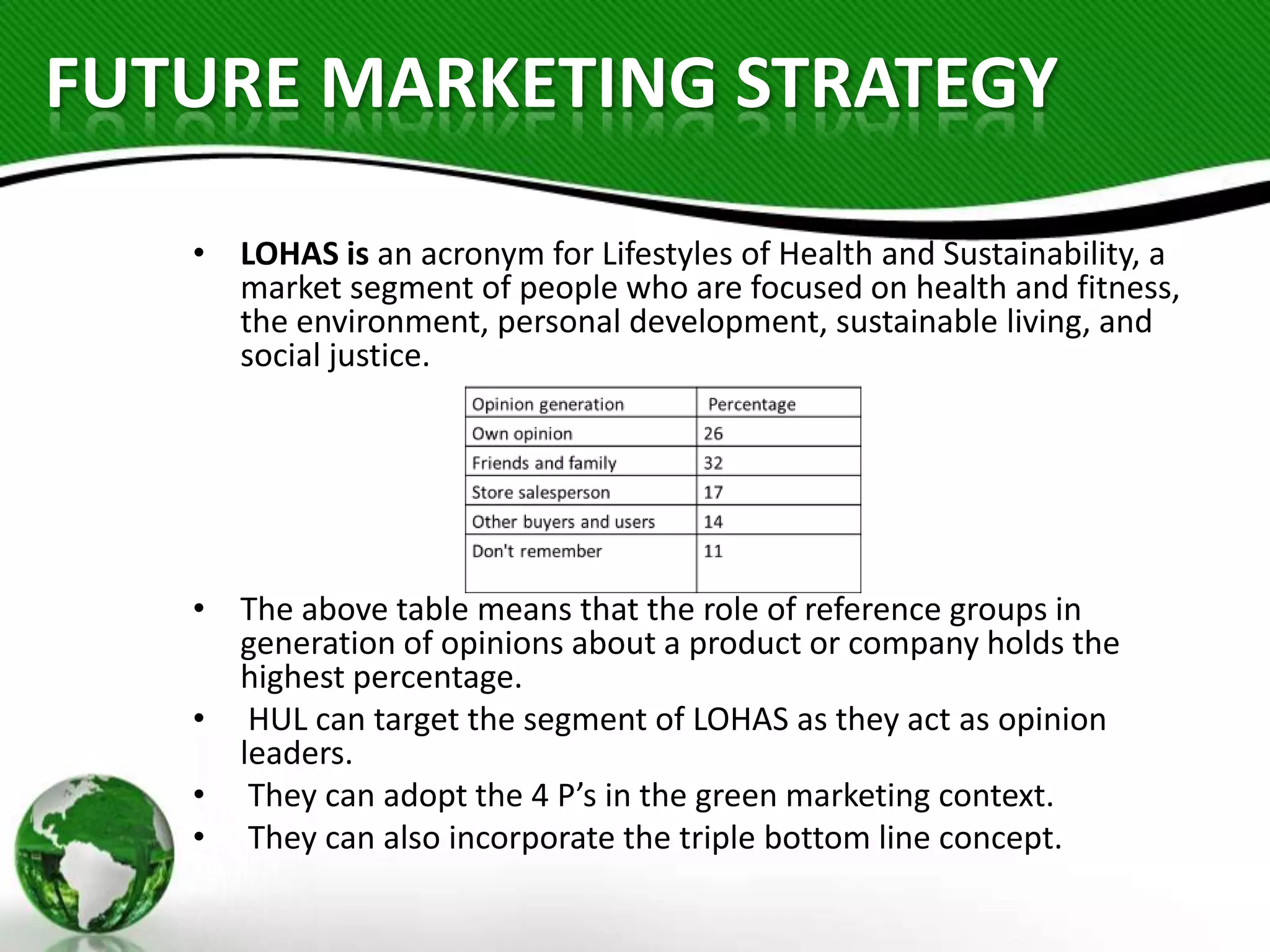
• LOHAS is an acronym for Lifestyles of Health and Sustainability, a
market segment of people who are focused on health and fitness,
the environment, personal development, sustainable living, and
social justice.

• The above table means that the role of reference groups in
generation of opinions about a product or company holds the
highest percentage.
• HUL can target the segment of LOHAS as they act as opinion
leaders.
• They can adopt the 4 P’s in the green marketing context.
• They can also incorporate the triple bottom line concept.
FUTURE MARKETING STRATEGY
4 P’s IN GREEN MARKETING
• To innovate and offer products that follow
the policy reduce, reuse and recycle
• Consumers are willing to pay a premium if
the product is helping in conserving natural
resources

• To make available them at a location which
reduces the frequency of travel of the
customers, hence reducing the fuel
consumption
• To communicate specifically the benefits of
these products to the opinion leaders
ETHICAL ASPECT
• Tackle Green-washing issue in the
marketing
– Not mis-leading consumers by printing false
“green” claims

• Mandate environmental reporting
– Start reflecting the externalities caused by
producing products ( deforestation floods etc)
into their financials
THANK YOU

Scanning Natural Environment of HUL

  • 1.
    ENVIRONMENT SCANNING Natural Environment GROUPNO. 8 CHITTRESH DHAWAN DEEP DAGA HIMANSHU ARORA NIKHIL SINGHVI SWATI SINGHAL
  • 2.
    CONTENTS • Environment ScanningApproach • Natural Environment Trends at HUL – – – – – What Customer Wants Packaging Water Footprint Reducing Wastes Greenhouse Gases • Future Marketing Strategy • Ethical Aspect
  • 3.
    Environmental Scanning Approach Doestrend create a marketing opportunity ? Identify relevant environment al factors and trends Decide how to take advantage of opportunity Does trend a pose a marketing threat Decide how to minimize threat Assess impact of trends on markets & marketing activities
  • 4.
    Constituents of Natural Environment Ecology • Natural Resources Climate • • Natural Environment NaturalResources: – Firms are concerned with the availability of raw materials – They need to know whether there will be a shortage in any of the critical raw material. – They also need to know the trends governing their cost Ecology – Firms need to know the nature and dimensions of environmental regulations and to what extent these factors will affect their business prospects Climate – Important factor for firms with products whose demand depends on climate – Firms depending on climate-dependent raw materials will be particularly concerned with this factor. – Decide on production locations and marketing territories appropriately.
  • 5.
  • 6.
    PACKAGING WHAT HAS BEENDONE TILL NOW REDUCE An approximate 9.5% reduction in weight per consumer use over 2011-12 compared to 2010, achieved through a combination of light weighting and material design optimisation REUSE Introduced refills in several markets during 2012, including China, India, South Africa and the UK RECYCLE 3,126 tonnes of post-consumer recycled materials incorporated into rigid plastic packaging 3.5% increase in recycling and recovery rates, over the 2010 average Recycling and Recovery Index (RRI), averaged across top 14 countries
  • 7.
    WATER FOOTPRINT • In2012 One Rinse products were used in 1.4 billion washes in 28.7 million households worldwide, a 66% increase on 2010 • 13 million fewer m3of water abstracted in 2012 than in 2008 (a reduction of 25% per tonne of production) • Products like dry shampoo , hand sanitizer reduce the consumption of water and are relatively new in the market
  • 8.
    REDUCING WASTES • 76,000fewer tonnes of total waste in 2012 than in 2008 • 7 new factories bound to open in 2013 with eco-efficient designs to reduce waste up to 50 % • Reducing the environment impact of sachets • Turning Sachet waste into fuel through Pyrolysis
  • 9.
    GREENHOUSE GASES • Concentratingthe laundry products helps to reduce greenhouse gas emissions. – 14% of portfolio made up of concentrated and compacted products at end 2012, compared to baseline of 4% in 2008 • Increasing the use of energy from renewable sources at our manufacturing sites. – a reduction of 31.5% per tonne of production from 2008 to 2012 • Reduced energy consumption in offices – 11% reduction in energy (kWh) purchased per occupant since 2010
  • 10.
    FUTURE MARKETING STRATEGY •LOHAS is an acronym for Lifestyles of Health and Sustainability, a market segment of people who are focused on health and fitness, the environment, personal development, sustainable living, and social justice. • The above table means that the role of reference groups in generation of opinions about a product or company holds the highest percentage. • HUL can target the segment of LOHAS as they act as opinion leaders. • They can adopt the 4 P’s in the green marketing context. • They can also incorporate the triple bottom line concept.
  • 11.
    FUTURE MARKETING STRATEGY 4P’s IN GREEN MARKETING • To innovate and offer products that follow the policy reduce, reuse and recycle • Consumers are willing to pay a premium if the product is helping in conserving natural resources • To make available them at a location which reduces the frequency of travel of the customers, hence reducing the fuel consumption • To communicate specifically the benefits of these products to the opinion leaders
  • 12.
    ETHICAL ASPECT • TackleGreen-washing issue in the marketing – Not mis-leading consumers by printing false “green” claims • Mandate environmental reporting – Start reflecting the externalities caused by producing products ( deforestation floods etc) into their financials
  • 13.