1.1 BEC manuals/learning guides 
1.2 Class programs 
1.3 List of fast students 
1.4 List of average students 
1.5 List of below average students 
1.6 List of learners with disability 
1.7 List of non-readers 
1.8 Reading program 
1.9 ALS program 
1.10 Greening program 
1.11 Homeroom meeting 
1.12 Teacher’s performance 
1.13 List of smart students
2.1 SSG report 
2.2 YES – O/Science Club Report 
2.3 English Festival 
2.4 Mathematics Fair/Olympics Report 
2.5 Filipino Club Report/Buwan ng Wika 
2.6 Report United Nations Month 
2.7 Family Day 
2.8 Girls Scout 
2.9 Boy’s Scout of the Phil. Report 
3.0 Activity sheets for students
 3.1 Comparative NAT Review 
 3.2 PHIL-IRI Test Results 
 3.3 Consolidated PRETEST/POST TEST Results 
 3.4 Consolidated School Tests Results 
 3.5 Numeracy and Dictation tests results 
 3.6 ESRYA test results 
 3.7 List of instructional MAE/used by teachers 
 3.8 Consolidated number of families who used educational CD’s/tapes 
 3.9 Project Photo ME 
 3.10 Formative/summative test plan 
 3.11 Class Record of students 
 3.12 Anecdotal Records 
 3.13 ICT program 
 3.14 Midyear/year end tracking competencies
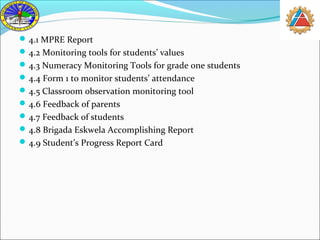
4.1 MPRE Report 
4.2 Monitoring tools for students’ values 
4.3 Numeracy Monitoring Tools for grade one students 
4.4 Form 1 to monitor students’ attendance 
4.5 Classroom observation monitoring tool 
4.6 Feedback of parents 
4.7 Feedback of students 
4.8 Brigada Eskwela Accomplishing Report 
4.9 Student’s Progress Report Card
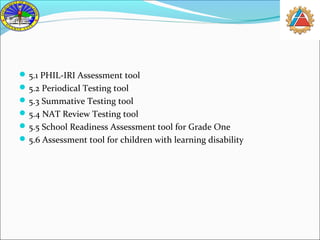
5.1 PHIL-IRI Assessment tool 
5.2 Periodical Testing tool 
5.3 Summative Testing tool 
5.4 NAT Review Testing tool 
5.5 School Readiness Assessment tool for Grade One 
5.6 Assessment tool for children with learning disability
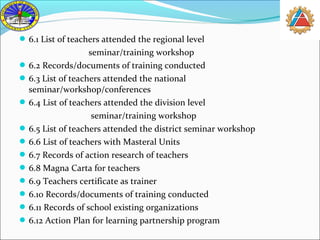
6.1 List of teachers attended the regional level 
seminar/training workshop 
6.2 Records/documents of training conducted 
6.3 List of teachers attended the national 
seminar/workshop/conferences 
6.4 List of teachers attended the division level 
seminar/training workshop 
6.5 List of teachers attended the district seminar workshop 
6.6 List of teachers with Masteral Units 
6.7 Records of action research of teachers 
6.8 Magna Carta for teachers 
6.9 Teachers certificate as trainer 
6.10 Records/documents of training conducted 
6.11 Records of school existing organizations 
6.12 Action Plan for learning partnership program
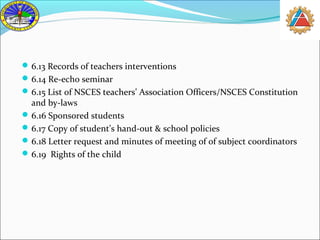
6.13 Records of teachers interventions 
6.14 Re-echo seminar 
6.15 List of NSCES teachers’ Association Officers/NSCES Constitution 
and by-laws 
6.16 Sponsored students 
6.17 Copy of student’s hand-out & school policies 
6.18 Letter request and minutes of meeting of of subject coordinators 
6.19 Rights of the child
7.1 SSG sponsored activities 
7.2 School Activities 
7.3 NSCES Revised school based management action plan for 
development 
7.4 List of student’s investigatory projects 
7.5 Pictures of learning environement 
7.6 School programs and invitation 
7.7 List of research project 
7.8 List of student’s journal 
7.9 Teacher’s portfolio 
7.10 Student’s portfolio 
7.11 DARE program
SBM VALIDATION MECHANICS 
Dimension 2 – Curriculum and Learning 
1. Learners of the school community are identified 
2. Localized materials are formulated and utilized 
3. Stakeholders were tapped to assist in review classes, reading, 
remediation, etc 
4. Differentiated instruction, activities and materials to different 
typologies of learners are available and practiced. Records of gains 
were discussed in meetings 
5. Assessment conducted regularly, results evaluated and analyzed and 
appropriate interventions implemented 
6. School Manual and School Protocol for teachers capture the child 
Protection Policy 
7. Self-learning modules are available 
8. List of children who are at risk of dropping-out
SBM VALIDATION MECHANICS 
Dimension 2 – Curriculum and Learning 
1. Learners of the school community are identified 
2. Localized materials are formulated and utilized 
3. Stakeholders were tapped to assist in review classes, reading, 
remediation, etc 
4. Differentiated instruction, activities and materials to different 
typologies of learners are available and practiced. Records of gains 
were discussed in meetings 
5. Assessment conducted regularly, results evaluated and analyzed and 
appropriate interventions implemented 
6. School Manual and School Protocol for teachers capture the child 
Protection Policy 
7. Self-learning modules are available 
8. List of children who are at risk of dropping-out

Sbm dimension 2

  • 1.
    1.1 BEC manuals/learningguides 1.2 Class programs 1.3 List of fast students 1.4 List of average students 1.5 List of below average students 1.6 List of learners with disability 1.7 List of non-readers 1.8 Reading program 1.9 ALS program 1.10 Greening program 1.11 Homeroom meeting 1.12 Teacher’s performance 1.13 List of smart students
  • 2.
    2.1 SSG report 2.2 YES – O/Science Club Report 2.3 English Festival 2.4 Mathematics Fair/Olympics Report 2.5 Filipino Club Report/Buwan ng Wika 2.6 Report United Nations Month 2.7 Family Day 2.8 Girls Scout 2.9 Boy’s Scout of the Phil. Report 3.0 Activity sheets for students
  • 3.
     3.1 ComparativeNAT Review  3.2 PHIL-IRI Test Results  3.3 Consolidated PRETEST/POST TEST Results  3.4 Consolidated School Tests Results  3.5 Numeracy and Dictation tests results  3.6 ESRYA test results  3.7 List of instructional MAE/used by teachers  3.8 Consolidated number of families who used educational CD’s/tapes  3.9 Project Photo ME  3.10 Formative/summative test plan  3.11 Class Record of students  3.12 Anecdotal Records  3.13 ICT program  3.14 Midyear/year end tracking competencies
  • 4.
    4.1 MPRE Report 4.2 Monitoring tools for students’ values 4.3 Numeracy Monitoring Tools for grade one students 4.4 Form 1 to monitor students’ attendance 4.5 Classroom observation monitoring tool 4.6 Feedback of parents 4.7 Feedback of students 4.8 Brigada Eskwela Accomplishing Report 4.9 Student’s Progress Report Card
  • 5.
    5.1 PHIL-IRI Assessmenttool 5.2 Periodical Testing tool 5.3 Summative Testing tool 5.4 NAT Review Testing tool 5.5 School Readiness Assessment tool for Grade One 5.6 Assessment tool for children with learning disability
  • 6.
    6.1 List ofteachers attended the regional level seminar/training workshop 6.2 Records/documents of training conducted 6.3 List of teachers attended the national seminar/workshop/conferences 6.4 List of teachers attended the division level seminar/training workshop 6.5 List of teachers attended the district seminar workshop 6.6 List of teachers with Masteral Units 6.7 Records of action research of teachers 6.8 Magna Carta for teachers 6.9 Teachers certificate as trainer 6.10 Records/documents of training conducted 6.11 Records of school existing organizations 6.12 Action Plan for learning partnership program
  • 7.
    6.13 Records ofteachers interventions 6.14 Re-echo seminar 6.15 List of NSCES teachers’ Association Officers/NSCES Constitution and by-laws 6.16 Sponsored students 6.17 Copy of student’s hand-out & school policies 6.18 Letter request and minutes of meeting of of subject coordinators 6.19 Rights of the child
  • 8.
    7.1 SSG sponsoredactivities 7.2 School Activities 7.3 NSCES Revised school based management action plan for development 7.4 List of student’s investigatory projects 7.5 Pictures of learning environement 7.6 School programs and invitation 7.7 List of research project 7.8 List of student’s journal 7.9 Teacher’s portfolio 7.10 Student’s portfolio 7.11 DARE program
  • 9.
    SBM VALIDATION MECHANICS Dimension 2 – Curriculum and Learning 1. Learners of the school community are identified 2. Localized materials are formulated and utilized 3. Stakeholders were tapped to assist in review classes, reading, remediation, etc 4. Differentiated instruction, activities and materials to different typologies of learners are available and practiced. Records of gains were discussed in meetings 5. Assessment conducted regularly, results evaluated and analyzed and appropriate interventions implemented 6. School Manual and School Protocol for teachers capture the child Protection Policy 7. Self-learning modules are available 8. List of children who are at risk of dropping-out
  • 10.
    SBM VALIDATION MECHANICS Dimension 2 – Curriculum and Learning 1. Learners of the school community are identified 2. Localized materials are formulated and utilized 3. Stakeholders were tapped to assist in review classes, reading, remediation, etc 4. Differentiated instruction, activities and materials to different typologies of learners are available and practiced. Records of gains were discussed in meetings 5. Assessment conducted regularly, results evaluated and analyzed and appropriate interventions implemented 6. School Manual and School Protocol for teachers capture the child Protection Policy 7. Self-learning modules are available 8. List of children who are at risk of dropping-out