Social and Behavior Change
Communication (SBCC)
Framework
October 4, 2010
SBCC has 3 characteristics:
1. SBCC is an interactive, researched and
planned process
2. SBCC applies a socio-ecological model to
find the tipping point for change
3. SBCC operates through three key
strategies, namely
a) advocacy,
b) social mobilization, and
c) behavior change communication.
Steps:
1. Understanding the
Context through
Situation &
Communication
Analysis
2. Focusing & Designing
the Communication
Strategy
3. Creating Interventions
& Materials for
Change
4. Implementing &
Monitoring Change
Processes
5. Evaluation &
Replanning for
Outcome and
Sustainability
Characteristic 1. SBCC is a Process
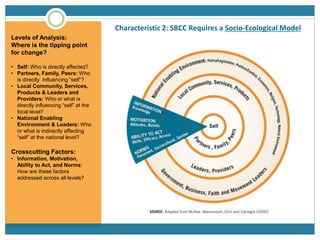
Levels of Analysis:
Where is the tipping point
for change?
• Self: Who is directly affected?
• Partners, Family, Peers: Who
is directly influencing “self”?
• Local Community, Services,
Products & Leaders and
Providers: Who or what is
directly influencing “self” at the
local level?
• National Enabling
Environment & Leaders: Who
or what is indirectly affecting
“self” at the national level?
Crosscutting Factors:
• Information, Motivation,
Ability to Act, and Norms:
How are these factors
addressed across all levels?
Characteristic 2: SBCC Requires a Socio-Ecological Model
Analysis determines the
mix of strategies:
•Advocacy to raise
resources & political/ social
leadership commitment for
change goals
•Social Mobilization for
wider participation,
collective action and
ownership, including
community mobilization
•Behavior Change
Communication for
changes in knowledge,
attitudes and practices of
specific audiences
Characteristic 3: SBCC Operates Through Three
Key Strategies

SBCC Framework

  • 1.
    Social and BehaviorChange Communication (SBCC) Framework October 4, 2010
  • 2.
    SBCC has 3characteristics: 1. SBCC is an interactive, researched and planned process 2. SBCC applies a socio-ecological model to find the tipping point for change 3. SBCC operates through three key strategies, namely a) advocacy, b) social mobilization, and c) behavior change communication.
  • 3.
    Steps: 1. Understanding the Contextthrough Situation & Communication Analysis 2. Focusing & Designing the Communication Strategy 3. Creating Interventions & Materials for Change 4. Implementing & Monitoring Change Processes 5. Evaluation & Replanning for Outcome and Sustainability Characteristic 1. SBCC is a Process
  • 4.
    Levels of Analysis: Whereis the tipping point for change? • Self: Who is directly affected? • Partners, Family, Peers: Who is directly influencing “self”? • Local Community, Services, Products & Leaders and Providers: Who or what is directly influencing “self” at the local level? • National Enabling Environment & Leaders: Who or what is indirectly affecting “self” at the national level? Crosscutting Factors: • Information, Motivation, Ability to Act, and Norms: How are these factors addressed across all levels? Characteristic 2: SBCC Requires a Socio-Ecological Model
  • 5.
    Analysis determines the mixof strategies: •Advocacy to raise resources & political/ social leadership commitment for change goals •Social Mobilization for wider participation, collective action and ownership, including community mobilization •Behavior Change Communication for changes in knowledge, attitudes and practices of specific audiences Characteristic 3: SBCC Operates Through Three Key Strategies

Editor's Notes

  • #5 Ecological means how people relate to their environment, shown by the rings