Pinple Parag et al. Int. Journal of Engineering Research and Applications www.ijera.com
ISSN : 2248-9622,Vol. 5, Issue 6, ( Part -2) June 2015, pp.109-111
www.ijera.com 109|P a g e
Shortcut Path Tress for Zigbee based Wireless Network
Parag Pimple,Dr.B. G. Hogade, Dr. Ravish R. Singh, Atul Sankhe.
(Student ME(EXTC) Mumbai University),
(HOD(Electronics) Terna COE Mumbai),
(HOD(EXTC) L. R. Tiwari COE Mumbai)
Abstract-
Neighbour Table based shortcut tree routing protocol provides the near optimal routing path as well as maintains the
advantages of the ZigBee tree routing such as no route discovery overhead and low memory consumption. However, in
Neighbour table based Shortcut tree routing the limitation is that route discovery is only on basis of Distance between
Nodes; thus, it cannot provide optimized paths. Here, the concept of link quality factor between nodes along with the
distance between two nodes to calculate the shortest path between source and destination. Where the Link quality will
depend upon traffic between two nodes, higher the traffic lesser the link quality and vice versa. Score will be calculated for
links which is function of Distance and Link Quality between nodes i.e score= f(d,lq), this is the idea proposed in
OPTIMIZING ROUTING PATHS UING SHORTCUT TREES FOR ZIGBEE BASED WIRELESS NETWORK.
I. Introduction
ZigBee is a worldwide standard of wireless
personal area network targeted to low-power, cost-
effective, reliable, and scalable products and
applications. Different from the other personal area
network standards such as Bluetooth, UWB, and
Wireless USB, ZigBee provides the low power
wireless mesh networking and supports up to
thousands of devices in a network. Based on these
characteristics, ZigBee Alliance has extended the
applications to the diverse areas such as smart home,
building automation , health care , smart energy ,
telecommunication, and retail services.
The ZigBee network layer, which is the core of the
standard, provides dynamic network formation,
addressing, routing, and network management
functions. ZigBee supports up to 64,000 devices in a
network with the multihop tree and mesh topologies
as well as star topology. Every node is assigned a
unique 16-bit short address dynamically using either
distributed addressing or stochastic addressing
scheme. The routing protocols of ZigBee are diverse
so that a system or users can choose the optimal
II. Literature Survey
Taehong Kim, SeongHoon Kim, Jinyoung
Yang, Seong-, Daeyoung Kim, “Neighbor Table
Based Shortcut Tree Routingin ZigBee Wireless
Networks”, IEEE TRANSACTIONS ON
PARALLEL AND DISTRIBUTED SYSTEMS,
VOL. 25, NO. 3, MARCH 2014.
The ZigBee tree routing is widely used in many
resource-limited devices and applications, since it
does not require any routing table and route
discovery overhead to send a packet to the
destination. However, the ZigBee tree routing has
the fundamental limitation that a packet follows the
tree topology; thus, it cannot provide the optimal
routing path.
In this paper, we propose the shortcut tree routing
(STR) protocol that provides the near optimal
routing path as well as maintains the advantages of
the ZigBee tree routing such as no route discovery
overhead and low memory consumption. The main
idea of the shortcut tree routing is to calculate
remaining hops from an arbitrary source to the
destination using the hierarchical addressing scheme
in ZigBee, and each source or intermediate node
forwards a packet to the neighbor node with the
smallest remaining hops in its neighbor table.
Inference drawn: 1-hop neighbor information
improves overall network performances by
providing an efficient routing path. shortcut tree
routing achieves the comparable performance to
AODV with limited overhead of neighbor table
maintenance as well as overwhelms the ZigBee tree
routing.
Our objective is to provide the near optimal routing
path like the reactive routing protocol as well as to
maintain the advantages of ZTR such as no route
discovery overhead and little memory consumption
for the routing table.
Inference drawn: The main idea of STR is that we
can compute the remaining tree hops from an
arbitrary source to a destination using ZigBee
address hierarchy and tree structure.
M. Al-Harbawi, M.F.A. Rashid, N.K. Noordin,
“Improved Tree Routing (ImpTR) Protocol for
ZigBee Network”, IJCSNS International Journal of
Computer Science and Network Security, VOL.9
No.10, October 2009.
Many application scenarios in wireless sensor
network (WSN) require connectivity between nodes
to transmit the collected data to a sink node. ZigBee
RESEARCH ARTICLE OPEN ACCESS
Pinple Parag et al. Int. Journal of Engineering Research and Applications www.ijera.com
ISSN : 2248-9622,Vol. 5, Issue 6, ( Part -2) June 2015, pp.109-111
www.ijera.com 110|P a g e
is a standard for wireless personal area network
(WPAN) based on IEEE 802.15.4. It has been
developed for low cost, low data rate and low power
consumption. ZigBee uses Ad-Hoc On-demand
Distance Vector (AODV) and Tree Routing (TR) as
a routing protocol. In TR protocol, the packets
follow the tree topology for forwarding the data to
the sink node even if the sink node is located near to
the source node. In this paper, we present an
enhancement of the TR protocol called Improved
Tree Routing (ImpTR) protocol. The new ImpTR
protocol determines the shortest path to the sink
node depending on the neighbor table instead of
following the tree topology. The packets are
forwarded to the neighbor node if the path to the
destination through neighbor node is shorter than the
path through PAN coordinator.
Inference drawn: Improved Tree Routing (ImpTR)
protocol algorithm provides shorter average end-
to-end delay, increase throughput and decrease the
energy consumption from the network when
compared to the original TR routing protocol.
III. Problem Statement
 If one node has two neighbouring nodes,
one is located at say 1metres away and
second one is 2 metres away from that
node. But traffic at 1 metre away node is
more than the traffic at 2 metre away node.
 But traffic will be send to one metre away
node only as it is nearer to the node which
has to send the traffic.
 Delay in routing
IV. The Proposed Mechanism
ZIGBEE TREE ROUTING
ZTR is designed for resource constrained ZigBee
devices to choose multihop routing path without any
route discovery procedure, and it works based on
hierarchical block addressing scheme described in
(1) and (2).
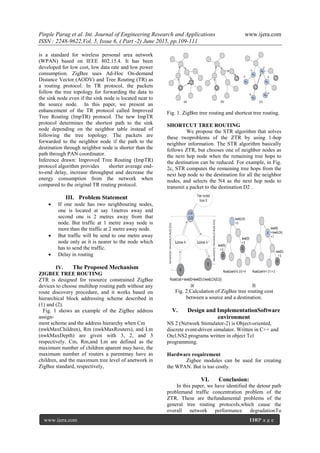
Fig. 1 shows an example of the ZigBee address
assign-
ment scheme and the address hierarchy when Cm
(nwkMaxChildren), Rm (nwkMaxRouters), and Lm
(nwkMaxDepth) are given with 3, 2, and 3
respectively. Cm, Rm,and Lm are defined as the
maximum number of children aparent may have, the
maximum number of routers a parentmay have as
children, and the maximum tree level of anetwork in
ZigBee standard, respectively,
Fig. 1. ZigBee tree routing and shortcut tree routing.
SHORTCUT TREE ROUTING
We propose the STR algorithm that solves
these twoproblems of the ZTR by using 1-hop
neighbor information. The STR algorithm basically
follows ZTR, but chooses one of neighbor nodes as
the next hop node when the remaining tree hops to
the destination can be reduced. For example, in Fig.
2c, STR computes the remaining tree hops from the
next hop node to the destination for all the neighbor
nodes, and selects the N4 as the next hop node to
transmit a packet to the destination D2 .
Fig. 2.Calculation of ZigBee tree routing cost
between a source and a destination.
V. Design and ImplementationSoftware
environment
NS 2 (Network Stimulator-2) is Object-oriented,
discrete event-driven simulator. Written in C++ and
Otcl.NS2 programs written in object Tcl
programming.
Hardware requirement
Zigbee modules can be used for creating
the WPAN. But is too costly.
VI. Conclusion:
In this paper, we have identified the detour path
problemand traffic concentration problem of the
ZTR. These are thefundamental problems of the
general tree routing protocols,which cause the
overall network performance degradationTo
Pinple Parag et al. Int. Journal of Engineering Research and Applications www.ijera.com
ISSN : 2248-9622,Vol. 5, Issue 6, ( Part -2) June 2015, pp.109-111
www.ijera.com 111|P a g e
overcome these problems, we propose STR that uses
theneighbor table, originally defined in the ZigBee
standard. InSTR, each node can find the optimal
next hop node basedon the remaining tree hops to
the destination. Themathematical analyses prove that
the 1-hop neighbour information in STR reduces the
traffic load concentratedon the tree links as well as
provides an efficient routingpath. The network
simulations show that STR provides thecomparable
routing performance to AODV as well asscalability
respect to the network density and the networktraffic
volume by suppressing the additional route
discovery process. Therefore, as discussed in Section
4 in theonline supplemental material, we expect STR
to be utilizedin many ZigBee applications requiring
both small memorycapacity and high routing
performances.
References
[1] D. Han and J. Lim, Smart Home Energy
Management System Using IEEE 802.15.4
and ZigBee, IEEE Trans. Consumer
Electronics, Oct. 2010.
[2] ZigBee Alliance, ZigBee Specification, 2009
[3] H. Lu et al., “A Distributed and Efficient
Flooding Scheme Using 1-HopInformation in
Mobile Ad Hoc Networks,” IEEE Trans.
Parallel and Distributed Systems, vol. 18, no.
5, pp. 658-671, Apr.2007.
[4] The Network Simulator,
http://www.isi.edu/nsnam/ns, 2013.
[5] Y. Huang et al., Distributed Throughput
Optimization for ZigBee Cluster-Tree
Networks, IEEE Trans. Parallel and
Distributed Systems, vol. 23, no. 3, pp. 513-
520, Mar. 2012.
[6] D.B. Johnson and D.A. Maltz, “Dynamic
Source Routing in Ad Hoc Wireless
Networks,” Mobile Computing, vol. 353, 1996,
p. 153–181.
[7] Y. Huang, et al, “Distributed Throughput
Optimization for ZigBee Cluster-Tree
Networks,” IEEE Transaction on Parallel and
Distributed Systems, vol. 23, no. 3, pp. 513-
520, 2012.
[8] Li, C. F., Ye, M., Chen, G., & Wu, J. (2005).
An energy efficient unequal clustering
mechanism for wireless sensor networks.In
IEEE international conference on mobile ad-
hoc and sensor systems (pp. 535–540).
[9] A. Wheeler, “Commercial Applications of
Wireless Sensor Networks Using ZigBee,”
IEEE Communications Magazine, vol. 45,
Issue.4, pp. 70-77, April,2007.

Shortcut Path Tress for Zigbee based Wireless Network

  • 1.
    Pinple Parag etal. Int. Journal of Engineering Research and Applications www.ijera.com ISSN : 2248-9622,Vol. 5, Issue 6, ( Part -2) June 2015, pp.109-111 www.ijera.com 109|P a g e Shortcut Path Tress for Zigbee based Wireless Network Parag Pimple,Dr.B. G. Hogade, Dr. Ravish R. Singh, Atul Sankhe. (Student ME(EXTC) Mumbai University), (HOD(Electronics) Terna COE Mumbai), (HOD(EXTC) L. R. Tiwari COE Mumbai) Abstract- Neighbour Table based shortcut tree routing protocol provides the near optimal routing path as well as maintains the advantages of the ZigBee tree routing such as no route discovery overhead and low memory consumption. However, in Neighbour table based Shortcut tree routing the limitation is that route discovery is only on basis of Distance between Nodes; thus, it cannot provide optimized paths. Here, the concept of link quality factor between nodes along with the distance between two nodes to calculate the shortest path between source and destination. Where the Link quality will depend upon traffic between two nodes, higher the traffic lesser the link quality and vice versa. Score will be calculated for links which is function of Distance and Link Quality between nodes i.e score= f(d,lq), this is the idea proposed in OPTIMIZING ROUTING PATHS UING SHORTCUT TREES FOR ZIGBEE BASED WIRELESS NETWORK. I. Introduction ZigBee is a worldwide standard of wireless personal area network targeted to low-power, cost- effective, reliable, and scalable products and applications. Different from the other personal area network standards such as Bluetooth, UWB, and Wireless USB, ZigBee provides the low power wireless mesh networking and supports up to thousands of devices in a network. Based on these characteristics, ZigBee Alliance has extended the applications to the diverse areas such as smart home, building automation , health care , smart energy , telecommunication, and retail services. The ZigBee network layer, which is the core of the standard, provides dynamic network formation, addressing, routing, and network management functions. ZigBee supports up to 64,000 devices in a network with the multihop tree and mesh topologies as well as star topology. Every node is assigned a unique 16-bit short address dynamically using either distributed addressing or stochastic addressing scheme. The routing protocols of ZigBee are diverse so that a system or users can choose the optimal II. Literature Survey Taehong Kim, SeongHoon Kim, Jinyoung Yang, Seong-, Daeyoung Kim, “Neighbor Table Based Shortcut Tree Routingin ZigBee Wireless Networks”, IEEE TRANSACTIONS ON PARALLEL AND DISTRIBUTED SYSTEMS, VOL. 25, NO. 3, MARCH 2014. The ZigBee tree routing is widely used in many resource-limited devices and applications, since it does not require any routing table and route discovery overhead to send a packet to the destination. However, the ZigBee tree routing has the fundamental limitation that a packet follows the tree topology; thus, it cannot provide the optimal routing path. In this paper, we propose the shortcut tree routing (STR) protocol that provides the near optimal routing path as well as maintains the advantages of the ZigBee tree routing such as no route discovery overhead and low memory consumption. The main idea of the shortcut tree routing is to calculate remaining hops from an arbitrary source to the destination using the hierarchical addressing scheme in ZigBee, and each source or intermediate node forwards a packet to the neighbor node with the smallest remaining hops in its neighbor table. Inference drawn: 1-hop neighbor information improves overall network performances by providing an efficient routing path. shortcut tree routing achieves the comparable performance to AODV with limited overhead of neighbor table maintenance as well as overwhelms the ZigBee tree routing. Our objective is to provide the near optimal routing path like the reactive routing protocol as well as to maintain the advantages of ZTR such as no route discovery overhead and little memory consumption for the routing table. Inference drawn: The main idea of STR is that we can compute the remaining tree hops from an arbitrary source to a destination using ZigBee address hierarchy and tree structure. M. Al-Harbawi, M.F.A. Rashid, N.K. Noordin, “Improved Tree Routing (ImpTR) Protocol for ZigBee Network”, IJCSNS International Journal of Computer Science and Network Security, VOL.9 No.10, October 2009. Many application scenarios in wireless sensor network (WSN) require connectivity between nodes to transmit the collected data to a sink node. ZigBee RESEARCH ARTICLE OPEN ACCESS
  • 2.
    Pinple Parag etal. Int. Journal of Engineering Research and Applications www.ijera.com ISSN : 2248-9622,Vol. 5, Issue 6, ( Part -2) June 2015, pp.109-111 www.ijera.com 110|P a g e is a standard for wireless personal area network (WPAN) based on IEEE 802.15.4. It has been developed for low cost, low data rate and low power consumption. ZigBee uses Ad-Hoc On-demand Distance Vector (AODV) and Tree Routing (TR) as a routing protocol. In TR protocol, the packets follow the tree topology for forwarding the data to the sink node even if the sink node is located near to the source node. In this paper, we present an enhancement of the TR protocol called Improved Tree Routing (ImpTR) protocol. The new ImpTR protocol determines the shortest path to the sink node depending on the neighbor table instead of following the tree topology. The packets are forwarded to the neighbor node if the path to the destination through neighbor node is shorter than the path through PAN coordinator. Inference drawn: Improved Tree Routing (ImpTR) protocol algorithm provides shorter average end- to-end delay, increase throughput and decrease the energy consumption from the network when compared to the original TR routing protocol. III. Problem Statement  If one node has two neighbouring nodes, one is located at say 1metres away and second one is 2 metres away from that node. But traffic at 1 metre away node is more than the traffic at 2 metre away node.  But traffic will be send to one metre away node only as it is nearer to the node which has to send the traffic.  Delay in routing IV. The Proposed Mechanism ZIGBEE TREE ROUTING ZTR is designed for resource constrained ZigBee devices to choose multihop routing path without any route discovery procedure, and it works based on hierarchical block addressing scheme described in (1) and (2). Fig. 1 shows an example of the ZigBee address assign- ment scheme and the address hierarchy when Cm (nwkMaxChildren), Rm (nwkMaxRouters), and Lm (nwkMaxDepth) are given with 3, 2, and 3 respectively. Cm, Rm,and Lm are defined as the maximum number of children aparent may have, the maximum number of routers a parentmay have as children, and the maximum tree level of anetwork in ZigBee standard, respectively, Fig. 1. ZigBee tree routing and shortcut tree routing. SHORTCUT TREE ROUTING We propose the STR algorithm that solves these twoproblems of the ZTR by using 1-hop neighbor information. The STR algorithm basically follows ZTR, but chooses one of neighbor nodes as the next hop node when the remaining tree hops to the destination can be reduced. For example, in Fig. 2c, STR computes the remaining tree hops from the next hop node to the destination for all the neighbor nodes, and selects the N4 as the next hop node to transmit a packet to the destination D2 . Fig. 2.Calculation of ZigBee tree routing cost between a source and a destination. V. Design and ImplementationSoftware environment NS 2 (Network Stimulator-2) is Object-oriented, discrete event-driven simulator. Written in C++ and Otcl.NS2 programs written in object Tcl programming. Hardware requirement Zigbee modules can be used for creating the WPAN. But is too costly. VI. Conclusion: In this paper, we have identified the detour path problemand traffic concentration problem of the ZTR. These are thefundamental problems of the general tree routing protocols,which cause the overall network performance degradationTo
  • 3.
    Pinple Parag etal. Int. Journal of Engineering Research and Applications www.ijera.com ISSN : 2248-9622,Vol. 5, Issue 6, ( Part -2) June 2015, pp.109-111 www.ijera.com 111|P a g e overcome these problems, we propose STR that uses theneighbor table, originally defined in the ZigBee standard. InSTR, each node can find the optimal next hop node basedon the remaining tree hops to the destination. Themathematical analyses prove that the 1-hop neighbour information in STR reduces the traffic load concentratedon the tree links as well as provides an efficient routingpath. The network simulations show that STR provides thecomparable routing performance to AODV as well asscalability respect to the network density and the networktraffic volume by suppressing the additional route discovery process. Therefore, as discussed in Section 4 in theonline supplemental material, we expect STR to be utilizedin many ZigBee applications requiring both small memorycapacity and high routing performances. References [1] D. Han and J. Lim, Smart Home Energy Management System Using IEEE 802.15.4 and ZigBee, IEEE Trans. Consumer Electronics, Oct. 2010. [2] ZigBee Alliance, ZigBee Specification, 2009 [3] H. Lu et al., “A Distributed and Efficient Flooding Scheme Using 1-HopInformation in Mobile Ad Hoc Networks,” IEEE Trans. Parallel and Distributed Systems, vol. 18, no. 5, pp. 658-671, Apr.2007. [4] The Network Simulator, http://www.isi.edu/nsnam/ns, 2013. [5] Y. Huang et al., Distributed Throughput Optimization for ZigBee Cluster-Tree Networks, IEEE Trans. Parallel and Distributed Systems, vol. 23, no. 3, pp. 513- 520, Mar. 2012. [6] D.B. Johnson and D.A. Maltz, “Dynamic Source Routing in Ad Hoc Wireless Networks,” Mobile Computing, vol. 353, 1996, p. 153–181. [7] Y. Huang, et al, “Distributed Throughput Optimization for ZigBee Cluster-Tree Networks,” IEEE Transaction on Parallel and Distributed Systems, vol. 23, no. 3, pp. 513- 520, 2012. [8] Li, C. F., Ye, M., Chen, G., & Wu, J. (2005). An energy efficient unequal clustering mechanism for wireless sensor networks.In IEEE international conference on mobile ad- hoc and sensor systems (pp. 535–540). [9] A. Wheeler, “Commercial Applications of Wireless Sensor Networks Using ZigBee,” IEEE Communications Magazine, vol. 45, Issue.4, pp. 70-77, April,2007.