Helen Buckley
Caroline O’Nolan
School of Social Work and Social Policy
Trinity College Dublin
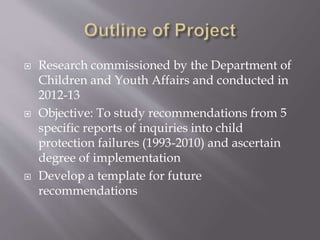
 Research commissioned by the Department of
Children and Youth Affairs and conducted in
2012-13
 Objective: To study recommendations from 5
specific reports of inquiries into child
protection failures (1993-2010) and ascertain
degree of implementation
 Develop a template for future
recommendations
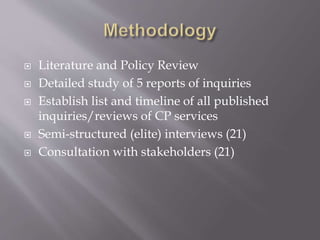
 Literature and Policy Review
 Detailed study of 5 reports of inquiries
 Establish list and timeline of all published
inquiries/reviews of CP services
 Semi-structured (elite) interviews (21)
 Consultation with stakeholders (21)
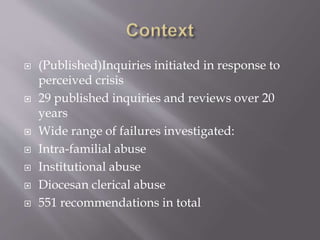
 (Published)Inquiries initiated in response to
perceived crisis
 29 published inquiries and reviews over 20
years
 Wide range of failures investigated:
 Intra-familial abuse
 Institutional abuse
 Diocesan clerical abuse
 551 recommendations in total
 ‘that’s life…that’s just life’
 Political reality
 Original report ‘game-changer’
 Way of accessing resources
 Very difficult for staff ‘caught up’ in the
process
 Not always conducive to learning
 Scope for improvement
 Many of the issues underpinning recommendations
had already been identified by policy makers and
had in many cases been planned and may have
stalled due to lack of funding
 Too numerous
 Some were predictable
 Some repetitive (infers lack of change)
 Some considered too aspirational
 Reflected agendas of panel members
 Potential for consultation
 ‘You can seal it in a brown envelope before you start
and know that inter-agency cooperation will come
up, probably something to do with adherence to
policy and procedure, and all these predictable
things, the quality of records and so on … You can
bet your bottom dollar that they will come out.’
 Improved vigilance and identification of
children at risk
 Better inter-agency co-operation
 Improved record keeping and exchange of
information
 Protocols for child protection conference
 Training
 Child-centeredness
 Children’s rights
 Most implemented at least to some degree
 Implementation of recommendations with a
local rather than national focus more difficult
to measure
 Implementation was often obscured by other
developments at the time
 Distinction between addressing and
implementing recommendations
 Pressure for implementation tended to come
from politicians in the opposition parties
 Considered far more influential than empirical
research because of public awareness- yet not real
drivers of change
 Implications?
 Recommendations fatigue- diminishing returns
 Critical mass reached
 Internal QA mechanisms providing greater
transparency & promoting higher standards- less need
for inquiries
 Effective reforms need local knowledge and
professional ‘buy-in’
 Process of developing recommendations needs to
provide for collaboration with key stakeholders
 Shift in focus to learning
 ‘A very good […] and very knowledgeable … but when […] had
[their] analysis done and began working on recommendations, the
absolute poverty of [their] understanding of management became
absolutely crystal clear because the consequences of what was
recommended were so inconsistent with any sound management
practice that it was completely undermining the report … You get
somebody at one level from the professional child care perspective
talking about interdisciplinary and inter-agency collaboration and
all of that and then coming with recommendations that are much
more akin to silos … The actual experience of having being
involved in statutory child protection and the actual experience of
managing within a statutory context is starkly absent from most
of the inquiries, it seems to me.’
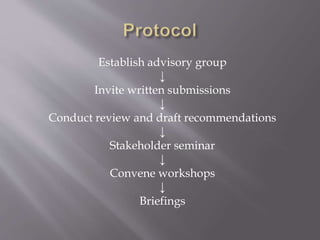
Establish advisory group
↓
Invite written submissions
↓
Conduct review and draft recommendations
↓
Stakeholder seminar
↓
Convene workshops
↓
Briefings
 Case for change
 Learning oriented
 Evidence based
 Assignment of responsibility
 Review – written in a manner which facilitates
review
 Drawing on evidence, identify the issues that
need change
 Outline the consequences of no change
 Contextualise it in current policy to show the
level of congruence
 Deficits are not necessarily due to lack of
training but to inadequate information or
guidance
 Promote additional research and practice
guidance
 Evidence of good practice
 Messages for practice elaborated in a separate
section
 Evidence of deficits in policy or practice
 Need to demonstrate knowledge of the context
in which recommendations are to be
implemented
 Recommendations should only be made if
evidence exists to show that their
implementation will effectively address and
remediate the deficits identified by the report
 Specify:
 Discipline
 Directorate
 Organisation
 Leader to coordinate and oversee implementation
 The implementation of recommendations
should be amenable to review
 Should be possible to link them to regulatory
processes such as HIQA standards
 Any review should capture the more nuanced
aspects of child protection practice
 Multi method approach to auditing will be
required
 Recommendations should be fewer in number
and should be the result of a collaborative and
consultative process,
 A fresh approach should provide clarity and
ensure that recommendations are well
grounded, more feasible and cost effective
 The CLEAR template should get over the
difficulty of measuring outcomes in an area
that involves the exercise of professional
judgement.

Clear Recommendations: Getting the Most from Reviews of Child Protection Failures

  • 1.
    Helen Buckley Caroline O’Nolan Schoolof Social Work and Social Policy Trinity College Dublin
  • 2.
     Research commissionedby the Department of Children and Youth Affairs and conducted in 2012-13  Objective: To study recommendations from 5 specific reports of inquiries into child protection failures (1993-2010) and ascertain degree of implementation  Develop a template for future recommendations
  • 3.
     Literature andPolicy Review  Detailed study of 5 reports of inquiries  Establish list and timeline of all published inquiries/reviews of CP services  Semi-structured (elite) interviews (21)  Consultation with stakeholders (21)
  • 4.
     (Published)Inquiries initiatedin response to perceived crisis  29 published inquiries and reviews over 20 years  Wide range of failures investigated:  Intra-familial abuse  Institutional abuse  Diocesan clerical abuse  551 recommendations in total
  • 5.
     ‘that’s life…that’sjust life’  Political reality  Original report ‘game-changer’  Way of accessing resources  Very difficult for staff ‘caught up’ in the process  Not always conducive to learning  Scope for improvement
  • 6.
     Many ofthe issues underpinning recommendations had already been identified by policy makers and had in many cases been planned and may have stalled due to lack of funding  Too numerous  Some were predictable  Some repetitive (infers lack of change)  Some considered too aspirational  Reflected agendas of panel members  Potential for consultation
  • 7.
     ‘You canseal it in a brown envelope before you start and know that inter-agency cooperation will come up, probably something to do with adherence to policy and procedure, and all these predictable things, the quality of records and so on … You can bet your bottom dollar that they will come out.’
  • 8.
     Improved vigilanceand identification of children at risk  Better inter-agency co-operation  Improved record keeping and exchange of information  Protocols for child protection conference  Training  Child-centeredness  Children’s rights
  • 9.
     Most implementedat least to some degree  Implementation of recommendations with a local rather than national focus more difficult to measure  Implementation was often obscured by other developments at the time  Distinction between addressing and implementing recommendations  Pressure for implementation tended to come from politicians in the opposition parties
  • 10.
     Considered farmore influential than empirical research because of public awareness- yet not real drivers of change  Implications?  Recommendations fatigue- diminishing returns  Critical mass reached  Internal QA mechanisms providing greater transparency & promoting higher standards- less need for inquiries  Effective reforms need local knowledge and professional ‘buy-in’  Process of developing recommendations needs to provide for collaboration with key stakeholders  Shift in focus to learning
  • 11.
     ‘A verygood […] and very knowledgeable … but when […] had [their] analysis done and began working on recommendations, the absolute poverty of [their] understanding of management became absolutely crystal clear because the consequences of what was recommended were so inconsistent with any sound management practice that it was completely undermining the report … You get somebody at one level from the professional child care perspective talking about interdisciplinary and inter-agency collaboration and all of that and then coming with recommendations that are much more akin to silos … The actual experience of having being involved in statutory child protection and the actual experience of managing within a statutory context is starkly absent from most of the inquiries, it seems to me.’
  • 12.
    Establish advisory group ↓ Invitewritten submissions ↓ Conduct review and draft recommendations ↓ Stakeholder seminar ↓ Convene workshops ↓ Briefings
  • 13.
     Case forchange  Learning oriented  Evidence based  Assignment of responsibility  Review – written in a manner which facilitates review
  • 14.
     Drawing onevidence, identify the issues that need change  Outline the consequences of no change  Contextualise it in current policy to show the level of congruence
  • 15.
     Deficits arenot necessarily due to lack of training but to inadequate information or guidance  Promote additional research and practice guidance  Evidence of good practice  Messages for practice elaborated in a separate section
  • 16.
     Evidence ofdeficits in policy or practice  Need to demonstrate knowledge of the context in which recommendations are to be implemented  Recommendations should only be made if evidence exists to show that their implementation will effectively address and remediate the deficits identified by the report
  • 17.
     Specify:  Discipline Directorate  Organisation  Leader to coordinate and oversee implementation
  • 18.
     The implementationof recommendations should be amenable to review  Should be possible to link them to regulatory processes such as HIQA standards  Any review should capture the more nuanced aspects of child protection practice  Multi method approach to auditing will be required
  • 19.
     Recommendations shouldbe fewer in number and should be the result of a collaborative and consultative process,  A fresh approach should provide clarity and ensure that recommendations are well grounded, more feasible and cost effective  The CLEAR template should get over the difficulty of measuring outcomes in an area that involves the exercise of professional judgement.