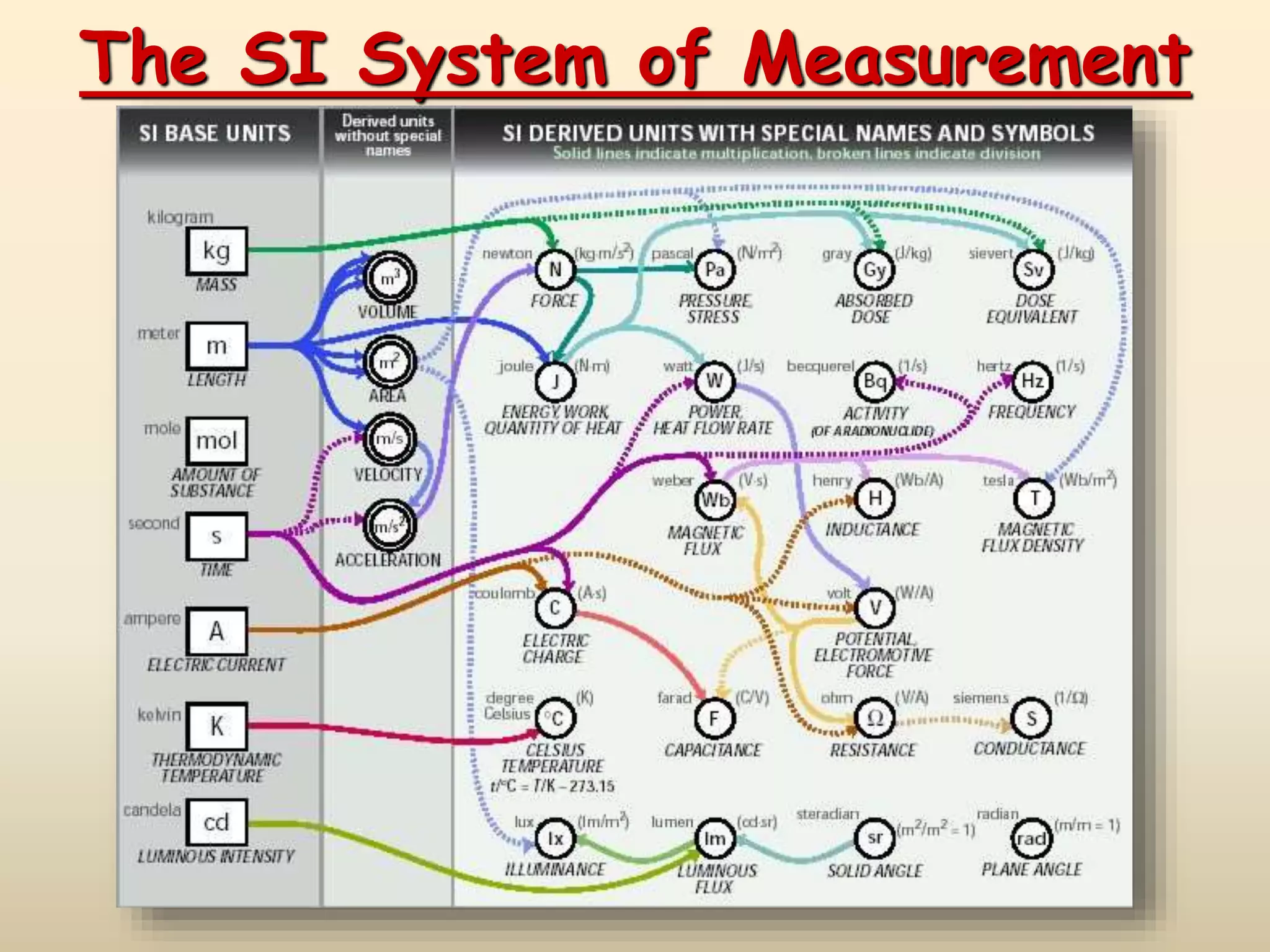
The SI System of Measurement
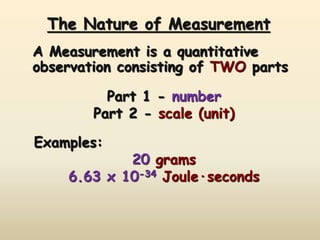
The Nature of Measurement 
A Measurement is a quantitative 
observation consisting of TWO parts 
Part 1 - number 
Part 2 - scale (unit) 
Examples: 
20 grams 
6.63 x 10⁻³⁴ Joule·seconds
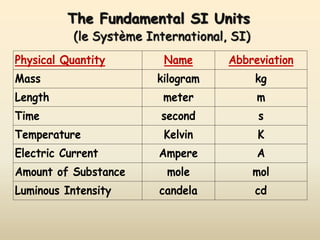
The Fundamental SI Units 
(le Système International, SI) 
Physical Quantity Name Abbreviation 
Mass kilogram kg 
Length meter m 
Time second s 
Temperature Kelvin K 
Electric Current Ampere A 
Amount of Substance mole mol 
Luminous Intensity candela cd
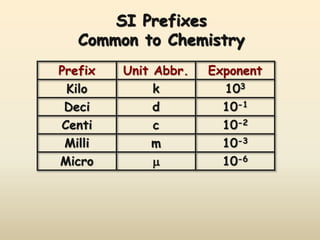
SI Prefixes 
Common to Chemistry 
Prefix Unit Abbr. Exponent 
Kilo k 103 
Deci d 10-1 
Centi c 10-2 
Milli m 10-3 
Micro  10-6
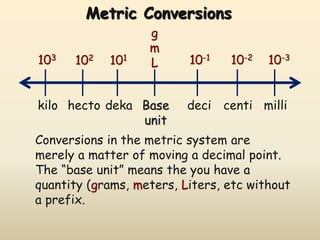
Metric Conversions 
g 
m 
103 102 101 L 10-1 10-2 10-3 
kilo hecto deka deci centi milli 
Base 
unit 
Conversions in the metric system are 
merely a matter of moving a decimal point. 
The “base unit” means the you have a 
quantity (grams, meters, Liters, etc without 
a prefix.
Metric Conversions 
g 
m 
103 102 101 L 10-1 10-2 10-3 
kilo hecto deka deci centi milli 
Base 
unit 
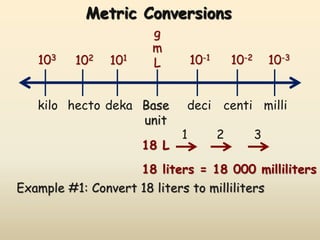
18 L 
1 2 3 
18 liters = 18 000 milliliters 
Example #1: Convert 18 liters to milliliters
Metric Conversions 
g 
m 
103 102 101 L 10-1 10-2 10-3 
kilo hecto deka deci centi milli 
Base 
unit 
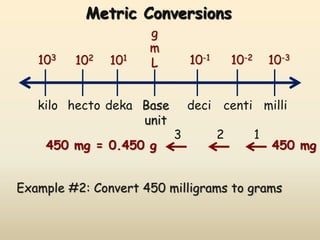
3 2 1 
450 mg = 0.450 g 450 mg 
Example #2: Convert 450 milligrams to grams
Metric Conversions 
g 
m 
103 102 101 L 10-1 10-2 10-3 
kilo hecto deka deci centi milli 
Base 
unit 
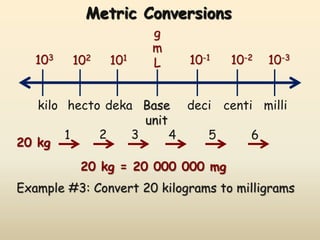
20 kg 
1 2 3 4 5 6 
20 kg = 20 000 000 mg 
Example #3: Convert 20 kilograms to milligrams

S isystem

  • 1.
    The SI Systemof Measurement
  • 2.
    The Nature ofMeasurement A Measurement is a quantitative observation consisting of TWO parts Part 1 - number Part 2 - scale (unit) Examples: 20 grams 6.63 x 10⁻³⁴ Joule·seconds
  • 3.
    The Fundamental SIUnits (le Système International, SI) Physical Quantity Name Abbreviation Mass kilogram kg Length meter m Time second s Temperature Kelvin K Electric Current Ampere A Amount of Substance mole mol Luminous Intensity candela cd
  • 4.
    SI Prefixes Commonto Chemistry Prefix Unit Abbr. Exponent Kilo k 103 Deci d 10-1 Centi c 10-2 Milli m 10-3 Micro  10-6
  • 5.
    Metric Conversions g m 103 102 101 L 10-1 10-2 10-3 kilo hecto deka deci centi milli Base unit Conversions in the metric system are merely a matter of moving a decimal point. The “base unit” means the you have a quantity (grams, meters, Liters, etc without a prefix.
  • 6.
    Metric Conversions g m 103 102 101 L 10-1 10-2 10-3 kilo hecto deka deci centi milli Base unit 18 L 1 2 3 18 liters = 18 000 milliliters Example #1: Convert 18 liters to milliliters
  • 7.
    Metric Conversions g m 103 102 101 L 10-1 10-2 10-3 kilo hecto deka deci centi milli Base unit 3 2 1 450 mg = 0.450 g 450 mg Example #2: Convert 450 milligrams to grams
  • 8.
    Metric Conversions g m 103 102 101 L 10-1 10-2 10-3 kilo hecto deka deci centi milli Base unit 20 kg 1 2 3 4 5 6 20 kg = 20 000 000 mg Example #3: Convert 20 kilograms to milligrams