1
TACYPNEA
PROBLEM BASED LEARNING (PBL)
PREPARED BY: MUHAMMAD ARIFF B. MAHDZUB
BACHELOR MEDICINE AND SURGERY (MBBS)
UNIVERSITY COLLEGE SHAHPUTRA, KUANTAN
HISTORY TAKING
FOR OUR CASE
• Christina, a 65 years old woman does not
experiencing tachypnea
• It means her respiratory rate is in between 12-
20 breath / minutes, which is normal.
• So we can conclude that she is not suffered by
any disease that related to tachypnea.
• Diseases such as heart diseases,depression
and others.
TACYPNEA
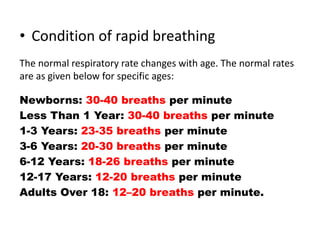
• Condition of rapid breathing
The normal respiratory rate changes with age. The normal rates
are as given below for specific ages:
Newborns: 30-40 breaths per minute
Less Than 1 Year: 30-40 breaths per minute
1-3 Years: 23-35 breaths per minute
3-6 Years: 20-30 breaths per minute
6-12 Years: 18-26 breaths per minute
12-17 Years: 12-20 breaths per minute
Adults Over 18: 12–20 breaths per minute.
Why respiratory rates for baby is
higher than adults ?
Because they have higher metabolism rate
and faster heartbeat.
It also possible because their lung is not
efficient as the adult since their lung still
growing
 In normal breathing, both the depth and frequency
of breaths is varied
 In order to supply appropriate levels of oxygen to the
body's tissues
• If carbon dioxide levels are high, the body assumes
that oxygen levels are low, and accordingly the
brain's blood vessels dilate, to assure sufficient blood
flow and supply of oxygen. Conversely, low carbon
dioxide levels (e.g. from hyperventilation) cause the
brain's blood vessels to constrict, resulting in
reduced blood flow to the brain

TACYPNEA

  • 1.
    1 TACYPNEA PROBLEM BASED LEARNING(PBL) PREPARED BY: MUHAMMAD ARIFF B. MAHDZUB BACHELOR MEDICINE AND SURGERY (MBBS) UNIVERSITY COLLEGE SHAHPUTRA, KUANTAN
  • 2.
  • 3.
    FOR OUR CASE •Christina, a 65 years old woman does not experiencing tachypnea • It means her respiratory rate is in between 12- 20 breath / minutes, which is normal. • So we can conclude that she is not suffered by any disease that related to tachypnea. • Diseases such as heart diseases,depression and others.
  • 4.
  • 5.
    • Condition ofrapid breathing The normal respiratory rate changes with age. The normal rates are as given below for specific ages: Newborns: 30-40 breaths per minute Less Than 1 Year: 30-40 breaths per minute 1-3 Years: 23-35 breaths per minute 3-6 Years: 20-30 breaths per minute 6-12 Years: 18-26 breaths per minute 12-17 Years: 12-20 breaths per minute Adults Over 18: 12–20 breaths per minute.
  • 6.
    Why respiratory ratesfor baby is higher than adults ? Because they have higher metabolism rate and faster heartbeat. It also possible because their lung is not efficient as the adult since their lung still growing
  • 7.
     In normalbreathing, both the depth and frequency of breaths is varied  In order to supply appropriate levels of oxygen to the body's tissues • If carbon dioxide levels are high, the body assumes that oxygen levels are low, and accordingly the brain's blood vessels dilate, to assure sufficient blood flow and supply of oxygen. Conversely, low carbon dioxide levels (e.g. from hyperventilation) cause the brain's blood vessels to constrict, resulting in reduced blood flow to the brain