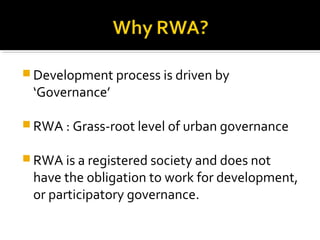
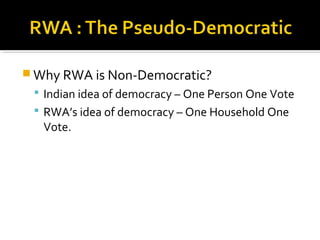
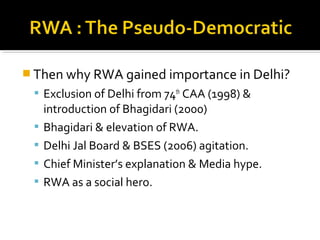






This document discusses residential welfare associations (RWAs) in Delhi and their impact on urban governance and social structure. It notes that while RWAs were intended to promote grassroots participation, they have become non-democratic bodies that primarily represent homeowners. The document traces the rise of RWAs in Delhi due to their role after 1984 anti-Sikh riots and subsequent policies. However, RWAs have also become political actors and exacerbated inequalities by prioritizing development in middle-class neighborhoods over slums. The document concludes by questioning how to make RWAs more inclusively participatory and strengthen grassroots democracy.


