The Russian Revolution
-Key Concepts-
I. Pre-Revolutionary Russia
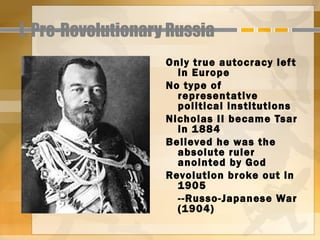
                    Only true autocracy lef t
                      in Europe
                    No type of
                      representative
                      political institutions
                    Nicholas II became Tsar
                      in 1884
                    Believed he was the
                      absolute ruler
                      anointed by God
                    Revolution broke out in
                      1905
                      --Russo-Japanese War
                      (1904)
II. The Revolution of 1905
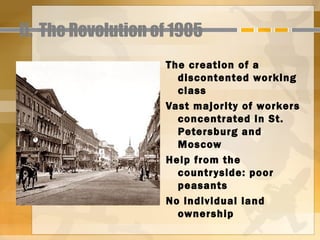
                    The creation of a
                      discontented working
                      class
                    Vast majority of workers
                      concentrated in St.
                      Petersburg and
                      Moscow
                    Help from the
                      countr yside: poor
                      peasants
                    No individual land
                      ownership
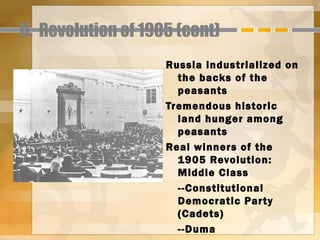
II. Revolution of 1905 (cont)
                     Russia industrialized on
                       the backs of the
                       peasants
                     Tremendous historic
                       land hunger among
                       peasants
                     Real winners of the
                       1905 Revolution:
                       Middle Class
                       --Constitutional
                       Democratic Par ty
                       (Cadets)
                       --Duma
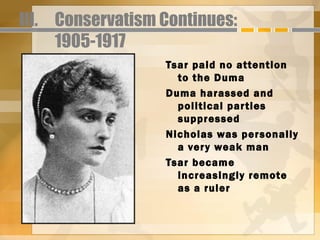
III. Conservatism Continues:
     1905-1917
                  Tsar paid no attention
                    to the Duma
                  Duma harassed and
                    political par ties
                    suppressed
                  Nicholas was personally
                    a ver y weak man
                  Tsar became
                    increasingly remote
                    as a ruler
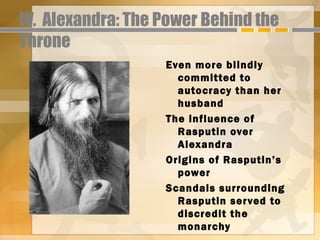
IV. Alexandra: The Power Behind the
Throne
                   Even more blindly
                     committed to
                     autocracy than her
                     husband
                   The influence of
                     Rasputin over
                     Alexandra
                   Origins of Rasputin’s
                     power
                   Scandals surrounding
                     Rasputin ser ved to
                     discredit the
                     monarchy
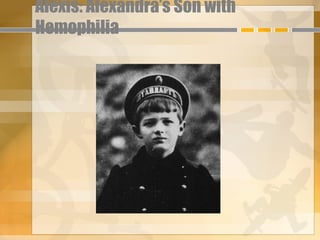
Alexis: Alexandra’s Son with
Hemophilia
V. World War I: “The Last Straw”
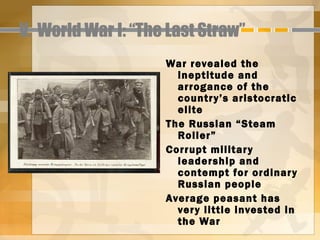
                    War revealed the
                      ineptitude and
                      arrogance of the
                      countr y’s aristocratic
                      elite
                    The Russian “Steam
                      Roller”
                    Corrupt militar y
                      leadership and
                      contempt for ordinar y
                      Russian people
                    Average peasant has
                      ver y little invested in
                      the War
V. World War I (cont)
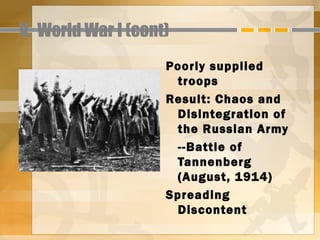
                    Poorly supplied
                     troops
                    Result: Chaos and
                     Disintegration of
                     the Russian Army
                     --Battle of
                     Tannenberg
                     (August, 1914)
                    Spreading
                     Discontent
VI. The Collapse of the Imperial
Government
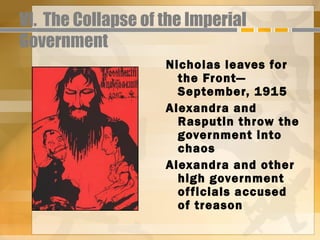
                    Nicholas leaves for
                      the Front—
                      September, 1915
                    Alexandra and
                      Rasputin throw the
                      government into
                      chaos
                    Alexandra and other
                      high government
                      officials accused
                      of treason
VI. The Collapse of the Imperial
Government (cont)
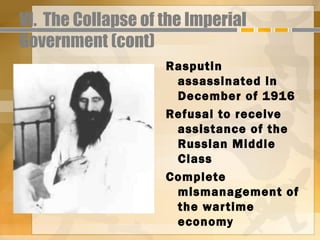
                    Rasputin
                     assassinated in
                     December of 1916
                    Refusal to receive
                     assistance of the
                     Russian Middle
                     Class
                    Complete
                     mismanagement of
                     the war time
                     economy
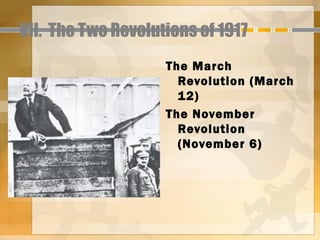
VII. The Two Revolutions of 1917
                    The March
                      Revolution (March
                      12)
                    The November
                      Revolution
                      (November 6)
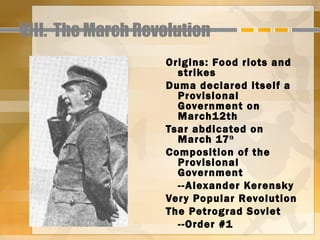
VIII. The March Revolution
                   Origins: Food riots and
                     strikes
                   Duma declared itself a
                     Provisional
                     Government on
                     March1 2th
                   Tsar abdicated on
                     March 17 th
                   Composition of the
                     Provisional
                     Government
                     --Alexander Kerensky
                   Ver y Popular Revolution
                   The Petrograd Soviet
                     --Order #1
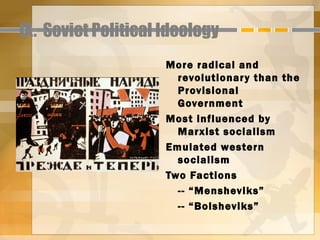
IX. Soviet Political Ideology
                     More radical and
                       revolutionar y than the
                       Provisional
                       Government
                     Most influenced by
                       Marxist socialism
                     Emulated western
                       socialism
                     Two Factions
                       -- “Mensheviks”
                       -- “Bolsheviks”
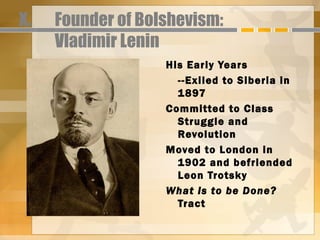
X.   Founder of Bolshevism:
     Vladimir Lenin
                   His Early Years
                     --Exiled to Siberia in
                     1897
                   Committed to Class
                     Struggle and
                     Revolution
                   Moved to London in
                     1902 and befriended
                     Leon Trotsky
                   What is to be Done?
                     Tract
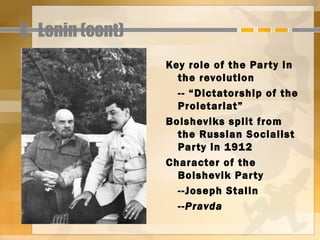
X. Lenin (cont)
                  Key role of the Par ty in
                    the revolution
                    -- “Dictatorship of the
                    Proletariat”
                  Bolsheviks split from
                    the Russian Socialist
                    Par ty in 1912
                  Character of the
                    Bolshevik Par ty
                    --Joseph Stalin
                    --Pravda
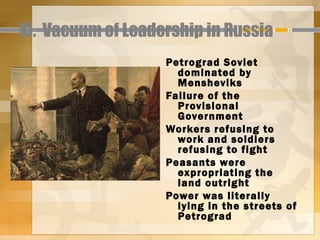
XI. Vacuum of Leadership in Russia
                   Petrograd Soviet
                     dominated by
                     Mensheviks
                   Failure of the
                     Provisional
                     Government
                   Workers refusing to
                     work and soldiers
                     refusing to fight
                   Peasants were
                     expropriating the
                     land outright
                   Power was literally
                     lying in the streets of
                     Petrograd
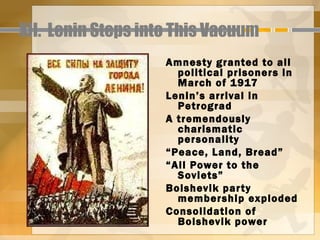
XII. Lenin Steps into This Vacuum
                    Amnesty granted to all
                      political prisoners in
                      March of 1917
                    Lenin’s arrival in
                      Petrograd
                    A tremendously
                      charismatic
                      personality
                    “Peace, Land, Bread”
                    “All Power to the
                      Soviets”
                    Bolshevik par ty
                      membership exploded
                    Consolidation of
                      Bolshevik power
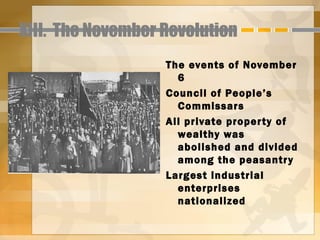
XIII. The November Revolution
                   The events of November
                     6
                   Council of People’s
                     Commissars
                   All private proper ty of
                     wealthy was
                     abolished and divided
                     among the peasantr y
                   Largest industrial
                     enterprises
                     nationalized
XIII. November Revolution (cont)
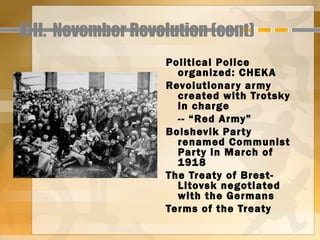
                   Political Police
                     organized: CHEKA
                   Revolutionar y army
                     created with Trotsky
                     in charge
                     -- “Red Army”
                   Bolshevik Par ty
                     renamed Communist
                     Par ty in March of
                     1918
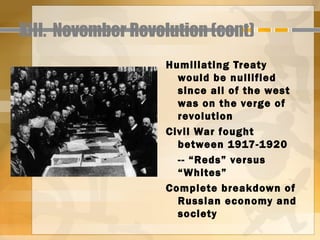
                   The Treaty of Brest-
                     Litovsk negotiated
                     with the Germans
                   Terms of the Treaty
XIII. November Revolution (cont)
                   Humiliating Treaty
                     would be nullified
                     since all of the west
                     was on the verge of
                     revolution
                   Civil War fought
                     between 1917-1920
                     -- “Reds” versus
                     “Whites”
                   Complete breakdown of
                     Russian economy and
                     society
XIV. Interpreting the Russian
Revolution
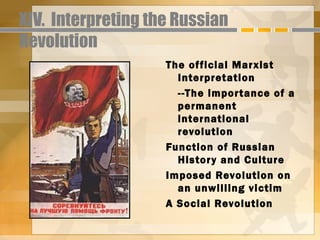
                    The of ficial Marxist
                      Interpretation
                      --The impor tance of a
                      permanent
                      international
                      revolution
                    Function of Russian
                      Histor y and Culture
                    Imposed Revolution on
                      an unwilling victim
                    A Social Revolution
DONE BY ,
R.MUTHU VASU

Russian

  • 1.
  • 2.
    I. Pre-Revolutionary Russia Only true autocracy lef t in Europe No type of representative political institutions Nicholas II became Tsar in 1884 Believed he was the absolute ruler anointed by God Revolution broke out in 1905 --Russo-Japanese War (1904)
  • 3.
    II. The Revolutionof 1905 The creation of a discontented working class Vast majority of workers concentrated in St. Petersburg and Moscow Help from the countr yside: poor peasants No individual land ownership
  • 4.
    II. Revolution of1905 (cont) Russia industrialized on the backs of the peasants Tremendous historic land hunger among peasants Real winners of the 1905 Revolution: Middle Class --Constitutional Democratic Par ty (Cadets) --Duma
  • 5.
    III. Conservatism Continues: 1905-1917 Tsar paid no attention to the Duma Duma harassed and political par ties suppressed Nicholas was personally a ver y weak man Tsar became increasingly remote as a ruler
  • 6.
    IV. Alexandra: ThePower Behind the Throne Even more blindly committed to autocracy than her husband The influence of Rasputin over Alexandra Origins of Rasputin’s power Scandals surrounding Rasputin ser ved to discredit the monarchy
  • 7.
  • 8.
    V. World WarI: “The Last Straw” War revealed the ineptitude and arrogance of the countr y’s aristocratic elite The Russian “Steam Roller” Corrupt militar y leadership and contempt for ordinar y Russian people Average peasant has ver y little invested in the War
  • 9.
    V. World WarI (cont) Poorly supplied troops Result: Chaos and Disintegration of the Russian Army --Battle of Tannenberg (August, 1914) Spreading Discontent
  • 10.
    VI. The Collapseof the Imperial Government Nicholas leaves for the Front— September, 1915 Alexandra and Rasputin throw the government into chaos Alexandra and other high government officials accused of treason
  • 11.
    VI. The Collapseof the Imperial Government (cont) Rasputin assassinated in December of 1916 Refusal to receive assistance of the Russian Middle Class Complete mismanagement of the war time economy
  • 12.
    VII. The TwoRevolutions of 1917 The March Revolution (March 12) The November Revolution (November 6)
  • 13.
    VIII. The MarchRevolution Origins: Food riots and strikes Duma declared itself a Provisional Government on March1 2th Tsar abdicated on March 17 th Composition of the Provisional Government --Alexander Kerensky Ver y Popular Revolution The Petrograd Soviet --Order #1
  • 14.
    IX. Soviet PoliticalIdeology More radical and revolutionar y than the Provisional Government Most influenced by Marxist socialism Emulated western socialism Two Factions -- “Mensheviks” -- “Bolsheviks”
  • 15.
    X. Founder of Bolshevism: Vladimir Lenin His Early Years --Exiled to Siberia in 1897 Committed to Class Struggle and Revolution Moved to London in 1902 and befriended Leon Trotsky What is to be Done? Tract
  • 16.
    X. Lenin (cont) Key role of the Par ty in the revolution -- “Dictatorship of the Proletariat” Bolsheviks split from the Russian Socialist Par ty in 1912 Character of the Bolshevik Par ty --Joseph Stalin --Pravda
  • 17.
    XI. Vacuum ofLeadership in Russia Petrograd Soviet dominated by Mensheviks Failure of the Provisional Government Workers refusing to work and soldiers refusing to fight Peasants were expropriating the land outright Power was literally lying in the streets of Petrograd
  • 18.
    XII. Lenin Stepsinto This Vacuum Amnesty granted to all political prisoners in March of 1917 Lenin’s arrival in Petrograd A tremendously charismatic personality “Peace, Land, Bread” “All Power to the Soviets” Bolshevik par ty membership exploded Consolidation of Bolshevik power
  • 19.
    XIII. The NovemberRevolution The events of November 6 Council of People’s Commissars All private proper ty of wealthy was abolished and divided among the peasantr y Largest industrial enterprises nationalized
  • 20.
    XIII. November Revolution(cont) Political Police organized: CHEKA Revolutionar y army created with Trotsky in charge -- “Red Army” Bolshevik Par ty renamed Communist Par ty in March of 1918 The Treaty of Brest- Litovsk negotiated with the Germans Terms of the Treaty
  • 21.
    XIII. November Revolution(cont) Humiliating Treaty would be nullified since all of the west was on the verge of revolution Civil War fought between 1917-1920 -- “Reds” versus “Whites” Complete breakdown of Russian economy and society
  • 22.
    XIV. Interpreting theRussian Revolution The of ficial Marxist Interpretation --The impor tance of a permanent international revolution Function of Russian Histor y and Culture Imposed Revolution on an unwilling victim A Social Revolution
  • 23.