Date : 8 March – 8 November 1917
Result : Bolshevik victory
MADE BY : SABHYATA BALI
IX – A
9036/36
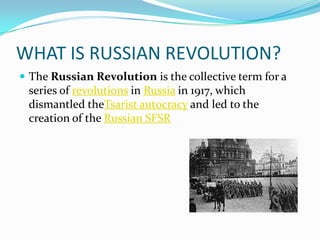
WHAT IS RUSSIAN REVOLUTION?
ď‚— The Russian Revolution is the collective term for a
series of revolutions in Russia in 1917, which
dismantled theTsarist autocracy and led to the
creation of the Russian SFSR
ď‚— The Emperor was forced to abdicate and the old
regime was replaced by a provisional
government during the first revolution of February
1917 (March in theGregorian calendar; the older Julian
calendar was in use in Russia at the time). In the
second revolution, during October, the Provisional
Government was removed and replaced with
a Bolshevik (Communist) government.
COMPETITORS?
ď‚— Civil war erupted between the "Red" (Bolshevik) and
"White" (anti-Bolshevik) factions, which was to
continue for several years, with the Bolsheviks
ultimately victorious. In this way, the Revolution paved
the way for the creation of the Union of Soviet Socialist
Republics (USSR) in 1922. While many notable
historical events occurred in Moscow and Petrograd,
there was also a visible movement in cities throughout
the state, among national minorities throughout the
empire and in the rural areas, where peasants took
over and redistributed land.
BACKGROUND
ď‚— The Russian Revolution of 1905 was said to be a major
factor to the February Revolutions of 1917. The events
of Bloody Sunday triggered a line of protests. A council
of workers called the St. Petersburg Soviet was created
in all this chaos, and the beginning of
a communist political protest had begun.
ECONOMIC AND SOCIAL CHANGES
ď‚— An elementary theory of property, believed by many
peasants, was that land should belong to those who
work on it. At the same time, peasant life and culture
was changing constantly. Change was facilitated by the
physical movement of growing numbers of peasant
villagers who migrated to and from industrial and
urban environments, but also by the introduction of
city culture into the village through material goods,
the press, and word of mouth
POLITICAL ISSUES
ď‚— Many sections of the country had reason to be dissatisfied
with the existing autocracy. Nicholas II was a deeply
conservative ruler and maintained a strict authoritarian
system. Individuals and society in general were expected to
show self-restraint, devotion to community, deference to
the social hierarchy and a sense of duty to the country.
Religious faith helped bind all of these tenets together as a
source of comfort and reassurance in the face of difficult
conditions and as a means of political authority exercised
through the clergy. Perhaps more than any other modern
monarch, Nicholas II attached his fate and the future of his
dynasty to the notion of the ruler as a saintly and infallible
father to his people
WORLD WAR I
ď‚— The outbreak of war in August 1914 initially served to quiet
the prevalent social and political protests, focusing
hostilities against a common external enemy, but this
patriotic unity did not last long. As the war dragged on
inconclusively, war-weariness gradually took its toll. More
important, though, was a deeper fragility: although many
ordinary Russians joined anti-German demonstrations in
the first few weeks of the war, the most widespread
reaction appears to have been skepticism and fatalism.
Hostility toward the Kaiser and the desire to defend their
land and their lives did not necessarily translate into
enthusiasm for the Tsar or the governmen
Between February and throughout
October: "Dual Power"
ď‚— The effective power of the Provisional Government was
challenged by the authority of an institution that claimed to
represent the will of workers and soldiers and could, in fact,
mobilize and control these groups during the early months of
the revolution – the Petrograd Soviet [Council] of Workers'
Deputies. The model for the soviet were workers' councils that
had been established in scores of Russian cities during the 1905
revolution. In February 1917, striking workers elected deputies to
represent them and socialist activists began organizing a
citywide council to unite these deputies with representatives of
the socialist parties. On 27 February, socialist Duma deputies,
mainly Mensheviksand Socialist Revolutionaries, took the lead
in organizing a citywide council. The Petrograd Soviet met in
the Tauride Palace, the same building where the new
government was taking shape.
The October Revolution
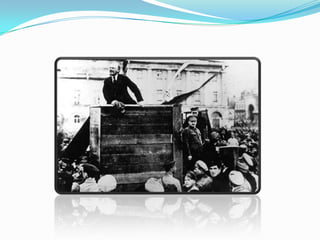
ď‚— The October Revolution was led by Vladimir
Lenin and was based upon Lenin's writing on the ideas
of Karl Marx, a political ideology often known
as Marxism-Leninism. It marked the beginning of the
spread of communism in the 20th century. It was far
less sporadic than the revolution of February and came
about as the result of deliberate planning and
coordinated activity to that end.
Death of the imperial family
ď‚— In early March, the Provisional Government placed
Nicholas and his family under house arrest in
the Alexander Palace at Tsarskoe Selo, 15 miles (24 km)
south of Petrograd. In August 1917
the Kerensky government evacuated the Romanovs
to Tobolsk in the Urals, allegedly to protect them from the
rising tide of revolution during the Red Terror. After the
Bolsheviks came to power in October 1917, the conditions
of their imprisonment grew stricter and talk of putting
Nicholas on trial increased. As the counter revolutionary
White movement gathered force, leading to full-scale civil
war by the summer, the Romanovs were moved during
April and May 1918 to Yekaterinburg, a militant Bolshevik
stronghold.
The Russian revolution and the
world
ď‚— Leon Trotsky said that the goal of socialism in Russia
would not be realized without the success of the world
revolution. Indeed, a revolutionary wave caused by the
Russian Revolution lasted until 1923. Despite initial
hopes for success in the German Revolution of 1918–
1919, in the short-lived Hungarian Soviet Republic and
others like it, no other Marxist movement succeeded
in keeping power in its hands.
THANKYOU..

Russian revolution

  • 1.
    Date : 8March – 8 November 1917 Result : Bolshevik victory MADE BY : SABHYATA BALI IX – A 9036/36
  • 2.
    WHAT IS RUSSIANREVOLUTION? ď‚— The Russian Revolution is the collective term for a series of revolutions in Russia in 1917, which dismantled theTsarist autocracy and led to the creation of the Russian SFSR
  • 3.
    ď‚— The Emperorwas forced to abdicate and the old regime was replaced by a provisional government during the first revolution of February 1917 (March in theGregorian calendar; the older Julian calendar was in use in Russia at the time). In the second revolution, during October, the Provisional Government was removed and replaced with a Bolshevik (Communist) government.
  • 4.
    COMPETITORS? ď‚— Civil warerupted between the "Red" (Bolshevik) and "White" (anti-Bolshevik) factions, which was to continue for several years, with the Bolsheviks ultimately victorious. In this way, the Revolution paved the way for the creation of the Union of Soviet Socialist Republics (USSR) in 1922. While many notable historical events occurred in Moscow and Petrograd, there was also a visible movement in cities throughout the state, among national minorities throughout the empire and in the rural areas, where peasants took over and redistributed land.
  • 5.
    BACKGROUND ď‚— The RussianRevolution of 1905 was said to be a major factor to the February Revolutions of 1917. The events of Bloody Sunday triggered a line of protests. A council of workers called the St. Petersburg Soviet was created in all this chaos, and the beginning of a communist political protest had begun.
  • 7.
    ECONOMIC AND SOCIALCHANGES ď‚— An elementary theory of property, believed by many peasants, was that land should belong to those who work on it. At the same time, peasant life and culture was changing constantly. Change was facilitated by the physical movement of growing numbers of peasant villagers who migrated to and from industrial and urban environments, but also by the introduction of city culture into the village through material goods, the press, and word of mouth
  • 9.
    POLITICAL ISSUES ď‚— Manysections of the country had reason to be dissatisfied with the existing autocracy. Nicholas II was a deeply conservative ruler and maintained a strict authoritarian system. Individuals and society in general were expected to show self-restraint, devotion to community, deference to the social hierarchy and a sense of duty to the country. Religious faith helped bind all of these tenets together as a source of comfort and reassurance in the face of difficult conditions and as a means of political authority exercised through the clergy. Perhaps more than any other modern monarch, Nicholas II attached his fate and the future of his dynasty to the notion of the ruler as a saintly and infallible father to his people
  • 10.
    WORLD WAR I ď‚—The outbreak of war in August 1914 initially served to quiet the prevalent social and political protests, focusing hostilities against a common external enemy, but this patriotic unity did not last long. As the war dragged on inconclusively, war-weariness gradually took its toll. More important, though, was a deeper fragility: although many ordinary Russians joined anti-German demonstrations in the first few weeks of the war, the most widespread reaction appears to have been skepticism and fatalism. Hostility toward the Kaiser and the desire to defend their land and their lives did not necessarily translate into enthusiasm for the Tsar or the governmen
  • 11.
    Between February andthroughout October: "Dual Power"  The effective power of the Provisional Government was challenged by the authority of an institution that claimed to represent the will of workers and soldiers and could, in fact, mobilize and control these groups during the early months of the revolution – the Petrograd Soviet [Council] of Workers' Deputies. The model for the soviet were workers' councils that had been established in scores of Russian cities during the 1905 revolution. In February 1917, striking workers elected deputies to represent them and socialist activists began organizing a citywide council to unite these deputies with representatives of the socialist parties. On 27 February, socialist Duma deputies, mainly Mensheviksand Socialist Revolutionaries, took the lead in organizing a citywide council. The Petrograd Soviet met in the Tauride Palace, the same building where the new government was taking shape.
  • 12.
    The October Revolution ď‚—The October Revolution was led by Vladimir Lenin and was based upon Lenin's writing on the ideas of Karl Marx, a political ideology often known as Marxism-Leninism. It marked the beginning of the spread of communism in the 20th century. It was far less sporadic than the revolution of February and came about as the result of deliberate planning and coordinated activity to that end.
  • 13.
    Death of theimperial family ď‚— In early March, the Provisional Government placed Nicholas and his family under house arrest in the Alexander Palace at Tsarskoe Selo, 15 miles (24 km) south of Petrograd. In August 1917 the Kerensky government evacuated the Romanovs to Tobolsk in the Urals, allegedly to protect them from the rising tide of revolution during the Red Terror. After the Bolsheviks came to power in October 1917, the conditions of their imprisonment grew stricter and talk of putting Nicholas on trial increased. As the counter revolutionary White movement gathered force, leading to full-scale civil war by the summer, the Romanovs were moved during April and May 1918 to Yekaterinburg, a militant Bolshevik stronghold.
  • 14.
    The Russian revolutionand the world  Leon Trotsky said that the goal of socialism in Russia would not be realized without the success of the world revolution. Indeed, a revolutionary wave caused by the Russian Revolution lasted until 1923. Despite initial hopes for success in the German Revolution of 1918– 1919, in the short-lived Hungarian Soviet Republic and others like it, no other Marxist movement succeeded in keeping power in its hands.
  • 15.