HISTORY
CHAPTER-2
SESSION-3
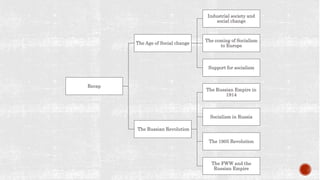
Recap
The Age of Social change
Industrial society and
social change
The coming of Socialism
to Europe
Support for socialism
The Russian Revolution
The Russian Empire in
1914
Socialism in Russia
The 1905 Revolution
The FWW and the
Russian Empire
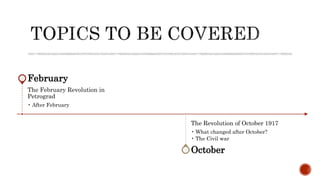
The February Revolution in
Petrograd
• After February
February
The Revolution of October 1917
• What changed after October?
• The Civil war
October
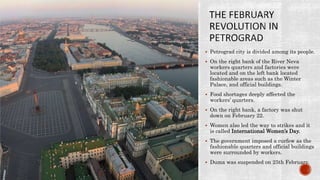
 Petrograd city is divided among its people.
 On the right bank of the River Neva
workers quarters and factories were
located and on the left bank located
fashionable areas such as the Winter
Palace, and official buildings.
 Food shortages deeply affected the
workers’ quarters.
 On the right bank, a factory was shut
down on February 22.
 Women also led the way to strikes and it
is called International Women’s Day.
 The government imposed a curfew as the
fashionable quarters and official buildings
were surrounded by workers.
 Duma was suspended on 25th February.
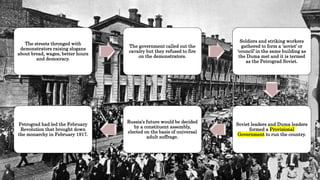
The streets thronged with
demonstrators raising slogans
about bread, wages, better hours
and democracy.
The government called out the
cavalry but they refused to fire
on the demonstrators.
Soldiers and striking workers
gathered to form a ‘soviet’ or
‘council’ in the same building as
the Duma met and it is termed
as the Petrograd Soviet.
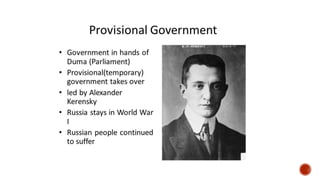
Soviet leaders and Duma leaders
formed a Provisional
Government to run the country.
Russia’s future would be decided
by a constituent assembly,
elected on the basis of universal
adult suffrage.
Petrograd had led the February
Revolution that brought down
the monarchy in February 1917.
He emphasised on renaming the Bolshevik Party to the Communist Party.
In April 1917, the Bolshevik leader Vladimir Lenin returned to Russia from his exile.
Restrictions on public meetings and associations were removed.
Liberals and socialists worked towards an elected government.
Under the Provisional Government, army officials, landowners and industrialists were influential.
Lenin demanded three
things and termed as
‘April Theses’.
He wanted war to end,
land to be transferred to
the peasants and
banks to be nationalised.
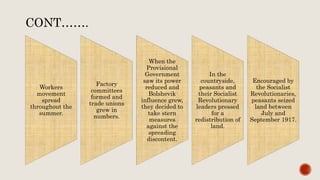
Workers
movement
spread
throughout the
summer.
Factory
committees
formed and
trade unions
grew in
numbers.
When the
Provisional
Government
saw its power
reduced and
Bolshevik
influence grew,
they decided to
take stern
measures
against the
spreading
discontent.
In the
countryside,
peasants and
their Socialist
Revolutionary
leaders pressed
for a
redistribution of
land.
Encouraged by
the Socialist
Revolutionaries,
peasants seized
land between
July and
September 1917.
CONT…….
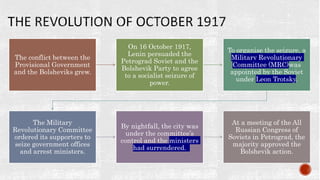
The conflict between the
Provisional Government
and the Bolsheviks grew.
On 16 October 1917,
Lenin persuaded the
Petrograd Soviet and the
Bolshevik Party to agree
to a socialist seizure of
power.
To organise the seizure, a
Military Revolutionary
Committee (MRC)was
appointed by the Soviet
under Leon Trotsky.
The Military
Revolutionary Committee
ordered its supporters to
seize government offices
and arrest ministers.
By nightfall, the city was
under the committee’s
control and the ministers
had surrendered.
At a meeting of the All
Russian Congress of
Soviets in Petrograd, the
majority approved the
Bolshevik action.
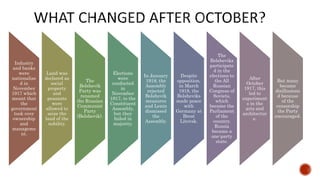
Industry
and banks
were
nationalise
d in
November
1917 which
meant that
the
government
took over
ownership
and
manageme
nt.
Land was
declared as
social
property
and
peasants
were
allowed to
seize the
land of the
nobility.
The
Bolshevik
Party was
renamed
the Russian
Communist
Party
(Bolshevik).
Elections
were
conducted
in
November
1917, to the
Constituent
Assembly,
but they
failed in
majority.
In January
1918, the
Assembly
rejected
Bolshevik
measures
and Lenin
dismissed
the
Assembly.
Despite
opposition,
in March
1918, the
Bolsheviks
made peace
with
Germany at
Brest
Litovsk.
The
Bolsheviks
participate
d in the
elections to
the All
Russian
Congress of
Soviets,
which
became the
Parliament
of the
country.
Russia
became a
one-party
state.
After
October
1917, this
led to
experiment
s in the
arts and
architectur
e.
But many
became
disillusione
d because
of the
censorship
the Party
encouraged.
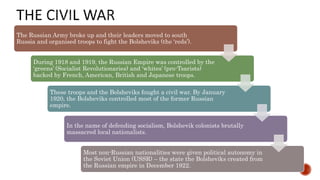
The Russian Army broke up and their leaders moved to south
Russia and organised troops to fight the Bolsheviks (the ‘reds’).
During 1918 and 1919, the Russian Empire was controlled by the
‘greens’ (Socialist Revolutionaries) and ‘whites’ (pro-Tsarists)
backed by French, American, British and Japanese troops.
These troops and the Bolsheviks fought a civil war. By January
1920, the Bolsheviks controlled most of the former Russian
empire.
In the name of defending socialism, Bolshevik colonists brutally
massacred local nationalists.
Most non-Russian nationalities were given political autonomy in
the Soviet Union (USSR) – the state the Bolsheviks created from
the Russian empire in December 1922.
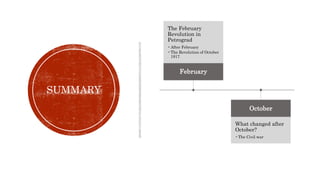
SUMMARY
February
The February
Revolution in
Petrograd
•After February
•The Revolution of October
1917
October
What changed after
October?
•The Civil war

Russian rev session-3

  • 1.
  • 2.
    Recap The Age ofSocial change Industrial society and social change The coming of Socialism to Europe Support for socialism The Russian Revolution The Russian Empire in 1914 Socialism in Russia The 1905 Revolution The FWW and the Russian Empire
  • 3.
    The February Revolutionin Petrograd • After February February The Revolution of October 1917 • What changed after October? • The Civil war October
  • 4.
     Petrograd cityis divided among its people.  On the right bank of the River Neva workers quarters and factories were located and on the left bank located fashionable areas such as the Winter Palace, and official buildings.  Food shortages deeply affected the workers’ quarters.  On the right bank, a factory was shut down on February 22.  Women also led the way to strikes and it is called International Women’s Day.  The government imposed a curfew as the fashionable quarters and official buildings were surrounded by workers.  Duma was suspended on 25th February.
  • 5.
    The streets throngedwith demonstrators raising slogans about bread, wages, better hours and democracy. The government called out the cavalry but they refused to fire on the demonstrators. Soldiers and striking workers gathered to form a ‘soviet’ or ‘council’ in the same building as the Duma met and it is termed as the Petrograd Soviet. Soviet leaders and Duma leaders formed a Provisional Government to run the country. Russia’s future would be decided by a constituent assembly, elected on the basis of universal adult suffrage. Petrograd had led the February Revolution that brought down the monarchy in February 1917.
  • 7.
    He emphasised onrenaming the Bolshevik Party to the Communist Party. In April 1917, the Bolshevik leader Vladimir Lenin returned to Russia from his exile. Restrictions on public meetings and associations were removed. Liberals and socialists worked towards an elected government. Under the Provisional Government, army officials, landowners and industrialists were influential.
  • 8.
    Lenin demanded three thingsand termed as ‘April Theses’. He wanted war to end, land to be transferred to the peasants and banks to be nationalised.
  • 9.
    Workers movement spread throughout the summer. Factory committees formed and tradeunions grew in numbers. When the Provisional Government saw its power reduced and Bolshevik influence grew, they decided to take stern measures against the spreading discontent. In the countryside, peasants and their Socialist Revolutionary leaders pressed for a redistribution of land. Encouraged by the Socialist Revolutionaries, peasants seized land between July and September 1917. CONT…….
  • 10.
    The conflict betweenthe Provisional Government and the Bolsheviks grew. On 16 October 1917, Lenin persuaded the Petrograd Soviet and the Bolshevik Party to agree to a socialist seizure of power. To organise the seizure, a Military Revolutionary Committee (MRC)was appointed by the Soviet under Leon Trotsky. The Military Revolutionary Committee ordered its supporters to seize government offices and arrest ministers. By nightfall, the city was under the committee’s control and the ministers had surrendered. At a meeting of the All Russian Congress of Soviets in Petrograd, the majority approved the Bolshevik action.
  • 11.
    Industry and banks were nationalise d in November 1917which meant that the government took over ownership and manageme nt. Land was declared as social property and peasants were allowed to seize the land of the nobility. The Bolshevik Party was renamed the Russian Communist Party (Bolshevik). Elections were conducted in November 1917, to the Constituent Assembly, but they failed in majority. In January 1918, the Assembly rejected Bolshevik measures and Lenin dismissed the Assembly. Despite opposition, in March 1918, the Bolsheviks made peace with Germany at Brest Litovsk. The Bolsheviks participate d in the elections to the All Russian Congress of Soviets, which became the Parliament of the country. Russia became a one-party state. After October 1917, this led to experiment s in the arts and architectur e. But many became disillusione d because of the censorship the Party encouraged.
  • 12.
    The Russian Armybroke up and their leaders moved to south Russia and organised troops to fight the Bolsheviks (the ‘reds’). During 1918 and 1919, the Russian Empire was controlled by the ‘greens’ (Socialist Revolutionaries) and ‘whites’ (pro-Tsarists) backed by French, American, British and Japanese troops. These troops and the Bolsheviks fought a civil war. By January 1920, the Bolsheviks controlled most of the former Russian empire. In the name of defending socialism, Bolshevik colonists brutally massacred local nationalists. Most non-Russian nationalities were given political autonomy in the Soviet Union (USSR) – the state the Bolsheviks created from the Russian empire in December 1922.
  • 13.
    SUMMARY February The February Revolution in Petrograd •AfterFebruary •The Revolution of October 1917 October What changed after October? •The Civil war