‘RUNNING WATER’ 
By 
ROHINTON MISTRY
Dharamsala is the principal township of Kangra 
district. With dense pine and deodar forests, 
numerous streams, cool healthy air, attractive 
surroundings and the nearby snowline, 
Dharamsala has everything for a perfect holiday. It 
is full of life and yet peaceful. The headquarters of 
His Holiness the Dalai Lama are at upper 
Dharamsala. 
Covering a wide area in the form of twin 
settlement, lower Dharamsala (1380m) is a busy 
commercial centre. 
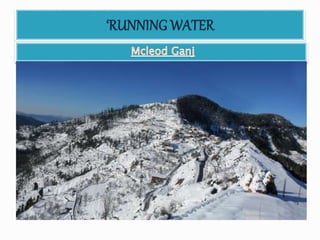
While upper Dharamsala (1830m) with the suburbs 
of Mcleodganj and Forsytheganj, retains a British 
flavor and colonial lifestyle.
The charming church of St. John in the 
wilderness is situated here and this is the final 
resting place of Lord Elgin, a British Viceroy 
of India during the 19th century. 
There is also a large Tibetan community who 
has made this place their home. 
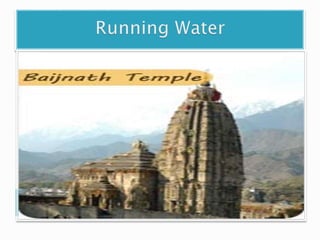
Numerous ancient temples like Jwalamukhi, 
Brijeshwari and Chamunda lie on the plains 
below Dharamsala. 
.
Like most of Mistry’s story this story also 
covers a number of generic distinctions. These 
are--- 
i. Autobiographic elements 
ii. Historiography of Dharamsala 
iii. Dalai Lama and his religious activities 
iv. Problems of Immigration & Refugee 
V. Religiosity of the Indians & 
vi. Vices of Urbanization
Rohinton Mistry began the story saying his nostalgic 
feeling about ‘Dharamsala’, a mountain hamlet where 
his uncle, aunt and cousins were living. 
He regretted that although he had a desire to visit 
‘Dharamsala’ to enjoy snow covered paths , roofs and 
leaves and branches of trees, he could not do so 
because of some practical problems. 
In course of time he left India and settled in Canada. 
All on a sudden he got the opportunity to visit 
Dharamsala when he was asked to do so as an official 
duty.
The story began as a travelogue. Mistry very lucidly stated 
how he started from Delhi and reached Chakki Bank of 
Punjab after 28 hours of boring train journey. Then he 
narrated how he took a foolish decision of hiring a worn out 
Rickshaw and reached the Pathankot bus-stand almost wet. 
Then he hired a taxi and started toward Dharamsala. 
It took him 3 hours to reach Dharamsala. 
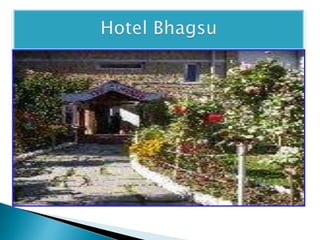
Reaching Dharamsala he took shelter at a Hotel named 
‘Bhagsu’. 
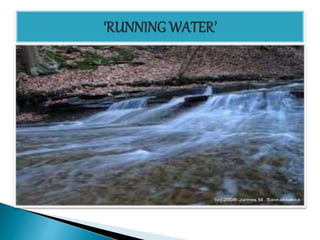
He came to know that ‘Bhagsu’ in local language means 
‘Running Water’. 
Eventually he titled his tale ‘Running Water’.
The desk clerk told that he would be supplied with two 
candles because the electricity supply of the hotel was 
disturbed. 
This was because of the employees’ strike for getting some 
of their demands fulfilled. 
The clerk then told that he would be supplied with two 
buckets of water as the water supply of the Hotel was 
disrupted because of landslide. 
However, the clerk consoled him saying that he would face 
the same problems in almost all the hotels of the locality. 
These were not the problems of Hotel Bhagsu only.
His aunt asked him to shift to their house 
immediately. She also said that they had personal 
water supply system and it was not affected. 
Mr. Nowrojee told that his grandfather saved 
lives of hundreds of people by providing blankets 
and necessary commodities during the 
devastating earthquake of 1905. As a reward the 
British Deputy commissioner donated a fountain 
of fresh water to the family. He also arranged for 
its independent pipeline. 
The Nowrojee family had been using it since 
then.
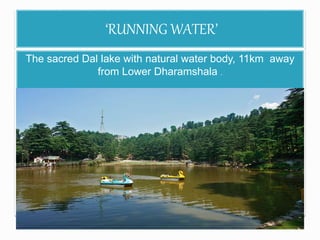
‘RUNNING WATER’ 
The sacred Dal lake with natural water body, 11km away 
from Lower Dharamshala .
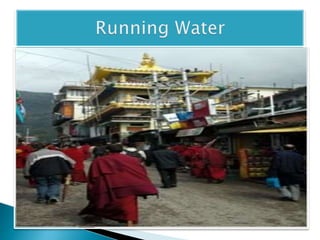
Then Mr. Nowrojee told the story of Dalai Lama. 
Dalai Lama fled Tibet in 1959 and had taken shelter 
at Dharamsala in order to save his life from the 
hands of Chinese soldiers of Chou en Lai. 
Mr. Nowrojee helped Dalai Lama to establish his 
government–in-exile and build his new monastery at 
Dharamsala. 
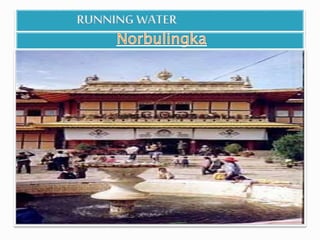
It was named Norbulingka or Namgyal.
The main hall of the Namgyal Monastery had a 
high throne at one side. Dalai Lama used to sit 
there when he gave audience and preached. 
Behind the throne was a larger than life statue of 
Buddha in the lotus position. The Buddha was 
locked in a huge glass case. 
The Monastery brought tourists and the situation 
changed with the change of time. 
In order to protect the valuable things, the 
Buddhist monks had to keep everything under lock 
and key. 
This was the consequences of Urbanization.
His Holiness the 14th Dalai 
Lama Tenzin Gyatso, is the head 
of state and spiritual leader of 
the Tibetan people. He was born 
Lhamo Dhondrub on 6 July 
1935, in a small village called 
Taktser in northeastern Tibet. 
Born to a peasant family, His 
Holiness was recognized at the 
age of two, in accordance with 
Tibetan tradition, as the 
reincarnation of his predecessor 
the 13th Dalai Lama, and thus 
an incarnation Avalokitesvara, 
the Buddha of Compassion.
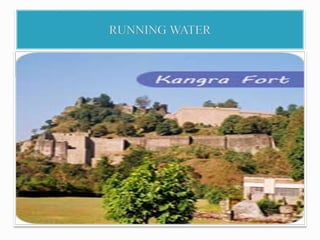
Kangra fort ,Dharmsala
Mistry then referred to the T.V.Serial of 
‘Ramayana’ and its impact on the average 
Indian People. 
Ramayana is one of the two great sanskrit 
epics of India. The other is the Mahabharata. 
Ramananda Sagar made a TV serial on the 
episodes of Ramayana in the seventies of the 
last century. 
It became very popular among all sections of 
people.
It was shown every Sunday at 10-00 a.m. 
People suspended all their normal activities 
for the sake of witnessing this Serial. 
They even garlanded the TV sets and burnt 
incense sticks before the TV sets as if they 
were watching real Rama, Laxmana etc. 
The serial ended after 76 episodes. 
People felt disgruntled as they found all 
incidents were not presented. 
The started agitation in protest. Bandhs 
paralyzed the normal life.
Ministerial oaths were postponed. 
The Sweepers declined to do their duties etc. 
The people started treating the actors as real Ramayana 
personalities. 
The Congress party wanted to win the election by enchasing 
this sentiment. 
So, the actors were given candidature and used for voting 
campaign 
But, while casting votes ,the people acted rationally and voted 
only the deserving candidates. Rajib Gandhi led Congress 
party had to suffer a serious defeat. 
Democratic spirit of the people prevailed over emotional craze 
highlighting the dignity of Indian Democracy.
A note to the author: - 
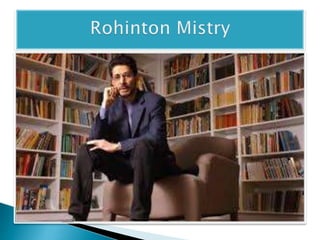
Rohinton Mistry was born in 1952 and grew up in 
Bombay, India, where he also attended university. In 1975 
he emigrated to Canada, where he began a course in 
English and Philosophy at the University of Toronto. He 
is the author of three novels and one collection of short 
stories. His debut novel, Such a Long Journey (1991), 
won the Commonwealth Writers Prize for Best Book and 
the Governor General's Award, and was shortlisted for the 
Booker Prize. 
Excerpt from: amazon.com
It was made into an acclaimed feature film in 1998. His second 
novel, A Fine Balance (1995), won many prestigious awards, 
including the Commonwealth Writers Prize for Best Book, the 
Los Angeles Times Book Prize for Fiction and the Giller Prize, as 
well as being shortlisted for the Booker Prize, the International 
IMPAC Dublin Literary Award and the Irish Times International 
Fiction Prize. His collection of short stories, Tales from Firozsha 
Baag, was published in 1987. In 2002 Faber published Mistry's 
third novel, Family Matters, which was longlisted for the 2002 
Man Booker Prize. 
Excerpt from: amazon.com
ACKNOWLEDGEMENTS: 
CREDITS : & REFERENCES : 
1. A COMPANION TO B.A ENGLISH PROSE ED. BY FATEHA HAQUE BARBARUAH 
2.WWW.EN.WIKIPEDEA.ORG 
3.PICTURES TAKEN FROM (A) WIKIPEDEA (2)OFFICIAL WEBSITE OF TOURISM DEPT. HIMACHAL PRADESH 
4.WWW.LITERATURE.BRITISHCOUNCIL.ORG 
5.JANUARY IMAGE.COM 
6.amazon.com 
7.Google photos/pictures

Running water by rohinton mistry

  • 1.
    ‘RUNNING WATER’ By ROHINTON MISTRY
  • 4.
    Dharamsala is theprincipal township of Kangra district. With dense pine and deodar forests, numerous streams, cool healthy air, attractive surroundings and the nearby snowline, Dharamsala has everything for a perfect holiday. It is full of life and yet peaceful. The headquarters of His Holiness the Dalai Lama are at upper Dharamsala. Covering a wide area in the form of twin settlement, lower Dharamsala (1380m) is a busy commercial centre. While upper Dharamsala (1830m) with the suburbs of Mcleodganj and Forsytheganj, retains a British flavor and colonial lifestyle.
  • 5.
    The charming churchof St. John in the wilderness is situated here and this is the final resting place of Lord Elgin, a British Viceroy of India during the 19th century. There is also a large Tibetan community who has made this place their home. Numerous ancient temples like Jwalamukhi, Brijeshwari and Chamunda lie on the plains below Dharamsala. .
  • 10.
    Like most ofMistry’s story this story also covers a number of generic distinctions. These are--- i. Autobiographic elements ii. Historiography of Dharamsala iii. Dalai Lama and his religious activities iv. Problems of Immigration & Refugee V. Religiosity of the Indians & vi. Vices of Urbanization
  • 11.
    Rohinton Mistry beganthe story saying his nostalgic feeling about ‘Dharamsala’, a mountain hamlet where his uncle, aunt and cousins were living. He regretted that although he had a desire to visit ‘Dharamsala’ to enjoy snow covered paths , roofs and leaves and branches of trees, he could not do so because of some practical problems. In course of time he left India and settled in Canada. All on a sudden he got the opportunity to visit Dharamsala when he was asked to do so as an official duty.
  • 13.
    The story beganas a travelogue. Mistry very lucidly stated how he started from Delhi and reached Chakki Bank of Punjab after 28 hours of boring train journey. Then he narrated how he took a foolish decision of hiring a worn out Rickshaw and reached the Pathankot bus-stand almost wet. Then he hired a taxi and started toward Dharamsala. It took him 3 hours to reach Dharamsala. Reaching Dharamsala he took shelter at a Hotel named ‘Bhagsu’. He came to know that ‘Bhagsu’ in local language means ‘Running Water’. Eventually he titled his tale ‘Running Water’.
  • 15.
    The desk clerktold that he would be supplied with two candles because the electricity supply of the hotel was disturbed. This was because of the employees’ strike for getting some of their demands fulfilled. The clerk then told that he would be supplied with two buckets of water as the water supply of the Hotel was disrupted because of landslide. However, the clerk consoled him saying that he would face the same problems in almost all the hotels of the locality. These were not the problems of Hotel Bhagsu only.
  • 18.
    His aunt askedhim to shift to their house immediately. She also said that they had personal water supply system and it was not affected. Mr. Nowrojee told that his grandfather saved lives of hundreds of people by providing blankets and necessary commodities during the devastating earthquake of 1905. As a reward the British Deputy commissioner donated a fountain of fresh water to the family. He also arranged for its independent pipeline. The Nowrojee family had been using it since then.
  • 19.
    ‘RUNNING WATER’ Thesacred Dal lake with natural water body, 11km away from Lower Dharamshala .
  • 21.
    Then Mr. Nowrojeetold the story of Dalai Lama. Dalai Lama fled Tibet in 1959 and had taken shelter at Dharamsala in order to save his life from the hands of Chinese soldiers of Chou en Lai. Mr. Nowrojee helped Dalai Lama to establish his government–in-exile and build his new monastery at Dharamsala. It was named Norbulingka or Namgyal.
  • 24.
    The main hallof the Namgyal Monastery had a high throne at one side. Dalai Lama used to sit there when he gave audience and preached. Behind the throne was a larger than life statue of Buddha in the lotus position. The Buddha was locked in a huge glass case. The Monastery brought tourists and the situation changed with the change of time. In order to protect the valuable things, the Buddhist monks had to keep everything under lock and key. This was the consequences of Urbanization.
  • 25.
    His Holiness the14th Dalai Lama Tenzin Gyatso, is the head of state and spiritual leader of the Tibetan people. He was born Lhamo Dhondrub on 6 July 1935, in a small village called Taktser in northeastern Tibet. Born to a peasant family, His Holiness was recognized at the age of two, in accordance with Tibetan tradition, as the reincarnation of his predecessor the 13th Dalai Lama, and thus an incarnation Avalokitesvara, the Buddha of Compassion.
  • 32.
  • 34.
    Mistry then referredto the T.V.Serial of ‘Ramayana’ and its impact on the average Indian People. Ramayana is one of the two great sanskrit epics of India. The other is the Mahabharata. Ramananda Sagar made a TV serial on the episodes of Ramayana in the seventies of the last century. It became very popular among all sections of people.
  • 35.
    It was shownevery Sunday at 10-00 a.m. People suspended all their normal activities for the sake of witnessing this Serial. They even garlanded the TV sets and burnt incense sticks before the TV sets as if they were watching real Rama, Laxmana etc. The serial ended after 76 episodes. People felt disgruntled as they found all incidents were not presented. The started agitation in protest. Bandhs paralyzed the normal life.
  • 36.
    Ministerial oaths werepostponed. The Sweepers declined to do their duties etc. The people started treating the actors as real Ramayana personalities. The Congress party wanted to win the election by enchasing this sentiment. So, the actors were given candidature and used for voting campaign But, while casting votes ,the people acted rationally and voted only the deserving candidates. Rajib Gandhi led Congress party had to suffer a serious defeat. Democratic spirit of the people prevailed over emotional craze highlighting the dignity of Indian Democracy.
  • 37.
    A note tothe author: - Rohinton Mistry was born in 1952 and grew up in Bombay, India, where he also attended university. In 1975 he emigrated to Canada, where he began a course in English and Philosophy at the University of Toronto. He is the author of three novels and one collection of short stories. His debut novel, Such a Long Journey (1991), won the Commonwealth Writers Prize for Best Book and the Governor General's Award, and was shortlisted for the Booker Prize. Excerpt from: amazon.com
  • 38.
    It was madeinto an acclaimed feature film in 1998. His second novel, A Fine Balance (1995), won many prestigious awards, including the Commonwealth Writers Prize for Best Book, the Los Angeles Times Book Prize for Fiction and the Giller Prize, as well as being shortlisted for the Booker Prize, the International IMPAC Dublin Literary Award and the Irish Times International Fiction Prize. His collection of short stories, Tales from Firozsha Baag, was published in 1987. In 2002 Faber published Mistry's third novel, Family Matters, which was longlisted for the 2002 Man Booker Prize. Excerpt from: amazon.com
  • 40.
    ACKNOWLEDGEMENTS: CREDITS :& REFERENCES : 1. A COMPANION TO B.A ENGLISH PROSE ED. BY FATEHA HAQUE BARBARUAH 2.WWW.EN.WIKIPEDEA.ORG 3.PICTURES TAKEN FROM (A) WIKIPEDEA (2)OFFICIAL WEBSITE OF TOURISM DEPT. HIMACHAL PRADESH 4.WWW.LITERATURE.BRITISHCOUNCIL.ORG 5.JANUARY IMAGE.COM 6.amazon.com 7.Google photos/pictures

Editor's Notes

  • #4 A. Bombey born Indian Writer in English
  • #10 Ans. A. Misery and Hardship of Indian people living in the countryside of the Himalayan region.
  • #27 Ans. A. Tibetans
  • #31 A.Dharamsala
  • #35 Ans.A.26