A Streetcar
Named Desire
By Tennessee Williams
 Major Themes in the Play
 The old south and the new south
 Cruelty
 The primitive and the primal
 Desire
 Loneliness
 Romance vs. Realism
Outline of This Session
Fantasy/ Illusion
 Blanche / Illusion
 Fantasy / Liberating magic / Fantasy is
her primary means of self-defense
 Blanche's dependence on illusion is
contrasted with Stanley's steadfast
realism
Fantasy/ Illusion
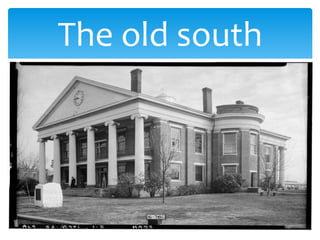
The old south
The new south
 Stella and Blanche come from a world that is
rapidly dying
 Two sisters are the last living members of
their family
 Old South and General Sherman's army
 The old south can only live on in a diluted,
bastardized form
The old south and the new south
 Blanche's comments Stanely as primitive.
 Stanely is a representative of unrefined
manhood
 Stanely's unrefined nature also includes a
terrifying amorality.
 Blanche finds Stanley's primitivism so
threating because it is something she sees
and hides within her
The primitive and the primal
Desire
 Desire is the central theme of the play
 Blanche seeks to deny it
 Desire, is her driving motivations.
 Her desire becomes the cause of her driving
out of town
 Desire is also Blanche’s undoing
Desire
Loneliness
 The companion theme to desire is loneliness
 Blanche is lost among these two
 She seeks companionship and protection in the arms
of strangers
 Blanch never recovers from her tragic and consuming
love of her first husband
 She needs a defender.
Loneliness
Romance
Romance
Realism
 The fundamental tension of the play is romance and
realism
 There is a parallel between lust and death
 Blanche, the romantic and Stanley the realist
 Blanche’s previous sexual encounters are tangled up
with death
 Blanche / Streetcars named desire and cemeteries /
symbolize run together to Blanche's final Destination
Romance VS Realism / Desire VS
Cemeteries
A streetcar named desire