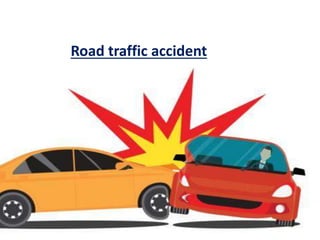
Road traffic accident
Introduction
Accidents on the road are the most common scenario
these days. Reckless driving, Increased number of
vehicles,and careless attitude have led to massive rise in
death toll due to road accidents.
The increased incurred due to road accidents are not
limited to physical deformity and results in loss of life as
well.
As per the global data, approximately 1.3 million people
die in road accidents each year, averaging to 3287 death's
in a day. It is alarming because the number of vehicles is
increasing day by day.
Definition
The definition of a road traffic accident occurs
when a vehicle is moving along a roadway collide
partially or fully with another vehicle or object on
a public road.
• WHO has projected the road traffic injuries will
move up to the third position among leading
causes of the global disease burden.
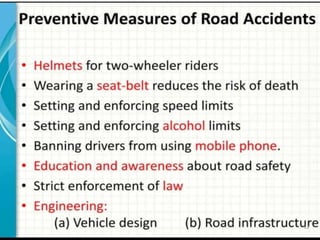
Types of Inguries
1) Major Injuries
2) Minor Inguries
Minor Injuries
Minor injuries are generally not life threatening .
These injuries often have quick recovery time.
Examples include minor cuts, scrapes,bruses,sprains
,strains, and minor head injuries.
• While these injuries can still be painfull and
discriptive, they often heal completely with
appropriate first aid and rest.
• Minor injuries are those that typically don’t cause
severe pain or permanent damage and can usually
be treated with minimal medical intervention.
Remember, even if an injury seems minor,
it’s important to monitor symptoms closely
and seek medical attention if there are any
signs of infection, increased pain, or if
symptoms persist longer than expected.
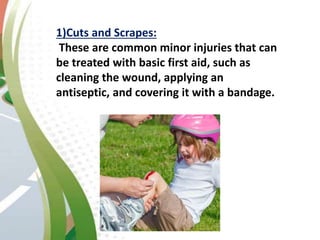
1)Cuts and Scrapes:
These are common minor injuries that can
be treated with basic first aid, such as
cleaning the wound, applying an
antiseptic, and covering it with a bandage.
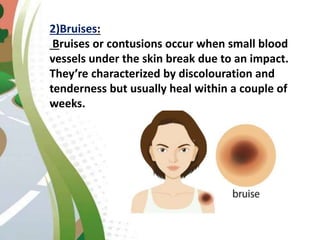
2)Bruises:
Bruises or contusions occur when small blood
vessels under the skin break due to an impact.
They’re characterized by discolouration and
tenderness but usually heal within a couple of
weeks.
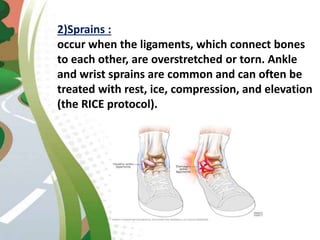
2)Sprains :
occur when the ligaments, which connect bones
to each other, are overstretched or torn. Ankle
and wrist sprains are common and can often be
treated with rest, ice, compression, and elevation
(the RICE protocol).
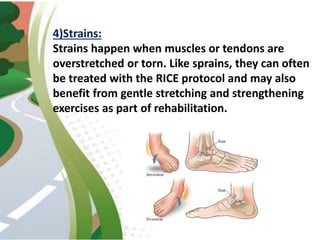
4)Strains:
Strains happen when muscles or tendons are
overstretched or torn. Like sprains, they can often
be treated with the RICE protocol and may also
benefit from gentle stretching and strengthening
exercises as part of rehabilitation.
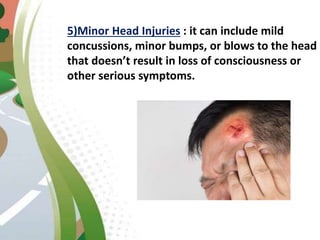
5)Minor Head Injuries : it can include mild
concussions, minor bumps, or blows to the head
that doesn’t result in loss of consciousness or
other serious symptoms.
Major Injuries
major injuries are typically more severe,
often requiring immediate and extensive
medical attention. They can be life-
threatening, resulting in lasting or
permanent damage or disability. Major
injuries frequently necessitate
hospitalization and may involve surgery or
other significant interventions.
• Examples can include fracture,
trumatic brain injuries,spinal cord
injuries , amputation, crush injuries
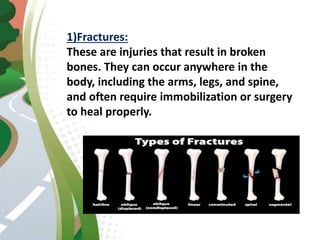
1)Fractures:
These are injuries that result in broken
bones. They can occur anywhere in the
body, including the arms, legs, and spine,
and often require immobilization or surgery
to heal properly.
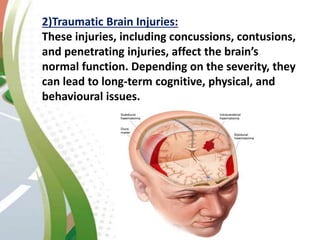
2)Traumatic Brain Injuries:
These injuries, including concussions, contusions,
and penetrating injuries, affect the brain’s
normal function. Depending on the severity, they
can lead to long-term cognitive, physical, and
behavioural issues.
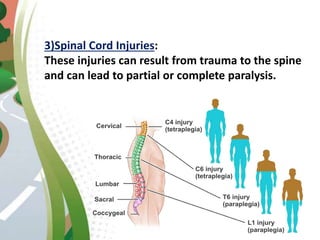
3)Spinal Cord Injuries:
These injuries can result from trauma to the spine
and can lead to partial or complete paralysis.
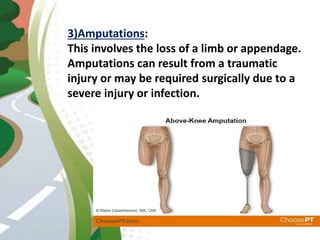
3)Amputations:
This involves the loss of a limb or appendage.
Amputations can result from a traumatic
injury or may be required surgically due to a
severe injury or infection.
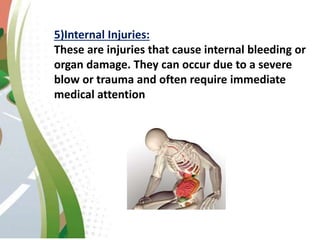
5)Internal Injuries:
These are injuries that cause internal bleeding or
organ damage. They can occur due to a severe
blow or trauma and often require immediate
medical attention
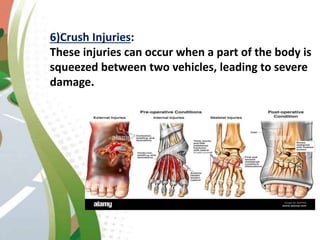
6)Crush Injuries:
These injuries can occur when a part of the body is
squeezed between two vehicles, leading to severe
damage.
Causes
• Over speeding
• Druken driving
• Red light jumping (not following traffic rules)
• Avoiding safety gears like seat belt and helmets
• Using mobile phone while driving.
• overloading of transport vehicles.
• Non adherence to lane driving and overtaking in
a wrong manner.
• Poor maintaince of the vehicles.
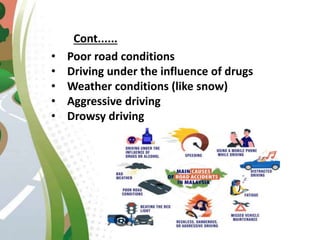
Cont......
• Poor road conditions
• Driving under the influence of drugs
• Weather conditions (like snow)
• Aggressive driving
• Drowsy driving
Signs and symptoms
• Chest pain
• Fatigue
• Headaches
• Joint pain
• Limited range of motion
• Neck pain.
• Memory loss
• Swelling and brusis
• Confusions.
• Dizziness
Management
First aid treatment
IMMEDIATE REQUIREMENT
Critical four minutes - One of the most common
causes of a d accident death is due to loss of
oxygen supply. This is mostly caused by a blocked
airway.
Remember:
Make the Scene safe
Look for the injured
Assist them
Call help & Look for the unconscious
victims
Follow the rule of ABC
1. Airway - Clear the airway i.e.
breathing track
2. Breathing - Help restore it by mouth
to mouth resuscitation
3.Circulation - Stop any bleeding
Clearing Airway
• Put the victim on ground very gently and
cautiously without vigorous handling to
prevent further injury.
• Turn the victim to one side.
• Loosen clothing at neck, chest and waist.
• Tilt the head back, point the face slightly
down so the tongue can fall forward allowing
blood and vomit to drain out.
Restoring breath
• Tilt head back, support jaw, keep your
fingers clear of throat;
• With good mouth to mouth seal and
your cheek sealing the victim's nose,
blow into the mouth until the chest
rises;
Circulation - stop any bleeding
• Uncover bleeding wound. Stop bleeding by
direct pressure on the wound with thick pad
of bandage or cloth.
• Bleeding limbs should be elevated to prevent
bleeding.
• Do not remove foreign objects from bleeding
wound.
• Apply pads and bandage them around the
wound. Do the same if broken bones are
visible.
Medical Procedure If the injury is not
severe, medication can help the patient
to recover.
• Injecting pain killers, and
• tetanus vaccine
• Blood transfusion may be required in
case of excessive blood loss.
Fracture Treatment
For fractures and bone displacement, doctors
will set the bone properly in its place. This is
known as reduction. Setting of bone that does
not require surgery, and is called closed
reduction.
Surgery
Surgery is inevitable in serious cases
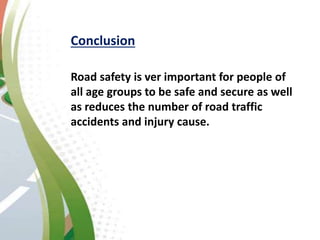
Conclusion
Road safety is ver important for people of
all age groups to be safe and secure as well
as reduces the number of road traffic
accidents and injury cause.

RTA

  • 1.
  • 2.
    Introduction Accidents on theroad are the most common scenario these days. Reckless driving, Increased number of vehicles,and careless attitude have led to massive rise in death toll due to road accidents. The increased incurred due to road accidents are not limited to physical deformity and results in loss of life as well.
  • 3.
    As per theglobal data, approximately 1.3 million people die in road accidents each year, averaging to 3287 death's in a day. It is alarming because the number of vehicles is increasing day by day.
  • 4.
    Definition The definition ofa road traffic accident occurs when a vehicle is moving along a roadway collide partially or fully with another vehicle or object on a public road. • WHO has projected the road traffic injuries will move up to the third position among leading causes of the global disease burden.
  • 5.
    Types of Inguries 1)Major Injuries 2) Minor Inguries
  • 6.
    Minor Injuries Minor injuriesare generally not life threatening . These injuries often have quick recovery time. Examples include minor cuts, scrapes,bruses,sprains ,strains, and minor head injuries. • While these injuries can still be painfull and discriptive, they often heal completely with appropriate first aid and rest. • Minor injuries are those that typically don’t cause severe pain or permanent damage and can usually be treated with minimal medical intervention.
  • 7.
    Remember, even ifan injury seems minor, it’s important to monitor symptoms closely and seek medical attention if there are any signs of infection, increased pain, or if symptoms persist longer than expected.
  • 8.
    1)Cuts and Scrapes: Theseare common minor injuries that can be treated with basic first aid, such as cleaning the wound, applying an antiseptic, and covering it with a bandage.
  • 9.
    2)Bruises: Bruises or contusionsoccur when small blood vessels under the skin break due to an impact. They’re characterized by discolouration and tenderness but usually heal within a couple of weeks.
  • 10.
    2)Sprains : occur whenthe ligaments, which connect bones to each other, are overstretched or torn. Ankle and wrist sprains are common and can often be treated with rest, ice, compression, and elevation (the RICE protocol).
  • 11.
    4)Strains: Strains happen whenmuscles or tendons are overstretched or torn. Like sprains, they can often be treated with the RICE protocol and may also benefit from gentle stretching and strengthening exercises as part of rehabilitation.
  • 12.
    5)Minor Head Injuries: it can include mild concussions, minor bumps, or blows to the head that doesn’t result in loss of consciousness or other serious symptoms.
  • 13.
    Major Injuries major injuriesare typically more severe, often requiring immediate and extensive medical attention. They can be life- threatening, resulting in lasting or permanent damage or disability. Major injuries frequently necessitate hospitalization and may involve surgery or other significant interventions.
  • 14.
    • Examples caninclude fracture, trumatic brain injuries,spinal cord injuries , amputation, crush injuries
  • 15.
    1)Fractures: These are injuriesthat result in broken bones. They can occur anywhere in the body, including the arms, legs, and spine, and often require immobilization or surgery to heal properly.
  • 16.
    2)Traumatic Brain Injuries: Theseinjuries, including concussions, contusions, and penetrating injuries, affect the brain’s normal function. Depending on the severity, they can lead to long-term cognitive, physical, and behavioural issues.
  • 17.
    3)Spinal Cord Injuries: Theseinjuries can result from trauma to the spine and can lead to partial or complete paralysis.
  • 18.
    3)Amputations: This involves theloss of a limb or appendage. Amputations can result from a traumatic injury or may be required surgically due to a severe injury or infection.
  • 19.
    5)Internal Injuries: These areinjuries that cause internal bleeding or organ damage. They can occur due to a severe blow or trauma and often require immediate medical attention
  • 20.
    6)Crush Injuries: These injuriescan occur when a part of the body is squeezed between two vehicles, leading to severe damage.
  • 21.
    Causes • Over speeding •Druken driving • Red light jumping (not following traffic rules) • Avoiding safety gears like seat belt and helmets • Using mobile phone while driving. • overloading of transport vehicles. • Non adherence to lane driving and overtaking in a wrong manner. • Poor maintaince of the vehicles.
  • 22.
    Cont...... • Poor roadconditions • Driving under the influence of drugs • Weather conditions (like snow) • Aggressive driving • Drowsy driving
  • 23.
    Signs and symptoms •Chest pain • Fatigue • Headaches • Joint pain • Limited range of motion • Neck pain. • Memory loss • Swelling and brusis • Confusions. • Dizziness
  • 24.
    Management First aid treatment IMMEDIATEREQUIREMENT Critical four minutes - One of the most common causes of a d accident death is due to loss of oxygen supply. This is mostly caused by a blocked airway. Remember: Make the Scene safe Look for the injured Assist them Call help & Look for the unconscious victims
  • 25.
    Follow the ruleof ABC 1. Airway - Clear the airway i.e. breathing track 2. Breathing - Help restore it by mouth to mouth resuscitation 3.Circulation - Stop any bleeding
  • 26.
    Clearing Airway • Putthe victim on ground very gently and cautiously without vigorous handling to prevent further injury. • Turn the victim to one side. • Loosen clothing at neck, chest and waist. • Tilt the head back, point the face slightly down so the tongue can fall forward allowing blood and vomit to drain out.
  • 27.
    Restoring breath • Tilthead back, support jaw, keep your fingers clear of throat; • With good mouth to mouth seal and your cheek sealing the victim's nose, blow into the mouth until the chest rises;
  • 28.
    Circulation - stopany bleeding • Uncover bleeding wound. Stop bleeding by direct pressure on the wound with thick pad of bandage or cloth. • Bleeding limbs should be elevated to prevent bleeding. • Do not remove foreign objects from bleeding wound. • Apply pads and bandage them around the wound. Do the same if broken bones are visible.
  • 29.
    Medical Procedure Ifthe injury is not severe, medication can help the patient to recover. • Injecting pain killers, and • tetanus vaccine • Blood transfusion may be required in case of excessive blood loss.
  • 30.
    Fracture Treatment For fracturesand bone displacement, doctors will set the bone properly in its place. This is known as reduction. Setting of bone that does not require surgery, and is called closed reduction. Surgery Surgery is inevitable in serious cases
  • 38.
    Conclusion Road safety isver important for people of all age groups to be safe and secure as well as reduces the number of road traffic accidents and injury cause.