A 
seminar on 
Practical Training taken at 
RANA PRATAP SAGAR HYDROELECTRIC 
POWER STATION 
PRESENTED BY: 
Hemant Shrivastava 
4th year, EE 
PCE/2EE/11/039 
DEPARTMENT OF ELECTRICAL ENGINEERING 
POORNIMA COLLEGE OF ENGINEERING 
ISI-6 RIICO INSTITUTIONAL AREA, 
JAIPUR -302022 
SUBMITTED TO: 
Mr. Nitin Goel 
Dept. Of Electrical Engg. 
2014-15
CONTENTS 
• Introduction 
• Classification 
• Single Line Diagram 
• Feeders 
• How it works 
• Cut section of Turbine and generator 
• PLCC System 
• Advantage 
• Disadvantage 
• Conclusion
INTRODUCTION 
• Rana Pratap Sagar Dam is built on Chambal River. 
• There are 7 feeders connected to the Power Stations. 
• There are 4 units of generation. 
• Each unit generate 11KV, 43MW. 
• It operates only in months from August to April 
• The generation is decided by the RLDC(Regional Load Dispatch Centre) at 
Jaipur. 
• General Electrical, Canada is the company of manufacturing most of the 
equipments installed in the Power Station. 
NOTE:- Pictures Provided in PPT does not belong to the Power Plant
Classification of Hydro electric power station. 
• CLASSIFICATION BASED ON HEAD. 
A. High head plant ( < 300 m.) 
B. Medium head plant. (60m to 300 m.) 
C. Low head plant. ( > 60m.) 
• CLASSIFICATION BASED ON WATER CONDITION. 
A. Flow of water plant. 
B. Storage of water plant. 
C. Pump storage water plant.
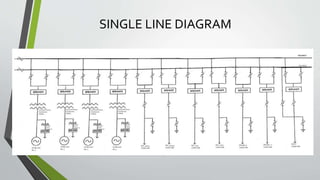
SINGLE LINE DIAGRAM
• KOTA - I 
• KOTA - II 
• GANDHI SAGAR – I 
• GANDHI SAGAR – II 
• BHILWARA – I 
• BHILWARA – II 
• INDUSTRIAL AREA
Element of Hydro power station, 
1. Reservoir. 
2. Catchments area. 
3. Dam. 
4. Spill ways. 
5. SCADA Screen. 
6. Fore bay or Intake. 
7. Tunnel. 
8. Penstock or pipe line. 
9. Surge tank. 
10. Draft tube. 
11. Tail race. 
12. Turbine.
How Hydro Electric Power Plant Works! 
• Water from the reservoir flows 
due to gravity to drive the 
turbine. 
• Turbine is connected to a 
generator. 
• Power generated is 
transmitted over power lines.
Medium Head Hydro electric power plant 
48 Poles
Spill Way 
During the lifetime of a dam different flow 
conditions will be experienced and a dam must be 
able to safely accommodate high floods that can 
exceed normal flow conditions in the river. For 
this reason, carefully passages are corporate in the 
dams as a part of structure. These passages are 
known as spillways. 
Function of Spill Way 
Function of spillway is to discharge 
the excess amount of water during 
floods and keep the level of water to 
the head of reservoir.
ALTERNATORS 
WINDINGS 
Name Specification 
Model 100780 
Volts 11000 
KVA 47778 
AMP 2515 
Class 48-47778-125 
ExcitationVolts 250 
Form w 
RPM 125 
KW 43000 
TYPE Ati 
Cycles 50 
AMP Excitation 854 
Max stator 
55oC 
temperature raise 
Poles 48
NAME SPECIFICATION 
Modal 101213 
Type EVF-8 
KW 250 
Speed 125 RPM 
Volts no loads 250 
AMP 1000 
WOUND Shunt 
POLES 8 
DC EXCITER 
Mercury Switches 
They operate relay and 
alarm when fault occur in 
alternator
Name Specification 
KVA 55000 
Cycles 50 
Output 132KV(star) 
Cooling 
i. Water Cooler 
ii. Oil Cooler 
55000 KVA 
60000 KVA 
Phase 3 
Input 11KV 
 There are 4 Power Transformers in which only one has buchholz relay and other have PVR for 
protection 
 Transformers have both oil forced and water forced cooling system 
 Oil is pumped into veins within water for extra cooling by two motors.
PLCC SYSTEM 
132 KV Line Wave Trap Coupling Capacitor 
Line Matching Unit 
Co-axial Cable 
(10V AC Signal ) 
Panel 
High frequency 
interface 
Difference between 
two communication 
line – 
3.35Khz(Minimum)
Image of installed Guide Bearing 
 There are two type bearings used in the plant 
1. Thrust Bearing:- 
1. Alternator is placed over this bearing so 
the weight of alternator comes over the 
bearing i.e. 418 tons. 
2. It is combined by 16 curved parts where 
each part have 30 springs for sharing load 
and vibrations. 
3. It is placed horizontally along with 
alternator 
2. Guide Bearing:- 
1. It is placed along with alternator 
2. It allows 8 thou* space for alternator 
vibrations 
3. It is combined with 16 parts. * 1 thou = thousand part of an inch
Kirloskar Electric, Bangalore, India 
NAME RATING 
POWER 250KVA 
RPM 1500 
Voltage 415 
AMP 347.8A 
Power Factor 0.8 
Frequency 50Hz
Supply is 
given to the 
plant by this 
transformers 
when the 
plant is in 
working 
mode or 
generating 
mode 
11KV/440KV 115KVA
Advantage of Hydro power station. 
1.The plant is simple in construction ,robust and required 
low maintenance. 
2.It can be put in the service instantly. 
3.It can respond to changing loads without any difficulty. 
4.There are no stand by losses. 
5.The running charges are very small. 
6.No fuels is burnt. 
7.The plant is quite neat and clean. 
8.The water after running the turbine can be used for 
irrigation and other purpose.
Disadvantage of Hydro power station. 
1. The capital cost of generators, civil engineering work etc is 
high. 
2. Long dry seasons may effect the delivery of power. 
3. The loss of land under the reservoir. 
4. Interference with the transport of sediment by the dam. 
5. Problems associated with the reservoir. 
i. Climatic and seismic effects. 
ii. Impact on aquatic ecosystems, flora and fauna.
Conclusion 
I would like to conclude that a practical training has been very useful. To learn 
about practical and theoretical differences while working on large machines and 
real life problems. It also help to get ready for any problem that may occur at 
any place and solving it as soon as possible.
Rps plant
Rps plant

Rps plant

  • 1.
    A seminar on Practical Training taken at RANA PRATAP SAGAR HYDROELECTRIC POWER STATION PRESENTED BY: Hemant Shrivastava 4th year, EE PCE/2EE/11/039 DEPARTMENT OF ELECTRICAL ENGINEERING POORNIMA COLLEGE OF ENGINEERING ISI-6 RIICO INSTITUTIONAL AREA, JAIPUR -302022 SUBMITTED TO: Mr. Nitin Goel Dept. Of Electrical Engg. 2014-15
  • 2.
    CONTENTS • Introduction • Classification • Single Line Diagram • Feeders • How it works • Cut section of Turbine and generator • PLCC System • Advantage • Disadvantage • Conclusion
  • 3.
    INTRODUCTION • RanaPratap Sagar Dam is built on Chambal River. • There are 7 feeders connected to the Power Stations. • There are 4 units of generation. • Each unit generate 11KV, 43MW. • It operates only in months from August to April • The generation is decided by the RLDC(Regional Load Dispatch Centre) at Jaipur. • General Electrical, Canada is the company of manufacturing most of the equipments installed in the Power Station. NOTE:- Pictures Provided in PPT does not belong to the Power Plant
  • 4.
    Classification of Hydroelectric power station. • CLASSIFICATION BASED ON HEAD. A. High head plant ( < 300 m.) B. Medium head plant. (60m to 300 m.) C. Low head plant. ( > 60m.) • CLASSIFICATION BASED ON WATER CONDITION. A. Flow of water plant. B. Storage of water plant. C. Pump storage water plant.
  • 5.
  • 6.
    • KOTA -I • KOTA - II • GANDHI SAGAR – I • GANDHI SAGAR – II • BHILWARA – I • BHILWARA – II • INDUSTRIAL AREA
  • 7.
    Element of Hydropower station, 1. Reservoir. 2. Catchments area. 3. Dam. 4. Spill ways. 5. SCADA Screen. 6. Fore bay or Intake. 7. Tunnel. 8. Penstock or pipe line. 9. Surge tank. 10. Draft tube. 11. Tail race. 12. Turbine.
  • 8.
    How Hydro ElectricPower Plant Works! • Water from the reservoir flows due to gravity to drive the turbine. • Turbine is connected to a generator. • Power generated is transmitted over power lines.
  • 10.
    Medium Head Hydroelectric power plant 48 Poles
  • 11.
    Spill Way Duringthe lifetime of a dam different flow conditions will be experienced and a dam must be able to safely accommodate high floods that can exceed normal flow conditions in the river. For this reason, carefully passages are corporate in the dams as a part of structure. These passages are known as spillways. Function of Spill Way Function of spillway is to discharge the excess amount of water during floods and keep the level of water to the head of reservoir.
  • 12.
    ALTERNATORS WINDINGS NameSpecification Model 100780 Volts 11000 KVA 47778 AMP 2515 Class 48-47778-125 ExcitationVolts 250 Form w RPM 125 KW 43000 TYPE Ati Cycles 50 AMP Excitation 854 Max stator 55oC temperature raise Poles 48
  • 13.
    NAME SPECIFICATION Modal101213 Type EVF-8 KW 250 Speed 125 RPM Volts no loads 250 AMP 1000 WOUND Shunt POLES 8 DC EXCITER Mercury Switches They operate relay and alarm when fault occur in alternator
  • 14.
    Name Specification KVA55000 Cycles 50 Output 132KV(star) Cooling i. Water Cooler ii. Oil Cooler 55000 KVA 60000 KVA Phase 3 Input 11KV  There are 4 Power Transformers in which only one has buchholz relay and other have PVR for protection  Transformers have both oil forced and water forced cooling system  Oil is pumped into veins within water for extra cooling by two motors.
  • 15.
    PLCC SYSTEM 132KV Line Wave Trap Coupling Capacitor Line Matching Unit Co-axial Cable (10V AC Signal ) Panel High frequency interface Difference between two communication line – 3.35Khz(Minimum)
  • 16.
    Image of installedGuide Bearing  There are two type bearings used in the plant 1. Thrust Bearing:- 1. Alternator is placed over this bearing so the weight of alternator comes over the bearing i.e. 418 tons. 2. It is combined by 16 curved parts where each part have 30 springs for sharing load and vibrations. 3. It is placed horizontally along with alternator 2. Guide Bearing:- 1. It is placed along with alternator 2. It allows 8 thou* space for alternator vibrations 3. It is combined with 16 parts. * 1 thou = thousand part of an inch
  • 17.
    Kirloskar Electric, Bangalore,India NAME RATING POWER 250KVA RPM 1500 Voltage 415 AMP 347.8A Power Factor 0.8 Frequency 50Hz
  • 18.
    Supply is givento the plant by this transformers when the plant is in working mode or generating mode 11KV/440KV 115KVA
  • 19.
    Advantage of Hydropower station. 1.The plant is simple in construction ,robust and required low maintenance. 2.It can be put in the service instantly. 3.It can respond to changing loads without any difficulty. 4.There are no stand by losses. 5.The running charges are very small. 6.No fuels is burnt. 7.The plant is quite neat and clean. 8.The water after running the turbine can be used for irrigation and other purpose.
  • 20.
    Disadvantage of Hydropower station. 1. The capital cost of generators, civil engineering work etc is high. 2. Long dry seasons may effect the delivery of power. 3. The loss of land under the reservoir. 4. Interference with the transport of sediment by the dam. 5. Problems associated with the reservoir. i. Climatic and seismic effects. ii. Impact on aquatic ecosystems, flora and fauna.
  • 21.
    Conclusion I wouldlike to conclude that a practical training has been very useful. To learn about practical and theoretical differences while working on large machines and real life problems. It also help to get ready for any problem that may occur at any place and solving it as soon as possible.