Retinopathy of Prematurity
(ROP): Current Understanding
and Management
1. M A MANNAN(Professor, Department of Neonatology, BSMMU, Dhaka),
2. SADEKA CHOUDHURY MONI (Assistant Professor, Department of
Neonatology, BSMMU, Dhaka),
3. MOHAMMOD SHAHIDULLAH (Professor and Chairman, Department of
Neonatology, BSMMU, Dhaka)
BANGLADESH JOURNAL OF CHILD HEALTH (December-2014-vol-38-no-3)
Introduction
Retinopathy of prematurity (ROP) is a vascular
disease of the eye unique to preterm infants
characterized by failure of retinal blood vessels to
grow and develop normally. It results in severe
visual impairment and blindness in newborns.
Originally it was called retrolental fibroplasias
(RLF), named for the end-stage of the disease in
which a white, vascularized plaque could be seen
behind the lens in an eye that was often
completely blind.
Epidemiology
ROP remains one of the leading causes of blindness
in children in the United States and developed world.
The epidemiology, natural history, and pathogenesis
of ROP over a period of 15 years have been
demonstrated in the largest study of the Multicenter
Trial of Cryotherapy for Retinopathy of
Prematurity (CRYOROP).
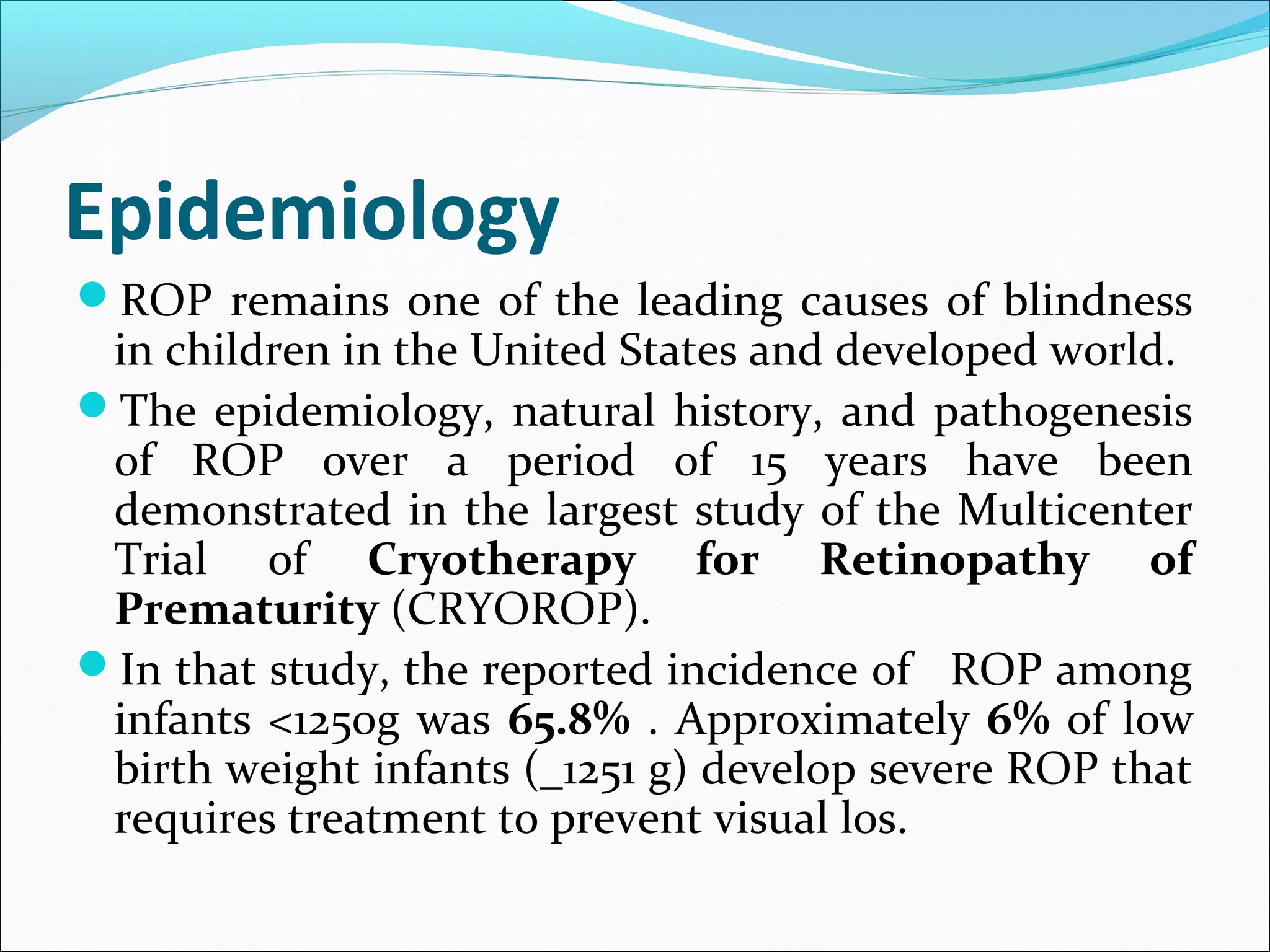
In that study, the reported incidence of ROP among
infants <1250g was 65.8% . Approximately 6% of low
birth weight infants (_1251 g) develop severe ROP that
requires treatment to prevent visual los.
Continued..
For the developing world ROP is an emerging problem.
In India in a prospective cohort of 552 preterm LBW
newborns in a tertiary care hospital with or without risk
factors, incidence of ROP was 22.3% and at 3 year follow
up of those treated with laser photocoagulation, 9%
were found blind due to retinal detachment.
In Bangladesh reported incidence of ROP based on
targeted screening program is not available. Follow up
eye examination of preterm infants <33 weeks enrolled
in another study demonstrated the incidence as 4.4%
 Risk factors for ROP
ROP is essentially a disease of prematurity. Other
documented risk factors for ROP includes Cardio-
respiratory instability, prolonged oxygen
therapy,repeated episodes of apnoea of prematurity,
anemia needing blood transfusion, neonatal sepsis
etc.
Risk is higher when the baby is severely ill.
History
The First ROP case was described by Terry in 1942 in
an infant who had grey, blood vessel-covered
membranes behind the pupil.
After that report, an epidemic of blindness occurred
in the 1950s and 1960s among the survived tiny
newborns in the United States. During that time high
doses of oxygen was being used to treat apnoea of
prematurity without monitoring. Uncontrolled
supplemental oxygen was thought to be one of the
causative factors of this devastating disease process.
Continued..
Attempts were made to curtail use of essential oxygen in
the premature nursery. ROP did decrease but at the
expense of increased mortality and higher incidence of
cerebral palsy. With the advent of pulse oxymetry in 1970s,
and beyond, oxygen therapy became controlled and it was
thought that ROP would disappear.
Unfortunately this proved to be untrue. With the
advancement of neonatal services, sicker babies continued
to survive and ROP again rose to frightingly high level.
Therefore small gestational age and very low birth weight
correlated more strongly with occurrence of ROP than did
oxygen administration.
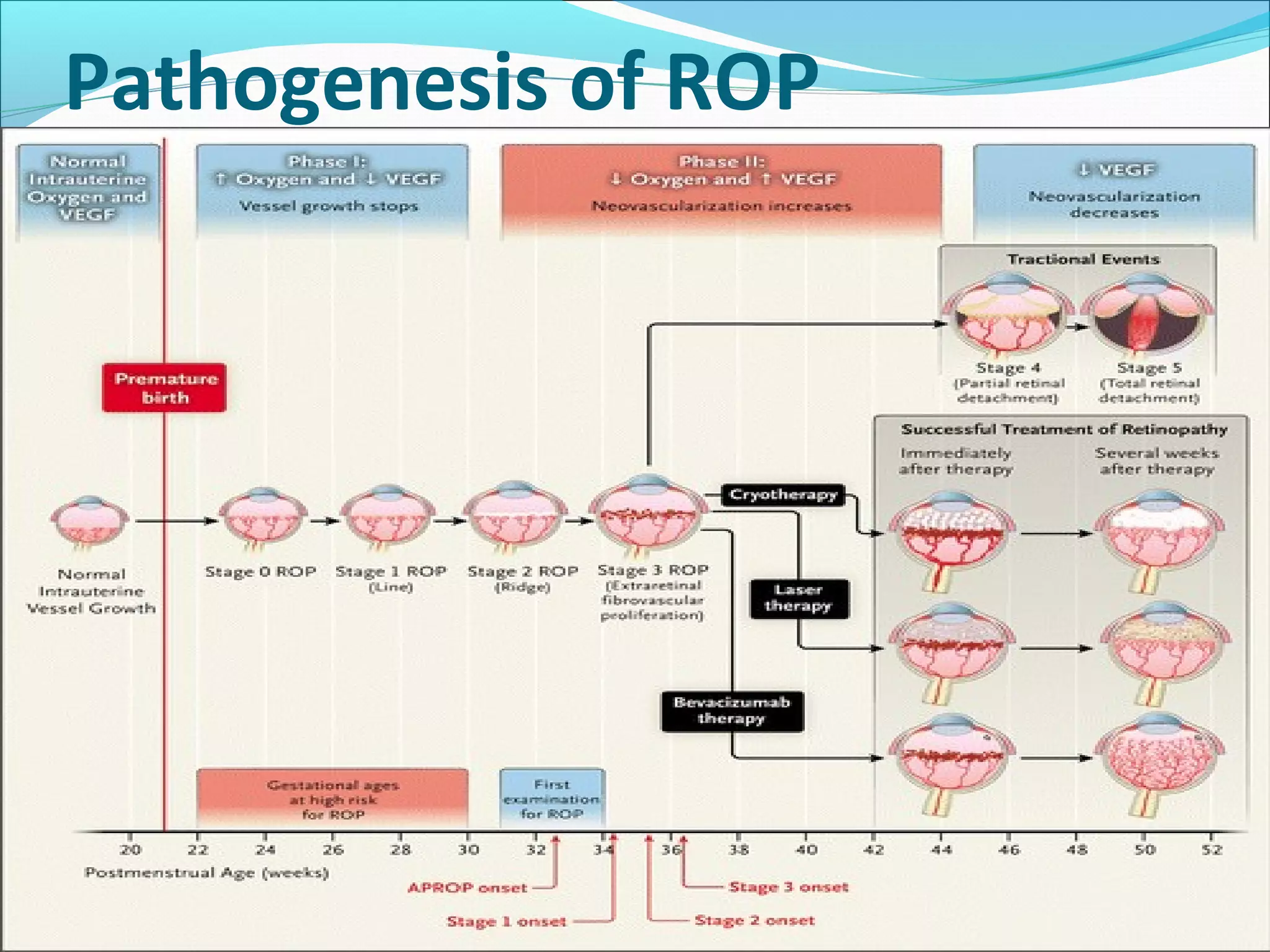
Pathogenesis of ROP
International Classification of
Retinopathy of Prematurity (ICROP)
The ICROP characterizes ROP by its
Position (Zone)
Extent (Clock hours)
Severity (Stage)
Presence or absence of “plus disease”
Location & Extent of ROP
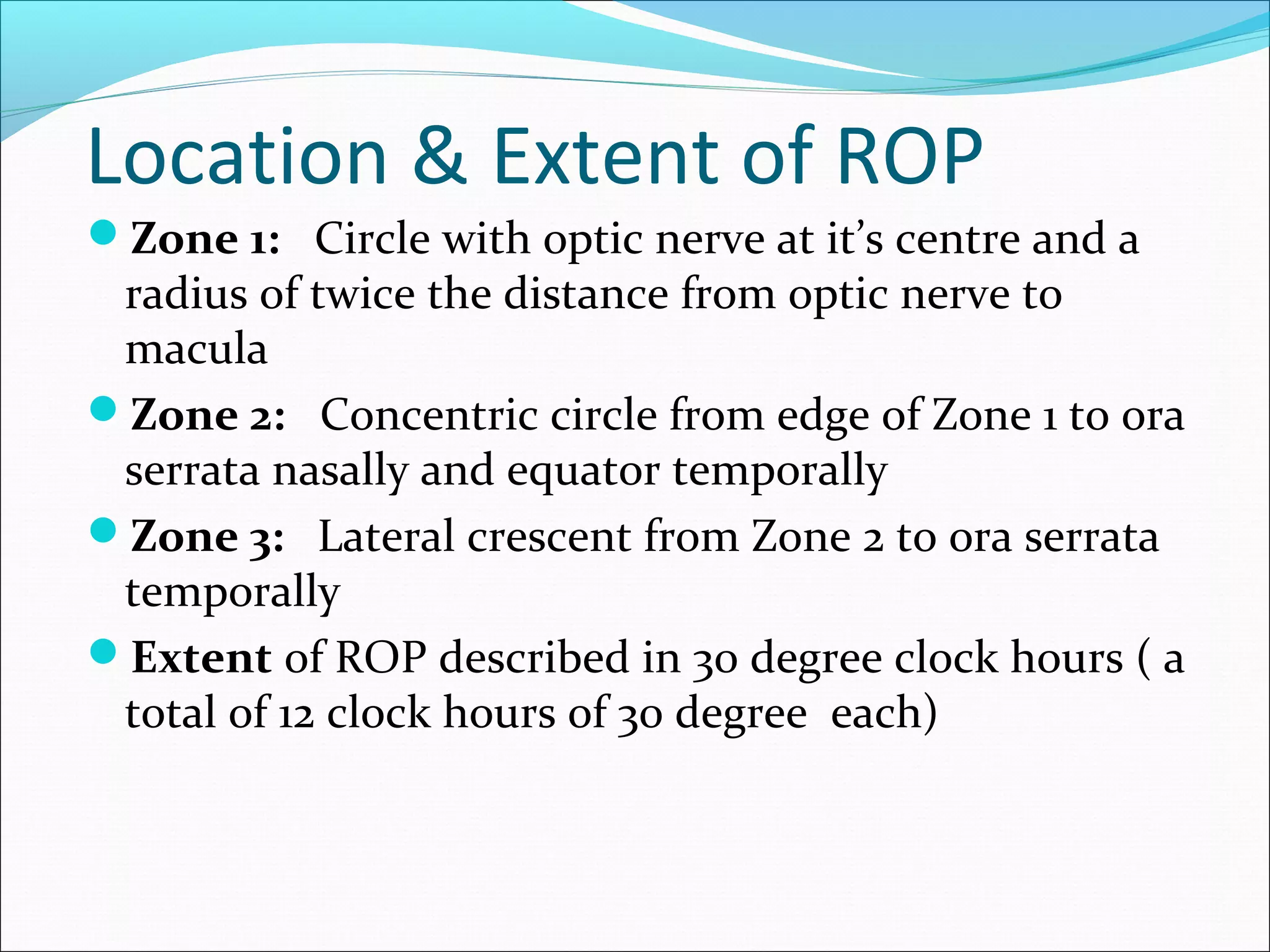
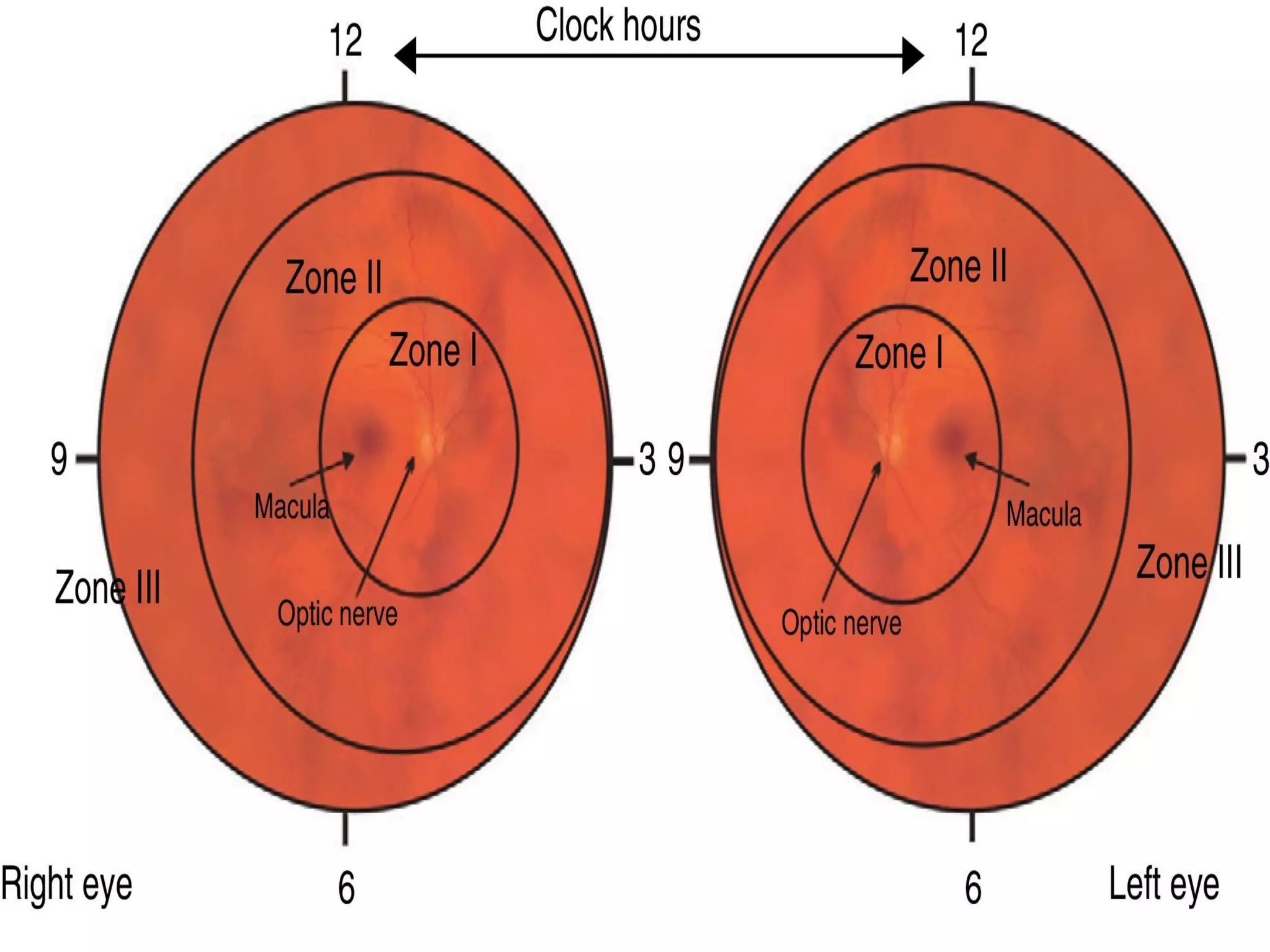
Zone 1: Circle with optic nerve at it’s centre and a
radius of twice the distance from optic nerve to
macula
Zone 2: Concentric circle from edge of Zone 1 to ora
serrata nasally and equator temporally
Zone 3: Lateral crescent from Zone 2 to ora serrata
temporally
Extent of ROP described in 30 degree clock hours ( a
total of 12 clock hours of 30 degree each)
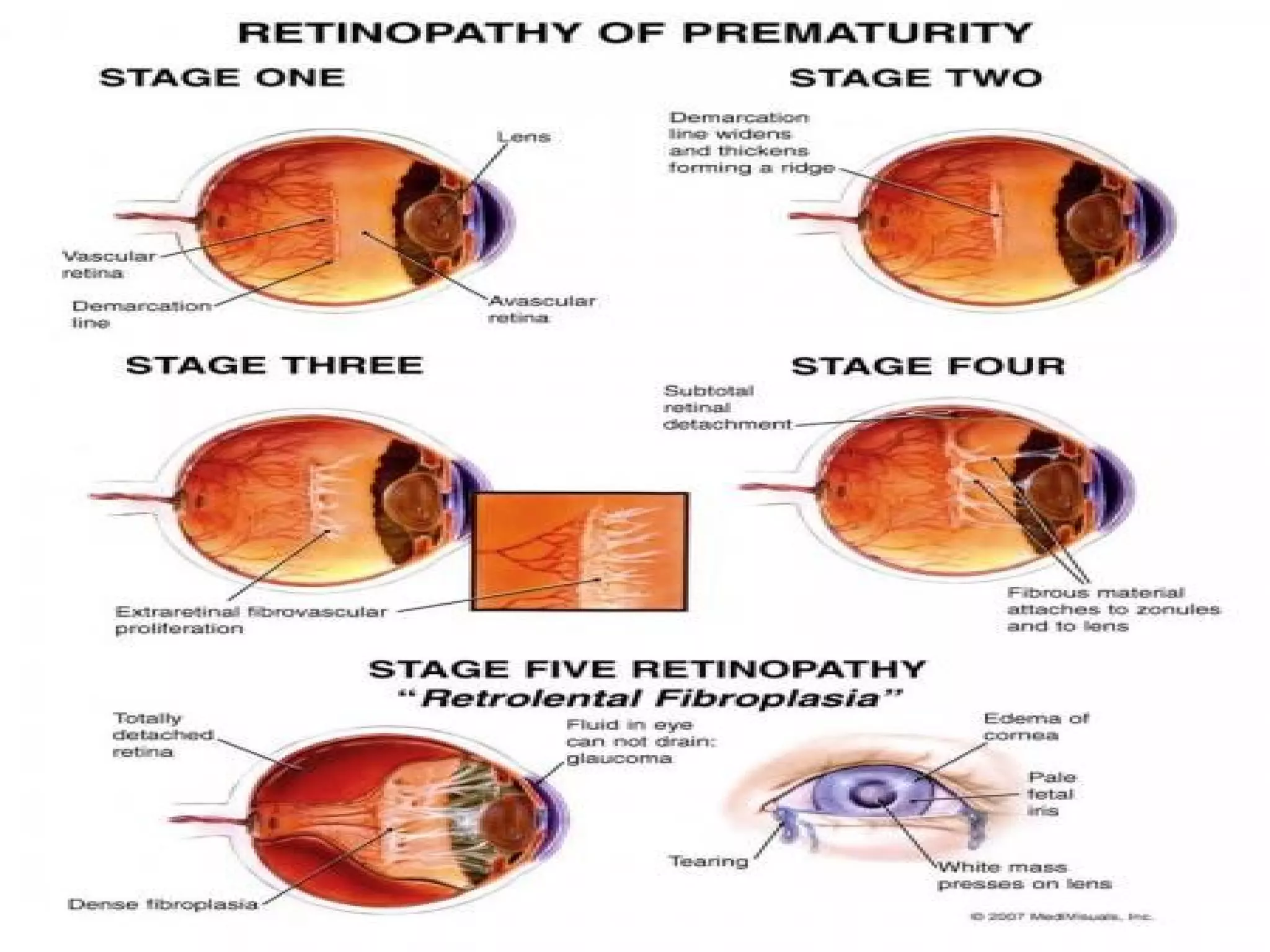
Severity of ROP
Stage 1 Presence of thin white demarcation line
seperating vascular from avascular retina
Stage 2 Addition of depth and width to the
demarcation line separating vascular from avascular
retina
Stage 3 Presence of extraretinal fibrovas cular
proliferation with abnormal vessels and fibrous tissue
extending from ridge to vitreous
Stage 4 Partial retinal detachment not involving
macula (4A) and involving macula (4B)
Stage 5 Complete retinal detachment
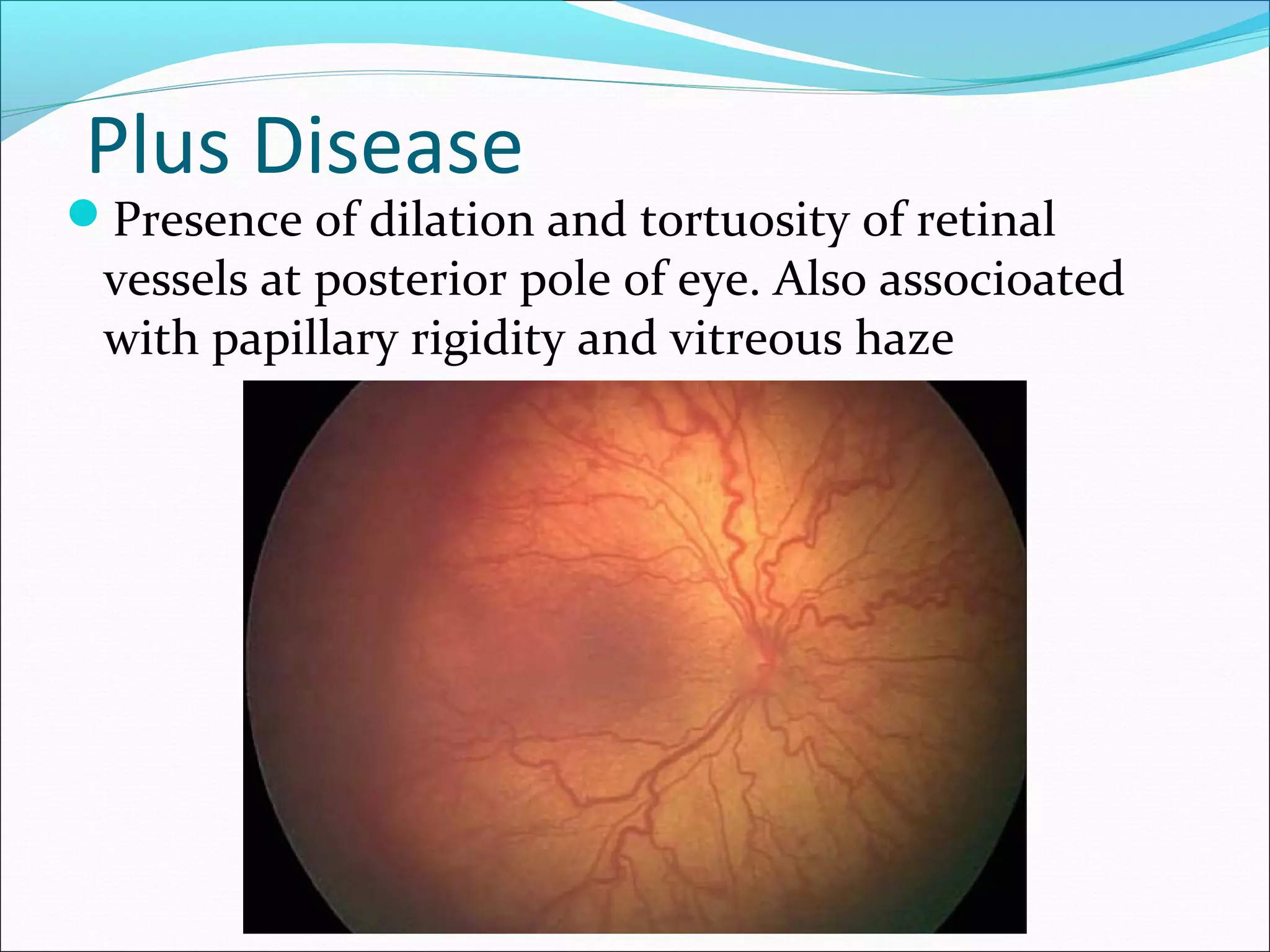
Plus Disease
Presence of dilation and tortuosity of retinal
vessels at posterior pole of eye. Also associoated
with papillary rigidity and vitreous haze
Composite Categories of ROP
“Threshold ROP” is defined as the presence of ROP in
either zone I or zone II
“Prethreshold ROP” Any ROP (less than threshold) in
zone I is considered prethreshold
“Aggressive Posterior ROP (AP-ROP)” A rapidly
progressing, severe form of ROP, if untreated progresses rapidly
to stage 5 ROP. The characteristics features of this type of ROP
includes it’s posterior location, prominence of plus disease, and
the ill- defined nature of the retinopathy.
“No ROP” is a category with potential disaster if it is
erroneously interpreted to mean that the retina is mature and
no longer at risk for developing ROP.
Screening of ROP
Whom to screen
Timing of screening
Frequency of Screening
Termination of Screening
Who should screen
Methods of screening
Place of Screening
Whom to screen
The target population for screening in a country
should be based incidence risk factors reported in
that country.
Current recommendation for a screening eye
examination is for all infants born at less than or
equal to 32 weeks gestation, and/or weighing less
than 1500 g at birth.
This is to ensure that all infants at significant
potential risk are screened.
Timing of screening
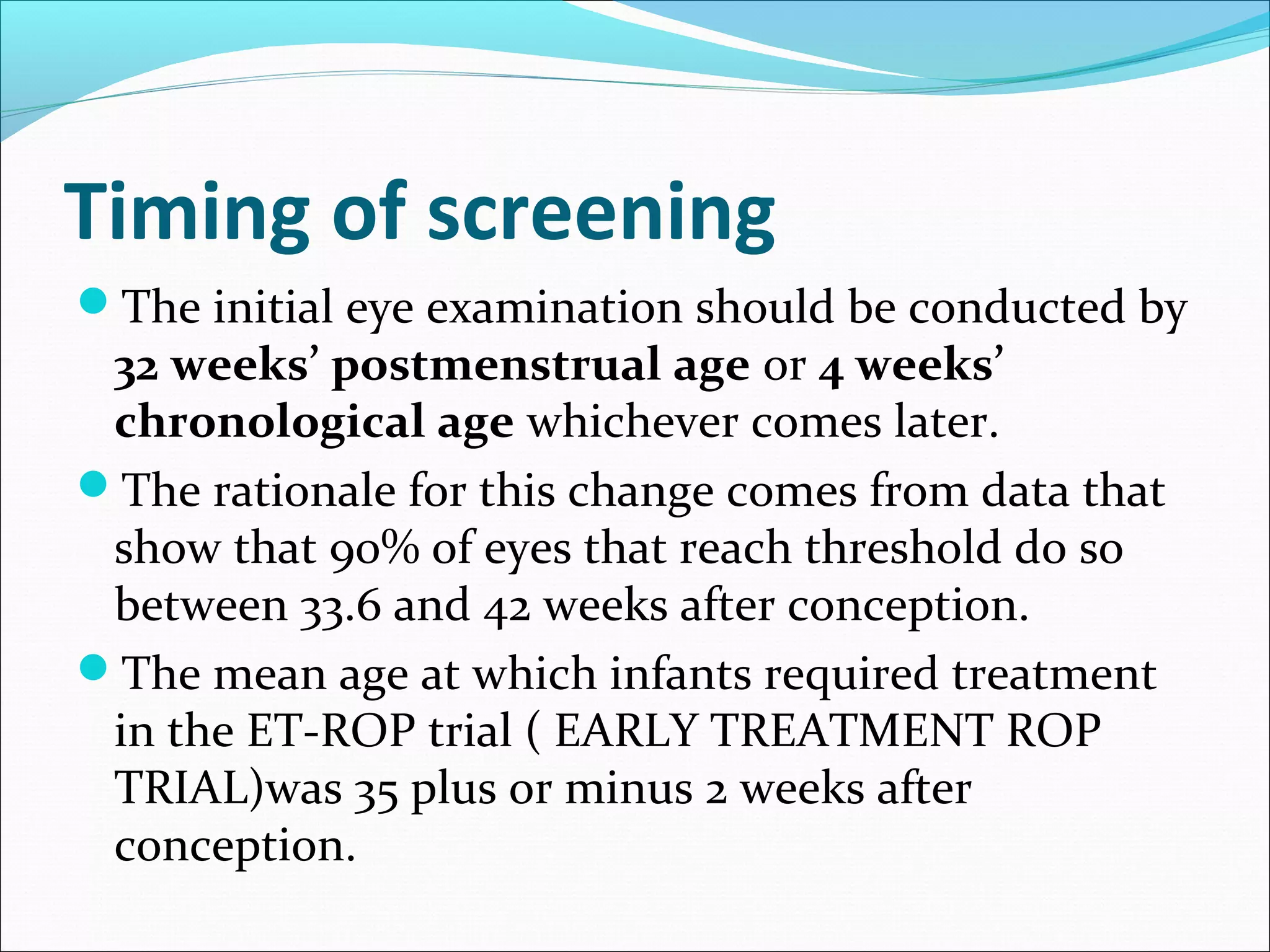
The initial eye examination should be conducted by
32 weeks’ postmenstrual age or 4 weeks’
chronological age whichever comes later.
The rationale for this change comes from data that
show that 90% of eyes that reach threshold do so
between 33.6 and 42 weeks after conception.
The mean age at which infants required treatment
in the ET-ROP trial ( EARLY TREATMENT ROP
TRIAL)was 35 plus or minus 2 weeks after
conception.
Frequency of Screening
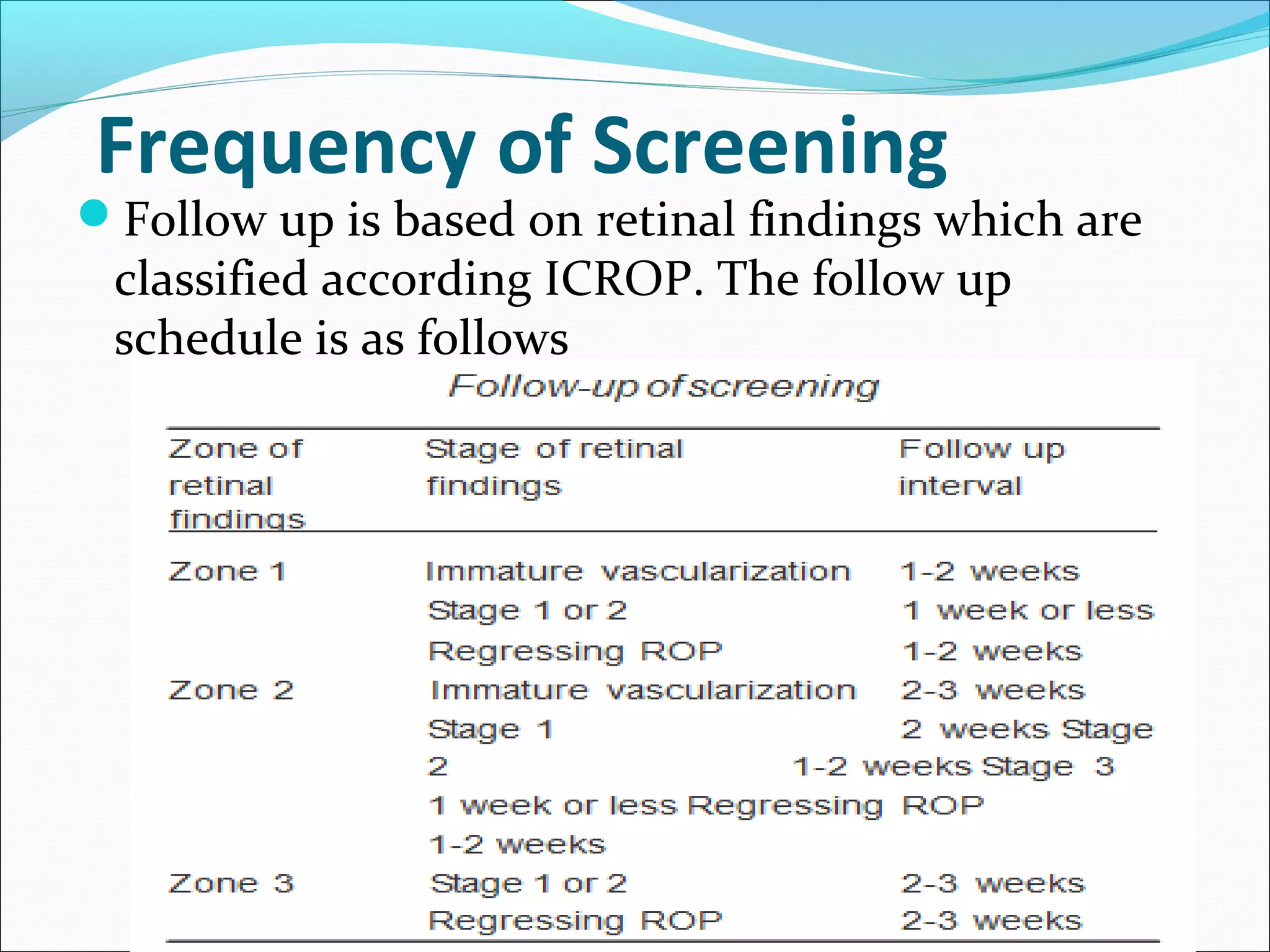
Follow up is based on retinal findings which are
classified according ICROP. The follow up
schedule is as follows
Termination of Screening
Criteria to stop further examination:
Full retinal vascularization; this usually occurs at
about 40th weeks of postmenstrual age and mostly
completed by the 45th weeks.
Regression of ROP noted.
Who should screen
It should be performed by an ophthalmologist
trained in indirect ophthalmoscopy with sufficient
knowledge and experience to enable accurate
identification of the location and sequential
retinal changes of ROP.
Other recommended personnel for screening
examination are:
Retina subspecialist
General ophthalmologist trained in indirect
ophthalmoscopy
Trained neonatologist/ Pediatrician
Trained Technician/ Nurses
Methods of screening
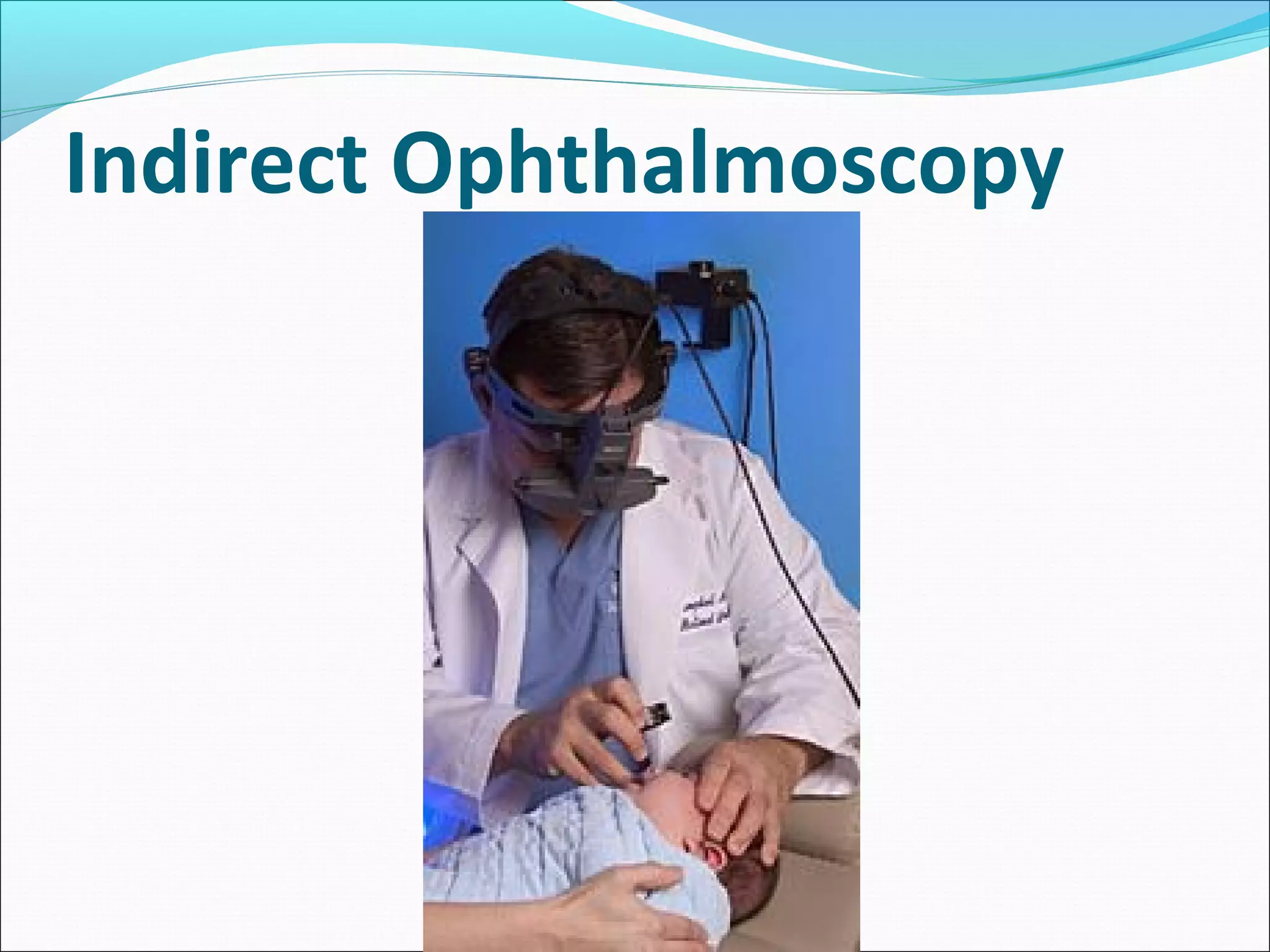
1. Indirect Ophthalmoscopy: Examination of the
retina is performed using the binocular indirect
ophthalmoscope (a head-mounted scope with
light source) and a lens for focusing.
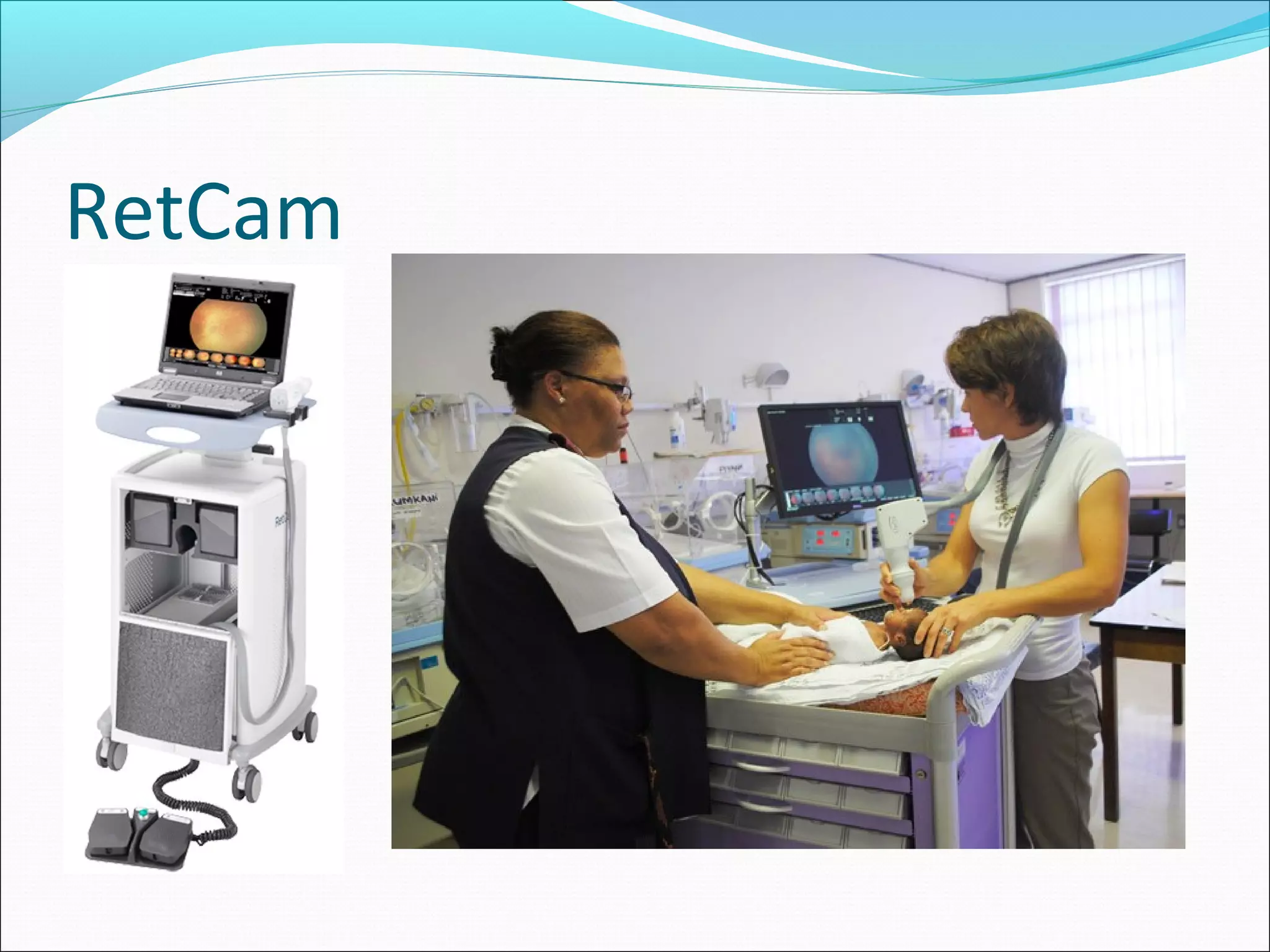
2. Use of RetCam and telemedicine Screening of
ROP : The RetCam is a camera used to photograph the
retina of infants. This camera do not require a dilated
pupil or contact with the eye. Retinal images taken by the
camera can be stored, transmitted to expert, reviewed,
analyzed and sequentially compared over time and are
useful for telemedicine purposes. The advantages of this
method are that fewer screening ophthalmologists would
be needed, making it ideal for more remote or rural areas.
Indirect Ophthalmoscopy
RetCam
Place of Screening
The ideal setting for screening is under a radiant
warmer in the NICU, under the guidance of
neonatologist.
Discharged and stable babies may be screened in the
trained ophthalmologist’s clinic or in the NICU.
ROP Screening In Bangladesh
Neonatal health services have been extended throughout the
country and due to improved neonatal services, increased
numbers of preterm low birth weight babies are surviving.
Therefore, ROP is an emerging problem.
Although the magnitude of the problem has not been
assessed in large scale, ROP screening has already been
initiated. Some enthusiastic pediatric ophthalmologist with
cooperation from neonatologist started to screen the tiny
infants for ROP under their own initiative.
Currently Neonatologists and ophthalmologist have come
forward to conduct ROP screening in large scale in some
reputed eye institutes and several Govt. and non-Govt.
institutes with support from international organizations.
Treatment of ROP
Treatment of ROP consists of destroying the portion
of the retina that is unvascularized in order to
preserve the rest of it.
The rationale for why this works is thought to be that
the avascular retina is a source of growth factors that
promote abnormal neovascularization.
When the avascular retina is destroyed, the release of
growth factors ceases, and neovascularization
involutes and regresses.
Indication of ROP treatment
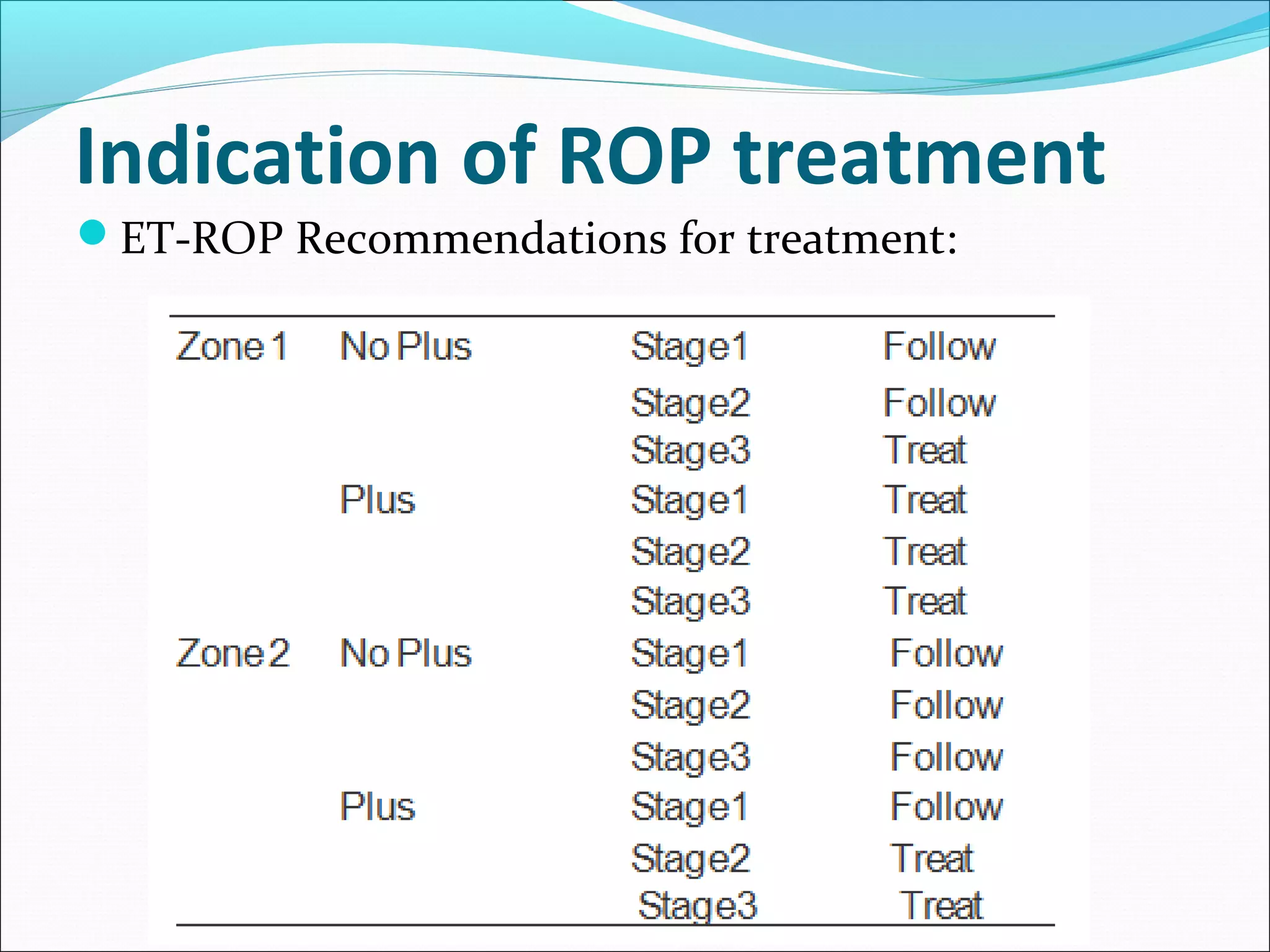
ET-ROP Recommendations for treatment:
Treatment modalities before
retinal detachment
Cryotherapy
Laser Photocoagulation
Cryotherapy
Cryotherapy was the mode of treatment in the absence
of portable laser machines.
In the late 1960s xenon arc photocoagulation and
transscleral cryotherapy were used for the treatment of
acute ROP.
The Multicentre Trial of Cryotherapy for Retinopathy
of Prematurity (CRYO-ROP) for the first time
established the beneficial effect of cryoablation of the
peripheral avascular retina. It usually requires a general
anaesthetic or sedation and ventilation.
Cryotherapy is a painful and inflammatory procedure.
Adverse effects include: conjunctivitis, eyelid swelling,
hypotony, infection, laceration and haemorrhage of conjunctiva,
preretinal and vitreous haemorrhage, glaucoma.
Laser Photocoagulation
Head-mounted lasers rapidly became an attractive
alternative to cryotherapy.
The procedure can be done more often in the NICU
without general anesthesia.
Indirect laser photocoagulation is more convenient and
technically easier to administer and is of particular
advantage over cryotherapy in treatment of posterior
disease.
 It permits a precise and relatively atraumatic delivery of
treatment with less ocular and systemic adverse effects.
The complications reported with laser are: cornea, iris
and lens burns, hyphaema, retinal haemorrhages and
choroidal rupture.
Treatment modalities after retinal
detachment
• Various procedures described are –
 Open-sky vitrectomy,
 Scleral buckling procedures (SBPs),
 Closed vitrectomy and lensectomy with or without
SBPs.
The success rate for surgery to reattach the retina in
infants with ROP is poor as there is rapid
degeneration of the photoreceptor cells after retinal
detachment.
Other Modalities of Treatment
Anti-VEGF therapies: Various anti-VEGF treatments
( bevacizumab) have been used in a small number of
patients either by intra vitreal injection or injection
into anterior chamber of the eye. These have yet to be
fully evaluated.
Gene therapy: Another method of producing local,
ocular anti-VEGF therapy has used gene transfer via
an intra vitreal injection of a control vector carrying
the appropriate gene. This treatment has been
reported as showing good results in animal testing
but has yet to be used in humans.
Long-term Sequelae Of
Retinopathy Of Prematurity
The most serious long term-sequelae of ROP is
blindness and this devastating disability affects
mobility, education, developmental milestones, social
interactions etc.
Serious long term consequences can occur in children
with severe ROP requiring treatment. Mild to
moderate degree of peripherl vision loss (about 6.2%
reduction) has been observed in the lasered Vs.
unlasered eyes
Continued..
Eyes that required laser often have areas of traction
or thinned retina that put them at increased risk of
retinal detachment at older ages.
Between 10 and 15 years of age, new retinal folds or
detachments developed in 4.5% of the threshold eyes
treated with cryotherapy, and 7.7% of threshold eyes
not treated in the original CRYO-ROP cohort
followed for 15 years.
Frequent eye examinations are mandatory
throughout life in all patients who had serious ROP in
infancy.
Continued..
Other long term sequelae as reported with
follow up of infants with ROP implications
includes co requiring vitrectomy, cataract,
amblyopia (loss of vision caused by disuse of one
eye, often caused by a difference between the two
eyes ), strabismus , early presenting myopia of
high degree etc.
Conclusion and Recommendation
Despite good efforts to control the risks of
premature birth and improvement of prenatal
care, premature birth cannot be avoided. But
blindness and/or visual disability due to ROP is
largely preventable.
Timely identification through ROP screening and
proper intervention in due time are the mainstay
of preventing this devastating disability.
Continued..
Furthermore, while caring these tiny newborns,
controlled oxygen exposure should be ensured.
Finally raising awareness about this long lasting
scar of premature birth among neonatologists,
ophthalmologists and above all, among parents
should not be under-estimated.
Thank You

ROP current understanding and management

  • 1.
    Retinopathy of Prematurity (ROP):Current Understanding and Management
  • 2.
    1. M AMANNAN(Professor, Department of Neonatology, BSMMU, Dhaka), 2. SADEKA CHOUDHURY MONI (Assistant Professor, Department of Neonatology, BSMMU, Dhaka), 3. MOHAMMOD SHAHIDULLAH (Professor and Chairman, Department of Neonatology, BSMMU, Dhaka) BANGLADESH JOURNAL OF CHILD HEALTH (December-2014-vol-38-no-3)
  • 3.
    Introduction Retinopathy of prematurity(ROP) is a vascular disease of the eye unique to preterm infants characterized by failure of retinal blood vessels to grow and develop normally. It results in severe visual impairment and blindness in newborns. Originally it was called retrolental fibroplasias (RLF), named for the end-stage of the disease in which a white, vascularized plaque could be seen behind the lens in an eye that was often completely blind.
  • 4.
    Epidemiology ROP remains oneof the leading causes of blindness in children in the United States and developed world. The epidemiology, natural history, and pathogenesis of ROP over a period of 15 years have been demonstrated in the largest study of the Multicenter Trial of Cryotherapy for Retinopathy of Prematurity (CRYOROP). In that study, the reported incidence of ROP among infants <1250g was 65.8% . Approximately 6% of low birth weight infants (_1251 g) develop severe ROP that requires treatment to prevent visual los.
  • 5.
    Continued.. For the developingworld ROP is an emerging problem. In India in a prospective cohort of 552 preterm LBW newborns in a tertiary care hospital with or without risk factors, incidence of ROP was 22.3% and at 3 year follow up of those treated with laser photocoagulation, 9% were found blind due to retinal detachment. In Bangladesh reported incidence of ROP based on targeted screening program is not available. Follow up eye examination of preterm infants <33 weeks enrolled in another study demonstrated the incidence as 4.4%
  • 6.
     Risk factors forROP ROP is essentially a disease of prematurity. Other documented risk factors for ROP includes Cardio- respiratory instability, prolonged oxygen therapy,repeated episodes of apnoea of prematurity, anemia needing blood transfusion, neonatal sepsis etc. Risk is higher when the baby is severely ill.
  • 7.
    History The First ROPcase was described by Terry in 1942 in an infant who had grey, blood vessel-covered membranes behind the pupil. After that report, an epidemic of blindness occurred in the 1950s and 1960s among the survived tiny newborns in the United States. During that time high doses of oxygen was being used to treat apnoea of prematurity without monitoring. Uncontrolled supplemental oxygen was thought to be one of the causative factors of this devastating disease process.
  • 8.
    Continued.. Attempts were madeto curtail use of essential oxygen in the premature nursery. ROP did decrease but at the expense of increased mortality and higher incidence of cerebral palsy. With the advent of pulse oxymetry in 1970s, and beyond, oxygen therapy became controlled and it was thought that ROP would disappear. Unfortunately this proved to be untrue. With the advancement of neonatal services, sicker babies continued to survive and ROP again rose to frightingly high level. Therefore small gestational age and very low birth weight correlated more strongly with occurrence of ROP than did oxygen administration.
  • 9.
  • 10.
    International Classification of Retinopathyof Prematurity (ICROP) The ICROP characterizes ROP by its Position (Zone) Extent (Clock hours) Severity (Stage) Presence or absence of “plus disease”
  • 11.
    Location & Extentof ROP Zone 1: Circle with optic nerve at it’s centre and a radius of twice the distance from optic nerve to macula Zone 2: Concentric circle from edge of Zone 1 to ora serrata nasally and equator temporally Zone 3: Lateral crescent from Zone 2 to ora serrata temporally Extent of ROP described in 30 degree clock hours ( a total of 12 clock hours of 30 degree each)
  • 13.
    Severity of ROP Stage1 Presence of thin white demarcation line seperating vascular from avascular retina Stage 2 Addition of depth and width to the demarcation line separating vascular from avascular retina Stage 3 Presence of extraretinal fibrovas cular proliferation with abnormal vessels and fibrous tissue extending from ridge to vitreous Stage 4 Partial retinal detachment not involving macula (4A) and involving macula (4B) Stage 5 Complete retinal detachment
  • 15.
    Plus Disease Presence ofdilation and tortuosity of retinal vessels at posterior pole of eye. Also associoated with papillary rigidity and vitreous haze
  • 16.
    Composite Categories ofROP “Threshold ROP” is defined as the presence of ROP in either zone I or zone II “Prethreshold ROP” Any ROP (less than threshold) in zone I is considered prethreshold “Aggressive Posterior ROP (AP-ROP)” A rapidly progressing, severe form of ROP, if untreated progresses rapidly to stage 5 ROP. The characteristics features of this type of ROP includes it’s posterior location, prominence of plus disease, and the ill- defined nature of the retinopathy. “No ROP” is a category with potential disaster if it is erroneously interpreted to mean that the retina is mature and no longer at risk for developing ROP.
  • 17.
    Screening of ROP Whomto screen Timing of screening Frequency of Screening Termination of Screening Who should screen Methods of screening Place of Screening
  • 18.
    Whom to screen Thetarget population for screening in a country should be based incidence risk factors reported in that country. Current recommendation for a screening eye examination is for all infants born at less than or equal to 32 weeks gestation, and/or weighing less than 1500 g at birth. This is to ensure that all infants at significant potential risk are screened.
  • 19.
    Timing of screening Theinitial eye examination should be conducted by 32 weeks’ postmenstrual age or 4 weeks’ chronological age whichever comes later. The rationale for this change comes from data that show that 90% of eyes that reach threshold do so between 33.6 and 42 weeks after conception. The mean age at which infants required treatment in the ET-ROP trial ( EARLY TREATMENT ROP TRIAL)was 35 plus or minus 2 weeks after conception.
  • 20.
    Frequency of Screening Followup is based on retinal findings which are classified according ICROP. The follow up schedule is as follows
  • 21.
    Termination of Screening Criteriato stop further examination: Full retinal vascularization; this usually occurs at about 40th weeks of postmenstrual age and mostly completed by the 45th weeks. Regression of ROP noted.
  • 22.
    Who should screen Itshould be performed by an ophthalmologist trained in indirect ophthalmoscopy with sufficient knowledge and experience to enable accurate identification of the location and sequential retinal changes of ROP. Other recommended personnel for screening examination are: Retina subspecialist General ophthalmologist trained in indirect ophthalmoscopy Trained neonatologist/ Pediatrician Trained Technician/ Nurses
  • 23.
    Methods of screening 1.Indirect Ophthalmoscopy: Examination of the retina is performed using the binocular indirect ophthalmoscope (a head-mounted scope with light source) and a lens for focusing. 2. Use of RetCam and telemedicine Screening of ROP : The RetCam is a camera used to photograph the retina of infants. This camera do not require a dilated pupil or contact with the eye. Retinal images taken by the camera can be stored, transmitted to expert, reviewed, analyzed and sequentially compared over time and are useful for telemedicine purposes. The advantages of this method are that fewer screening ophthalmologists would be needed, making it ideal for more remote or rural areas.
  • 24.
  • 25.
  • 26.
    Place of Screening Theideal setting for screening is under a radiant warmer in the NICU, under the guidance of neonatologist. Discharged and stable babies may be screened in the trained ophthalmologist’s clinic or in the NICU.
  • 27.
    ROP Screening InBangladesh Neonatal health services have been extended throughout the country and due to improved neonatal services, increased numbers of preterm low birth weight babies are surviving. Therefore, ROP is an emerging problem. Although the magnitude of the problem has not been assessed in large scale, ROP screening has already been initiated. Some enthusiastic pediatric ophthalmologist with cooperation from neonatologist started to screen the tiny infants for ROP under their own initiative. Currently Neonatologists and ophthalmologist have come forward to conduct ROP screening in large scale in some reputed eye institutes and several Govt. and non-Govt. institutes with support from international organizations.
  • 28.
    Treatment of ROP Treatmentof ROP consists of destroying the portion of the retina that is unvascularized in order to preserve the rest of it. The rationale for why this works is thought to be that the avascular retina is a source of growth factors that promote abnormal neovascularization. When the avascular retina is destroyed, the release of growth factors ceases, and neovascularization involutes and regresses.
  • 29.
    Indication of ROPtreatment ET-ROP Recommendations for treatment:
  • 30.
    Treatment modalities before retinaldetachment Cryotherapy Laser Photocoagulation
  • 31.
    Cryotherapy Cryotherapy was themode of treatment in the absence of portable laser machines. In the late 1960s xenon arc photocoagulation and transscleral cryotherapy were used for the treatment of acute ROP. The Multicentre Trial of Cryotherapy for Retinopathy of Prematurity (CRYO-ROP) for the first time established the beneficial effect of cryoablation of the peripheral avascular retina. It usually requires a general anaesthetic or sedation and ventilation. Cryotherapy is a painful and inflammatory procedure. Adverse effects include: conjunctivitis, eyelid swelling, hypotony, infection, laceration and haemorrhage of conjunctiva, preretinal and vitreous haemorrhage, glaucoma.
  • 32.
    Laser Photocoagulation Head-mounted lasersrapidly became an attractive alternative to cryotherapy. The procedure can be done more often in the NICU without general anesthesia. Indirect laser photocoagulation is more convenient and technically easier to administer and is of particular advantage over cryotherapy in treatment of posterior disease.  It permits a precise and relatively atraumatic delivery of treatment with less ocular and systemic adverse effects. The complications reported with laser are: cornea, iris and lens burns, hyphaema, retinal haemorrhages and choroidal rupture.
  • 33.
    Treatment modalities afterretinal detachment • Various procedures described are –  Open-sky vitrectomy,  Scleral buckling procedures (SBPs),  Closed vitrectomy and lensectomy with or without SBPs. The success rate for surgery to reattach the retina in infants with ROP is poor as there is rapid degeneration of the photoreceptor cells after retinal detachment.
  • 34.
    Other Modalities ofTreatment Anti-VEGF therapies: Various anti-VEGF treatments ( bevacizumab) have been used in a small number of patients either by intra vitreal injection or injection into anterior chamber of the eye. These have yet to be fully evaluated. Gene therapy: Another method of producing local, ocular anti-VEGF therapy has used gene transfer via an intra vitreal injection of a control vector carrying the appropriate gene. This treatment has been reported as showing good results in animal testing but has yet to be used in humans.
  • 35.
    Long-term Sequelae Of RetinopathyOf Prematurity The most serious long term-sequelae of ROP is blindness and this devastating disability affects mobility, education, developmental milestones, social interactions etc. Serious long term consequences can occur in children with severe ROP requiring treatment. Mild to moderate degree of peripherl vision loss (about 6.2% reduction) has been observed in the lasered Vs. unlasered eyes
  • 36.
    Continued.. Eyes that requiredlaser often have areas of traction or thinned retina that put them at increased risk of retinal detachment at older ages. Between 10 and 15 years of age, new retinal folds or detachments developed in 4.5% of the threshold eyes treated with cryotherapy, and 7.7% of threshold eyes not treated in the original CRYO-ROP cohort followed for 15 years. Frequent eye examinations are mandatory throughout life in all patients who had serious ROP in infancy.
  • 37.
    Continued.. Other long termsequelae as reported with follow up of infants with ROP implications includes co requiring vitrectomy, cataract, amblyopia (loss of vision caused by disuse of one eye, often caused by a difference between the two eyes ), strabismus , early presenting myopia of high degree etc.
  • 38.
    Conclusion and Recommendation Despitegood efforts to control the risks of premature birth and improvement of prenatal care, premature birth cannot be avoided. But blindness and/or visual disability due to ROP is largely preventable. Timely identification through ROP screening and proper intervention in due time are the mainstay of preventing this devastating disability.
  • 39.
    Continued.. Furthermore, while caringthese tiny newborns, controlled oxygen exposure should be ensured. Finally raising awareness about this long lasting scar of premature birth among neonatologists, ophthalmologists and above all, among parents should not be under-estimated.
  • 40.